
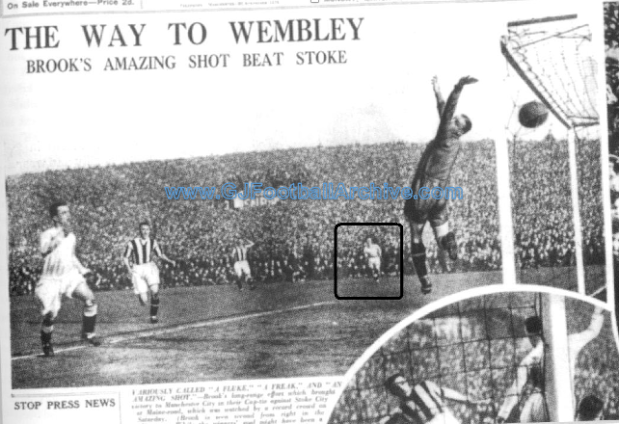
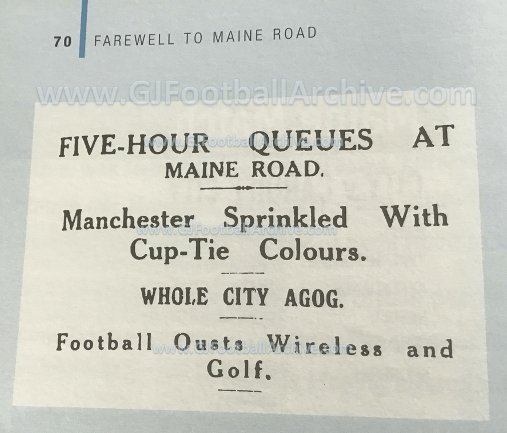
This is an interesting cutting from 1935 talking about the possibility of increasing Maine Road to cope with the huge crowds that wanted to watch Manchester City play. It may seem crazy today but wasn’t such an odd idea in the 1930s. You can find out more on the story here:
Tag Archives: Attendances
Record Average Crowds

I’ve not done one of these for a while but I know they always prompt a bit of debate, so here goes… a feature on Manchester City FC attendances. It is a fact that the Blues have, generation after generation, been one of the English game’s top attractions. Like all – and I do mean all – English clubs there have been some average attendance lows over the years, but when the entire history of Manchester City is reviewed and the club’s average figures are compared with the national average it is clear that the Blues have consistently been one of football’s most attractive draws. Take a look at the following:
- Since the beginning of the Football League in 1888 only nine sides have topped the table for average attendances. In chronological order of their first appearance at the top of the average table they are: Everton (1888-9), Villa (1898-99), Newcastle (1904-05), Chelsea (1907-08), Tottenham (1909-10), City (1910-11), Liverpool (1922-23), Arsenal (1929-30), & Manchester United (1956-57)
- As early as 1895-96 City were the third best supported side in the entire League despite being a Second Division side. Only First Division sides Everton & Aston Villa could better the Blues. Modern day giants Arsenal were 10th; Liverpool were 19th; United were 21st and Chelsea had yet to exist.
- In 1900-01 City were the 2nd best supported side in the entire League with only 400 people separating Villa (1st) and City
- The 1910-11 season saw Manchester’s Blues top the attendance charts for the first time. City’s average was 26,000 and was the 8th highest average of all time at that point (all clubs, all seasons).
- Regularly amongst the best supported sides throughout the inter war period, City’s average exceeded 37,000 for the first time in 1927-28 when the Blues established a record average crowd for the Second Division. This was also the entire League’s highest.
- In 1947-48 City’s average crowd exceeded 42,000 for the first time. Prior to that season only Chelsea (1919-20 & 1946-7), Arsenal (1934-5, 1936-7, 1937-8, & 1946-7) , Newcastle (1946-7), Liverpool (1946-7), United (1946-7), and Wolves (1946-7) had exceeded that figure.
- From 1975 to relegation in 1983 City were always one of the top 4 best supported sides, usually third behind United and Liverpool.
- Since the 1980s whenever City have played outside of the top division, they have tended to be the best supported side in that division.
- Since moving to their current home in 2003, the increased capacity has allowed City to re-establish itself as one of best supported clubs again. Maine Road’s capacity from 1994 onwards was extremely low compared to the club’s entire history and prevented the Blues from staging games in front of attendances of approximateley 35,000 upwards.
In general many people believe success increases support, and while that is undoubtedly true to some extent, for City it is often periods of adversity that prove the loyalty of the Club’s fans. It is highly significant, for example, that the first time City were the best supported side in the entire League (1910-11) Manchester United (6th best supported side) won the League title for the second time in 3 seasons.
Similarly, in 1925-26 when City were the best supported side in Division One and had established a new record average, the Blues were actually relegated. This coupled with significant poverty and hardship in Manchester at the time should have reduced support but loyalty increased! In my book “Manchester A Football History” I explore the relationship between attendances and Manchester’s major sides and it is fair to say that City fans can feel immensely proud of their loyalty throughout the history of the game. Something that cannot be said by all of the League’s biggest names.
In fact, it is worth highlighting that City have never been the worst supported side in their division but, of today’s so-called giants, Arsenal (1912-13 – average = 9,100) and Manchester United (1930-31 – average = 11,685) have. City’s worst average of the Twentieth Century came in the desperate 1964-65 season and was 14,753 (half the average of 1960-61 and a 3rd of the 1957-8 figure). However it is significant that for every League season City’s average has always been above the divisional average and, apart from 17 seasons, has always been in the top 11 nationally. Again, few of today’s giants can’t say that – United’s 20th Century low stands at 4,650 and Chelsea averaged 15,731 as recently as 1988-89. In fact City’s lowest League attendance is more than double United’s lowest League attendance at Old Trafford (United have several crowds of less than 4,000 at Old Trafford, including top flight games; City’s lowest in the League was a little over 8000 in the second tier).
For fans average attendances are often used as an indicator of size of club and so a number of people over the years have tried to produce a definitive ‘all-time’ attendance table. Several years ago analysis by a member of the Association of Football Statisticians claimed that if stadium capacity was not an issue for any club City would be the fourth biggest side in terms of attendance. That analysis compared postwar attendance detail with performance on the pitch.
In 2002 writer Brian Tabner calculated an all-time attendance table based on each club’s average attendance position during seasons 1925-2002. His top ten were: Arsenal, Liverpool, United, Everton, Tottenham, Newcastle, City, Chelsea, Villa and Sunderland. Since 2002 several clubs have increased their capacities of course and this will have a positive impact on each club’s standing in a more up to date analysis.
Figures can be manipulated in many different ways, but City should feel proud that they have many attendance firsts that can never be matched by today’s perceived biggest clubs.
The Seasons City Have Topped the Divisional Charts
The following figures show the seasons when City were the best supported side in their division and the Club’s highest individual crowd that season. Those crowds marked in italics were also the highest individual crowds for the entire division that season (crowds pre-1925 are inconsistently recorded and so have not been highlighted). It is fair to say that when an average crowd is within 4,000 of the highest then the stadium is likely to have been full for the majority of games with the size of away support varying.
Average Season Highest Crowd
10,000 1895-96 30,000 (Liverpool)
10,000 1898-99 25,000 (N. Heath)
16,000 1902-03 30,000 (United)
18,275 1909-10 40,000 (Oldham)
26,000 1910-11 40,000 (Liverpool)
21,000 1914-15 40,000 (Oldham)
32,000 1925-26 62,994 (United)
30,848 1926-27 49,384 (Bradford C)
37,468 1927-28 59,500 (Preston)
31,715 1928-29 61,007 (United)
35,016 1950-51 45,842 (Hull)
27,739 1965-66 47,171 (Huddersfield)
24,220 1984-85 47,285 (Charlton)
23,500 1988-89 40,070 (Chelsea)
26,753 1996-97 30,729 (Oldham)
28,273 1998-99 32,471 (York)
32,001 1999-00 33,027 (Blackburn)
33,059 2001-02 34,657 (Portsmouth)
With the increase in capacity at the Etihad coming this year it will be interesting to see how attendances develop. No doubt I’ll post more on this as the season progresses. Undoubtedly City will establish a new record average attendance in 2026-27.
60,332: The Etihad’s Highest
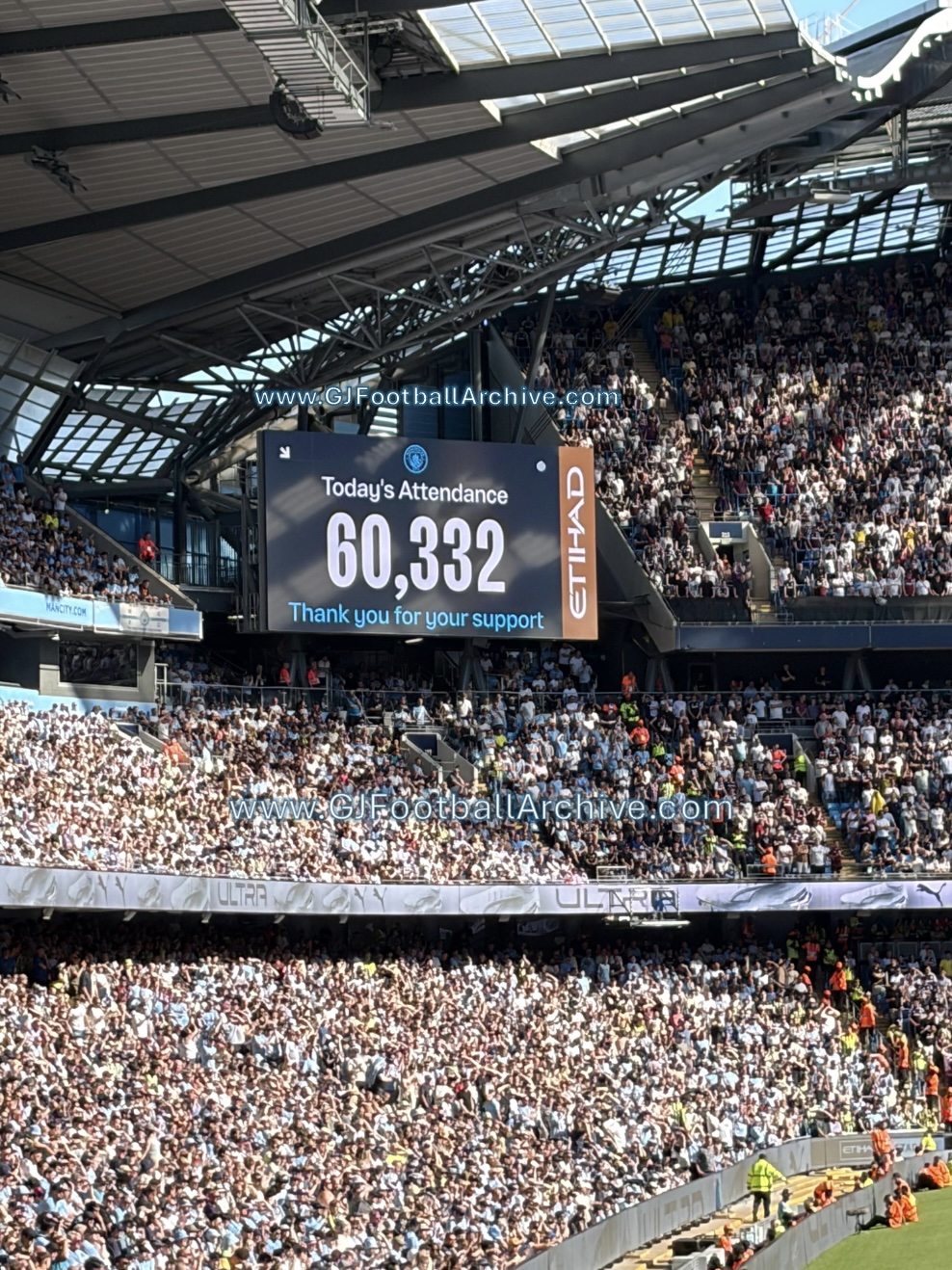
Yesterday Manchester City’s final home game of the season saw the Etihad stage its record crowd for football (any sport actually). It was also City’s highest home attendance for 54 years. The attendance was 60,332 and next year the capacity will increase again as some hospitality areas will then open. The game was also the final emotional match for manager Pep Guardiola, Bernardo Silva and John Stones.
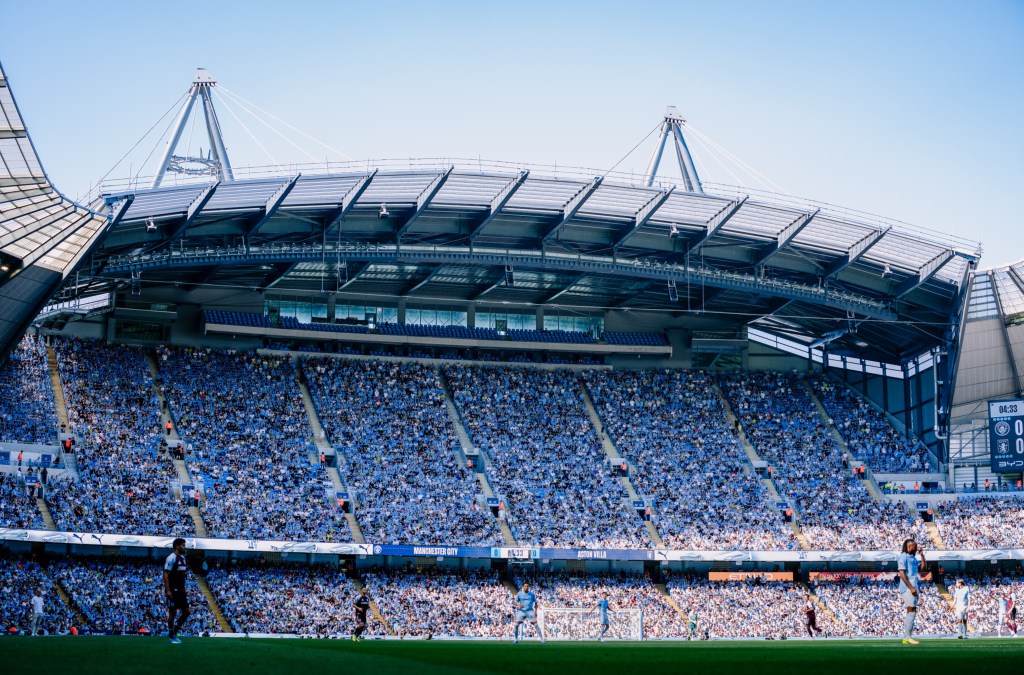
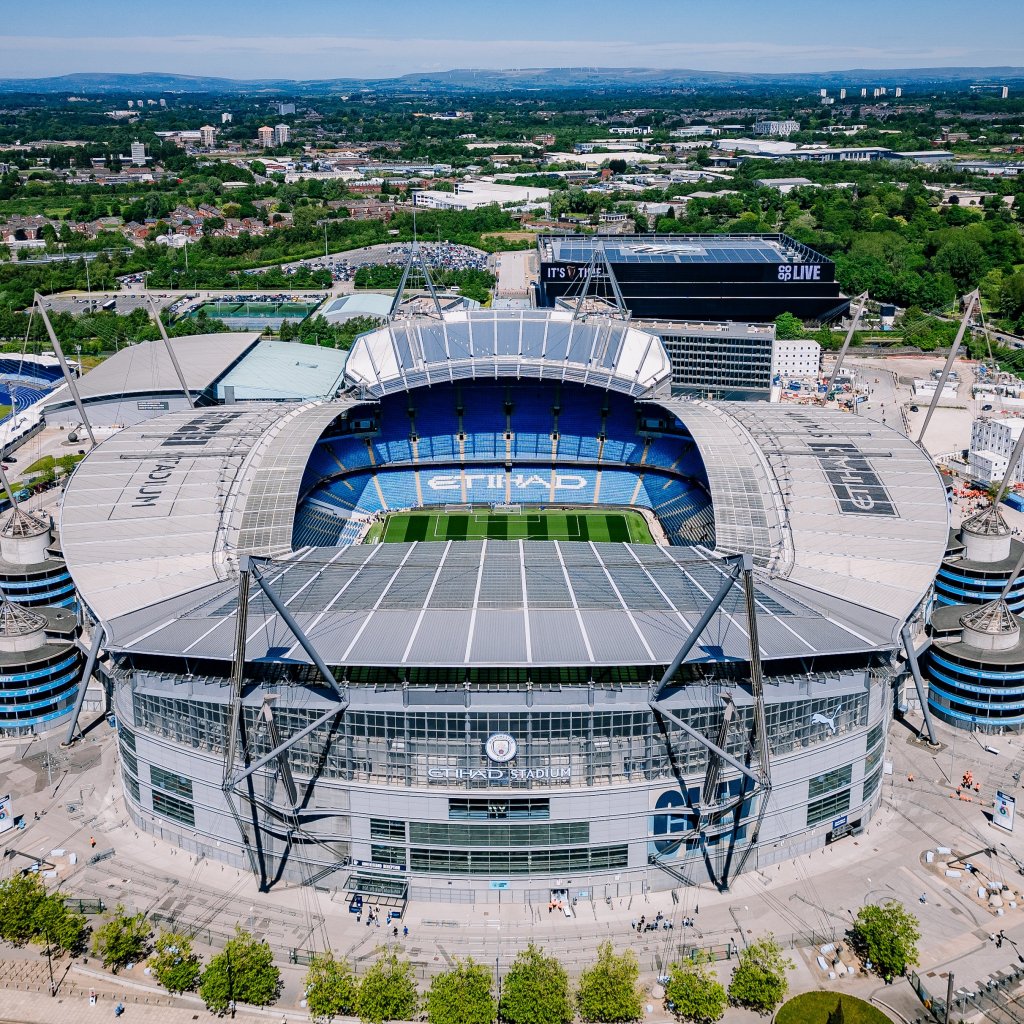
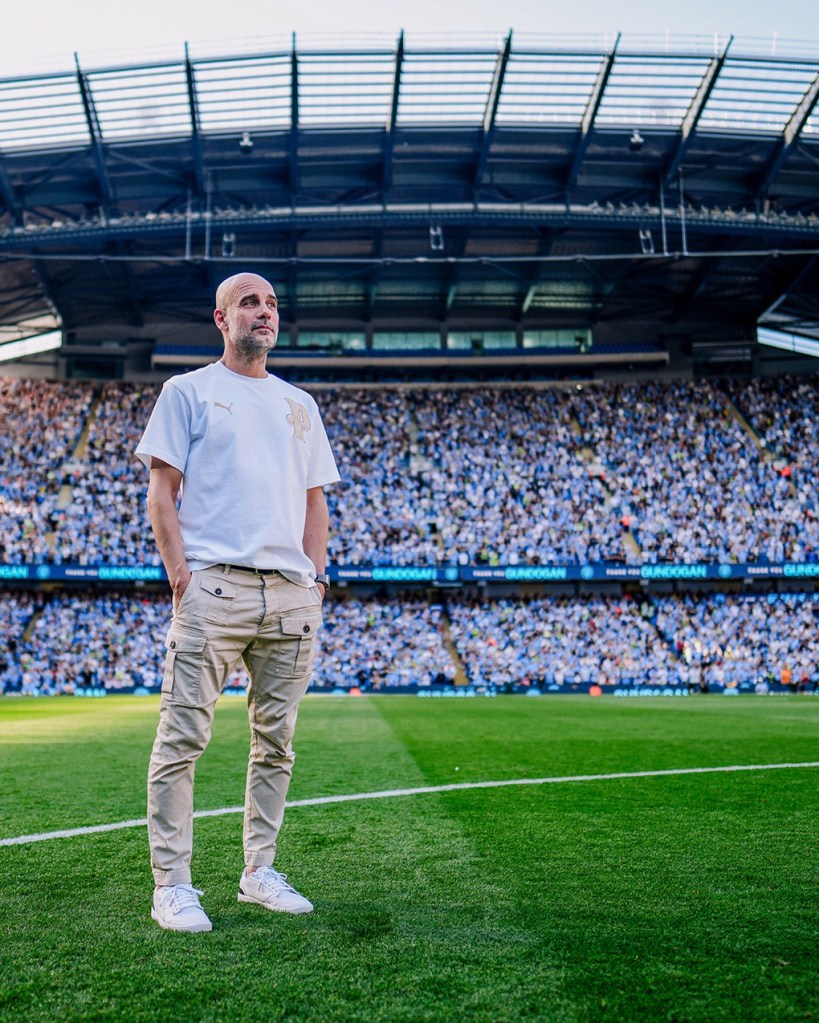
I posted the following the other day, but here is the last home crowd of 60,000+ City attracted at Maine Road (ignoring the Charlton 1985 promotion match which many think was around that figure). There’s also a little bit of history of capacities at City.
The last 60,000+ crowd was for the Manchester Derby on 6/11/1971 and was 63,326. These images are from that game (lots changed since then – the MCFC badge has been redesigned 3 times; Brian Kidd became a Blue, then a Red coach then a Blue coach)
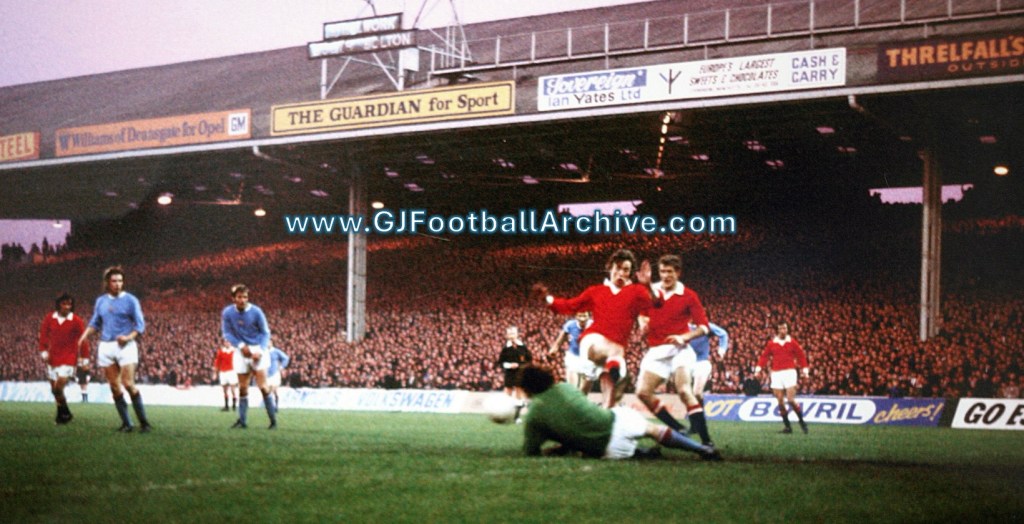
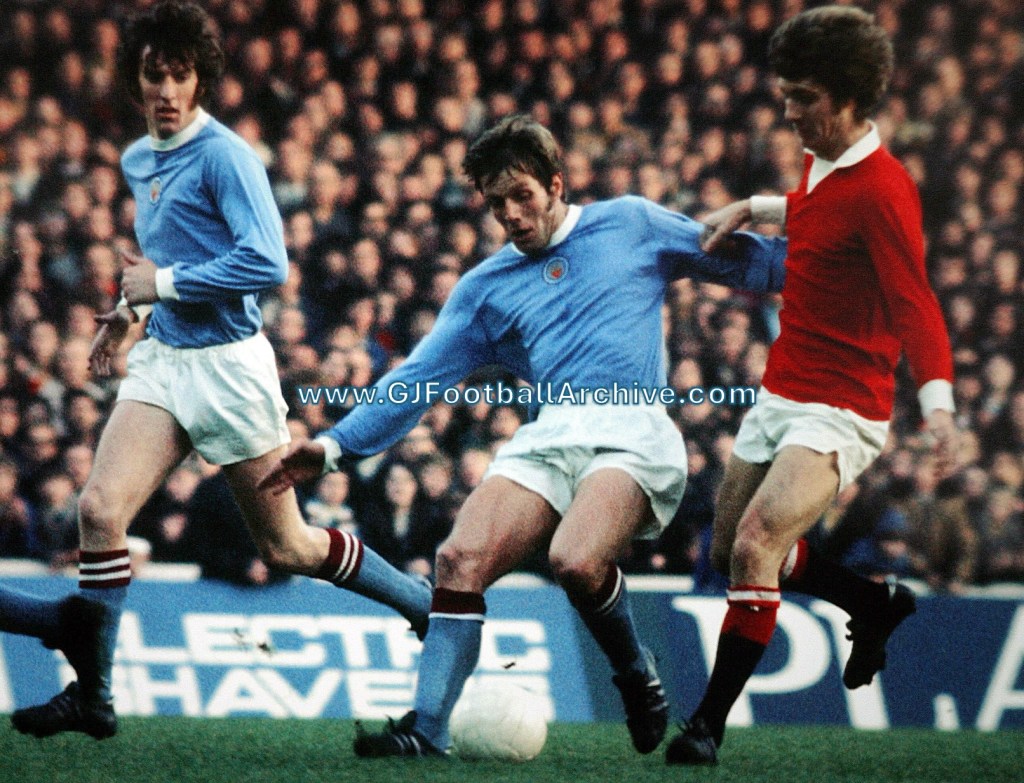
The last 60,000+ home cup attendance was 60,844 v Newcastle on 29/1/1969.
For those wondering about home attendances over 75,000, the last one of those was 76,129 for City ve Everton in the FA Cup on 3/3/1956.
For the first 49 years of its existence the capacity of Maine Road was over 60,000, with the record attendance at the old place being 84,569 (see the story of this elsewhere on this site). Stadium developments, alongside safety changes and legislation, reduced the capacity from that high to about 63,000 by 1967. The Ibrox disaster of 1971 caused a reconsideration of stadium safety and a further reduction and City took the decision to seat the one year old North Stand. That meant the capacity from 1972 was approximately 52,600 (there was an attendance of over 54,000 in 1972-73 which I’ll explain about another day based on an interview – and admission – by the then club secretary Bernard Halford!).
The capacity of Maine Road (based on official records and announcements) over the years is:
1923 – 84,000
1931 – 86,000
1935 – 88,000
1946 – 84,000
1953 – 76,500
1957 – 77,000
1963 – 64,000
1972 – 52,600
1989 – 48,500
1992 – 39,359
1994 – 19,150 (first game of the season; increased gradually throughout the season)
1995 – 31,458
1997 – 32,147
1999 – 34,026
2000 – 34,421
2002 – 35,150
You can read more about Maine Road’s record crowd here:
And watch Maine Road’s opening game in 1923 here:
Highest Attendance For Over Fifty Years
This weekend’s final Manchester City home game of the season will see the Etihad stage its record crowd for football (any sport actually) and the club stage its highest home attendance for over fifty years. The new capacity is expected to be over 60,000 with a further capacity increase at the start of 2026-27. Detailed below are the last home crowd of 60,000+ City have attracted plus a little bit of history of attendances at City.
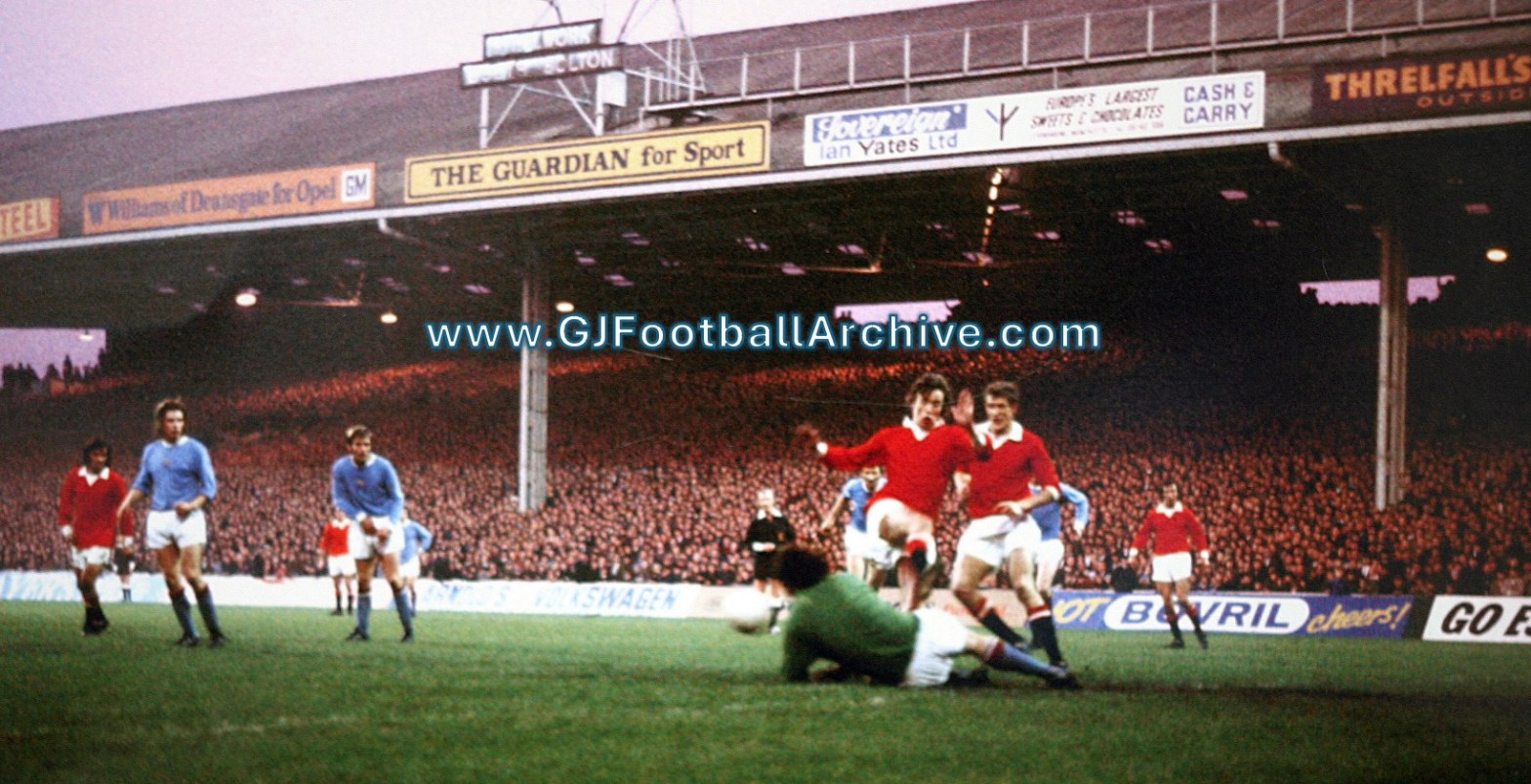
The last 60,000+ crowd was for the Manchester Derby on 6/11/1971 and was 63,326. These images are from that game (lots changed since then – the MCFC badge has been redesigned 3 times; Brian Kidd became a Blue, then a Red coach then a Blue coach)
The last 60,000+ home cup attendance was 60,844 v Newcastle on 29/1/1969.
For those wondering about home attendances over 75,000, the last one of those was 76,129 for City ve Everton in the FA Cup on 3/3/1956.
For the first 49 years of its existence the capacity of Maine Road was over 60,000, with the record attendance at the old place being 84,569 (see the story of this elsewhere on this site). Stadium developments, alongside safety changes and legislation, reduced the capacity from that high to about 63,000 by 1967. The Ibrox disaster of 1971 caused a reconsideration of stadium safety and a further reduction and City took the decision to seat the one year old North Stand. That meant the capacity from 1972 was approximately 52,600 (there was an attendance of over 54,000 in 1972-73 which I’ll explain about another day based on an interview – and admission – by the then club secretary Bernard Halford!).
The capacity of Maine Road (based on official records and announcements) over the years is:
1923 – 84,000
1931 – 86,000
1935 – 88,000
1946 – 84,000
1953 – 76,500
1957 – 77,000
1963 – 64,000
1972 – 52,600
1989 – 48,500
1992 – 39,359
1994 – 19,150 (first game of the season; increased gradually throughout the season)
1995 – 31,458
1997 – 32,147
1999 – 34,026
2000 – 34,421
2002 – 35,150
You can read more about Maine Road’s record crowd here:
And watch Maine Road’s opening game in 1923 here:
King Colin’s Crown
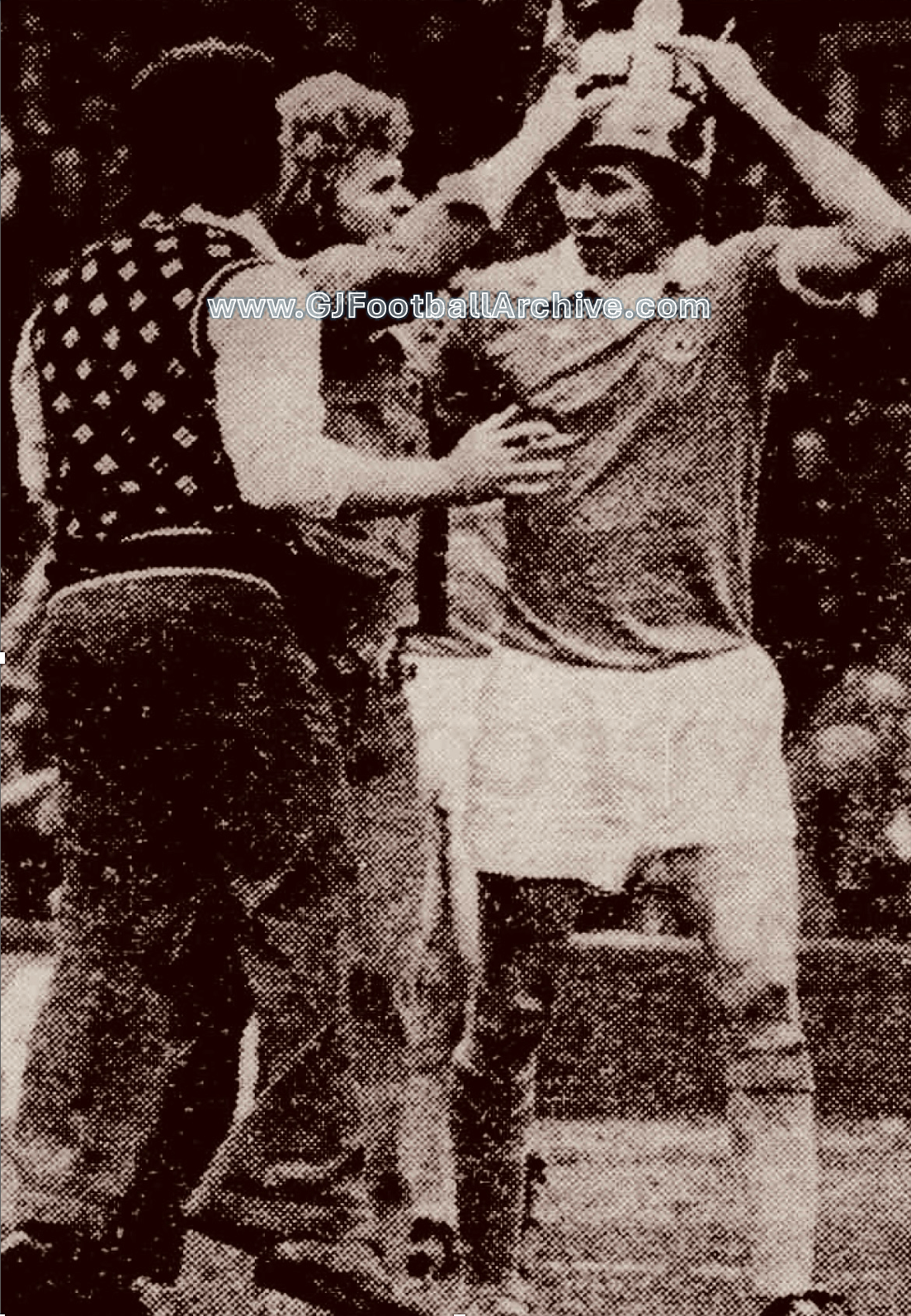
Today (10 April 2026) marks the 50th anniversary of the day City legend Colin Bell was crowned. The story has entered folklore about the day when a fan – Dave Brammer – ran on to the Maine Road pitch with a crown he had specially made for the occasion and placed it on the head of Colin as the player warmed up just before kick-off. This photo recently rediscovered captures the moment and you can read more about this remarkable day and see other photos of Colin in action that day below (this is a subscriber article – see below for details).
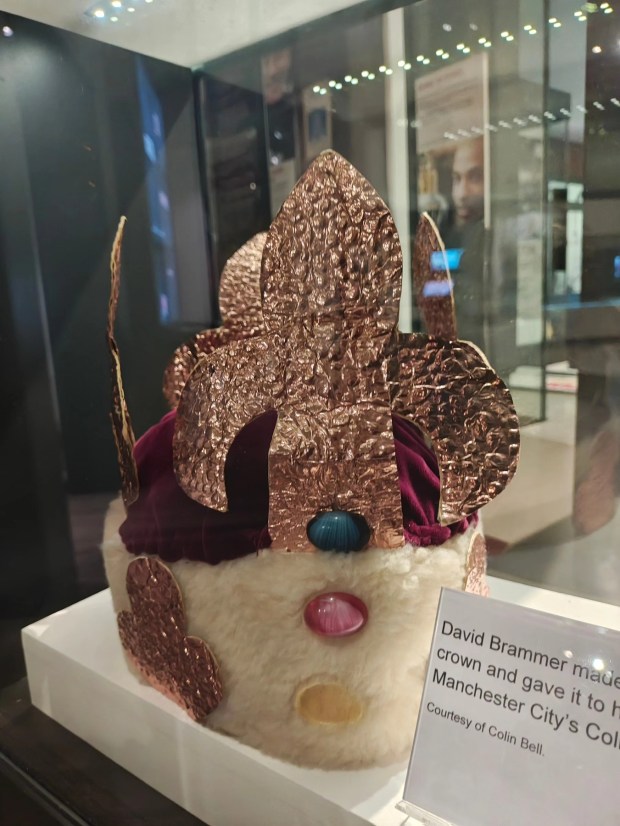
There’s also plenty of other stuff on Colin throughout the site so why not have a search and see what you can see?
Subscribe to access great content and support Gary’s research
If you want to read this full article or have enjoyed the free content on this site then why not subscribe? At the same time you’ll be supporting my research and writing (I’m not employed by anyone and my research/writing is self-funded). It costs £3 per month (cancel anytime) or sign up on an annual basis for the discounted rate of £20 per year. You’ll also get to read all content posted during your subscription. Thanks.
If you enjoy all the free material on my website and would like to support my research and keep this website going (but don’t want to subscribe) then why not make a one-time donation (or buy me a coffee). All support for my research is valued and welcome. It allows me to keep some free material available for all. Thanks.
Choose an amount
£2.50
£5.00
£7.50
Or enter a custom amount
£
Your contribution is appreciated.
Double The Crowd: Crerand’s Bet With Allison
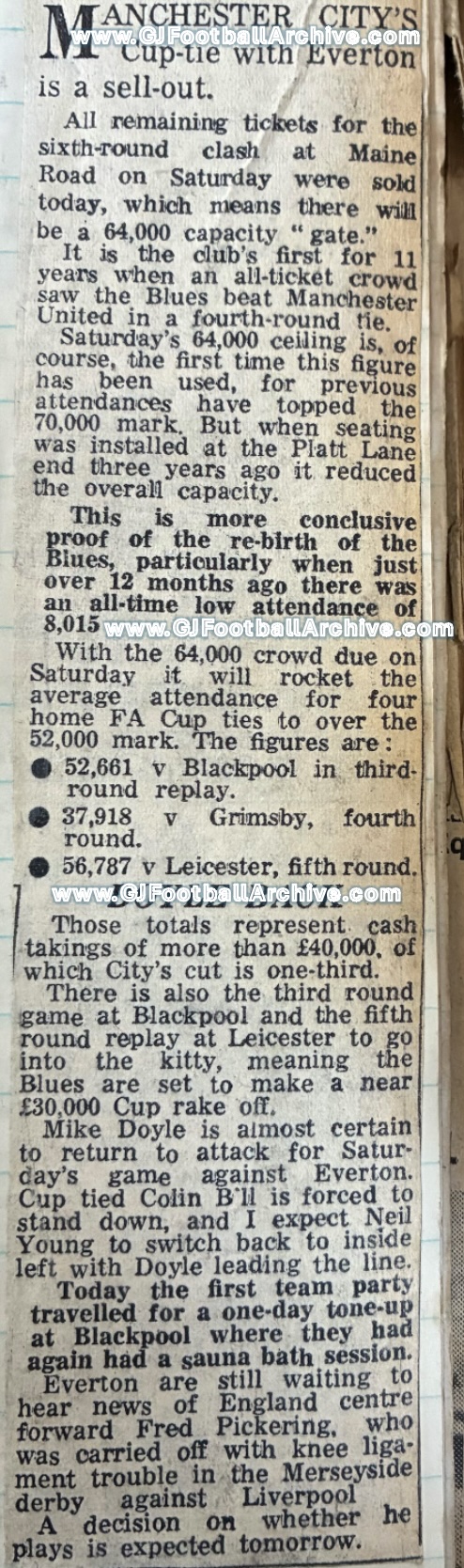
60 years ago this week (March 1966) Manchester City announced that their FA Cup quarter final was a 63,000 sell out. Why is this significant? Because the attendance was larger than any domestic crowd at Old Trafford that season, but why is that significant? Because at the start of the season United’s Pat Crerand bet City assistant manager Malcolm Allison that City would never get more than 30,000 for a game again! I interviewed Malcolm back in 1993 when we talked about this and he also mentioned it in he biography. The story…
Basically, Allison was sat at United’s League championship celebration and became somewhat frustrated by the glorification of United that night. While Joe Mercer took a diplomatic approach, afterall it was United’s celebration dinner, Allison decided to speak out. He told Matt Busby’s son Sandy that his dad had a twenty year start but ‘I’ll pass him in three’ and then Allison claimed he got into a discussion with Crerand about ‘little City’ compared to United. Allison claimed Crerand made a £10 bet with him that City would never again get 30,000+ in Maine Road.
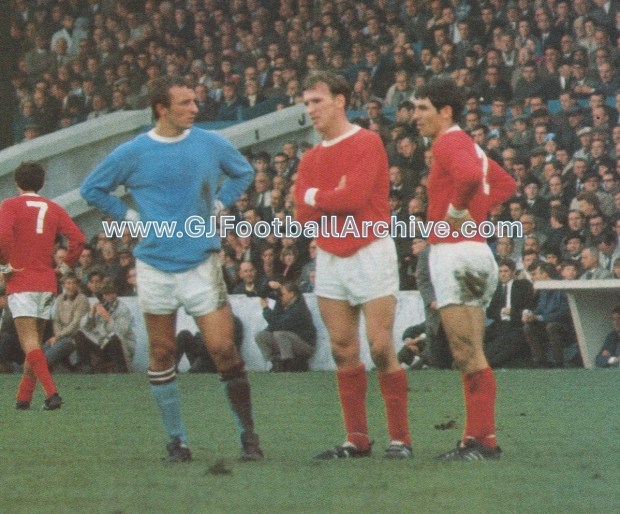
On a Wednesday night in October (27/10/65) City attracted 34,091 for the visit of Norwich in the Second Division. Allison told me he couldn’t remember whether he ever got his £10 but he did laugh a great deal when I told him that United’s attendance the previous Saturday was 32,716 for the top flight visit of Fulham.
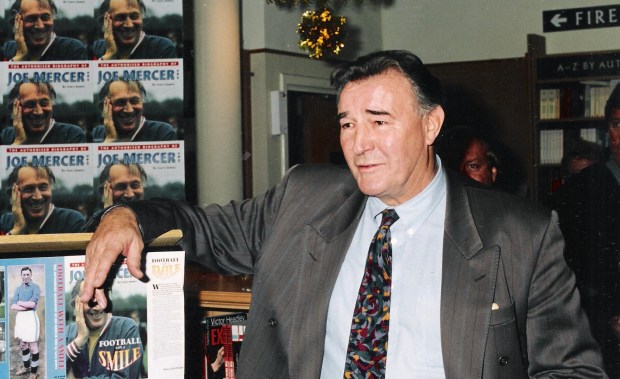
What was even more remarkable was that the City-Everton FAC tie on 26 March 1966 was watched by 63,034 and that was higher than any domestic crowd at United that season. Allison laughed again when we discussed that briefly. As a comparison, United attracted 58,161 for their League game with Liverpool (lowest home League attendance 23,039 v Aston Villa) and they did get 60,433 for their FAC Cup quarter-final replay with Preston. Plus United managed to better all these attendances with 64,035 for their European Cup quarter-final with Benfica.
I did an earlier interview with Allison that can be listened to here:
If you’re new to this website there’s lots more like this elsewhere on the site. Some is available for subscribers and some is available for all. If you’d like to subscribe then see see ‘How To Subscribe’ lower down. If not why not help keep it going and support the research too:
If you enjoy all the free material on my website and would like to support my research and keep this website going (but don’t want to subscribe) then why not make a one-time donation (or buy me a coffee). All support for my research is valued and welcome. It allows me to keep some free material available for all. Thanks.
Choose an amount
£2.50
£5.00
£7.50
Or enter a custom amount
£
Your contribution is appreciated.
102 Years of a National Crowd Record for Manchester City!

Today (8 March) marks the 102nd anniversary of a record Manchester City set – the record is the highest attendance on a club ground! The record set in 1924 saw 76,166 attend City v Cardiff. Keep reading all those who think ‘don’t you mean 84,569 in 1934?’ – City already held the record… City had moved to their new Maine Road stadium in August 1923. The capacity of the venue was estimated at around 90,000 but was actually approximately 83,000 when the stadium opened (it was enlarged in 1931 and 1935).
In its first season the capacity was tested and, on this day (8 March) in 1924 the largest attendance for any footballing fixture (including three FA Cup Finals) in Manchester gathered to watch the Blues. This was also, at the time, the record crowd for any game played on an English club ground. It was beaten ten years later when 84,569 watched City v Stoke – so It’s 102 years of this record for the Blues!
You can read about the remarkable day in 1924 below:
Subscribe to get access
Read more of this content when you subscribe today. It costs £20 a year (access to everything) or £3 per month (see below).
Subscribe to get access
Read more of this content when you subscribe today. It costs £20 a year (see above) or £3 per month (cancel anytime; access to everything posted since 1 October 2022).
You can read about the attendance that broke this record (again by City at Maine Road) here:
Other record crowd articles can be seen here:
Manchester City v River Plate at Maine Road
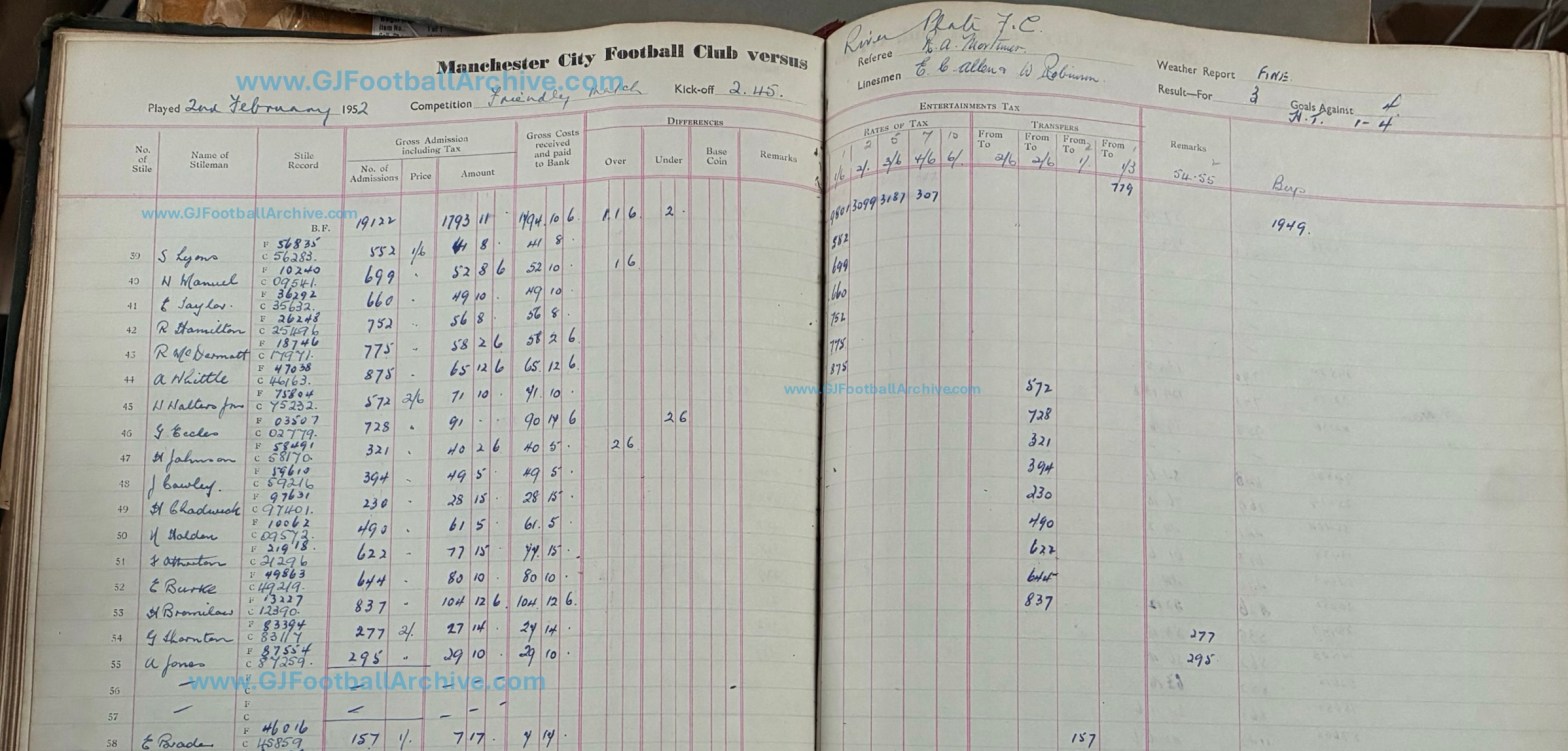
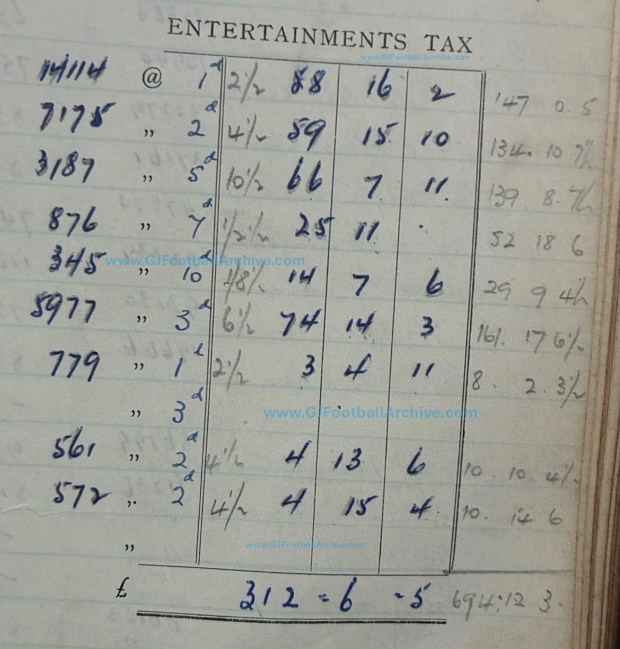
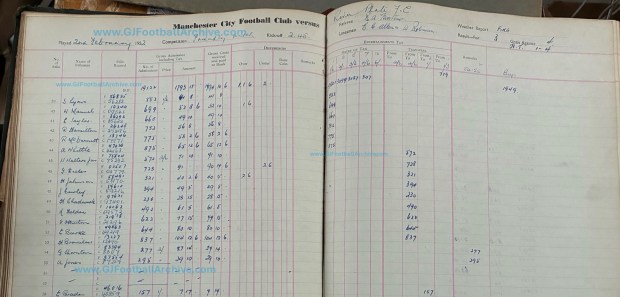
On 2 February 1952 Manchester City were defeated 4-3 by Argentinian football club River Plate in a friendly at Maine Road, watched by a crowd of 34,974. Here are some interesting images from an official record book showing details of entertainment tax paid by City and turnstile records. I’m not certain if anyone has ever researched how much money football clubs paid in entertainment tax over the years but if anyone’s interested then hopefully the following will help.
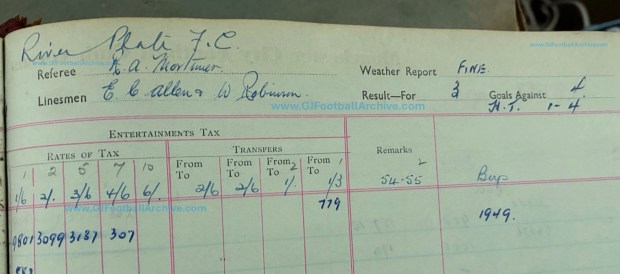
You can see from the above photo a few match details such as HT/FT scores, weather and referee details. In addition the various admission prices can be seen (not all shown on this image) and the record book also includes details of how many fans attended within these prices per turnstile. A summary of the attendance per price and the amount of tax paid can be seen in the next image:
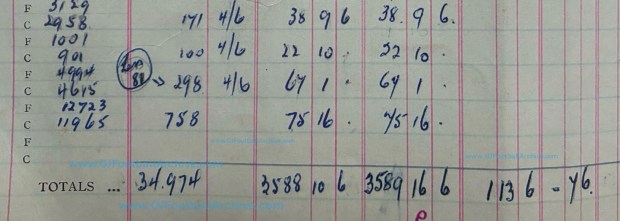
For the record City’s goals were scored by Don Revie, Jimmy Meadows and Roy Clarke. The two images below show the name of the turnstile operator and the admissions via that turnstile and the second image shows the total attendance and income details.
The series on the 1950s includes some free articles and some subscriber only features. If you’d like to know more on this period then why not subscriber and enjoy the following article on the 1951-52 season.
This is a subscriber article and you can read it by subscribing below.
Subscribe to get access
Read more of this content when you subscribe today. It costs £3 per month or you can subscriber for the discounted annual rate of £20 per year. Each subscriber gets access to everything posted so far, including PDFs of a couple of my books.
Manchester’s Support
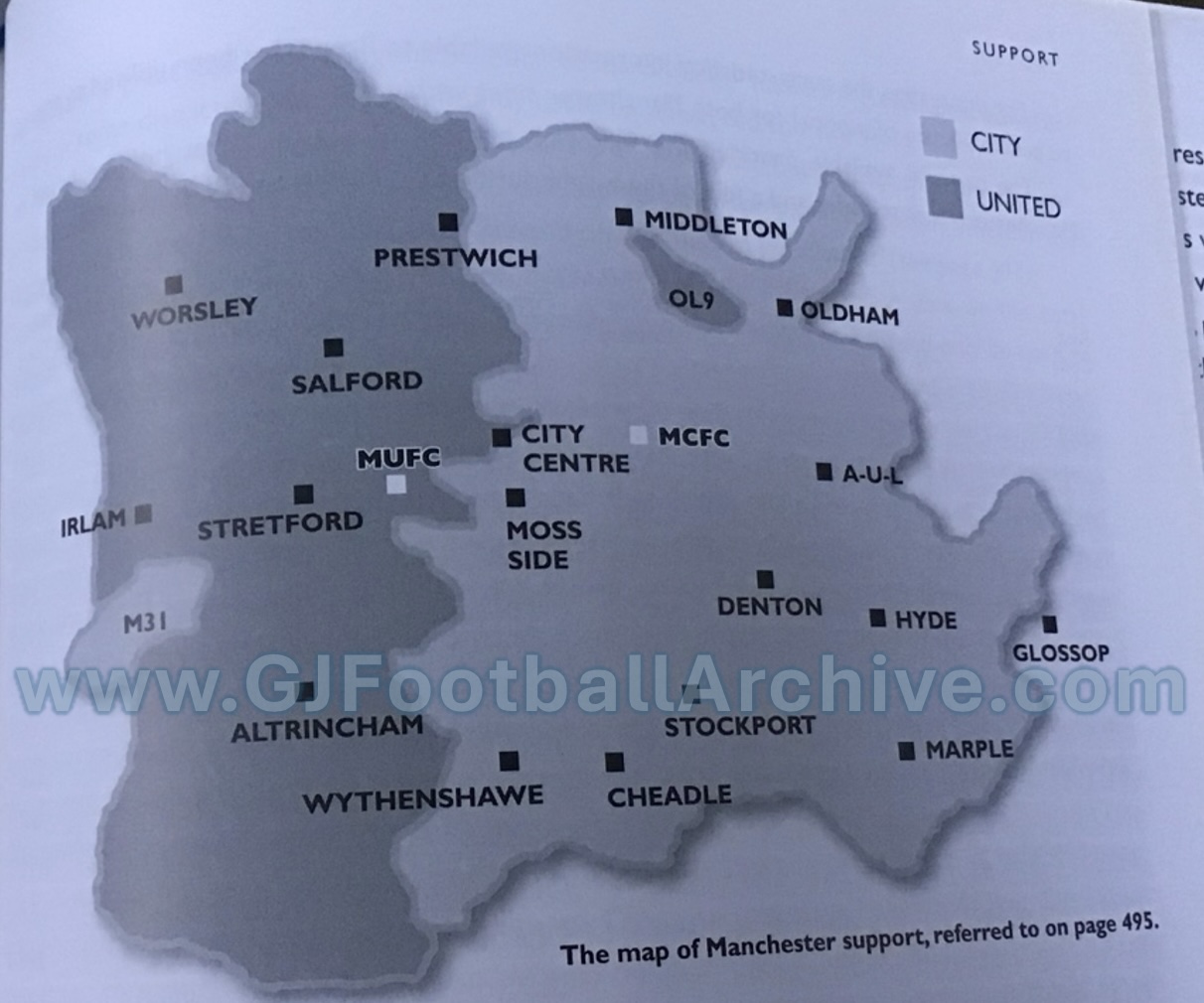
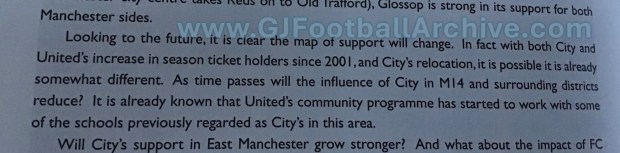
Here’s a map I published in my book Manchester A Football History. It shows the spread of support for both City and United across Manchester as recorded in an academic study back in 2002 (using data from 2001). Basically this was based on season ticket holders in each postcode area of Manchester and shows whether a postcode area was Red or Blue at that time. You can see that back then City had more season ticket holders in almost every district of the city centre and east Manchester while United tended to have more in western districts. However, this was based on the number of season ticket holders in 2001. Since then of course the numbers attending games at both clubs have increased significantly.
In my chapter I made a comment about how this analysis might change:
Top Two Divisions Attendances and Table From 40 Years Ago!

Last week I posted the top flight attendances for this last week forty years ago and this led to a number of comments/questions and so to answer some of those I’ve now posted the top two divisions attendances together with the two League tables AND the end of season average attendances. People asked for clarity on how the figures compared to the second tier and whether League position played its part in affecting crowds. As a reminder here’s last week’s attendances…

And here’s this week’s (published 24 November 1985) and the League table too.

Obviously, these are only snapshots from that season but to add a bit more context here are the end of season averages here are the top 46 best supported clubs in order that season (hopefully it might make those who sing songs like ‘Where Were You?’ think about the crowds at their own clubs first):

A few notable League positions for those who do sing ‘Where Were You?’… The top eight clubs in the League were: Liverpool (champions), Everton, West Ham, Man Utd, Sheff Wed, Chelsea, Arsenal and Forest. Manchester City (who were 4th best supported club) were 15th (only 4 points above relegation zone), Spurs were tenth, Newcastle 11th and Aston Villa 16th.
In the Second Division best supported club Sunderland were 18th (avoiding relegation by 4 points); the top four were Norwich, Charlton, Wimbledon and Portsmouth.
If you’d like to know more about Manchester City at this time, here’s a 2,500 word subscriber feature on the 1985-86 season. Enjoy!
Subscribe to get access – Monthly
Read more of this content when you subscribe today. It costs £3 per month (cancel anytime) to access everything posted since 1 October 2022 or there’s a special annual rate below which gives greater access and works out much cheaper.
Subscribe to get access – Annual
Read more of this content when you subscribe today. It costs £3 per month (above) or £20 a year (here) to access everything posted since the site was created in December 2020. This special rate works out about £1.67 a week and gives access to everything posted, including PDFs of 3 of my books.
If you’d like to know more about subscribing then see:

