Darren Beckford Tribute

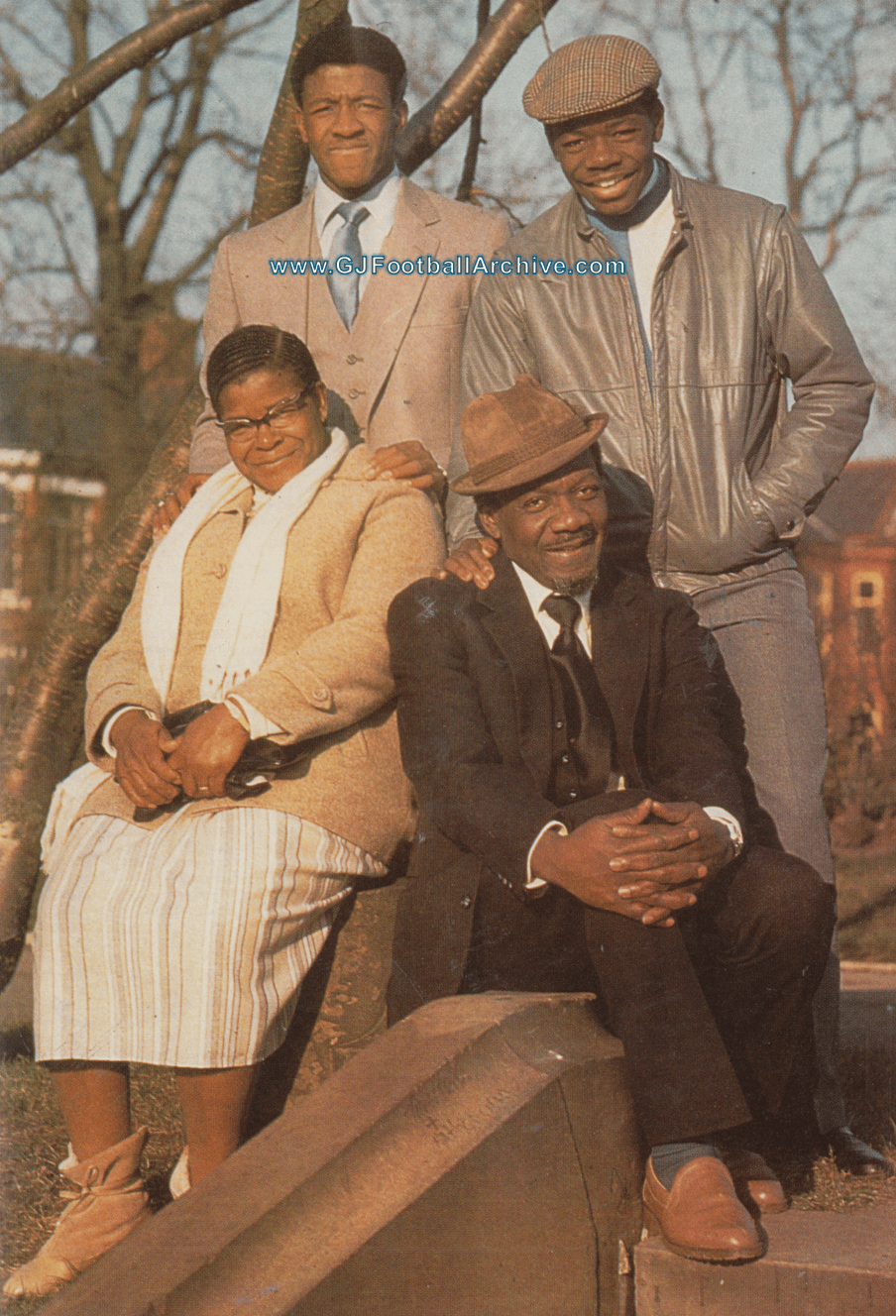
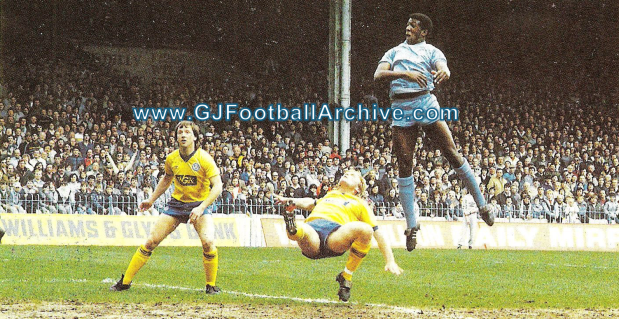
Yesterday came the news of Darren Beckford’s death at the age of 59. I wanted to pay a full and proper tribute to him but have only really had the chance today. Darren (seen in 1985 in the main photo taken by John Peters with his parents Val and Dudley and his brother Jason) was a supremely talented forward who attended Burnage High School before joining Manchester City as an apprentice on 16 April 1984. Less than four months later he was deservedly given a professional contract (1 August 1984) and on 20 October that year he made his first team debut, coming on as substitute for Gordon Smith in a 2-1 defeat at Middlesbrough. A fortnight later he came on again (for Graham Baker) in a goalless game at Brighton and on 8 April 1985 he made his first start in a 2-1 defeat at home to Leeds at Maine Road (John Peters photo below).
When I interviewed Darren’s brother Jason a few years back we talked about the Beckfords early sporting interests: ‘Darren and I were mad about any sport as kids – football, cricket, basketball… anything that had a ball really. Back then we just played and played and because Darren’s a couple of years older than me I always seemed to play with him and his mates, not my age group. We played in the street for hours and, I guess where we were different to some of the other lads is that we stayed out for ages after they’d all gone in.’

I asked Jason about the brothers’ footballing support: ‘You tend to get your first interest from your parents. If they take you to a club it becomes part of you, but my parents weren’t really football people. My dad loved his sport but he was more into cricket. Me and Darren loved football but we didn’t get chance to go and didn’t really have any allegiance until we signed schoolboy forms with City. It was just the way it was. We loved playing football but didn’t get the chance to watch it.’

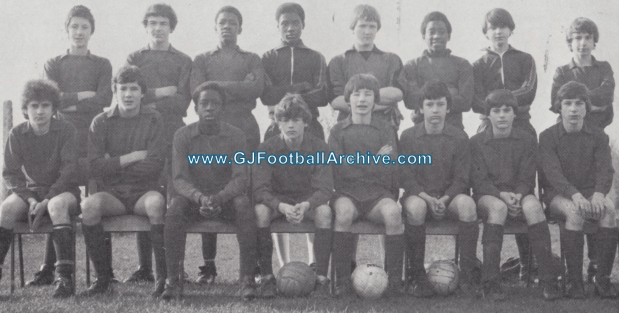
Darren excelled at sport and he represented his city playing football for Manchester Boys (14 year old Darren can be seen in the Manchester Boys lineup on the image below: back row, 3rd from left) and also represented the North West at basketball. In fact he had to make a tough decision as to which sport he focused on and, fortunately for us, he chose football. He made eight England under-15 appearances at soccer and excelled as a youth player with the Blues too.
There was a period where his goalscoring for the youth team gained a few headlines, and made many City fans notice his talent. He netted three hat-tricks in four FA Youth Cup ties during 1984-85 and twice that season he netted four goals in an A team match. Inevitably, he was leading scorer for both the Reserves and City’s A team that season. The following season he scored 24 goals for A team. For all of us who attended first team, reserve or youth games back then the name Darren Beckford was regularly being spoken. I remember desperately wanting him to have a sustained run in the first team but the difficulties of this era meant those chances came few and far between. Darren never got the run of games that some of us felt he deserved to allow him to adjust to the demands of the League. Worth remembering that these were difficult days for City with the team he debuted in being desperate for promotion from the second tier, then 1985-1987 fighting for survival in the top tier. Not necessarily the best place for an attack-minded player to get his grounding.

During the 1984-85 season Tottenham had contacted City about buying Darren and his teammate Paul Moulden. Put across as a ‘name your price’ offer, City rejected the bid. We were all relieved. We saw these guys, Paul Simpson, and the others we knew were developing in the youth team as ‘our’ team. I was a similar age to them all and I was a teenager standing on the Kippax supporting the team. Whenever a player from the youth team made their debut they tended to be either my age or slightly older/younger and, because of that, I always felt they were like me (except they could play football!). Darren was, to use a modern expression, ‘one of our own’, as was Paul Moulden, Paul Simpson and those that followed like David White, Paul Lake and Ian Brightwell. It always felt, to me at least, that our future needed these young players and if City ever sold them it would be a foolish act. These guys were tipped for greatness and Darren was already within the England system, going to Lilleshall and in the youth squad.

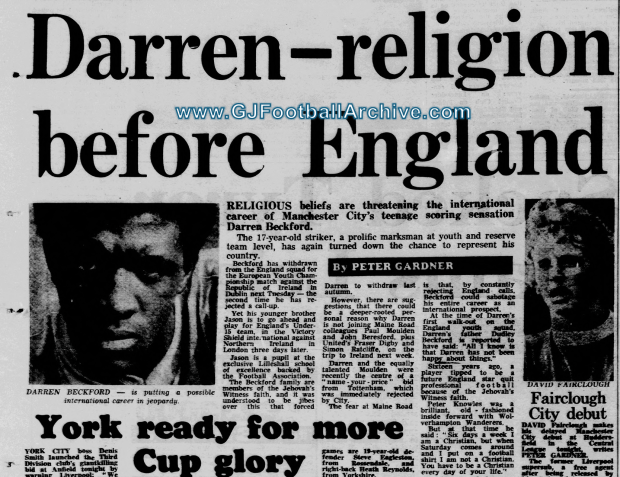
In February 1985 Darren made the headlines when he withdrew from the England Youth squad. Religious reasons were cited at the time. It seemed to shock many but others respected his decision.
In 1986-87 Darren was again top scorer in the reserve team with 11 goals. His last first team game for City came on 24 January 1987, a goalless draw at Wimbledon which also Paul Lake’s first team debut.

A spell on loan at Bury came in October 1985, where he gained some valuable experience and on 26 March 1987 he went on loan at Port Vale. The loan went well and on 25 June 1987 they made the move permanent, bringing to an end his Manchester City career. Darren’s most successful spell of his career came at Port Vale where he was signed permanently for a modest £15,000—a fee raised in part by fans doing bucket collections! He established himself as an electric and dominant striker, helping the club secure promotion to the Second Division via the play-offs in 1989 and finished as Port Vale’s top scorer for four consecutive seasons. In total, he scored 81 goals in 214 appearances for the club. This included a memorable goal in the FA Cup against City. I was there at Vale Park that day (this was the year we were convinced City’s name was on the cup. How wrong we were!). You can see his equaliser on this video (after about two minutes) but there’s also a great defensive moment from him earlier, plus the highlights are well worth watching to get a feel for how we all felt that day, plus to see Darren’s goal (top of the net and a good celebration).

A move to Norwich City followed (£925,000 – Vale’s record sale at the time) but he suffered with injuries while there. The main highlight of his time at Carrow Road was a crucial hat-trick against Everton that preserved Norwich’s top-flight status during the 1991–92 season.

On 24 March 1993 Darren was sold to Premier League side Oldham Athletic for £300,000, where he scored some vital top-flight goals for the Latics. He recorded 17 goals in 52 appearances before a severe hamstring injury halted his momentum and led to his release in 1996.

After leaving Oldham, he moved north to Scottish club Heart of Midlothian, where he helped them reach the 1996 Scottish League Cup final, scoring twice during his stay. A succession of brief, short-term spells at a variety of clubs including Fulham, Rushden & Diamonds, Preston North End, Walsall and Total Network Solutions followed before he retired in 1998.

The news of Darren’s death yesterday was an absolute shock and my thoughts remain with his family, friends and of course Jason. I think it’s worth ending this piece with the words from Once A Blue, the Manchester City Former Players Association. They commented on his death: ‘We are truly devastated at the news that one of our own, Darren Beckford, has sadly passed away at the age of 59. Raised in Ancoats and Longsight, Darren was a product of Manchester City’s youth system and made his senior debut against Middlesbrough in October 1984.

‘An athletic striker with a keen eye for goal, he played 12 times for the Blues before continuing his career at Port Vale, Norwich City and Oldham Athletic, among others. He made a total of 324 appearances as a professional footballer, accruing a tally of 100 goals. Darren’s younger brother Jason followed in his footsteps, playing for City between 1987 and 1991. The pair attended the Etihad together earlier this season to watch City v Norwich and both enjoyed this year’s Once A Blue Man City summertime catch-up in Manchester city centre (See image from Once A Blue below).
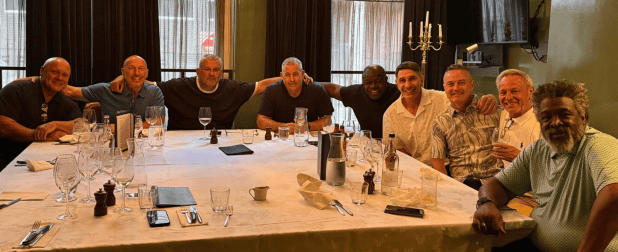
‘Jason would like to express his gratitude to the staff at The Christie NHS Foundation Trust for all their care and compassion, and would also like to thank Maggie’s Centres Manchester for providing invaluable advice and support to the Beckford family. On behalf of everyone at Once A Blue, may we offer our heartfelt condolences to Darren’s friends, family and team-mates as they come to terms with this huge loss. Rest in peace, Daz. You will never be forgotten Once a Blue, Always a Blue’
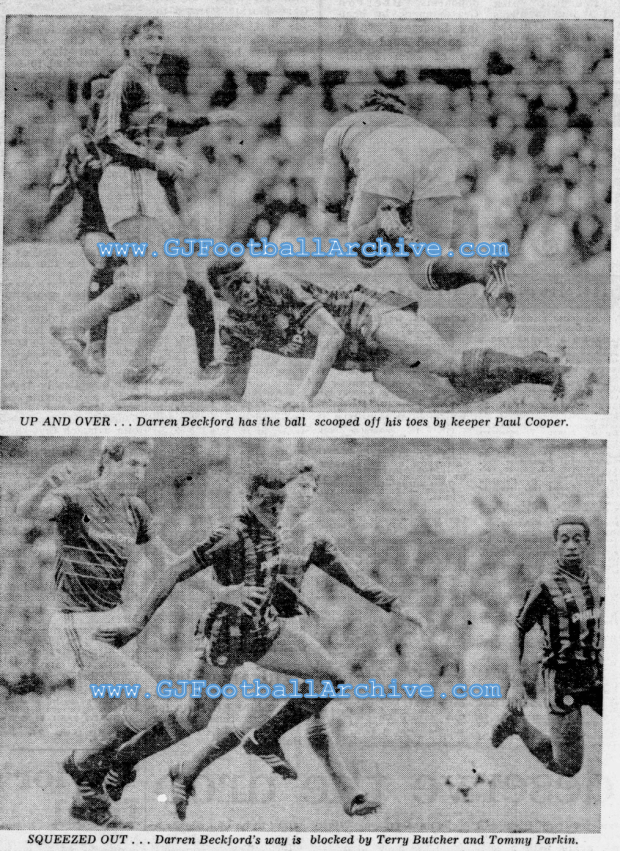
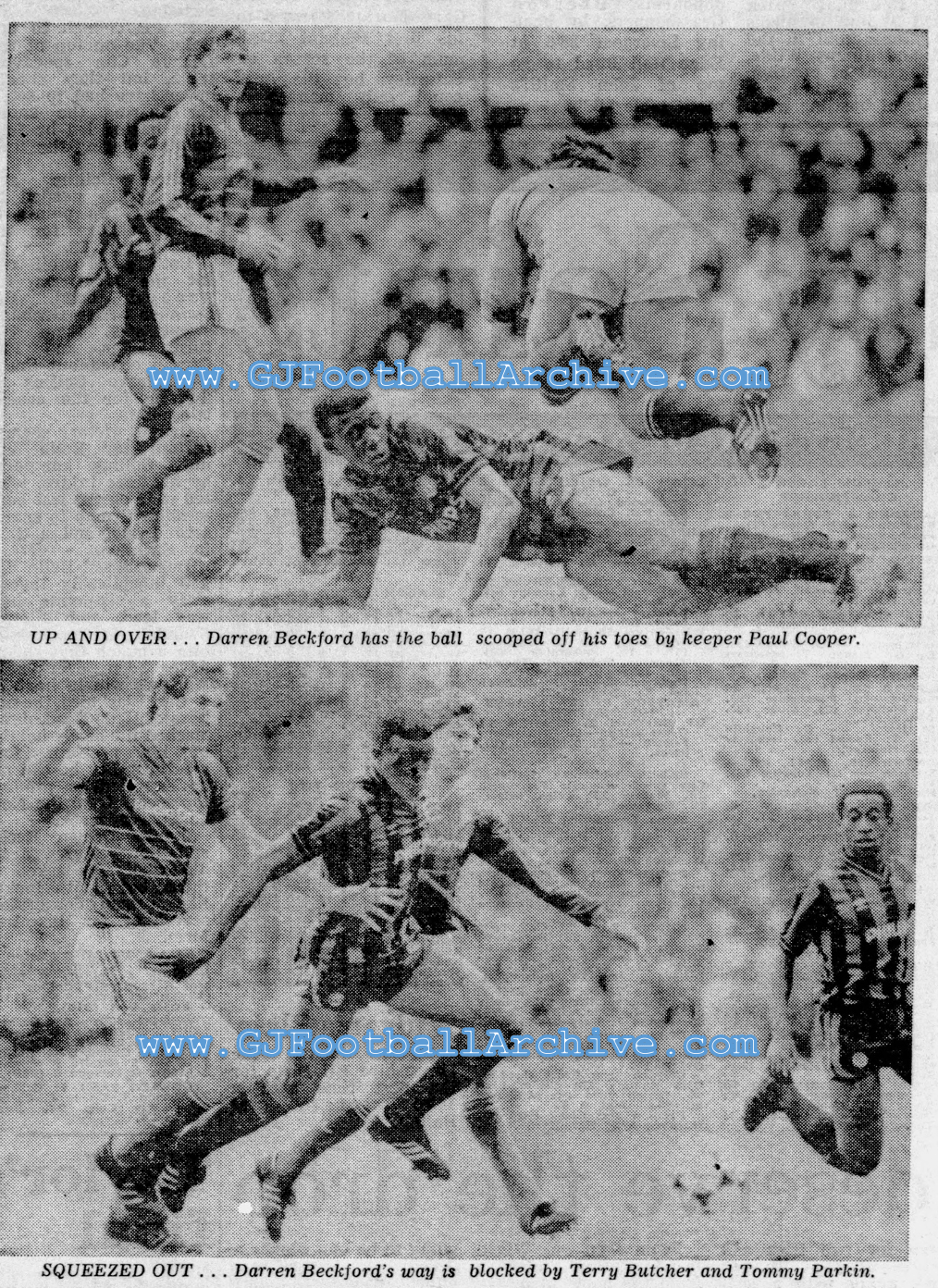
Darren Beckford in action, April 1985 Ipswich 0 City 0

Darren Beckford

I’ve just heard the news of Darren Beckford’s passing at the age of 59. Darren played for a variety of clubs but began his career with Manchester City and spent four years at Oldham Athletic. he also had two spells at Bury. My thoughts are with his family, friends and of course his brother Jason.

Darren was born on 12 May 1967 and became a forward with City, making his debut as substiture iv Middlesbrough in October 1984. His full debut came at Leeds on 8 April 1985.

In total he made 12 appearances in City’s first team. He joined Oldham in March 1993 and was with them until February 1997.

Throughout his time at City he was much loved by fans who hoped that he’d get a decent run in the first team. In the reserves and youth teams his skills were clear but some of the managerial change and player churn at City meant his first team chances were limited.

Of course Darren’s most successful spell of his career came at Port Vale. Signed permanently for £15,000—a fee raised in part by fans doing bucket collections—he established himself as an electric and dominant striker. He helped the club secure promotion to the Second Division via the play-offs in 1989 and finished as Port Vale’s top scorer for four consecutive seasons. In total, he bagged 81 goals in 214 appearances for the club.

Goal Flood

On this day twenty years ago (1 November 2004) Willo Flood netted the only League goal of his Manchester City career. It came from a strike on the edge of the area in a 1-1 draw with Norwich. He had previously scored in a League Cup tie, but this was the only League goal in 14 League games for the Irishman. You can see the goal below:

Flood’s goal was the City opener but Norwich equalised 12 seconds into the second half.

50 Years Ago Today: A Win At Norwich

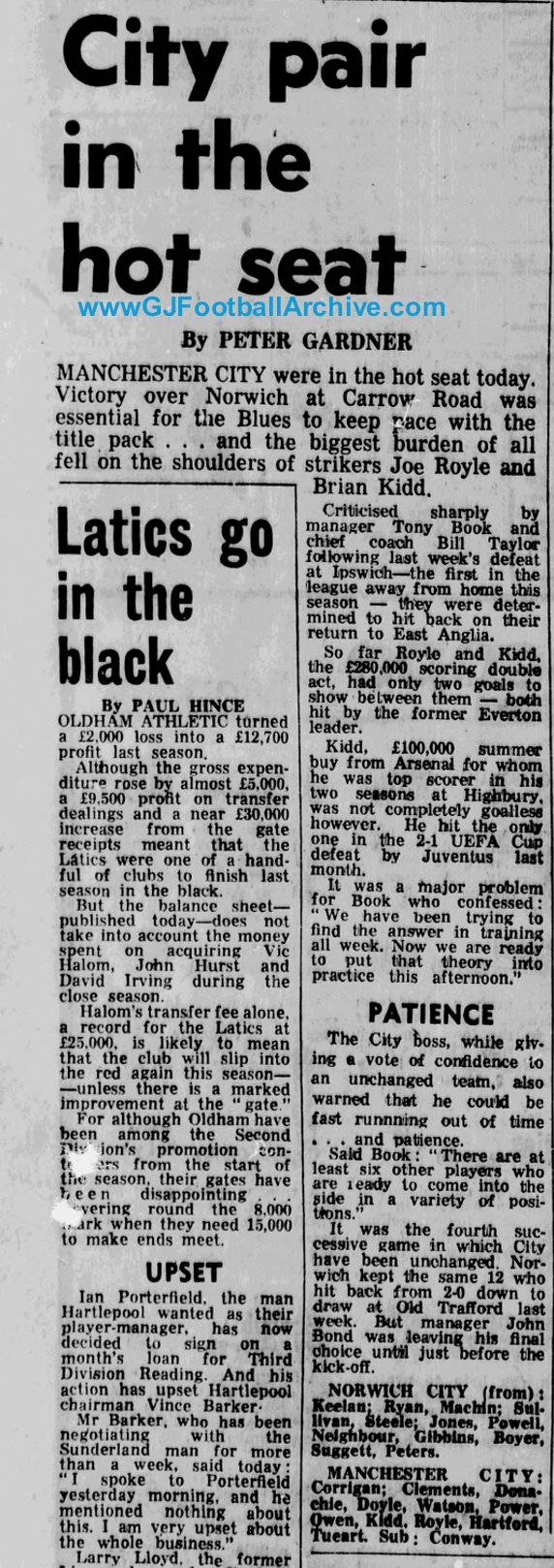
After a 1-0 defeat at title-hopefuls Ipswich Manchester City faced Norwich on this day (30 October) in 1976. City’s lack of goals in previous games had caused a little concern to manager Tony Book, and he asked coach Bill Taylor to take target men Joe Royle and Brian Kidd, together with Dennis Tueart, for some special training. Book commented afterwards: ‘The causes for the lack of success were discussed very sensibly, and the main lesson learned was that both players had made life more difficult for themselves by attempting to do each other’s job.’

He added: ‘I had in mind that, if the week’s work did not provide signs of improvement, then the attack would be re-adjusted but not necessarily by the omission of both players from the side. As it happened, all came well at Norwich, I do not simply refer to the late goals they grabbed which gave us the 2-0 victory. The display was vastly improved, and even had they failed to get on the scoring sheet at Carrow Road I knew there was enough in their work and the way their talents were being harnessed that justified me having patience for a little longer.’

Kidd netted the opening goal in the 87th minute and Royle made it 2-0 a minute later. The 2-0 win placed City second, three points behind Liverpool, but more significantly the win was the first of an undefeated run of 17 League and Cup games.

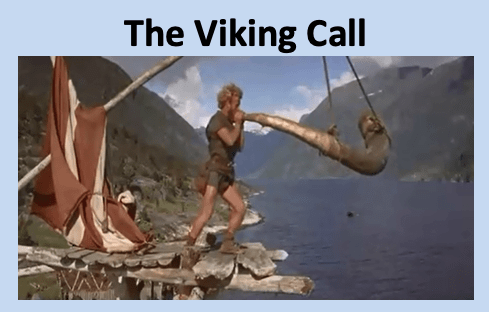
Off the pitch the two games away in East Anglia were noteworthy for the appearance of a new chant on the terraces. After the film The Vikings, starring Tony Curtis and Kirk Douglas, had appeared on TV in London, a few days before the Ipswich game, and in Granadaland a few days before the Norwich match, several fans adapted the famous Viking Call used in the film to call out ‘CCC-IIII-TTT-YYY’. Over the months that followed the chant grew in popularity with the words ‘The best team in the land, and all the world’ eventually added. It remains a popular match day chant. More on this here:

You can also read more on this season if you subscribe to the website. Here’s a 2,100 word article on the entire 1976-77 season – a season which saw City come close to League success. 

Subscribe to get access – Monthly

Read more of this content when you subscribe today. It costs £3 per month (cancel anytime) to access everything posted since 1 October 2022 or there’s a special annual rate below which gives greater access and works out much cheaper.

Subscribe to get access – Annual

Read more of this content when you subscribe today. It costs £3 per month (above) or £20 a year (here) to access everything posted since the site was created in December 2020. This special rate works out about £1.67 a week and gives access to everything posted, including PDFs of 3 of my books.

If you’d like to know more about subscribing then see:

50 Years Old Today: The “Best Team in the Land and all the World” Chant

On this day (23 October) in 1976 Manchester City fans first did their ‘Viking Call’. The chant eventually evolved into ‘The best team in the land and all the world’ but for some time was basically City fans doing a C-iii-ttt-yy chant to the first part of the song. You can hear the song and find out its story in this talk I did in 2022 (if you don’t want to watch the full talk, jump to about 23mins 40 seconds for the Viking Call story):

https://wordpress.com/post/gjfootballarchive.com/5329

I’ve also posted an article on the Manchester City website here telling the story:

https://www.mancity.com/news/mens/the-birth-of-a-chant-63928339

MCFC Fans Attack Stretford Mayor Believing Him To Be Referee!

This is an unusual tale from this day (9 September) in 1965. On that day Manchester City’s game with Norwich was abandoned at half time due to a waterlogged pitch. Norwich had taken an early lead via a Ron Davies header.

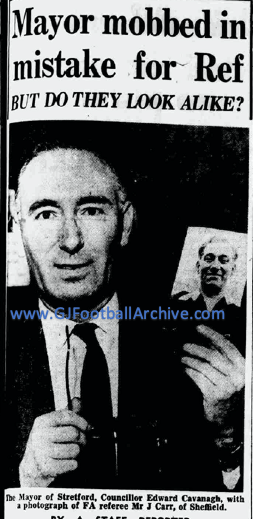
Neil Young equalised for the Blues in the 37th minute and fans had been hopeful of a win but referee Jim Carr (Sheffield) abandoned the match stating: ‘The lines were not visible. In seven seasons on the list, I can’t remember a ground in this state at this time of year.’

Journalist Peter Gardner thought the ref had made a mistake as conditions seemed to be improving. Many fans agreed and after the abandonment several confronted a man they believed to be the ref but it was actually Stretford mayor Edward Cavanagh. He claimed about 300 people confronted him as he headed for his car. A woman apparently kicked a councillor who was with him and the ‘mob’ started to bang on his car too!

The story made the papers. The replay ended in a goalless draw before over 34,000 on 27 October.

Sponsorship Arrives

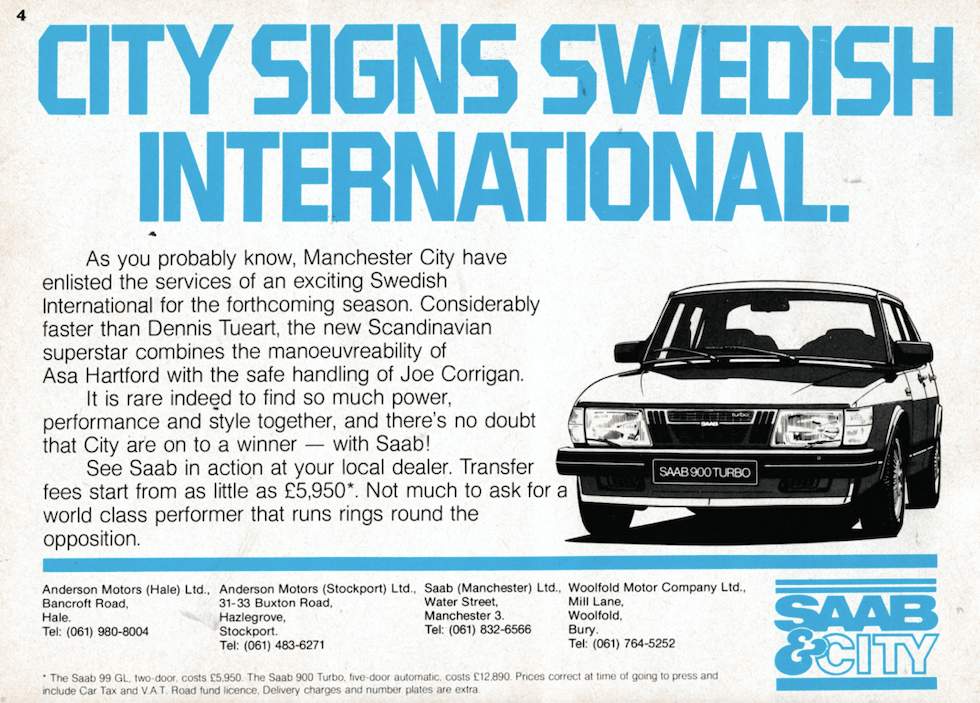
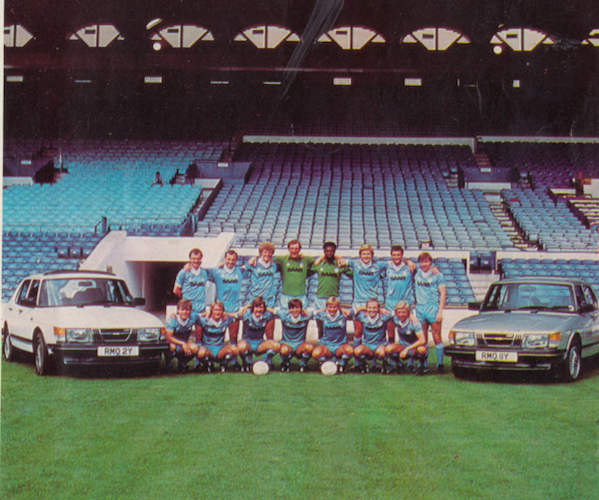
On this day (28 August) in 1982 Manchester City should have played their first League game with a sponsor’s name on their shirt. However the match was televised and in those days TV did not allow clubs to wear sponsors names in televised games. The match was a 2-1 win away at Norwich and City’s first sponsor was the car company Saab.

New signing David Cross scored the opener after 3 minutes and 5 seconds (below) and we all thought this was going to be a great season. I won’t spoil it by saying what happened the following May!

New signing David Cross scoring after 3 minutes and 5 seconds at Norwich, August 1982

Double The Crowd: Crerand’s Bet With Allison

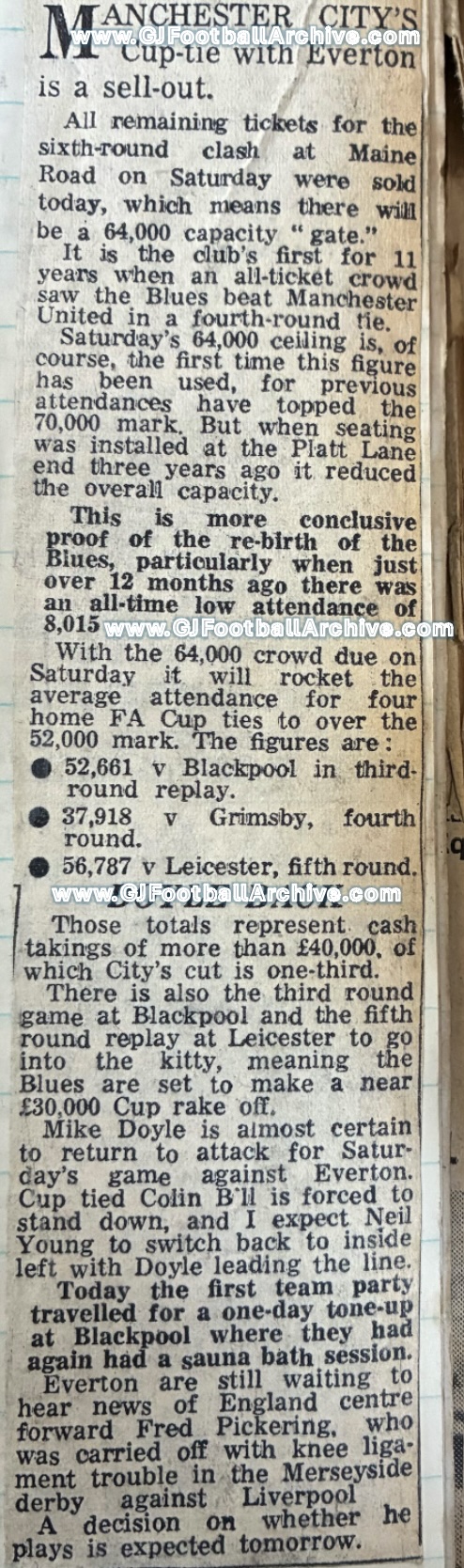
60 years ago this week (March 1966) Manchester City announced that their FA Cup quarter final was a 63,000 sell out. Why is this significant? Because the attendance was larger than any domestic crowd at Old Trafford that season, but why is that significant? Because at the start of the season United’s Pat Crerand bet City assistant manager Malcolm Allison that City would never get more than 30,000 for a game again! I interviewed Malcolm back in 1993 when we talked about this and he also mentioned it in he biography. The story…

Basically, Allison was sat at United’s League championship celebration and became somewhat frustrated by the glorification of United that night. While Joe Mercer took a diplomatic approach, afterall it was United’s celebration dinner, Allison decided to speak out. He told Matt Busby’s son Sandy that his dad had a twenty year start but ‘I’ll pass him in three’ and then Allison claimed he got into a discussion with Crerand about ‘little City’ compared to United. Allison claimed Crerand made a £10 bet with him that City would never again get 30,000+ in Maine Road.

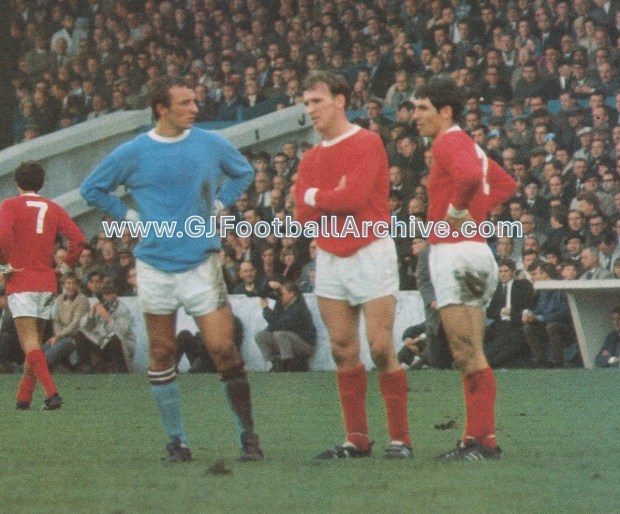
A pause in the action (September 1967 Manchester derby) gives Summerbee Crerand and Dunne an opportunity to debate the action so far (Image: The Pride of Manchester, 1991)

On a Wednesday night in October (27/10/65) City attracted 34,091 for the visit of Norwich in the Second Division. Allison told me he couldn’t remember whether he ever got his £10 but he did laugh a great deal when I told him that United’s attendance the previous Saturday was 32,716 for the top flight visit of Fulham.

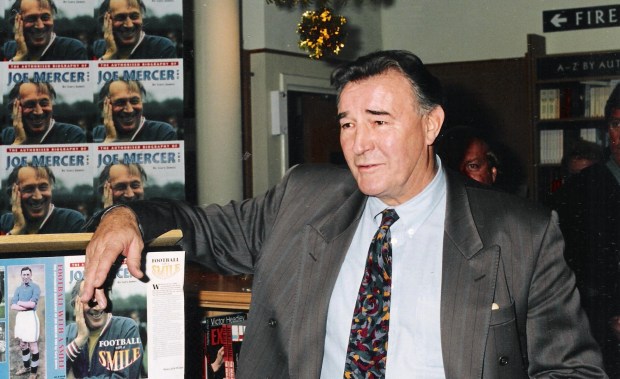
Malcolm Allison at the launch of Gary James’ Football With A Smile: The Authorised Biography of Joe Mercer, OBE in December 1993. Note Francis Lee appearing behind Allison.

What was even more remarkable was that the City-Everton FAC tie on 26 March 1966 was watched by 63,034 and that was higher than any domestic crowd at United that season. Allison laughed again when we discussed that briefly. As a comparison, United attracted 58,161 for their League game with Liverpool (lowest home League attendance 23,039 v Aston Villa) and they did get 60,433 for their FAC Cup quarter-final replay with Preston. Plus United managed to better all these attendances with 64,035 for their European Cup quarter-final with Benfica.

I did an earlier interview with Allison that can be listened to here:

If you’re new to this website there’s lots more like this elsewhere on the site. Some is available for subscribers and some is available for all. If you’d like to subscribe then see see ‘How To Subscribe’ lower down. If not why not help keep it going and support the research too:

City 6 Norwich 0

On this day (24 January) 1981 John Bond’s Manchester City defeated his former club Norwich 6-0 in the FA Cup fourth round tie. Subscribers can read a report and watch highlights here:

Subscribe to get access

If you would like to read this and all the other great content on here then please subscribe. Annual subscribers (£20 per year, sign up here) get access to everything posted on the site including PDFs of 2 of my out of print books and archived content like my exclusive audio interviews with John Bond, Malcolm Allison etc. Not only that but you’ll be helping to support this site’s development.

Subscribe to get access

If you would like to read this and all other great content on here then please subscribe. Monthly subscribers (£3 per month, cancel anytime and sign up here) get access to everything posted on the site since 1 October 2022. Not only that but you’ll be helping to support this site’s development.

Top Two Divisions Attendances and Table From 40 Years Ago!

Last week I posted the top flight attendances for this last week forty years ago and this led to a number of comments/questions and so to answer some of those I’ve now posted the top two divisions attendances together with the two League tables AND the end of season average attendances. People asked for clarity on how the figures compared to the second tier and whether League position played its part in affecting crowds. As a reminder here’s last week’s attendances…

And here’s this week’s (published 24 November 1985) and the League table too.

Obviously, these are only snapshots from that season but to add a bit more context here are the end of season averages here are the top 46 best supported clubs in order that season (hopefully it might make those who sing songs like ‘Where Were You?’ think about the crowds at their own clubs first):

A few notable League positions for those who do sing ‘Where Were You?’… The top eight clubs in the League were: Liverpool (champions), Everton, West Ham, Man Utd, Sheff Wed, Chelsea, Arsenal and Forest. Manchester City (who were 4th best supported club) were 15th (only 4 points above relegation zone), Spurs were tenth, Newcastle 11th and Aston Villa 16th.

In the Second Division best supported club Sunderland were 18th (avoiding relegation by 4 points); the top four were Norwich, Charlton, Wimbledon and Portsmouth.

If you’d like to know more about Manchester City at this time, here’s a 2,500 word subscriber feature on the 1985-86 season. Enjoy!

Subscribe to get access – Monthly

Read more of this content when you subscribe today. It costs £3 per month (cancel anytime) to access everything posted since 1 October 2022 or there’s a special annual rate below which gives greater access and works out much cheaper.

Subscribe to get access – Annual

Read more of this content when you subscribe today. It costs £3 per month (above) or £20 a year (here) to access everything posted since the site was created in December 2020. This special rate works out about £1.67 a week and gives access to everything posted, including PDFs of 3 of my books.

If you’d like to know more about subscribing then see: