Every week I’m posting a section from my book ‘The Emergence of Footballing Cultures: Manchester 1840-1919’. It tells the story of the origins of men’s football in Manchester and discusses the birth of both City and United plus the clubs that predated them such as Hulme Athenaeum, Manchester AFC, Birch etc. Today’s section is the eighth chapter of the book (a 11,200 word section). This focuses on the establishment of Manchester United and demise of Newton Heath, plus the first major trophy won by one of the city’s clubs. Fans of both Manchester’s League teams should find something in it for them as it talks of how Manchester gained its footballing identity. Bury fans will also be happy as this talks of their FA Cup successes too.
Subscribing costs £3 per month (cancel anytime) or you could sign up for a year at the discounted price of £20 per year. Every subscriber gets access to everything posted on the site.
Subscribe to get access
Read more of this content when you subscribe today.
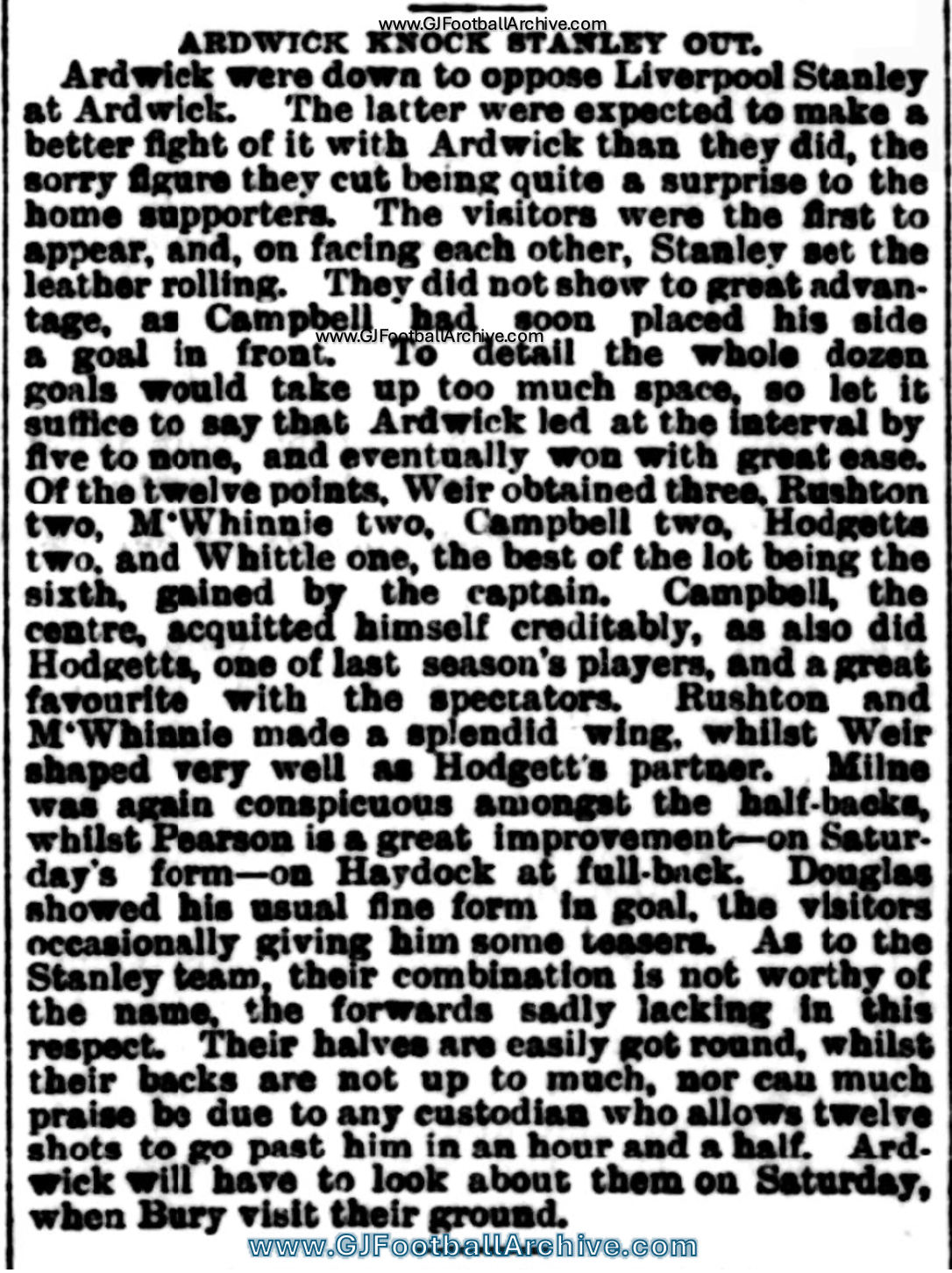
On this day (4 October) in 1890 Ardwick (the predecessors of Manchester City) defeated Liverpool Stanley 12-0 in the FA Cup. It remains the club’s highest score in the competition and was the first FA Cup tie played by the blue and whites of Ardwick. Ardwick were also nicknamed the Brewerymen back then. Money and football are not a new thing and if you’re wondering why they had that nickname then read the 1,300 word subscriber article below. Put simply Chesters Brewery saw football as a way to spread their product. The same happened at Newton Heath/Utd with Manchester Brewery, and demonstrates how football has always been seen as a vehicle for business.
The match report of this game is above.
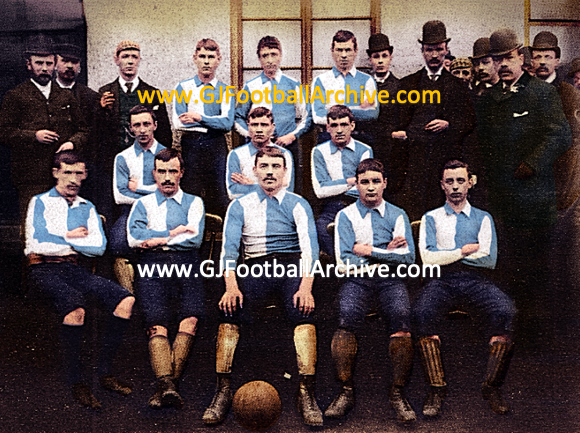
This team image has been coloured to show the club’s colours of that season. Note: the story of City adopting blue and white for the first time due to Masonic influence in 1894 is a myth. The Club had been wearing blue and white from as early as 1887.
Ever wondered how MCFC came into being and what happened to Ardwick AFC? Well, now’s your chance to find out. The article below is on the 1890-91 season.
Subscribe to get access
Read more of this content when you subscribe today. It costs £3 per month (cancel anytime) or sign up a year at a time for the discounted annual fee of £20. This gives access to everything on the site, including PDFs of 3 of my books and various other articles, interviews and audio material. Each subscriber has access to all content posted during their subscription period too. Why not sign up for a month and see what you think?
Every Monday I’m posting a section from my book ‘The Emergence of Footballing Cultures: Manchester 1840-1919’. It tells the story of the origins of men’s football in Manchester and discusses the birth of both City and United plus the clubs that predated them such as Hulme Athenaeum, Manchester AFC, Birch etc. Today’s section is the seventh chapter of the book (a 10,500 word section). This focuses on football as a business (yes, it was a business even then!), the move into league football for Manchester’s clubs and the relaunch of them as Manchester City and Manchester United.
Subscribing costs £3 per month (cancel anytime) or you could sign up for a year at the discounted price of £20 per year. Every subscriber gets access to everything posted on the site.
Subscribe to get access
Read more of this content when you subscribe today.
Every Monday I’m posting a section from my book ‘The Emergence of Footballing Cultures: Manchester 1840-1919’. It tells the story of the origins of men’s football in Manchester and discusses the birth of both City and United plus the clubs that predated them such as Hulme Athenaeum, Manchester AFC, Birch etc. Today’s section is the sixth chapter of the book (a 10,000 word section). This focuses on the earliest Manchester entrants in the FA Cup, as well as Ardwick AFC and Newton Heath.
Subscribing costs £3 per month (cancel anytime) or you could sign up for a year at the discounted price of £20 per year. Every subscriber gets access to everything posted on the site.
Subscribe to get access
Read more of this content when you subscribe today.
Every Monday I’m posting a section from my book ‘The Emergence of Footballing Cultures: Manchester 1840-1919’. It tells the story of the origins of men’s football in Manchester and discusses the birth of both City and United plus the clubs that predated them such as Hulme Athenaeum, Manchester AFC, Birch etc. Today’s section is the fifth chapter of the book (a 8,200 word section). This focuses on the establishment of clubs in the 1870s and 1880s, including City and United’s predecessors.
Subscribing costs £3 per month (cancel anytime) or you could sign up for a year at the discounted price of £20 per year. Every subscriber gets access to everything posted on the site.
Subscribe to get access
Read more of this content when you subscribe today.
Every Monday I’m posting a section from my book ‘The Emergence of Footballing Cultures: Manchester 1840-1919’. It tells the story of the origins of men’s football in Manchester and discusses the birth of both City and United plus the clubs that predated them such as Hulme Athenaeum, Manchester AFC, Birch etc. Today’s section is the fourth chapter of the book (a 11,000 word section). This focuses on the footballing communities that developed during the mid to late 1800s.
Subscribing costs £3 per month (cancel anytime) or you could sign up for a year at the discounted price of £20 per year. Every subscriber gets access to everything posted on the site.
Subscribe to get access
Read more of this content when you subscribe today.
Every Monday I’m posting a section from my book ‘The Emergence of Footballing Cultures: Manchester 1840-1919’. It tells the story of the origins of men’s football in Manchester and discusses the birth of both City and United plus the clubs that predated them such as Hulme Athenaeum, Manchester AFC, Birch etc. Today’s section is the third chapter of the book (a 11,500 word section). This focuses on the mid 1800s and the development of Manchester’s earliest known association football club Hulme Athenaeum and its long term impact.
Subscribing costs £3 per month (cancel anytime) or you could sign up for a year at the discounted price of £20 per year. Every subscriber gets access to everything posted on the site.
Subscribe to get access
Read more of this content when you subscribe today.
Every Monday I’m posting a section from my book ‘The Emergence of Footballing Cultures: Manchester 1840-1919’. It tells the story of the origins of men’s football in Manchester and discusses the birth of both City and United plus the clubs that predated them such as Hulme Athenaeum, Manchester AFC, Birch etc. Today’s section is the second chapter of the book (another 5,000 word section). This focuses mainly on the early to mid 1800s and talks of the development of Manchester and the sporting growth occurring at that time, including forms of football as well as cricket and horse racing etc..
Subscribing costs £3 per month (cancel anytime) or you could sign up for a year at the discounted price of £20 per year. Every subscriber gets access to everything posted on the site.
Subscribe to get access
Read more of this content when you subscribe today.
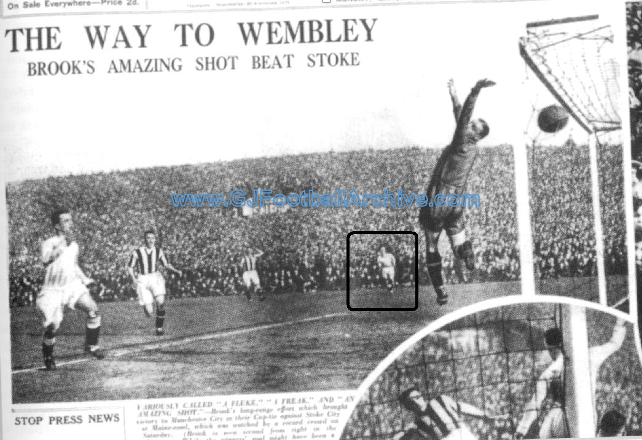
It has virtually slipped out of living memory but this goal is possibly the greatest ever scored at Maine Road. It is also the goal that was viewed by the largest paying audience of all time at the old stadium.
The goalscorer Eric Brook remains one of City’s biggest stars and he was idolised by thousands of Mancunians throughout his career. This goal was obviously popular with Maine Road regulars at the time but it has to be stressed that it was also highly significant in the Blues’ quest to re-establish themselves as a major force.
The idea of this ‘GOLDEN GOALS’ feature is to remember a significant or spectacular Manchester City goal from yesteryear. My hope is that supporters who were not around back then will learn more about these goals while those who were here will hopefully be reminded of them. If you would like to nominate a goal for possible use in a future feature then please comment at the end of this piece or email me with details of game, goal scorer and date.
This article, covering Brook’s goal is available for subscribers to the website below. It costs £20 a year (it works out £1.67 per month) and you get full access to all articles posted, including PDFs of the out of print Manchester A Football History and my first ever book about Manchester City. There are also audio interviews & more. Do a few searches on past content to see what’s available.
Subscribe to get access
Read more of this content when you subscribe today.
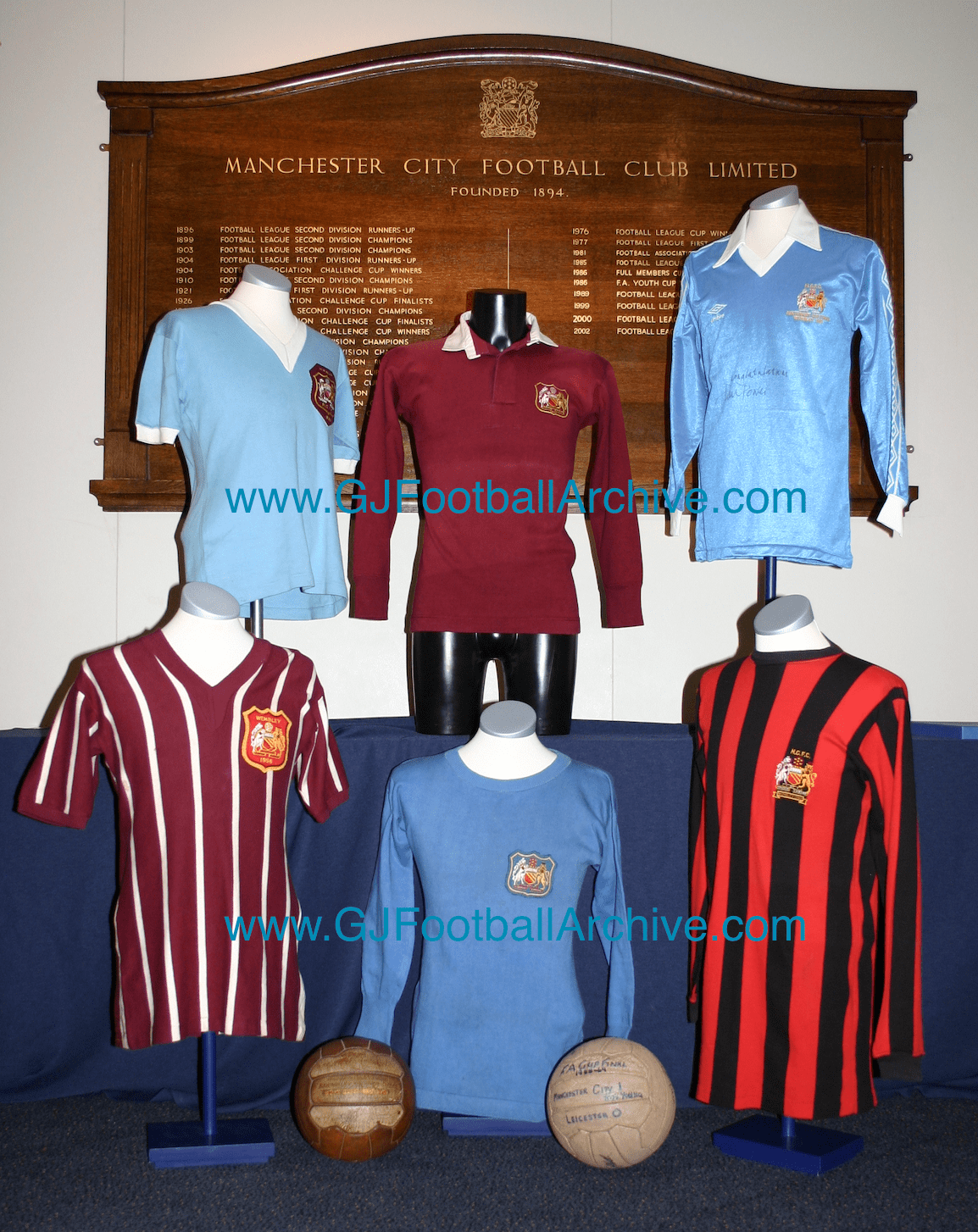
Yesterday I posted images of early Manchester City FA Cup final shirts and asked ‘which shirts are from which finals’ with a bonus question of ‘can anyone work out the players’ who wore these (no searching on t’internet for matching player numbers please!).’ So here are the answers and further details on these players/shirts.
The shirts and players who wore them are:
4, pale blue, top right – Ken Barnes 1955 FA Cup Final
Unnumbered maroon, top middle – Ernie Toseland 1934 FA Cup Final
5, shiny blue, top right – Paul Power 1981 FA Cup Final
4, maroon & white, bottom left – Ken Barnes 1956 FA Cup Final
Cornflower blue, bottom middle – Sam Cookson 1926 FA Cup Final
8, red/black, bottom right – Colin Bell 1969 FA Cup Final
Notice the two balls on the photographs? They are the 1956 FAC Final ball and the 1969 FAC final ball. All shirts and balls were on loan to the Manchester City Experience (the original club museum set up in 2003) as part of our exhibition.
I’ve got further images and more information on these shirts below but first it’s worth talking about the only City FA Cup final shirts missing when we did this exhibition in the mid 2000s (obviously City have reached multiple FA Cup finals since that time) being 1904 and 1933. We simply could not track down shirts from either final, though we kept getting close to borrowing a scarlet shirt from the 1933 final. We put the shirts together and I took these photos of them.
Here’s a contemporary photo of the 1904 FA Cup final shirt. The player here is James McMahon.
James McMahon wearing his 1904 FA Cup final shirt
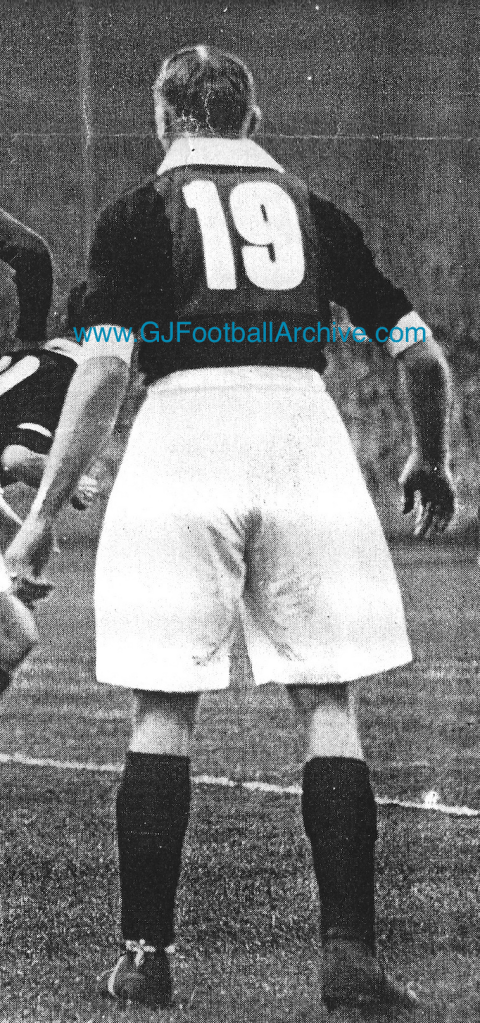
The 1933 FA Cup final was the first final to feature numbered shirts (Everton wore 1-11, City 12-22) and City’s shirts were usually described as being scarlet. City had word what they called ‘Lucky Scarlet’ a few times in the previous decade, though it never quite seemed that lucky! Here’s a contemporary image of the 1933 FA Cup final shirt back, worn by Matt Busby, showing the numbering used.
Matt Busby in the 1933 FA Cup Final
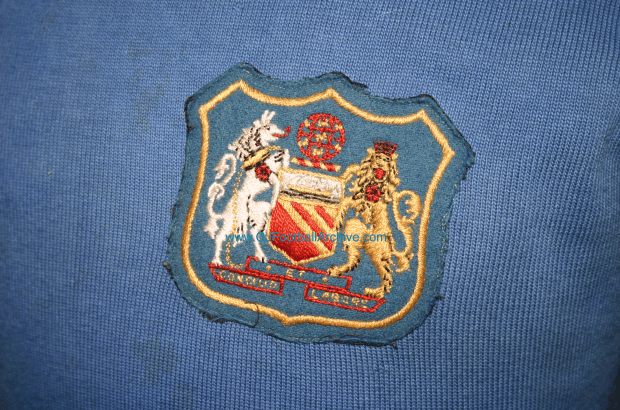
The oldest shirt we had on display was Sam Cookson’s 1926 FA Cup final shirt and here’s a close up of the Manchester coat of arms worn on that shirt. This was the first time City had worn the coat of arms in a final (City didn’t wear any emblem in 1904):
Notice the shade of blue too. It’s a darker blue than City were known to wear and was known as cornflower blue at the time. It was a special colour for the final against Bolton. Someone at City must have remembered (or maybe it was the FA) that there had been some comments in 1904 that City’s blue and Bolton’s white were too close in colour. I’ve always found that a bit odd but I guess City didn’t want to take any chances when the two sides met again in 1926.
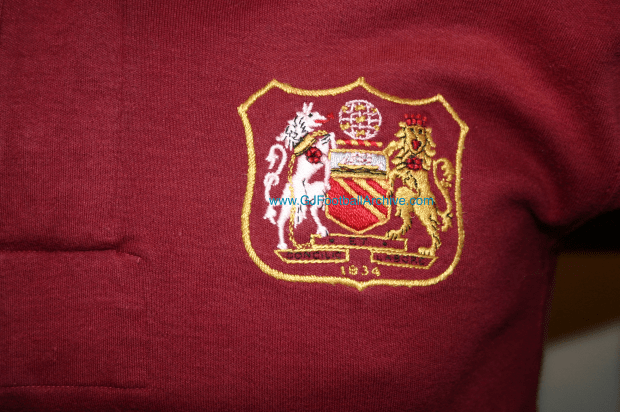
The 1933 final was scarlet as mentioned earlier and the players wore numbers for the first time but in 1934 numbers were not worn. Personally I’d have thought they’d keep up the idea but maybe someone somewhere moaned about these new fangled ideas like wearing numbers in a similar way to how some moaned when squad numbers were introduced and player names were added. Here’s a close up of Ernie Toseland’s 1934 shirt badge. The shirt was described as maroon and the shorts were revolutionary…. We had an expert from Umbro come to visit and he looked at the shorts (we had Toseland’s full kit on display) and was delighted to see an exclusive design. They contained a diamond shaped piece of fabric stitched in and he told me that this was a pair of Umbro’s ‘crotch resistant’ shorts. He explained more, but whether they gave benefit is open to question.
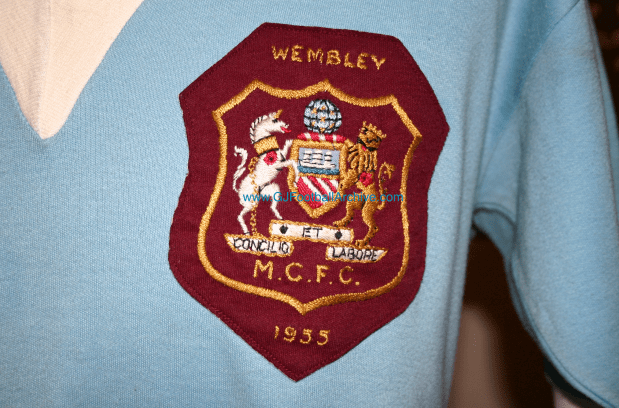
Here’s Ken Barnes’ 1955 emblem. A more traditional blue but it’s interesting that the away colour of maroon makes its way on to the emblem. I wonder if they thought City would wear maroon at some point when the sew on patch was created?
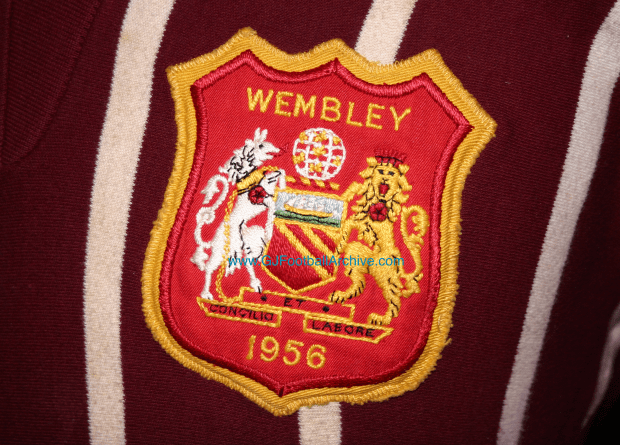
In 1956 the emblem colour was red with yellow edging (to match the numbers on the back). People often try to suggest yellow is not a traditional City colour but it has been used on plenty of kits, including the numbering in 1956 and as the main colour of the away shirt in 1959-60.
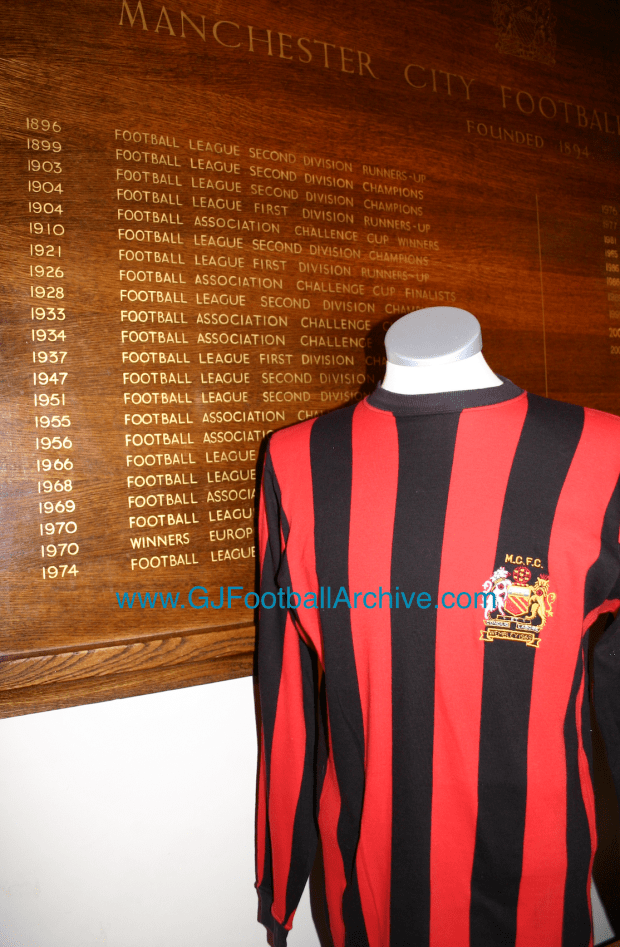
Here’s Colin Bell’s 1969 FA Cup final shirt in front of the old honours board. I believe this honours board is still held in City’s archive somewhere. Maybe we should dig it out and update it. I may post another feature on the board itself another day – people think it’s as old as Maine Road but Bernard Halford had it made in the mid 1970s, just after the League Cup win if my memory is working today!
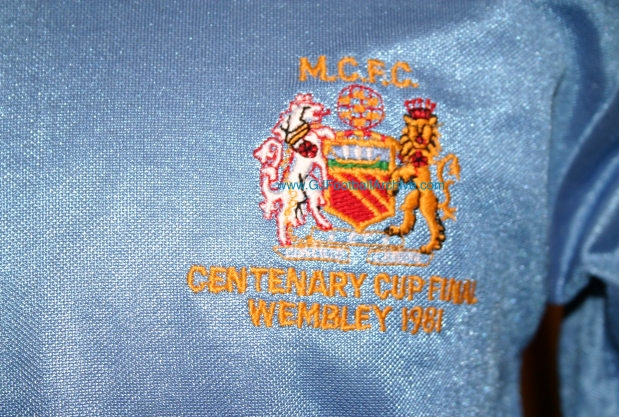
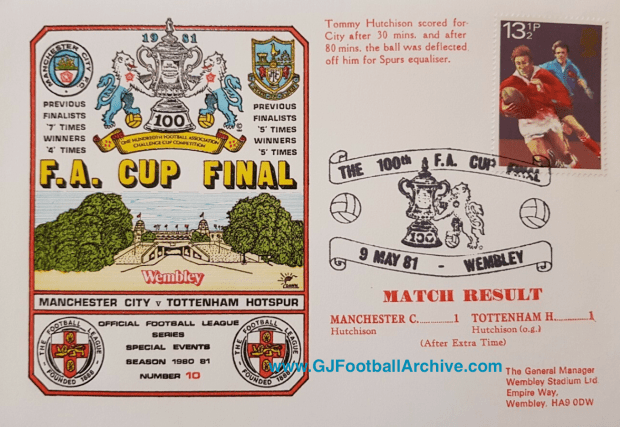
Here’s the special emblem to mark the 100th FA Cup Final. People get confused about this cup final with some saying it was the Centenary Cup Final (as the emblem does!) or the 100th FA Cup Final. The FA were quite clear at the time – the 1972 FA Cup Final was the Centenary Cup Final (marking 100 years since the FA Cup was established) and 1981 was the 100th FA Cup Final. So City or Umbro got this wrong and if you look at the First Day Cover (below) or any of the match programmes, souvenirs etc. you’ll see they created a special 100th cup final emblem.
I’ve done a lot of research on City’s kits over the decades. There’s lots of comments on them in my books, especially Manchester The Greatest City, Farewell To Maine Road and my City Folklore book. There are also other features across this website. Some only for subscribers and some for all. Why not subscribe (see below) and read all the content on this site? You can subscribe for a month at £3 per month or sign up for a year at £20. Why not try it for a month?
If you enjoy all the free material on my website and would like to support my research and keep this website going (but don’t want to subscribe) then why not make a one-time donation (or buy me a coffee). All support for my research is valued and welcome. It allows me to keep some free material available for all. Thanks.