Abandoned Derby

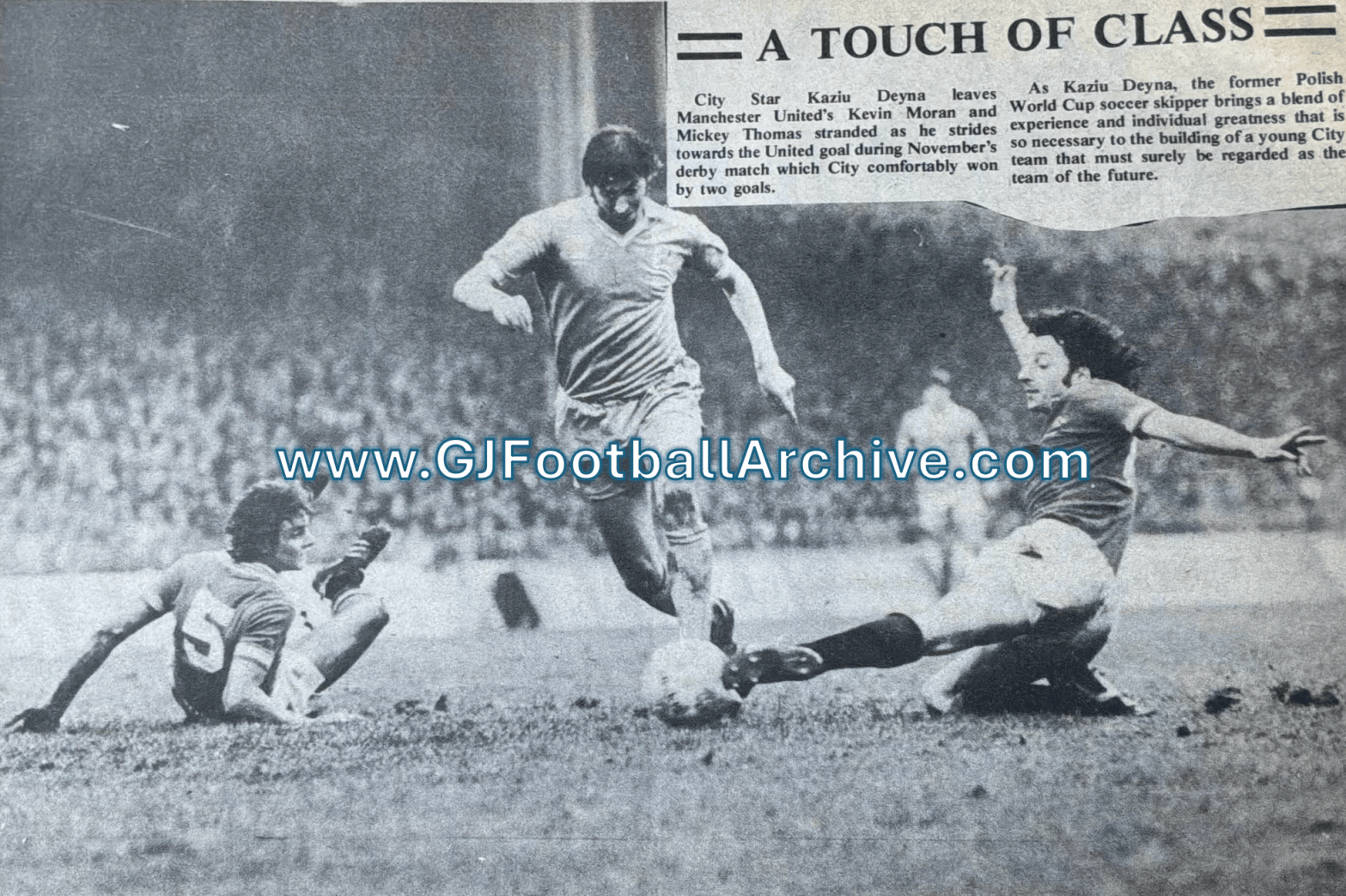
On this day (27 August) in 1960 the only Manchester Derby to be abandoned (and the game replayed) took place. It was abandoned at 2-2 with heavy rain at Maine Road.

Strictly speaking another derby (the one at Old Trafford in 1974) was also abandoned but the result for that game was allowed to stand.

27 August 1960 (date on image is incorrect). The abandoned Manchester derby.

Manchester 1840-1919 (Part Four)

Every Monday I’m posting a section from my book ‘The Emergence of Footballing Cultures: Manchester 1840-1919’. It tells the story of the origins of men’s football in Manchester and discusses the birth of both City and United plus the clubs that predated them such as Hulme Athenaeum, Manchester AFC, Birch etc. Today’s section is the third chapter of the book (a 11,500 word section). This focuses on the mid 1800s and the development of Manchester’s earliest known association football club Hulme Athenaeum and its long term impact.

Subscribing costs £3 per month (cancel anytime) or you could sign up for a year at the discounted price of £20 per year. Every subscriber gets access to everything posted on the site.

Subscribe to get access

Read more of this content when you subscribe today.

Sven’s First Manchester Derby Was A Great Win

On this day (19 August) in 2007 Sven’s Manchester City defeated Fergie’s United 1-0 in Sven’s first derby since joining City that summer. His City career ended with him having a 100% win record in the derby. Here’s a video of Geovanni’s goal:

Manchester 1840-1919 (Part Three)

Every Monday I’m posting a section from my book ‘The Emergence of Footballing Cultures: Manchester 1840-1919’. It tells the story of the origins of men’s football in Manchester and discusses the birth of both City and United plus the clubs that predated them such as Hulme Athenaeum, Manchester AFC, Birch etc. Today’s section is the second chapter of the book (another 5,000 word section). This focuses mainly on the early to mid 1800s and talks of the development of Manchester and the sporting growth occurring at that time, including forms of football as well as cricket and horse racing etc..

Subscribing costs £3 per month (cancel anytime) or you could sign up for a year at the discounted price of £20 per year. Every subscriber gets access to everything posted on the site.

Subscribe to get access

Read more of this content when you subscribe today.

Manchester 1840-1919 (Part Two)

Every Monday I’m posting a section from my book ‘The Emergence of Footballing Cultures: Manchester 1840-1919’. It tells the story of the origins of men’s football in Manchester and discusses the birth of both City and United plus the clubs that predated them such as Hulme Athenaeum, Manchester AFC, Birch etc. Today’s section is the first chapter of the book (a 5,000 word section). This focuses mainly on the middle ages up to the early 1800s and talks of the 1608 ban on football in Manchester, Peterloo and leisure activities such as cockfighting and early cricket activity, as well as football of course. There is material in every section of the book that should interest fans of Manchester football, no matter which team you support, or academic researchers/historians.

Subscribing costs £3 per month (cancel anytime) or you could sign up for a year at the discounted price of £20 per year. Every subscriber gets access to everything posted on the site.

Subscribe to get access

Read more of this content when you subscribe today.

Manchester City’s First Overseas Born Player

Although most Mancunians were unaware at the time, one of the players with Ardwick AFC (Manchester City’s predecessors) was actually the first overseas international to play in the Football League.  Walter Bowman was born in Canada during 1862, and arrived in the British Isles in August 1888 as a Canadian international.  

The Canadians were playing a number of friendly fixtures against sides in Ireland, Scotland and England, and they even faced Newton Heath winning 2-0 with Bowman scoring.  Whether this appearance was witnessed by any of the Ardwick officials at the time isn’t known, but Bowman returned to Canada with his team mates shortly afterwards.

A second tour followed in 1891 – including a 3-1 Ardwick victory on 12th December 1891 – and Bowman remained behind after the rest of the Canadians had returned home.  He joined Accrington, making his debut in January 1892.  That match made him the first overseas international to play in the League and on 25 August 1892 he signed for Ardwick.  He didn’t manage to make his Ardwick debut until 18 February 1893 when he scored as Crewe were defeated 3-1.

Bowman became a Manchester City player when the Club was re-established and he remained with the Blues until the close season of 1900, with one of his most significant matches being the 11-3 record victory over Lincoln on 23rd March 1895, although Bowman failed to make the scoresheet.

After City little is known of Bowman’s life.  An article in April 1929 talked of a reunion in Toronto of the touring side but Bowman did not attend.  It was believed he was living in the USA in a copper mining city in western Montana called Butte, but he was never traced.  No matter what the final resting place of Bowman, his place as the Football League’s first overseas player means his name will never be forgotten.

Ardwick and the Manchester Cup

Following on from yesterday’s Ardwick AFC feature, here’s another one. This focuses on the Manchester Cup… As football in Manchester developed, so did Ardwick’s desire to become one of the regions elite clubs.  The Manchester Cup had been established in 1884-5 and this was quickly perceived by the majority of Mancunians as the most prestigious competition around.  The Football League was not in existence until 1888 and even then Manchester failed to have any representatives, while the FA Cup had been established since the 1860s but was not seen in a positive light by Manchester’s sides.  Entry into the Cup required great expense as games could be played anywhere in the United Kingdom – during the 1880s sides from Ireland competed in the FA Cup, while Scottish sides had been amongst the earliest supporters of the competition.  The cost of travel clearly limited Ardwick’s ability to play beyond the Manchester region.

In April 1891 Ardwick reached the Manchester Cup final for the first time in their history.  This was a major landmark and it was also the first major meeting with Newton Heath, present day Manchester United.  Newton Heath had previously played in every final of the competition since it was created in 1884-5 and so this was seen as a real test for the Ardwick players.

Despite the fact that Newton Heath were the more experienced side, Ardwick took the lead thanks to a seventh minute goal from the influential captain Davie Weir.  Reports simply stated that “Weir scored with a long shot”, however they did give a little information before that to suggest that the goal owed much to the earlier persistence of Bob Milarvie.  Milarvie had challenged the Newton Heath goal a couple of times and had clearly surprised the Heathens.  Then, after gaining the ball following a Newton Heath attack, Milarvie “got on a splendid run but was badly fouled.”  From the resulting free kick Ardwick attacked and Weir netted the goal.

Ardwick did actually have another goal disallowed – they were awarded an indirect free kick and the taker blasted the ball straight into the Heathens goal without any other player touching it – but the trophy was won by the Hyde Road side for the first time.

Success in the trophy perhaps went a little to their heads when at the 1891 Football League AGM Ardwick – along with Darwen, Newton Heath, Nottingham Forest, Stoke, and Sunderland Albion – applied to join the newly expanded Football League.  All the applicants, with the exception of Ardwick, were members of the Football Alliance – a league originally set up to rival the Football League.  Not surprisingly, Ardwick failed to gain admittance, with the new places were filled by Stoke, who had won the Alliance, and Darwen.  There was a consolation prize however and Ardwick were admitted to the Alliance League for the 1891-2 season.  

The Manchester Cup had proved to be the Club’s major breakthrough and it had also proved the Ardwick were already perceived as Manchester’s club.  Although Newton Heath had been the more successful club so far, Ardwick were perhaps seen as being more progressive and were already the better supported of the two.  The Hyde Road derby in the Alliance League attracted a crowd of over 10,000, whereas the Heathens home game at North Road was watched by around 4,000.  Even the Hyde Road derby attendance was bettered by Ardwick on two other occasions in the Alliance that season.  

As well as their large support, Ardwick managed to prove their ability to live with the best when they won the Manchester Cup again.  This time they convincingly defeated Football League side Bolton Wanderers 4-1.  The dream of playing League football was getting closer and the Manchester Cup successes had helped that dream.  One man who was proud of this achievement was Walter Chew (image below), who was with St. Mark’s in their first season of 1880-81.  In 1888 he joined the Manchester FA Committee and remained an influential figure there until his death in 1949.  

Manchester 1840-1919 (Part One)

Every Monday I’m posting a section from my book ‘The Emergence of Footballing Cultures: Manchester 1840-1919’. It tells the story of the origins of men’s football in Manchester and discusses the birth of both City and United plus the clubs that predated them such as Hulme Athenaeum, Manchester AFC, Birch etc. Today’s section is the introduction to the book. There is material in every section of the book that should interest fans of Manchester football, no matter which team you support, or academic researchers/historians.

Subscribing costs £3 per month (cancel anytime) or you could sign up for a year at the discounted price of £20 per year. Every subscriber gets access to everything posted on the site.

Subscribe to get access

Read more of this content when you subscribe today.

David James

On this day (1 August) in 1970 former Manchester City and England goalkeeper David James was born in Welwyn. Here for subscribers is a profile of James:

Subscribe to get access

Read more of this content when you subscribe today.

Starting Monday: Manchester 1840-1919

Every Monday starting on 3 August 2025 I’m posting a section from my book ‘The Emergence of Footballing Cultures: Manchester 1840-1919’. It tells the story of the origins of men’s football in Manchester and discusses the birth of both City and United plus the clubs that predated them such as Hulme Athenaeum, Manchester AFC, Birch etc. There is material in every section of the book that should interest fans of Manchester football, no matter which team you support, or academic researchers/historians.

Subscribing costs £3 per month (cancel anytime) or you could sign up for a year at the discounted price of £20 per year. Every subscriber gets access to everything posted on the site.