Record Average Crowds

I’ve not done one of these for a while but I know they always prompt a bit of debate, so here goes… a feature on Manchester City FC attendances. It is a fact that the Blues have, generation after generation, been one of the English game’s top attractions. Like all – and I do mean all – English clubs there have been some average attendance lows over the years, but when the entire history of Manchester City is reviewed and the club’s average figures are compared with the national average it is clear that the Blues have consistently been one of football’s most attractive draws.  Take a look at the following:

  • Since the beginning of the Football League in 1888 only nine sides have topped the table for average attendances.  In chronological order of their first appearance at the top of the average table they are: Everton (1888-9), Villa (1898-99), Newcastle (1904-05), Chelsea (1907-08), Tottenham (1909-10), City (1910-11), Liverpool (1922-23), Arsenal (1929-30), & Manchester United (1956-57) 
  • As early as 1895-96 City were the third best supported side in the entire League despite being a Second Division side.  Only First Division sides Everton & Aston Villa could better the Blues.  Modern day giants Arsenal were 10th; Liverpool were 19th; United were 21st and Chelsea had yet to exist.
  • In 1900-01 City were the 2nd best supported side in the entire League with only 400 people separating Villa (1st) and City 
  • The 1910-11 season saw Manchester’s Blues top the attendance charts for the first time.  City’s average was 26,000 and was the 8th highest average of all time at that point (all clubs, all seasons). 
  • Regularly amongst the best supported sides throughout the inter war period, City’s average exceeded 37,000 for the first time in 1927-28 when the Blues established a record average crowd for the Second Division.  This was also the entire League’s highest.
  • In 1947-48 City’s average crowd exceeded 42,000 for the first time.  Prior to that season only Chelsea (1919-20 & 1946-7), Arsenal (1934-5, 1936-7, 1937-8, & 1946-7) , Newcastle (1946-7), Liverpool (1946-7), United (1946-7), and Wolves (1946-7) had exceeded that figure.
  • From 1975 to relegation in 1983 City were always one of the top 4 best supported sides, usually third behind United and Liverpool.
  • Since the 1980s whenever City have played outside of the top division, they have tended to be the best supported side in that division.  
  • Since moving to their current home in 2003, the increased capacity has allowed City to re-establish itself as one of best supported clubs again. Maine Road’s capacity from 1994 onwards was extremely low compared to the club’s entire history and prevented the Blues from staging games in front of attendances of approximateley 35,000 upwards.

In general many people believe success increases support, and while that is undoubtedly true to some extent, for City it is often periods of adversity that prove the loyalty of the Club’s fans.  It is highly significant, for example, that the first time City were the best supported side in the entire League (1910-11) Manchester United (6th best supported side) won the League title for the second time in 3 seasons.

Similarly, in 1925-26 when City were the best supported side in Division One and had established a new record average, the Blues were actually relegated.  This coupled with significant poverty and hardship in Manchester at the time should have reduced support but loyalty increased!  In my book “Manchester A Football History” I explore the relationship between attendances and Manchester’s major sides and it is fair to say that City fans can feel immensely proud of their loyalty throughout the history of the game.  Something that cannot be said by all of the League’s biggest names.  

In fact, it is worth highlighting that City have never been the worst supported side in their division but, of today’s so-called giants, Arsenal (1912-13 – average = 9,100) and Manchester United (1930-31 – average = 11,685) have.  City’s worst average of the Twentieth Century came in the desperate 1964-65 season and was 14,753 (half the average of 1960-61 and a 3rd of the 1957-8 figure).  However it is significant that for every League season City’s average has always been above the divisional average and, apart from 17 seasons, has always been in the top 11 nationally.  Again, few of today’s giants can’t say that – United’s 20th Century low stands at 4,650 and Chelsea averaged 15,731 as recently as 1988-89. In fact City’s lowest League attendance is more than double United’s lowest League attendance at Old Trafford (United have several crowds of less than 4,000 at Old Trafford, including top flight games; City’s lowest in the League was a little over 8000 in the second tier).

For fans average attendances are often used as an indicator of size of club and so a number of people over the years have tried to produce a definitive ‘all-time’ attendance table.  Several years ago analysis by a member of the Association of Football Statisticians claimed that if stadium capacity was not an issue for any club City would be the fourth biggest side in terms of attendance.  That analysis compared postwar attendance detail with performance on the pitch.  

In 2002 writer Brian Tabner calculated an all-time attendance table based on each club’s average attendance position during seasons 1925-2002.  His top ten were:  Arsenal, Liverpool, United, Everton, Tottenham, Newcastle, City, Chelsea, Villa and Sunderland.  Since 2002 several clubs have increased their capacities of course and this will have a positive impact on each club’s standing in a more up to date analysis.   

Figures can be manipulated in many different ways, but City should feel proud that they have many attendance firsts that can never be matched by today’s perceived biggest clubs.  

The Seasons City Have Topped the Divisional Charts

The following figures show the seasons when City were the best supported side in their division and the Club’s highest individual crowd that season.  Those crowds marked in italics were also the highest individual crowds for the entire division that season (crowds pre-1925 are inconsistently recorded and so have not been highlighted).  It is fair to say that when an average crowd is within 4,000 of the highest then the stadium is likely to have been full for the majority of games with the size of away support varying.     

Average         Season          Highest Crowd                                  

10,000            1895-96         30,000 (Liverpool)                

10,000            1898-99         25,000 (N. Heath)    

16,000            1902-03         30,000 (United)        

18,275            1909-10         40,000 (Oldham)

26,000            1910-11         40,000 (Liverpool)    

21,000            1914-15         40,000 (Oldham)

32,000            1925-26         62,994 (United)

30,848            1926-27         49,384 (Bradford C)

37,468            1927-28         59,500 (Preston)

31,715            1928-29         61,007 (United)

35,016            1950-51         45,842 (Hull)

27,739            1965-66         47,171 (Huddersfield)

24,220            1984-85         47,285 (Charlton)

23,500            1988-89         40,070 (Chelsea)

26,753            1996-97         30,729 (Oldham)

28,273            1998-99         32,471 (York)

32,001            1999-00         33,027 (Blackburn)

33,059            2001-02         34,657 (Portsmouth)

With the increase in capacity at the Etihad coming this year it will be interesting to see how attendances develop. No doubt I’ll post more on this as the season progresses. Undoubtedly City will establish a new record average attendance in 2026-27.
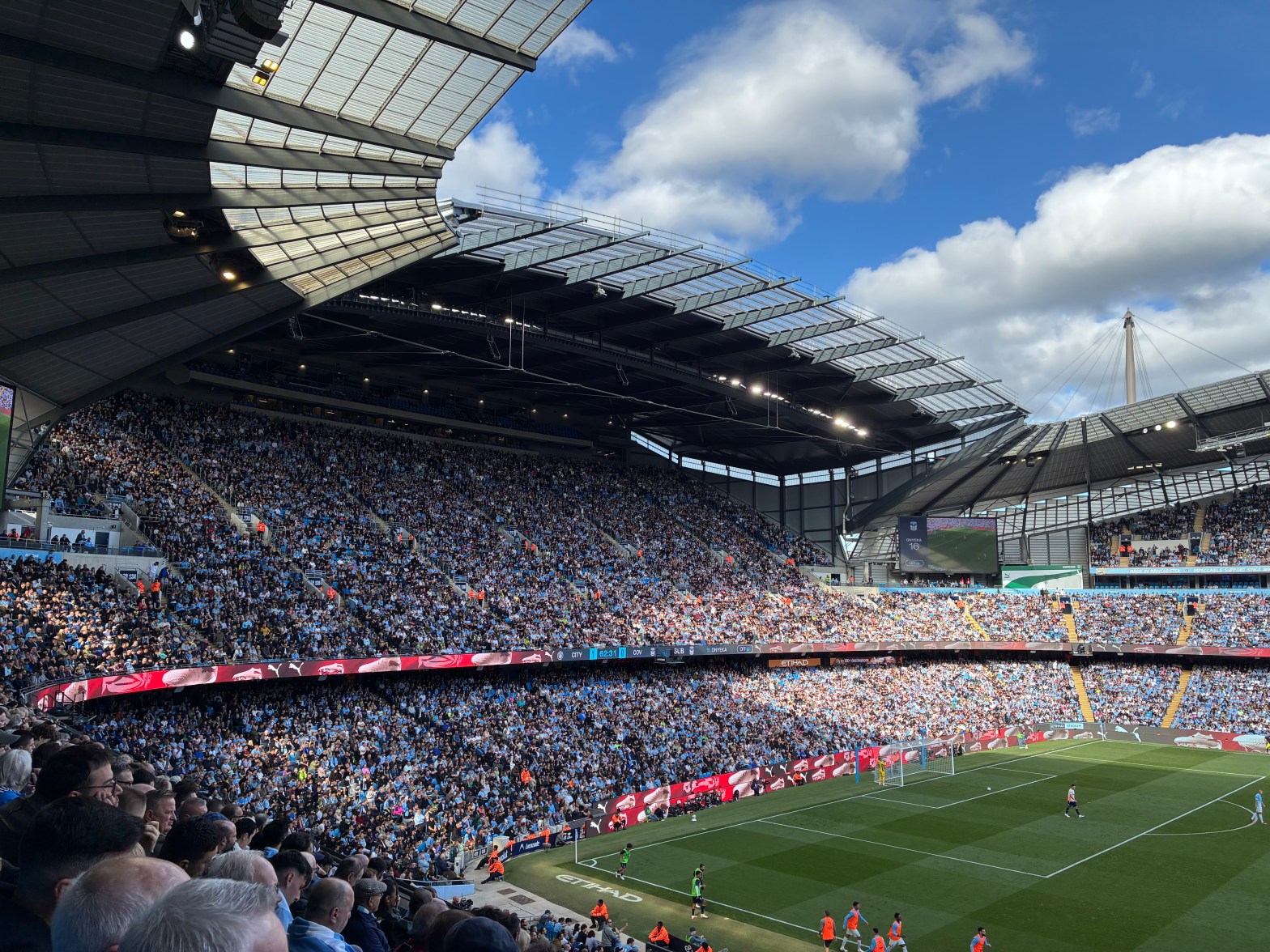
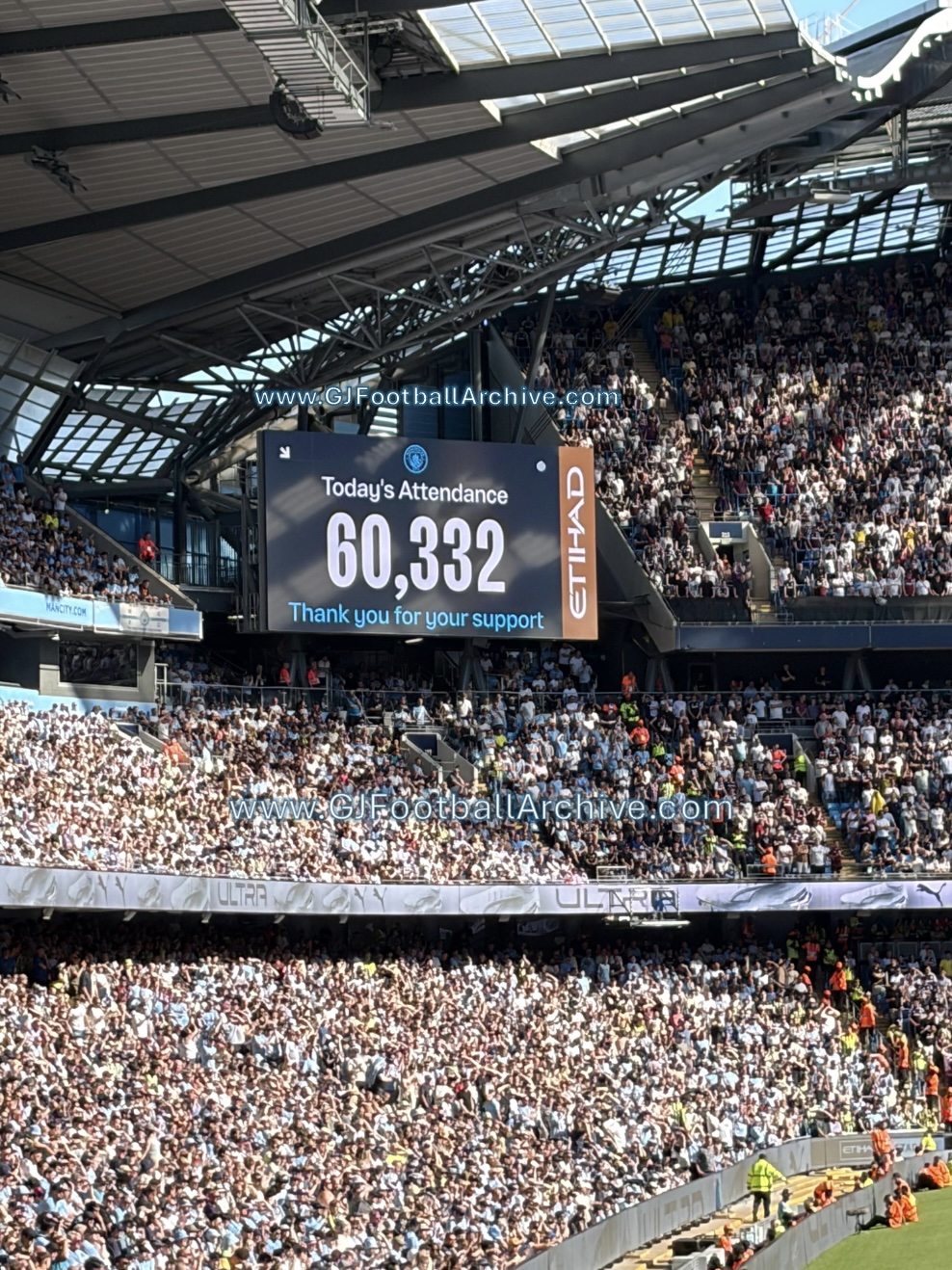
60,332: The Etihad’s Highest

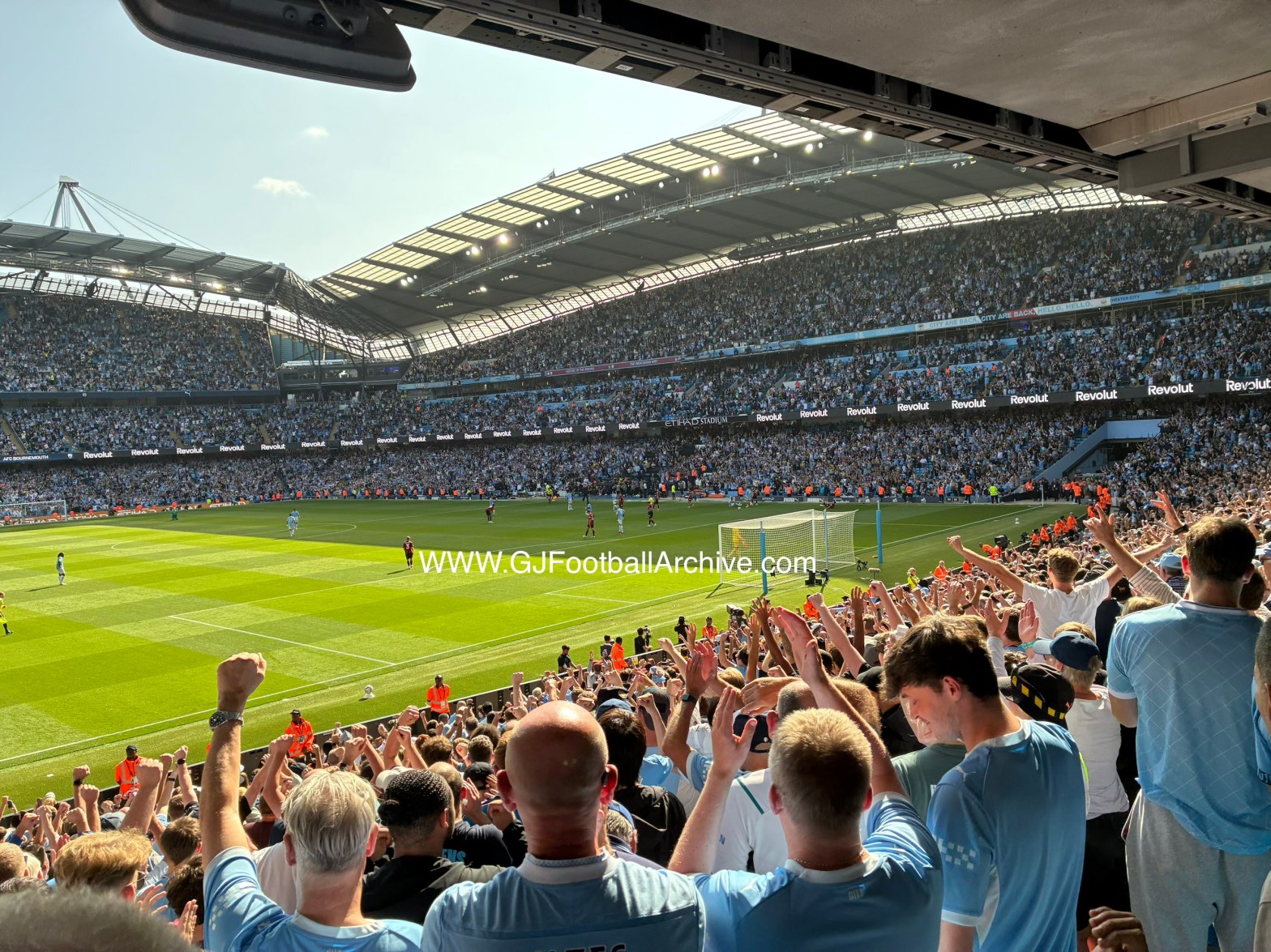
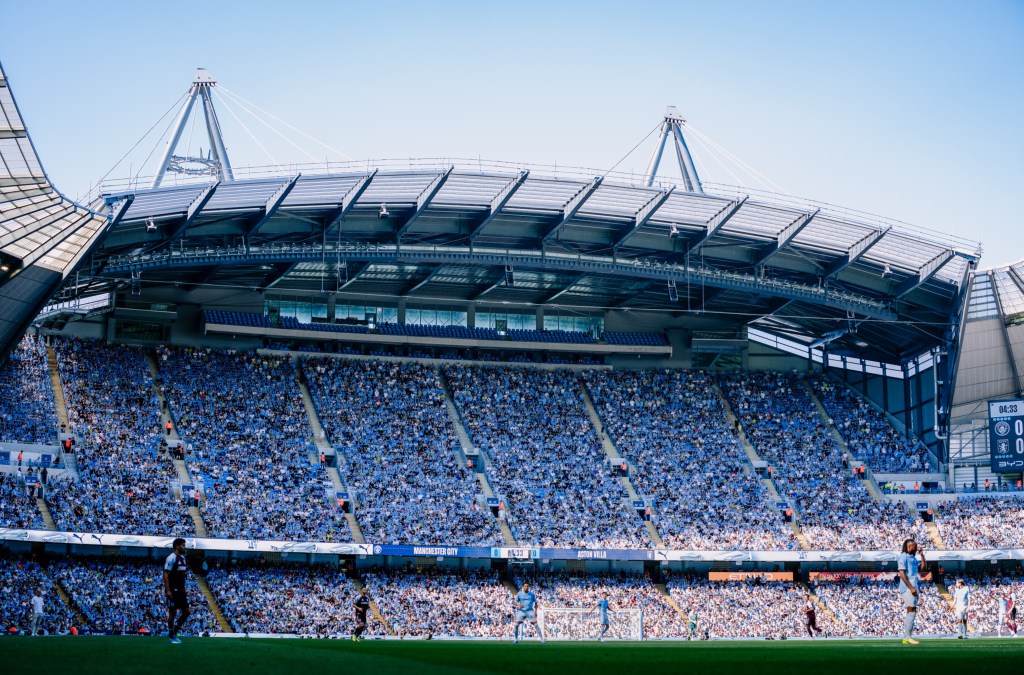
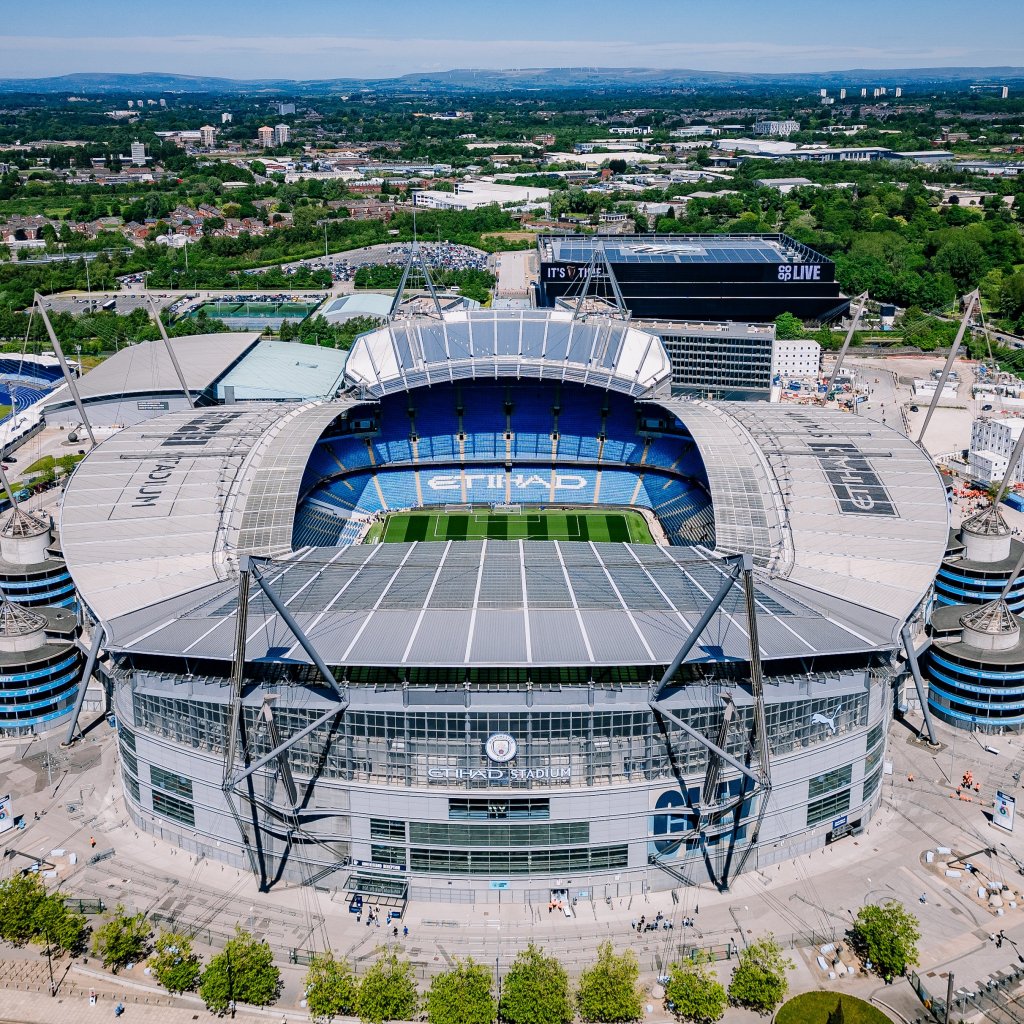
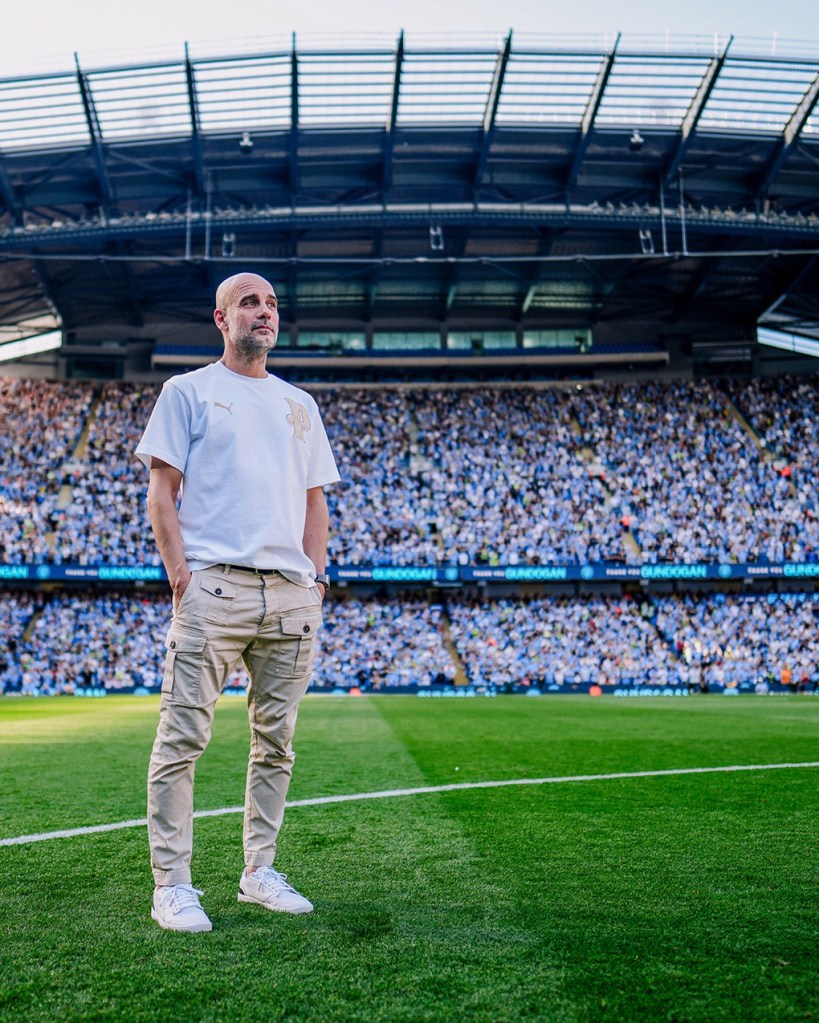
Yesterday Manchester City’s final home game of the season saw the Etihad stage its record crowd for football (any sport actually). It was also City’s highest home attendance for 54 years. The attendance was 60,332 and next year the capacity will increase again as some hospitality areas will then open. The game was also the final emotional match for manager Pep Guardiola, Bernardo Silva and John Stones.

I posted the following the other day, but here is the last home crowd of 60,000+ City attracted at Maine Road (ignoring the Charlton 1985 promotion match which many think was around that figure). There’s also a little bit of history of capacities at City.

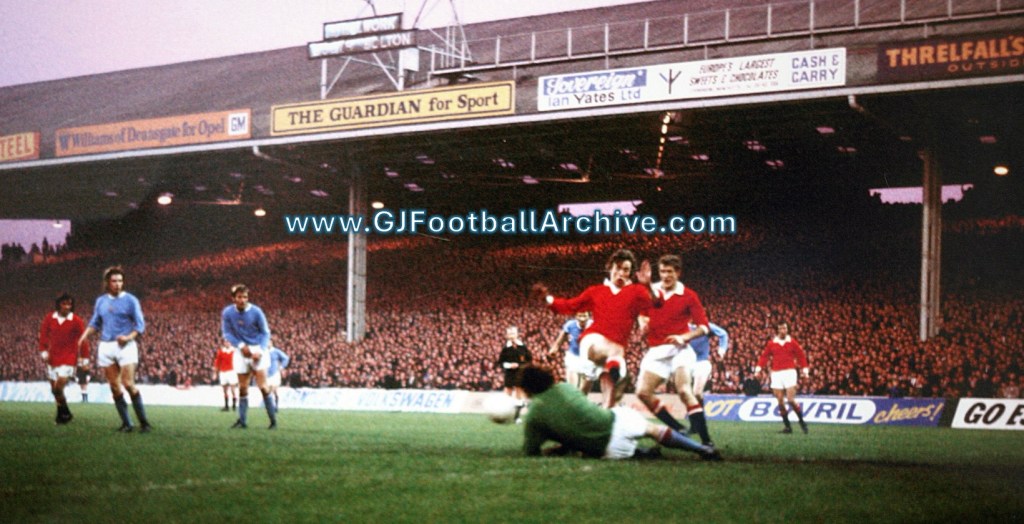
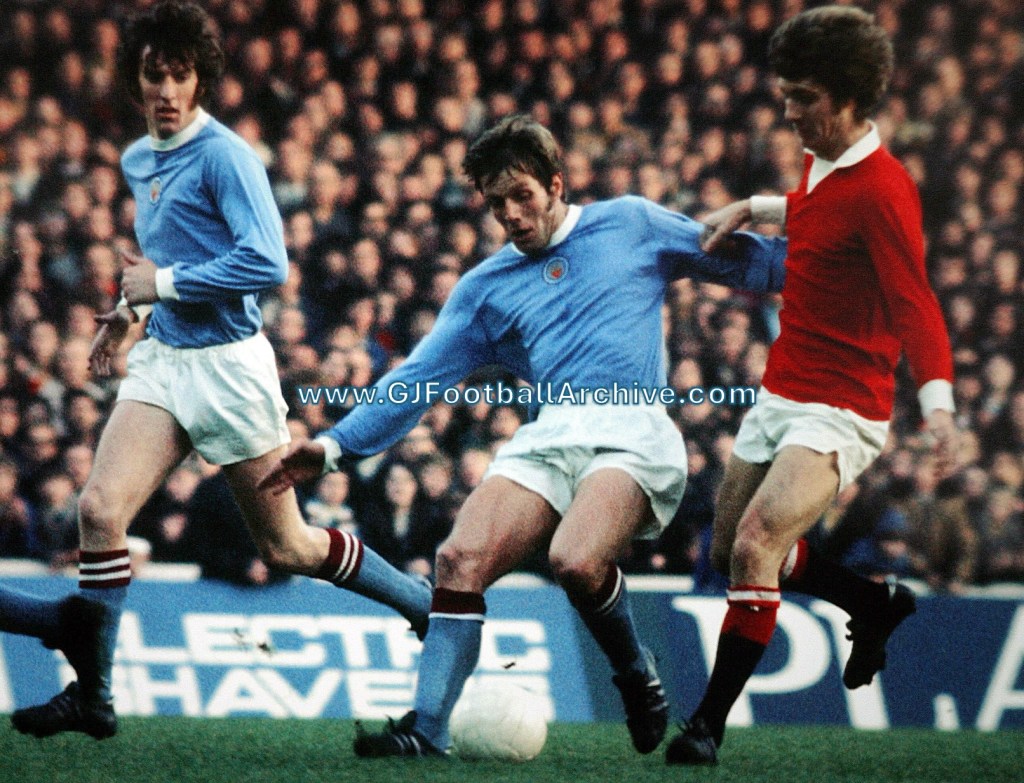
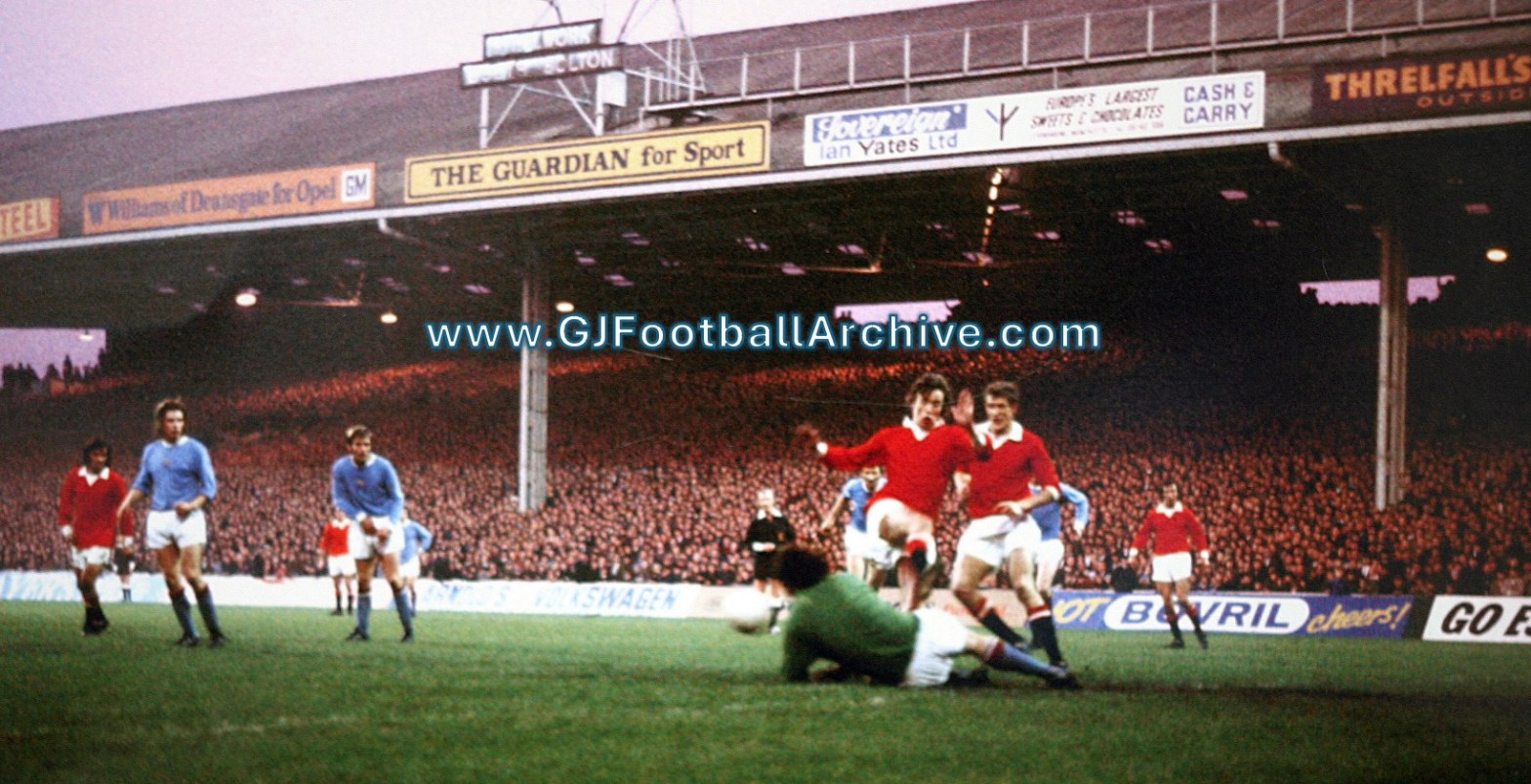
The last 60,000+ crowd was for the Manchester Derby on 6/11/1971 and was 63,326. These images are from that game (lots changed since then – the MCFC badge has been redesigned 3 times; Brian Kidd became a Blue, then a Red coach then a Blue coach)

The last 60,000+ home cup attendance was 60,844 v Newcastle on 29/1/1969.

For those wondering about home attendances over 75,000, the last one of those was 76,129 for City ve Everton in the FA Cup on 3/3/1956.

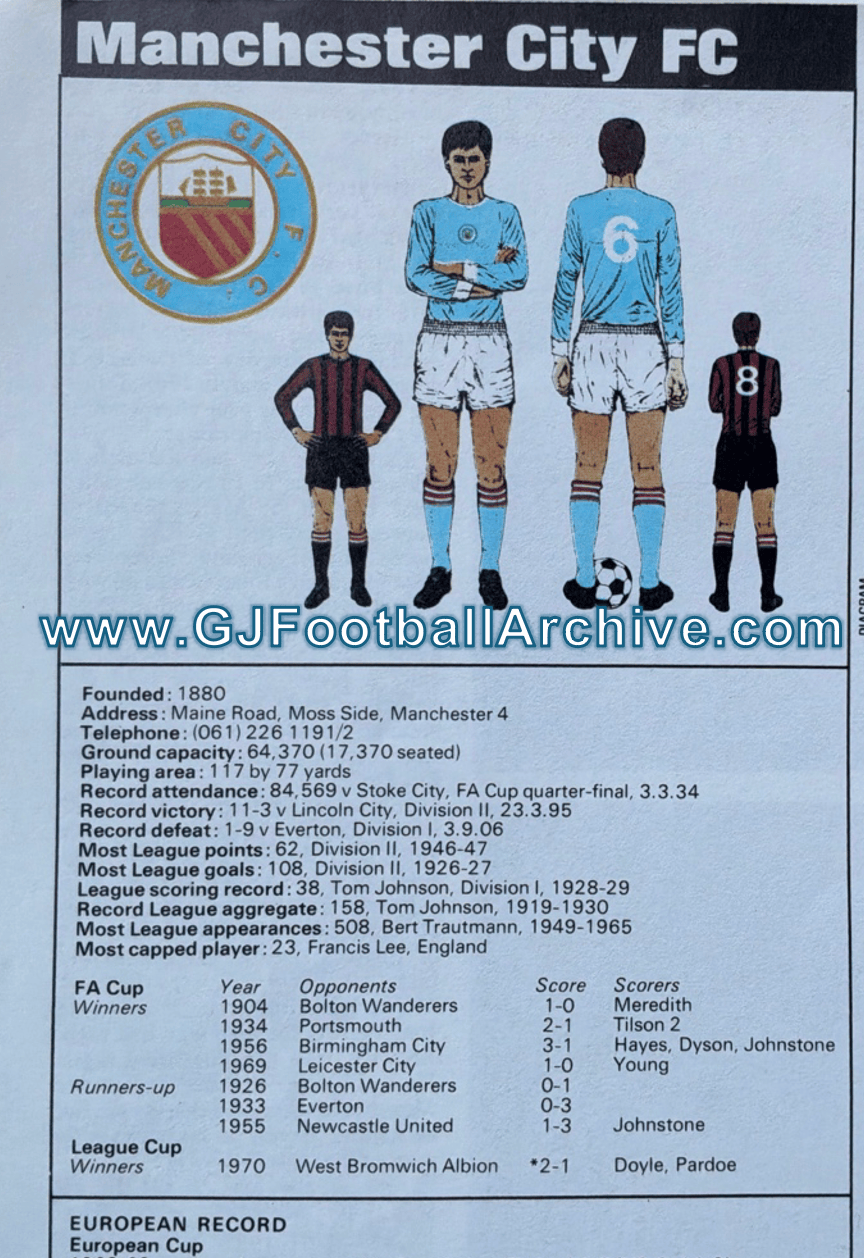
For the first 49 years of its existence the capacity of Maine Road was over 60,000, with the record attendance at the old place being 84,569 (see the story of this elsewhere on this site). Stadium developments, alongside safety changes and legislation, reduced the capacity from that high to about 63,000 by 1967. The Ibrox disaster of 1971 caused a reconsideration of stadium safety and a further reduction and City took the decision to seat the one year old North Stand. That meant the capacity from 1972 was approximately 52,600 (there was an attendance of over 54,000 in 1972-73 which I’ll explain about another day based on an interview – and admission – by the then club secretary Bernard Halford!).

The capacity of Maine Road (based on official records and announcements) over the years is:

1923 – 84,000

1931 – 86,000

1935 – 88,000

1946 – 84,000

1953 – 76,500

1957 – 77,000

1963 – 64,000

1972 – 52,600

1989 – 48,500

1992 – 39,359

1994 – 19,150 (first game of the season; increased gradually throughout the season)

1995 – 31,458

1997 – 32,147

1999 – 34,026

2000 – 34,421

2002 – 35,150

You can read more about Maine Road’s record crowd here:

And watch Maine Road’s opening game in 1923 here:

Highest Attendance For Over Fifty Years

This weekend’s final Manchester City home game of the season will see the Etihad stage its record crowd for football (any sport actually) and the club stage its highest home attendance for over fifty years. The new capacity is expected to be over 60,000 with a further capacity increase at the start of 2026-27. Detailed below are the last home crowd of 60,000+ City have attracted plus a little bit of history of attendances at City.

The last 60,000+ crowd was for the Manchester Derby on 6/11/1971 and was 63,326. These images are from that game (lots changed since then – the MCFC badge has been redesigned 3 times; Brian Kidd became a Blue, then a Red coach then a Blue coach)

The last 60,000+ home cup attendance was 60,844 v Newcastle on 29/1/1969.

For those wondering about home attendances over 75,000, the last one of those was 76,129 for City ve Everton in the FA Cup on 3/3/1956.

For the first 49 years of its existence the capacity of Maine Road was over 60,000, with the record attendance at the old place being 84,569 (see the story of this elsewhere on this site). Stadium developments, alongside safety changes and legislation, reduced the capacity from that high to about 63,000 by 1967. The Ibrox disaster of 1971 caused a reconsideration of stadium safety and a further reduction and City took the decision to seat the one year old North Stand. That meant the capacity from 1972 was approximately 52,600 (there was an attendance of over 54,000 in 1972-73 which I’ll explain about another day based on an interview – and admission – by the then club secretary Bernard Halford!).

The capacity of Maine Road (based on official records and announcements) over the years is:

1923 – 84,000

1931 – 86,000

1935 – 88,000

1946 – 84,000

1953 – 76,500

1957 – 77,000

1963 – 64,000

1972 – 52,600

1989 – 48,500

1992 – 39,359

1994 – 19,150 (first game of the season; increased gradually throughout the season)

1995 – 31,458

1997 – 32,147

1999 – 34,026

2000 – 34,421

2002 – 35,150

You can read more about Maine Road’s record crowd here:

And watch Maine Road’s opening game in 1923 here:

102 Years of a National Crowd Record for Manchester City!

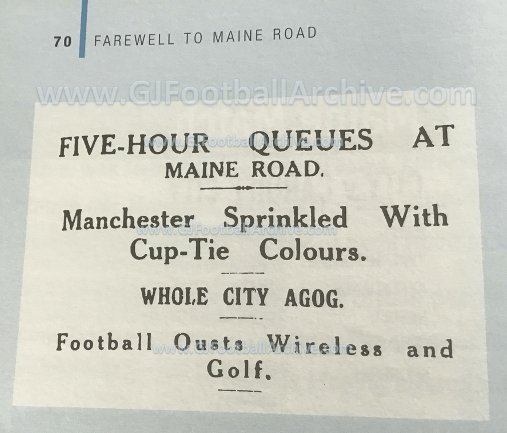
Today (8 March) marks the 102nd anniversary of a record Manchester City set – the record is the highest attendance on a club ground! The record set in 1924 saw 76,166 attend City v Cardiff. Keep reading all those who think ‘don’t you mean 84,569 in 1934?’ – City already held the record… City had moved to their new Maine Road stadium in August 1923. The capacity of the venue was estimated at around 90,000 but was actually approximately 83,000 when the stadium opened (it was enlarged in 1931 and 1935).

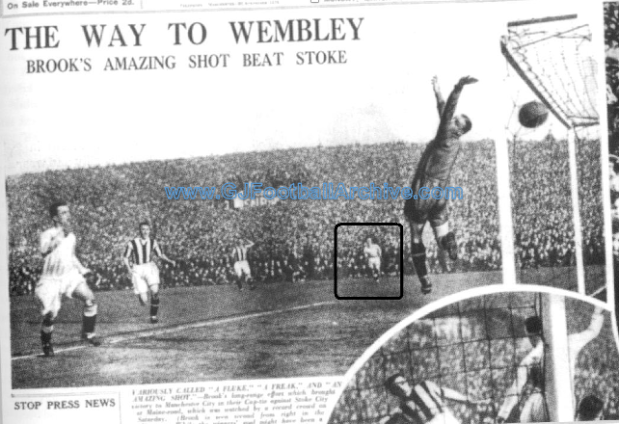
In its first season the capacity was tested and, on this day (8 March) in 1924 the largest attendance for any footballing fixture (including three FA Cup Finals) in Manchester gathered to watch the Blues. This was also, at the time, the record crowd for any game played on an English club ground. It was beaten ten years later when 84,569 watched City v Stoke – so It’s 102 years of this record for the Blues!

You can read about the remarkable day in 1924 below:

Subscribe to get access

Read more of this content when you subscribe today. It costs £20 a year (access to everything) or £3 per month (see below).

Subscribe to get access

Read more of this content when you subscribe today. It costs £20 a year (see above) or £3 per month (cancel anytime; access to everything posted since 1 October 2022).

You can read about the attendance that broke this record (again by City at Maine Road) here:

Other record crowd articles can be seen here:

https://gjfootballarchive.com/tag/record-crowd/

The 1910s: 1912-1913 Mangnall Walks Out On United 

The new series of features on Manchester City in the 1910s continues today with a 2800 word article on the 1912-13 season – A season which saw United’s most successful manager (at the time) walk out on the Reds to become City’s manager (he believed that City, with the larger pulling power, was a more ambitious club). If you’re a subscriber you can read all about that and the rest of the season below. If you’re not a subscriber then why not sign up for a month and see what you think?

Subscribe to get access

Read more of this content when you subscribe today. It costs £3 per month (cancel anytime) or sign up a year at a time for the discounted annual fee of £20. This gives access to everything on the site, including PDFs of 3 of my books and various other articles, interviews and audio material. Each subscriber has access to all content posted during their subscription period too. Why not sign up for a month and see what you think?

More on the 1910s soon. Why not subscribe and read this and all the other subscriber features?

40 Years Ago Today: MCFC Wembley Bound

Forty years ago today (11 December 1985) a 2-0 victory (3-2 on aggregate) by Billy McNeill’s Manchester City over Brian Horton’s Hull sent the Blues to Wembley for the inaugural Full Members’ Cup Final. City’s scorers at Maine Road were David Phillips and Jim Melrose before the largest crowd (by any club) of the entire tournament, excluding the final, of 10,180. Here’s a contemporary report by Patrick Barclay of the game:

 You can read more on the Full Members Cup and what it was all about here:

From My Collection… Topical Times Sporting Annual 1934 1935

During my tidy-up of my writing space I’ve rediscovered items I’ve used in my research over the years and thought I’d post some on here. Today here are some images and information from the Topical Times Sporting Annual 1934-35. There’s some interesting aspects and information that I’m sure some of you will find interesting. let’s start with the cover…

The player in the blue shirt is Manchester City’s Matt Busby who the yearbook regarded as one of the 6 sporting stars of 1934. Here’s what they said about him:

The book included a small section on each team. City’s looked like this (notice the record attendance has a typo; it should be 84,569. Also, look at Middlesbrough’s record crowd. It has since been passed though!):

For those wondering why this alphabetical list of clubs went from City to Middlesbrough and not Manchester United, the list was by division. At that time City were in the top tier and United were in the second. Here’s their profile:

At that time United’s record crowd was for a game staged at Old Trafford but not featuring United. That has since been surpassed but Old Trafford’s record is still for a game not featuring United (Wolves v Grimsby FAC tie). Note also the official colours of United.

Charlton-Arsenal Attendance

Here’s a cutting from a Manchester City match programme in October 1936 which talks of a game between Charlton and Arsenal, played on 17 October 1936. The official attendance that day was 68,160 for the League game. Note how it talks of Arsenal leaving their original base south of the Thames due to issues attracting crowds and then the mention of Charlton’s popularity in south London.

Incidentally, Manchester City’s record League attendance at this time was 79,491 and record attendance was 84,569.

You can find out all about Manchester City during the 1936-37 season by reading the following 2,500 word subscriber article on that season. If you subscribe (see below) I hope you enjoy it. If you don’t subscribe then why not try it for a month (£3 per month or sign up for a year at a discounted £20 per year)?

Here’s the article:

Subscribe to get access

Read more of this content when you subscribe today. It costs £3 a month (cancel anytime) or sign up for a year at £20 per year. Subscribers have access to the 1000s of articles, features, interviews etc. posted so far and all those posted during your subscription.

130,000 Capacity Stadium for Manchester City

This is an interesting cutting from 1935 talking about the possibility of increasing Maine Road to cope with the huge crowds that wanted to watch Manchester City play. It may seem crazy today but wasn’t such an odd idea in the 1930s. You can find out more on the story here:

The 1930s: 1937-1938 Making History

My series on Manchester City in the 1930s continues today with a 1,800 word subscriber article on the 1937-38 season. If you subscribe (see below) I hope you enjoy it. If you don’t subscribe then why not try it for a month (£3 per month or sign up for a year at a discounted £20 per year)?

Here’s the article:

Subscribe to get access

Read more of this content when you subscribe today. It costs £3 a month (cancel anytime) or sign up for a year at £20 per year. Subscribers have access to the 1000s of articles, features, interviews etc. posted so far and all those posted during your subscription.