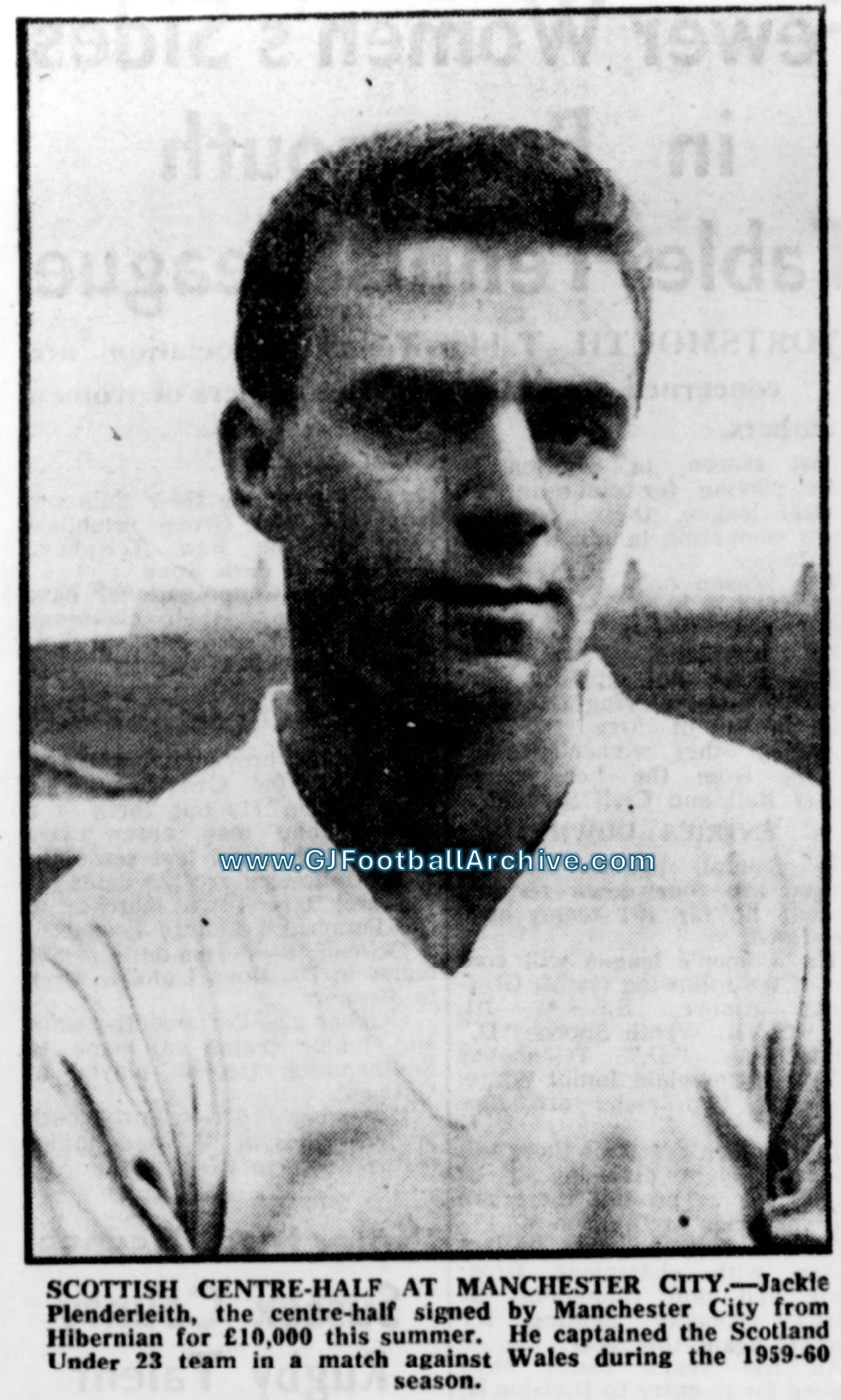
Jackie Plenderleith, ex-Hibs & City Tribute

Yesterday, I promised to share a tribute to former Manchester City and Hibernian player Jackie Plenderleith, who died this week, so here it is…

I had the pleasure of meeting Jackie once back in the 2005–06 season, when he made an unannounced visit to the City museum on a day I happened to be there. If memory serves, he caught up with Ken Barnes and a few other former players while he was in town. Though his time in Manchester wasn’t the key period of his career—that honour undoubtedly belongs to his years at Hibs — he still spoke of his time at City with genuine pride.

John Boyd Plenderleith, known universally as Jackie, was born in Bellshill (the same town that produced Matt Busby) on 6 October 1937. After turning out for Ferndale Athletic and Armadale Thistle, he signed for Hibernian in 1953, turning full-time professional the following year. A former Scotland Boys international, he made his league debut for Hibs shortly after his 17th birthday and almost immediately began attracting attention from clubs south of the border.
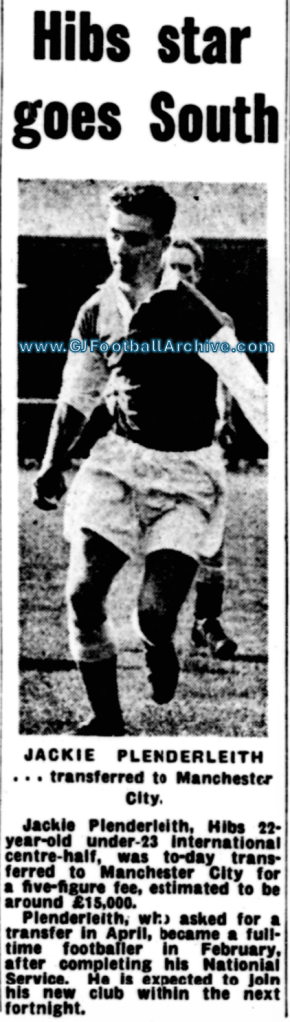
North of the border, he is fondly remembered for a trailblazing spell at Easter Road, most notably helping Hibs reach the semi-finals of the inaugural 1955–56 European Cup—making them the very first British club to compete in the tournament.

City’s interest was first sparked in January 1960 when Jackie lined up against the Blues in a Maine Road friendly. By the following summer, City decided to act and brought him to Manchester for £17,500, with the defender having already made 123 Scottish League appearances.

The Blues had just endured a disappointing 1959–60 campaign, finishing 16th and missing out on 15th only on goal average to Everton. Heading into 1960–61 with record signing Denis Law in the ranks, optimism was high—especially after manager Les McDowall bolstered the defence with full-back Barrie Betts and centre-half Jackie Plenderleith. Jackie made his City debut away at Nottingham Forest on 20 August 1960.
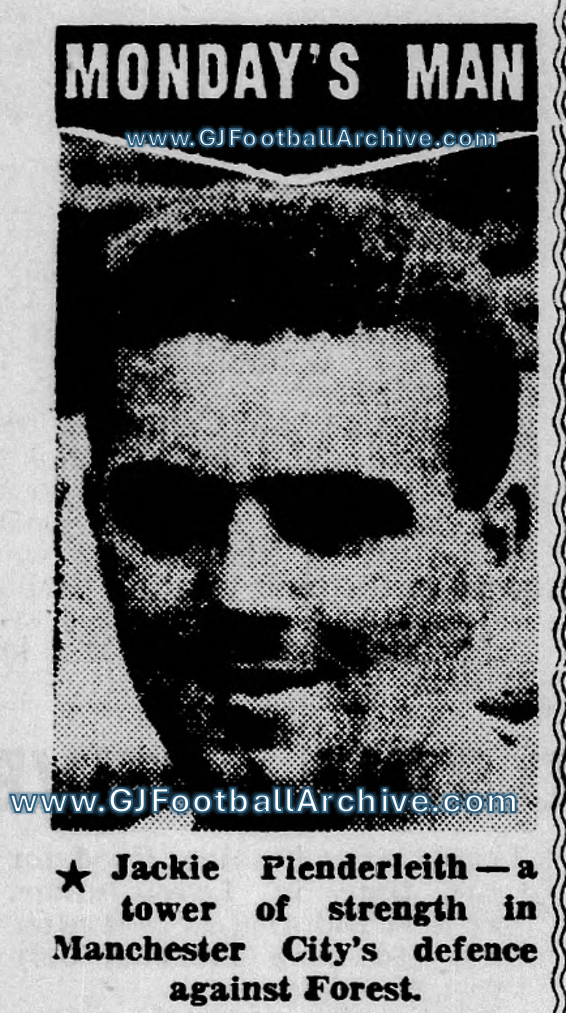
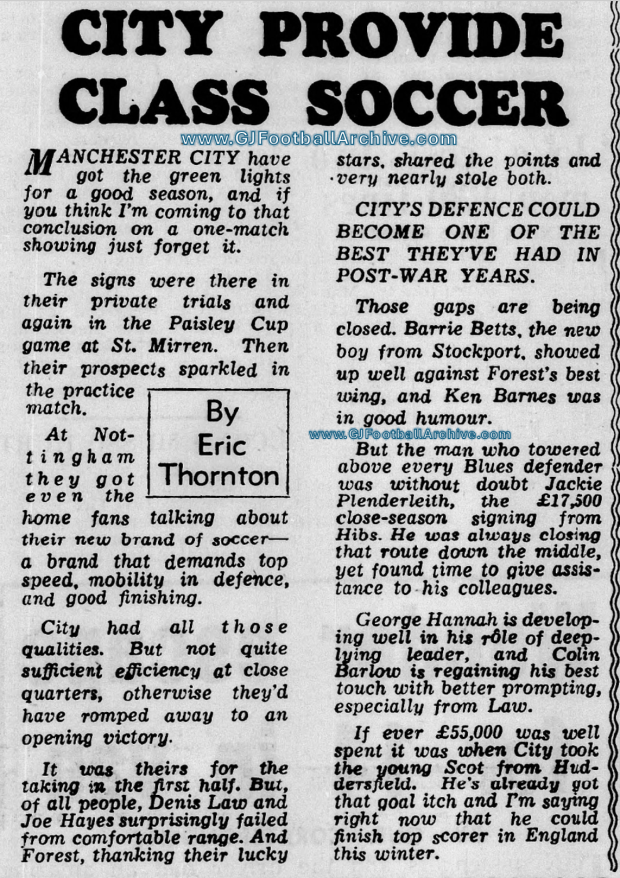
That debut season was undoubtedly his finest in a blue shirt. Steady and dependable at the heart of the defence, he rarely missed a match and was rewarded with a full Scotland cap against Northern Ireland. Sadly, his second season saw him fall out of favour and into the reserves as the veteran Dave Ewing was recalled to the senior side. Frustrated, Jackie handed in several transfer requests, though he remained at the club until at least November 1962, when he was sent off in a reserve fixture against Derby.
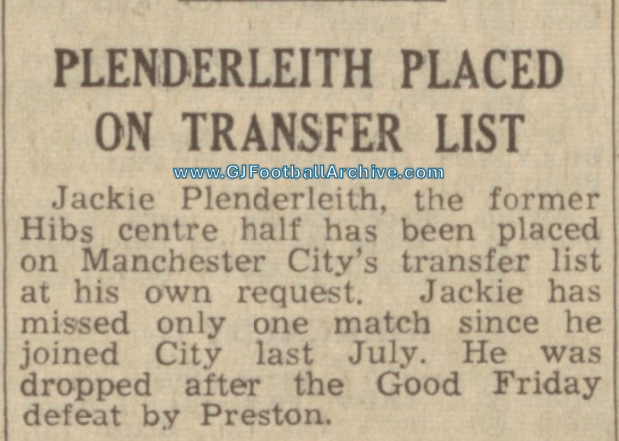
When we spoke at the museum, Jackie was candid about how things were at Maine Road: ‘I earned my only Scottish cap with City. I signed from Hibs in July 1960 for £16,500 and by November had won my first cap against Northern Ireland. We won 5–2, but I was dropped. I didn’t get picked again simply because I’d lost my place in City’s first team. Things started to go wrong for me at Maine Road during my second season. I’d asked for a transfer because I thought I was being made a scapegoat, and finally it ended with me going back to Scotland to Queen of the South on a free transfer in September 1963.’

Yet despite the frustrations on the pitch, he didn’t seem bitter towards the club when we chatted: ‘Despite the fact I had my share of reserve team football, and also the fact that the first team seemed to be perpetually struggling, I really enjoyed life at Maine Road.’

His generosity off the pitch also left a lasting mark on his teammates. Bobby Kennedy, another Scot who arrived in 1961, later told me how much Jackie helped him adjust to life in England: ‘I was fortunate that Jackie was at City because he looked after me and helped me settle, as it felt like an entirely different way of life. At first, Jackie would take me and my wife to the pubs and clubs—I guess he wanted to show us the different areas and help us get accustomed to the place.’

Following his departure from Manchester, Jackie went on to play for Queen of the South, Cape Town City, and Hellenic FC, before taking on the role of player-manager at Dunoon Athletic—balancing his football duties with a weekday job managing a local boatyard and carrying out boat repairs.
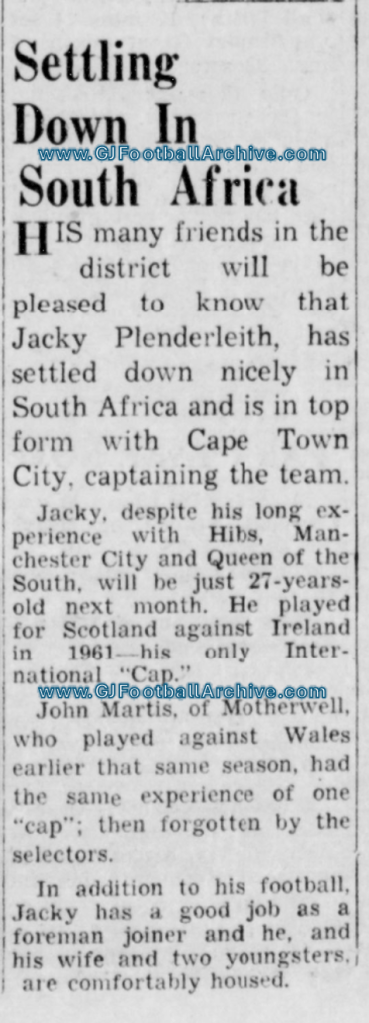
In all, he made 47 first-team appearances for Manchester City alongside 59 outings for the reserves, scoring once. My thoughts are with his family, friends and former players.

Top Two Divisions Attendances and Table From Today in 1985

Here are the top two divisions of the Football League’s attendances together with the two League tables. Whenever details like attendances are posted in isolation people often ask for clarity on how the top tier figures compare to the second tier and whether League position played its part in affecting crowds. Firstly, here are the top flight attendances published on 17 November 1985:

And here’s those that correspond with today in 1985 (published 24 November 1985), together with the League table too.

Obviously, these are only snapshots from that season.

If you’d like to know more about Manchester City at this time, here’s a 2,500 word subscriber feature on the 1985-86 season. Enjoy!

Subscribe to get access – Monthly

Read more of this content when you subscribe today. It costs £3 per month (cancel anytime) to access everything posted since 1 October 2022 or there’s a special annual rate below which gives greater access and works out much cheaper.

Subscribe to get access – Annual

Read more of this content when you subscribe today. It costs £3 per month (above) or £20 a year (here) to access everything posted since the site was created in December 2020. This special rate works out about £1.67 a week and gives access to everything posted, including PDFs of 3 of my books.

If you’d like to know more about subscribing then see:

Kaziu Deyna Goal v Forest

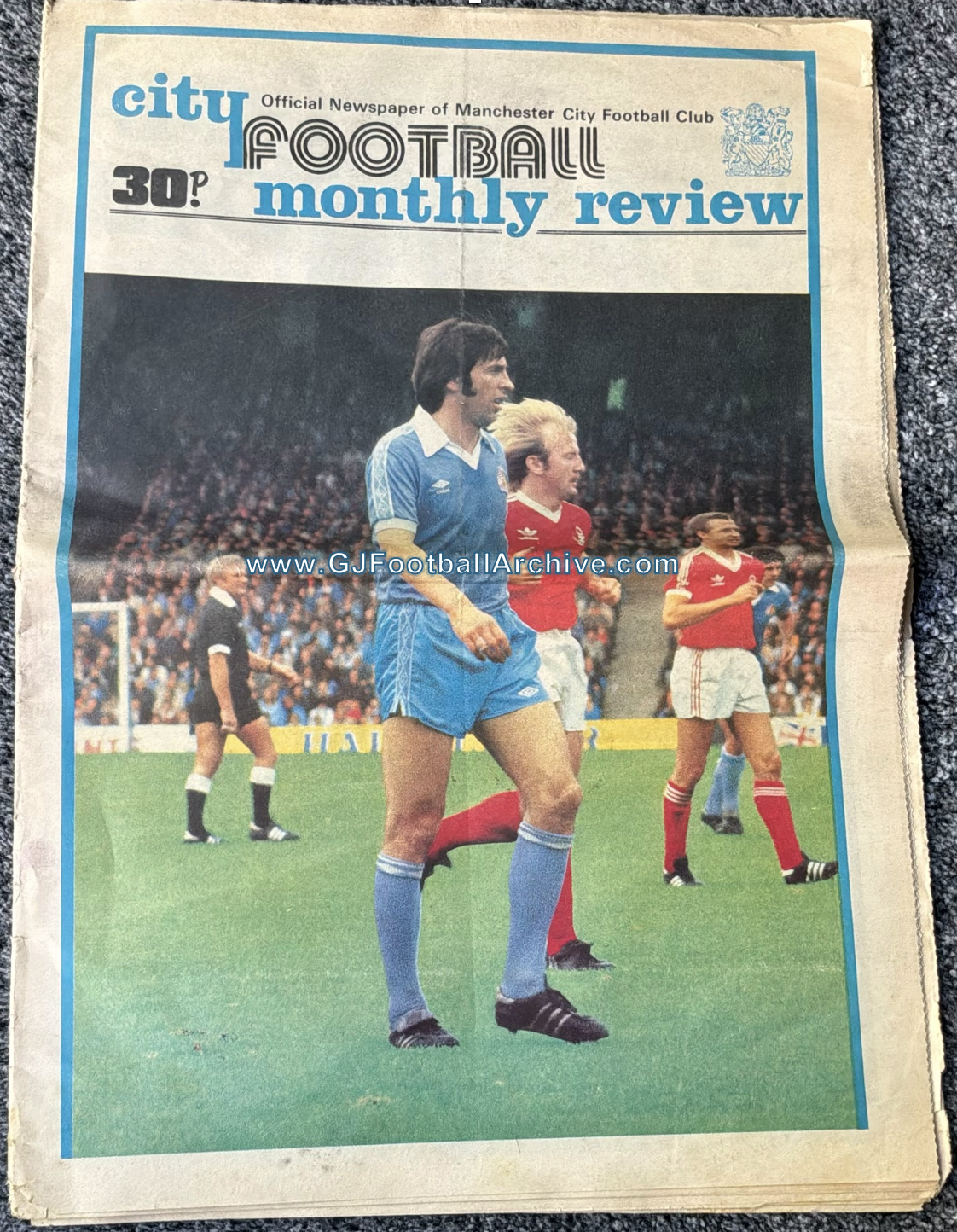
On this day (13 October) in 1979 Kaziu Deyna scored the only goal of the City-Nottingham Forest League game at Maine Road. The photograph shows Deyna in action during this game.  A crowd of 41,683 witnessed the City win with future Spanish TV presenter Michael Robinson wearing the number 9 shirt for the Blues that day.

Back in 2003 I wrote this profile of former Manchester City player and Polish World Cup star Kazimierz Deyna. Deyna was such an important and unusual signing at the time he joined City in November 1978 that I feel this article is still appropriate and of interest to subscribers to my blog today.

Subscribe to get access – Annual

If you would like to read this in-depth article and all the others on this site (including the entire Manchester A Football History book) then please subscribe. It works out about £1.67 a month if you take out an annual subscription (£20 per year) or £3 a month (see below) if you’d like to sign up for a month at a time. Each subscriber gets full access to the 1000+ articles posted so far and the hundreds scheduled to be posted in the coming weeks.

Subscribe to get access – Monthly

If you would like to read this in-depth article and all the others on this site (including the entire Manchester A Football History book) then please subscribe. It costs £3 a month (cancel anytime) of take out a special annual subscription for £20 (above).

Manchester 1840-1919 (Part Six)

Every Monday I’m posting a section from my book ‘The Emergence of Footballing Cultures: Manchester 1840-1919’. It tells the story of the origins of men’s football in Manchester and discusses the birth of both City and United plus the clubs that predated them such as Hulme Athenaeum, Manchester AFC, Birch etc. Today’s section is the fifth chapter of the book (a 8,200 word section). This focuses on the establishment of clubs in the 1870s and 1880s, including City and United’s predecessors.

Subscribing costs £3 per month (cancel anytime) or you could sign up for a year at the discounted price of £20 per year. Every subscriber gets access to everything posted on the site.

Subscribe to get access

Read more of this content when you subscribe today.

Manchester 1840-1919 (Part Five)

Every Monday I’m posting a section from my book ‘The Emergence of Footballing Cultures: Manchester 1840-1919’. It tells the story of the origins of men’s football in Manchester and discusses the birth of both City and United plus the clubs that predated them such as Hulme Athenaeum, Manchester AFC, Birch etc. Today’s section is the fourth chapter of the book (a 11,000 word section). This focuses on the footballing communities that developed during the mid to late 1800s.

Subscribing costs £3 per month (cancel anytime) or you could sign up for a year at the discounted price of £20 per year. Every subscriber gets access to everything posted on the site.

Subscribe to get access

Read more of this content when you subscribe today.

Manchester City v Nottm Forest

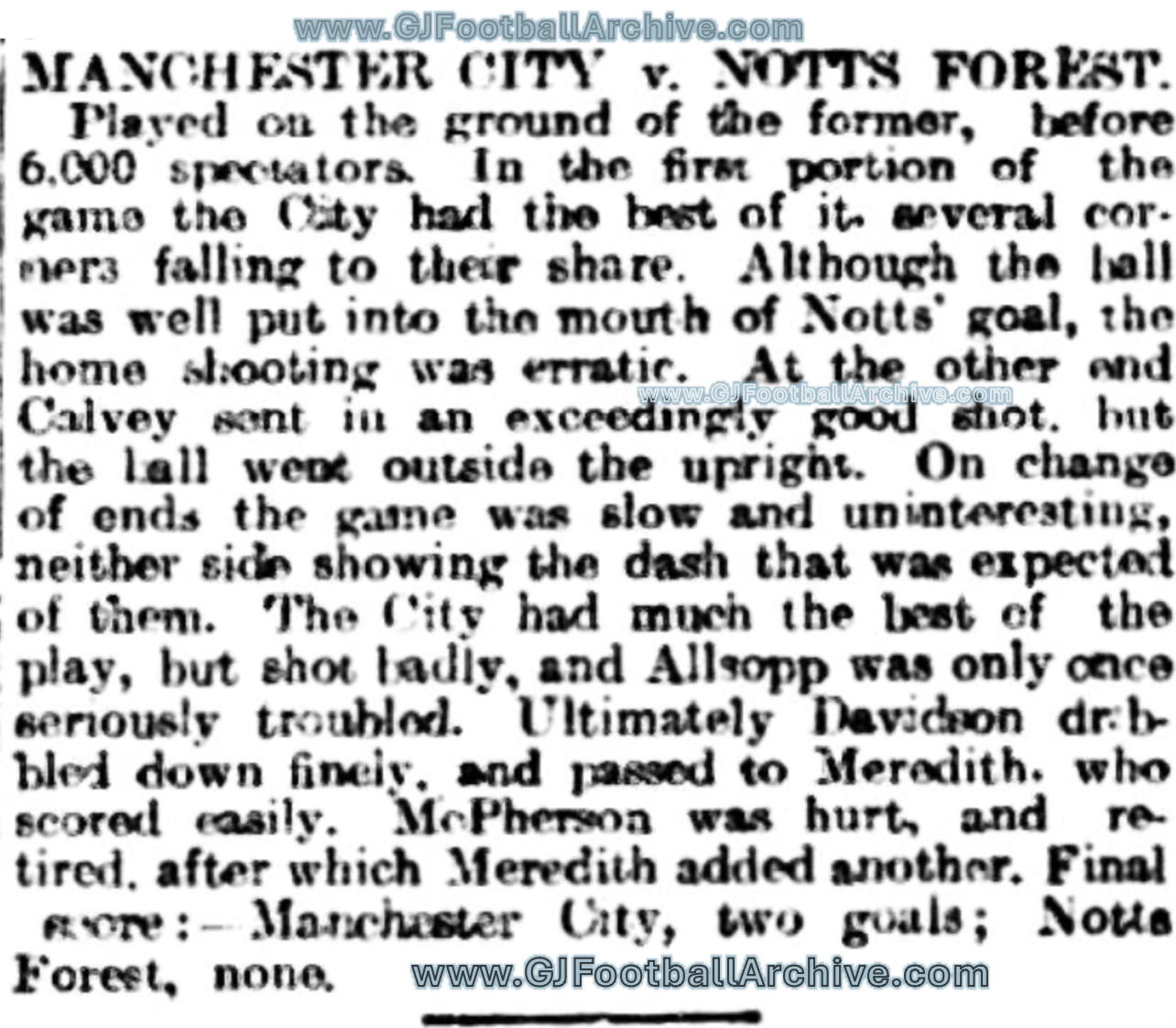
It’s City v Forest tonight (4 March 2026), so here’s a few snippets/features on the two clubs. The first game between them in Manchester was played on 9 April 1900 and ended in a 2-0 City win (see report). This was a First Division game (City became the first Manchester side to earn promotion when they won the Second Division title the previous season). Billy Meredith scored both goals.

Manchester City with the Second Division Shield, 1899

There are quite a few articles on Forest and City on here. Here are all the ones tagged Nottingham Forest:

https://gjfootballarchive.com/tag/nottingham-forest/

Also, if you’d like to find out more on the early 1900s for Manchester City then why not start with this subscriber feature on the second half of the 1899-1900 season? It’s a 1300 word article:

Subscribe to get access

Read more of this content when you subscribe today. It costs £3 per month (cancel anytime) or sign up a year at a time for the discounted annual fee of £20. This gives access to everything on the site, including PDFs of 3 of my books and various other articles, interviews and audio material. Each subscriber has access to all content posted during their subscription period too. Why not sign up for a month and see what you think?

More on the 1900s tomorrow. Why not subscribe and read this and all the other subscriber features?

The 1910s: 1910-1911 Ground Work

The new series of features on Manchester City in the 1910s continues today with a 1500 word article on the 1910-11 season. If you’re a subscriber you can read this below.

If you’re not a subscriber then why not sign up for a month and see what you think?

Subscribe to get access

Read more of this content when you subscribe today. It costs £3 per month (cancel anytime) or sign up a year at a time for the discounted annual fee of £20. This gives access to everything on the site, including PDFs of 3 of my books and various other articles, interviews and audio material. Each subscriber has access to all content posted during their subscription period too. Why not sign up for a month and see what you think?

More on the 1910s soon. Why not subscribe and read this and all the other subscriber features?

5-1 to 5-4 Score!

Last night’s game and talk of comebacks has reminded me that only a couple of months ago I posted about a remarkable game from 24 September 1927 which ended with Manchester City beating Forest 5-4 at the City Ground. Manchester’s Blues had been winning 5-1 shortly into the second half before Forest started a fightback. Here’s a report:

24 September 1927 MCFC 5 Nottingham Forest 4

You can read more on this season for if you subscribe (see below). I hope you enjoy it. If you are not currently a subscriber then why not try it for a month (£3 per month or sign up for a year at a discounted £20 per year)?

Here’s the article:

Subscribe to get access

Read more of this content when you subscribe today. It costs £3 a month (cancel anytime) or sign up for a year at £20 per year. Subscribers have access to the 1000s of articles, features, interviews etc. posted so far and all those posted during your subscription.

Top Two Divisions Attendances and Table From 40 Years Ago!

Last week I posted the top flight attendances for this last week forty years ago and this led to a number of comments/questions and so to answer some of those I’ve now posted the top two divisions attendances together with the two League tables AND the end of season average attendances. People asked for clarity on how the figures compared to the second tier and whether League position played its part in affecting crowds. As a reminder here’s last week’s attendances…

And here’s this week’s (published 24 November 1985) and the League table too.

Obviously, these are only snapshots from that season but to add a bit more context here are the end of season averages here are the top 46 best supported clubs in order that season (hopefully it might make those who sing songs like ‘Where Were You?’ think about the crowds at their own clubs first):

A few notable League positions for those who do sing ‘Where Were You?’… The top eight clubs in the League were: Liverpool (champions), Everton, West Ham, Man Utd, Sheff Wed, Chelsea, Arsenal and Forest. Manchester City (who were 4th best supported club) were 15th (only 4 points above relegation zone), Spurs were tenth, Newcastle 11th and Aston Villa 16th.

In the Second Division best supported club Sunderland were 18th (avoiding relegation by 4 points); the top four were Norwich, Charlton, Wimbledon and Portsmouth.

If you’d like to know more about Manchester City at this time, here’s a 2,500 word subscriber feature on the 1985-86 season. Enjoy!

Subscribe to get access – Monthly

Read more of this content when you subscribe today. It costs £3 per month (cancel anytime) to access everything posted since 1 October 2022 or there’s a special annual rate below which gives greater access and works out much cheaper.

Subscribe to get access – Annual

Read more of this content when you subscribe today. It costs £3 per month (above) or £20 a year (here) to access everything posted since the site was created in December 2020. This special rate works out about £1.67 a week and gives access to everything posted, including PDFs of 3 of my books.

If you’d like to know more about subscribing then see:

Attendances 40 Years Ago!

These two results tables for top flight football in November 1985 make interesting reading. I’ve included the details published today (17 November, for games played the previous day) in 1985 and also the week after’s details too. This gives an idea of what the top clubs were attracting back then. Notice West Ham’s game attracted more at home than Arsenal’s and that Liverpool were over 26,000 less than Manchester United. Arsenal’s crowd was 6,000 less than struggling Manchester City and Tottenham attracted more than Arsenal too. Reigning League champions Everton were some way ahead of the London clubs and only about 600 behind Liverpool. Obviously, these are only snapshots from two weekends but hopefully it might make those who sing songs like ‘Where Were You?’ think about the crowds at their own clubs first.

the Marwood scoring for Sheffield Wednesday was of course Brian Marwood who went on to play a key part in Manchester City’s modern return to glory. If you’d like to know more about Manchester City at this time, here’s a 2,500 word subscriber feature on the 1985-86 season. Enjoy!

Subscribe to get access – Monthly

Read more of this content when you subscribe today. It costs £3 per month (cancel anytime) to access everything posted since 1 October 2022 or there’s a special annual rate below which gives greater access and works out much cheaper.

Subscribe to get access – Annual

Read more of this content when you subscribe today. It costs £3 per month (above) or £20 a year (here) to access everything posted since the site was created in December 2020. This special rate works out about £1.67 a week and gives access to everything posted, including PDFs of 3 of my books.

If you’d like to know more about subscribing then see: