An On This Day Always Worth Remembering

On this day (9 October) 59 years ago Manchester City signed Francis Lee. Here is a long profile of him that I’ve written, together with links to other stories and audio tributes to him too:

A World Cup international for England, Francis Lee remains one of Manchester City’s most famous former players and one of the Club’s greatest heroes.

Early Life

Born in Westhoughton, on the edge of Bolton, Francis remembers that sport played a big part in his early life.  His father used to play a lot of football with him and encouraged him to develop his skills.  The young Francis would play any other sporting activity, but it was football which brought him to the attention of the local scouts.  

While training at Horwich Technical College an offer came from Bolton Wanderers:  “I went to college in Horwich but left to sign for Bolton.  The principal said I was stupid but my father, who had spent forty years working in a cotton mill doing something he didn’t like, said why not give it a crack.  He said I could always go back to college if I didn’t make the grade, and the idea was to give myself a year.  Within six months I thought I had a chance of making it.”

Francis’ new footballing career was about to develop at an incredible pace.  On Bonfire Night 1960, he made his debut at the age of 16 after only appearing in eight Central League matches.  The game was, co-incidentally, against Manchester City and Bolton won 3-1 with Francis marking a superb debut with a goal:  “I scored at exactly 3.15.  I know because there was a photo of me the next day, heading past Bert Trautmann with the time on the stand clock in the background.”

To score a debut goal against such a legendary goalkeeping figure was clearly something Francis could hardly have dreamed of six months earlier, and inevitably it was enough to keep the Westhoughton youngster in the side for the following five League games.  A further five games followed in 1961-62, and then the next season Francis found himself having a sustained run in the side making 23 League appearances and scoring twelve goals.  Four of those goals came from the penalty spot, including two in a game at West Bromwich Albion in September, and it’s fair to say Francis’ success from the penalty spot throughout his career helped to develop his name.  

Malcolm’s Bath

During January 1964 Francis played against Malcolm Allison’s Bath City in the FA Cup.  On a miserable and difficult pitch at non-League Bath Bolton were awarded a penalty.  Francis prepared to take the kick but as he did so he heard his own captain whisper to another Bolton player:  “He’s due to miss one, you know.”  Whether it was the conditions or the vote of ‘no confidence’ is unclear but the penalty was not one of Francis’ best.  It did, however, go into the net off the inside of the post.  It may not have been the perfect penalty, but it certainly made Bath’s Malcolm Allison notice the player, and it saved Bolton from an embarrassing defeat.  

The match went to a replay and the Trotters won the return 3-0 with Francis once again scoring from the penalty spot.  Francis’ approach to penalty taking is clear:  “You’ve got to want to take penalties to be good at it.  You’ve got to enjoy it.  The kick itself is the easy part.  Any player who can’t hit the corner of the goal from twelve yards shouldn’t be playing.  Nerve is the key.  Everyone said I blasted the ball, but I used to aim for the stanchion and hit the ball at three-quarter speed, pretending I was passing the ball fifty or sixty yards.  I would take a long run up to give the ‘keeper longer to think about it – it gave him less of an idea which side I was going to hit it.”

Time to Leave

Francis’ career at Bolton continued until October 1967.  By that time he had made a total of 210 League and cup appearances and netted 106 goals, and was clearly a man other sides were interested in.  Unfortunately, his final year had become a difficult one as far as his relationship with the club was concerned:  “It was enjoyable at Bolton, but frustrating.  I really wanted to get away from the age of 18 or 19 because I could see they were going nowhere.  The wages were poor and the club just wasn’t changing with the times on or off the field.  My contract was up in the June (1967) and they didn’t want to sell me, so I signed a monthly contract.  Bolton said they would never sell me and offered £150 a week to stay.  I was only on £30 at the time, but I knew the only chance to further my ambition was to leave.  By October I had served my contract, and the option, and virtually retired!  I hadn’t played football for about three weeks.  I just did a bit of training on my own.  Eventually, Bolton realised they had a rapidly depreciating asset.”

Manchester City were interested from the start.  Malcolm Allison remembered Francis from the Bath-Bolton match and, of course, he had played in the Bolton-City Second Division game in November 1965, but the Blues were not the only interested party.  Stoke made an offer; Wolves were very keen; and Bill Shankly at Liverpool had also been very interested, but in the end it was Joe Mercer and Malcolm Allison who got their man.  

At one point Mercer turned to the player and said:  “I hope you will sign.  We feel we’ve got the start of a good side.  We are just one player short, and we think you are that player.  The odd goal or two will turn us into a great team.”

But even after the main negotiations had been agreed the transfer still stuttered – the League refused to accept the registration at first.  Eventually Francis did sign, and his transfer did help turn City into a great side as Mercer predicted.  Within seven months of his arrival the Blues were League Champions for the first time since 1937.

Playing on the right, with Mike Summerbee as centre-forward, Francis scored sixteen League goals in 31 games and ended that Championship season as second highest goalscorer – only three short of Neil Young.  There had been many thrilling and memorable performances with famous victories over Tottenham, Manchester United, and the last day tussle with Newcastle all grabbing the headlines.  Francis was a key player in each of these games, but it’s fair to say he excelled throughout the season.  Prior to his arrival, City had lost five of the eleven games they had played, with Francis in the side that record improved considerably and they were worthy champions.  Mercer had been right, Francis was the last piece of the jigsaw.

Cup Success

Much was expected of the Blues at the start of the following season, but injury to Tony Book affected City more than anyone could have anticipated.  In addition, every side seemed to raise its game when it faced City making average opposition appear like world beaters.  Francis was moved into the number nine shirt for the second half of the season and, although league form remained mixed, City started to compete well in the FA Cup.  Francis: “Having murdered everybody in my first season, we floundered as soon as the next season started.  We thought we had a divine right to go out and thrash people.  Mike (Summerbee) didn’t start very well at centre-forward because opponents got wise to his style.  So they changed us.  I was perfectly happy, it didn’t matter where I played.  But I don’t think centre-forward was my best position.  I was happiest when I was supporting a big striker.”

“When I played for England, Geoff Hurst was the striker up front, and when City bought big Wyn Davies I scored 33 goals one season.  In my time at Maine Road there was talk of buying Joe Royle or John Toshack and I think if we had, my record would have been better.”

The 33 goals mentioned by Francis came in 1971-72 and remains the second highest total of goals scored in a League season by a Blue, but before that Francis played in three major finals for City.  The first, the FA Cup in 1969, saw City defeat Leicester 1-0 with a goal from Neil young:  “I was delighted to beat Leicester and win the cup, but I didn’t have the best preparation for the Final.  I’d been out since the semi with a leg strain, and though I was fit, I had missed a couple of weeks’ training.  I don’t think I played outstandingly, I just had an average game, which was a shame.”

Less than a year later Francis did play a major part in the League Cup success over West Bromwich Albion, and the ECWC win over Polish side Gornik Zabrze.  Writing in his autobiography in 1970 Francis felt the Gornik match had been tough at times:  “The result was better than we dared hope.  Secretly, I thought beforehand that Gornik were going to be really difficult, and that with Mike Summerbee out we could easily struggle unless we hit absolutely peak form.  After eleven minutes Neil Young snapped up a chance presented to him by a lapse on the part of Poland’s international ‘keeper Kostka, and two minutes from half-time I hit a penalty in via the ‘keeper’s legs.”

“Our rhythm was disturbed for a while when Doyle was carried off in the first half with a leg injury, but we seemed to be cantering to victory when the Poles surprisingly pulled back the score to 2-1 in the 69th minute.  The rain had started to bucket down, and even when they scored I felt our only chance of losing the game was if it was called off.  There was a real fear of this at one time, but Gornik obviously sensed they were back in with a chance because they tried to put the pressure on us.  Even their goal was diverted off George Heslop and I think Joe Corrigan would have saved but for this.”

“In the last few minutes I think Gornik got the message that we had been on top throughout the game and intended staying on top.  We certainly felt we were good winners.”

Derby Move

After Gornik, City were seen as one of football’s most glamorous sides and Francis, with his never say die, bustling style, was a firm favourite.  His goals in 1971-72 brought City within a point of the title, and then in 1974 the Blues reached Wembley again in the League Cup final.  Sadly, the game ended in defeat, and at the end of that season Francis was sold to Derby County:  “I didn’t want to leave, I felt I had a couple more good seasons in me but Tony Book (the manager) said he thought it would be better if I went.”

Francis moved to Derby County and, as if to prove City wrong, the entertaining forward helped his new club to the League title:  “I think City would have won the League that season if I’d stayed.  The season before I signed for Derby, they won four away games.  We won seven after I arrived and won the League.”

Of course, Francis’ success wasn’t only confined to club football. He was also a wonderful England forward, scoring ten goals in 27 international appearances between December 1968 and April 1972.  There are many who felt his international career should have continued for at least another year, however it is worth stressing that he appeared for England at a time when there were many, many quality attackers desperate to make an impression.  The England side of 1970, for example, is believed to be one of the strongest national sides of all time.  Francis himself believes the 1970 side was one of quality:  “I played three games in the 1970 World Cup finals and I felt we had a better side than in ’66.  The players who had won the Cup were more experienced and I think the fringe players were better.  If we hadn’t gone out to West Germany in extra-time in the quarters, I think we would have gone on to win it.  Brazil certainly didn’t fancy playing us.”

Retirement

In 1976 Francis retired.  His final game came on 24th April 1976 when he scored twice for Derby against Ipswich in the final two minutes – a perfect way to end a great career.

After football, Francis spent most of his time developing his business interests, most notably his toilet paper manufacturers, and horse racing training.  His business interests had started while he was still a Bolton player and helped make Francis a multi-millionaire. Inevitably there was often talk during the 1980s and early 90s that Francis would one day turn his attention back to City.  During 1993-94 the fans backed a campaign to help him take over the Club, and he went on to replace Peter Swales as Chairman.  Off the pitch, the structure of the Blues improved considerably, however on the pitch activities struggled.  

In 1998 Francis stepped down as Chairman.  After that time Francis continued to be a major shareholder and regular attendee at City.  It’s fair to say his time as Chairman did not bring the level of success everybody anticipated, but his time as a player certainly brought more rewards than any neutral could have predicted on the day he signed in October 1967.

Francis will always be remembered as one of Manchester City’s greatest international players, and a firm favourite with supporters.

You can hear me and Mike Sweeney talk briefly about him here:

Here’s a tribute on the Blue Moon Podcast I did with David Mooney:

Francis Lee’s first MCFC penalty is remembered here:
Allison’s Red and Black

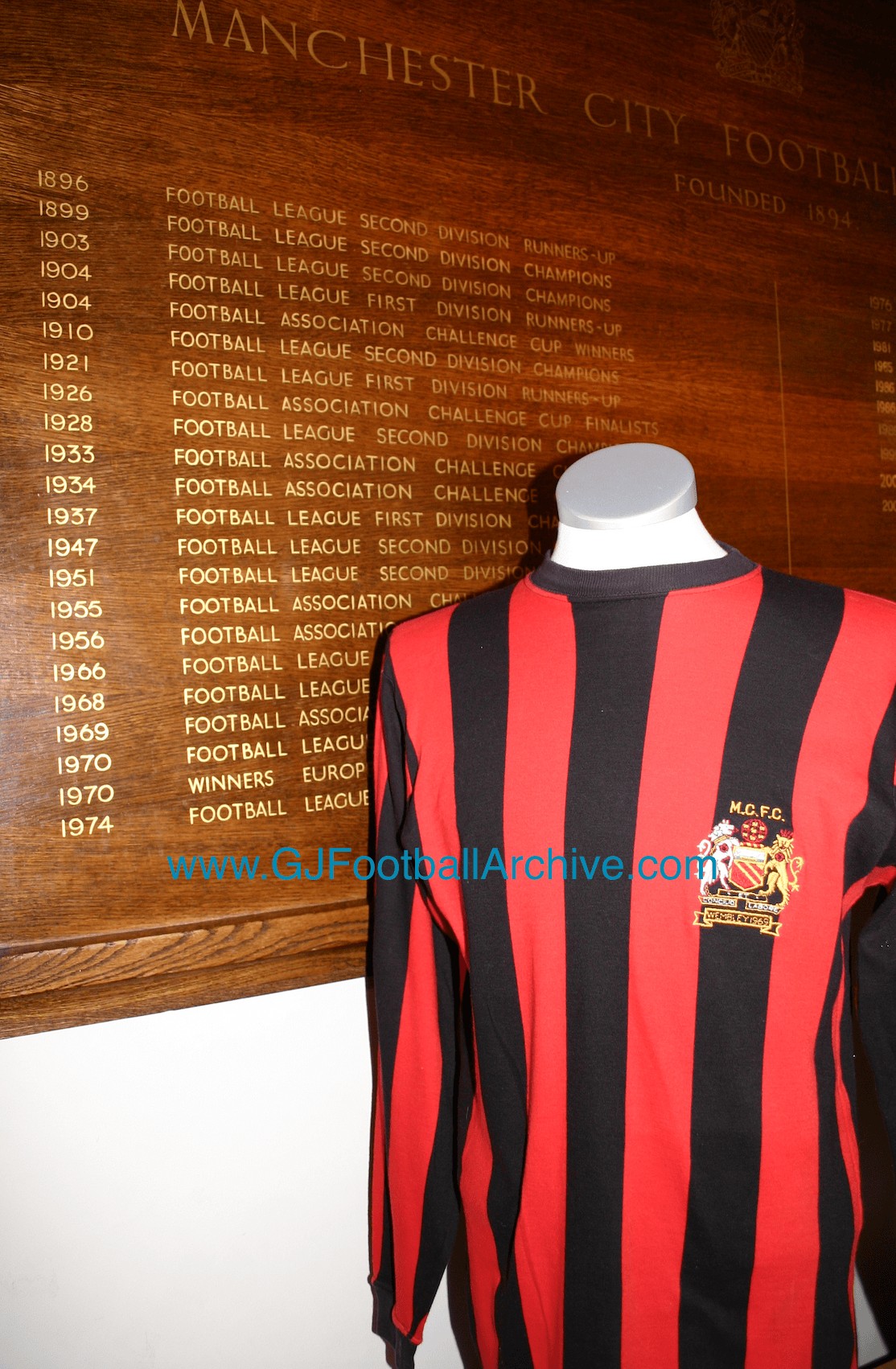
On this day in 1968 Manchester City wore Red & Black stripes for the first time. Malcolm Allison had suggested adopting AC Milan’s colours and City first wore them for their meeting at Everton on October 5 1968. Sadly, City were defeated 2-0 at Goodison and the colour change wasn’t popular with fans at first. However, due to a colour clash with Leicester, the new colours were worn in the 1969 FA Cup final. The club won that trophy and the kit soon entered City folklore as an important kit.

City chose to wear the new style for all the successful major finals that followed during Joe Mercer & Malcolm Allison’s time, including the club’s first European trophy in 1970.  At one point Allison suggested making red and black the first choice kit.

There were however plenty of complaints about City adopting the colours. Take a look at an earlier post I made on those complaints here:

A European Cup First

On this day (18 September) in 1968 Manchester City’s first European Cup fixture against Fenerbahce ended goalless at Maine Road.  This was the first time two British clubs from the same city had competed in the European Cup. Here’s a match report of the City game:

Francis Lee (left) and Mike Summberbee (right) threaten the Fenerbahce goal in City’s first European Cup tie in 1968.

Subscribers can read a feature about that game here:

Subscribe to get access – Monthly

This article is available to subscribers. It costs £3 per year (cancel anytime) to subscribe and monthly subscriver get full access to all the articles, interviews and books published since 1 October 2022. There’s also a special annual option (see below).

Subscribe to get access – Annual

This article is available to subscribers. It costs £20 a year (£1.67 per month) to subscribe and for that you get full access to all the articles, interviews and books already published since the site was created in December 2020 and throughout your subscription.

From The Archive: Facts That Rarely Change

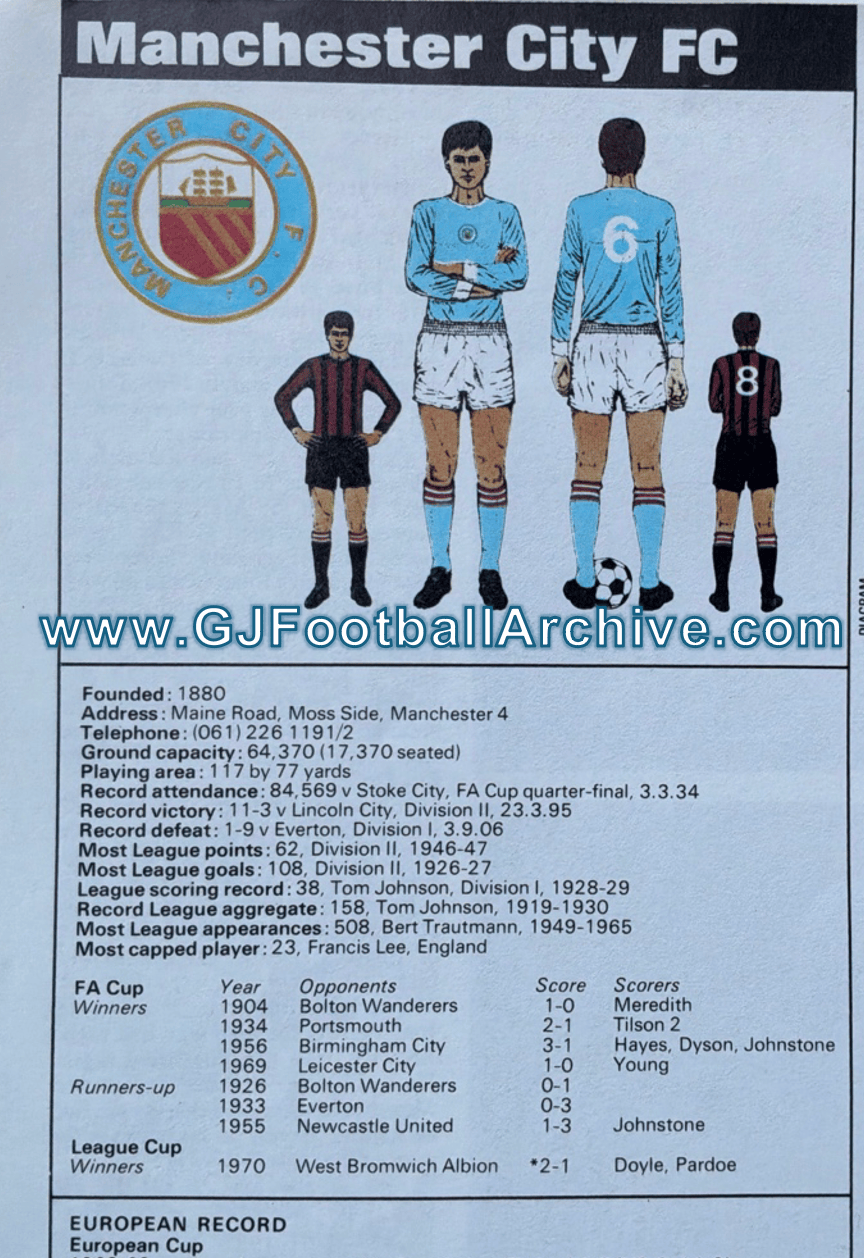
Here’s a section from a magazine in my collection. It’s part of the 1970s Book Of Football series and this section shows Manchester City’s kit and club details as they were in 1972. For years much of this didn’t change but now almost every line of club facts/details have changed, even the address of course! Interestingly, the capacity of the Etihad today is closer to the recorded capacity of Maine Road when this was published than at any other time since then (the seating of the North Stand dropped the attendance by around 10,000 and the capacity continued to drop until the move to the current stadium and then the increases since then).

I’ve not reviewed every fact but from memory the ones that remain are: Founded 1880 (as St Mark’s but 1894 at MCFC); the record attendance of 84,569; record victory and record defeat; Most League goals has been equalled; Tommy Johnson still holds the most goals in a League season but all the other player stats have changed. Of course the badge and kit have also changed on more than one occasion since then.

Seven Goal League Cup Tie: City v Wolves

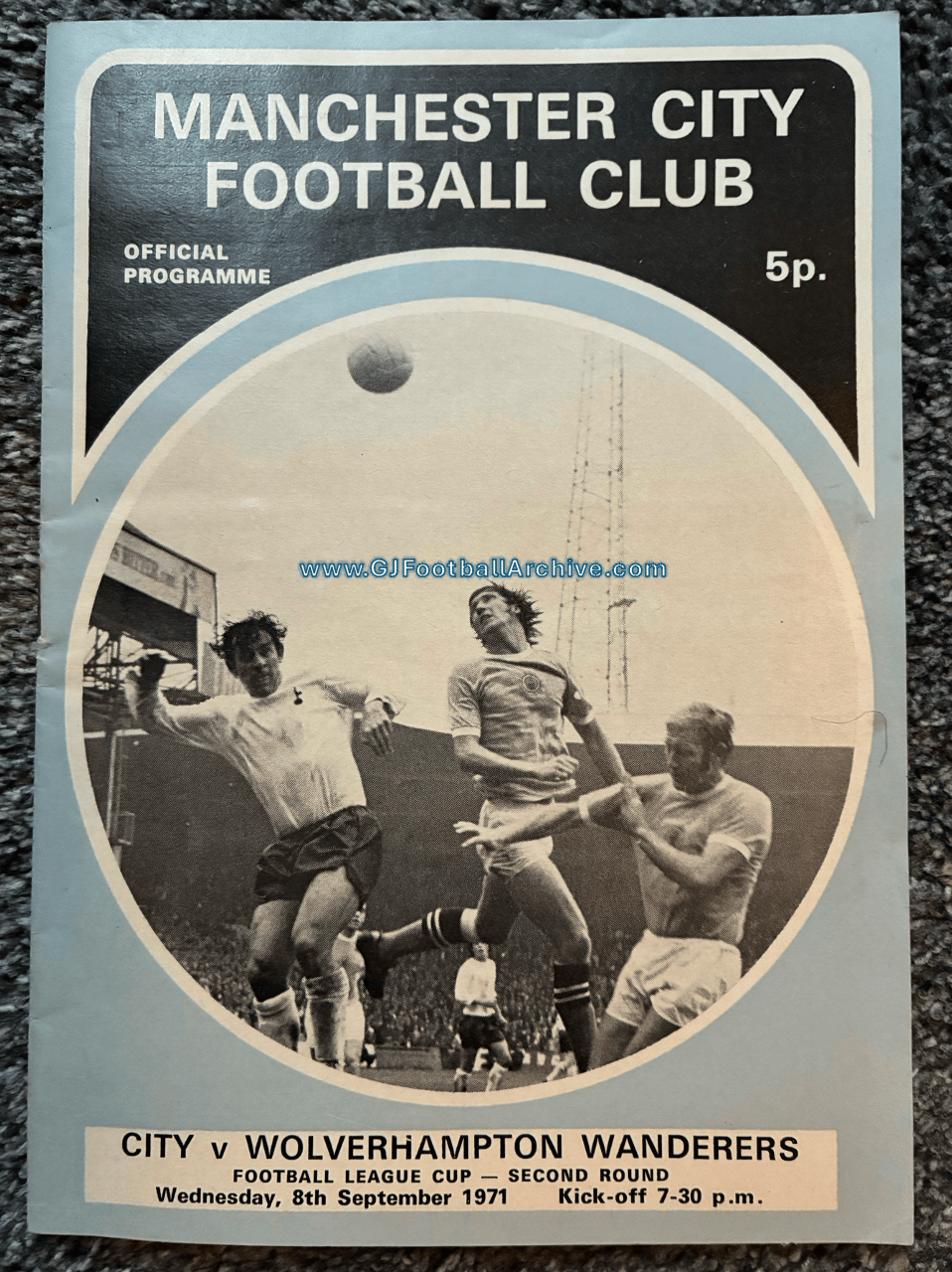
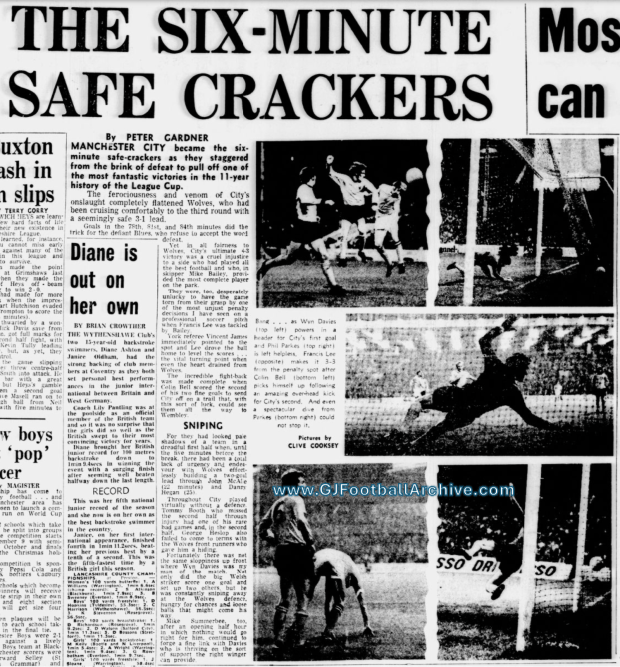
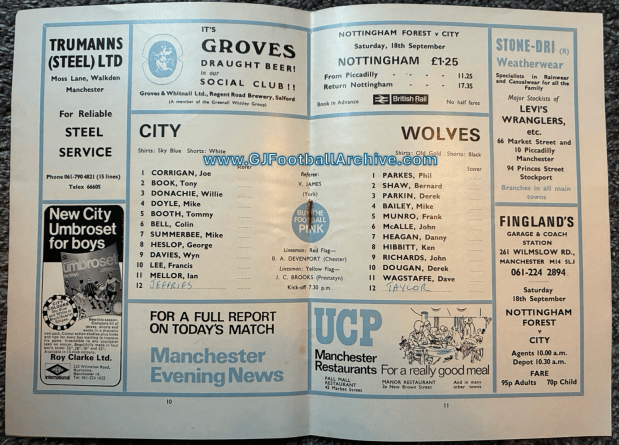
On this day (8 September) in 1971 Manchester City defeated Wolves 4-3 in the League Cup. The Manchester Evening News claimed this was ‘one of the most fantastic victories in the 11 year history of the League Cup.’ Wolves were leading 3-1 and appeared comfortably through to the third round when City scored in the 78th, 81st and 84th minutes to send City through instead. Here’s a report of the game:

8 september 1971 City 4 Wolves 3 League Cup

You can find out more on the entire 1971-72 season for City with a 4,700 word article – a hugely significant season though one that’s often neglected. Subscribers can read this below.

If you want to know more on this incredible decade for Manchester City Football Club then why not subscribe and read it all? You could even subscribe for a month and see what you think. The following 4,700 word article is on the 1971-72 season and is available to subscribers below. Enjoy!

Subscribe to get access – Monthly

Read more of this content when you subscribe today. It costs £3 per month (cancel anytime) to access everything posted since 1 October 2022 or there’s a special annual rate below which gives greater access and works out much cheaper.

Subscribe to get access – Annual

Read more of this content when you subscribe today. It costs £3 per month (above) or £20 a year (here) to access everything posted since the site was created in December 2020. This special rate works out about £1.67 a week and gives access to everything posted, including PDFs of 3 of my books.

If you’d like to know more about subscribing then see:

Manchester City 4 WBA 1

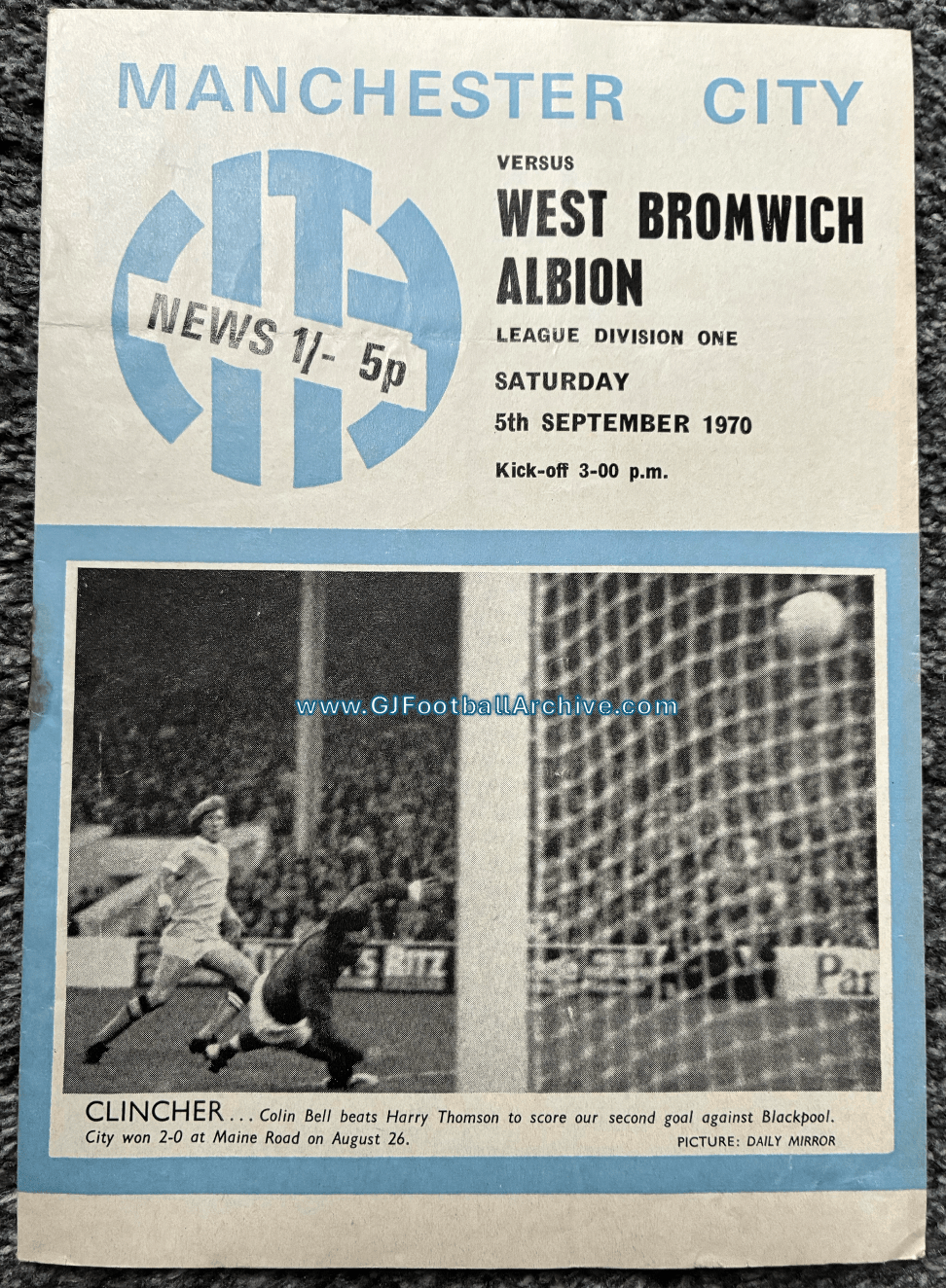
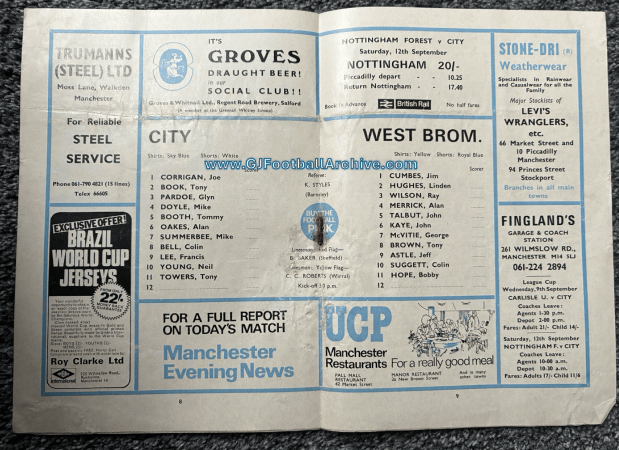
On this day (5 September) in 1970 Manchester City defeated West Bromwich Albion 4-1 with goals from Colin Bell (2), Francis Lee & Mike Summerbee. You can read more on the entire 1970-71 season below. This is a 5,200 word article for subscribers.

If you want to know more on this incredible decade for Manchester City Football Club then why not subscribe and read it all? You could even subscribe for a month and see what you think. The following 5,200 word article is on the 1970-71 season and is available to subscribers below. Enjoy!

Subscribe to get access – Monthly

Read more of this content when you subscribe today. It costs £3 per month (cancel anytime) to access everything posted since 1 October 2022 or there’s a special annual rate below which gives greater access and works out much cheaper.

Subscribe to get access – Annual

Read more of this content when you subscribe today. It costs £3 per month (above) or £20 a year (here) to access everything posted since the site was created in December 2020. This special rate works out about £1.67 a week and gives access to everything posted, including PDFs of 3 of my books.

If you’d like to know more about subscribing then see:

This is Your Life Joe Mercer

Broadcast live on 25 March in 1970 was the This is Your Life TV episode with Manchester City boss Joe Mercer as the subject. Here are the details plus a special recording which supporters of all the clubs Joe was involved with could be interested in.

This Is Your Life was viewed at the time as significant recognition for a lifetime’s achievement. Only major stars and personalities were featured in those days, and the main idea would be that the subject of the programme would be surprised by the sudden appearance of presenter Eamonn Andrews and his ‘Big Red Book’. The subject would then be whisked away to a studio or other location where a variety of figures from the person’s life would be brought out to tell anecdotes and the like. The main part of the show would be broadcast live.

This is Your Life Joe Mercer 1970

Back in 1970 young Manchester City supporter John Stapleton was working on the series and he suggested they feature Joe Mercer as the topic of one show. John, who went on to be a prominent broadcaster with a well-regarded TV career, was interviewed by me a few years back and we discussed the programme and John’s part in the idea of featuring Joe: ‘I did it purely for the benefit of me and my dad.  Eamon Andrews, the presenter, had of course a great interest in sport and I put the idea to him and the rest of the production team.  Together with Norah, Joe’s wife who in recent years I often sat with at games sharing her boiled sweets, we concocted a situation where Joe and Malcolm were in a London hotel before a trip to watch a European game in 1970. Malcolm disappeared – deliberately as part of the show though Joe didn’t know this – and Joe was called to reception urgently.  Eamon leaped out to do the big “This Is Your Life” reveal and Joe had no idea whatsoever. It was a great day for us all and Joe was thoroughly deserving of it as well.’

Joe was staying at a Hilton Hotel in London. As John described, He had been due to fly with Malcolm Allison to the continent to watch ECWC semi-final opponents Schalke but he had received a message to say the game was off. It was all a ruse of course. That night television viewers watched as Eamonn Andrews surprised Joe at the hotel reception desk: ‘Joe Mercer, former England playing star, now manager of Cup winning Manchester City, tonight. This Is Your Life!’

Eamon Andrews This is Your Life Joe Mercer 1970

At the start of the show the City team appeared. This had been an extremely busy time for the Blues. Over a 18 day period City had played two League games, the League Cup final, the second leg of the ECWC quarter-final with Coimbra and found time to work with television to honour their manager. This live show occurred on Wednesday 25 March and City were to face Derby in the League on 27th and Manchester United on 28th, plus they had to play the first leg of the ECWC semi-final with Schalke on 1st. It was incredible that a team would be involved in this at such a busy time but that’s the way it was.

This is Your Life Joe Mercer 1970 MCFC squad

As Joe explains in the show Malcolm Allison was nowhere to be seen. He had been staying with Joe at the hotel and the City manager commented: ‘I’m a great sleeper you see, and subconsciously I heard Malcolm getting up and I thought, oh, he’s going to the bathroom. I thought, well, he hasn’t come back, so he must be having a bath, and then I went back to sleep. I woke about ten and Malcolm had gone, but occasionally this happens – Malcolm disappears!’

Andrews explained that Allison had left early to watch the match which was still on. Joe was flabbergasted: ‘He’s left all his clothes! I’ve had to pack his bag as well!’

During the course of the show, Andrews informed Joe that Alf Ramsey had named the squad he was to take to the 1970 World Cup: ‘I know you haven’t had a chance to hear the news, but I’m going to tell it to you now, that two of your boys have been named by Alf for the World Cup – Francis Lee and Colin Bell. And two more in the twelve reserves – Mike Summerbee and Alan Oakes. Congratulations lads, and to the whole of the Manchester City.’

Joe was overjoyed.

Subscribers to this website are now in for a special treat as an audio of the entire episode has been preserved and can now be listened to here:

Subscribe to get access – Monthly

You can listen to this special recording of Joe Mercer, Eamon Andrews, Dixie Dean, Malcolm Allison, Stan Cullis, Stanley Matthews etc. by subscribing. It costs £3 per month (cancel anytime) to access everything posted since 1 Oct 2022 or there’s an annual option (below).

Subscribe to get access – Annual

You can listen to this special recording of Joe Mercer, Eamon Andrews, Dixie Dean, Malcolm Allison, Stan Cullis, Stanley Matthews etc. by subscribing. It costs £20 per year (cancel anytime) to access everything posted since the site began in December 2020, that includes history talks, videos, a couple of my books, hundreds of articles etc.

Joe appeared on several other This Is Your Life shows including in November 1988 when Tom Finney was the subject and in 1980 when Emlyn Hughes was. He also appeared on two for Matt Busby, one in 1958 and one in 1971 (which opened at Maine Road).

The Programme details for the Joe Mercer episode are:

  • Edition No: 274
  • Subject No: 276
  • Broadcast live: Wed 25 Mar 1970
  • Broadcast time: 7.00-7.30pm
  • Venue: Euston Road Studios
  • Series: 10
  • Edition: 18
  • Director: Margery Baker
  • Producer: Robert Tyrrell
  • City supporter and broadcaster John Stapleton worked on the show

The guests were:

  • Norah – wife
  • members of Manchester City FC team 
  • Francis Lee
  • Colin Bell
  • Mike Summerbee
  • Alan Oakes
  • Alan Percival
  • David – son
David & Joan Mercer, This is Your Life Joe Mercer 1970
  • Joan – daughter-in-law
  • Arthur – brother
  • Stan Cullis
Stan Cullis, This is Your Life Joe Mercer 1970
  • Billy Dixie Dean
Billy ‘Dixie’ Dean, This is Your Life Joe Mercer 1970
  • Jim Morris
  • Charles Palmer
  • Matt Busby
  • Frank Soo
  • Walley Barnes
  • Maurice Edelston
  • Bernard Joy
  • Roy White
  • George Hardwick
  • Raich Carter
  • Neil Franklin
  • Stanley Matthews
Stanley Matthews, This is Your Life Joe Mercer 1970

Filmed tributes:

  • Malcolm Allison
  • Susan – granddaughter
  • Albert Dyson – father-in-law

If you have enjoyed this article then why not subscribe (see above for details) for other material like this? If you don’t want to subscribe but would like to support the research into Manchester football by Gary James then it’s possible to donate below. All support is used to help perform further research that will be posted here for future generations. Thanks for the support.

Fifteen Years On: 2011 FA Cup

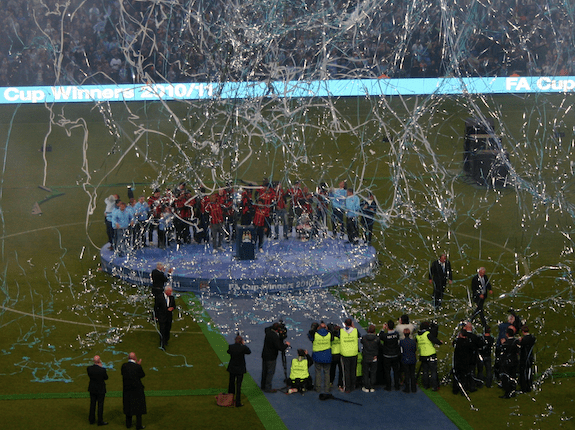
Today (14 May 2026) marks the 15th anniversary of Manchester City’s 2011 FA Cup final success over Stoke. There are so many angles to that first major success of the modern era for Manchester City and it is impossible to cover them all here. Elsewhere on this website I talk about the 2011 FA Cup run, especially that semi-final win over Manchester United. If you’ve not heard it have a listen to this:

Today I’ll focus on the final itself with a lengthy article on the final below. This is a subscriber article. It costs £3 a month to subscribe OR take out an annual subscription at £20 (works out about £1.67 a month). All subscribers get full access to everything throughout their subscription.

Subscribe to get access

Read more of this content when you subscribe today.

1969 Manchester City’s Fourth FA Cup

On this day (26 April) in 1969 Manchester City defeated Leicester City 1-0 in the FA Cup final. City’s scorer was Neil Young. If you’d like to know more about that success or the 1968-69 season then have a read of this subscriber article on Manchester City during the 1968-69 season.
If you’d like to read this 6,000 word article , plus all other articles on the site, then please subscribe (see below). As with most of the other features in this series it includes words from interviews I have performed with those who were there.

Subscribe to get access

Read more of this content when you subscribe today. It costs £3 per month (cancel anytime) or sign up for a year at the discounted price of £20 per year (works out £1.67 per month). Subscribers access all the articles posted so far and the others scheduled during the life of your subscription.

King Colin’s Crown

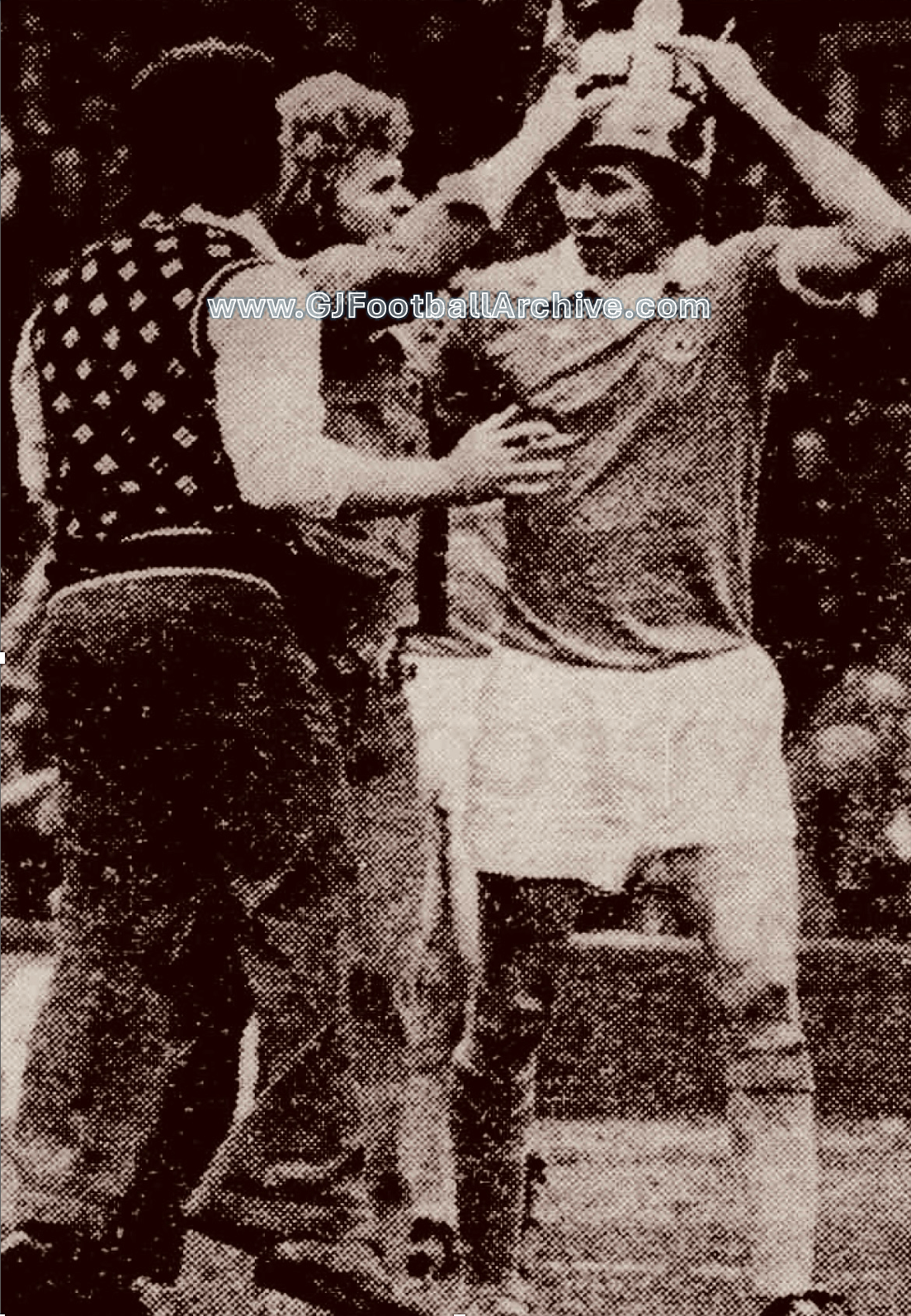
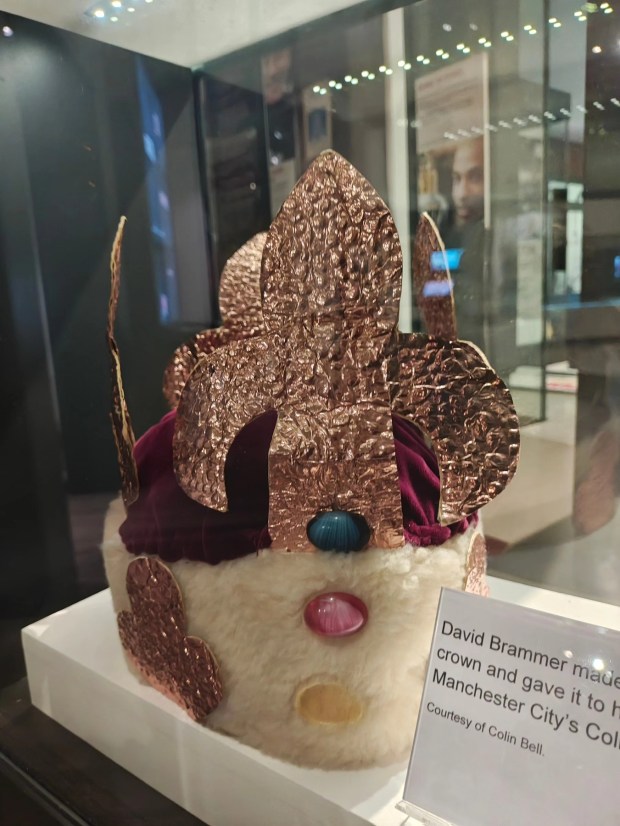
Today (10 April 2026) marks the 50th anniversary of the day City legend Colin Bell was crowned. The story has entered folklore about the day when a fan – Dave Brammer – ran on to the Maine Road pitch with a crown he had specially made for the occasion and placed it on the head of Colin as the player warmed up just before kick-off.  This photo recently rediscovered captures the moment and you can read more about this remarkable day and see other photos of Colin in action that day below (this is a subscriber article – see below for details).

There’s also plenty of other stuff on Colin throughout the site so why not have a search and see what you can see?

Subscribe to access great content and support Gary’s research

If you want to read this full article or have enjoyed the free content on this site then why not subscribe? At the same time you’ll be supporting my research and writing (I’m not employed by anyone and my research/writing is self-funded). It costs £3 per month (cancel anytime) or sign up on an annual basis for the discounted rate of £20 per year. You’ll also get to read all content posted during your subscription. Thanks.