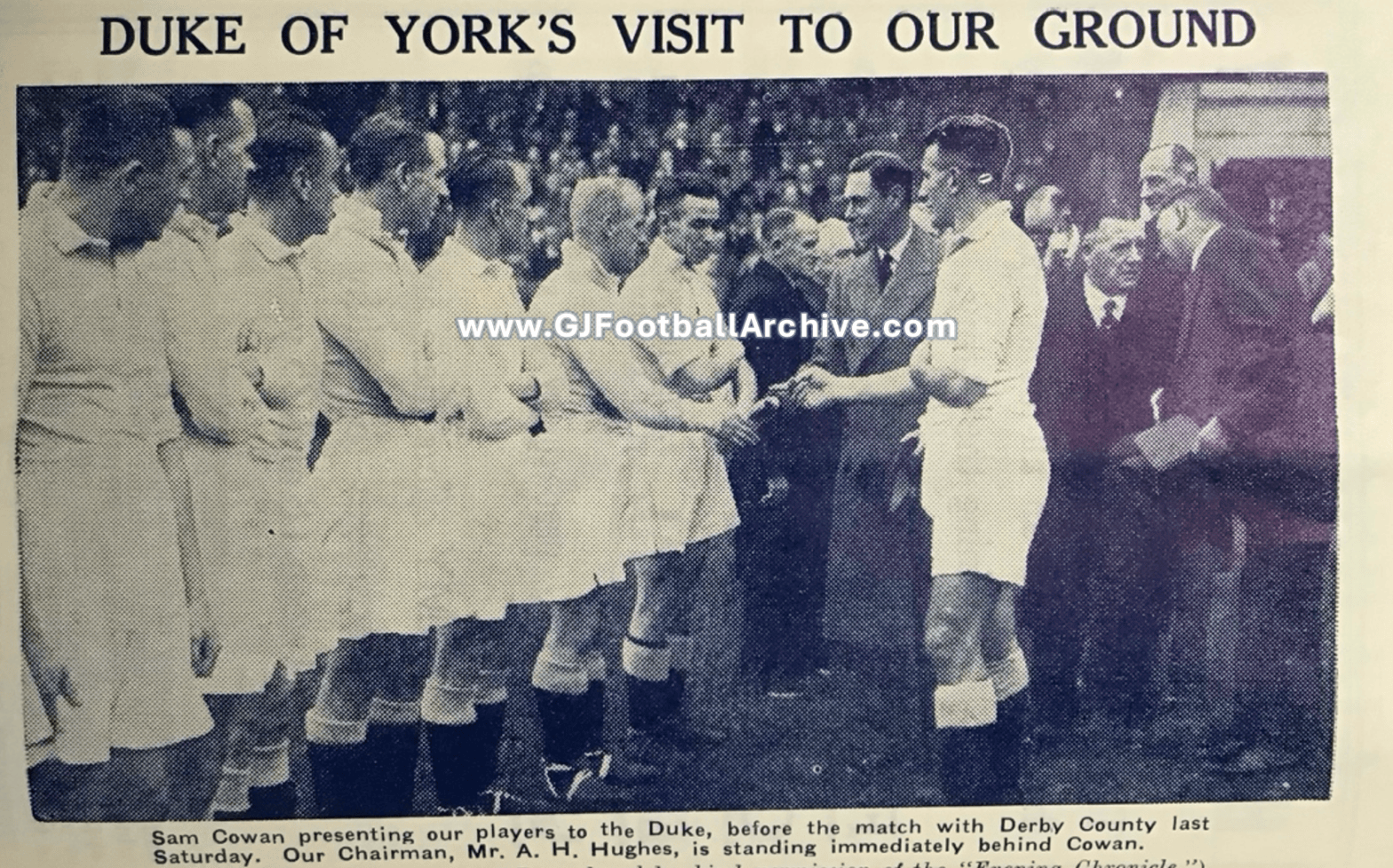
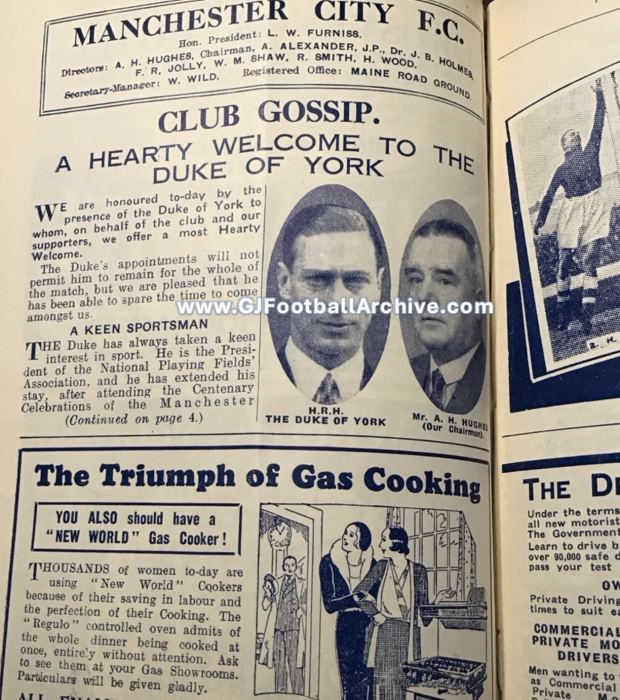
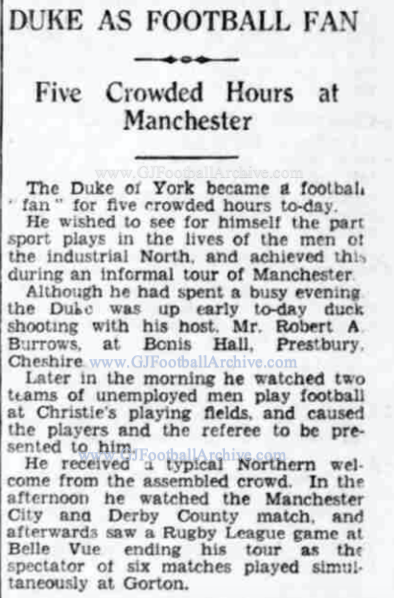
On this day (20 October 1934) King Charles III’s grandad attended Maine Road to watch Manchester City face Derby County in the League. The then Duke of York went on to become king of course a few years later. These images are from the Manchester City match programme highlighting the day. It wasn’t the first time a senior member of the royal family attended a City home game, nor was it the last time a future monarch or monarch attended Manchester City’s home.
Duke of York, later King George VI, attending Maine Road in October 1934
You can read about those visits here:
Subscribe to get access – Monthly
Read this 1,600 word article when you subscribe today. It costs £3 per month (cancel any time) or £20 a year. As well as this article you get to access books, videos, history talks, interviews and other articles.
Annual subscribers access everything since the site went live in December 2020. Monthly subscribers get everything since 1 October 2022. All subscribers access new posts throughout their subscription.
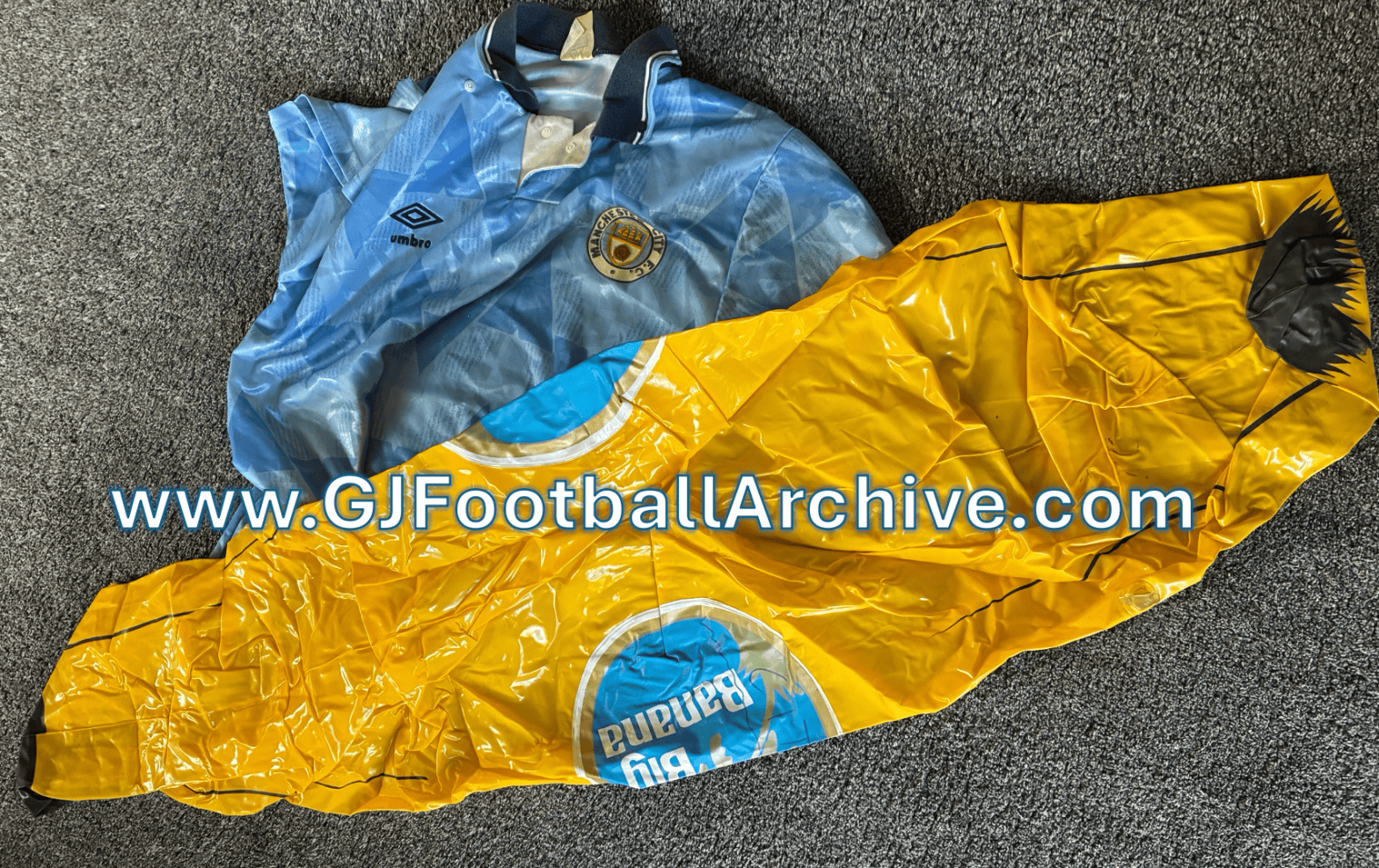
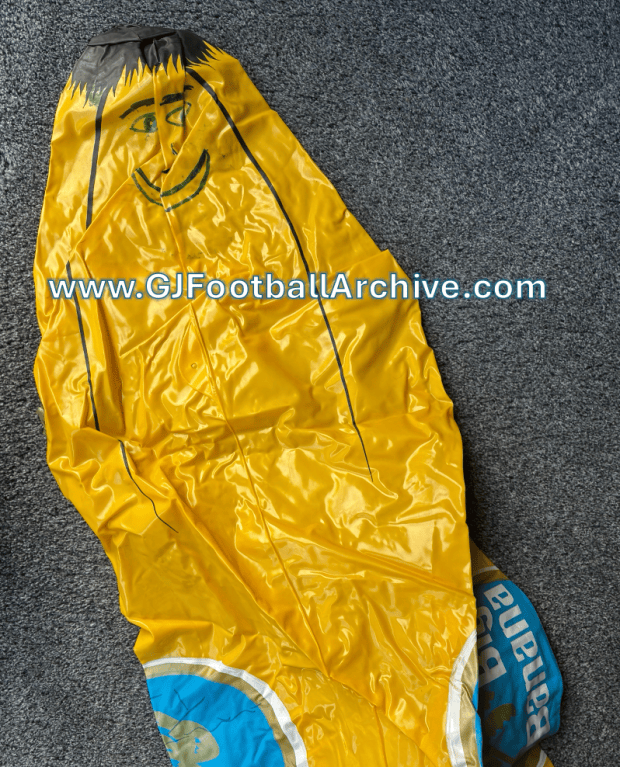
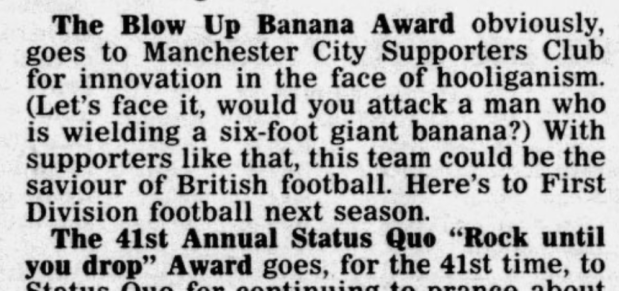
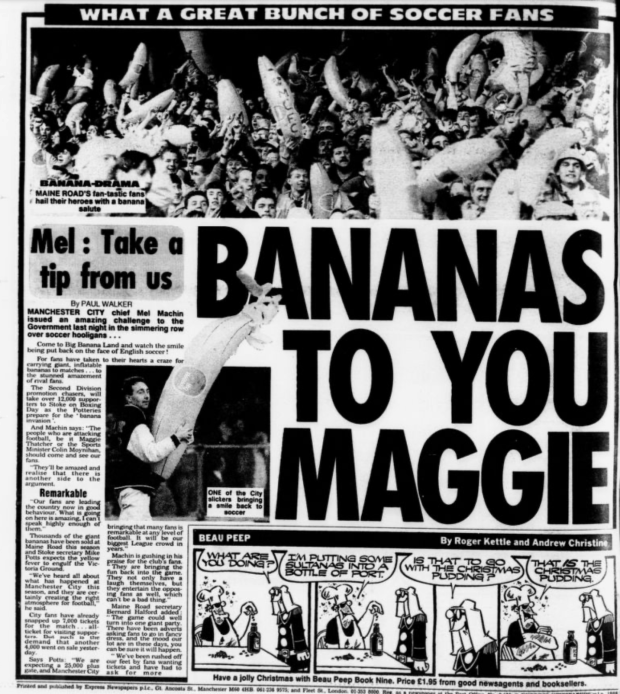
Well, well, well… I’ve just rediscovered in a box of my memorabilia my original 1980s inflatable banana. This went with me to various games, most memorably the 1988 match with Stoke at the Victoria Ground. I always felt I’d saved it but wasn’t entirely sure. It was hidden with various shirts and scarves from the 70s, 80s and 90s I used to wear.
On this day (19 October) in 1920 longserving Manchester City goalkeeper Walter Smith left the Blues for Port Vale. He was a hugely popular figure at Hyde Road but in the days following he was arrested and a major scandal followed. Subscribers can read more on that moment and on the story of Walter Smith’s career here:
Subscribe to get access: Monthly
Read more of this content when you subscribe today. Monthly subscription is £3 (cancel anytime). For that you get access to everything posted since 1 October 2022 and everything posted during your subscription. There’s also a special annual rate that gives more benefits and works out cheaper (see below).
Annual subscription is available at the discounted/special price of £20 (works out about £1.67 per month). For that you get access to everything posted since the site was created in December 202, including 3 books and over 1000 articles/interviews/audio etc. You’ll also get everything posted throughout your subscription.
On this day (18 October) in 2003 Manchester City scored 6 goals at their new home, the City of Manchester Stadium (now Etihad Stadium), for the first time. It was also the 6th consecutive record attendance for the new ground. There was also a sending off for Shaun Wright-Phillips. It was an odd day in some ways but you can read more below:
Although the game was 1-1 at half-time, City defeated Bolton 6-2 at the City of Manchester stadium. The 6th was scored by Claudio Reyna in the 84th minute.The Bolton victory was notable from a stadium perspective as it also marked the sixth consecutive highest record breaking attendance for the venue. Due to seating reconfigurations taking place throughout the early part of the season, a new record crowd for the stadium was set for the first five League games.
The first competitive game (TNS, UEFA Cup) saw 34,103 – capacity had been restricted to about 35,000 due to safety legislation – followed by a record in every one of the following five League games staged – 46,287 (Portsmouth), 46,436 (Arsenal), 46,687 (Villa), 46,842 (Spurs) & 47,101 (Bolton). Each of those matches was watched by a capacity attendance. Over the following months further changes, such as reducing the size of the Directors’ Box, increased capacity further and the record crowd was broken again when Leeds United came on 22nd December (47,126) and then Liverpool (47,201) six days later. Ultimately, the Chelsea game on 28th February became the season’s best with an attendance of 47,304.
If you enjoy all the free material on my website and would like to support my research and keep this website going (but don’t want to subscribe) then why not make a one-time donation (or buy me a coffee). All support for my research is valued and welcome. It allows me to keep some free material available for all. Thanks.
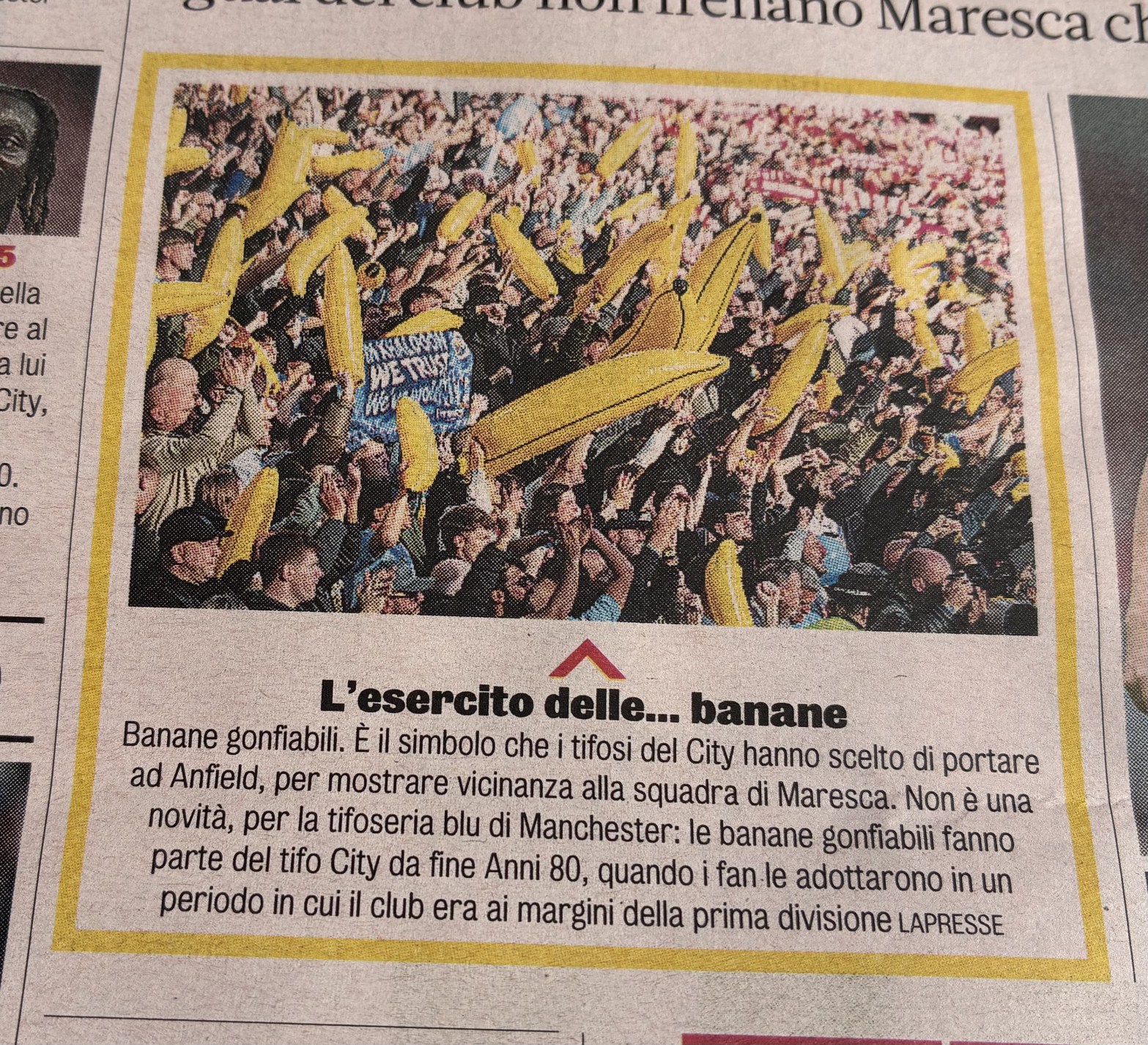
There has been a lot of criticism of City’s fanbase in recent weeks. Ridiculous stuff like celebrating a goal is seemingly wrong, according to some. Thankfully the banana craze and the general humour of fans is helping enormously and is a huge positive. Let’s face it, football is a game to enjoy and, as with the original banana craze, the idea of ‘putting the fun’ back into football is something all should support. The appeal of Manchester City has never simply been about finding success, it’s about community.
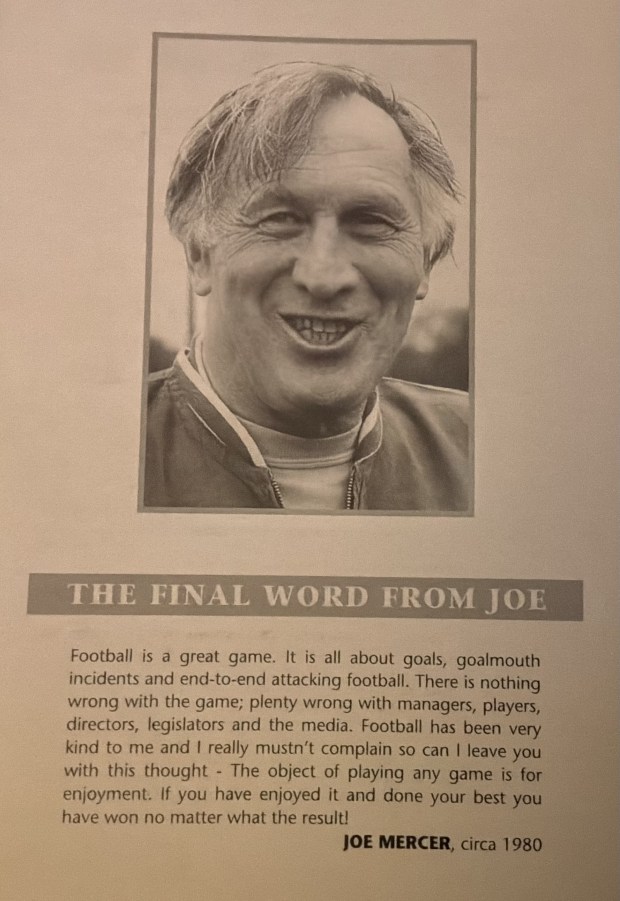
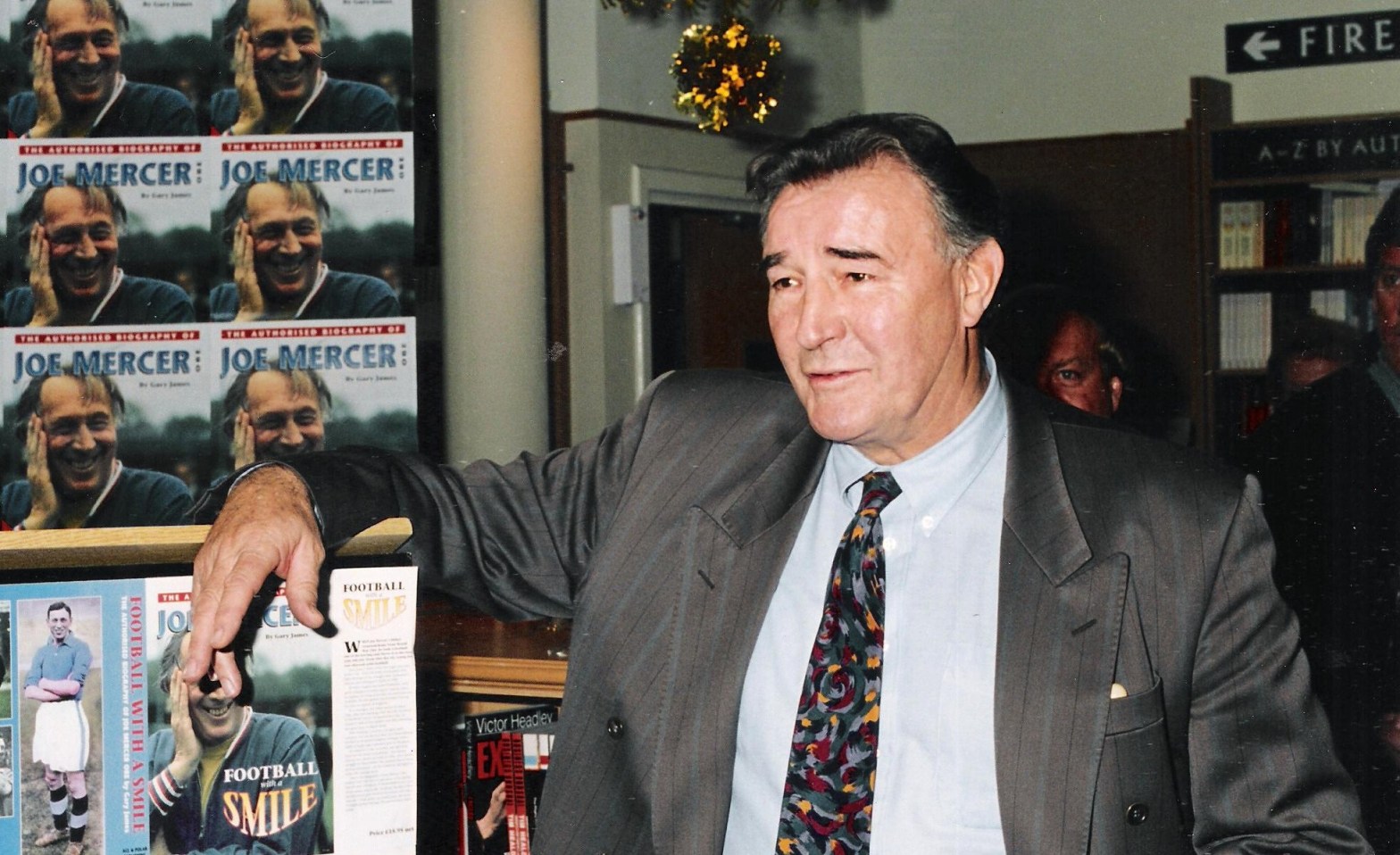
I’ve often posted this page from my biography of Joe Mercer which rightly points out that football is a great game (and highlights that there’s plenty wrong around the game, though he didn’t highlight fans which I think shows he knew what it was like for us).
Joe Mercer, quoted in Football With A Smile by Gary James
Football is all about camaraderie, connections, family and friends. It’s about shared experiences and the joy of life. Sometimes things don’t go so well, but the key thing is that football should always be about the joy of attending games and sharing experiences and, as with so many times in the past, the negativity of others shouldn’t detract from your own experience.
Leaving the Etihad the other night after City had lost to PSG there were plenty of smiling faces. Sure we’d lost but most there recognised the fightback and spirit exhibited in that second half, while also acknowledging that PSG played extremely well. I think we always knew it would be difficult to beat PSG, especially after Sunday’s pressures at Anfield, so it was wonderful to see the spirit of the Blues (both on the pitch and in the stands).
As I left the ground an excited boy was saying to his dad: ‘Did you see that penalty save, Dad?’ and he was clearly delighted with what he saw. I’m sure his dad will have seen better penalties – and saves for that matter – but for that boy it was a great moment. Maybe it was the first time he’d seen a penalty save? Maybe he wants to be a goalkeeper? Who knows, but what is true is that the game brought him joy. Ultimately, we should all have that joy.
Back in 1987 when the banana craze started football fans were viewed negatively by politicians, the wider media and the general public who didn’t attend games but read what they saw in the ‘papers. We were all classed as hooligans because of several high profile stories (not least Heysel but also issues at a variety of grounds around the country), but of course not all fans looked for trouble. Not all fans were ‘hooligans’. However, the negativity towards us was intense. I remember being interviewed for, what I hoped would be my first job, and the interviewee (who knew nothing about football) was surprised I’d mentioned being a season ticket holder. It was as if I’d said I belonged to some outlawed political party.
In this environment many fans began to challenge the way we were perceived and organisations were established to represent fans’ feelings. Fanzines also started to appear. Then at City the banana craze began. It was a laugh, pure and simple, and several articles highlighted the positivity of it all. It brightened the mood.
This is a bit of a rambling piece but I just basically wanted to highlight that football is a fun game and it’s not all about match results, it’s about the community. City fans know better than most that football is never just about results. Only a small number of clubs can ever find trophy success each season and games are either won, drawn or lost – we can’t all win every game. So it’s so important to have fun no matter what the result. The banana craze gave us that in the 1980s (our big fancy dress day out at Stoke ended in defeat of course!) and today, in October 2026, thanks to the 1894 Group, the Supporters Club and those who attended Anfield, the 2026 version of the craze is doing it again. Enjoy!
Pre-match the Times claimed: ‘if only one [goal] is needed, Chelsea usually find it.’ Well, not this day as Manchester City became the only team to beat Chelsea during their title winning season (their 2nd title; their first was 50 years earlier).
Nicolas Anelka netted an early penalty to give Manchester’s Blues the 1-0 win on this day (16 October) in 2004.
If you enjoy all the free material on my website and would like to support my research and keep this website going (but don’t want to subscribe) then why not make a one-time donation (or buy me a coffee). All support for my research is valued and welcome. It allows me to keep some free material available for all. Thanks.
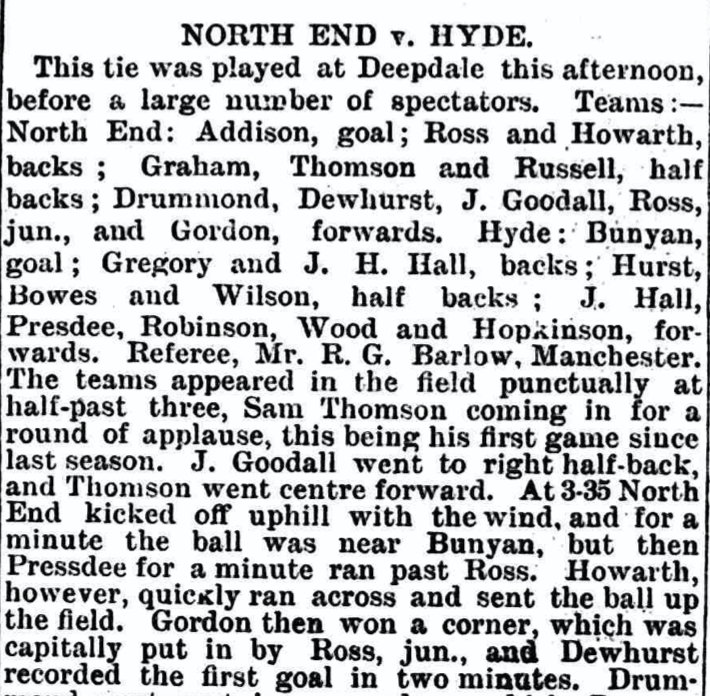
On 15 October 1887 one of the most remarkable FA Cup games of all time occurred at Preston and featured Hyde FC, who were formed in 1885 at a meeting attended by approximately forty men in the White Lion public house.
At the start of the 1886-87 season one of the giants of the period, Blackburn Rovers, were invited to Hyde for a friendly which Hyde lost 8-0 but afterwards members of Blackburn’s side stressed they believed Hyde had potential.
These comments encouraged Hyde to enter the FA Cup the following season and they opened the 1887-88 season with a friendly against significant opposition with Bolton defeating Hyde 8-1.
Preston had arranged a fixture with West Bromwich Albion and wanted to play the FA Cup tie midweek instead. Hyde, because of the complications a midweek game would have caused, rightly refused and, as a result, Preston made it clear that they would do all they could to win the match – in those days friendlies were often perceived as being more lucrative than FA Cup ties (actually we’re back at that point now in 2020s England for some clubs!).
The game commenced on 15 October 1887 at 3.30pm and within five minutes Fred Dewhurst headed Preston’s first goal and the score reached 4-0 after approximately twenty minutes.
According to reports the Preston goalkeeper didn’t touch the ball until the twenty-fifth minute when he took a goal kick, but by this point Hyde was already a struggling side and almost immediately after the goal kick Preston challenged Hyde’s goal again with Hyde conceding three goals in five minutes. By half time they had scored twelve goals.
Hyde commenced the second half determined to demonstrate an attacking spirit and they briefly put Preston under some pressure but Preston soon regained the initiative and the goals flooded in.
Match reports simply list the scorers from this point on as, presumably, the pace was so frenetic that it was impossible for the reporters to record the general action, and the final score was 26-0. There had been significant controversy and confusion as Hyde’s centre-back Bowers had left the pitch with a sprained arm at 3-0 and Preston allowed the Hydonians to bring on another player for the second half even though substitutions were not allowed at this point in football history. Presumably they had felt a half time twelve goal lead was enough of a cushion.
Famous Lancashire cricketer and footballer Richard Barlow played his part in the large victory as he was the referee, emphasising the continuing existence of a local sporting elite that crossed the conurbation.
Barlow had played an additional five minutes during which time Preston’s last goal was scored and the reason this additional time was played remains unclear, although some suggested the referee was simply too involved with the action to check his watch, while others over the years that followed claimed his watch had stopped and that an additional ten or fifteen minutes had actually been played.
Whatever the truth this was a remarkable victory for Preston. Despite the scoreline, Hyde’s goalkeeper Bunyan was regarded as one of the best players on the pitch. The referee, himself a former goalkeeper with Manchester Association, was equal in his praise when reflecting on the game in 1908: ‘I may say that had the Hyde goalkeeper not been in good form, North End would have materially increased their score. I have never seen such splendid passing and shooting in my life. The old Preston team would, in my opinion, be at least two goals better than any team in the field at the present day.’
After the game Hyde and Preston regularly played each other in friendlies, and the two sides also met to raise money for the victims of the Hyde Coal mining disaster of 1889 – that same year Newton Heath LY&R and Ardwick met under floodlights at Belle Vue to raise money for the families. Walter Chew, the Ardwick secretary, was responsible for organising the floodlit match in February 1889, which raised £240 for the families of the twenty-three killed in the disaster. This is believed to be the first floodlit association match played in the area, although there is anecdotal evidence to suggest that Preston played against Ardwick at Hyde Road around the same time under artificial light and there was also a meeting between Everton and Ardwick on 10 March 1890 under artificial light.
In 1987 Preston and Hyde United met to remember the 1887 FA Cup tie. This time Preston defeated Hyde 4-1 on their plastic pitch at Ewen Fields.
In the FA Cup Hyde were drawn away to Preston North End, who had reached the semi-finals the previous season and were recognised as a leading side. For Hyde, the game was expected to be exceptionally tough, however there was some controversy pre-match.
Today (14 October) marks the anniversary of the death of legendary Manchester City coach Malcolm Allison. He passed away in 2010. I’ve interviewed Malcolm often over the years and you can listen to one of those interviews here:
Here’s also an article I published in September this year on Allison. It included comments from a variety of interviews I have performed over the decades. Allison’s views on then young footballer Shaun Wright-Phillips are captured and comments from various people who know Allison well are included.
Subscribe to get access – Annual
Read more of this content when you subscribe today. It costs £20 per year (equivalent to about £1.67 a month) to subscribe annually or if you’d prefer a month at a time then it’s £3 per month (see below). Annual subscribers access all the interviews, books, articles and features posted here since the site was launched in December 2020.
Read more of this content when you subscribe today. It costs £3 per month (cancel anytime) or special price of £20 a year (above). Monthly subscribers access all the interviews, books, articles and features posted here since 1st October 2022.
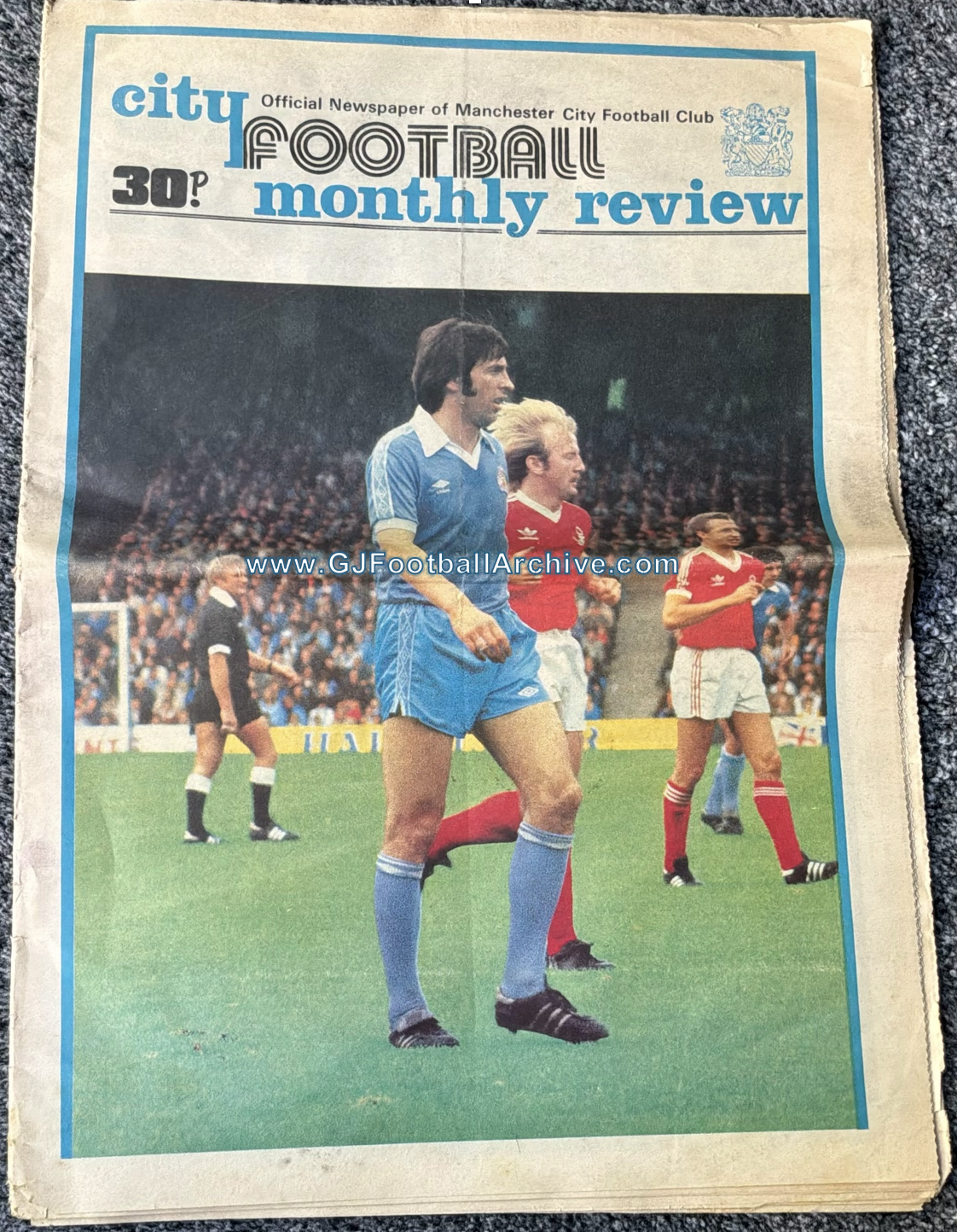
On this day (13 October) in 1979 Kaziu Deyna scored the only goal of the City-Nottingham Forest League game at Maine Road. The photograph shows Deyna in action during this game. A crowd of 41,683 witnessed the City win with future Spanish TV presenter Michael Robinson wearing the number 9 shirt for the Blues that day.
Back in 2003 I wrote this profile of former Manchester City player and Polish World Cup star Kazimierz Deyna. Deyna was such an important and unusual signing at the time he joined City in November 1978 that I feel this article is still appropriate and of interest to subscribers to my blog today.
Subscribe to get access – Annual
If you would like to read this in-depth article and all the others on this site (including the entire Manchester A Football History book) then please subscribe. It works out about £1.67 a month if you take out an annual subscription (£20 per year) or £3 a month (see below) if you’d like to sign up for a month at a time. Each subscriber gets full access to the 1000+ articles posted so far and the hundreds scheduled to be posted in the coming weeks.
If you would like to read this in-depth article and all the others on this site (including the entire Manchester A Football History book) then please subscribe. It costs £3 a month (cancel anytime) of take out a special annual subscription for £20 (above).
Rare action images from Hyde Road taken on this day (October 12) in 1912 as Manchester City were defeated 1-0 at home to Newcastle before a capacity 40,000 crowd.
If you enjoy all the free material on my website and would like to support my research and keep this website going (but don’t want to subscribe) then why not make a one-time donation (or buy me a coffee). All support for my research is valued and welcome. It allows me to keep some free material available for all. Thanks.