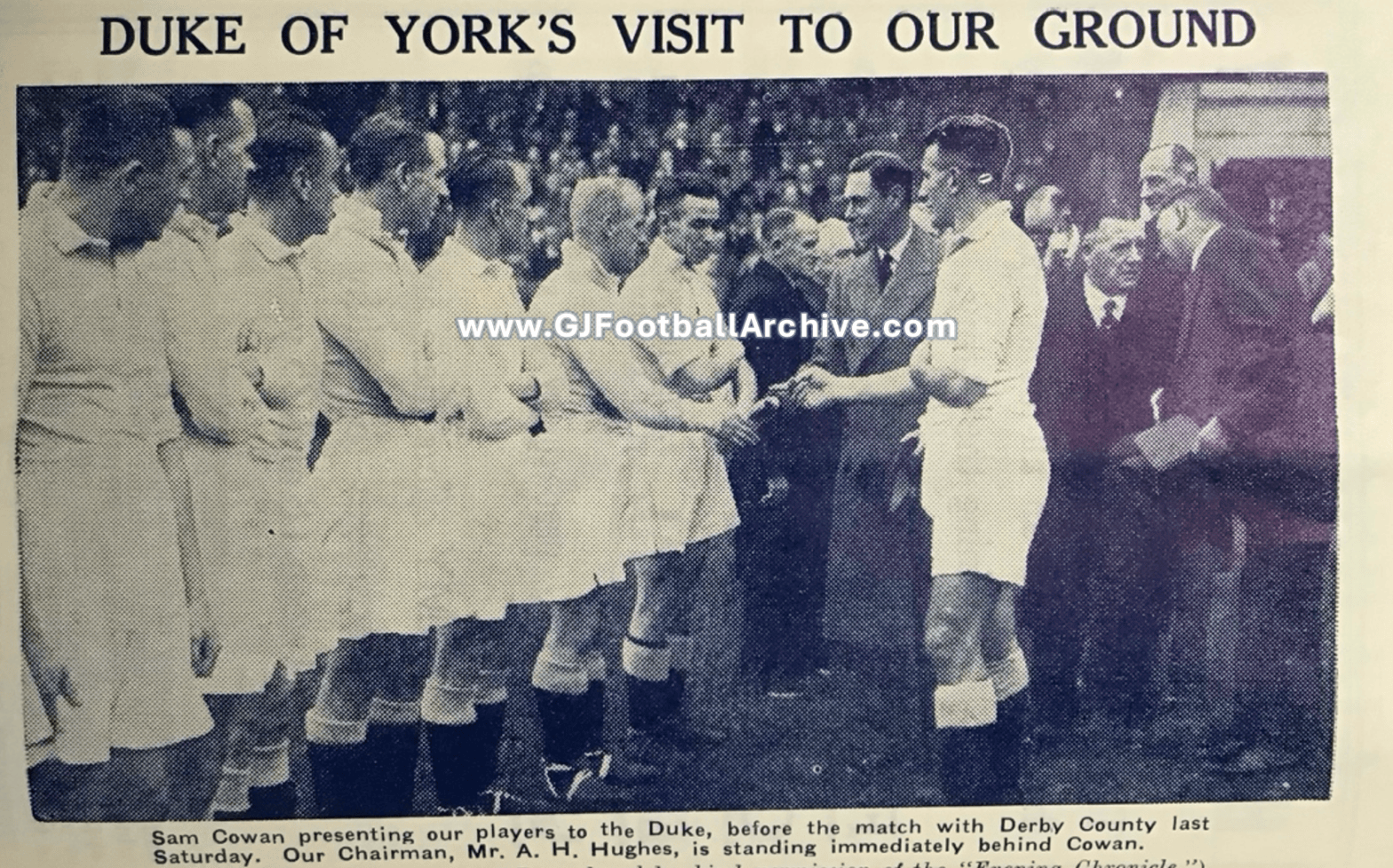
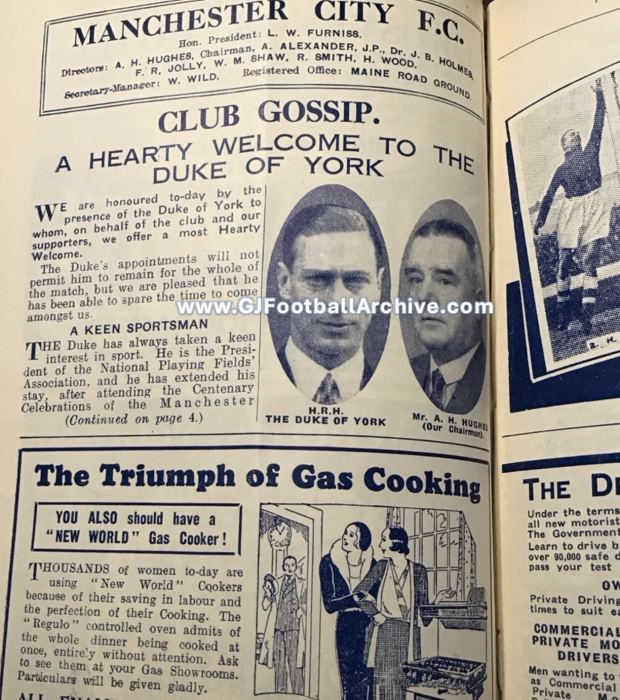
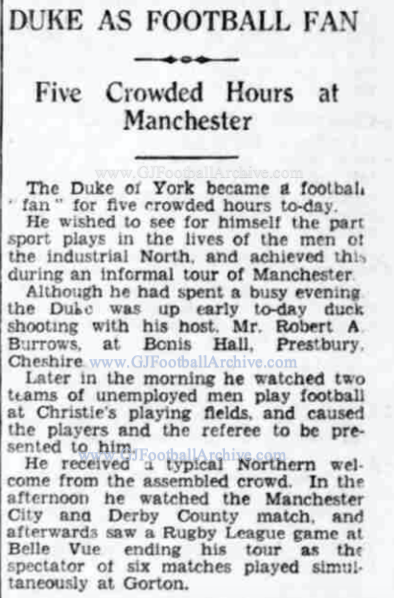
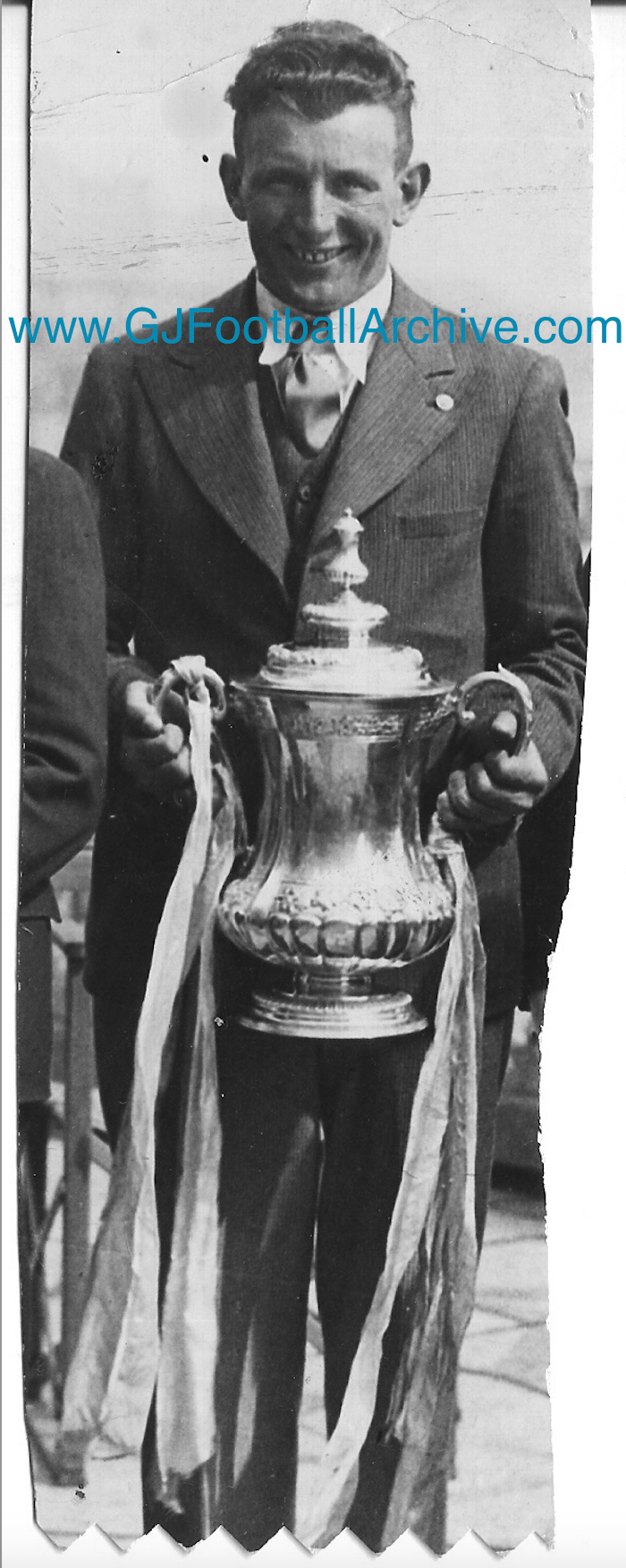
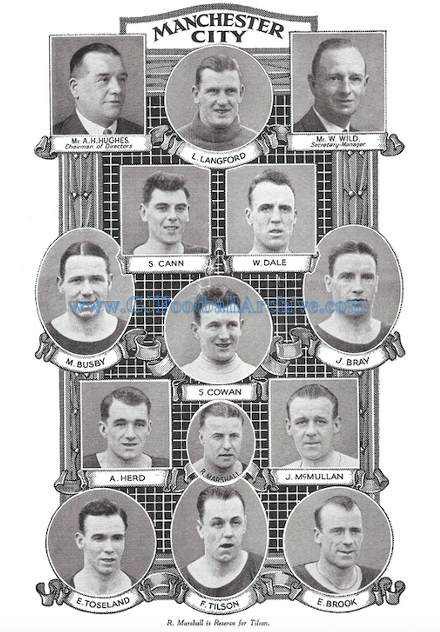
On this day (20 October 1934) King Charles III’s grandad attended Maine Road to watch Manchester City face Derby County in the League. The then Duke of York went on to become king of course a few years later. These images are from the Manchester City match programme highlighting the day. It wasn’t the first time a senior member of the royal family attended a City home game, nor was it the last time a future monarch or monarch attended Manchester City’s home.
Duke of York, later King George VI, attending Maine Road in October 1934
You can read about those visits here:
Subscribe to get access – Monthly
Read this 1,600 word article when you subscribe today. It costs £3 per month (cancel any time) or £20 a year. As well as this article you get to access books, videos, history talks, interviews and other articles.
Annual subscribers access everything since the site went live in December 2020. Monthly subscribers get everything since 1 October 2022. All subscribers access new posts throughout their subscription.
Manchester City’s 1930s captain Sam Cowan is often reported to have said something like ‘We’ll be back next year’ to the King when City lost the 1933 FA Cup final to Everton BUT this cannot have been true. So, here to spell it all out is the story… City reached the FA Cup final in 1926 (losing 1-0 to Bolton), and again in 1933 (losing 3-0 to Everton). Sam Cowan had played in both these games and felt bitterly disappointed with each defeat. By the time of the 1933 final Cowan was City’s captain and that defeat had hurt him more than the 1926 final. He hated being runner up and was determined to see the Blues triumph. He vowed to guide the Blues to glory and promised supporters that City would be back in 1934 to win the trophy. His promise became a reality and over the years Sam’s promise has become part of City folklore with various publications, including official City magazines and other works, claiming that Sam had told King George V at the 1933 final that the Blues would be back in 1934 to win the trophy. Sadly, the story has become corrupted and Sam never did make a promise to the King.
So what did Sam say and why did everyone believe he had made a promise to the King? The Guest of Honour at the 1933 final was the Duke Of York, the present King’s grandfather and the future King George VI. He attended because King George V was too ill to make the final, and so that simple fact proves Sam could not have made a promise to the King.
Lawrence Furniss, the City President, told journalists immediately after the 1934 final that Sam had predicted that the Blues would be back twelve months earlier, and he also suggested that Sam had mentioned this to the Duke Of York. So it’s possible this comment is the one which later became adapted by journalists looking for an even better story.
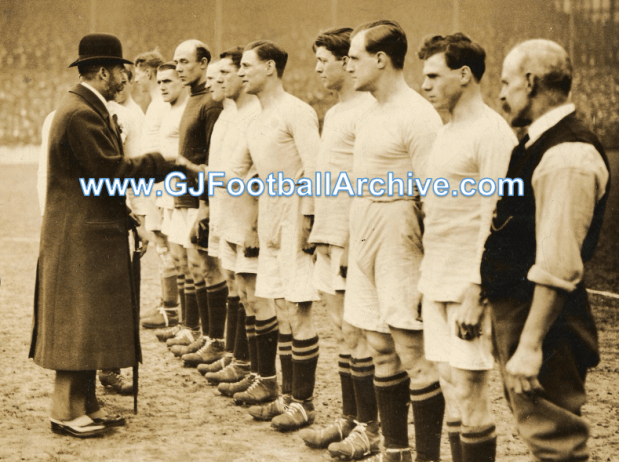
As an aside here’s a photo of the King at City’s Hyde Road ground in 1920 and Lawrence Furniss is the man stood immediately behind the King:
The King with the Mayor in Hyde Road’s ‘Royal Box’. Notice Lawrence Furniss stood, behind the King. Furniss was a major figure from the 1880s to the 1940s at City.
What is known is that Sam appeared on a newsreel shortly after the 1933 final with Everton’s Dixie Dean where both men toasted each other for the future and Sam stated that he hoped his team, Manchester City, would win the Cup in 1934. This film was shown across the country and made it clear that Sam wanted to return to Wembley.
In 1934 Sam guided City to a 2-1 victory over Portsmouth. Apart from Furniss’s comments nothing was said of a prediction by Sam to the King or Duke of York, it was only years later when it was mentioned. In fact the first time the story was quoted appears to be in 1955 when City’s fifties captain Roy Paul talked of emulating Sam Cowan by guiding City back to Wembley the following year. Books and articles from the period then made the claim that Sam had told the King in 1933 the Blues would return. Clearly, this was a corruption of the truth, but the story sounded great and future generations accepted this as fact.
Clearly, reaching Wembley in successive seasons was a major achievement for Sam and his team. Likewise any losing captain is likely to make a statement saying ‘We’ll be back’. As Sam was not a boastful character it is unlikely he would have said anything more than he was determined to guide his side back to Wembley for what he hoped would be a successful trip.
Regardless of the validity of Sam’s prediction it is clear that Sam was a major influence with the Blues, and he became the first City man to appear in three FA Cup finals while with the club.
If you enjoy all the free material on my website and would like to support my research and keep this website going (but don’t want to subscribe) then why not make a one-time donation (or buy me a coffee). All support for my research is valued and welcome. It allows me to keep some free material available for all. Thanks.
The new series of features on Manchester City in the 1910s continues today with a 2,400 word article on the 1919-20 season. This was an important season in the history of City. If you’re a subscriber you can read all about this season below. If you’re not a subscriber then why not sign up for a month and see what you think?
Subscribe to get access
Read more of this content when you subscribe today. It costs £3 per month (cancel anytime) or sign up a year at a time for the discounted annual fee of £20. This gives access to everything on the site, including PDFs of 3 of my books and various other articles, interviews and audio material. Each subscriber has access to all content posted during their subscription period too. Why not sign up for a month and see what you think?
Last Saturday (25 October 2025) I was fortunate to be invited to the England v Brazil women’s international as a guest of the FA. My seat was in the Royal Box at the Etihad (City of Manchester Stadium as it was named on the night due to sponsorship reasons). On social media someone commented that the Royal Box was a bit of a stretch in terms of its name but the truth is that the Directors Box (as it’s more commonly known) has housed members of the British royal family, including the late Queen Elizabeth II. In fact it was originally named the Royal Box for the Commonwealth Games in 2002. Back then I remember suggesting it should retain the name and now, maybe, the original name should return?
Other royals, including the former King of Spain, have sat there for Manchester City games and other events, so the name would be quite apt. Funnily enough, the Etihad’s ‘Royal Box’ isn’t the first part of a City ground to be given that name. It’s not even the second but the third! Both Maine Road and before that Hyde Road, had visits from senior members of the British Royal Family and on each occasion the Directors Box was spruced up and renamed the Royal Box for the game. Here’s the current King’s great grandad at Hyde Road’s Royal Box in 1920:
The King with the Mayor in Hyde Road’s ‘Royal Box’. Notice Lawrence Furniss stood, behind the King. Furniss was a major figure from the 1880s to the 1940s at City.
So, City, how about renaming the Directors Box the Royal Box again?
The following subscriber article talks about all of that, but in essence the current King’s dad, grandad and great grandad have all attended City matches at one of City’s home grounds. You can read about those visits here:
Subscribe to get access – Monthly
Read this 1,600 word article when you subscribe today. It costs £3 per month (cancel any time) or £20 a year. As well as this article you get to access books, videos, history talks, interviews and other articles.
Annual subscribers access everything since the site went live in December 2020. Monthly subscribers get everything since 1 October 2022. All subscribers access new posts throughout their subscription.
A new series on Manchester City in the 1920s begins today with a 2,350 word subscriber article on the 1919-20 season. If you subscribe (see below) I hope you enjoy it. If you are not currently a subscriber then why not try it for a month (£3 per month or sign up for a year at a discounted £20 per year)?
Here’s the article:
Subscribe to get access
Read more of this content when you subscribe today. It costs £3 a month (cancel anytime) or sign up for a year at £20 per year. Subscribers have access to the 1000s of articles, features, interviews etc. posted so far and all those posted during your subscription.
On this day (20 October 1934) King Charles III’s grandad attended Maine Road to watch Manchester City face Derby County in the League. It wasn’t the first time a senior member of the royal family attended a City home game, nor was it the last time a future monarch or monarch attended Manchester City’s home. You can read about those visits here:
Subscribe to get access – Monthly
Read this 1,600 word article when you subscribe today. It costs £3 per month (cancel any time) or £20 a year. As well as this article you get to access books, videos, history talks, interviews and other articles.
Annual subscribers access everything since the site went live in December 2020. Monthly subscribers get everything since 1 October 2022. All subscribers access new posts throughout their subscription.
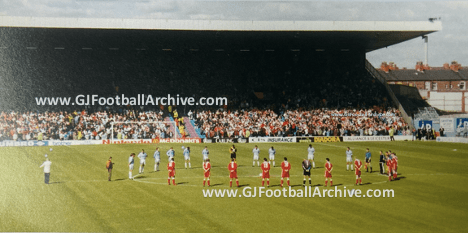
The 54th post in my series counting down to the centenary of Maine Road’s opening game is a simple reminder of City fans and players paying their respects. The main image is from the game with Liverpool at the end of the 1995-96 season. That day City fans and the players paid tribute to former chairman Peter Swales. We all knew it would be respected even though many fans had not forgiven Swales for how he and his supporting directros had transformed the club from a major, profitable European trophy winning club into one that was struggling financially and out of touch with its traditional rivals.
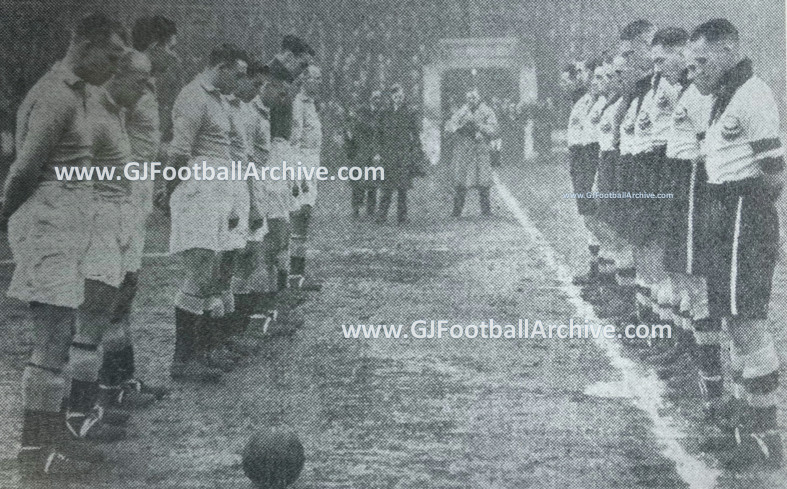
There have been many minute’s silences, or two minutes in many cases going back, at Maine Road. This image is from the two minutes silence for King George V in January 1936. That day City faced Luton. Note: back then we did not cancel games the weekend after a monarch’s death.
Here are two photos of King George V in happier times when he visited Hyde Road in 1920:
King George V at Hyde Road in 1920 The King with the Mayor in Hyde Road’s ‘Royal Box’. Notice Lawrence Furniss stood, behind the King. Furniss was a major figure from the 1880s to the 1940s at City.
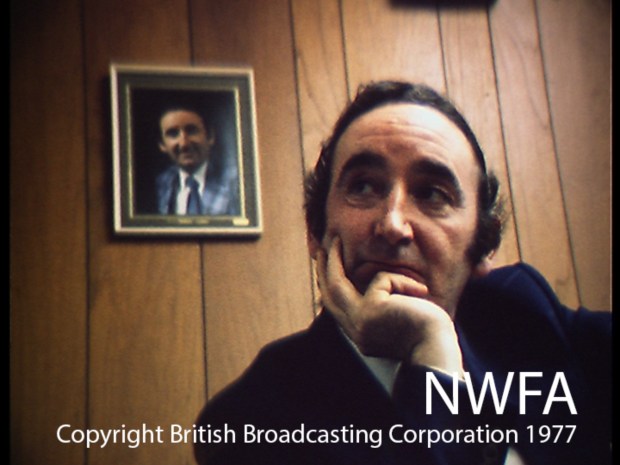
Here’s an image from a film that Will McTaggart and I showed during our Boys In Blue film show. This was from a film profile of the Manchester City chairman Peter Swales.
You can use this 1971 image to work out where the images of fans/players paying their respects were taken. The colour image of City v LFC was taken from the new Platt Lane Stand which was built where numbers 4 & 5 are. I was sat in the stand that day, looking towards the North Stand (10). The King George V silence sees the players lined up in front of the players tunnel (1) with the camera on the pitch looking towards that tunnel.
Maine Road aerial 1971 from Farewell To Maine Road
If you’d like to read more on the history of Maine Road, take a look at Farewell To Maine Road, which can be downloaded from this page:
If you enjoy all the free material on my website and would like to support my research and keep this website going (but don’t want to subscribe) then why not make a one-time donation (or buy me a coffee). All support for my research is valued and welcome. It allows me to keep some free material available for all. Thanks.