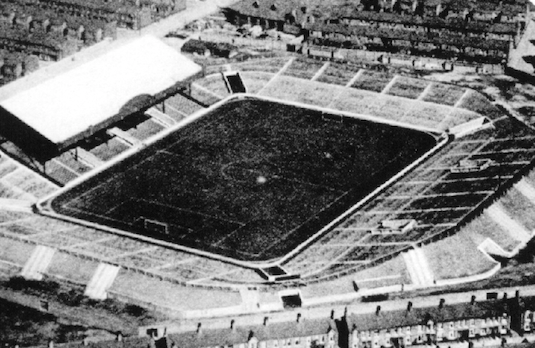
Maine Road 100 – Day 64

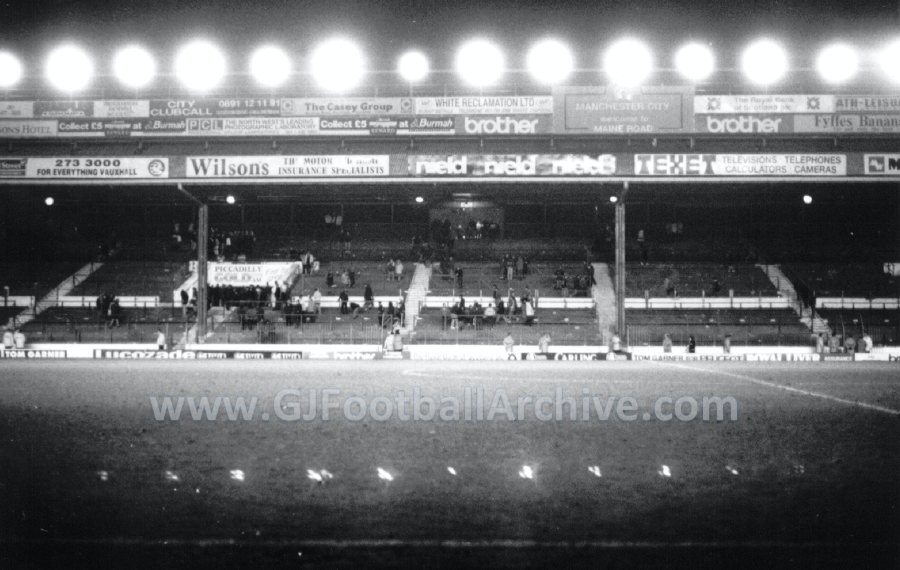
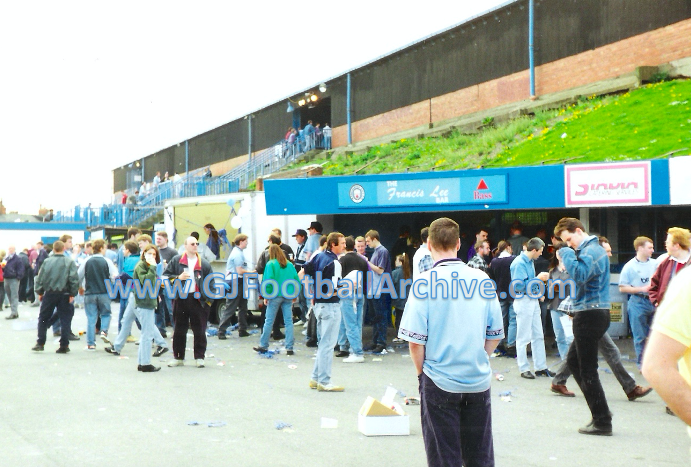
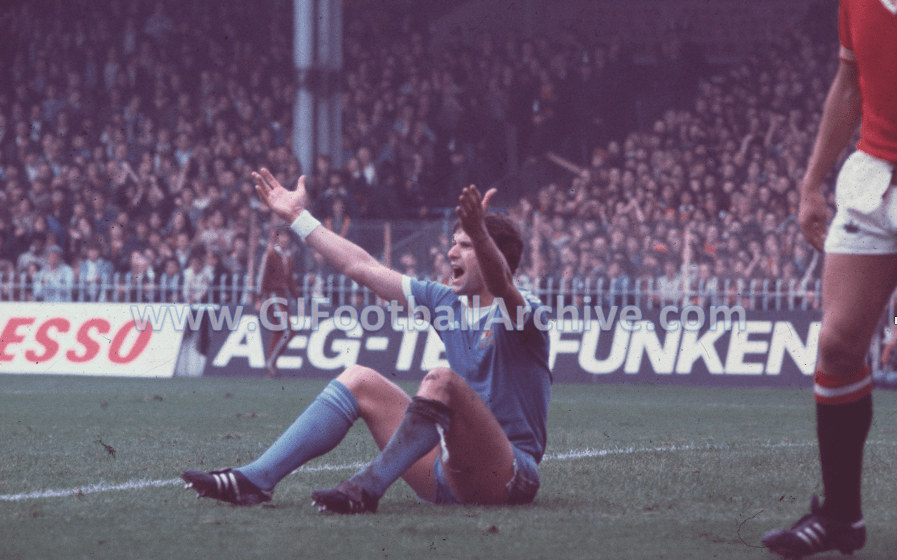
Day 64 of my posts counting down to the centenary of Maine Road’s opening game is this image taken by Steve Worthington from behind the old Kippax Stand during its final season. Notice the player named bar – this one after Francis Lee – and if you look carefully the second staircase visible (left) is the staircase to nowhere which was blocked off in the early 1970s following the safety legislation (that followed the Ibrox disaster) that outlawed the original style of staircase. The one closest to the camera was remodelled but the other was blocked off (see previous Maine Road 100 posts for details).

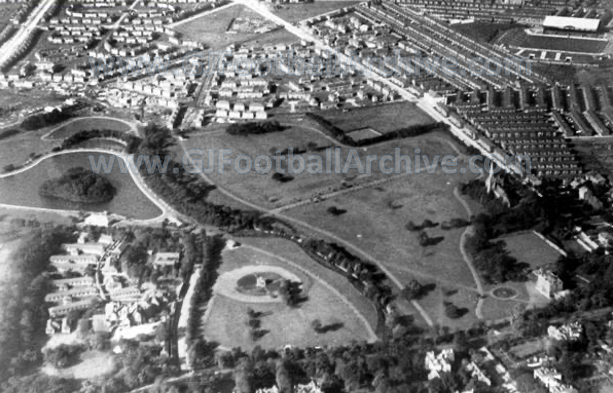
Steve Worthington’s photo was taken from the area behind the kippax, slightky 1971 aerial image shows the 1957 roof over the Kippax (7 & 8) which was demolished in 1994:

Maine Road aerial 1971 from Farewell To Maine Road

If you’d like to read more on the history of Maine Road, take a look at Farewell To Maine Road, which can be downloaded from this page:

If you enjoy all the free material on my website and would like to support my research and keep this website going (but don’t want to subscribe) then why not make a one-time donation (or buy me a coffee). All support for my research is valued and welcome. It allows me to keep some free material available for all. Thanks.

Choose an amount

£2.50
£5.00
£7.50

Or enter a custom amount

£

Your contribution is appreciated.

Donate

Maine Road 100 – Day 62

Day 6 of my posts counting down to the centenary of Maine Road’s opening game continues with another segregation image. This is a late 1970s Manchester derby image and the City player is Mike Doyle but look beyond him at the segregation and perimeter fencing. As well as the railings in front of the Kippax Stand the away section (to the right) has an additional chicken wire style temporary fence in front of the United fans.

This was a period when United fans had an extremely bad reputation for pitch invasions and crowd actions and City had been forced to install this additional netting for this derby match after consultation with the police.

The fencing didn’t last of course and so this image is extremely unusual.

If you’d like to read more on the history of Maine Road, take a look at Farewell To Maine Road, which can be downloaded from this page:

If you enjoy all the free material on my website and would like to support my research and keep this website going (but don’t want to subscribe) then why not make a one-time donation (or buy me a coffee). All support for my research is valued and welcome. It allows me to keep some free material available for all. Thanks.

Choose an amount

£2.50
£5.00
£7.50

Or enter a custom amount

£

Your contribution is appreciated.

Donate

Maine Road 100 – Day 56

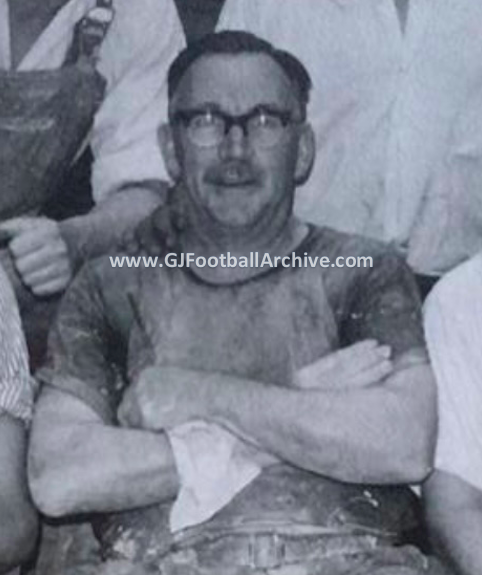
Day 56 of my posts counting down to the centenary of Maine Road’s opening game is a simple reminder of the days when local newspapers would highlight faces in the crowd and offer cash prizes to those ringed, squared or triangled. The top row of photos here are from the Manchester City v Arsenal game at Maine Road of February 1935 and the bottom row is from Mossley v Wigan Athletic. Oddly, a bloke who looks uncannily like my granddad appears triangled in the bottom right. He’d have been about 20 when this photo was taken, so it can’t be him as he looks as he did in the 70s but they had it tough in those days! This is my granddad back in early 70s (I think it was 70s; could have been late 60s).

And the man I’m talking about…

Fans at MCFC v Arsenal and Mossley v Wigan, February 1935

Anyone worked out why the City-Arsenal game of February 1935 is still regularly referred to these days? This might help:

Fans at MCFC v Arsenal and Mossley v Wigan, February 1935

If you’d like to read more on the history of Maine Road, take a look at Farewell To Maine Road, which can be downloaded from this page:

If you enjoy all the free material on my website and would like to support my research and keep this website going (but don’t want to subscribe) then why not make a one-time donation (or buy me a coffee). All support for my research is valued and welcome. It allows me to keep some free material available for all. Thanks.

Choose an amount

£2.50
£5.00
£7.50

Or enter a custom amount

£

Your contribution is appreciated.

Donate

Maine Road 100 – Day 54

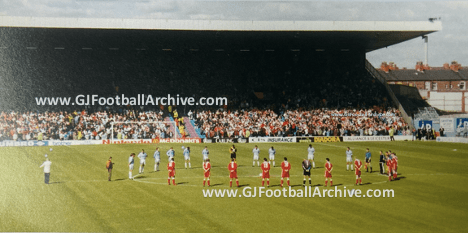
The 54th post in my series counting down to the centenary of Maine Road’s opening game is a simple reminder of City fans and players paying their respects. The main image is from the game with Liverpool at the end of the 1995-96 season. That day City fans and the players paid tribute to former chairman Peter Swales. We all knew it would be respected even though many fans had not forgiven Swales for how he and his supporting directros had transformed the club from a major, profitable European trophy winning club into one that was struggling financially and out of touch with its traditional rivals.

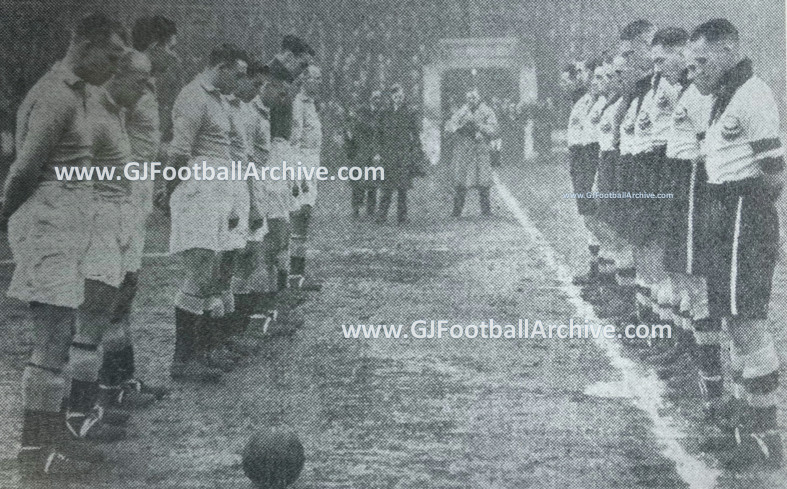
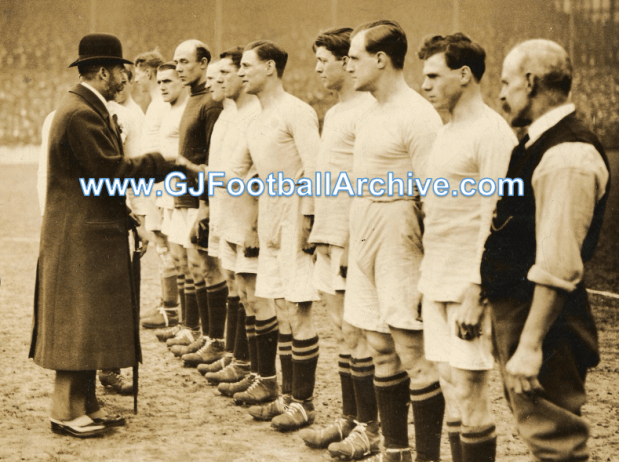
There have been many minute’s silences, or two minutes in many cases going back, at Maine Road. This image is from the two minutes silence for King George V in January 1936. That day City faced Luton. Note: back then we did not cancel games the weekend after a monarch’s death.

Here are two photos of King George V in happier times when he visited Hyde Road in 1920:

King George V at Hyde Road in 1920
The King with the Mayor in Hyde Road’s ‘Royal Box’. Notice Lawrence Furniss stood, behind the King. Furniss was a major figure from the 1880s to the 1940s at City.

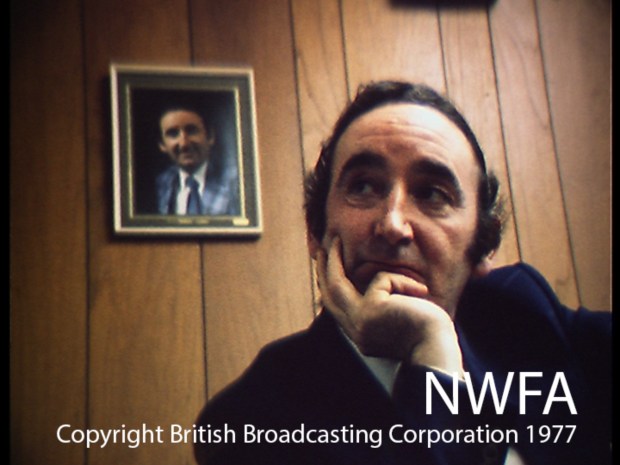
Here’s an image from a film that Will McTaggart and I showed during our Boys In Blue film show. This was from a film profile of the Manchester City chairman Peter Swales.

You can use this 1971 image to work out where the images of fans/players paying their respects were taken. The colour image of City v LFC was taken from the new Platt Lane Stand which was built where numbers 4 & 5 are. I was sat in the stand that day, looking towards the North Stand (10). The King George V silence sees the players lined up in front of the players tunnel (1) with the camera on the pitch looking towards that tunnel.

Maine Road aerial 1971 from Farewell To Maine Road

If you’d like to read more on the history of Maine Road, take a look at Farewell To Maine Road, which can be downloaded from this page:

If you enjoy all the free material on my website and would like to support my research and keep this website going (but don’t want to subscribe) then why not make a one-time donation (or buy me a coffee). All support for my research is valued and welcome. It allows me to keep some free material available for all. Thanks.

Choose an amount

£2.50
£5.00
£7.50

Or enter a custom amount

£

Your contribution is appreciated.

Donate

Maine Road 100 – Day 53

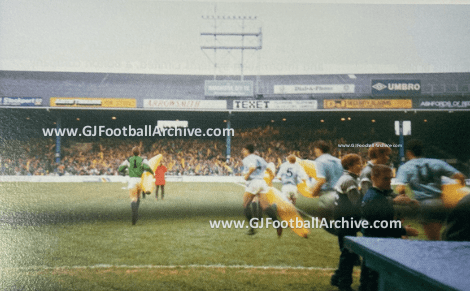
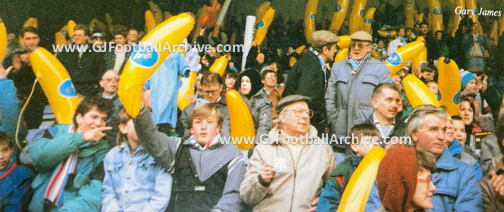
The 53rd post in my series counting down to the centenary of Maine Road’s opening game remembers the banana craze.

I’ve written a lot on the banana craze over the years and, like many other areas of football, there are already some myths that have developed. You can read about the craze here:

If you’d like to read more on the history of Maine Road, take a look at Farewell To Maine Road, which can be downloaded from this page:

If you enjoy all the free material on my website and would like to support my research and keep this website going (but don’t want to subscribe) then why not make a one-time donation (or buy me a coffee). All support for my research is valued and welcome. It allows me to keep some free material available for all. Thanks.

Choose an amount

£2.50
£5.00
£7.50

Or enter a custom amount

£

Your contribution is appreciated.

Donate

Maine Road 100 – Day 52

The 52nd post in my series counting down to the centenary of Maine Road’s opening game takes a look at the CITY F.C. flag that proudly flew above the Popular Side (Kippax) for decades.

There had been a CITY F.C. flag at Hyde Road and it may well be that this was the same flag. It was often referred to in the media during its life at Maine Road, such as in this 1925 cartoon:

The first derby at Maine Road
The City flag flying at Maine Road’s first Manchester derby

The flag flew proudly over the Popular Side until the stand was roofed in 1957. Then the flag was moved to the Scoreboard End, eventually disappearing in the 1960s when rumour has it that it was taken down by Liverpool fans. I’m not certain if that’s true and I’ve never found any evidence but if you do know more please let me know.

I do know that in the 1930s a disgruntled City fan lowered it during a difficult game and it caused outrage. It was mentioned in the local press and the culprit had to make a formal apology to the club and his fellow City fans.

This 1971 image shows the roofed Kippax Stand. The flag was originally on a flag pole roughly where the number 7 is in the days before the stand had a roof. When the Kippax was roofed it was moved to the back of the Scoreboard End. The North Stand (10) replaced the Scoreboard End in the early 1970s.

Maine Road aerial 1971 from Farewell To Maine Road

If you’d like to read more on the history of Maine Road, take a look at Farewell To Maine Road, which can be downloaded from this page:

If you enjoy all the free material on my website and would like to support my research and keep this website going (but don’t want to subscribe) then why not make a one-time donation (or buy me a coffee). All support for my research is valued and welcome. It allows me to keep some free material available for all. Thanks.

Choose an amount

£2.50
£5.00
£7.50

Or enter a custom amount

£

Your contribution is appreciated.

Donate

Maine Road 100 – Day 51

It’s 51 of my posts counting down to the centenary of Maine Road’s opening game and today I’m looking at the segregation fence in the old Kippax Stand.

On the main photo above you can see the segregation fence as it looked in the early 1990s. The gap between away fans and home fans had increased compared with the image below from the mid 1980s. The police used to patrol up and down this narrow pathway and on the image below you can see some police within that area.

Kippax Segregation mid 1980s

To help the police control the crowd a few simple platforms were constructed out of scaffolding. It all seems so primitive now but I guess clubs were reacting to increasing violence and needed quick solutions. The following was one of several platforms in the Kippax by the end of the 1980s.

Kippax Segregation police platform early 1990s

Before the segregation fence had an alleyway for the police to walk through there was one fence and scaffolding was erected next to it to separate the fans further (see next two images). Similarly this approach was used to widen the segregation fence at other times in later years.

Kippax Segregation early 1990s

The single fence with scaffolding to separate fans further (below).

Early Kippax Segregation

I explain a lot more about this area in Farewell To Maine Road. Formal segregation started in the mid 1970s but not for every game. By the end of the decade it was permanent and in place game after game.

This 1971 image shows the Kippax Stand and the segregation area was roughly where the number 8 is within the stand.

Maine Road aerial 1971 from Farewell To Maine Road

If you’d like to read more on the history of Maine Road, take a look at Farewell To Maine Road, which can be downloaded from this page:

If you enjoy all the free material on my website and would like to support my research and keep this website going (but don’t want to subscribe) then why not make a one-time donation (or buy me a coffee). All support for my research is valued and welcome. It allows me to keep some free material available for all. Thanks.

Choose an amount

£2.50
£5.00
£7.50

Or enter a custom amount

£

Your contribution is appreciated.

Donate

Maine Road 100 – Day 41

Day 41 of my posts counting down to the centenary of Maine Road’s opening game follows on from yesterday’s feature. Today I cover ticket prices for Maine Road’s last season and provide a bit more on the additional temporary seating. This was of course a Premier League season, but the temporary seating had started to be added several years before, being used in 1998-99 as mentioned yesterday.

The most expensive seat was in the centre blocks B & C at £29 for the highest category game. The cheapest adult seat was £16 for the uncovered temporary stand UU, also known as the Gene Kelly Stand (see yesterday for naming details), and HH (dubbed the ‘Alan Ball Stand’ by one fanzine as it was small and didn’t make much noise!).

Other temporary stands were now in place in the tunnel between Platt Lane and the Main Stand (block G1 on the plan) and behind the security box (block H1 on the plan). As these were covered they were more expensive than the uncovered temporary stands.

You can see the temporary seating behind the stadium control box here – this would have been an empty space in previous years.

Photo by Ed Garvey

People often forget about these extra temporary stands, focusing only on the Gene Kelly and ‘Alan Ball’ (or Gene Kelly 2 as it was sometimes called). Even those two uncovered stands increased in size over the years. I typically sat in block Y of the Platt Lane this season but I did sit in the ‘Alan Ball’ for the Newcastle game early in the season. It poured down!

This image shows the ground before any temporary stands were built. This was 1995 (the Kippax is still being completed).

Compare the two plans from 2002 (above) and from 1998 (below) to see the additional temporary stands.:

If you’d like to read more on the history of Maine Road, take a look at Farewell To Maine Road, which can be downloaded from this page:

If you enjoy all the free material on my website and would like to support my research and keep this website going (but don’t want to subscribe) then why not make a one-time donation (or buy me a coffee). All support for my research is valued and welcome. It allows me to keep some free material available for all. Thanks.

Choose an amount

£2.50
£5.00
£7.50

Or enter a custom amount

£

Your contribution is appreciated.

Donate

Maine Road 100 – Day 34

It’s day 34 of my posts counting down to the centenary of Maine Road’s opening game. Today – Bert Trautmann’s testimonial scenes.

In 1964 Manchester City staged a testimonial game for legendary City goalkeeper Bert Trautmann. Officially there were less than 48,000 there (in a stadium that could hold in excess of 60,000) yet fans and others there that night know the attendance was much higher. My own dad told me last week how him & my mam were going to the game but when they arrived the turnstiles were closed and thousands were locked out a long time before kick off.

There are stories of some fans trying to climb walls to get in and others talk about the packed terraces and stands.

It was truly the biggest testimonial game ever at Maine Road in terms of numbers, even if officially it was short of capacity. In the 90s I often asked players and officials from that era about this attendance, including Bert. No one actually wanted to say much about the discrepancy between the numbers officially reported and the actual volume of people in attendance, so we can leave all of that to the imagination. What they did all agree on is that there must have been well over 60,000 there that night and that Bert deserved whatever was raised from the match.

This image from 1961 shows how the stadium looked at the time of Trautmann’s testimonial.

Below is a view of Maine Road from 1971. The main image of fans on the pitch (above) is taken from near the Main Stand (number 2) looking across to the Kippax (7/8).

Maine Road aerial 1971 from Farewell To Maine Road

If you’d like to read more on the history of Maine Road, take a look at Farewell To Maine Road, which can be downloaded from this page:

If you enjoy all the free material on my website and would like to support my research and keep this website going (but don’t want to subscribe) then why not make a one-time donation (or buy me a coffee). All support for my research is valued and welcome. It allows me to keep some free material available for all. Thanks.

Choose an amount

£2.50
£5.00
£7.50

Or enter a custom amount

£

Your contribution is appreciated.

Donate

Maine Road 100 – Day 32

It’s day 32 of my posts counting down to the centenary of Maine Road’s opening game. Today – A behind the Kippax image from 1993. This photo has so much going on despite it looking fairly bland. I’ll explain:

When the Kippax was roofed in 1957 the original terracing had to be squared off and so, instead of reducing the terracing City decided to extend it where its started to curve. You can see in this image that the end of the stand is on stilts/stanchions over the original banking where it was extended.

At the time the stand was enlarged in 1957 local residents objected to it. Some claimed they’d lost TV signal and were no longer able to get Granada TV which had started broadcasting in May 1956.

When this photo was taken in 1993 that area was for away fans and if you look carefully you can see the segregation fence to the left of the tunnel and going up the banking.

The tunnel and steps in the foreground of the photo are the original 1923 construction but these steps were no longer in use as an entry point. They were blocked off at the top and tended to be used as a seating area by fans instead. They’d been blocked off after the Ibrox Stadium disaster in 1971 when steps like these had to be remodelled to prevent a build up of fans flowing down at speed. This staircase was not altered but others were and remained in use.

Notice also the paved slope. This had been a simple slope of grass and rubble (as can be seen on the 1971 image lower down this page) for most of the stand’s life but general crowd disorder at football had led to City deciding to pave this section to prevent fans from grabbing stones and lobbing them over the segregation fence at rival fans. When I spoke with Bernard Halford many years ago, he was quite proud of this ‘flagging’ of the slope and said it did prevent some significant issues which could have had repercussions for the club.

This image from 1961 shows this part of the extended/squared off Kippax to the right of the photo.

Here’s a view from 1971 showing the back of the Kippax as it looked. The away staircase is to the left of number 8 and to the left of that you can see the squared off part of the stand on stilts. The staircase that is on the 1993 image is the one between 7 and 8 below.

Maine Road aerial 1971 from Farewell To Maine Road

If you’d like to read more on the history of Maine Road, take a look at Farewell To Maine Road, which can be downloaded from this page:

If you enjoy all the free material on my website and would like to support my research and keep this website going (but don’t want to subscribe) then why not make a one-time donation (or buy me a coffee). All support for my research is valued and welcome. It allows me to keep some free material available for all. Thanks.

Choose an amount

£2.50
£5.00
£7.50

Or enter a custom amount

£

Your contribution is appreciated.

Donate