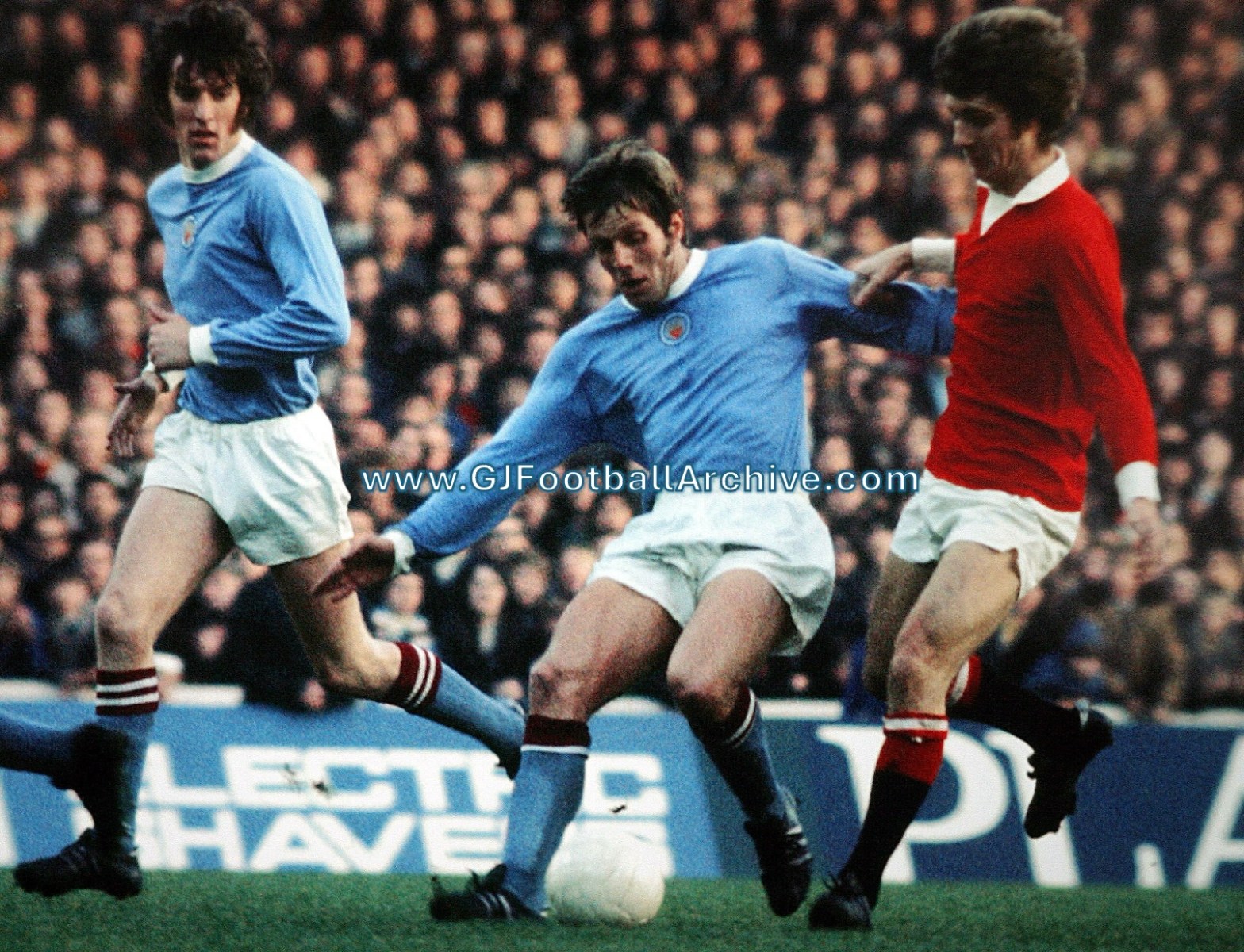
Happy Birthday Alan Oakes (Interview Feature)

Happy birthday Alan Oakes, born on this day (7 September) in 1942. Alan has made more appearances for Manchester City than any other player but more significantly he’s an absolute gent. Here to commemorate his birthday is an interview I did with Alan.

This interview occurred in February 2005 and we discussed his life and career. This appears here as it was originally published.

Alan Oakes joined the Blues at the age of 15 in 1958 and made his first team debut in November 1959 when he was 17 years and 2 months.  He stayed at Maine Road until July 1976 by which time he had made a staggering 564 League appearances.  In February 2005 he was inducted into City’s Hall of Fame, and author Gary James met up with him to discuss his career.

To begin with let’s talk about your childhood, did you come from a sporting background?

We were all very sporty and my father and others played local football – nothing professional – and as a boy I’d play cricket in the summer and football in the winter.  The usual sort of thing – coats as goalposts – and I loved playing.  I progressed into the Mid-Cheshire Boys side and then one day I got the shock of my life when City’s scout Albert Kavanagh knocked on the door and asked me to join the groundstaff.  He’d watched me play at Broughton, Salford, and seemed to like what he saw.  I was astounded and delighted at the same time.  This was a dream moment.

Coming from a Cheshire village like Winsford in the 50s to a big city like Manchester must have been a bit daunting, how did you and your family feel about the move?

It was an opportunity I couldn’t miss.  Other teams showed interest but City meant so much to me.  I’d been to Maine Road a few times – I stood on the old Kippax before it had a roof – and loved the Club.  I wasn’t blinkered though because I also went to Maine Road to watch some of United’s first games in Europe.  Remember they used City’s ground because they didn’t have floodlights and a lot of Blues went to watch the European sides.

Clearly, you saw a wealth of talent during this period, but who were your heroes?

Ken Barnes was a brilliant player and by far the best in his position, and Bobby Johnstone had an amazing footballing brain.  They were great players to watch and later I was fortunate to play with Ken, but my boyhood hero was always Billy Wright from Wolves.  There was something special about Wolves.  They brought over several top European sides for friendlies – I guess they paved the way for the European Cup – and they won so many fans.  They were a great, entertaining side and Billy Wright was their star.  I was still a City fan, but I recognised the quality of Wright and Wolves.

Still only 17 you made your debut in a 1-1 draw with Chelsea, how did you feel about your performance?

I felt okay, but I gave away a penalty!  Fortunately for me Bert Trautmann – the greatest ever keeper – was in nets and he saved the day.  As a member of the groundstaff I’d clean Bert’s boots and even that felt like a great honour, so you can imagine how grateful I felt when he saved the penalty.  The Chelsea game was a one off – I think Ken Barnes was injured – and so it was a few weeks before my chance came again.  I felt a lot of satisfaction that I was in the reckoning though.  When I arrived at City there were 55 professionals and about five teams to progress through to reach the first team.

How did you find the management and coaching staff in those days?

They were all ex-City players and so that was important.  Fred Tilson and Laurie Barnett had played in the 30s finals and coached us, and manager Les McDowall had been a good player in his day.  Clearly the coaching techniques they used were not a patch on Malcolm Allison, but they did what was right for the period.  They also treated me well and looked after me.  I found it difficult adjusting to life in a big city.  I lived in digs for a while, and then moved back home and travelled by train and, eventually, car.  

By 1963 you were a regular but City were entering a difficult period, did that come across to you?

We had a lot of quality in the side but seemed to be conceding too many goals.  We knew we were struggling but we always gave it our best.  After we were relegated in ’63 Derek Kevan and Jimmy Murray arrived.  We were doing really well, then Jimmy did his cartilage in – that was a major blow – and we tailed off.  We missed promotion (6th place) and we couldn’t get it going again until Joe and Malcolm arrived in ’65.  

Although you were still relatively young, you were one of the more experienced players, how did the arrival of Mercer & Allison go down?

It was a great lift of course, but I know we were wary of Malcolm at first.  He had all these ideas and it seemed so different to what we were used to, but within a week or so he’d won everybody over.  The transformation by the two men was so fast – before we’d completed our pre-season games we were convinced we would win promotion.  We couldn’t wait to get started.  The confidence flowed and then Malcolm tackled our fitness.  Of course we won promotion easily, and then held our own in 1966-7.  Don’t forget we had faced a couple of big tests in those first two seasons – We took a strong Everton side to 2 replays in the FA Cup while we were still in Division Two and narrowly lost to Revie’s Leeds the following year.  We lost 1-0 to Leeds with a Jack Charlton goal that should have been disallowed.  So we came away from those games confident we could face any side.  There was nothing for us to fear.

Of course, the Championship followed in ’68 and all the other successes of that great period, which one means most to you?

The Championship and European successes were both very important.  This is a difficult one really, but because I was there during the dark days, I think the most important one had to be the promotion in 1966.  My reason is that without that none of the rest would have followed.  Joe and Malcolm didn’t just get us promoted, they first stopped the rot.  We were going downhill fast and they stopped that, changed gear and pushed us forward quickly, and it wasn’t done with negative play.  A lot of teams pack the defence and try to ensure they don’t lose, we always went out to win and never contemplated holding out for a point.

Throughout your City career people commented that you were a quiet, unassuming, perhaps shy player, was that fair?

I think I was a good professional.  I used to simply get on with it.  I was dedicated and tried to give everything for the Club.  I believe I was a good, honest pro.  If I was asked to do an interview, I’d do it, but I never sought the headlines.  Media coverage was not as it is today, so it was easier in many ways, but I would do it when needed.  More than anything I wanted to make sure my role on the pitch spoke for me.  

By 1973 the Mercer-Allison partnership had ended and some of the other players started to move on, did you contemplate leaving?

Never.  You were worried that you’d be dropped or the next one out, but I never thought about choosing to leave.  Why would anyone want to leave the best club in the country?  I remember thinking that somebody would take my place and that I had to keep performing at the highest level.  In some ways I liked to push myself by thinking of all the people who could take my place, but I never, ever thought about leaving until after the League Cup final of 1976.

The team had changed significantly by 1976, and you were clearly one of the elder statesmen of the team, how did you find that period?

I enjoyed it all, and I remember playing a few games with Peter Barnes in front of me.  I loved that.  He was such a gifted player and it was great for me to play behind someone that exciting at that stage in my career and in his.  I know this came a couple of years after I’d moved on, but it irritated me when Peter Barnes was sold because I believe he could have helped City to real success.  He was the sort of player you built a team around.

While I’m thinking about this, I also believe Mike Summerbee and Francis Lee were sold far too early.  Francis had so much more left in him – he proved that at Derby – and so the break up of the Mercer-Allison team came too rapid.

In July 1976 you moved to Chester, why did you make the move?

I’d had a great season.  I’d played 39 League games and won the League Cup and so there was no pressure to leave, but I did think that I may have blocked some other gifted players coming through.  I was also aware that I’d be 34 when the new season starts and that I may not be up to it in the way I would normally expect.  Chester City were just up the road and for me it was a nice move.  I do remember thinking ‘what have I done?’ because I’d gone from a First Division palace to play at Third Division grounds, but the move was a good one.  Looking back though I was perhaps wrong to leave when I did.  My advice to any player now is to remain playing at the highest level for as long as you physically can.  Those days are precious and should not be cut short.  

I also missed Maine Road a lot when I left and I miss it even more now.  I regret the fact City have left that ground.

At Chester you moved into management, was this something you’d always wanted?

It was part of the attraction of joining Chester that I could become player-manager and I think in the six years I was there we had a great time.  Success is different for a team like Chester, it’s all about survival and so I had to do a lot of work in the transfer market.  I had another ex-City star, Cliff Sear, with me and we worked well together, and I loved every minute at Sealand Road.  Often I’d be trying to negotiate good transfer fees and working hard to sell a couple of players to keep us afloat, and so I got satisfaction from that when it all came right.  I still got a lot of satisfaction from playing as well, so it was a perfect role.

Ian Rush was one of your players.  Is it true he almost came to City?

Yes it is.  Whenever anybody with talent was due to leave Chester I would want them to move to a bigger, better club.  I still love City and so I wanted Rushie to go to Maine Road.  We were having a great cup run and Tony Book and Malcolm Allison came to watch him.  Rush scored twice and I met up with Tony and Malcolm afterwards.  Tony was keen to sign him but Malcolm didn’t rate him for some reason and it all collapsed.  He later went to Liverpool and the rest is history, but I wanted him to go to Maine Road and I wish that deal had occurred.  Of course, you never know how these things would have worked out.

Did you ever consider moving into a higher division as a manager?

Definitely – with City!  It must have been 1983 because I know Billy McNeill was given the job in the end, but I applied for the City job.  I desperately wanted the role because I loved the Club and because I believed I knew exactly what the Club needed.  I’d also served what I thought was a good apprenticeship – six years at Chester taught me a great deal about survival and transfer negotiations.  I knew City had financial problems and that someone with the right experience was needed – the last thing the Club could cope with was someone who needed to spend – and so I felt I was ideal for the role.  Don’t forget what I’d experienced as a player at Maine Road as well.  Most importantly, I understood the Club and all about Manchester football fans and their expectations and needs.   This remains the greatest club in my eyes.

I got an interview at Peter Swales’ house.  A few directors were there and I thought I gave a very good interview.  Unfortunately, I didn’t get the job.  I still wonder what might have happened.

Moving on to today, your son Michael has become a Premier League goalkeeper, is this something you’ve encouraged?

I didn’t push him but I did encourage him.  It’s a great game to be a part of and I love the fact he’s involved.  Joe Corrigan helped him a lot when he was young and so I’m grateful for that, and when he joined Aston Villa I was delighted.  Now he’s at Wolves and I do try to watch him but I find it very difficult.  I’m always in two minds as to whether I want the ball to be at his end of the field or not.  If Wolves are attacking I know he’s safe, but I also know he can’t demonstrate his abilities.  If Wolves are on the defensive I want him to have to make a great save but I’m also worried he’s going to be caught out.  I think he’s doing really well though.  

I once replaced Bert Trautmann in nets – it was against West Ham and he was sent off, so I deputised.  I can’t remember much about it now, but I don’t think Michael would have learnt much if he’d seen it!

Finally, you have made a total of 672 first team appearances for City (including 3 Charity Shield games), how did you feel when you first broke Bert Trautmann’s appearance record?

I was a little bit sad that I took the record off Bert because to me there was no finer ‘keeper and player for the Club, but obviously I felt pleased to have the record.  Personally, I’m looking forward to the day when the record’s beaten.  I know it will take a lot to beat but I hope somebody does it, and if the person who beats it has the same sort of career and enjoyment at City that I have had then he will have had a fantastic career.  This is a great club with terrific fans and I have enjoyed every minute of my time with the Club.

Mr Grimsdale!

The entertainer Norman Wisdom was born on this day (4 feb) in 1915 so a good excuse to remember the day when he larked around on the Maine Rd pitch (and some claimed they thought it was Peter Reid). It’s always worth reminding ourselves of the days when he’d come out on to the pitch, fall over while taking a penalty and similar antics. Often supported by musician Rick Wakeman too! On one of the days in the 90many of us stood on the Kippax saw the elderly entertainer take to the field but didn’t recognise him at first. In fact many of us thought it was Peter Reid wearing a flat cap!

There were lots of odd prematch activities over the decades and you can read about them in this 2000 word article on the history of pre-match entertainment at Manchester City. There are mentions of the St Joseph’s Industrial School and Beswick Prize Bands, various DJs, athletic challenges, Norman Wisdom, Frank Sidebottom & more. Enjoy:

Subscribe to get access – Annual

Read more of this content when you subscribe today. It costs £20 a year (less than 6p a day) to access everything posted since the site went live in December 2020 (books, interviews, videos, history talks etc.) and throughout your period of subscription. Or you can subscribe a month at a time for £3 (cancel anytime; see below)

Subscribe to get access – Monthly

Monthly subscribers have access to everything posted since 1 October 2022 (books, interviews, videos, history talks etc.) and throughout your period of subscription. It costs £3 per month (cancel anytime)

60 Years Ago Today: City and United Youth

Here’s the front of a match programme for the FA Youth Cup tie between Manchester City and Manchester United on this day (13 December) in 1965. How many names do you recognise? The match ended in a 5-0 United win.

You can find out more on Manchester City during the 1965-66 season by reading the following 4100 word article. As with most of the other features in this series it includes words from interviews I have performed with those who were there. This is a subscriber article (see below).

Subscribe to get access

Read more of this content when you subscribe today. It costs £3 per month (cancel anytime) or sign up for a year at the discounted price of £20 per year (works out £1.67 per month). Subscribers access the 1000+ articles posted so far and the others scheduled during the life of your subscription.

The 1960s: Watch This Penalty from Plymouth v Manchester City!

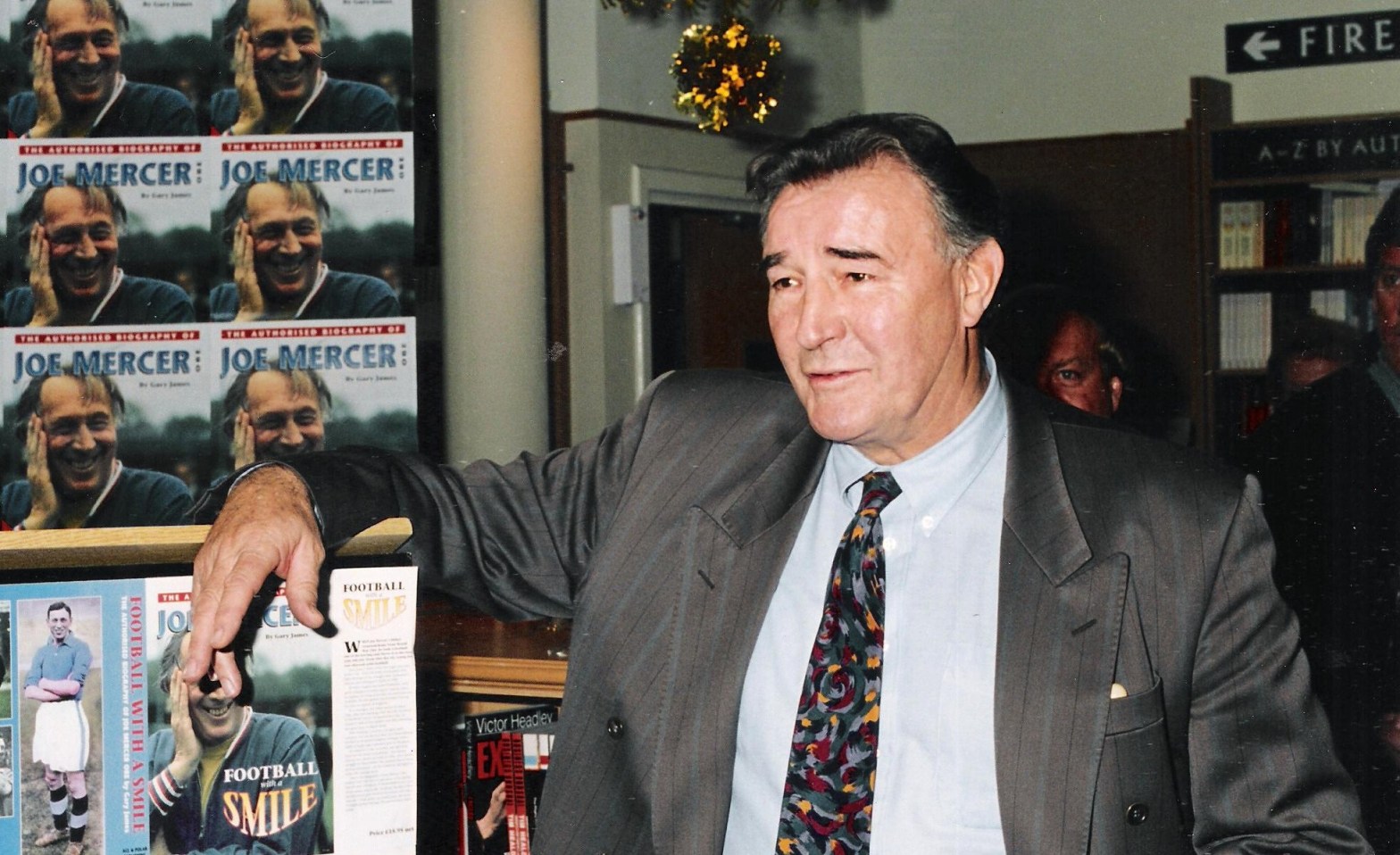
On this day (21 November) in 1964 Manchester City travelled away to Plymouth Argyle. The Blues lost 3-2 but you really need to take a look at this penalty captured on film that day. Malcolm Allison (seen here at my Joe Mercer book launch in 1993) was the Plymouth manager back then, so I guess he had a hand in the plan:

https://www.youtube.com/watch?v=t2iuw4NBYCI

You can read more on Malcolm Allison (and listen to an interview I did with him), Plymouth and on Manchester City in the 1960s across this website. Why not sta, here’s a subscriber article on Manchester City during the 1964-65 season. This was a remarkable season when a City director held meetings, hoping to merge City and United! Plus much more. If you’d like to read this 2350 word article, plus all other articles on the site, then please subscribe (see below). As with most of the other features in this series it includes words from interviews I have performed with those who were there.

Subscribe to get access

Read more of this content when you subscribe today. It costs £3 per month (cancel anytime) or sign up for a year at the discounted price of £20 per year (works out £1.67 per month). Subscribers access the 1000+ articles posted so far and the others scheduled during the life of your subscription.

Albert Alexander (Junior): MCFC Chairman

Back in the late 1960s there was a popular Manchester City chairman whose family had been involved with the club since the very beginning of the club. That was Albert Alexander. Here’s a profile I wrote in 2012 on him. It’s about 900 words long and is free to read. Enjoy!

Albert Alexander was the second generation of the Alexander family to play a prominent role in the development and history of Manchester City.  His father, also Albert, had been involved with the Club from the 1890s and had held various positions including vice-chairman, and even manager for a spell in 1925-26.

Like his father, the younger Albert dedicated his life to the Blues.  Inevitably, he spent most of his boyhood watching the Club develop and, as he grew, he became more involved with behind the scenes work at the Club’s first home Hyde Road.  He was a member of the Ground Committee which performed crucial activities such as stewarding and ground maintenance.

Alexander also managed the Club’s A team and provided support in whatever way necessary to ensure the Blues succeeded.  He was more than happy to work through the ranks and take on any duty necessary.  His son Eric, who was Chairman in the early 1970s, remembers that his father had suffered during the First World War but that didn’t stop him from putting his energies into the Blues:  “He was a very good footballer and cricketer but he was gassed in the Great War and had to give it up.  It affected him throughout his life, although it’s fair to say he recovered enough to fulfil a happy normal life apart from playing of course. 

“He took up golf, but his love for football was such that he started the ‘A’ team at City.  He started it in 1921 and ran it through until 1963.  He enjoyed working with the youngsters and developing them.  He gained an awful lot of satisfaction from that, particularly when players like Matt Busby developed their skills and style as part of the ‘A’ team.”

Ultimately, after many years of loyal service Alexander became a City director.  This came after the Blues became aware that Manchester United were hoping he would join their board.  It is highly likely Alexander would have turned the Reds down, and it was appropriate that he became a director at Maine Road.  It was an honour he deserved for years of dedication to the City cause.

While director he felt the passion all fans feel for the Blues and he also felt the pain and worries during the Club’s struggles in the early Sixties.  He wanted better and, in 1965 as fans demonstrated following City’s lowest attended League game, he came out to face them and talk with them about his hopes and ambitions for the Club.  He apologised for City’s appalling decline.  It says much about his courage and the respect fans had for him that they dispersed.  It is doubtful whether any other director would have been respected in this manner at such a low point.

Understandably, Alexander who was City’s Chairman by this point wanted to see his side successful and later that summer he appointed Joe Mercer as manager.  It was a brave decision as Mercer had been out of work for a year and had suffered a stroke at Aston Villa.  Other names, such as former City hero Peter Doherty and Liverpool manager Bill Shankly, had been expected to be appointed by the media, so this move could easily have been seen negatively.

Alexander guided City through the successful years of the Mercer-Allison period and was probably the first Chairman to be hugely popular with fans.  Everyone seemed to love ‘Little Albert’ as Mercer dubbed him.

Many of City’s achievements during these years were dedicated to Alexander by Mercer, while journalist Bill Fryer commented in 1970:  “He is highly revered in the game and by the public, and I have no doubt good deals have been done for City out of Albert’s friendships because in reality the whole of football is a ‘club’.”

Sadly, despite the Chairman’s popularity, his final years saw him suffer at the hands of the 1970 takeover battle.  Alexander found out about the takeover when he received a knock on his door at breakfast one day.  It was a complete shock to him.

The takeover destroyed much that was good about City at this point, including the Mercer-Allison partnership.  However, it is rarely mentioned how the takeover affected Alexander, the man who had guided City with distinction through some dark days when no one else wanted to know.  He had taken the Club from the lowest point it had experienced since joining the League, to a position of strength with trophies galore.  Those bidding for control wanted the glory, Alexander’s motives were somewhat different – like all true fans he wanted City no matter what. 

Alexander stood down as Chairman and was made Life President – an honour first given to Lawrence Furniss seven decades earlier, proving the significance of this recognition.  Unfortunately, Alexander’s health was deteriorating by this point and he passed away soon after.

Manchester City owes a great deal to the dedication of Albert Alexander and the other members of his family.  The Alexanders helped guide the Blues from the 1890s through to the reign of Peter Swales, and in some ways on via the continuing involvement of Eric Alexander (still a regular attendee until his death in 2019).  Their contribution should never be forgotten.

Subscribe to get access – Annual

Read more of this content when you subscribe today. It costs £20 a year to subscribe (it works out £1.67 a month) or £3 if you’d like to sign up a month at a time. Annual subscribers get full access for as long as you subscribe (you can always try it for a month). It’s worth bearing in mind that the 2010 Manchester A Football History cost £24.95 and all subscribers will be able to access all of that for as long as they are a subscriber (plus all the other stuff of course).

Subscribe to get access – Monthly

It costs £3 a month to subscribe a month at a time. Why not give it a try! Monthly subscribers get access to everything posted since 1 October 2022 for as long as you subscribe.

Mr Grimsdale!

I’ve posted this image of entertainer Norman Wisdom doing some prematch stuff at Maine Rd in the 90s before but it’s always worth reminding ourselves of the days when he’d come out on to the pitch, fall over while taking a penalty and similar antics. Often supported by musician Rick Wakeman too! On one of the days many of us stood on the Kippax saw the elderly entertainer take to the field but didn’t recognise him at first. In fact many of us thought it was Peter Reid wearing a flat cap!

There were lots of odd prematch activities over the decades and you can read about them in this 2000 word article on the history of pre-match entertainment at Manchester City. There are mentions of the St Joseph’s Industrial School and Beswick Prize Bands, various DJs, athletic challenges, Norman Wisdom, Frank Sidebottom & more. Enjoy:

Subscribe to get access – Annual

Read more of this content when you subscribe today. It costs £20 a year (less than 6p a day) to access everything posted since the site went live in December 2020 (books, interviews, videos, history talks etc.) and throughout your period of subscription. Or you can subscribe a month at a time for £3 (cancel anytime; see below)

Subscribe to get access – Monthly

Monthly subscribers have access to everything posted since 1 October 2022 (books, interviews, videos, history talks etc.) and throughout your period of subscription. It costs £3 per month (cancel anytime)

The 1960s: Allison’s Plymouth

On this day (3 April) in 1965 Manchester City defeated Plymouth 2-1 thanks to goals from Alan Oakes and Trevor Ogden. Mike Trebilcock scored for Plymouth. Tony Book played for Plymouth that day while Malcolm Allison was their manager. The following summer Allison would arrive as number two to Joe Mercer and the year after that Tony Book would become a Blue too. Incredible success followed of course!

The 1964-65 season was remarkable and, perhaps, demonstrated how bonkers things were at Maine Road before Mercer and Allison arrived. This was the season when a City director held meetings, hoping to merge City and United! If you’d like to read the following 2350 word article on that season, plus all other articles on the site, then please subscribe (see below). As with most of the other features in this series it includes words from interviews I have performed with those who were there.

Subscribe to get access

Read more of this content when you subscribe today. It costs £3 per month (cancel anytime) or sign up for a year at the discounted price of £20 per year (works out £1.67 per month). Subscribers access the 1000+ articles posted so far and the others scheduled during the life of your subscription.

The 1960s: Manchester City 3 Southampton 1

Continuing the series of features on the 1960s… On this day (20 February) in 1965 Manchester City defeated Southampton 3-1 with goals from Johnny Crossan, Bobby Kennedy and Neil Young. Subscribers can read more on Manchester City during the 1964-65 season below. This was a remarkable season when a City director held meetings, hoping to merge City and United! Plus much more. If you’d like to read this 2350 word article, plus all other articles on the site, then please subscribe (see below). As with most of the other features in this series it includes words from interviews I have performed with those who were there.

Subscribe to get access

Read more of this content when you subscribe today. It costs £3 per month (cancel anytime) or sign up for a year at the discounted price of £20 per year (works out £1.67 per month). Subscribers access the 1000+ articles posted so far and the others scheduled during the life of your subscription.

The 1960s: Summerbee Double

On this day (29 January) in 1966 Mike Summerbee scored twice as Manchester City defeated Middlesbrough 3-1. The other goal came from Neil Young (the photo is of course Neil Young in 1971 at Maine Road). 1965-66 was an important season in MCFC history and you can read more on it in the following 4100 word article. This (plus all other articles on the site) is available to subscribers (see below). As with most of the other features in this series it includes words from interviews I have performed with those who were there.

Subscribe to get access

Read more of this content when you subscribe today. It costs £3 per month (cancel anytime) or sign up for a year at the discounted price of £20 per year (works out £1.67 per month). Subscribers access the 1000+ articles posted so far and the others scheduled during the life of your subscription.

The 1960s: Crossan Goal

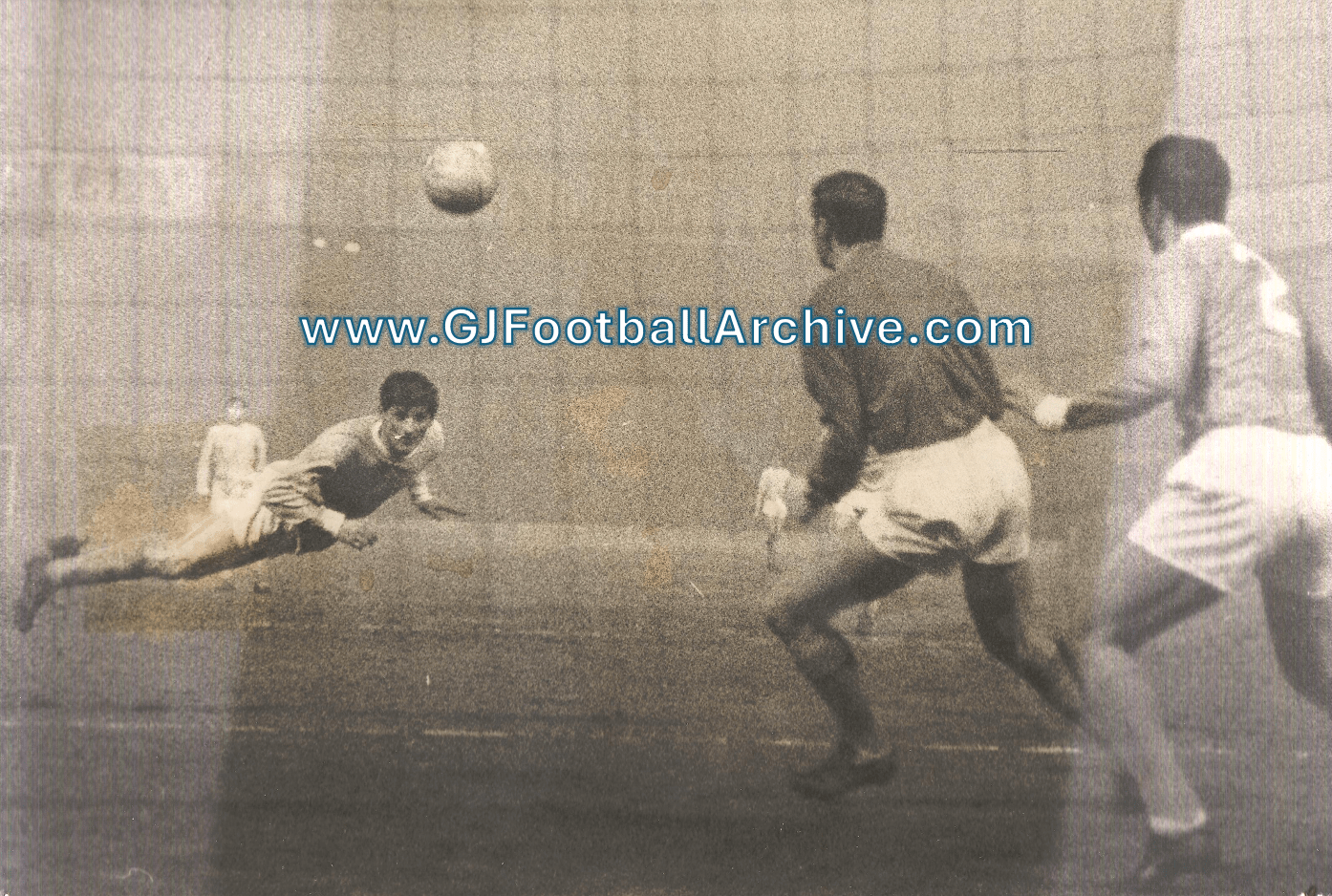
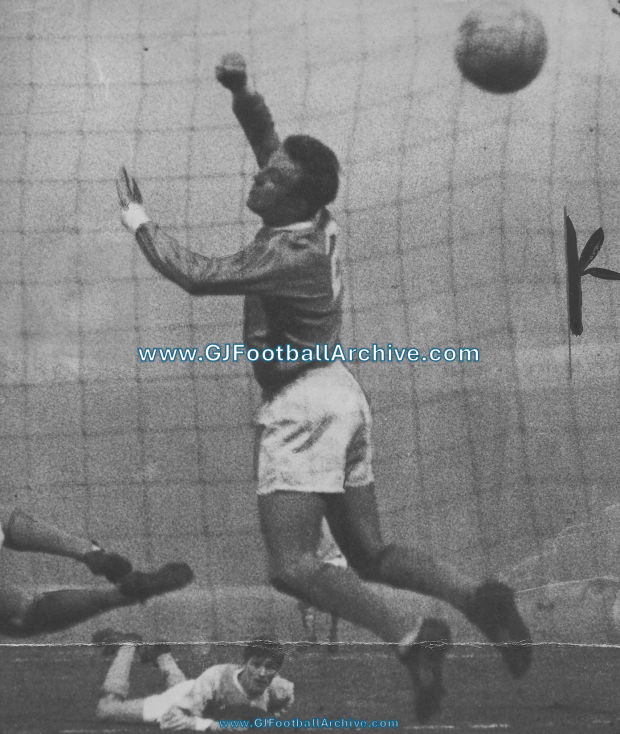
Here are a couple of interesting photos of Johnny Crossan’s goal in the game I mentioned earlier today (24 January 1966; City defeated Blackpool 3-1 in the FA Cup). The number 2 is Blackpool’s Jimmy Armfield who does remarkably well to get up so high during the time inbetween these two photos being taken, even though he’s not able to stop the goal. I’ve not yet found film of the game but Crossan’s goal looks somewhat impressive. Here are the two images in sequence:

First of two shots of Johnny Crossan Scoring v Blackpool 24/1/1966 Jimmy Armfield is Blackpool number two.
Second of two shots of Johnny Crossan Scoring v Blackpool 24/1/1966 Jimmy Armfield is Blackpool number two.

1965-66 was an important season in MCFC history and you can read more on it in the following 4100 word article. This (plus all other articles on the site) is available to subscribers (see below). As with most of the other features in this series it includes words from interviews I have performed with those who were there.

Subscribe to get access

Read more of this content when you subscribe today. It costs £3 per month (cancel anytime) or sign up for a year at the discounted price of £20 per year (works out £1.67 per month). Subscribers access the 1000+ articles posted so far and the others scheduled during the life of your subscription.