Manchester’s Support

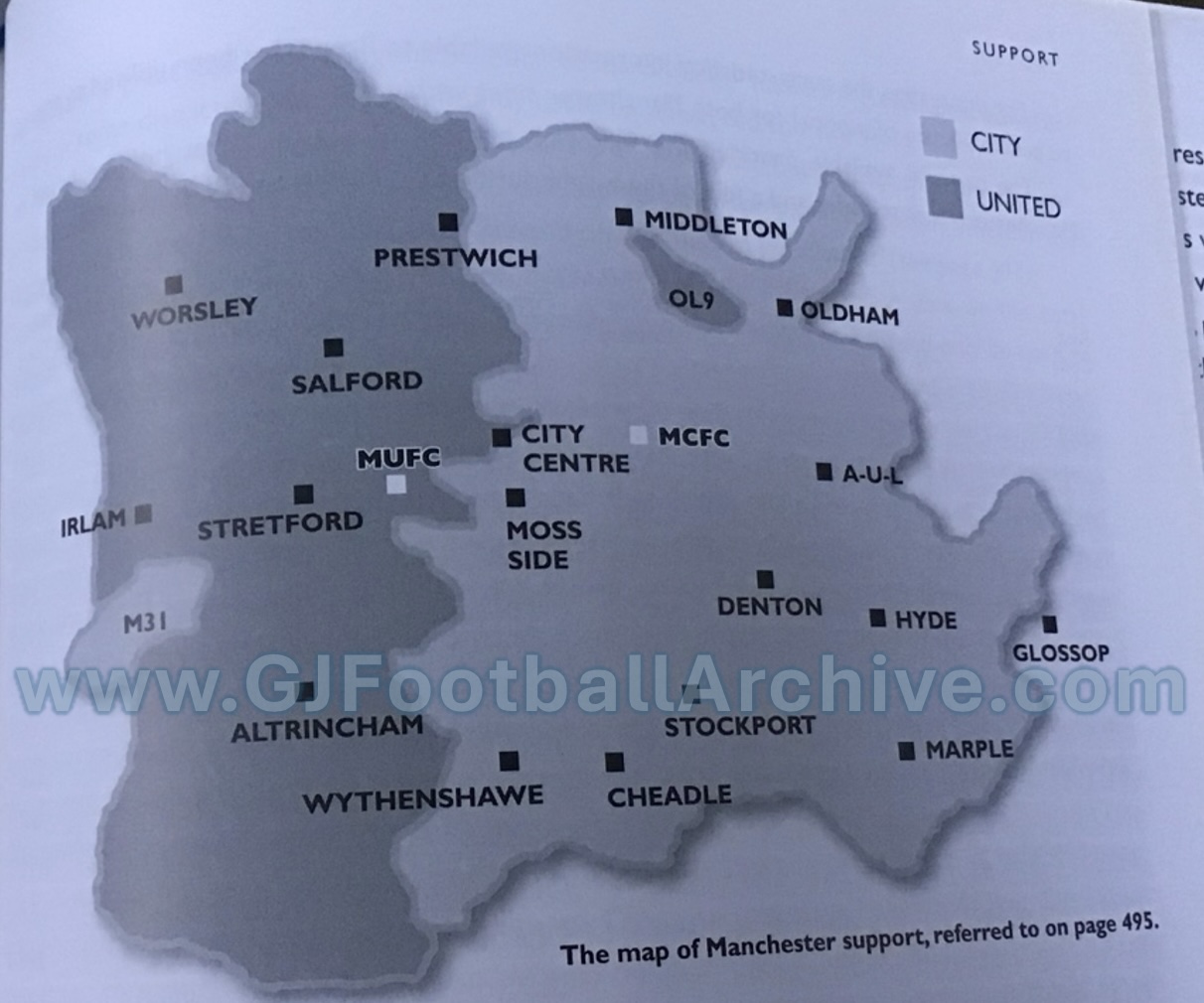
Here’s a map I published in my book Manchester A Football History. It shows the spread of support for both City and United across Manchester as recorded in an academic study back in 2002 (using data from 2001). Basically this was based on season ticket holders in each postcode area of Manchester and shows whether a postcode area was Red or Blue at that time. You can see that back then City had more season ticket holders in almost every district of the city centre and east Manchester while United tended to have more in western districts. However, this was based on the number of season ticket holders in 2001. Since then of course the numbers attending games at both clubs have increased significantly.

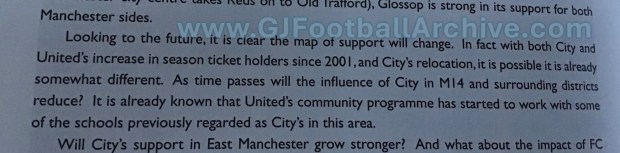
In my chapter I made a comment about how this analysis might change:

Screenshot

Top Two Divisions Attendances and Table From 40 Years Ago!

Last week I posted the top flight attendances for this last week forty years ago and this led to a number of comments/questions and so to answer some of those I’ve now posted the top two divisions attendances together with the two League tables AND the end of season average attendances. People asked for clarity on how the figures compared to the second tier and whether League position played its part in affecting crowds. As a reminder here’s last week’s attendances…

And here’s this week’s (published 24 November 1985) and the League table too.

Obviously, these are only snapshots from that season but to add a bit more context here are the end of season averages here are the top 46 best supported clubs in order that season (hopefully it might make those who sing songs like ‘Where Were You?’ think about the crowds at their own clubs first):

A few notable League positions for those who do sing ‘Where Were You?’… The top eight clubs in the League were: Liverpool (champions), Everton, West Ham, Man Utd, Sheff Wed, Chelsea, Arsenal and Forest. Manchester City (who were 4th best supported club) were 15th (only 4 points above relegation zone), Spurs were tenth, Newcastle 11th and Aston Villa 16th.

In the Second Division best supported club Sunderland were 18th (avoiding relegation by 4 points); the top four were Norwich, Charlton, Wimbledon and Portsmouth.

If you’d like to know more about Manchester City at this time, here’s a 2,500 word subscriber feature on the 1985-86 season. Enjoy!

Subscribe to get access – Monthly

Read more of this content when you subscribe today. It costs £3 per month (cancel anytime) to access everything posted since 1 October 2022 or there’s a special annual rate below which gives greater access and works out much cheaper.

Subscribe to get access – Annual

Read more of this content when you subscribe today. It costs £3 per month (above) or £20 a year (here) to access everything posted since the site was created in December 2020. This special rate works out about £1.67 a week and gives access to everything posted, including PDFs of 3 of my books.

If you’d like to know more about subscribing then see:

Attendances 40 Years Ago!

These two results tables for top flight football in November 1985 make interesting reading. I’ve included the details published today (17 November, for games played the previous day) in 1985 and also the week after’s details too. This gives an idea of what the top clubs were attracting back then. Notice West Ham’s game attracted more at home than Arsenal’s and that Liverpool were over 26,000 less than Manchester United. Arsenal’s crowd was 6,000 less than struggling Manchester City and Tottenham attracted more than Arsenal too. Reigning League champions Everton were some way ahead of the London clubs and only about 600 behind Liverpool. Obviously, these are only snapshots from two weekends but hopefully it might make those who sing songs like ‘Where Were You?’ think about the crowds at their own clubs first.

the Marwood scoring for Sheffield Wednesday was of course Brian Marwood who went on to play a key part in Manchester City’s modern return to glory. If you’d like to know more about Manchester City at this time, here’s a 2,500 word subscriber feature on the 1985-86 season. Enjoy!

Subscribe to get access – Monthly

Read more of this content when you subscribe today. It costs £3 per month (cancel anytime) to access everything posted since 1 October 2022 or there’s a special annual rate below which gives greater access and works out much cheaper.

Subscribe to get access – Annual

Read more of this content when you subscribe today. It costs £3 per month (above) or £20 a year (here) to access everything posted since the site was created in December 2020. This special rate works out about £1.67 a week and gives access to everything posted, including PDFs of 3 of my books.

If you’d like to know more about subscribing then see:

The Days When Televised Games Led To Claims For Compensation

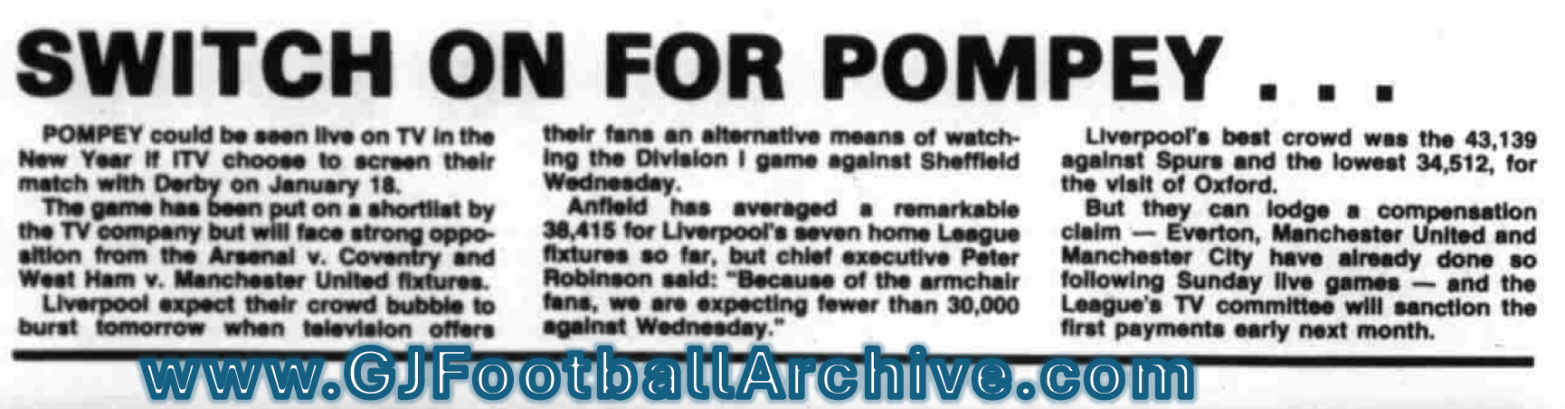
Here’s an interesting cutting from 39 years ago today (15 November 1986). Back then live televised football matches were deemed to have an effect on attendances at games and clubs could put in a claim for compensation if they could prove their gate would normally have been higher. This article talks of Liverpool’s home game with Sheffield Wednesday… The attendance was 28,020.

Charlton-Arsenal Attendance

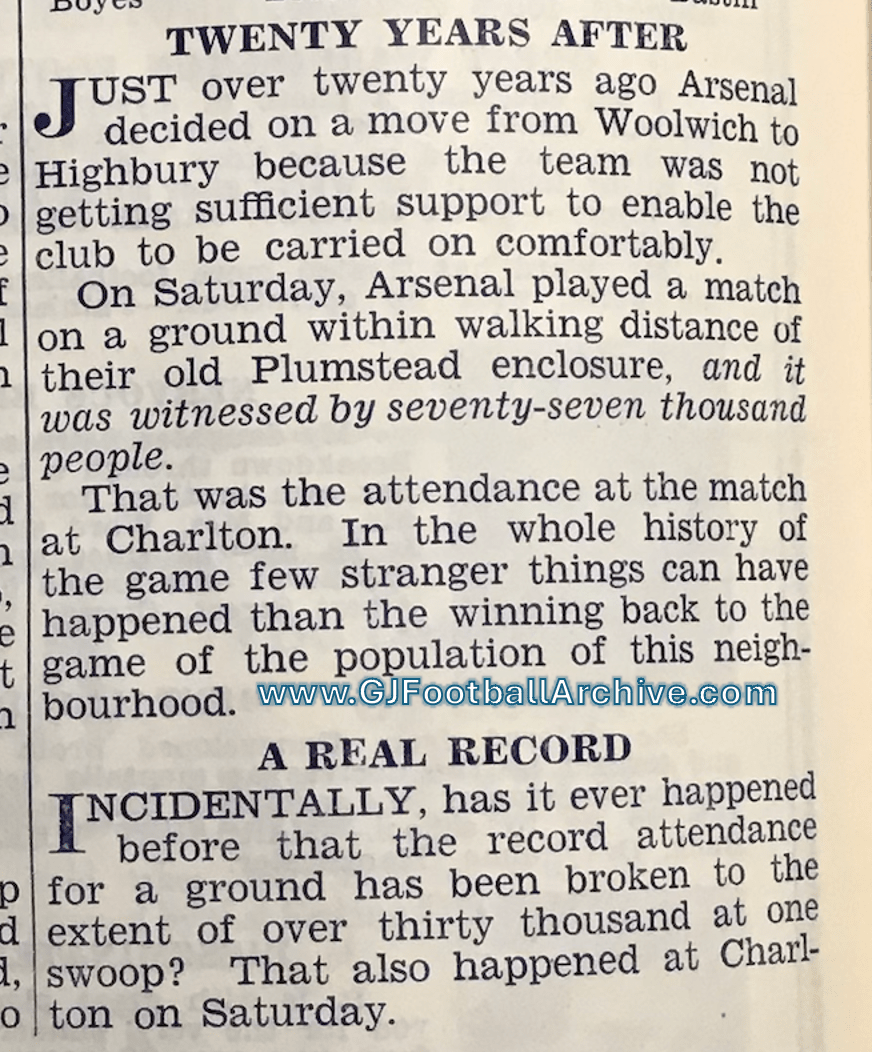
Here’s a cutting from a Manchester City match programme in October 1936 which talks of a game between Charlton and Arsenal, played on 17 October 1936. The official attendance that day was 68,160 for the League game. Note how it talks of Arsenal leaving their original base south of the Thames due to issues attracting crowds and then the mention of Charlton’s popularity in south London.

Incidentally, Manchester City’s record League attendance at this time was 79,491 and record attendance was 84,569.

You can find out all about Manchester City during the 1936-37 season by reading the following 2,500 word subscriber article on that season. If you subscribe (see below) I hope you enjoy it. If you don’t subscribe then why not try it for a month (£3 per month or sign up for a year at a discounted £20 per year)?

Here’s the article:

Subscribe to get access

Read more of this content when you subscribe today. It costs £3 a month (cancel anytime) or sign up for a year at £20 per year. Subscribers have access to the 1000s of articles, features, interviews etc. posted so far and all those posted during your subscription.

The 1920s: The Second Attempt

The new series on Manchester City in the 1920s continues today with a 700 word subscriber article on the 1927-28 season. If you subscribe (see below) I hope you enjoy it. If you are not currently a subscriber then why not try it for a month (£3 per month or sign up for a year at a discounted £20 per year)?

Here’s the article:

Subscribe to get access

Read more of this content when you subscribe today. It costs £3 a month (cancel anytime) or sign up for a year at £20 per year. Subscribers have access to the 1000s of articles, features, interviews etc. posted so far and all those posted during your subscription.

130,000 Capacity Stadium for Manchester City

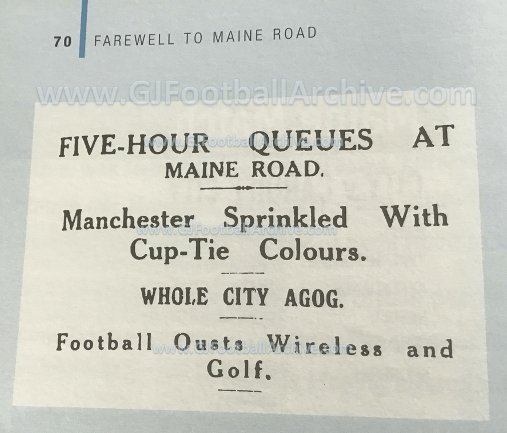
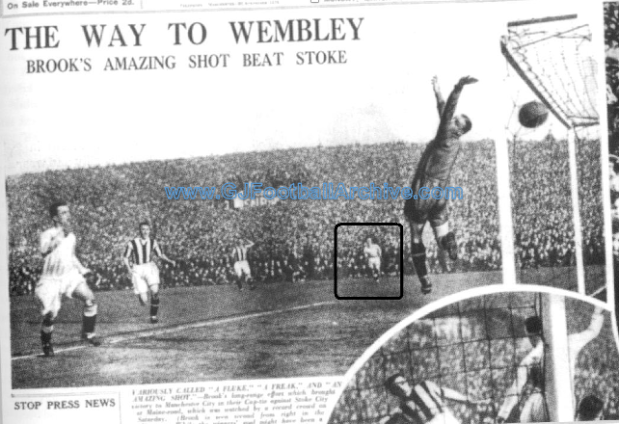
This is an interesting cutting from 1935 talking about the possibility of increasing Maine Road to cope with the huge crowds that wanted to watch Manchester City play. It may seem crazy today but wasn’t such an odd idea in the 1930s. You can find out more on the story here:

The 1940s: A Huge Attendance in Second Tier

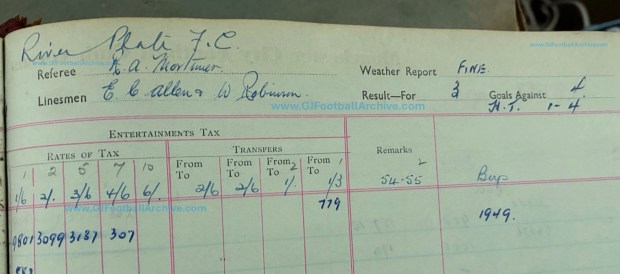
On this day (10 May) in 1947 a solitary goal from Alec Herd (image) against Burnley was enough to give Manchester City promotion.  The attendance for this Second Division game was recorded by the media at the time as 67,672 but official records reviewed almost sixty years later showed that City actually recorded the attendance as 69,463 at the time.

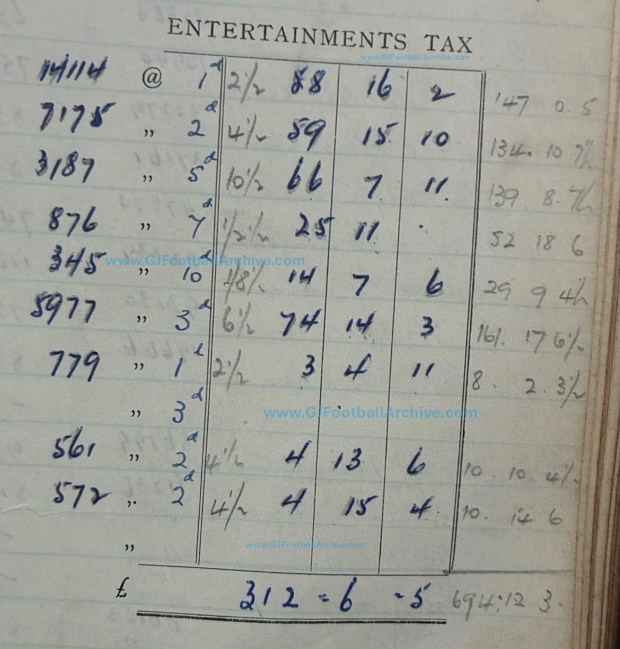
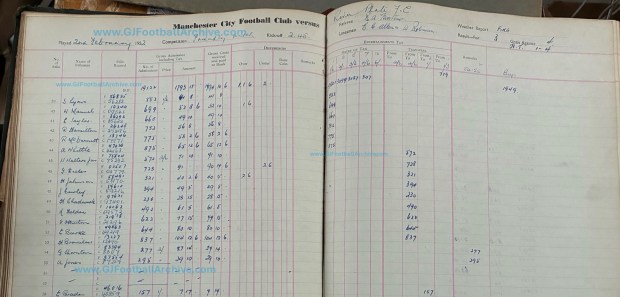
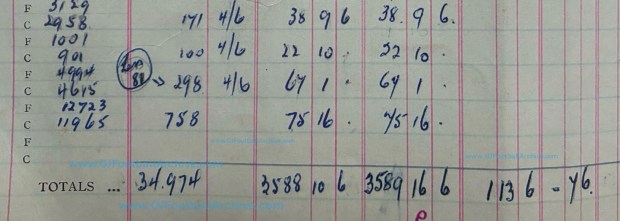
Typically, the attendance figures City used to give the media for League games through to the 1960s tended to exclude season tickets. So the Blues’ management would give the figure of tickets or pay on the gate admission for the game but exclude season ticket holders. Back in 1946-47 City had around 1,800 season ticket holders and almost every League attendance back then is understated by that amount. 

FA Cup games were the actual attendances as these were always sold game by game.

As this practice of excluding all season ticket holders continued for many, many decades at Maine Road attendance figures for League games are usually understated (they were often understated in the 1970s & 1980s as well but for different reasons and back then Peter Swales, Bernard Halford and the others involved in calculating attendances would deny any discrepancy despite many fans, fanzines and others challenging them often).

For comparison purposes it’s worth looking at the attendances of the Division One champions in 1947 to see how the Blues compared. This attendance against Burnley was almost 17,000 higher than Division One champions Liverpool’s highest crowd that season (52,512 v Wolves in December) and the Merseyside Reds nearest home game to City’s Burnley match was watched by 48,800 and that was Liverpool v Manchester United (May 3). Liverpool did average 45,732 that season, whereas City averaged 39,283 but they were a Second Division club.

The City-Burnley crowd was the Second Division’s record at the time and it was higher than every First Division crowd since the 1937-38 season (The Second Division record is now held by Tottenham v Southampton which had 70,302 in 1949-50).

Film of City v Burnley does exist but it’s in a most unlikely place. It was actually filmed as part of a Mancunian Films drama called Cup Tie Honeymoon. The company was run by a Manchester City fan who made this film, which starred Sandy Powell and Pat Phoenix (under her original name of Pilkington). A football game is crucial to the plot and scenes were filmed at Maine Road and interspersed with real action from the City-Burnley game to add credibility.

Myself and Will McTaggart have shown these scenes in our Boys In Blue film shows which have been staged at the Dancehouse and Cornerhouse in Manchester over the last decade. Maybe I’ll explain more about the film and those talks another day.

You can read more on the 1946-47 season below. This was the first league season after the war and ended with City winning the Second Division title. There were some truly significant – and well attended – games that season and future Liverpool manager Joe Fagan (photograph) made his debut this season too. This subscriber article includes comments from an interview I did with George Smith back in 2003.

This is a subscriber article and you can read it by subscribing below.

Subscribe to get access

Read more of this content when you subscribe today. It costs £3 per month or you can subscriber for the discounted annual rate of £20 per year. Each subscriber gets access to everything posted so far, including PDFs of a couple of my books.

Allison Wins Bet With Crerand!

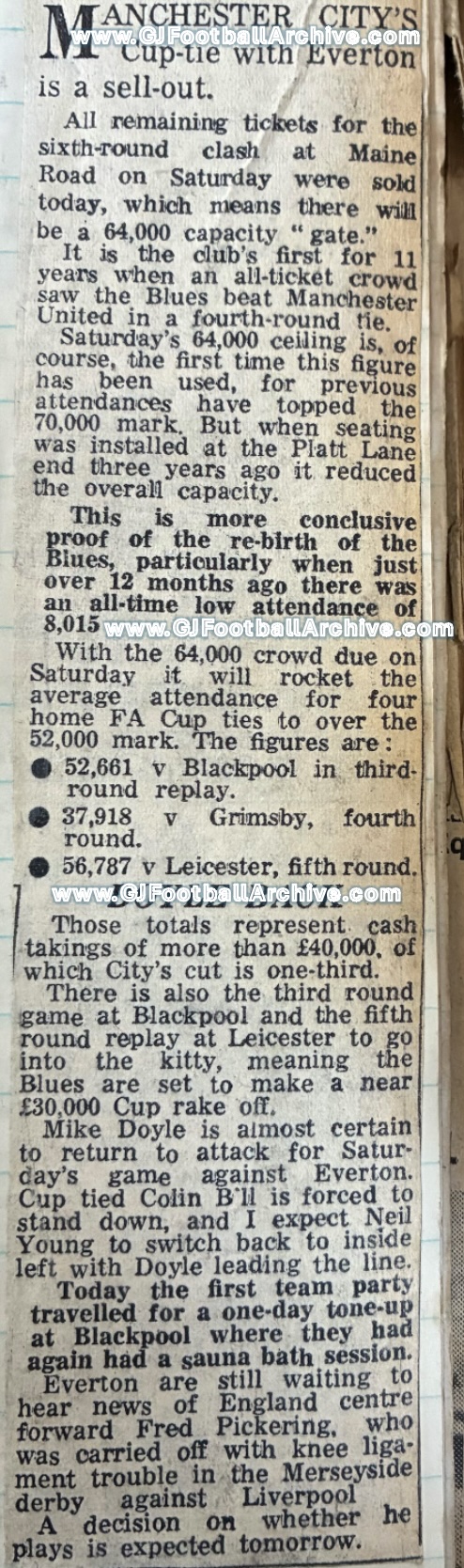
Today’s the day (27 October) in 1965 when Malcolm Allison won a significant bet with Pat Crerand about attendances at Manchester City. The Blues had drawn 0-0 with Norwich at Maine Road, ensuring City were top of Division Two and looking like promotional hopefuls. A crowd of 34,091 watched the match and Allison was delighted with that figure. The attendance had won him ten pounds off Manchester United’s Paddy Crerand who had told the City coach that City were a ‘dying club’ and bet him the Blues would never get a crowd above 30,000 at Maine Road again!  Later that season 63,034 watched City play Everton – an attendance greater than any domestic crowd at Old Trafford that season. Allison had the last laugh of course!

Allison For England

Subscribe to get access

If you’ve enjoyed this then why not subscribe? Every subscription directly helps support my research and provides each annual subscriber with access to everything posted on this site, including the entire Manchester A Football History and From Maine Men To Banana Citizens books, plus interviews, articles and more. I am not employed by anyone and all my research is self funded or comes from subscriptions to this site.

Where Were You?

Fairly early on in the game between Manchester City and Arsenal the fans of the London club started to sing the old ‘Where were you when you were…’ chant. You’d think they’d know because often City were attracting better crowds than Arsenal. Let’s look at 1982-83 when I experienced my first relegation as a City fan. Back then City were the 4th best supported club (26,789) and Arsenal were 6th (24,153) – see the average attendance table above. City finished in a relegation position and Arsenal were 10th.

The following season Arsenal did attract a better average than City but they were the 5th best supported club in the entire 4 divisions and City were the 6th. In terms of League position Arsenal were 6th and City were 4th in Division Two.

We could talk about the late 1990s but neither club had a ground that could satisfy the demand to see them, so a sell out Maine Road in 1998-99 for third tier City has to compare with a sell out Highbury for title challenging Arsenal.

Since then stadium size has dictated average support but if we go back to earlier decades and assume that Arsenal’s ‘Where were you when you were sh*t’ refers to City heading towards relegation or being out of the top flight then City’s record is impressive overall. In 1965-66 (the last 2nd division season before the 1980s) City averaged 27,739 (10th best in entire League) while First Division Arsenal were the 9th best supported club on 29,036.

We can jump back even further. In the 1920s Arsenal were perceived as a popular club and in 1925-26 they averaged 31,471 – the 3rd best in the League. Where were City? Oh, City who were relegated that season were the 2nd best supported team with an average of almost 32,000. Not much more than Arsenal but the Gunners were 2nd in the League and City were relegated!

The year after Second Division City were the 3rd best supported club and top flight Arsenal were 4th!

1926-27 Average attendances. Manchester City in Second Division

The year after that (1927-28) Second Division City were the best supported club in the entire League with 37,468. Where were top flight Arsenal? 7th best supported with 27,434.

1927-28 Average attendances. Manchester City were the best supported club despite being in Second Division

It’s all a nonsense but if Arsenal fans, or any other team, want to sing songs like this then it would help if they knew their own history of support.