On this day in 1953 Manchester City defeated Swindon Town 7-0 in the FA Cup third round at Maine Road. The goalscorers were Hart (4), Broadis, Cunliffe, and Williamson.
Exactly one year later future Manchester United and Manchester City full-back John Gidman was born in Garstang. Gidman went on to make 123 first team appearances for United and 71 for City. He briefly became a cult hero at Maine Road by stating that City were the only side he would leave Old Trafford for at the time of his transfer in 1986.
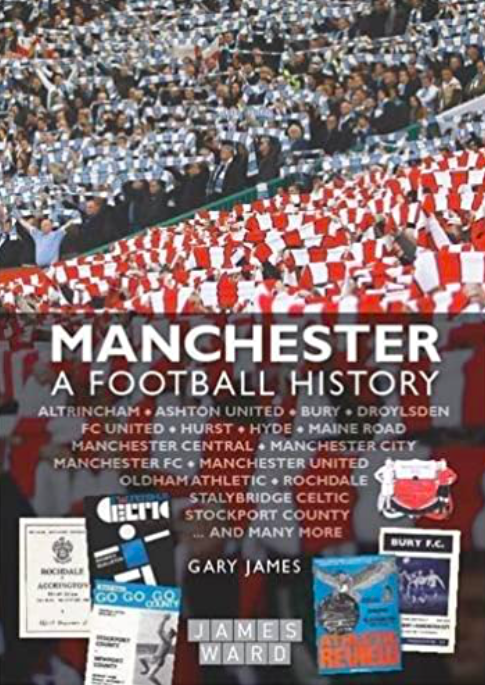
This is the first chapter of the 2010 edition of the book Manchester A Football History (Gary James, published by James Ward). As with everything else on this site copyright laws apply. The book is published here for the personal use of subscribers to this site. For any other use please email the publishers at info@manchesterfootball.org
Subscribe to get access
Read more of this content when you subscribe today. You can sign up for a year at £20 here or at £3 per month lower down.
This is the Introduction for the 2010 edition of the book Manchester A Football History (Gary James, published by James Ward). As with everything else on this site copyright laws apply. The book is published here for the personal use of subscribers to this site. For any other use please email the publishers at info@manchesterfootball.org
Subscribe to get access
Read more of this content when you subscribe today. You can subscribe for £20 a year (works out about £1.67 per month) here.
If you would like to read the full article and other pieces like this then please subscribe below. It works out about £1.67 a month if you take out an annual subscription (£20 per year) or £3 a month if you’d like to sign up for a month at a time. Each subscriber gets full access to the 100+ articles posted so far and the hundreds scheduled to be posted in the coming weeks.
Subscribe to get access
Read this article and everything else posted to GJFootballArchive.com when you subscribe today.
ABSTRACT: Association football had become a prominent part of Manchester’s sporting landscape by 1904 when Manchester achieved its first national success. Its journey had been difficult, relying on the efforts of several key individuals whose relentless determination to widen the sport’s participation ensured the game succeeded. This paper provides an analysis of three pioneering figures, John Nall, Fitzroy Norris, and Joshua Parlby, who took the game from its formalized inception in the region through to its first national successes, considering their class, experience, shared history, and connections, while analyzing what these narratives add to the wider origins of football debate. The author concludes that football’s emergence depended primarily on the activities of key individuals from varying backgrounds who provided the energy, enthusiasm, and organizational structures necessary, while relying on cross-class connections, to establish the game within a region.
If you would like to read the full article and other pieces like this then please subscribe below. It works out about £1.67 a month if you take out an annual subscription (£20 per year) or £3 a month if you’d like to sign up for a month at a time. Each subscriber gets full access to the 100+ articles posted so far and the hundreds scheduled to be posted in the coming weeks.
This paper will focus on the origins and subsequent development of school football in Manchester and its surrounding conurbation between 1880 and 1919. Archival evidence, drawing mainly on the Manchester Schools Football Association (MSFA) collection, will be used to chronicle the expansion of organized competition and sporting opportunities. It will demonstrate that football’s growth in Manchester’s education system owed much to dedicated teachers who encouraged participation at their own schools and organized inter-school competitions. Association football became prominent right across Manchester as young teachers, most notably George Sharples, encouraged pupils to play, leading to a widening of participation and interest that helps to explain how Manchester transitioned from a rugby to a soccer city. Also discussed is the important role of the Manchester and Salford Playing Fields Society (MSPFS) which assisted the game’s growth in schools and amongst schoolchildren more generally by making suitable fields and pitches available. Without the Society’s efforts facilities may have been insufficient to satisfy growing demand at a critical point in soccer’s development.
If you would like to read the full article and other pieces like this then please subscribe below. It works out about £1.67 a month if you take out an annual subscription (£20 per year) or £3 a month if you’d like to sign up for a month at a time. Each subscriber gets full access to the 100+ articles posted so far and the hundreds scheduled to be posted in the coming weeks.
Subscribe to get access
Read article and the rest of GJFootballArchive.com when you subscribe today.
This paper provides an overview of an oral history project focusing on the experiences of female footballers, in particular those playing for Manchester City Women since its formation as a community initiative in 1988, through to its modern-day position as a leading Women’s Super League club. It discusses the development of the project, analysis of the methodology employed and provides high-level findings on the club’s history, the participants and the research process. For too long female participation, even at England’s most famous clubs, has not been widely recognised, reported on or understood. This project, supported by a professional football club, begins to address these omissions. It does so by focusing on personal testimonies, together with archive material to generate an historical account of how a team, established as a community initiative, developed into a major trophy-winning club.
If you would like to read the full article and other pieces like this then please subscribe below. It works out about £1.67 a month if you take out an annual subscription (£20 per year) or £3 a month if you’d like to sign up for a month at a time. Each subscriber gets full access to the 100+ articles posted so far and the hundreds scheduled to be posted in the coming weeks.
Subscribe to get access
Read more of this content when you subscribe today.
ABSTRACT: Contemporary Manchester is recognized internationally as a footballing city, with both Manchester United and Manchester City acknowledged as prominent clubs. However, the city has not always been a force in the game, nor has the game always been important across Manchester’s social spectrum. This paper examines how Manchester first became established as a footballing city, identify- ing that success in the FA Cup in 1904 stimulated interest in the game and con- siders how the legacy of that victory enabled the game to develop in terms of participation and spectating. It also considers the social mix of attendees at pro- fessional games in the city, and closes by concluding that footballing success generated increased interest and was the catalyst for improvement in the infra- structure for both participation and attendance, enabling Manchester’s footballing identity to become established.
If you would like to read the full article and other pieces like this then please subscribe below. It works out about £1.67 a month if you take out an annual subscription (£20 per year) or £3 a month if you’d like to sign up for a month at a time. Each subscriber gets full access to the 100+ articles posted so far and the hundreds scheduled to be posted in the coming weeks.
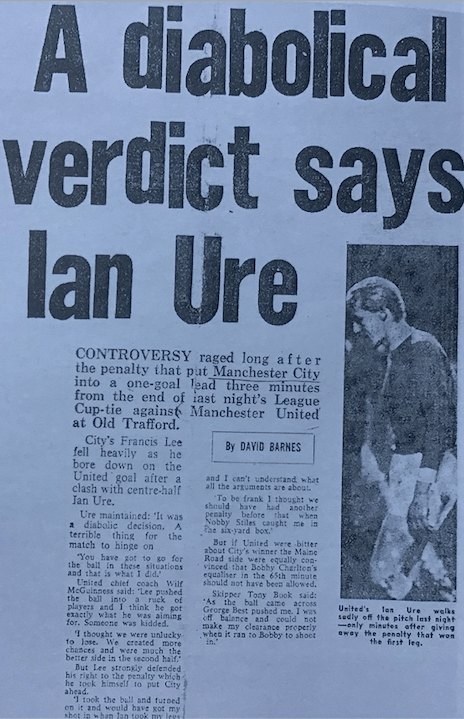
On Wednesday 6th January 2020 Manchester City and Manchester United will play yet another semi-final in the League Cup. Unlike the previous semi-finals however this one will be a one-leg affair (due to potential fixture congestion it was decided to take this approach).
The first ever League Cup semi final between the teams – indeed the first ever League Cup tie between them – came during the 1969-70 season. That was the first season when all 92 League clubs entered the competition.
Here is the background to each of the 1969-70 semi-final legs and a report on each game with lineups, attendance details etc.
LEAGUE CUP SEMI-FINAL 1ST LEG
DERBY: League Cup
DATE 3rd December 1969
COMPETITION League Cup S/F leg 1
VENUE Maine Road
ATTENDANCE 55,799
MANCHESTER CITY 2 (Bell, Lee pen)
MANCHESTER UNITED 1 (Charlton)
Manchester City: Joe CORRIGAN, Tony BOOK, Glyn PARDOE, Mike DOYLE, Tommy BOOTH, Alan OAKES, Mike SUMMERBEE, Colin BELL, Francis LEE, Neil YOUNG, Ian BOWYER. Unused substitute: Dave CONNOR. Manager: Joe MERCER
Manchester United: Alex STEPNEY, Paul EDWARDS, Tony DUNNE, Francis BURNS, Ian URE, David SADLER, George BEST, Brian KIDD, Bobby CHARLTON, Nobby STILES, John ASTON. Unused Substitute: Jim RYAN. Manager: Wilf McGUINNESS
Subscribe to get access
Read more of this content when you subscribe today. Subscribing gives access to all the 100+ articles posted so far with Manchester A Football History being serialised from Saturday 9th January 2021 as well.
Read more of this content when you subscribe today. Subscribing gives access to all the 100+ articles posted so far with Manchester A Football History being serialised from Saturday 9th January 2021 as well.
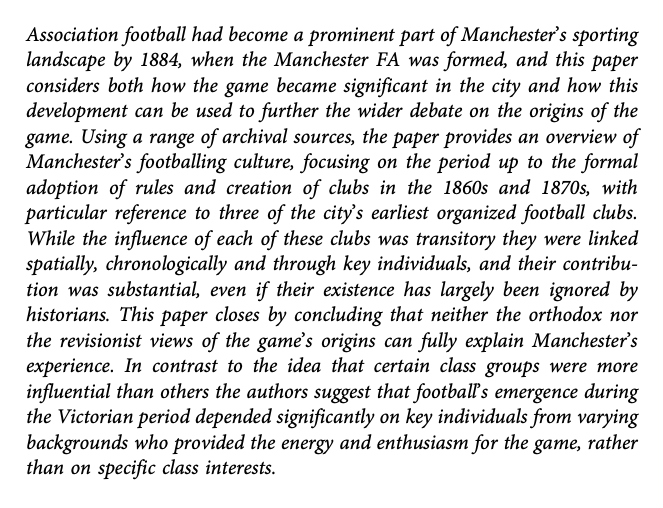
Over the coming weeks I’ll be posting my academic articles here for subscribers to my blog. In the meantime, here’s a link to one, first published in 2014, that is currently free to access on the publisher’s website: