Maine Road 100 – Day 93

For Day 93 in my series of free articles counting down the 100 days to the centenary of Maine Road’s first game I want to do a bit of an attendance feature. Maybe this will put a few myths to bed!  

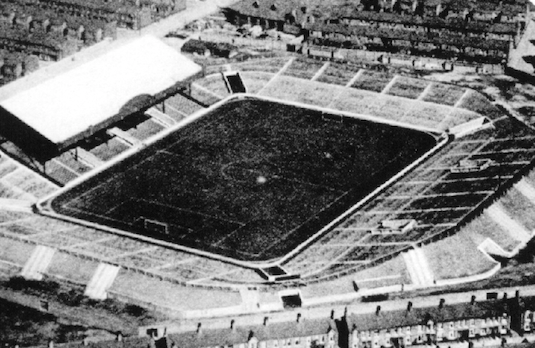
The Blues have, generation after generation, been one of the English game’s top attractions and Maine Road was an incredible and poweful venue over the years. The Etihad has seen City establish new record average attendances but no English club venue can match what Maine Road achieved in terms of record crowds and it still, all these years on, holds the record for the highest crowd on an English club ground and the record attendance for an English League game – a record City set in 1935 which is currently held by a game featuring United and Arsenal at Maine Road.

The record attendance on a club ground was first set by City in 1924 – 99 years ago! – and was eclipsed by a figure of 84,569 in 1934 – almost 90 years ago. City know how to establish and keep records for decades!

Like all – and I do mean all – English clubs there have been some average attendance lows at Maine Road over the years, but when the entire history of Manchester City at the old stadium is reviewed and the club’s average figures are compared with the national average it is clear that the Blues have consistently been one of football’s most attractive draws.  Take a look at the following:

  • Since the beginning of the Football League in 1888 only nine sides have topped the table for average attendances.  In chronological order of their first appearance at the top of the average table they are: Everton (1888-9), Villa (1898-99), Newcastle (1904-05), Chelsea (1907-08), Tottenham (1909-10), City (1910-11), Liverpool (1922-23), Arsenal (1929-30), & Manchester United (1956-57). City were not based at Maine Road back in 1910 (which makes that even more remarkable) and they were the best supported club again before moving to Maine Road. The first time Maine Road attracted the highest national average was in 1925-26 – which means that City are the ONLY team to have topped the attendance charts at two different venues! 
  • Regularly amongst the best supported sides throughout the inter war period, City’s average exceeded 37,000 for the first time in 1927-28 when the club established a record average crowd for the Second Division.  This was also the entire League’s highest.
  • In 1947-48 City’s average crowd exceeded 42,000 for the first time.  Prior to that season only Chelsea (1919-20 & 1946-7), Arsenal (1934-5, 1936-7,1937-8, & 1946-7) , Newcastle (1946-7), Liverpool (1946-7), United (1946-7), and Wolves (1946-7) had exceeded that figure.
  • From 1975 to relegation in 1983 City were always one of the top 4 best supported sides. Yes, even in a relegation season they were better than all but 3 teams and those 3 teams all finished in the top 4 (one won the League, one the FA Cup and the other finished 4th after winning the FA Cup in the previous two seasons).
  • Since the 1980s whenever City have played outside of the top division, they have tended to be the best supported side in that division.  

In general many people believe success increases support, and while that is undoubtedly true to some extent, for City at Maine Road it was often periods of adversity that proved the loyalty of the Club’s fans.  For example, in 1925-26 when City were the best supported side in Division One and had established a new record average, the Blues were actually relegated.  This coupled with significant poverty and hardship in Manchester at the time should have reduced support but loyalty increased!  In my book “Manchester A Football History” I explore the relationship between attendances and Manchester’s major sides and it is fair to say that City fans can feel immensely proud of their loyalty throughout the history of the game.  Something that cannot be said by all of the League’s biggest names.  

In fact, it is worth highlighting that City have never been the worst supported side in their division at Maine Road (or anywhere else for that matter!) but, of today’s perceived giants, Arsenal (1912-13 – average = 9,100) and Manchester United (1930-31 – average = 11,685) have.  City’s worst average at Maine Road came in the desperate 1964-65 season and was 14,753 (half the average of 1960-61 and a 3rd of City’s 1957-8 figure).  However it is significant that for every League season the club’s average has always been above the divisional average and, apart from 17 seasons, has always been in the top 11 nationally.  Again, few of today’s giants can say that – United’s 20th Century low stands at 4,650 and Chelsea averaged 15,731 as recently as 1988-89. 

For fans average attendances are often used as an indicator of size of club and so a number of people over the years have tried to produce a definitive ‘all-time’ attendance table.  A few years ago analysis by a member of the Association of Football Statisticians (It wasn’t my research – though I was a life member of this organisation) claimed that if stadium capacity was not an issue for any club City would be the fourth biggest side in terms of attendance.  That analysis compared postwar attendance detail with performance on the pitch.   

Figures can be manipulated in many different ways, but City fans should feel proud that the Blues have many attendance firsts that can never be matched by today’s perceived biggest clubs.   

If you have enjoyed this and the other Maine Road 100 articles/features then why not subscribe? For details see:

Treble Success

I don’t know where to start with this but I wanted to get a few thoughts down ahead of the celebration chat I’ve planned for Wednesday (see link below)… This has been an absolutely incredible few weeks for fans of Manchester City and it’s also be mentally and physically draining too. It will be in the coming weeks that we get to relax and look back on it all but I wanted to get some top of the head thoughts down now while they’re buzzing around. So here goes…

The history of football moves at a frantic pace and there are key moments (Tueart, Dickov, Aguerooooooooooooo for example) that are era defining or represent the beginning or the end of an era. This last week is another of those with Rodri’s goal at Istanbul finally bringing City the Champions League that we’ve all craved for so long (but pretended at times that we didn’t).

Manchester City are now Champions Of Europe and, finally, Villa fans can stop singing their song to us! There were many occasions over the decades since City’s last European trophy that the club had a squad of players that were capable of major European success but sadly circumstances worked against them. There were also times when the club suffered major failures but I’ll forget those for the moment.

Depending on when you were born you tend to fall into three rough categories of City fan (there’s more than this but I hope you get my point):

  • Those who remember City as a major power, winning trophies and being ahead of United, Liverpool & others; then falling apart under bad chairmanship; then resurrected; then takeover and what we have today.
  • Those who remember the failures of the 80s/90s; the lack of chance of competing then the takeover and the glory that’s followed.
  • Those who have only known City as a dominant, trophy winning force.

The media tend to portray City as a failing 3rd tier club that got lucky, but the truth is that that was only one season and it was only in the late 1990s that United overtook City in terms of number of seasons at the highest level (I’ll explain the numbers another day but prior to the late 1990s United had spent more seasons between 1894 and then in the second tier than City had !).

In the 1970s City won three times as many trophies as United and even in the 1990s/2000s the Blues only spent 6 seasons out of the top flight. This was two spells (5 years and 1 year) and that 5 year spell was the longest period the Blues had ever endured out of the top flight.

This season finding European success has lifted everything in a global sense. I’ve talked previously (way back in 2012) about City being the club for the new generation and that is absolutely how it is panning out. Add to the Champions League the FA Cup – where City’s traditional rivals United were vanquished – and the Premier League (where City’s old rival from the 1930s looked certain to win the League for much of the season) and this has been a truly brilliant season.

https://gjfootballarchive.com/wp-content/uploads/2023/06/2023-champions-league-final-sd-480p.mov

City and United are now the only clubs ever to have achieved THE treble – a truly great achievement that many thought impossible. Add to that that Guardiola’s Blues have previously become the ONLY team to win a domestic treble and you get to see that this isn’t simply the greatest ever Manchester City side but one of, if not THE, greatest ever side in English football.

We’ve had the Viking Call (the best team in the land and all the world) chant for almost 50 years now but, for the first time, the words are absolutely true (though we haven’t yet had a competitive fixture to determine the best world team of course – that will come!).

If you’d like to come and join me for an online celebration then please do:

These are truly great times to be a Blue. Enjoy!

Fastest Manchester Derby Goal

I’ve been asked whether Gundogan’s goal in the FA Cup final was the fastest Manchester City goal of all time. Sadly, it’s impossible to prove as we do not have accurate times for the majority of goals scored throughout football history. Often in the past reports would say things like: ‘From the kick-off City rushed forward and scored.’ No time and even when this is said in reports highlights that have been found often show that this was not the case, so it’s impossible to say conclusively.

We know it’s the fastest FA Cup final goal of all time and, at 12 seconds, it’s also the fastest goal in a Manchester derby. Back in 1975 Dennis Tueart netted what was claimed to be the fastest derby goal at 35 seconds. I interviewed him about it a few years ago:

GJ: ‘You played in lots of significant derbies over the years, but there is one, above all others, that we should mention – the November 1975 League Cup tie at Maine Road.

DT: ‘I scored the first goal after about 35 seconds and that is the fastest goal in a Manchester derby.  It was a midweek game at Maine Road and I loved night matches, under the floodlights, packed stadium.  Incredible.  The lights meant that the stadium shone out amongst the dark streets – it was the whole focus.

Dennis Tueart scores after 35 seconds v United, 1975

‘We were 1-0 up and played great football.  3-0 up after 36 minutes when I got my second goal after Asa Hartford had got City’s second. Colin Bell was injured and stretchered off which was by far the worst moment of the evening and would impact us for the next few years. 

‘After the game we went to Cellar Vie in the city centre, and I walked in and I got a standing ovation from everyone in there.  Again it hit home how important the derby was to the city of Manchester.’

Now Gundogan holds the record but we should also mention Shaun Goater who in 2003 netted after only 9 seconds of coming on as substitute. You can read about that here:

Gundogan’s goal is the fastest in a derby, while Goater’s goal was the fastest ever netted in a derby from a player’s arrival on the pitch, regardless of stage of the game.

If you’d like to read the indepth material on this website, or download the entire Manchester A Football History, Farewell to Maine Road or my first book then why not subscribe? Details here:

If you enjoy all the free material on my website and would like to support my research and keep this website going (but don’t want to subscribe) then why not make a one-time donation (or buy me a coffee). All support for my research is valued and welcome. It allows me to keep some free material available for all. Thanks.

Choose an amount

£2.50
£5.00
£7.50

Or enter a custom amount

£

Your contribution is appreciated.

Donate

Getting Ready For Wembley

Looking forward to the first ever all Manchester FA Cup final at Wembley tomorrow. To get in the mood why not watch the highlights of the 2011 FA Cup semi here (follow the link):

Prior to this year’s final, the FA Cup semi finals in 1926 and 2011 were the closest we got to one. I wasn’t around in 1926 but I definitely was in 2011! So a couple of years ago I made this special audio recording talking about the years building up to the semi and the day itself from a Manchester City perspective. Many of you have listened to this already but if you haven’t then it tells the story of the 2011 FA Cup semi final and the years between 1976 and that moment in 2011 for City.

I include audio from interviews I did with a variety of people including Khaldoon, Peter Swales, Garry Cook, Brain Marwood and many others.

If you have heard it before then maybe you should listen again to remind yourself of how we all felt and why that game was so significant.

I include a few words from Roberto Mancini recorded in 2011 and at one point he talks about the view that was then being expressed that City were ‘trying’ to buy success (now they say City ‘have’ bought success!). His words are a reminder that City have been having that particular criticism thrown at them for over a decade! Oh well, I wonder how long those criticisms were laid at other clubs who had seen major investment which propelled them forward?

Anyway, get yourself a brew and be prepared to be transported back in time. Here’s the recording:

If you enjoy the recording then please let me know, comment or subscribe to the site. If you don’t fancy doing that then there’s also the option to make a welcome donation to keep this site going (see below). I’ve produced videos/talks like this highlighting key points in Manchester City’s footballing history which subscribers can watch too. 

If you enjoy all the free material on my website and would like to support my research and keep this website going (but don’t want to subscribe) then why not make a one-time donation (or buy me a coffee). All support for my research is valued and welcome. It allows me to keep some free material available for all. Thanks.

Choose an amount

£2.50
£5.00
£7.50

Or enter a custom amount

£

Your contribution is appreciated.

Donate


Subscribe to get access – Annual

Read more of this content when you subscribe today. It costs £20 a year to subscribe (it works out £1.67 a month) or £3 if you’d like to sign up a month at a time. Annual subscribers get full access for as long as you subscribe (you can always try it for a month). It’s worth bearing in mind that the 2010 Manchester A Football History cost £24.95 and all subscribers will be able to access all of that for as long as they are a subscriber (plus all the other stuff of course).

Subscribe to get access – Monthly

It costs £3 a month to subscribe a month at a time. Why not give it a try! Monthly subscribers get access to everything posted since 1 October 2022 for as long as you subscribe.

Match Stats for the 2011 FA Cup Semi-final

City 1-0 United (HT 0-0)

Yaya Toure 52

City: 25 Hart 04 Kompany (yellow card), 05 Zabaleta (yellow card), 13 Kolarov, 19 Lescott, 11 Johnson (Wright-Phillips 79), 18 Barry, 21 Silva (Vieira 86), 34 De Jong (yellow card), 42 Y Toure, 45 Balotelli (yellow card). Substitutes 12 Taylor, 38 Boyata, 07 Milner, 08 Wright-Phillips, 24 Vieira, 10 Dzeko, 27 Jo

United: 01 Van der Sar, 03 Evra, 05 Ferdinand, 15 Vidic, 22 O’Shea (Fabio Da Silva 84), 13 Park Ji-Sung, 16 Carrick, 17 Nani, 18 Scholes (red card), 25 Valencia (Hernandez 65), 09 Berbatov (Anderson 74). Substitutes 29 Kuszczak, 12 Smalling, 20 Fabio Da Silva, 08 Anderson, 28 Gibson, 07 Owen, 14 Hernandez

Referee: Dean

Attendance: 86,549

The All-Manchester FA Cup Final

Well, the Premier League is now over for another year and we know who the Champions are and who has qualified for Europe etc. so it’s time to look forward to the first ever all Manchester FA Cup final. There have been FA Cup finals between two teams from present day Greater Manchester before (the first one being City v Bolton in 1904) but this is the first to involve both Manchester clubs.

Prior to this year’s final, the closest Manchester City and Manchester United have got to playing each other in a Wembley FA Cup final were the FA Cup semi finals in 1926 and 2011. I wasn’t around in 1926 but I definitely was in 2011! So a couple of years ago I made this special audio recording talking about the years building up to the semi and the day itself from a Manchester City perspective. Many of you have listened to this already but if you haven’t then it tells the story of the 2011 FA Cup semi final and the years between 1976 and that moment in 2011 for City.

I include audio from interviews I did with a variety of people including Khaldoon, Peter Swales, Garry Cook, Brain Marwood and many others.

If you have heard it before then maybe you should listen again to remind yourself of how we all felt and why that game was so significant.

I include a few words from Roberto Mancini recorded in 2011 and at one point he talks about the view that was then being expressed that City were ‘trying’ to buy success (now they say City ‘have’ bought success!). His words are a reminder that City have been having that particular criticism thrown at them for over a decade! Oh well, I wonder how long those criticisms were laid at other clubs who had seen major investment which propelled them forward?

Anyway, get yourself a brew and be prepared to be transported back in time. Here’s the recording:

If you enjoy the recording then please let me know, comment or subscribe to the site. If you don’t fancy doing that then there’s also the option to make a welcome donation to keep this site going (see below). I’ve produced videos/talks like this highlighting key points in Manchester City’s footballing history which subscribers can watch too. 

If you enjoy all the free material on my website and would like to support my research and keep this website going (but don’t want to subscribe) then why not make a one-time donation (or buy me a coffee). All support for my research is valued and welcome. It allows me to keep some free material available for all. Thanks.

Choose an amount

£2.50
£5.00
£7.50

Or enter a custom amount

£

Your contribution is appreciated.

Donate


Subscribe to get access – Annual

Read more of this content when you subscribe today. It costs £20 a year to subscribe (it works out £1.67 a month) or £3 if you’d like to sign up a month at a time. Annual subscribers get full access for as long as you subscribe (you can always try it for a month). It’s worth bearing in mind that the 2010 Manchester A Football History cost £24.95 and all subscribers will be able to access all of that for as long as they are a subscriber (plus all the other stuff of course).

Subscribe to get access – Monthly

It costs £3 a month to subscribe a month at a time. Why not give it a try! Monthly subscribers get access to everything posted since 1 October 2022 for as long as you subscribe.

Match Stats for the 2011 FA Cup Semi-final

City 1-0 United (HT 0-0)

Yaya Toure 52

City: 25 Hart 04 Kompany (yellow card), 05 Zabaleta (yellow card), 13 Kolarov, 19 Lescott, 11 Johnson (Wright-Phillips 79), 18 Barry, 21 Silva (Vieira 86), 34 De Jong (yellow card), 42 Y Toure, 45 Balotelli (yellow card). Substitutes 12 Taylor, 38 Boyata, 07 Milner, 08 Wright-Phillips, 24 Vieira, 10 Dzeko, 27 Jo

United: 01 Van der Sar, 03 Evra, 05 Ferdinand, 15 Vidic, 22 O’Shea (Fabio Da Silva 84), 13 Park Ji-Sung, 16 Carrick, 17 Nani, 18 Scholes (red card), 25 Valencia (Hernandez 65), 09 Berbatov (Anderson 74). Substitutes 29 Kuszczak, 12 Smalling, 20 Fabio Da Silva, 08 Anderson, 28 Gibson, 07 Owen, 14 Hernandez

Referee: Dean

Attendance: 86,549

Maine Road 100 – Day 9

Day 9 of my posts counting down to the centenary of Maine Road’s opening game. Today this grainy image highlights something that was, until the end of the Kippax in 1994, a regular part of the Maine Road match experience. If you look carefully you can see the tea urn being pushed around the ground. It’s currently in front of the Platt Lane Stand and I remember being in that stand as a young boy in the 1970s and desperately wanting something from the vendor. Chipmunk crisps, Waggon Wheels & TipTop orange drinks were three of the items I remember them selling.

Usually, we brought a flask to games (often broken in the excitement of a goal) and occasionally Dad would have enough money to let us go and get some crisps or something. For those who never experienced Maine Road or the tea urns, basically a couple of young matchday staff, usually lads, but sometimes girls, would push a tea urn around in front of the white wall that surrounded the pitch. Presumably they had filled the tea urn at some point early into the game and I guess older fans knew how long it took the tea urn to get from one end to the other. If you were at the wrong end of the Platt Lane Stand your brew may not have been as hot as you’d want.

The Platt Lane tea urn, early 1970s

I never had a hot drink from it, so I don’t know if the urn had hot water in so that they could add a tea bag, Nescafe or bit of Bovril to it or whether it was already made up. If it was maybe there were different drinks in multiple urns that I didn’t spot? Anyone here ever work one or know more about that? If you did please leave your comments, or if you’ve any other memories of Maine Road that you’d like to share.

If you’d like to read more on the history of Maine Road, take a look at Farewell To Maine Road, which can be downloaded from this page:

To help those unfamiliar with Maine Road locate the specific location of this post, the Platt Lane tea urn photographed is heading towards the number 3 on this plan.

Maine Road aerial 1971 from Farewell To Maine Road

If you enjoy all the free material on my website and would like to support my research and keep this website going (but don’t want to subscribe) then why not make a one-time donation (or buy me a coffee). All support for my research is valued and welcome. It allows me to keep some free material available for all. Thanks.

Choose an amount

£2.50
£5.00
£7.50

Or enter a custom amount

£

Your contribution is appreciated.

Donate

El Rubio: Barnes, United & Betis

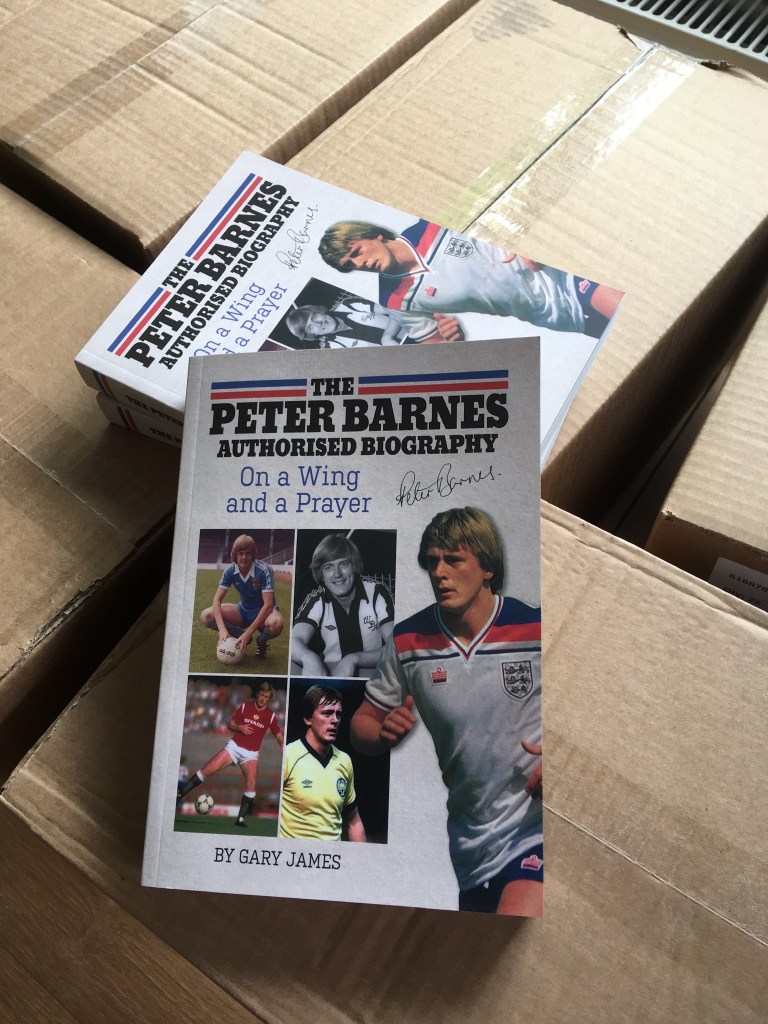
This week Manchester United play Real Betis in the Europa League. This immediately brings to mind the stories of the former England international winger Peter Barnes. Barnes, or El Rubio as he was known in Spain (it means the blond one).

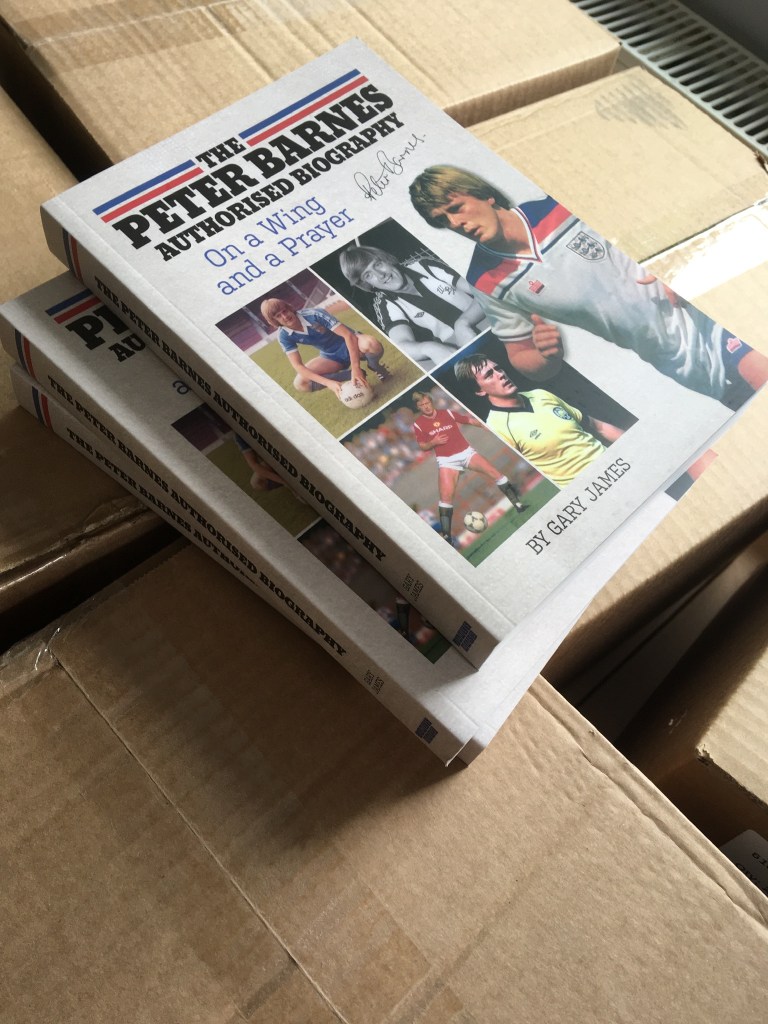
Peter’s time at both clubs is covered in my authorised biography of him. There are some touching moments and some great stories too. The book was started before the Covid pandemic and then was delayed because of Covid. Despite the delays it was great to write this biography and Peter’s a wonderful person who has an interesting story. I’m sure fans of every club Peter was involved with and neutrals will enjoy reading the book.

You can buy the book below.

This 372 page, colour paperback book is £16.95 (including UK postage).

United Kingdom

The Peter Barnes Authorised Biography – UNITED KINGDOM

Order today for £16.95 (incl UK Postage and Packaging).

£16.95

To order please use the button above (UK postage included; outside UK contact me for additional postage costs). You do not need to have a PayPal account to order – use the ‘Pay with PayPal’ button above and it will give you the option to pay by credit/debit card without creating a PayPal account.

Here are the contents pages:

This long awaited authorised biography, written by Gary James with the memories and stories of Peter’s career throughout, tells the story of Peter’s life from his childhood in Manchester and Wrexham through to the modern day. With particular focus on his footballing career with Manchester City, West Bromwich Albion, Leeds United, Real Betis, Coventry City, Manchester United, Tampa Bay Rowdies and, of course, England.

If you run a book shop and would like to know more about the book please email: accounts@manchesterfootball.org

The ISBN is 978-1-9168852-0-2.

You can listen to Peter in conversation with myself about the book here:

Thanks,

Gary James

Colin The King

I know I’ve written plenty about Colin Bell over the years but, to be frank, you can never read or write enough about Bell. So for today’s subscriber article here’s a 1,900 word piece (plus videos of the Ballet On Ice game and his first return game v Derby in April 1976 – yes that’s right!) on the legendary Manchester City and Bury footballer. Enjoy!

Subscribe to get access

Read more of this content when you subscribe today. It costs £20 for an annual subscription (here; access everything from December 2020) or £3 per month (below; access everything since 1 October 2022).

Subscribe to get access

Read more of this content when you subscribe today. It costs £20 for an annual subscription (above; access everything from December 2020) or £3 per month (here; access everything since 1 October 2022).

IN SEARCH OF THE BLUES – Colin Bell MBE (interviewed in January 2005)

Boxing Day is a day that will forever be a reminder of the great Colin Bell and his return to the Manchester City first team after the devastating injury that came in the November 1975 Manchester Derby. Colin did return briefly at the end of the 1975-76 season but that was a comeback too early. To remember Colin and everything he achieved at Bury and City here’s an interview I did with him in January 2005. This was published in the City match programme back then and you can read Colin’s views on his career here as published at the time. Enjoy!

Colin Bell MBE joined the Blues from Bury in March 1966 and went on to become a major trophy winner with the Blues and a star with England.  Gary James met up with him at the end of January 2005

Let’s start with your early life, was football everything to you from an early age?

From the moment I was born I wanted to play.  Actually, everybody did in those days.  Football was all you ever wanted and I always had a ball with me, so I could play anywhere.  No one ever pushed me; it was something I just wanted to do.  My mother had played ladies football before I was born and so did others in the family, so there must have been a natural instinct for the game.  I used to go and watch Sunderland when I could, although it would take about 90 minutes and three buses to get to Roker Park.  As a boy my hero was Len Shackleton and then Charlie Hurley. 

At the age of 17 (1963) you joined Bury.  There were other potentially larger teams interested, so what made you choose Bury?

The move had to be right and I was quite a shy boy in many ways, so I needed to go somewhere where I felt at home.  Bury were a homely club and made me feel so welcome.  I’d had interest from a few clubs – Newcastle offered me a trial but I heard nothing afterwards!  Arsenal were another.  I damaged my back shortly before I went down to London from my home in the north-east and that made me a little uncomfortable.  Their manager Billy Wright watched the games we played and selected the ones to stay, and then said to those not selected “I hope you join other clubs that are not as good as Arsenal!”

Both Bury and Huddersfield wanted me to sign, so I was totally open with them and agreed I wouldn’t make my mind up until I returned back home and looked at it objectively.  The Huddersfield experience went well, but Bury was so much more homely.  While I was there I knew I’d sign for Bury, but I wouldn’t tell them.  They kept pushing me, and I wanted to say yes, but I felt it was more important to stick to the plan.  So when I went home I told both clubs of my decision.

Presumably, you never looked back and felt Bury was the right choice?

Definitely.  My instincts were right, however I did still feel homesick.  It really hit me for about six weeks or so and I know that if my family had suggested I go home I would have done.  I’d have packed it all in because I hated that homesick feeling.  I’d have got that wherever I went, and I’m glad I chose Bury because in the end I couldn’t have had a better start to my career.  It was a great period once I’d settled and I felt I was so lucky to be paid for playing.  

How ambitious were you then?  Did you set targets and aims?

I took each day as it came.  That’s true of all my career.  I never thought about moving from Bury.  It never crossed my mind, and I certainly didn’t think about playing for England.  I didn’t even know City were watching me until the official approach came.  In fact it got to transfer deadline day and suddenly I had both City and Blackpool interested in me and I had to make another choice.  This time it was stay at Bury, move to Second Division City, or move to First Division Blackpool.

So what made you pick City, was the Mercer-Allison involvement the deciding factor?

At the time I didn’t know enough about Mercer or Allison to base a decision on, so my decision was based more on league position.  City were heading for promotion, while Blackpool were beginning to struggle (they were eventually relegated in 1967), so I thought it would be best to join a club looking forward rather than one heading for struggle. 

Was City as homely as Bury?

That’s something that was truly special about City at the time because even though it was a much bigger club, it still had that homely feel.  We were all part of the same family.  First team players would pop into the laundry room and have a cup of tea with the ladies in there.  Sometimes we’d just love being at the ground.  I do think football’s lost a lot by having training grounds some distance from the home grounds.  We felt part of the Maine Road furniture.  It was my second home and most mornings we’d get in early to get into the gym for head tennis.  If ever you arrived at the ground and found you’d arrived too late to make up a head tennis team you’d skulk around and plan to get in even earlier the next day.

You mentioned that you were homesick at Bury, how long did it take you to settle at City?

I arrived in March 1966 and it took me the rest of that promotion season to settle.  Promotion helped because I was part of the celebrations from the start.  The goal I scored at Rotherham guaranteed promotion and afterwards I tasted champagne for the first time.  I couldn’t believe how quickly I was part of a winning side.  Something major I realised at this time was that at Bury we’d go to away matches with the aim of getting a draw – at best – but with City we went expecting to turn over every side.  After a couple of games I felt this same level of expectation and I think that’s why we became so successful.  Malcolm stressed our strengths and used to say that he didn’t care how many we concede so long as we win.  If ever we won 4-3 he’d never mention the three goals, he’d only mention the four.  That was a great way to play and it continued throughout those successful years.

Both Mercer & Allison and most of the other players have often commented on your high level of fitness and your stamina, was this something you were conscious of at the time?
I think in games I was just as tired as the rest but I think I had a quick recovery rate and I never ever wanted to give less than the best.  I was always determined.  At training I never really thought about my own fitness, but I do remember that when Malcolm had us all running hard I’d give a commentary as we were running.  I’d be going “Bell overtaking Booky on the inside” and so on and I think that may have been a bit off putting for some of the others.  

In 1967-68 City won the Championship by two points over Manchester United with a victory over Newcastle, do you remember much of that day?

It was a great end to end game.  I’d never previously won at Newcastle and I know that beforehand I felt quite uncomfortable.  The great thing about football during this period was that every team in the League was capable of beating you on their ground, so it didn’t matter whether you were playing the top or the bottom.  Also, no side ever gave up, so we knew that Newcastle, who were about tenth, wouldn’t sit back if we took the lead they’d be going for it… and they did!  We beat them 4-3 but it could have been 5-4 or 6-5 – we knew we’d score one more than them, but both sides kept attacking, kept playing.  At no time did they give up. 

Presumably the Old Trafford derby match (March 1968) remains another great memory for you?

We beat United 3-1 and that really set us up, but we’d lost a goal right at the start.  I equalised, George Heslop headed a goal, and then late on I was brought down by Francis Burns.  As I was being stretchered off Francis Lee scored the penalty.  I went to hospital, had my leg put in plaster and then joined the rest of the players at the Fletcher’s Arms in Denton for a celebratory drink! 

Before the match Malcolm had stressed the importance of the game.  He told us they were beatable and once he’d convinced us of that nothing was going to stop us.  I think that helped the other teams as well, because once we started to beat them at Old Trafford – and remember I played 9 League derbies at Old Trafford and only lost the first – they realised they could do the same.

Winning so many trophies – League, FA Cup, ECWC, League Cup – during such a short spell was incredible, but which success brought you most satisfaction?

Each trophy was important but I judge success by consistency and when we won the League in 1968 we proved over 42 games that we were the most consistent side.  I have to say I’m also very proud of winning the Central League in 1977-78 because I was fighting to regain fitness and also because the side was a very good one.  It was great to play with some very enthusiastic young players.

Of course, each success means a great deal.  Winning the ECWC was great, but the 1968 League success was all about consistency. Our journey back from Newcastle after the last game was very memorable.  Coming down the A1 was superb.  There was a convoy of blue and white all the way back.

Moving on to international football, how did it feel when you first discovered you were in the England squad?

When the letter came through the door I couldn’t believe it.  Again, as with my early days, I never thought about anything beyond the next City game.  I didn’t think about England, but when the letter arrived it was a major, major honour.  In fact every time the letter came – even after 40 odd appearances – I still had the same excitement and same buzz I’d always had.  It was the highest honour you could receive.

When I joined the squad I remember sitting in the dressing room and seeing all those players who had won the World Cup only a year earlier.  These men had achieved so much and to be sat in the same room and to see my name on the squad list next to theirs was a real highlight.  Of course when there were other City players in the squad that helped as well, but it’s also worth remembering that every top division side had players who were either in the international squad or on the fringes, so you knew that you’d achieved something major if you got into Alf Ramsey’s team.

You made your international debut in May 1968 against Sweden, and went to the 1970 World Cup finals.  How did you feel about the way your career had developed?

Immensely proud, and looking back it’s incredible how it all developed.  Having said that I do feel a little aggrieved that when some people talk of the 1970 quarterfinal against West Germany they talk of the substitution of Bobby Charlton as some sort of turning point.  I came on for him and I know that he was absolutely drained.  Like me he would try and deliver more, but his age and the heat worked against him.  I personally think I should have come on earlier and maybe we’d have kept the score at 2-1, or even increased it.  Once I came on we still had a lot of play but they’d got to 2-2 and then unfortunately they scored the winner in extra time.  Apparently Brazil were delighted because they were convinced we were the best side in the tournament – they’d beaten us in the group stage but knew they’d been in a real game.

You made 48 England appearances and replaced Bobby Moore as captain for one game in 1972, was this something you had always wanted?

I always believed that there should be eleven captains in a side.  By that I mean every player needed to be interested and offer advice. There’s no point hiding, waiting for someone else to make the decisions.  Every player needed support at times and everybody needs to give advice in my opinion.  Tony Book was City’s great captain and a wonderful leader, but if you watch any of those games you’ll see we all act as a captain should.  Actually they used to go on about how loud I was on the pitch and how quiet I was off it.  

The England captaincy came against Northern Ireland and it must have been a one-off because Moore remained captain for the next year or so.  I’m not certain why I got the nod, but it was a privilege and I do remember Sir Alf Ramsey asking me to take on the role.

Moving on to your injury in the 1975 Manchester derby, we now know how serious it was, but how did you feel at the time?

I knew it was very bad, and I know that the physio Freddie Griffiths worked hard to try and get things working for me.  He and his assistant Roy Bailey really went out of their way to help, but it was a long and difficult recovery.  The TV programme Nationwide did a feature on me and I received lots of letters and cards, which helped – the fans were terrific – but it was the blackest moment of my life.  I had violent pains in my leg if I sat a certain way, and thanks to my wife and family they managed to keep me sane.  When I started walking properly I was so glad.  At one point I didn’t think I would walk again, let alone play sport.  

I tried a comeback towards the end of 1975-6 but after the fourth game (V Arsenal) I broke down.  It was too soon, and for the following 20 months the battle to return dominated everything I did.  

Boxing Day 1977 V Newcastle was your memorable return.  I know how I and most Blues felt that day, but how did you feel?

There’s always been something about Newcastle.  That day I came on as substitute and I could not believe the atmosphere.  The whole ground – including the Newcastle fans – stood and applauded and chanted my name.  I was at the Halifax Supporters Club a month ago and I mentioned the game and almost every person in the room talked of the day and how emotional they got.  There were at least two dozen people in the room who said they were crying when I came on.  Grown men admitted it and I was deeply touched.  On the day you could feel that emotion.  I don’t believe I did anything of note in the game.  I was a passenger, but everyone tells me it was great seeing me there and for me it was and will always be my number one game, and my number one memory of playing football.

Finally, I guess that Newcastle game demonstrated how fans truly felt about you?

The fans have been marvellous throughout my life.  The last four years they’ve helped to get me honoured as one of the Football League’s 100 legends; the stand has been named after me; and now the MBE.  It’s been an amazing four years.  I don’t believe there’s any other player anywhere in football who has the same bond with the fans, and I don’t believe any club has fans as loyal as ours.  City fans like players who give 100% and so long as you do that, you will always get incredible support.  I loved my time as a player, and I am delighted my bond with the fans is as strong – possibly stronger – today than its ever been.

Subscribe to access great content and support Gary’s research

If you’ve enjoyed this piece then why not subscribe and read the rest of the great material on here. At the same time you’ll be supporting my research and writing (I’m not employed by anyone and my research/writing is self-funded). It costs £3 per month (here; access everything posted since 1 October 2022) or £20 per year (below; access everything posted since December 2020). You’ll also get to read all content posted during your subscription. Thanks.
Subscribe to access great content and support Gary’s research

If you’ve enjoyed this piece then why not subscribe and read the rest of the great material on here. At the same time you’ll be supporting my research and writing (I’m not employed by anyone and my research/writing is self-funded). It costs £3 per month (above) or £20 per year (here; access everything posted since December 2020). You’ll also get to read all content posted during your subscription. Thanks.

Colin Bell’s Injury

On this day (12th November) in 1975…

Attendance: 50,182; City 4 United 0 (League Cup 4th round)

A 35 second opener from Tueart and a world-class performance by Hartford give City total control of this tie.  However few at Maine Road are able to celebrate as a fifth minute tackle by Buchan on Bell causes the influential City star to be stretchered away.  City deserve the victory, but the cost is high.

I’ve written lots on Colin Bell over the years and I was fortunate to interview him a few times too. You can read some of the articles I’ve written here:

You can watch highlights of the game here: