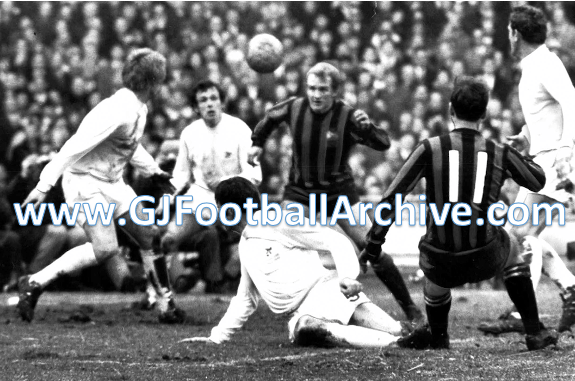
Happy Birthday Alan Oakes (Interview Feature)

Happy birthday Alan Oakes, born on this day (7 September) in 1942. Alan has made more appearances for Manchester City than any other player but more significantly he’s an absolute gent. Here to commemorate his birthday is an interview I did with Alan.

This interview occurred in February 2005 and we discussed his life and career. This appears here as it was originally published.

Alan Oakes joined the Blues at the age of 15 in 1958 and made his first team debut in November 1959 when he was 17 years and 2 months.  He stayed at Maine Road until July 1976 by which time he had made a staggering 564 League appearances.  In February 2005 he was inducted into City’s Hall of Fame, and author Gary James met up with him to discuss his career.

To begin with let’s talk about your childhood, did you come from a sporting background?

We were all very sporty and my father and others played local football – nothing professional – and as a boy I’d play cricket in the summer and football in the winter.  The usual sort of thing – coats as goalposts – and I loved playing.  I progressed into the Mid-Cheshire Boys side and then one day I got the shock of my life when City’s scout Albert Kavanagh knocked on the door and asked me to join the groundstaff.  He’d watched me play at Broughton, Salford, and seemed to like what he saw.  I was astounded and delighted at the same time.  This was a dream moment.

Coming from a Cheshire village like Winsford in the 50s to a big city like Manchester must have been a bit daunting, how did you and your family feel about the move?

It was an opportunity I couldn’t miss.  Other teams showed interest but City meant so much to me.  I’d been to Maine Road a few times – I stood on the old Kippax before it had a roof – and loved the Club.  I wasn’t blinkered though because I also went to Maine Road to watch some of United’s first games in Europe.  Remember they used City’s ground because they didn’t have floodlights and a lot of Blues went to watch the European sides.

Clearly, you saw a wealth of talent during this period, but who were your heroes?

Ken Barnes was a brilliant player and by far the best in his position, and Bobby Johnstone had an amazing footballing brain.  They were great players to watch and later I was fortunate to play with Ken, but my boyhood hero was always Billy Wright from Wolves.  There was something special about Wolves.  They brought over several top European sides for friendlies – I guess they paved the way for the European Cup – and they won so many fans.  They were a great, entertaining side and Billy Wright was their star.  I was still a City fan, but I recognised the quality of Wright and Wolves.

Still only 17 you made your debut in a 1-1 draw with Chelsea, how did you feel about your performance?

I felt okay, but I gave away a penalty!  Fortunately for me Bert Trautmann – the greatest ever keeper – was in nets and he saved the day.  As a member of the groundstaff I’d clean Bert’s boots and even that felt like a great honour, so you can imagine how grateful I felt when he saved the penalty.  The Chelsea game was a one off – I think Ken Barnes was injured – and so it was a few weeks before my chance came again.  I felt a lot of satisfaction that I was in the reckoning though.  When I arrived at City there were 55 professionals and about five teams to progress through to reach the first team.

How did you find the management and coaching staff in those days?

They were all ex-City players and so that was important.  Fred Tilson and Laurie Barnett had played in the 30s finals and coached us, and manager Les McDowall had been a good player in his day.  Clearly the coaching techniques they used were not a patch on Malcolm Allison, but they did what was right for the period.  They also treated me well and looked after me.  I found it difficult adjusting to life in a big city.  I lived in digs for a while, and then moved back home and travelled by train and, eventually, car.  

By 1963 you were a regular but City were entering a difficult period, did that come across to you?

We had a lot of quality in the side but seemed to be conceding too many goals.  We knew we were struggling but we always gave it our best.  After we were relegated in ’63 Derek Kevan and Jimmy Murray arrived.  We were doing really well, then Jimmy did his cartilage in – that was a major blow – and we tailed off.  We missed promotion (6th place) and we couldn’t get it going again until Joe and Malcolm arrived in ’65.  

Although you were still relatively young, you were one of the more experienced players, how did the arrival of Mercer & Allison go down?

It was a great lift of course, but I know we were wary of Malcolm at first.  He had all these ideas and it seemed so different to what we were used to, but within a week or so he’d won everybody over.  The transformation by the two men was so fast – before we’d completed our pre-season games we were convinced we would win promotion.  We couldn’t wait to get started.  The confidence flowed and then Malcolm tackled our fitness.  Of course we won promotion easily, and then held our own in 1966-7.  Don’t forget we had faced a couple of big tests in those first two seasons – We took a strong Everton side to 2 replays in the FA Cup while we were still in Division Two and narrowly lost to Revie’s Leeds the following year.  We lost 1-0 to Leeds with a Jack Charlton goal that should have been disallowed.  So we came away from those games confident we could face any side.  There was nothing for us to fear.

Of course, the Championship followed in ’68 and all the other successes of that great period, which one means most to you?

The Championship and European successes were both very important.  This is a difficult one really, but because I was there during the dark days, I think the most important one had to be the promotion in 1966.  My reason is that without that none of the rest would have followed.  Joe and Malcolm didn’t just get us promoted, they first stopped the rot.  We were going downhill fast and they stopped that, changed gear and pushed us forward quickly, and it wasn’t done with negative play.  A lot of teams pack the defence and try to ensure they don’t lose, we always went out to win and never contemplated holding out for a point.

Throughout your City career people commented that you were a quiet, unassuming, perhaps shy player, was that fair?

I think I was a good professional.  I used to simply get on with it.  I was dedicated and tried to give everything for the Club.  I believe I was a good, honest pro.  If I was asked to do an interview, I’d do it, but I never sought the headlines.  Media coverage was not as it is today, so it was easier in many ways, but I would do it when needed.  More than anything I wanted to make sure my role on the pitch spoke for me.  

By 1973 the Mercer-Allison partnership had ended and some of the other players started to move on, did you contemplate leaving?

Never.  You were worried that you’d be dropped or the next one out, but I never thought about choosing to leave.  Why would anyone want to leave the best club in the country?  I remember thinking that somebody would take my place and that I had to keep performing at the highest level.  In some ways I liked to push myself by thinking of all the people who could take my place, but I never, ever thought about leaving until after the League Cup final of 1976.

The team had changed significantly by 1976, and you were clearly one of the elder statesmen of the team, how did you find that period?

I enjoyed it all, and I remember playing a few games with Peter Barnes in front of me.  I loved that.  He was such a gifted player and it was great for me to play behind someone that exciting at that stage in my career and in his.  I know this came a couple of years after I’d moved on, but it irritated me when Peter Barnes was sold because I believe he could have helped City to real success.  He was the sort of player you built a team around.

While I’m thinking about this, I also believe Mike Summerbee and Francis Lee were sold far too early.  Francis had so much more left in him – he proved that at Derby – and so the break up of the Mercer-Allison team came too rapid.

In July 1976 you moved to Chester, why did you make the move?

I’d had a great season.  I’d played 39 League games and won the League Cup and so there was no pressure to leave, but I did think that I may have blocked some other gifted players coming through.  I was also aware that I’d be 34 when the new season starts and that I may not be up to it in the way I would normally expect.  Chester City were just up the road and for me it was a nice move.  I do remember thinking ‘what have I done?’ because I’d gone from a First Division palace to play at Third Division grounds, but the move was a good one.  Looking back though I was perhaps wrong to leave when I did.  My advice to any player now is to remain playing at the highest level for as long as you physically can.  Those days are precious and should not be cut short.  

I also missed Maine Road a lot when I left and I miss it even more now.  I regret the fact City have left that ground.

At Chester you moved into management, was this something you’d always wanted?

It was part of the attraction of joining Chester that I could become player-manager and I think in the six years I was there we had a great time.  Success is different for a team like Chester, it’s all about survival and so I had to do a lot of work in the transfer market.  I had another ex-City star, Cliff Sear, with me and we worked well together, and I loved every minute at Sealand Road.  Often I’d be trying to negotiate good transfer fees and working hard to sell a couple of players to keep us afloat, and so I got satisfaction from that when it all came right.  I still got a lot of satisfaction from playing as well, so it was a perfect role.

Ian Rush was one of your players.  Is it true he almost came to City?

Yes it is.  Whenever anybody with talent was due to leave Chester I would want them to move to a bigger, better club.  I still love City and so I wanted Rushie to go to Maine Road.  We were having a great cup run and Tony Book and Malcolm Allison came to watch him.  Rush scored twice and I met up with Tony and Malcolm afterwards.  Tony was keen to sign him but Malcolm didn’t rate him for some reason and it all collapsed.  He later went to Liverpool and the rest is history, but I wanted him to go to Maine Road and I wish that deal had occurred.  Of course, you never know how these things would have worked out.

Did you ever consider moving into a higher division as a manager?

Definitely – with City!  It must have been 1983 because I know Billy McNeill was given the job in the end, but I applied for the City job.  I desperately wanted the role because I loved the Club and because I believed I knew exactly what the Club needed.  I’d also served what I thought was a good apprenticeship – six years at Chester taught me a great deal about survival and transfer negotiations.  I knew City had financial problems and that someone with the right experience was needed – the last thing the Club could cope with was someone who needed to spend – and so I felt I was ideal for the role.  Don’t forget what I’d experienced as a player at Maine Road as well.  Most importantly, I understood the Club and all about Manchester football fans and their expectations and needs.   This remains the greatest club in my eyes.

I got an interview at Peter Swales’ house.  A few directors were there and I thought I gave a very good interview.  Unfortunately, I didn’t get the job.  I still wonder what might have happened.

Moving on to today, your son Michael has become a Premier League goalkeeper, is this something you’ve encouraged?

I didn’t push him but I did encourage him.  It’s a great game to be a part of and I love the fact he’s involved.  Joe Corrigan helped him a lot when he was young and so I’m grateful for that, and when he joined Aston Villa I was delighted.  Now he’s at Wolves and I do try to watch him but I find it very difficult.  I’m always in two minds as to whether I want the ball to be at his end of the field or not.  If Wolves are attacking I know he’s safe, but I also know he can’t demonstrate his abilities.  If Wolves are on the defensive I want him to have to make a great save but I’m also worried he’s going to be caught out.  I think he’s doing really well though.  

I once replaced Bert Trautmann in nets – it was against West Ham and he was sent off, so I deputised.  I can’t remember much about it now, but I don’t think Michael would have learnt much if he’d seen it!

Finally, you have made a total of 672 first team appearances for City (including 3 Charity Shield games), how did you feel when you first broke Bert Trautmann’s appearance record?

I was a little bit sad that I took the record off Bert because to me there was no finer ‘keeper and player for the Club, but obviously I felt pleased to have the record.  Personally, I’m looking forward to the day when the record’s beaten.  I know it will take a lot to beat but I hope somebody does it, and if the person who beats it has the same sort of career and enjoyment at City that I have had then he will have had a fantastic career.  This is a great club with terrific fans and I have enjoyed every minute of my time with the Club.

This is Your Life Joe Mercer

Broadcast live on 25 March in 1970 was the This is Your Life TV episode with Manchester City boss Joe Mercer as the subject. Here are the details plus a special recording which supporters of all the clubs Joe was involved with could be interested in.

This Is Your Life was viewed at the time as significant recognition for a lifetime’s achievement. Only major stars and personalities were featured in those days, and the main idea would be that the subject of the programme would be surprised by the sudden appearance of presenter Eamonn Andrews and his ‘Big Red Book’. The subject would then be whisked away to a studio or other location where a variety of figures from the person’s life would be brought out to tell anecdotes and the like. The main part of the show would be broadcast live.

This is Your Life Joe Mercer 1970

Back in 1970 young Manchester City supporter John Stapleton was working on the series and he suggested they feature Joe Mercer as the topic of one show. John, who went on to be a prominent broadcaster with a well-regarded TV career, was interviewed by me a few years back and we discussed the programme and John’s part in the idea of featuring Joe: ‘I did it purely for the benefit of me and my dad.  Eamon Andrews, the presenter, had of course a great interest in sport and I put the idea to him and the rest of the production team.  Together with Norah, Joe’s wife who in recent years I often sat with at games sharing her boiled sweets, we concocted a situation where Joe and Malcolm were in a London hotel before a trip to watch a European game in 1970. Malcolm disappeared – deliberately as part of the show though Joe didn’t know this – and Joe was called to reception urgently.  Eamon leaped out to do the big “This Is Your Life” reveal and Joe had no idea whatsoever. It was a great day for us all and Joe was thoroughly deserving of it as well.’

Joe was staying at a Hilton Hotel in London. As John described, He had been due to fly with Malcolm Allison to the continent to watch ECWC semi-final opponents Schalke but he had received a message to say the game was off. It was all a ruse of course. That night television viewers watched as Eamonn Andrews surprised Joe at the hotel reception desk: ‘Joe Mercer, former England playing star, now manager of Cup winning Manchester City, tonight. This Is Your Life!’

Eamon Andrews This is Your Life Joe Mercer 1970

At the start of the show the City team appeared. This had been an extremely busy time for the Blues. Over a 18 day period City had played two League games, the League Cup final, the second leg of the ECWC quarter-final with Coimbra and found time to work with television to honour their manager. This live show occurred on Wednesday 25 March and City were to face Derby in the League on 27th and Manchester United on 28th, plus they had to play the first leg of the ECWC semi-final with Schalke on 1st. It was incredible that a team would be involved in this at such a busy time but that’s the way it was.

This is Your Life Joe Mercer 1970 MCFC squad

As Joe explains in the show Malcolm Allison was nowhere to be seen. He had been staying with Joe at the hotel and the City manager commented: ‘I’m a great sleeper you see, and subconsciously I heard Malcolm getting up and I thought, oh, he’s going to the bathroom. I thought, well, he hasn’t come back, so he must be having a bath, and then I went back to sleep. I woke about ten and Malcolm had gone, but occasionally this happens – Malcolm disappears!’

Andrews explained that Allison had left early to watch the match which was still on. Joe was flabbergasted: ‘He’s left all his clothes! I’ve had to pack his bag as well!’

During the course of the show, Andrews informed Joe that Alf Ramsey had named the squad he was to take to the 1970 World Cup: ‘I know you haven’t had a chance to hear the news, but I’m going to tell it to you now, that two of your boys have been named by Alf for the World Cup – Francis Lee and Colin Bell. And two more in the twelve reserves – Mike Summerbee and Alan Oakes. Congratulations lads, and to the whole of the Manchester City.’

Joe was overjoyed.

Subscribers to this website are now in for a special treat as an audio of the entire episode has been preserved and can now be listened to here:

Subscribe to get access – Monthly

You can listen to this special recording of Joe Mercer, Eamon Andrews, Dixie Dean, Malcolm Allison, Stan Cullis, Stanley Matthews etc. by subscribing. It costs £3 per month (cancel anytime) to access everything posted since 1 Oct 2022 or there’s an annual option (below).

Subscribe to get access – Annual

You can listen to this special recording of Joe Mercer, Eamon Andrews, Dixie Dean, Malcolm Allison, Stan Cullis, Stanley Matthews etc. by subscribing. It costs £20 per year (cancel anytime) to access everything posted since the site began in December 2020, that includes history talks, videos, a couple of my books, hundreds of articles etc.

Joe appeared on several other This Is Your Life shows including in November 1988 when Tom Finney was the subject and in 1980 when Emlyn Hughes was. He also appeared on two for Matt Busby, one in 1958 and one in 1971 (which opened at Maine Road).

The Programme details for the Joe Mercer episode are:

  • Edition No: 274
  • Subject No: 276
  • Broadcast live: Wed 25 Mar 1970
  • Broadcast time: 7.00-7.30pm
  • Venue: Euston Road Studios
  • Series: 10
  • Edition: 18
  • Director: Margery Baker
  • Producer: Robert Tyrrell
  • City supporter and broadcaster John Stapleton worked on the show

The guests were:

  • Norah – wife
  • members of Manchester City FC team 
  • Francis Lee
  • Colin Bell
  • Mike Summerbee
  • Alan Oakes
  • Alan Percival
  • David – son
David & Joan Mercer, This is Your Life Joe Mercer 1970
  • Joan – daughter-in-law
  • Arthur – brother
  • Stan Cullis
Stan Cullis, This is Your Life Joe Mercer 1970
  • Billy Dixie Dean
Billy ‘Dixie’ Dean, This is Your Life Joe Mercer 1970
  • Jim Morris
  • Charles Palmer
  • Matt Busby
  • Frank Soo
  • Walley Barnes
  • Maurice Edelston
  • Bernard Joy
  • Roy White
  • George Hardwick
  • Raich Carter
  • Neil Franklin
  • Stanley Matthews
Stanley Matthews, This is Your Life Joe Mercer 1970

Filmed tributes:

  • Malcolm Allison
  • Susan – granddaughter
  • Albert Dyson – father-in-law

If you have enjoyed this article then why not subscribe (see above for details) for other material like this? If you don’t want to subscribe but would like to support the research into Manchester football by Gary James then it’s possible to donate below. All support is used to help perform further research that will be posted here for future generations. Thanks for the support.

European Span of Success 2025: Will Villa & Arsenal Move Up The Table?

Each year, following the end of the UEFA football season I update the UEFA European Span of Success table. What is this? It’s a list of those clubs who have won two or more (sorry Palace) major UEFA tournaments showing the span between their first UEFA success and their most recent. The list may surprise some who think that football is all about those perceived as European giants with ‘history’. This is how the table stands today (19 May 2026). Chelsea and Tottenham have moved up the table in recent seasons.

UEFA European Major Trophy Span of Success 2025

I can imagine a few Arsenal fans looking at this and saying ‘Why aren’t we on there?’ They won the Fairs Cup in 1970 and the ECWC in 1994 BUT the Fairs Cup wasn’t a UEFA tournament and had some odd entry rules over the years! For your benefit here’s a table including the Fairs Cup lower down on this page. The above table includes the four major UEFA tournaments: European Cup/Champions League; European Cup Winner’s Cup; UEFA Cup/Europa League & the Europa Conference League. It does not include non-UEFA tournaments such as the Mitropa Cup and Fairs Cup. Nor does it include the Intertoto Cup or similar.

So why are they excluded… I recognise that the Mitropa Cup had some significant clubs competing in it. However, it was predominantly an East European competition and participants were not spread over the entire continent.

With the Fairs Cup… It is true that this was later transformed into the UEFA Cup and I have included all UEFA Cup finals in my analysis. But the Fairs Cup had an odd series of entry rules at times. Cities, rather than clubs, often entered with Barcelona beating London in one final for example. It was set up as a friendly type of competition with cities that had staged trade fairs playing each other. As time wore on entry came via the League Cup or League position in England, which added significance to it. But two teams from the same city were not allowed to participate, which meant that teams finishing way down the table could be (and were) included if those above them were multiple clubs from the same city.

In 1970 Manchester City’s Mike Doyle joked that by winning the League Cup he was satisfying his aim of ‘keeping United out of Europe’ (he joked about creating car stickers with that slogan!) because it appeared at that time that United’s only chance of Europe had gone with City’s qualification for the Fairs Cup.

City went on to win the ECWC that season, meaning that Fairs Cup place was opened up to League position, but United had finished lower down the table anyway and qualified for the Watney Cup instead. Actually, the Watney Cup is one worth talking about, but I’ll save that for another day. In 1970 Fourth placed Derby County qualified for the Watney Cup, while 5th to 7th (Liverpool, Coventry and Newcastle) all got a Fairs Cup place, alongside 12th placed Arsenal (Fairs Cup winners). I’ve not investigated this fully but it does seem odd that the Watney Cup took precedence over the Fairs Cup.

Arsenal’s 1970 Fairs Cup success was their first European trophy but is not included in the span, neither are those Fairs Cup wins of Barcelona. However, as quite a few Arsenal fans seemed to get a bit upset when the table was posted the other year I’ve decided to include the Fairs Cup in the following version of the table. So this table is the winners of the main UEFA competitions I mentioned earlier plus the Fairs Cup with its odd rules:

ClubFirst Major European trophy wonSpanFirst Major European successMost Recent Major European trophy won
Real MadridEC 6819562024
TottenhamECWC6219632025
RomaFairs6119612022
West HamECWC5819652023
BarcelonaFairs5719582015
Atletico MadridECWC5619622018
ChelseaECWC5419712025
Bayern MunchenECWC5319672020
Manchester CityECWC5319702023
Manchester UnitedEC4919682017
LiverpoolUEFA4619732019
Inter MilanEC 4319642007
ValenciaFairs4219622004
Eintracht FrankfurtUEFA4219802022
AC MilanEC 4019632003
FeyernoordEC 3219702002
Real Zaragoza Fairs3119641995
Borussia DortmundECWC3119661997
Paris Saint-GermainECWC2919962025
ArsenalFairs2419701994
AjaxEC 2419711995
Porto EC 2419872011
JuventusUEFA1919771996
SevillaUEFA1720062023
Dynamo KyivECWC1119751986
PSV EindhovenUEFA1019781988
AnderlechtECWC719761983
ParmaECWC619931999
Borussia MoenchengladbachUEFA419751979
Leeds United (BOTH FAIRS CUP)Fairs319681971
BenficaEC 119611962
Nottingham ForestEC119791980

Obviously, neither table shows the number of major trophies won, but it does indicate trophy-winning longevity for those who obsess over ‘my cup’s bigger than yours’ and similar debates. Personally, I think we should all be proud of our club’s achievements and not worry about what a rival has won.

Hopefully, those Arsenal fans who were somewhat upset last year will now be happy. Note that both Roma and Barcelona have moved up the table. Both ‘Rome’ and ‘Barcelona’ won the Fairs Cup when it was city based and not club based, adding to the questionable nature of including the Fairs Cup. ‘London’ once competed in it!

Arsenal are now 20th in this combined table, behind their fellow English clubs Tottenham, West Ham, City, Chelsea, United and Liverpool. But they could move up, as could Aston Villa.

As an example of the odd qualification rules in place for the Fairs Cup at times it’s worth looking at the 1969 qualification via the English League system.

In 1969 champions Leeds entered the European Cup. The ECWC place went to FA Cup winners Manchester City and the Fairs Cup places went to: Arsenal (4th), Southampton (7th) and Newcastle (9th). Swindon had won the League Cup, beating Arsenal in the final, but the Fairs Cup organisers wouldn’t allow them to participate as they were not a top flight club! This adds to the reason the competition is usually excluded. It is certainly not a UEFA competition in any case.

Similarly, Everton (3rd), Chelsea (5th), Spurs (6th) and West Ham (8th) who all finished above Newcastle were denied because of the rule that only one club from each city be allowed. So Liverpool and Arsenal’s inclusion meant their rivals stood less chance of winning the trophy than Newcastle simply because there were multiple clubs in their cities.

That rule does make me wonder what would have happened if both Manchester clubs had qualified for the competition as City are within the city of Manchester boundaries and United are not. Would the two clubs have challenged any decision not to include one of them based on the age old argument of Manchester’s boundaries?

Maybe I’ll post more on the odd rules of football competitions and tell the story of some of those long forgotten competitions.

If you’re interested in the wider span of success for English clubs (listing those who have the longest span between their first trophy and most recent, not simply European trophies) then take a look at this I posted Sunday:

You can find out the benefits of subscribing here:

Glyn Pardoe and the 1970 League Cup Final

On this day (March 7) in 1970 Manchester City defeated West Bromwich Albion 2-1 in the League Cup final. City’s goalscorers were both grandfathers of modern day player Tommy Doyle (currently on loan to Birmingham from Wolves). They were Glyn Pardoe and Mike Doyle. Sadly both men have since passed away. As you can see below I interviewed Glyn a few times over the years, including one of my first ever interviews back in the early 1990s (it was for my biography of Joe Mercer and Glyn was a wonderful, welcoming man).
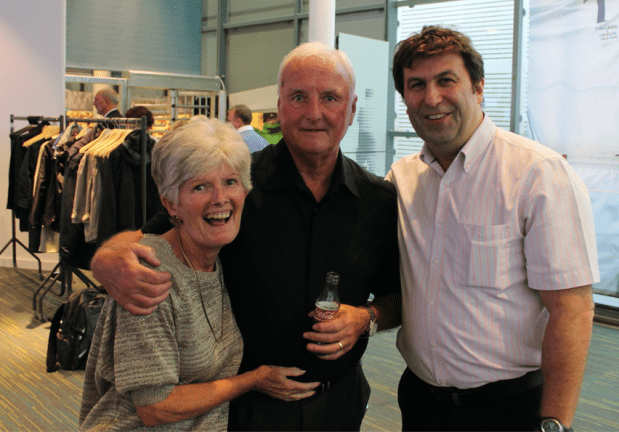
Janice Monk (former City Store), Glyn Pardoe and Steve Mackenzie at the launch of Manchester The City Years

This photo is of Glyn with Janice Monk and Steve Mackenzie at one of my book launches. Back in January 2004 I interview Glyn for my then regular Manchester City match programme series In Search of the Blues. Here is that interview as it was written up for the programme:

Glyn Pardoe holds the record for the youngest player to make his debut with the Blues.  At the age of 15 years and 314 days he played in City’s 11th April 1962 meeting with Birmingham City.  He went on to play throughout City’s glorious late sixties period and made a total of 374 (plus 2 as substitute) appearances.

Gary James, author of Farewell To Maine Road, caught up with Glyn to discuss his playing career and his present day activities.

Let’s start with your role today, I’m sure many of our readers will have heard you on local radio this season.  Can you explain your role?

I work with Ian Cheeseman, Jimmy Wagg and the others at GMR to provide my views on what’s happening on the pitch.  Part of that is actually sat next to Ian summarising, and part of it is after the match when I am one of the guys talking to callers and generally talking about City.  It’s a great role and I love chatting to fans.  Ian and Jimmy are nice lads as well, and the great thing for me is that I enjoy it.  I love listening to supporters giving their views and I like to stress that the game is still all about opinions.  It doesn’t matter what else changes, football is a great game to talk about.

How did it all come about?

You have to go back to the eighties when I was still working for the Club.  Back then Ian Cheeseman was doing the Club videos of each game, while I was working with the Reserves and the Youth teams.  I was asked to give my opinions of each first team game for the Club videos, and so I’d work with the Reserves in the morning, then head off up to the old commentary gantry at Maine Road for the first team.  

Eventually that stopped of course, but then a few months ago I got a call from Ian.  Totally out of the blue really… I didn’t ever consider I could do the same thing on radio.  Ian asked if I could help for one game, so I did, then afterwards they kept asking me back.  

Did you find it difficult?

At first it was hard, although I don’t think any of that came across.  Unlike the old days of working on the video, I was not too familiar with every one of the first team squad, so it took some time to work out the characteristics of each player.  I also have a day job of course – it’s security reception work – so that had to be taken in to consideration.  Nevertheless, it has been a great experience and I do enjoy doing it.

Going back to your early career, making your debut at such an early age must have been a shock?

Well you’d think so, and I’m sure it was, but I did actually get to find out a few days before, so that helped.  If I’d have found out on the morning I don’t know how I’d have coped.  I don’t think I ever thought about my age.  I’m sure others did, but to me it was just a great opportunity.

Your debut came against Birmingham in 1962.  Do you remember much about the game?

Not really, except we lost 4-1 at home and I was up against a tough centre-half called Trevor Smith.  I wore the number nine shirt for that game – I later played in almost every position!  I don’t think I did a great deal, but I know I kept my place for the next 3 games.

These were not particularly good days as far as fans were concerned, but how did it feel to be a player during those first few years of your career?

The great side of the 1950s had disintegrated really.  We still had a few of the players in the side like Trautmann and Hayes, but the rest of the side was mainly youngsters finding their feet.  It was difficult because there was a general air of despondency.  We’d go to places like Blackburn and expect to win.  We’d take the lead, but end up losing 4-1 (1st May 1963) and I think that said it all.  We didn’t know how to win matches.  At the time I knew nothing else really, but when you do start to find success you suddenly realise how bleak the atmosphere inside the Club had been just a couple of seasons earlier.

Because you made your debut at such an early age did you think ‘this is it, I’ve made it’?

Not a chance!  They’d never have allowed me to think like that anyway.  I remember playing on the Saturday, and then walking up to the ground on the Monday and having to knock to be allowed in.  As far as everybody was concerned I was a Reserve – or even a youth player I suppose – not a first teamer.  You never actually ‘made it’ until you were a first team regular and even then you could never be complacent.  Even when we were winning all the trophies there was a very real fear that your contract would not be renewed.  I remember worrying each summer, thinking that I’d be forced to move on.  

In those days the Club had total control and as a player you were simply glad to be there.  We’ve gone to the other extreme now, but for me I don’t think I ever felt I’d made it.  Even when we were the most successful side in the Country.

How do you feel the mid-sixties transformation of the Club’s fortunes came about?

Joe Mercer and Malcolm Allison came in.  That’s it really.  I remember when the Club was at its lowest and we had no hope, ambition, or direction and as a player you really worried about where we were heading and who the new guy might be.  I was still only about 18 and had no idea how it would all pan out of course.  Then Joe arrived, followed by Malcolm, and everything started to improve.  Training improved considerably and so you started to realise how football could be improved and enjoyed.

What were your first impressions of Mercer & Allison?

Joe was a very respectable figure.  We knew what he’d achieved as a player and he had a great approach.  He was quiet but very supportive.  A real calming influence.  Lovely.  

My first impression of Malcolm – remember I was still only a lad – was that he was very loud.  He liked to shout a lot!  Naturally, I got used to that, but at first it was a bit of a shock.  Malcolm was a terrific coach and we all learnt so much from him.  He was fantastic once you got to know him, and together they both turned us into a great side.

In the 1965-6 promotion season I only missed the opening game, so it was their arrival which made me a regular first teamer.  I’d had good runs before that of course, but once they arrived I hardly missed a match, and enjoyed the successes.

The 1970 League Cup Final saw you score the winning goal 12 minutes into extra-time – presumably a great moment?

Fantastic!  It’s always a great feeling when you score, but when you score in a cup final it’s tremendous.  A truly great memory.

Not too long after that you suffered with a serious leg injury sustained in the Manchester derby.  Did you realise how bad it was at the time?

I knew very little at the time.  It was the December 1970 game at Old Trafford and there was a collision between me and George Best.  Apparently I broke my leg and an artery was trapped, but I have no memory of what followed.  I’ve been told that I was within twenty minutes of losing my leg.  They had decided that removing my leg would save my life, but fortunately the operation they eventually did meant that my leg was saved as well.  I was in a daze for at least four or five hours and really have no idea of the worry my family and friends went through.  

You were only 24 when the injury occurred, and it was a long struggle back to fitness after that wasn’t it?

I missed the rest of that season, all the next, and didn’t play again in the first team until November 1972.  Even then my appearances were limited.  I managed 32 League appearances during 1973-4 and played in the League Cup Final with Wolves, but my career was really over.  

Even now I still haven’t got full movement back, but I do feel fortunate that I am still alive and I still have my leg.

Personally, considering your age at the time I feel the blow you suffered was equal if not greater than the tragedy suffered by Paul Lake and by Colin Bell.  Presumably you regard it as your worst moment?

I don’t like thinking about worst moments.  Football was all about enjoyment to me.  I feel very lucky to have been in such a successful side, and to play during a great period.  Not many people are given the opportunity in the first place, so it all has to be great.

Which players were you closest with during your career?

Alan Oakes is my cousin of course, so I’d been playing with him since I was very young.  The two of us, plus Mike Doyle and Colin Bell were known as the Big Four because we were always together.  We played golf a lot and so were always seen together, but the whole of the playing staff was close in those days.  We had a great team spirit.

After your playing days finished you continued to work with the Club.  Did you enjoy that period?

I worked with the youth sides, and winning the Youth Cup against United in 1986 was a great moment.  The lads had so much enthusiasm – Paul Moulden, Paul Lake, Steve Redmond, Andy Hinchcliffe, Ian Brightwell and the others.  That gave me great satisfaction but people forget that we came close to winning it again three years later.  Watford beat us in the final, but that side contained players like Neil Lennon, Ged Taggart and Ashley Ward.  To think that so many of the players from those two sides went on to play international football or make a name for themselves at other clubs makes you appreciate the quality we had at the time.  Those kids had ability, and it brought me and the others a lot of satisfaction.

Finally, how did the fans treat you during your time at the Club?

Always great.  They were very supportive – even when we were struggling at the start of my career.  They gave me fantastic treatment throughout my career, and I still enjoy meeting and talking with them today. 

Here’s film of that 1970 final:

A reminder that you can still watch my 1 hour plus talk on Manchester City crowds, support, chants and Maine Road here. It’s free to watch:

I’m keen to hear thoughts on the idea of doing other talks like this for subscribers to my site. If you’re interested then please get in touch and let me know what you’d like me to talk on. I have quite a few ideas I’m keen to do and am also open to suggestions. Thanks.

If you enjoy the talk then please subscribe to my site. I am a self employed historian and spend all my working week writing, researching and publishing my work. I am not an employee of any organisation (I know some think I’m employed by a football club but I’m not an employee of any club). I am independent of any organisation and care passionately about the quality and accuracy of my work. 

A limited amount of content will always be free for anyone to read but those subscribing will have access to everything on this site for as long as they subscribe. For subscribers I guarantee to post a minimum of 4 articles alongside adding material from my archives each month (in practice it’s been much more than this!). To subscribe costs £3 a month or £20 a year (a reminder that the 2010 edition of Manchester A Football History cost £24.95 when published and is now out of print but available to subscribers as a downloadable pdf as part of their subscription.).

If you’re uncertain whether to subscribe or not then why not subscribe for a month at £3 and see if you’re getting value for money. The £20 annual subscription works out about £1.67 a month for a guaranteed 4 new articles per month and access to everything else posted in the archive.

You can subscribe here:

Subscribe to get access

Read everything on this website when you subscribe today.
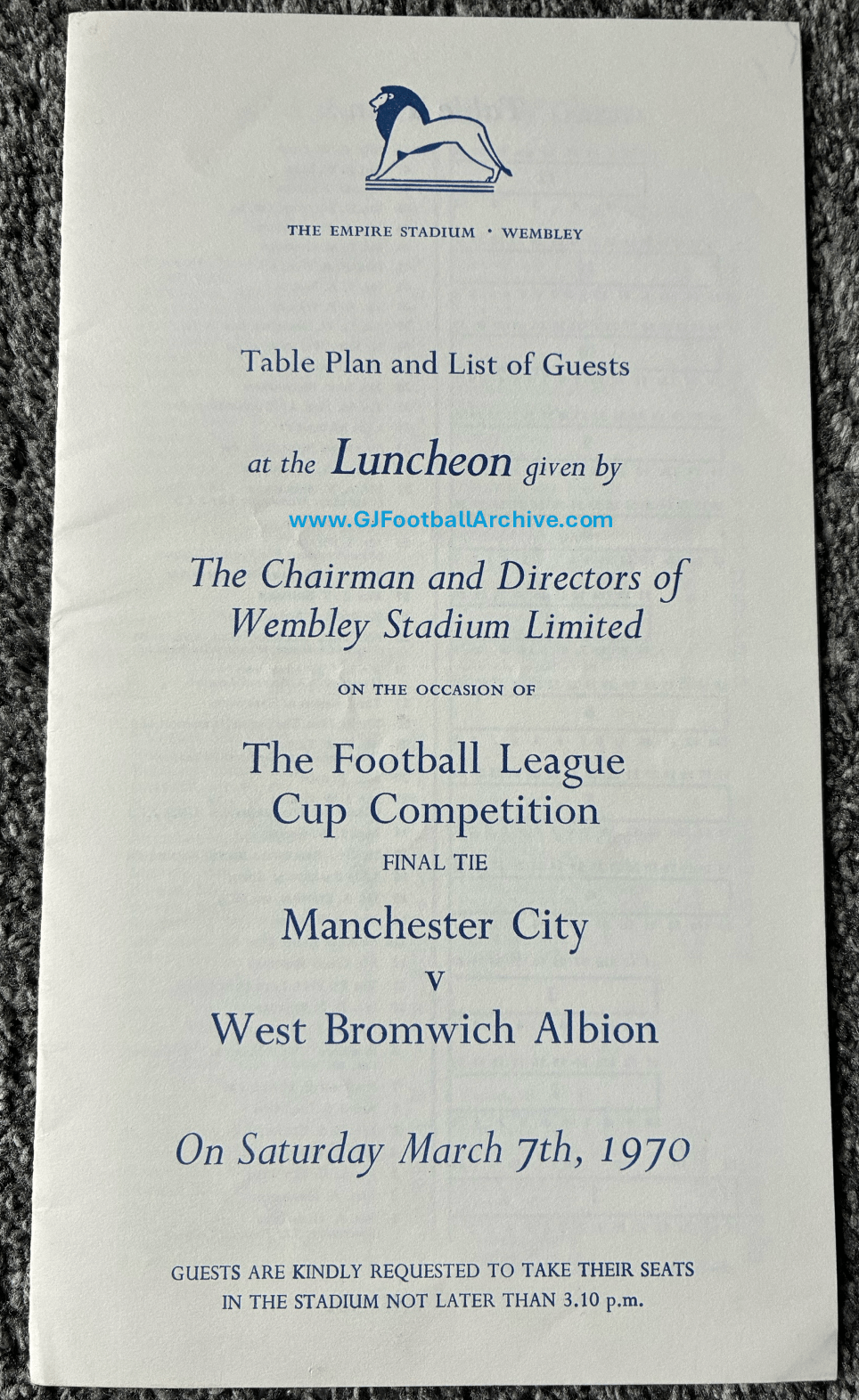
From My Collection: 1970 League Cup Final

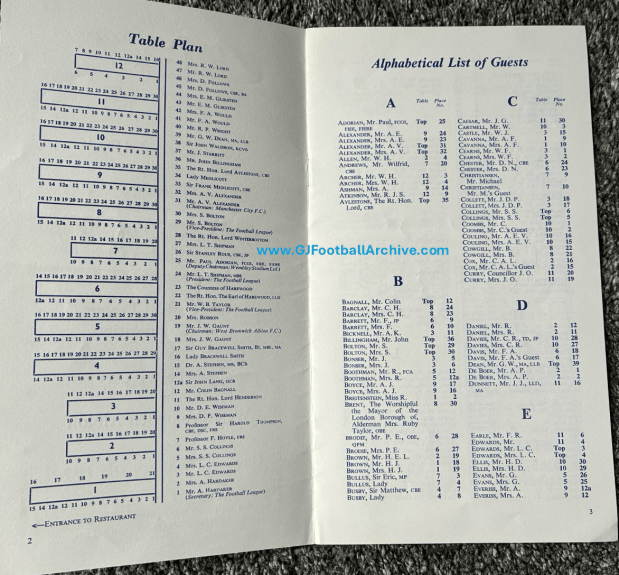
Ever wondered who the official guests were for major games like the League Cup final? Here’s an item from my collection showing the guest lists and tables for the 1970 League Cup final which featured West Bromwich Albion and Manchester City. One of the guests was Manchester United manager and former City player Matt Busby. Here’s the full list:

If you want to know more on the incredible 1960s & 1970s for Manchester City Football Club then why not subscribe and read it all? Have a search through what’s been posted and see what you want to read, watch and remember. The following 5,600 word article on the successes of 1970 is available to subscribers below. Enjoy!

Subscribe to get access – Monthly

Read more of this content when you subscribe today. It costs £3 per month (cancel anytime) to access everything posted since 1 October 2022 or there’s a special annual rate below which gives greater access and works out much cheaper.

Subscribe to get access – Annual

Read more of this content when you subscribe today. It costs £3 per month (above) or £20 a year (here) to access everything posted since the site was created in December 2020. This special rate works out about £1.67 a week and gives access to everything posted, including PDFs of 3 of my books.

If you’d like to know more about subscribing then see:

From My Collection: The Radio Times

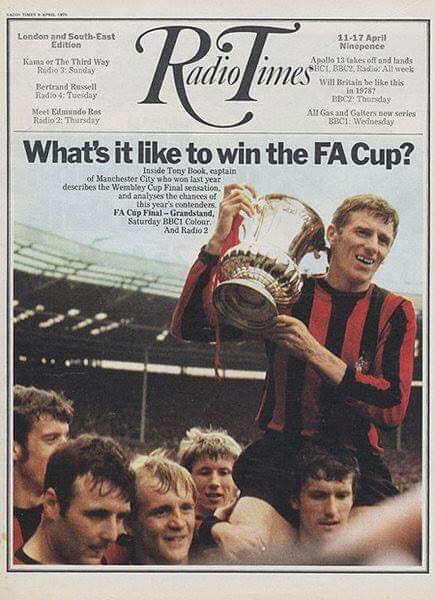
Here’s a nice cover from the Radio Times featuring Manchester City’s 1969 FA Cup winners. They defeated Leicester 1-0 thanks to a goal from prolific City scorer Neil Young.

Nobby Stiles Has “Dialogue” with Manchester City Fans

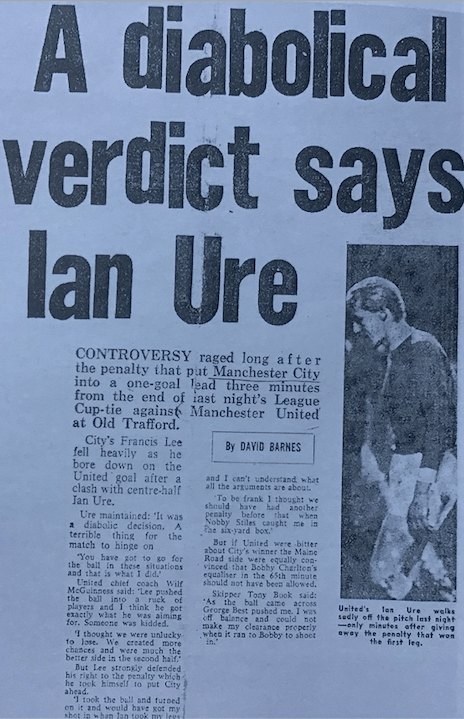
Today (3 December) in 1969 saw this image of United star Nobby Stiles having ‘dialogue’ as the original caption claims with City fans at the Platt Lane end of Maine Road. This was the first leg of the League Cup semi final and City won the leg 2-1 with goals from Colin Bell and Franny Lee. You can watch highlights here: https://www.youtube.com/watch?v=H0Y1KpM49Og

Manchester’s two top flight clubs met in their first ever League Cup tie between them during the 1969-70 season. That was the first season when all 92 League clubs entered the competition.

Here, for subscribers, is the background to each of the 1969-70 semi-final legs and a report on each game with lineups, attendance details etc.

Subscribe to get access

Read more of this content when you subscribe today. Subscribing gives access to all the articles posted so far, including a PDF of the book Manchester A Football History

Albert Alexander (Junior): MCFC Chairman

Back in the late 1960s there was a popular Manchester City chairman whose family had been involved with the club since the very beginning of the club. That was Albert Alexander. Here’s a profile I wrote in 2012 on him. It’s about 900 words long and is free to read. Enjoy!

Albert Alexander was the second generation of the Alexander family to play a prominent role in the development and history of Manchester City.  His father, also Albert, had been involved with the Club from the 1890s and had held various positions including vice-chairman, and even manager for a spell in 1925-26.

Like his father, the younger Albert dedicated his life to the Blues.  Inevitably, he spent most of his boyhood watching the Club develop and, as he grew, he became more involved with behind the scenes work at the Club’s first home Hyde Road.  He was a member of the Ground Committee which performed crucial activities such as stewarding and ground maintenance.

Alexander also managed the Club’s A team and provided support in whatever way necessary to ensure the Blues succeeded.  He was more than happy to work through the ranks and take on any duty necessary.  His son Eric, who was Chairman in the early 1970s, remembers that his father had suffered during the First World War but that didn’t stop him from putting his energies into the Blues:  “He was a very good footballer and cricketer but he was gassed in the Great War and had to give it up.  It affected him throughout his life, although it’s fair to say he recovered enough to fulfil a happy normal life apart from playing of course. 

“He took up golf, but his love for football was such that he started the ‘A’ team at City.  He started it in 1921 and ran it through until 1963.  He enjoyed working with the youngsters and developing them.  He gained an awful lot of satisfaction from that, particularly when players like Matt Busby developed their skills and style as part of the ‘A’ team.”

Ultimately, after many years of loyal service Alexander became a City director.  This came after the Blues became aware that Manchester United were hoping he would join their board.  It is highly likely Alexander would have turned the Reds down, and it was appropriate that he became a director at Maine Road.  It was an honour he deserved for years of dedication to the City cause.

While director he felt the passion all fans feel for the Blues and he also felt the pain and worries during the Club’s struggles in the early Sixties.  He wanted better and, in 1965 as fans demonstrated following City’s lowest attended League game, he came out to face them and talk with them about his hopes and ambitions for the Club.  He apologised for City’s appalling decline.  It says much about his courage and the respect fans had for him that they dispersed.  It is doubtful whether any other director would have been respected in this manner at such a low point.

Understandably, Alexander who was City’s Chairman by this point wanted to see his side successful and later that summer he appointed Joe Mercer as manager.  It was a brave decision as Mercer had been out of work for a year and had suffered a stroke at Aston Villa.  Other names, such as former City hero Peter Doherty and Liverpool manager Bill Shankly, had been expected to be appointed by the media, so this move could easily have been seen negatively.

Alexander guided City through the successful years of the Mercer-Allison period and was probably the first Chairman to be hugely popular with fans.  Everyone seemed to love ‘Little Albert’ as Mercer dubbed him.

Many of City’s achievements during these years were dedicated to Alexander by Mercer, while journalist Bill Fryer commented in 1970:  “He is highly revered in the game and by the public, and I have no doubt good deals have been done for City out of Albert’s friendships because in reality the whole of football is a ‘club’.”

Sadly, despite the Chairman’s popularity, his final years saw him suffer at the hands of the 1970 takeover battle.  Alexander found out about the takeover when he received a knock on his door at breakfast one day.  It was a complete shock to him.

The takeover destroyed much that was good about City at this point, including the Mercer-Allison partnership.  However, it is rarely mentioned how the takeover affected Alexander, the man who had guided City with distinction through some dark days when no one else wanted to know.  He had taken the Club from the lowest point it had experienced since joining the League, to a position of strength with trophies galore.  Those bidding for control wanted the glory, Alexander’s motives were somewhat different – like all true fans he wanted City no matter what. 

Alexander stood down as Chairman and was made Life President – an honour first given to Lawrence Furniss seven decades earlier, proving the significance of this recognition.  Unfortunately, Alexander’s health was deteriorating by this point and he passed away soon after.

Manchester City owes a great deal to the dedication of Albert Alexander and the other members of his family.  The Alexanders helped guide the Blues from the 1890s through to the reign of Peter Swales, and in some ways on via the continuing involvement of Eric Alexander (still a regular attendee until his death in 2019).  Their contribution should never be forgotten.

Subscribe to get access – Annual

Read more of this content when you subscribe today. It costs £20 a year to subscribe (it works out £1.67 a month) or £3 if you’d like to sign up a month at a time. Annual subscribers get full access for as long as you subscribe (you can always try it for a month). It’s worth bearing in mind that the 2010 Manchester A Football History cost £24.95 and all subscribers will be able to access all of that for as long as they are a subscriber (plus all the other stuff of course).

Subscribe to get access – Monthly

It costs £3 a month to subscribe a month at a time. Why not give it a try! Monthly subscribers get access to everything posted since 1 October 2022 for as long as you subscribe.

Remembering Tony Book

It’s Tony Book’s funeral today and, all being well, I intend being there. Tony was one of the most important figures in the entire history of Manchester City and deserves to be remembered for ever more. Please spare a moment today to think of him. Over the years I met and interviewed Tony on many occasions. I last spoke with him at the MCFC Former Players Dinner earlier this season. As a tribute to him I’m posting here an interview I did with him back in May 2015 (I’ve posted this before but think it’s an appropriate moment to post it again). It wasn’t the first interview I did with him (that was in 1992 about Joe Mercer), but it is a reflective piece with Tony talking about his career.

I always think it’s important when someone passes away to use their words where possible to talk about their career. You can read it below. I’ve posted this exactly as it was written and published in 2015 so, obviously, references are to that era and before.

TALKING CITY WITH GARY JAMES

Tony Book joined City in 1966 and went on to become manager, winning the League Cup in 1976.

Let’s start with your birth certificate and the story that this was altered to give the impression you were a bit younger when signing.  Is this true?

Ah, it’s true, but I didn’t actually alter it. My birth certificate had been folded with a heavy crease down it, and I needed it when I was moving from Bath to join Plymouth where Malcolm Allison was the manager. He told them I was 28 but I was 30. Luckily, when I opened out my birth certificate the fold had meant that the final number in the year wasn’t clear, so they just took Malcolm’s word for it!  When I came here in 1966 I was 32 – for real – and we never hid my age.

It’s a good job, otherwise you’d have been celebrating your 80th two years late!  When you signed for City Malcolm had to persuade Joe Mercer to ignore your age didn’t he?

Yes. Joe was a similar age when he joined Arsenal, as you know Gary, and Malcolm said “look at what you did at Arsenal Joe” – he captained them to a couple of League titles and the FA Cup.  Little did we realise that something similar would happen to me at City. I always wanted to be a full time professional footballer and Malcolm gave me the chance.  I went playing in Toronto – it was the first time I’d trained in the day because I was a bricklayer by trade and had to train at night back home – before Plymouth and Malcolm came and talked with me after I’d played against a team of Italians over there.  He told me how much he liked my play and, well, after that he signed me for Plymouth and then City.  I was always grateful to Malcolm, but joining City was perfect.  The club under Joe and Malcolm was about to take off and I recognised as soon as I got here that there was a good nucleus of young lads who were ready. Doyle, Pardoe, Oakes, Dowd, Young… the list goes on.  I came in just after they’d got promoted and everything felt right.  I made my debut at Southampton on 20 August 1966 and, although that match ended goalless, it was clear those lads were enjoying their football.  Of course, Summerbee and Bell had been added and then Francis came in October 1967. That’s when we really took off. 

Tony Book 1969

How did it feel to be made captain of this team?

When Johnny Crossan left I was made captain because of my experience in football, not because of experience at the highest level because I didn’t have that.  But what I did know was football and the way a team operates.  I came to professional football late, but back then non-league teams did have quite a few former League players.  Some actually gave up League careers because, in the end, they could earn more in non-League and regular employment.  I always felt I had something to offer the younger guys because of that experience.

Being totally honest, what did you feel you’d do at City?  Did you think you’d be there for as long as you were?

I hoped I’d get a couple of years.  That’s all I felt I could get and I would have been very happy with two years at Manchester City, of course.  Back then City owned some club houses and I went in one – paying about £2.50 a week!  Because of what happened and the way the success came in my second year, Gary, I felt I could go on again. Winning the League in 1968 was like a spark and I wanted to keep the flame going.

Thinking about the title winning season of 1967-68, there were quite a few standout games. What are your memories of those?

There was the Spurs game at Christmas when we sharpened our studs to keep a grip on the surface and we really played a graceful, stylish game.  There was the derby at Old Trafford when I made a mistake. I was playing the sweeper role, I let the ball bounce, and George Best went through and stuck it right in the net in the first minute!  I couldn’t believe it and the lads lifted me and, Gary, we went on to play a brilliant game. We won 3-1 and that set us on course, but we still had nine games to play.  None of us had ever won a major trophy, but Malcolm and Joe were brilliant during that period.  Malcolm was great at relaxing us and there was never a doubt in his mind, and then in our minds, that we wouldn’t win it.  We believed in ourselves and with Colin Bell, Mike Summerbee and Francis Lee we knew we had that something special that champions need. I always felt that if we went behind one of those three would get us out of trouble. We had a great team throughout of course, and we complimented each other well across the park.  We all knew our roles.

After winning the League you suffered an Achilles injury, did you think that was the end?

No, but I was desperate to get back.  I tried everything. My leg was in plaster and as soon as they took it off I tried.  I played in a reserve game and Sidney Rose, the doctor who was also a director, saw me struggle. I felt it go again.  He stuck a needle in me and I had to rest. In the end I went to Christie’s, had a shot of radium, and that seemed to take the sting out of it all.  I don’t know whether that was the right treatment or not, but I began training and came back to the first team in January. 

Clearly, losing your influential captain for such a large period of the season had its effect on City in the League and in their first European Cup campaign, but once you returned you guided City to FA Cup success.  Was this another fairytale season for you?

I guess it was because winning the FA Cup was amazing. It was important for us to keep our success going and the FA Cup was viewed as something special, but I have to tell you Gary, that now, when I look back, I realise that we were not consistent in our challenge for the League.  We consistently challenged for trophies, but not in the League.  Today, we have such a wonderful team that has been able to challenge for the League season after season, but back then we were more inconsistent. We had good days and bad days, but almost any team in the division could challenge back then. There were no easy games.  In 1969 I also shared the FWA player of the year with Dave Mackay, so it was a good season.  People had suggested I’d win it the year before because I’d played every game and we’d won the League.  I was getting a lot of praise but George Best won it that year. So, the year I won it, it was a surprise.  A great feeling and I remember being at the award dinner.  For me though, it was an achievement for the entire team.  You need a good team around you to win awards like these, and we certainly had a great team.

What are your memories of City in Europe during that time?

There was Malcolm’s boast about scaring Europe which set us up, but then in the ECWC 1969-70 we did.  The final is the strongest memory but mostly because of the rain. We had a great following of fans, but few locals and Gornik fans were there, and they were all drenched.  I felt so sorry for them.  We won the cup, of course, and that season we’d also won the League Cup.  I wanted to go on forever by that time.  I was enjoying it and those two years became four and I was 36.  I couldn’t wait for the next season.  I was like an 18 year old who had just been given his chance.

1971 ECWC v Chelsea. Tony Book and mascot Paul Todd. Photo by Alan Jubb

Is there anything from your playing career that you would change if you could?

Ah, yes. I gave the referee an elbow at Ipswich! He’d disallowed a goal. At Ipswich, you had to go down a corridor as you went in at half time and as I turned I deliberately elbowed him. He went down.  I was called to an FA disciplinary meeting and the first question they asked was “would you like your past record to be taken into consideration?”  Well, I’d only been a pro for a couple of years so I said yes, thinking it’ll be great.  They then brought out information going years back from my non-league days and it all worked against me!

When it came time to retire from playing, was that your choice?

No.  Johnny Hart had been manager but was ill and Peter Swales asked me to take over on a temporary basis in October 1973. I managed the team for about five weeks until Ron Saunders came in and he had a chat with me suggesting I was needed more as a coach/assistant than a player.  I wish now I’d said I wanted to finish playing at the end of the season because I think that would have helped him more.  There were issues between him and some of the playing squad and I think I could have helped him, had I been a player. He was insistent though. 

Ron Saunders, Peter Swales and Tony Book at Saunders appointment in November 1973

It’s a shame because we got to the League Cup final (1974) and with you in that team, maybe things would have gone differently.  Saunders didn’t last as manager and was gone in April that year. How did you feel?

You see things happening but are unable to change it.  It was tough. I ended up being given the manager’s job and it was a strange period because we’d had turmoil over that season.  I also had to start looking at my pals, the players I had won trophies with, and explain that they needed to move on.  I didn’t want to do that and I found it very hard. Awful! 

As a manager I was proud that in the five years that followed we won the League Cup, finished runners up by a point to Liverpool, and we were in Europe for three consecutive seasons. I had some good players that came in – Dave Watson, Brian Kidd, Asa Hartford – and did an excellent job for me.  I felt we were on our way.

From the moment you took on the job it was progress all the way through and, just before Malcolm returned as ‘coaching overlord’ in January 1979, we had reached the UEFA Cup quarter finals. What was it that made you a success in that role?

The players.  It’s always about the players you manage to sign and what they do for you.  I was more like Joe Mercer as a manager and had good coaches working with me.  Bill Taylor was recommended to me by Don Revie and he was a great coach.

Tony Book, Peter Swales and Kaziu Deyna at Deyna’s signing for Manchester City

City may not have won many trophies during your spell as manager, but we came close, had some great players and, significantly, this was an exciting period to watch.  Then Malcolm came back. Did you welcome the return?

Malcolm is such an important figure in my life that I cannot say anything but positives about him as a man.  I will always be indebted to him.  But I knew that it couldn’t work when he came back.  I knew the chairman, I knew Malcolm, and I knew how they both worked. There was no way they would have been able to work together. It was as simple as that.  That’s what the main difference was between the 60s and 1979. In the 60s we had Albert Alexander as chairman who worked wonderfully with Joe and Malcolm, but it was different in 1979.  It was such a shame, because I thought we were going somewhere.

Silkman, Allison & Book after Peter Barnes scored v Tottenham 3 February 1979

On a day to day basis, what was it like working during that period?

It varied but there were players like Gary Owen and Peter Barnes who I felt had a lot to offer, but they were moved on. It’s difficult to go through it all, but as we know it failed and we were dismissed in October 1980.  I stayed briefly and then became Cardiff manager.  I missed Manchester but was delighted that under John Bond that season ended with the FA Cup final against Spurs.  I got a phone call from John Bond asking me back to City to look after the youth team and I said I’d think about it. In the meantime there was the FA Cup final and as it was the 100th final they invited all surviving captains of cup winning sides.  Myself, Roy Paul, and Joe Mercer (Arsenal) were on the pitch with the others and all of a sudden they announced my name and the City fans erupted into song.  It really got to me, emotionally, and I knew I had to come back. It was one of the best feelings I ever had.  Returning to City was the right thing and I had a wonderful time working with Ken Barnes, Glyn Pardoe and all those talented young lads.  We won the Youth Cup in 1986 and it was a real pleasure being there at the start of so many careers. 

This year I’ve interviewed quite a few of the players who had progressed through the youth team while you were there. Every one of them has talked with affection about your approach, driving them on.  I think it’s amazing really that your influence has been there at City year after year since 1966. How does it make you feel to have had three great distinct careers at the club?

I love this club and am grateful to all those who brought me here and involved me for so long.  Whenever I’ve been given a job to do I’ve always tried to give my best.  When it all came to an end in the 90s it hit me hard and there were issues that were well documented, but since then Francis Lee and I have resolved our differences.  Actually, I think it says something that so many of our former players come to games these days, and all of those players from that Mercer-Allison team are so proud of how this club is challenging once more.  We’re enjoying the success and the consistency season after season.  Having said that I loved my days as a player and would never swap them… I would have loved us to have these pitches though. They’re perfect. How great would the likes of Colin Bell have been on these surfaces?

Tony Book Interview

Over the years I met and interviewed Tony Book on many occasions. I last spoke with him at the MCFC Former Players Dinner earlier this season. As a tribute to him I’m posting here an interview I did with him back in May 2015. It wasn’t the first interview I did with him (that was in 1992 about Joe Mercer), but it is a reflective piece with Tony talking about his career. I always think it’s important when someone passes away to use their words where possible to talk about their career. You can read it below.

I’ve posted this exactly as it was written and published in 2015 so, obviously, references are to that era and before.

TALKING CITY WITH GARY JAMES

Tony Book joined City in 1966 and went on to become manager, winning the League Cup in 1976.

Let’s start with your birth certificate and the story that this was altered to give the impression you were a bit younger when signing.  Is this true?

Ah, it’s true, but I didn’t actually alter it. My birth certificate had been folded with a heavy crease down it, and I needed it when I was moving from Bath to join Plymouth where Malcolm Allison was the manager. He told them I was 28 but I was 30. Luckily, when I opened out my birth certificate the fold had meant that the final number in the year wasn’t clear, so they just took Malcolm’s word for it!  When I came here in 1966 I was 32 – for real – and we never hid my age.

It’s a good job, otherwise you’d have been celebrating your 80th two years late!  When you signed for City Malcolm had to persuade Joe Mercer to ignore your age didn’t he?

Yes. Joe was a similar age when he joined Arsenal, as you know Gary, and Malcolm said “look at what you did at Arsenal Joe” – he captained them to a couple of League titles and the FA Cup.  Little did we realise that something similar would happen to me at City. I always wanted to be a full time professional footballer and Malcolm gave me the chance.  I went playing in Toronto – it was the first time I’d trained in the day because I was a bricklayer by trade and had to train at night back home – before Plymouth and Malcolm came and talked with me after I’d played against a team of Italians over there.  He told me how much he liked my play and, well, after that he signed me for Plymouth and then City.  I was always grateful to Malcolm, but joining City was perfect.  The club under Joe and Malcolm was about to take off and I recognised as soon as I got here that there was a good nucleus of young lads who were ready. Doyle, Pardoe, Oakes, Dowd, Young… the list goes on.  I came in just after they’d got promoted and everything felt right.  I made my debut at Southampton on 20 August 1966 and, although that match ended goalless, it was clear those lads were enjoying their football.  Of course, Summerbee and Bell had been added and then Francis came in October 1967. That’s when we really took off. 

Tony Book 1969

How did it feel to be made captain of this team?

When Johnny Crossan left I was made captain because of my experience in football, not because of experience at the highest level because I didn’t have that.  But what I did know was football and the way a team operates.  I came to professional football late, but back then non-league teams did have quite a few former League players.  Some actually gave up League careers because, in the end, they could earn more in non-League and regular employment.  I always felt I had something to offer the younger guys because of that experience.

Being totally honest, what did you feel you’d do at City?  Did you think you’d be there for as long as you were?

I hoped I’d get a couple of years.  That’s all I felt I could get and I would have been very happy with two years at Manchester City, of course.  Back then City owned some club houses and I went in one – paying about £2.50 a week!  Because of what happened and the way the success came in my second year, Gary, I felt I could go on again. Winning the League in 1968 was like a spark and I wanted to keep the flame going.

Thinking about the title winning season of 1967-68, there were quite a few standout games. What are your memories of those?

There was the Spurs game at Christmas when we sharpened our studs to keep a grip on the surface and we really played a graceful, stylish game.  There was the derby at Old Trafford when I made a mistake. I was playing the sweeper role, I let the ball bounce, and George Best went through and stuck it right in the net in the first minute!  I couldn’t believe it and the lads lifted me and, Gary, we went on to play a brilliant game. We won 3-1 and that set us on course, but we still had nine games to play.  None of us had ever won a major trophy, but Malcolm and Joe were brilliant during that period.  Malcolm was great at relaxing us and there was never a doubt in his mind, and then in our minds, that we wouldn’t win it.  We believed in ourselves and with Colin Bell, Mike Summerbee and Francis Lee we knew we had that something special that champions need. I always felt that if we went behind one of those three would get us out of trouble. We had a great team throughout of course, and we complimented each other well across the park.  We all knew our roles.

After winning the League you suffered an Achilles injury, did you think that was the end?

No, but I was desperate to get back.  I tried everything. My leg was in plaster and as soon as they took it off I tried.  I played in a reserve game and Sidney Rose, the doctor who was also a director, saw me struggle. I felt it go again.  He stuck a needle in me and I had to rest. In the end I went to Christie’s, had a shot of radium, and that seemed to take the sting out of it all.  I don’t know whether that was the right treatment or not, but I began training and came back to the first team in January. 

Clearly, losing your influential captain for such a large period of the season had its effect on City in the League and in their first European Cup campaign, but once you returned you guided City to FA Cup success.  Was this another fairytale season for you?

I guess it was because winning the FA Cup was amazing. It was important for us to keep our success going and the FA Cup was viewed as something special, but I have to tell you Gary, that now, when I look back, I realise that we were not consistent in our challenge for the League.  We consistently challenged for trophies, but not in the League.  Today, we have such a wonderful team that has been able to challenge for the League season after season, but back then we were more inconsistent. We had good days and bad days, but almost any team in the division could challenge back then. There were no easy games.  In 1969 I also shared the FWA player of the year with Dave Mackay, so it was a good season.  People had suggested I’d win it the year before because I’d played every game and we’d won the League.  I was getting a lot of praise but George Best won it that year. So, the year I won it, it was a surprise.  A great feeling and I remember being at the award dinner.  For me though, it was an achievement for the entire team.  You need a good team around you to win awards like these, and we certainly had a great team.

What are your memories of City in Europe during that time?

There was Malcolm’s boast about scaring Europe which set us up, but then in the ECWC 1969-70 we did.  The final is the strongest memory but mostly because of the rain. We had a great following of fans, but few locals and Gornik fans were there, and they were all drenched.  I felt so sorry for them.  We won the cup, of course, and that season we’d also won the League Cup.  I wanted to go on forever by that time.  I was enjoying it and those two years became four and I was 36.  I couldn’t wait for the next season.  I was like an 18 year old who had just been given his chance.

1971 ECWC v Chelsea. Tony Book and mascot Paul Todd. Photo by Alan Jubb

Is there anything from your playing career that you would change if you could?

Ah, yes. I gave the referee an elbow at Ipswich! He’d disallowed a goal. At Ipswich, you had to go down a corridor as you went in at half time and as I turned I deliberately elbowed him. He went down.  I was called to an FA disciplinary meeting and the first question they asked was “would you like your past record to be taken into consideration?”  Well, I’d only been a pro for a couple of years so I said yes, thinking it’ll be great.  They then brought out information going years back from my non-league days and it all worked against me!

When it came time to retire from playing, was that your choice?

No.  Johnny Hart had been manager but was ill and Peter Swales asked me to take over on a temporary basis in October 1973. I managed the team for about five weeks until Ron Saunders came in and he had a chat with me suggesting I was needed more as a coach/assistant than a player.  I wish now I’d said I wanted to finish playing at the end of the season because I think that would have helped him more.  There were issues between him and some of the playing squad and I think I could have helped him, had I been a player. He was insistent though. 

Ron Saunders, Peter Swales and Tony Book at Saunders appointment in November 1973

It’s a shame because we got to the League Cup final (1974) and with you in that team, maybe things would have gone differently.  Saunders didn’t last as manager and was gone in April that year. How did you feel?

You see things happening but are unable to change it.  It was tough. I ended up being given the manager’s job and it was a strange period because we’d had turmoil over that season.  I also had to start looking at my pals, the players I had won trophies with, and explain that they needed to move on.  I didn’t want to do that and I found it very hard. Awful! 

As a manager I was proud that in the five years that followed we won the League Cup, finished runners up by a point to Liverpool, and we were in Europe for three consecutive seasons. I had some good players that came in – Dave Watson, Brian Kidd, Asa Hartford – and did an excellent job for me.  I felt we were on our way.

From the moment you took on the job it was progress all the way through and, just before Malcolm returned as ‘coaching overlord’ in January 1979, we had reached the UEFA Cup quarter finals. What was it that made you a success in that role?

The players.  It’s always about the players you manage to sign and what they do for you.  I was more like Joe Mercer as a manager and had good coaches working with me.  Bill Taylor was recommended to me by Don Revie and he was a great coach.

Tony Book, Peter Swales and Kaziu Deyna at Deyna’s signing for Manchester City

City may not have won many trophies during your spell as manager, but we came close, had some great players and, significantly, this was an exciting period to watch.  Then Malcolm came back. Did you welcome the return?

Malcolm is such an important figure in my life that I cannot say anything but positives about him as a man.  I will always be indebted to him.  But I knew that it couldn’t work when he came back.  I knew the chairman, I knew Malcolm, and I knew how they both worked. There was no way they would have been able to work together. It was as simple as that.  That’s what the main difference was between the 60s and 1979. In the 60s we had Albert Alexander as chairman who worked wonderfully with Joe and Malcolm, but it was different in 1979.  It was such a shame, because I thought we were going somewhere.

Silkman, Allison & Book after Peter Barnes scored v Tottenham 3 February 1979

On a day to day basis, what was it like working during that period?

It varied but there were players like Gary Owen and Peter Barnes who I felt had a lot to offer, but they were moved on. It’s difficult to go through it all, but as we know it failed and we were dismissed in October 1980.  I stayed briefly and then became Cardiff manager.  I missed Manchester but was delighted that under John Bond that season ended with the FA Cup final against Spurs.  I got a phone call from John Bond asking me back to City to look after the youth team and I said I’d think about it. In the meantime there was the FA Cup final and as it was the 100th final they invited all surviving captains of cup winning sides.  Myself, Roy Paul, and Joe Mercer (Arsenal) were on the pitch with the others and all of a sudden they announced my name and the City fans erupted into song.  It really got to me, emotionally, and I knew I had to come back. It was one of the best feelings I ever had.  Returning to City was the right thing and I had a wonderful time working with Ken Barnes, Glyn Pardoe and all those talented young lads.  We won the Youth Cup in 1986 and it was a real pleasure being there at the start of so many careers. 

This year I’ve interviewed quite a few of the players who had progressed through the youth team while you were there. Every one of them has talked with affection about your approach, driving them on.  I think it’s amazing really that your influence has been there at City year after year since 1966. How does it make you feel to have had three great distinct careers at the club?

I love this club and am grateful to all those who brought me here and involved me for so long.  Whenever I’ve been given a job to do I’ve always tried to give my best.  When it all came to an end in the 90s it hit me hard and there were issues that were well documented, but since then Francis Lee and I have resolved our differences.  Actually, I think it says something that so many of our former players come to games these days, and all of those players from that Mercer-Allison team are so proud of how this club is challenging once more.  We’re enjoying the success and the consistency season after season.  Having said that I loved my days as a player and would never swap them… I would have loved us to have these pitches though. They’re perfect. How great would the likes of Colin Bell have been on these surfaces?