The 1970s: Attendance Facts Not Fiction

It seems that some have a view that the giant clubs remain giant clubs forever and that there are some clubs who have only recently become prominent. Others believe that teams that were giants decades before some of today’s major trophy winners were never actually that prominent. I could spend hours challenging those who hold these views and pointing out that teams such as Everton, Newcastle & City won major trophies before many of these clubs and were perceived as giants years earlier too (decades before in some cases!), but it doesn’t feel like they’d listen. Ah well! Instead as part of my series of features/articles covering Manchester City in the 1970s I’d like to post a few attendance details that may interest some.

The following are a list of the top seven best supported top flight clubs for the ten seasons prior to City’s relegation in 1983. The Manchester clubs are in bold and the numbers in brackets show each club’s league position that season. In addition if any of the clubs won the European Cup, UEFA Cup, ECWC, FA Cup or League Cup that is also listed in brackets.

AVERAGE ATTENDANCES – Top Tier 1973-74

42712 MUFC (21st); 42332 Liverpool (2nd & FA Cup winners); 38666 Leeds (1st); 33048 Birmingham (19th); 32861 Newcastle (15th); 30756 MCFC (14th).

AVERAGE ATTENDANCES – Top Tier 1974-75

45966 LFC (2nd); 40021 Everton (4th); 34822 Leeds (9th); 34614 Newcastle (15th); 32898 MCFC (8th); 30854 Birmingham (17th); 29872 West Ham (13th & FA Cup winners). Both Manchester United (48387) and Sunderland (29931) were in Division Two but had an average higher than some of those in the top seven top tier averages.

AVERAGE ATTENDANCES – Top Tier 1975-76

54750 MUFC (3rd); 41623 Liverpool (1st & UEFA Cup winners); 38874 Aston Villa (16th); 34280 MCFC (8th & LC winners); 33060 Newcastle (15th); 31511 Leeds (5th); 28350 Derby (4th). Sunderland in Division Two had an average of 31250.

AVERAGE ATTENDANCES – Top Tier 1976-77

53710 MUFC (6th & FA Cup winners); 47221 Liverpool (1st & European Cup winners); 40058 MCFC (2nd); 37903 Aston Villa (4th & LC winners); 33599 Newcastle (5th); 32743 Sunderland (20th), 32671 Arsenal (8th).

AVERAGE ATTENDANCES – Top Tier 1977-78

51860 MUFC (10th); 45546 Liverpool (2nd & European Cup winners); 41687 MCFC (4th); 39513 Everton (3rd); 35464 Aston Villa (8th); 35446 Arsenal (5th); 32501 Nottm Forest (1st & LC winners). Tottenham were in Division Two with an average of 33417.

AVERAGE ATTENDANCES – Top Tier 1978-79

46430 MUFC (9th); 46407 Liverpool (1st); 36371 Arsenal (7th & FA Cup winners); 36203 MCFC (15th); 35456 Everton (4th); 34902 Tottenham (11th); 32838 Aston Villa (8th).

AVERAGE ATTENDANCES – Top Tier 1979-80

51608 MUFC (2nd); 44586 Liverpool (1st); 35272 MCFC (17th); 33596 Arsenal (4th); 32018 Tottenham (14th); 29794 Crystal Palace (13th); 28711 Everton (19th).

1979-80 League table and attendance detail up to 26/4/1980

AVERAGE ATTENDANCES – Top Tier 1980-81

45071 MUFC (8th); 37547 Liverpool (5th & LC winners); 34117 Aston Villa (1st); 33587 MCFC (12th); 32480 Arsenal (3rd); 30724 Tottenham (10th & FA Cup winners); 26477 Sunderland (17th). West Ham were in Division Two with an average of 27140.

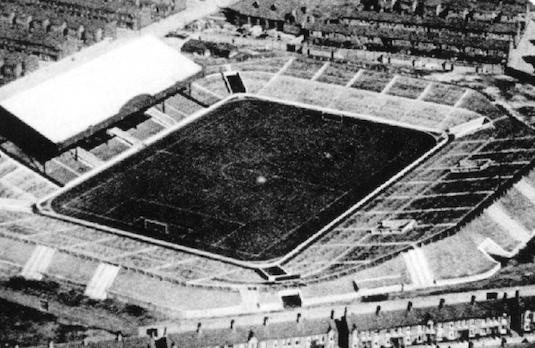
Kippax Stand c.1980

AVERAGE ATTENDANCES – Top Tier 1981-82

44571 MUFC (3rd); 35100 Tottenham (4th & FA Cup winners); 35061 Liverpool (1st & LC winners); 34063 MCFC (10th); 26780 Aston Villa (11th & European Cup winners); 26585 West Ham (9th); 25589 Arsenal (5th).

1981 City v United Maine Road

AVERAGE ATTENDANCES – Top Tier 1982-83

41552 MUFC (3rd & FA Cup winners); 34758 Liverpool (1st & LC winners); 30581 Tottenham (4th); 26789 MCFC (20th); 24153 Arsenal (10th); 23748 Aston Villa (6th); 22822 West Ham (8th). Second Division Newcastle attracted an average of 24166.

Fans storming the main entrance in 1983. Mirrorpix photo

For those wondering Manchester City did drop a little in terms of position in the attendance chart during their Second Division days but they were still the 6th best supported club (of all clubs) in 1983-84 and 8th best in 1984-85. Back in Division One in 1985-86 the Blues were once again the 4th best supported team in the entire League.

This series of articles and features on Manchester City in the 1970s has been running throughout January with indepth articles some days and smaller ‘on this day’ style posts on others. Every day in January will offer something to enjoy.

Subscribers will get access to everything. If you want to know more on this incredible decade for Manchester City Football Club then why not subscribe and read it all? You could even subscribe for a month and see what you think. The following 1,600 word article is on the 1974-75 season and is available to subscribers below. Enjoy!

Subscribe to get access – Monthly

Read more of this content when you subscribe today. It costs £3 per month (cancel anytime) to access everything posted since 1 October 2022 or there’s a special annual rate below which gives greater access and works out much cheaper.

Subscribe to get access – Annual

Read more of this content when you subscribe today. It costs £3 per month (above) or £20 a year (here) to access everything posted since the site was created in December 2020. This special rate works out about £1.67 a week and gives access to everything posted, including PDFs of 3 of my books.

If you’d like to know more about subscribing then see:

The 1970s: 1972-1973 Allison Leaves

The series of features/articles covering Manchester City in the 1970s continues with a 1,700 word article on the entire 1972-73 season – a season of major change which saw one man who didn’t want to be manager told to take the manager’s job or you’ll be leaving yourself! Oh City! You can read this below. This series of articles and features on Manchester City in the 1970s has been running throughout January with indepth articles some days and smaller ‘on this day’ style posts on others. Every day in January will offer something to enjoy.

Subscribers will get access to everything. If you want to know more on this incredible decade for Manchester City Football Club then why not subscribe and read it all? You could even subscribe for a month and see what you think. The following 1,700 word article is on the 1972-73 season and is available to subscribers below. Enjoy!

Subscribe to get access – Monthly

Read more of this content when you subscribe today. It costs £3 per month (cancel anytime) to access everything posted since 1 October 2022 or there’s a special annual rate below which gives greater access and works out much cheaper.

Subscribe to get access – Annual

Read more of this content when you subscribe today. It costs £3 per month (above) or £20 a year (here) to access everything posted since the site was created in December 2020. This special rate works out about £1.67 a week and gives access to everything posted, including PDFs of 3 of my books.

If you’d like to know more about subscribing then see:

Maine Road 100 – Day 70

Here’s post 70 in my Maine Road 100 countdown. Today I’m talking about the old stadium’s final Manchester City victory. During 2002-03 the focus for many City fans was Maine Road’s final season, especially the final month or so of the season. With every game at the stadium a sell-out – only the size of the away support varied – supporters were desperate for the final season to see the old venue at its best.  They also wanted a few memorable results in those final weeks.  

Ultimately, the best Maine Road match of the final weeks came on April 21 2003 when a goal from Robbie Fowler and two from Marc-Vivien Foe brought a 3-0 win over Sunderland.  The game became significant as it was to be the last City victory at the old stadium and Foe’s 80th minute goal was the last scored there by a City man. Sadly, Foe was also to die a few weeks later, adding to the poignancy of this day.

Pre-match Sunderland presented the Blues with a rose bowl commemorating their final visit to the stadium.  Significantly, the time span between their first appearance at Maine Road and their last was greater than any other visiting club. Co-incidentally City’s last victory at Hyde Road was also against Sunderland in April. You can read about that game here:

https://gjfootballarchive.com/2021/04/02/hyde-roads-last-city-victory/

21/4/2003 MCFC 3 Sunderland 0, Attendance 34,357

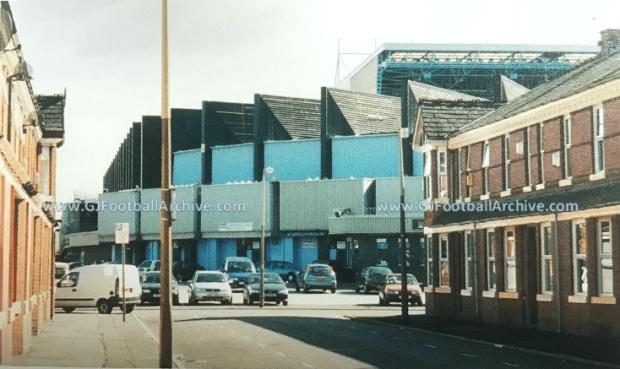
The view down Wansford Street towards Maine Road in 2003

100 Years Ago Today: Hyde Road’s Last City Victory!

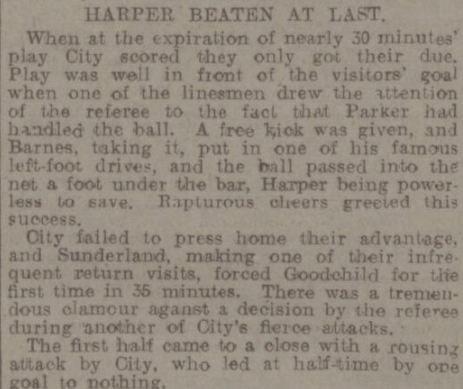
100 years ago today (April 2 1923) Manchester City won a first team game at Hyde Road for the last time. They defeated Sunderland 1-0 with a goal from Horace Barnes after about thirty minutes. The above is a report of that goal (I love the way these things used to be described – ‘the linesmen drew the attention of the referee…’).

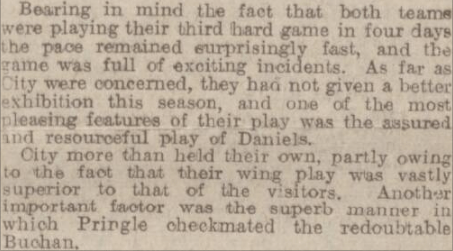
It was a controversial game which angered City’s Hyde Road fans, as this section of the report shows:

Also worth bearing in mind that this was the 3rd game in four days – what would today’s managers make of that! Even in the 1980s I remember games being played on Good Friday, Easter Saturday and Easter Monday.

In the other games City had lost 2-0 at Sunderland (March 30) and beaten Chelsea 3-0 (March 31)at Hyde Road.

The gate receipts at Sunderland on Good Friday we’re said to be quite substantial from a 35,000 crowd. So substantial that the Roger Park offices were broken into that night BUT, fortunately for Sunderland, the takings had already been taken from the ground (presumably by staff not fans!).

After this last win at Hyde Rd two further top flight games were played there – a 1-1 with Nottingham Forest and a 0-0 with Newcastle United. Neither of which attracted particularly significant crowds and there was no great ‘Farewell To Hyde Road’ commemoration (if I’d have been around I’d have tried to write a book on the old place). Maybe fans felt the move still wouldn’t happen as Maine Road was some way off completion?

Interesting note:  Maine Road’s last victory was against Sunderland on 21/4/2003 and again there were two further home games to come after it!

Hail Affects Report

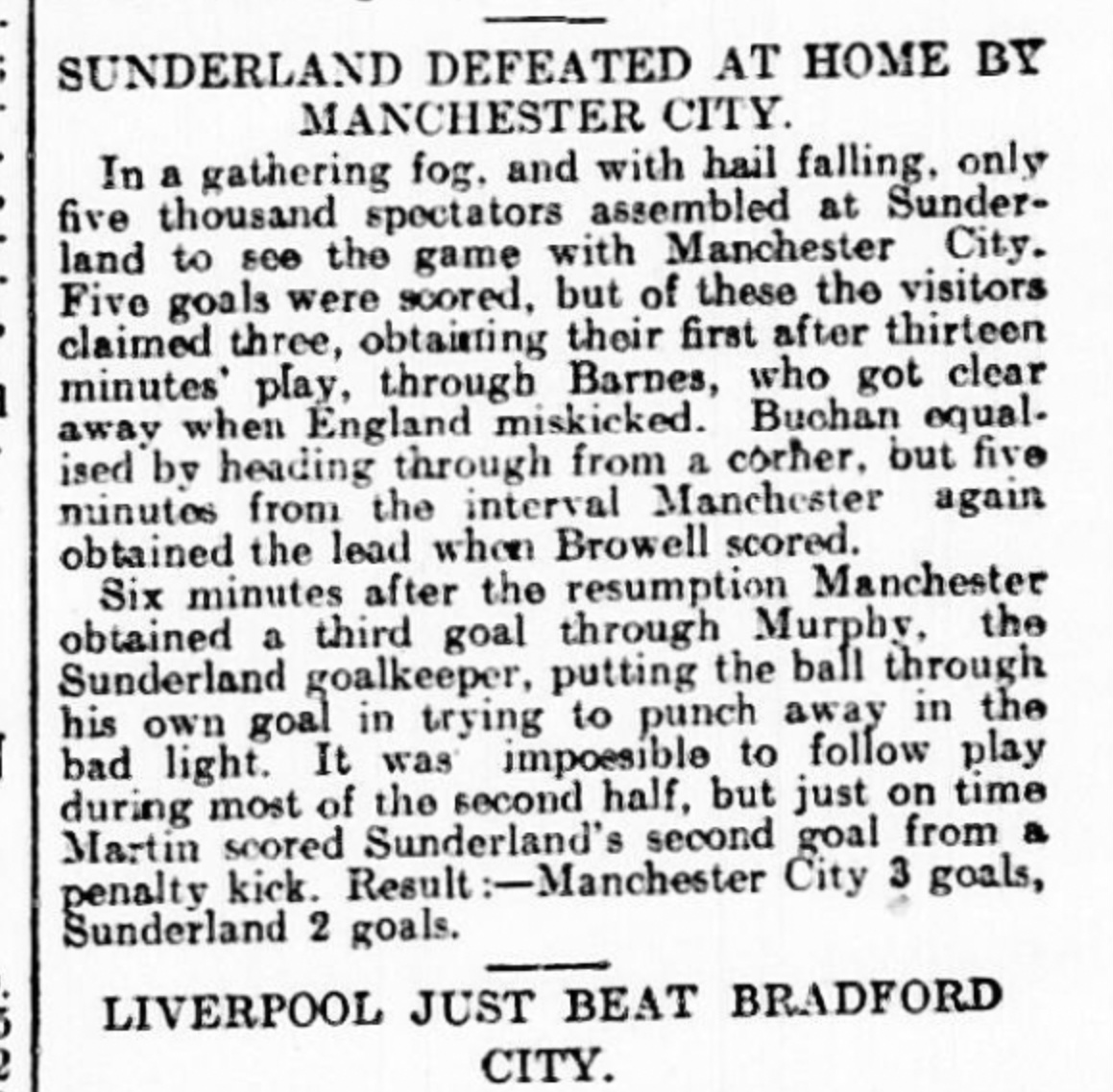
100 years ago today (16 January) the previous Saturday’s game between Manchester City & Sunderland was reported on. The game had ended in a 3-2 City win at Roker Park. The weather was poor, affecting the attendance and, as this report shows, preventing the reporter from being able to report properly on the game.

Revie Leaves But City Win

On this day (10 November) in 1956 the great Don Revie left Manchester City for Sunderland.  Revie had been in and out of favour with manager Les McDowall for over a year, but fans recognised his qualities. You can read more about his departure and find out about the first Manchester game without him here:

Subscribe to get access

If you’d like to support my research then why not subscribe? Every subscription directly helps support my research and provides annual subscribers with access to everything posted on this site, including the entire Manchester A Football History and From Maine Men To Banana Citizens books, plus interviews, articles and more. I am not employed by anyone and all my research is self funded or comes from subscriptions to this site.

Subscribe to get access

Read more of this content when you subscribe today. You can subscribe at either £20 per year (above) or at £3 per month here (cancel any time). For those subscribing £3 per month you will be able to access all content from October 2022 onwards for as long as you are a subscriber. Those subscribing £20 a year have access to everything posted since December 2020.

A Manchester City Death in 2002

On this day (13 October) in 2002 Fifties goalscoring star Billy McAdams died. During his Manchester City career he made 134 first team appearances and scored 65 goals. He had joined City on 6 December 1953 and on 2 January 1954 McAdams, signed from Distillery, made his debut. It was a memorable one as he scored an equaliser in the 49th minute against Sunderland at Maine Road.  The game was played in poor, foggy conditions but City won.

A week after the Sunderland game, McAdams scored a hat-trick in City’s 5-2 Cup win at Bradford.  He followed that with an equaliser in the 56th League derby match at Old Trafford.  His arrival and goalscoring streak was viewed as refreshing that season..

I’ll be writing a little bit more on McAdams in my article in the Manchester City match programme v Brighton next week.

Re-Using Match Tickets

Today (26th February) reminds me of how football clubs would often do anything to save a few quid or to avoid spending money they didn’t need to. The reason? Because on this day in 1977 Manchester City’s League game with Sunderland was postponed.

The game was postponed because the Blues were drawn to face Leeds United in the fifth round of the FA Cup that day and so the original League fixture was rescheduled. Tickets had already been sold for the Sunderland League game and, rather than issue new tickets, the club simply announced the original tickets would be used for the new game. It made common sense and this was something that happened often when cup games meant League games had to be postponed. Now, in the days when entry for home fans is mostly by card (though some tickets are issued of course), it seems an unusual occurrence.

The re-arranged game saw City beat Sunderland 1-0 on 9th March with a goal from Dennis Tueart. As for the FA Cup tie – that ended in a 1-0 defeat before 47,731 at Elland Road.

In 2021 Noel Bayley wrote a guest blog on match tickets and their significance. It’s a free read here: https://gjfootballarchive.com/2021/02/16/guest-blog-noel-bayley-to-be-retained/

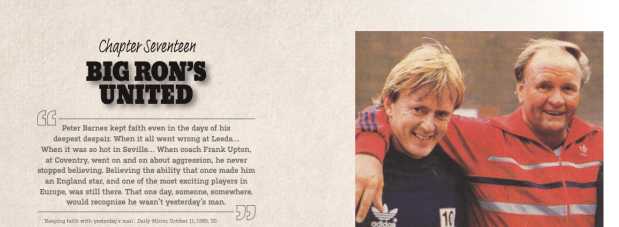
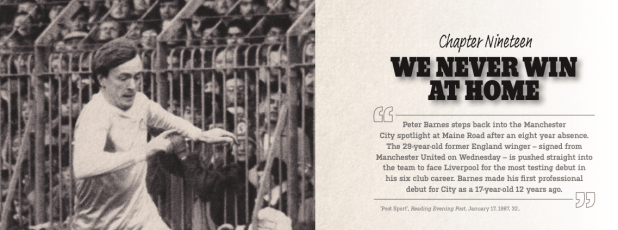
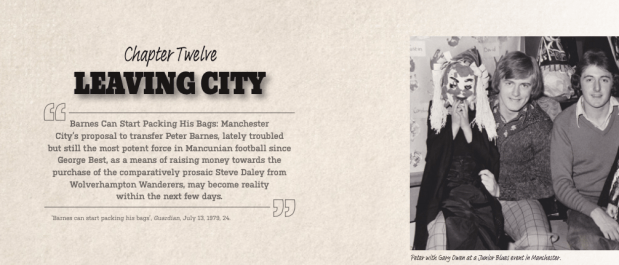
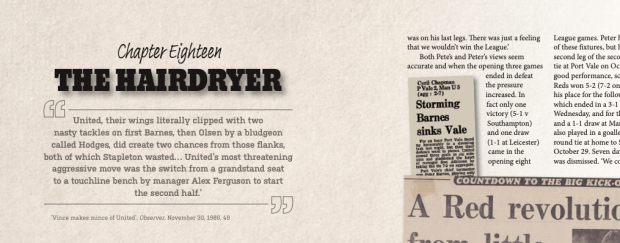
Review of Barnes Biography

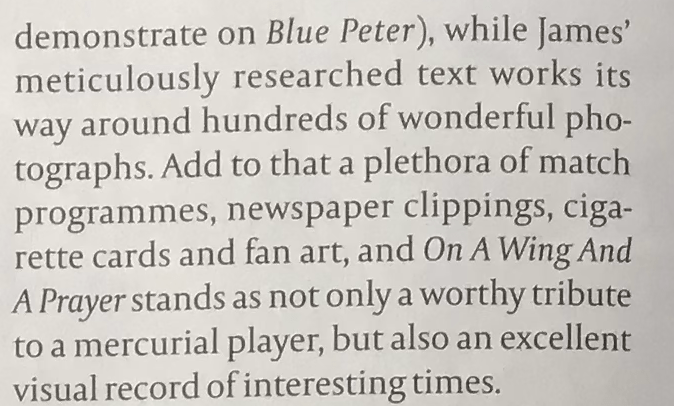
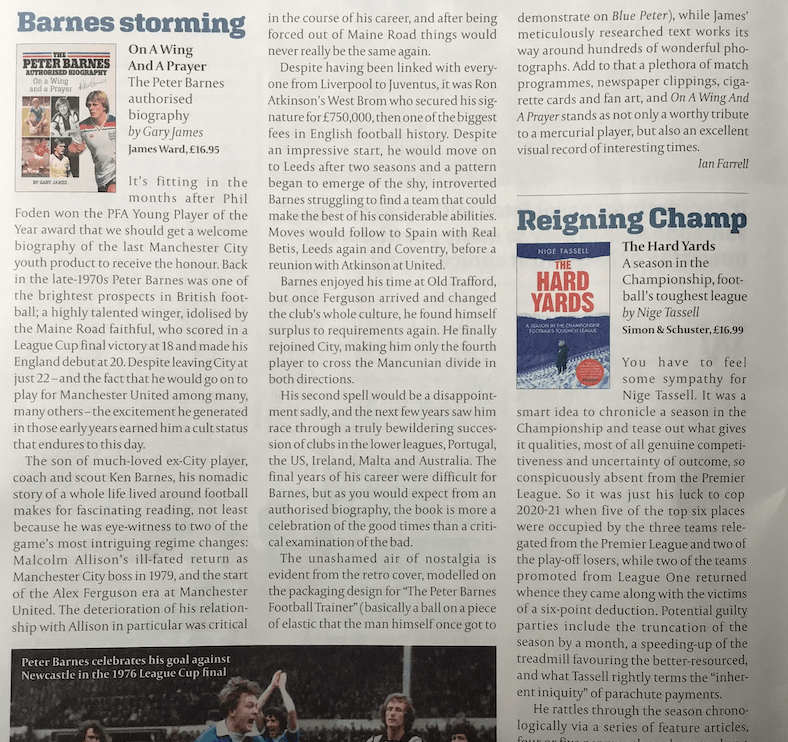
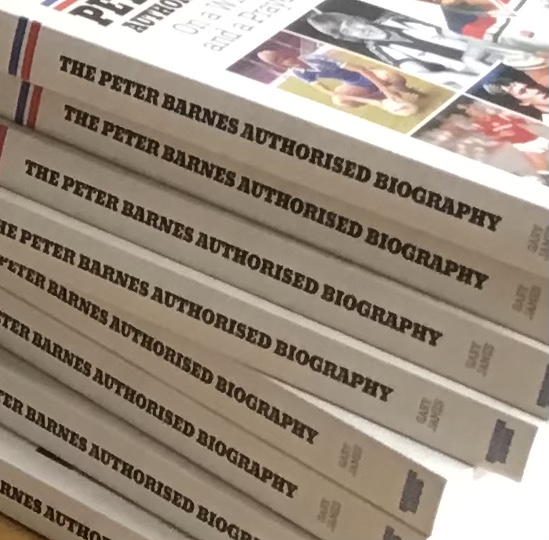
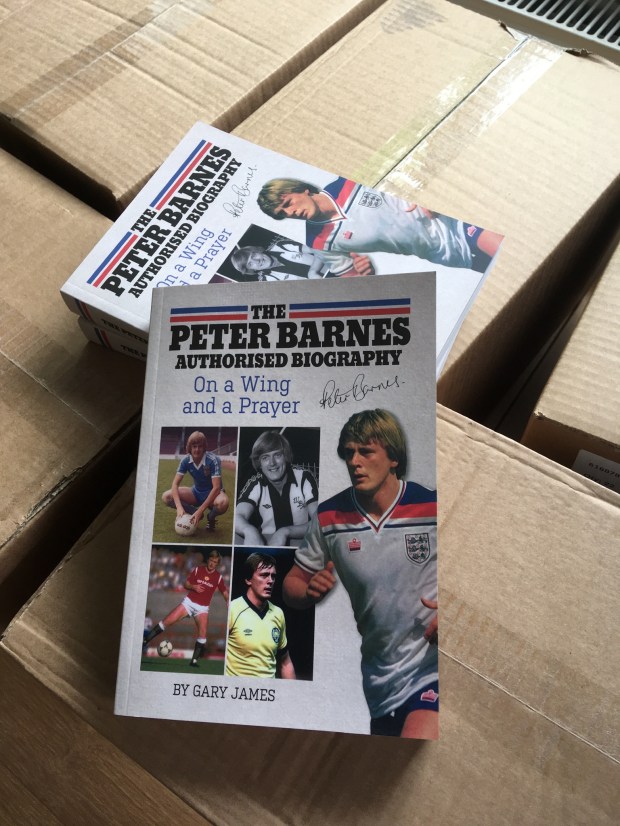
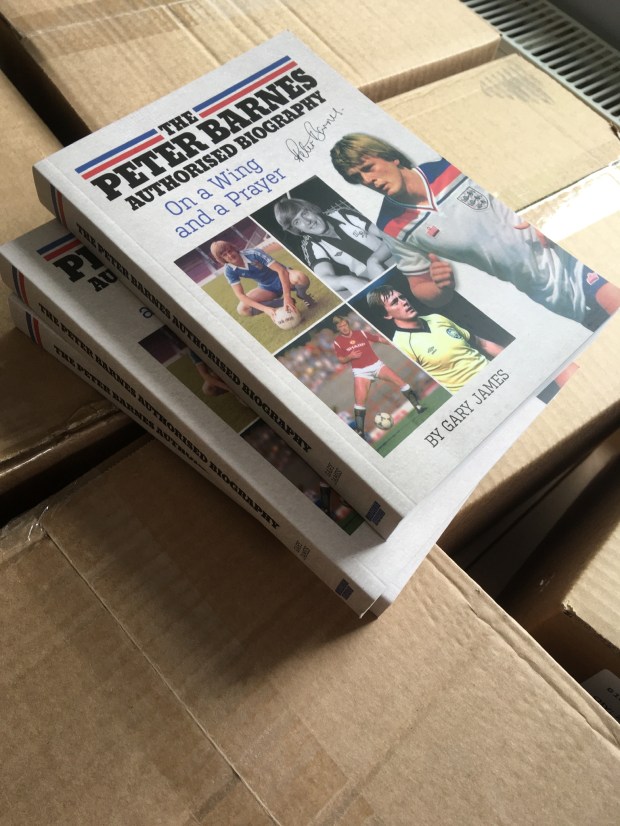
For those still wondering whether my biography of Peter Barnes is worth getting, here’s a fairly typical review that appeared last month. Enjoy! Also thanks to Ian Farrell for reviewing this in When Saturday Comes. Ta!

The Peter Barnes Authorised Biography – Available Here!

Tonight Peter & I will be talking about my new book on Peter’s life and career. At Reddish MCFC Supporters Club. If you can’t make it you can still order the book here:

United Kingdom

The Peter Barnes Authorised Biography – UNITED KINGDOM

Order today for £16.95 (incl UK Postage and Packaging).

£16.95

This 372 page, colour paperback book is £16.95 (including UK postage).

You do not need to have a PayPal account to order – use the ‘Pay with PayPal’ button above and it will give you the option to pay by credit/debit card without creating a PayPal account. UK postage included; outside UK contact me for additional postage costs.

Here are the contents pages:

This is the life story of Peter Barnes who, at the age of 18, scored the opening goal in the 1976 League Cup final. Playing for the team he supported, Manchester City, Peter was idolised by fans and was awarded the 1976 PFA Young Player of the Year award. The following year he made his England debut and was described by one journalist as the ‘saviour of English football.’

These were the days when Manchester City won the League Cup; were runners up in the League (missing the title by a point); and were challenging in Europe but then Malcolm Allison returned as coach and within months Peter, and a whole host of international stars, were on their way out. Peter was sold for a record amount. City’s fortunes suffered while Peter carved out a new career at West Bromwich Albion (where he played for Ron Atkinson).

Another record breaking transfer to Leeds United followed, before spells at Real Betis, Coventry City, Manchester United (playing for both Ron Atkinson and his replacement Alex Ferguson) and Tampa Bay Rowdies.

Written by acclaimed author Dr Gary James, this book covers the highs and lows of Peter’s life with stories about his time playing for some of the game’s biggest clubs and most famous managers. It also discusses Peter’s ongoing involvement with the sport and the significance of his family.

Oh, and if you’re wondering where the cover came from… it’s based on the packaging and advertising for the cult toy from the late 1970s The Peter Barnes Football Trainer.

If you run a book shop and would like to know more about the book please email: accounts@manchesterfootball.org

If you’re a media company interested in interviewing Peter or Gary about the book then please contact author Gary James: gary@GJFootballArchive.com

The ISBN is 978-1-9168852-0-2 and stocks are now available for book shops.

You can listen to Peter in conversation with myself about the book here:

Thanks,

Gary James