On this day (30 September) in 2020 Manchester City defeated Burnley 3-0 in the League Cup at Turf Moor. City’s scorers were Raheem Sterling (2) and Ferran Torres. Here are some highlights of the game:
If you enjoy all the free material on my website and would like to support my research and keep this website going (but don’t want to subscribe) then why not make a one-time donation (or buy me a coffee). All support for my research is valued and welcome. It allows me to keep some free material available for all. Thanks.
On this day (29 September) in 2007 goals from Petrov (38 mins), Mpenza (47) and Elano (87) helped Manchester City to a 3-1 victory over Newcastle United. Elano’s goal came from a truly outstanding free kick and was his first goal for the club. You can see highlights of the game here:
If you enjoy all the free material on my website and would like to support my research and keep this website going (but don’t want to subscribe) then why not make a one-time donation (or buy me a coffee). All support for my research is valued and welcome. It allows me to keep some free material available for all. Thanks.
City v Newcastle is one of the most enduring fixtures in English football. There have been cup finals, title deciders, dramatic games, shared heroes and so much more. The two clubs first met in the League in October 1893 (Ardwick/MCFC’s 2nd season in the League) and City’s record is:
Competition
Played
Won
Drawn
Lost
League
174
71
38
65
FA Cup
12
4
2
6
League Cup
6
3
1
2
European
0
0
0
0
Other
0
0
0
0
There have been lots of significant games in the League, FA Cup and League Cup. A League Cup final in 1976 saw them meet at Wembley when Peter Barnes and Dennis Tueart both scoring for the Blues.
Most Blues of my age and above will remember where they were when our King returned to action on Boxing Day 1977. Here’s an interview I did with him a few years back when we talked about that special day:
There was a really odd thing a while back where a Newcastle paper claimed that their local team had first worn bar scarves at games. A few simple searches soon proved there were much earlier bar scarfs:
If you enjoy all the free material on my website and would like to support my research and keep this website going (but don’t want to subscribe) then why not make a one-time donation (or buy me a coffee). All support for my research is valued and welcome. It allows me to keep some free material available for all. Thanks.
Five years ago today (28 September 2019) Manchester City defeated Everton 3-1 before 39,222 at Goodison Park. The City scorers were Jesus, Mahrez and Sterling and you can see highlights of the game below:
While you’re here why not subscribe to my website. It costs £20 per year (works out about £1.67 a month) and for that every subscriber gets access to a PDF of both Manchester A Football History and From Maine Men to Banana Citizens (both out of print) plus the hundreds of articles, interviews and videos already posted and a guaranteed 4 new exclusive articles per month (usually a lot more than that!). I am not employed to do any research and so subscribers help fund detailed research into football’s history. Thanks for supporting my work if you do already subscribe or buy my books.
If you enjoy all the free material on my website and would like to support my research and keep this website going (but don’t want to subscribe) then why not make a one-time donation (or buy me a coffee). All support for my research is valued and welcome. It allows me to keep some free material available for all. Thanks.
As it’s Newcastle v Manchester City tomorrow I thought I’d post a flashback to a game from 30 years ago (yes, it really is that long ago!). Sit back and enjoy this read…
When high-flying Newcastle (they were third) arrived at Maine Road in April 1994 many expected the Geordies to embarrass City, particularly as the Blues were struggling at the other end of the table, but a determined performance brought City the points and the plaudits.
Maine Road’s second largest crowd of the season felt a little apprehensive in the opening period – especially when Newcastle’s £700,000 purchase Scot Sellars netted in the 19th minute. The worry didn’t last however, and as the match progressed Brian Horton’s Blues began to excel. After 33 minutes Paul Walsh scored a deserved equaliser, and then 3 minutes into the second half defender David Brightwell scored the winner. This was the unlikely hero’s first goal for the club and pre-match bookmakers Ladbrookes had offered odds of 66-1 for him to score. Immediately after netting he was mobbed by Paul Walsh, Peter Beagrie, and David Rocastle.
For the rest of the match City appeared confident and were certainly good value for money, matching Newcastle throughout. An ecstatic crowd gave the Blues a tremendous ovation at the whistle with the talents of Beagrie, Walsh, and Rosler gaining particular praise. Afterwards Kevin Keegan gave the Blues further praise – something he repeated two years later in an equally thrilling 3-3 draw between a Geordie side six points clear at the top, and a City side slipping towards relegation.
The season ended with Newcastle in third place, and City in 16th position – 3 points above the relegation zone.
You can watch highlights here:
Stats: Premier League 9th April 1994.
City 2 Newcastle United 1
Scorers – City: Walsh, Brightwell (D)
Newcastle: Sellers
City: Dibble, Hill, Brightwell D., McMahon, Curle, Vonk, Rocastle, Karl (Lomas), Rosler, Walsh, Beagrie
If you enjoy all the free material on my website and would like to support my research and keep this website going (but don’t want to subscribe) then why not make a one-time donation (or buy me a coffee). All support for my research is valued and welcome. It allows me to keep some free material available for all. Thanks.
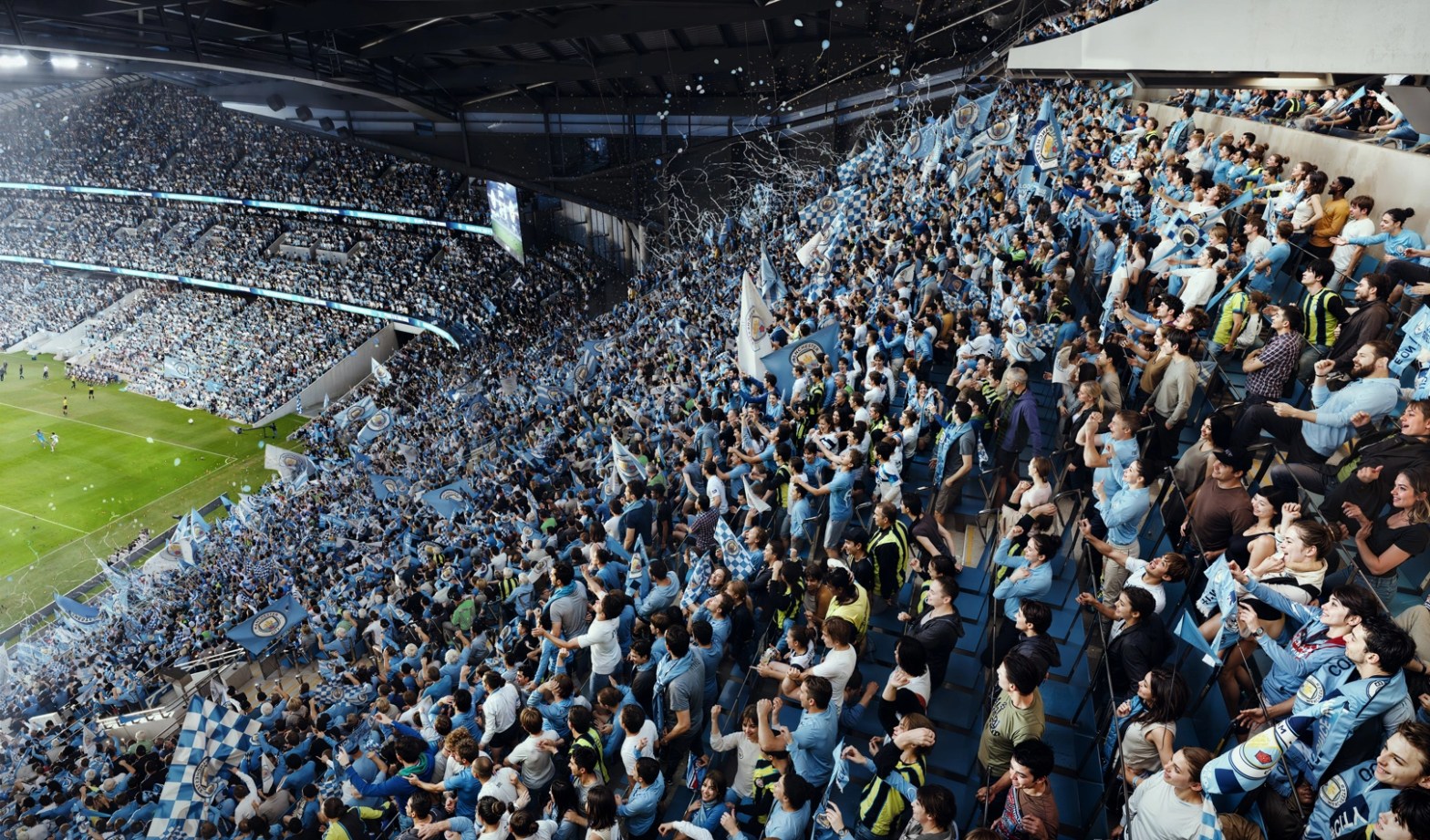
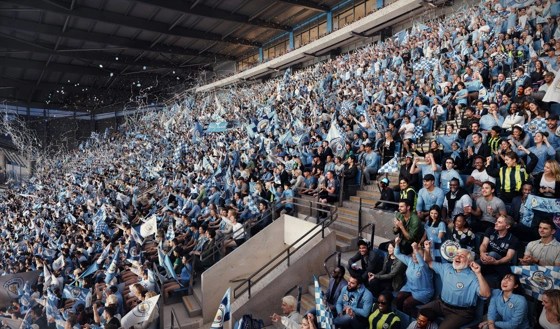
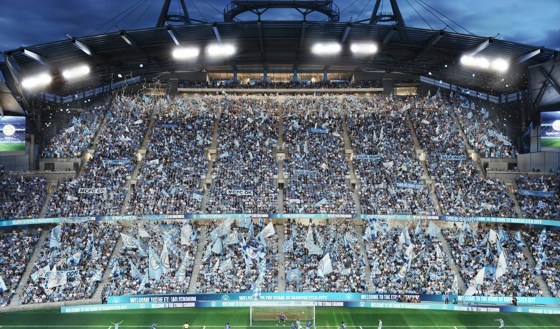
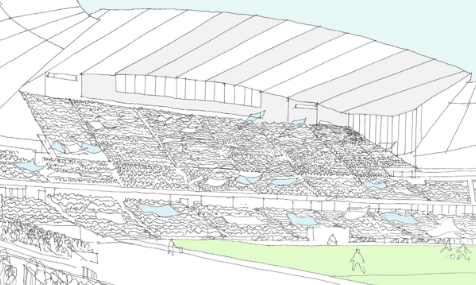
Yesterday’s release of the plans for the newly extended North Stand looked excellent. There’s a long way to go before anyone can sit or stand in the new extension of course, but it does look like it’s going to boost almost every area of support: New rail seating, an emphasis on under 21s, hospitality, families… interesting times. Looking at the images released it looks as though the new 3,000 rail seats will be at the back of the 2nd tier. If that’s the case any noise generated up there should bounce down off the roof and encourage others to join in.
If you enjoy all the free material on my website and would like to support my research and keep this website going (but don’t want to subscribe) then why not make a one-time donation (or buy me a coffee). All support for my research is valued and welcome. It allows me to keep some free material available for all. Thanks.
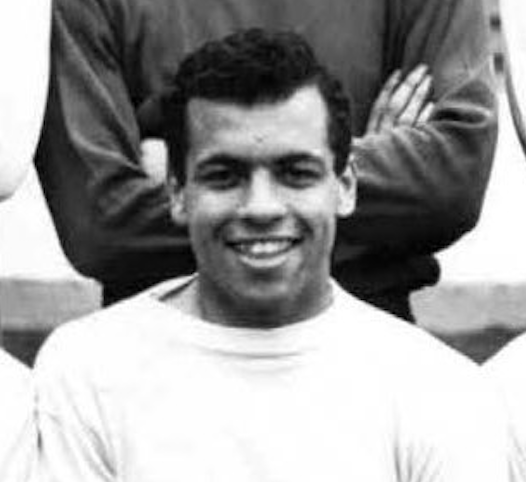
Three days after making his Manchester City debut in a League Cup tie with Leicester (22 September 1965, 3-1 City win) Stan Horne made his League debut for Joe Mercer’s Blues. The game, played on this day (25th) in 1965 ended in a 1-0 City win over Derby County at Maine Road. The scorer was Jimmy Murray.
Horne had previously played for Mercer’s Aston Villa too.
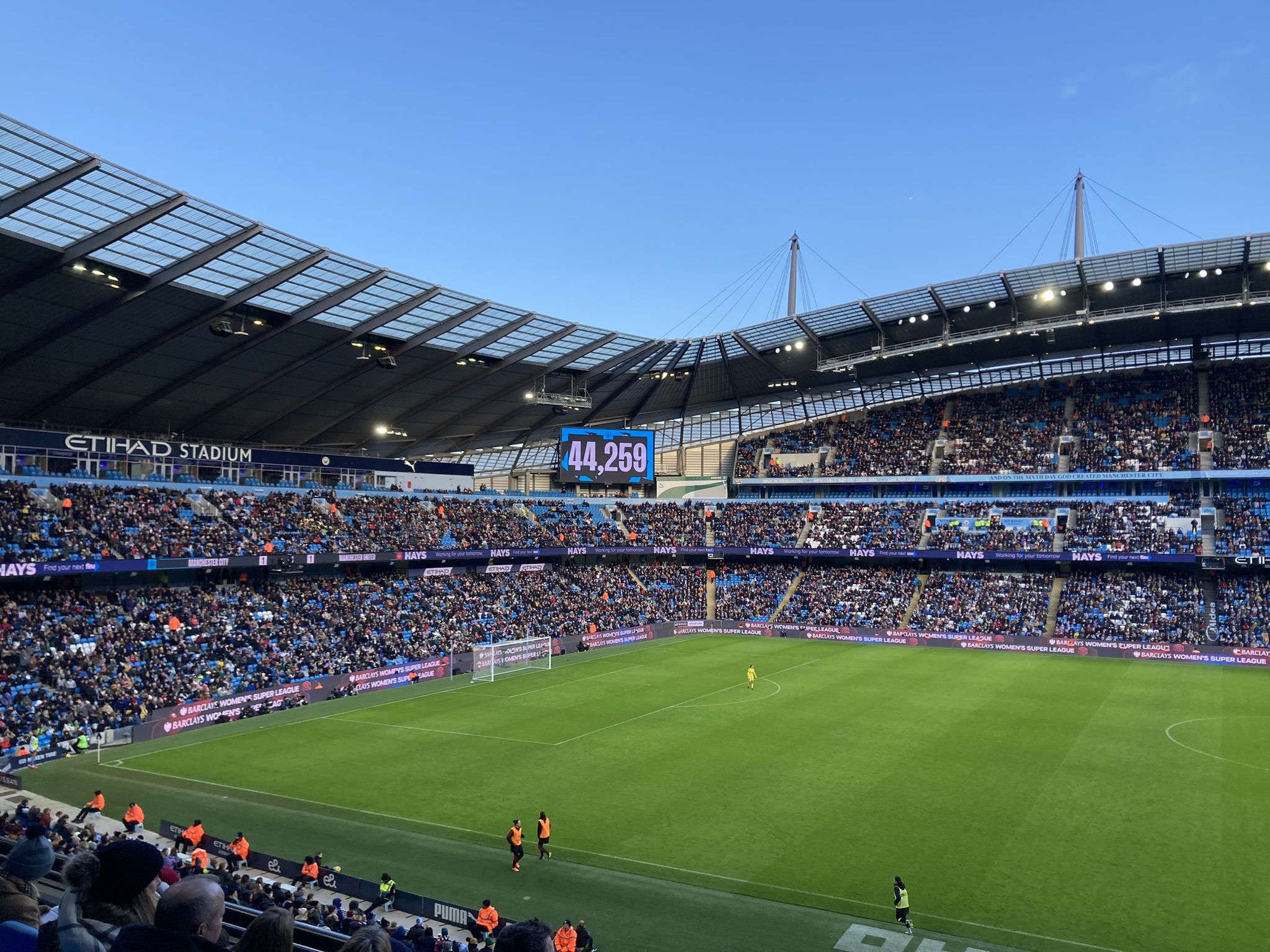
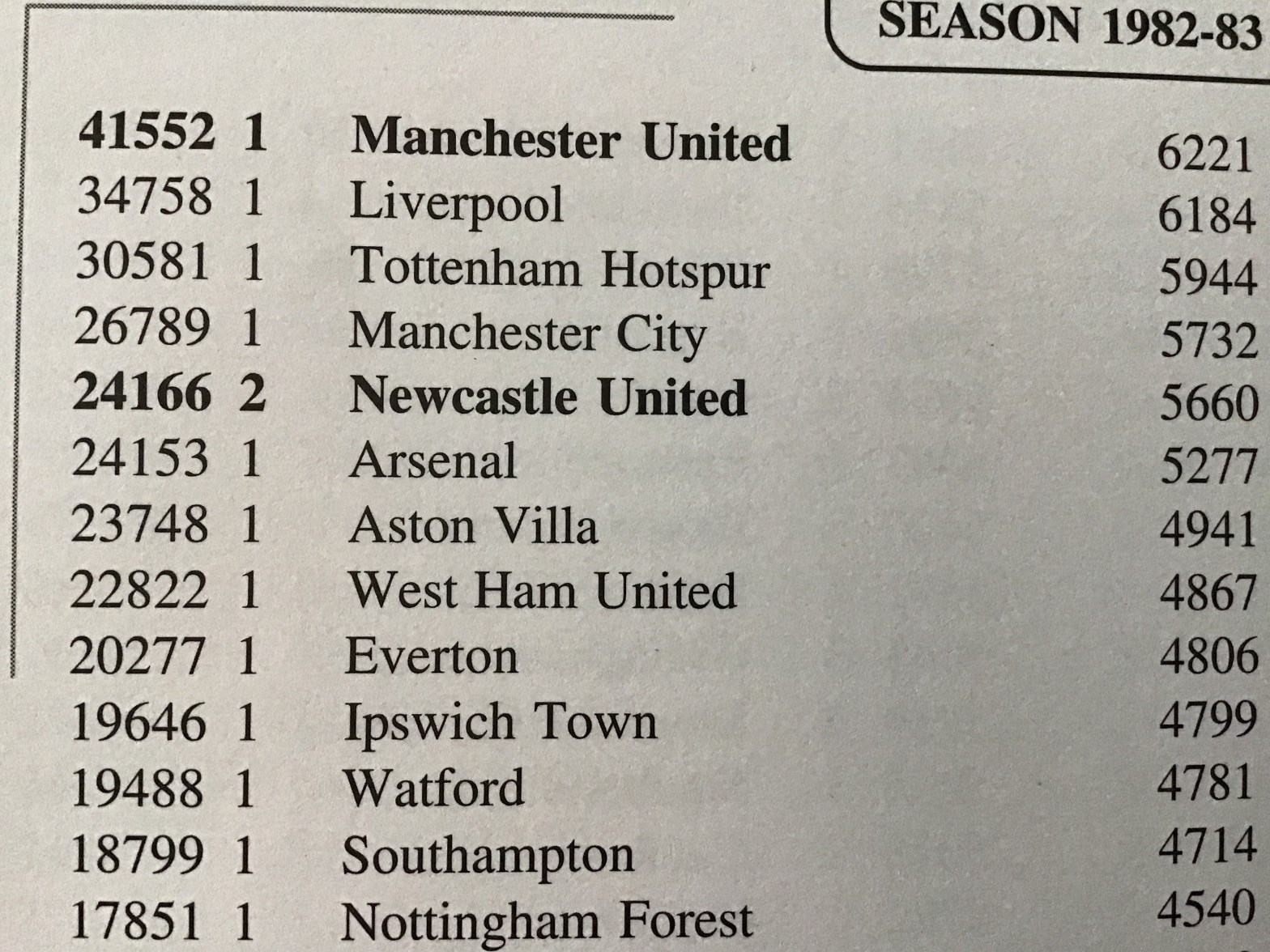
Fairly early on in the game between Manchester City and Arsenal the fans of the London club started to sing the old ‘Where were you when you were…’ chant. You’d think they’d know because often City were attracting better crowds than Arsenal. Let’s look at 1982-83 when I experienced my first relegation as a City fan. Back then City were the 4th best supported club (26,789) and Arsenal were 6th (24,153) – see the average attendance table above. City finished in a relegation position and Arsenal were 10th.
The following season Arsenal did attract a better average than City but they were the 5th best supported club in the entire 4 divisions and City were the 6th. In terms of League position Arsenal were 6th and City were 4th in Division Two.
We could talk about the late 1990s but neither club had a ground that could satisfy the demand to see them, so a sell out Maine Road in 1998-99 for third tier City has to compare with a sell out Highbury for title challenging Arsenal.
Since then stadium size has dictated average support but if we go back to earlier decades and assume that Arsenal’s ‘Where were you when you were sh*t’ refers to City heading towards relegation or being out of the top flight then City’s record is impressive overall. In 1965-66 (the last 2nd division season before the 1980s) City averaged 27,739 (10th best in entire League) while First Division Arsenal were the 9th best supported club on 29,036.
We can jump back even further. In the 1920s Arsenal were perceived as a popular club and in 1925-26 they averaged 31,471 – the 3rd best in the League. Where were City? Oh, City who were relegated that season were the 2nd best supported team with an average of almost 32,000. Not much more than Arsenal but the Gunners were 2nd in the League and City were relegated!
The year after Second Division City were the 3rd best supported club and top flight Arsenal were 4th!
1926-27 Average attendances. Manchester City in Second Division
The year after that (1927-28) Second Division City were the best supported club in the entire League with 37,468. Where were top flight Arsenal? 7th best supported with 27,434.
1927-28 Average attendances. Manchester City were the best supported club despite being in Second Division
It’s all a nonsense but if Arsenal fans, or any other team, want to sing songs like this then it would help if they knew their own history of support.
I thought I’d give this a mention again because this is likely to be something truly special. There’s a new documentary series going to be made on City and there are lots of City fans involved in the production. As part of the series the production team and MCFC are looking to find 4 generations of living Blues who can tell their stories of supporting City. They want to find fans who can be interviewed that have 4 (or more) generations of living City fans.
There are 4/5/6 generation families who have lost the earlier generations who have interesting stories I know, but the key here is that they need to be able to interview each generation. If you fit the bill and are interested then get in touch. There’s a bit more here:
You can email families@projectkippax.com if you do have 4 generations of living blues and want to be considered for the series.
They are also looking for film, video, cine camera, mobile phone footage from City over the decades. In some ways the older the better. They want to find stuff that hasn’t been seen before. Obviously, any footage must have your own copyright and not recordings from commercial media – for example, copied from YouTube or other media/social media outlets.
As I said earlier there are City fans involved in the production, some of whom have excellent reputations in the world of media production and have been dedicated match going Blues for decades. I’m also involved.