Darren Beckford Tribute

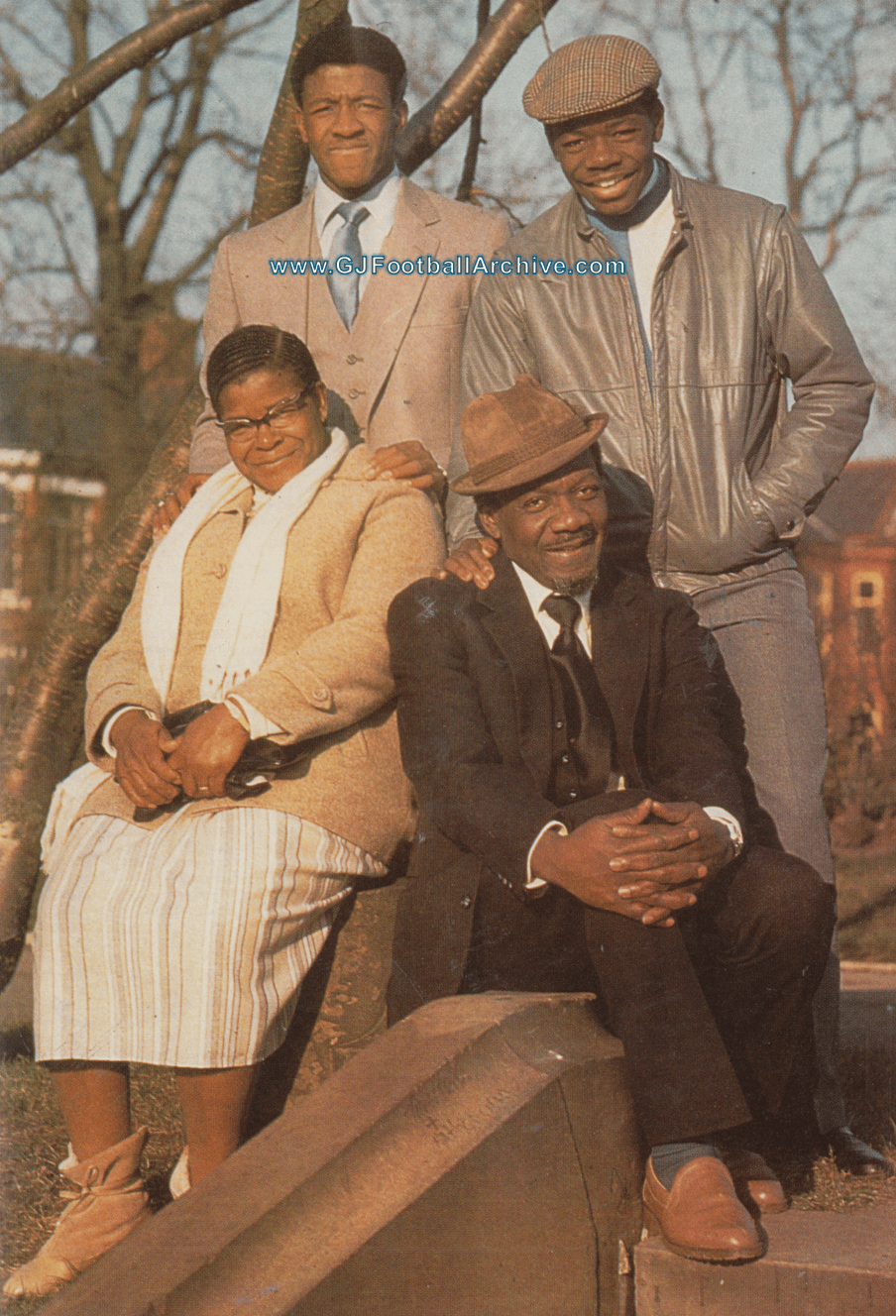
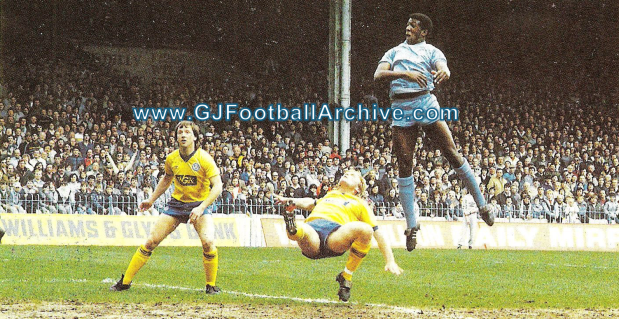
Yesterday came the news of Darren Beckford’s death at the age of 59. I wanted to pay a full and proper tribute to him but have only really had the chance today. Darren (seen in 1985 in the main photo taken by John Peters with his parents Val and Dudley and his brother Jason) was a supremely talented forward who attended Burnage High School before joining Manchester City as an apprentice on 16 April 1984. Less than four months later he was deservedly given a professional contract (1 August 1984) and on 20 October that year he made his first team debut, coming on as substitute for Gordon Smith in a 2-1 defeat at Middlesbrough. A fortnight later he came on again (for Graham Baker) in a goalless game at Brighton and on 8 April 1985 he made his first start in a 2-1 defeat at home to Leeds at Maine Road (John Peters photo below).
When I interviewed Darren’s brother Jason a few years back we talked about the Beckfords early sporting interests: ‘Darren and I were mad about any sport as kids – football, cricket, basketball… anything that had a ball really. Back then we just played and played and because Darren’s a couple of years older than me I always seemed to play with him and his mates, not my age group. We played in the street for hours and, I guess where we were different to some of the other lads is that we stayed out for ages after they’d all gone in.’

I asked Jason about the brothers’ footballing support: ‘You tend to get your first interest from your parents. If they take you to a club it becomes part of you, but my parents weren’t really football people. My dad loved his sport but he was more into cricket. Me and Darren loved football but we didn’t get chance to go and didn’t really have any allegiance until we signed schoolboy forms with City. It was just the way it was. We loved playing football but didn’t get the chance to watch it.’

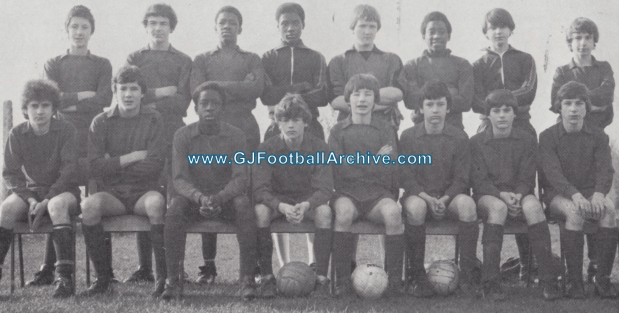
Darren excelled at sport and he represented his city playing football for Manchester Boys (14 year old Darren can be seen in the Manchester Boys lineup on the image below: back row, 3rd from left) and also represented the North West at basketball. In fact he had to make a tough decision as to which sport he focused on and, fortunately for us, he chose football. He made eight England under-15 appearances at soccer and excelled as a youth player with the Blues too.
There was a period where his goalscoring for the youth team gained a few headlines, and made many City fans notice his talent. He netted three hat-tricks in four FA Youth Cup ties during 1984-85 and twice that season he netted four goals in an A team match. Inevitably, he was leading scorer for both the Reserves and City’s A team that season. The following season he scored 24 goals for A team. For all of us who attended first team, reserve or youth games back then the name Darren Beckford was regularly being spoken. I remember desperately wanting him to have a sustained run in the first team but the difficulties of this era meant those chances came few and far between. Darren never got the run of games that some of us felt he deserved to allow him to adjust to the demands of the League. Worth remembering that these were difficult days for City with the team he debuted in being desperate for promotion from the second tier, then 1985-1987 fighting for survival in the top tier. Not necessarily the best place for an attack-minded player to get his grounding.

During the 1984-85 season Tottenham had contacted City about buying Darren and his teammate Paul Moulden. Put across as a ‘name your price’ offer, City rejected the bid. We were all relieved. We saw these guys, Paul Simpson, and the others we knew were developing in the youth team as ‘our’ team. I was a similar age to them all and I was a teenager standing on the Kippax supporting the team. Whenever a player from the youth team made their debut they tended to be either my age or slightly older/younger and, because of that, I always felt they were like me (except they could play football!). Darren was, to use a modern expression, ‘one of our own’, as was Paul Moulden, Paul Simpson and those that followed like David White, Paul Lake and Ian Brightwell. It always felt, to me at least, that our future needed these young players and if City ever sold them it would be a foolish act. These guys were tipped for greatness and Darren was already within the England system, going to Lilleshall and in the youth squad.

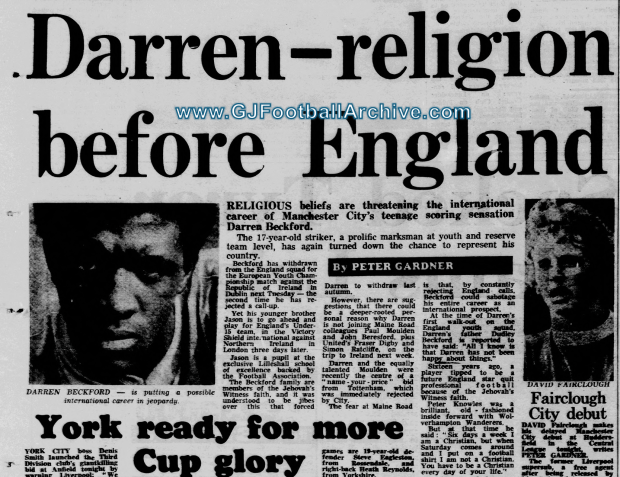
In February 1985 Darren made the headlines when he withdrew from the England Youth squad. Religious reasons were cited at the time. It seemed to shock many but others respected his decision.
In 1986-87 Darren was again top scorer in the reserve team with 11 goals. His last first team game for City came on 24 January 1987, a goalless draw at Wimbledon which also Paul Lake’s first team debut.

A spell on loan at Bury came in October 1985, where he gained some valuable experience and on 26 March 1987 he went on loan at Port Vale. The loan went well and on 25 June 1987 they made the move permanent, bringing to an end his Manchester City career. Darren’s most successful spell of his career came at Port Vale where he was signed permanently for a modest £15,000—a fee raised in part by fans doing bucket collections! He established himself as an electric and dominant striker, helping the club secure promotion to the Second Division via the play-offs in 1989 and finished as Port Vale’s top scorer for four consecutive seasons. In total, he scored 81 goals in 214 appearances for the club. This included a memorable goal in the FA Cup against City. I was there at Vale Park that day (this was the year we were convinced City’s name was on the cup. How wrong we were!). You can see his equaliser on this video (after about two minutes) but there’s also a great defensive moment from him earlier, plus the highlights are well worth watching to get a feel for how we all felt that day, plus to see Darren’s goal (top of the net and a good celebration).

A move to Norwich City followed (£925,000 – Vale’s record sale at the time) but he suffered with injuries while there. The main highlight of his time at Carrow Road was a crucial hat-trick against Everton that preserved Norwich’s top-flight status during the 1991–92 season.

On 24 March 1993 Darren was sold to Premier League side Oldham Athletic for £300,000, where he scored some vital top-flight goals for the Latics. He recorded 17 goals in 52 appearances before a severe hamstring injury halted his momentum and led to his release in 1996.

After leaving Oldham, he moved north to Scottish club Heart of Midlothian, where he helped them reach the 1996 Scottish League Cup final, scoring twice during his stay. A succession of brief, short-term spells at a variety of clubs including Fulham, Rushden & Diamonds, Preston North End, Walsall and Total Network Solutions followed before he retired in 1998.

The news of Darren’s death yesterday was an absolute shock and my thoughts remain with his family, friends and of course Jason. I think it’s worth ending this piece with the words from Once A Blue, the Manchester City Former Players Association. They commented on his death: ‘We are truly devastated at the news that one of our own, Darren Beckford, has sadly passed away at the age of 59. Raised in Ancoats and Longsight, Darren was a product of Manchester City’s youth system and made his senior debut against Middlesbrough in October 1984.

‘An athletic striker with a keen eye for goal, he played 12 times for the Blues before continuing his career at Port Vale, Norwich City and Oldham Athletic, among others. He made a total of 324 appearances as a professional footballer, accruing a tally of 100 goals. Darren’s younger brother Jason followed in his footsteps, playing for City between 1987 and 1991. The pair attended the Etihad together earlier this season to watch City v Norwich and both enjoyed this year’s Once A Blue Man City summertime catch-up in Manchester city centre (See image from Once A Blue below).

‘Jason would like to express his gratitude to the staff at The Christie NHS Foundation Trust for all their care and compassion, and would also like to thank Maggie’s Centres Manchester for providing invaluable advice and support to the Beckford family. On behalf of everyone at Once A Blue, may we offer our heartfelt condolences to Darren’s friends, family and team-mates as they come to terms with this huge loss. Rest in peace, Daz. You will never be forgotten Once a Blue, Always a Blue’
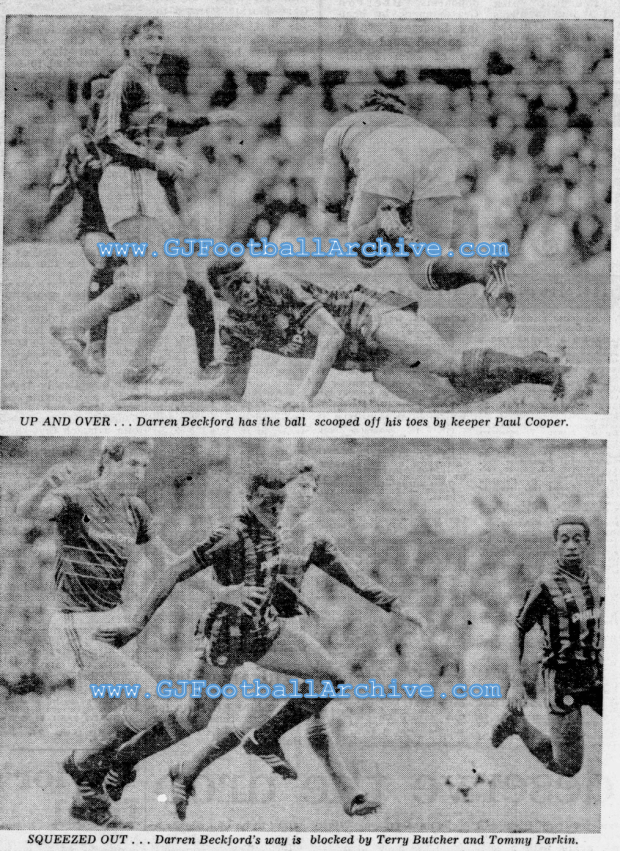
Darren Beckford in action, April 1985 Ipswich 0 City 0

The 1930s: 1932-33 The Number Game

My series on Manchester City in the 1930s continues today with a 1600 word subscriber article on the 1932-33 season. If you subscribe (see below) I hope you enjoy it. If you don’t subscribe then why not try it for a month (£3 per month or sign up for a year at a discounted £20 per year)?

Here’s the article:

Subscribe to get access

Read more of this content when you subscribe today. It costs £3 a month (cancel anytime) or sign up for a year at £20 per year. Subscribers have access to the 1000s of articles, features, interviews etc. posted so far and all those posted during your subscription.

The 1980s: Gleghorn Goes in Nets

It was one of those crazy Manchester City days in the 1980s (and you can see film of it below!) when City travelled to Walsall for a League game on this day (25 March) in 1989. That day every one attending the match had real value for money when Nigel Gleghorn replaced the injured Andy Dibble in goal.  City were 2-0 down when Dibble collapsed in agony with a groin problem.  Gleghorn put on the green shirt and helped the Blues to fight back with David Oldfield – the fifth most expensive City player up until that point at £600,000 – scoring his first goal for the club.  Paul ‘Golden’ Moulden equalised and then, early in the second half, he scored again to bring a 3-2 lead.  Gleghorn made a couple of good saves and even kicked superbly to keep the pressure off City but then a ridiculous out of character back pass from Oldfield gave Walsall opportunity to score, and the game ended 3-3.  

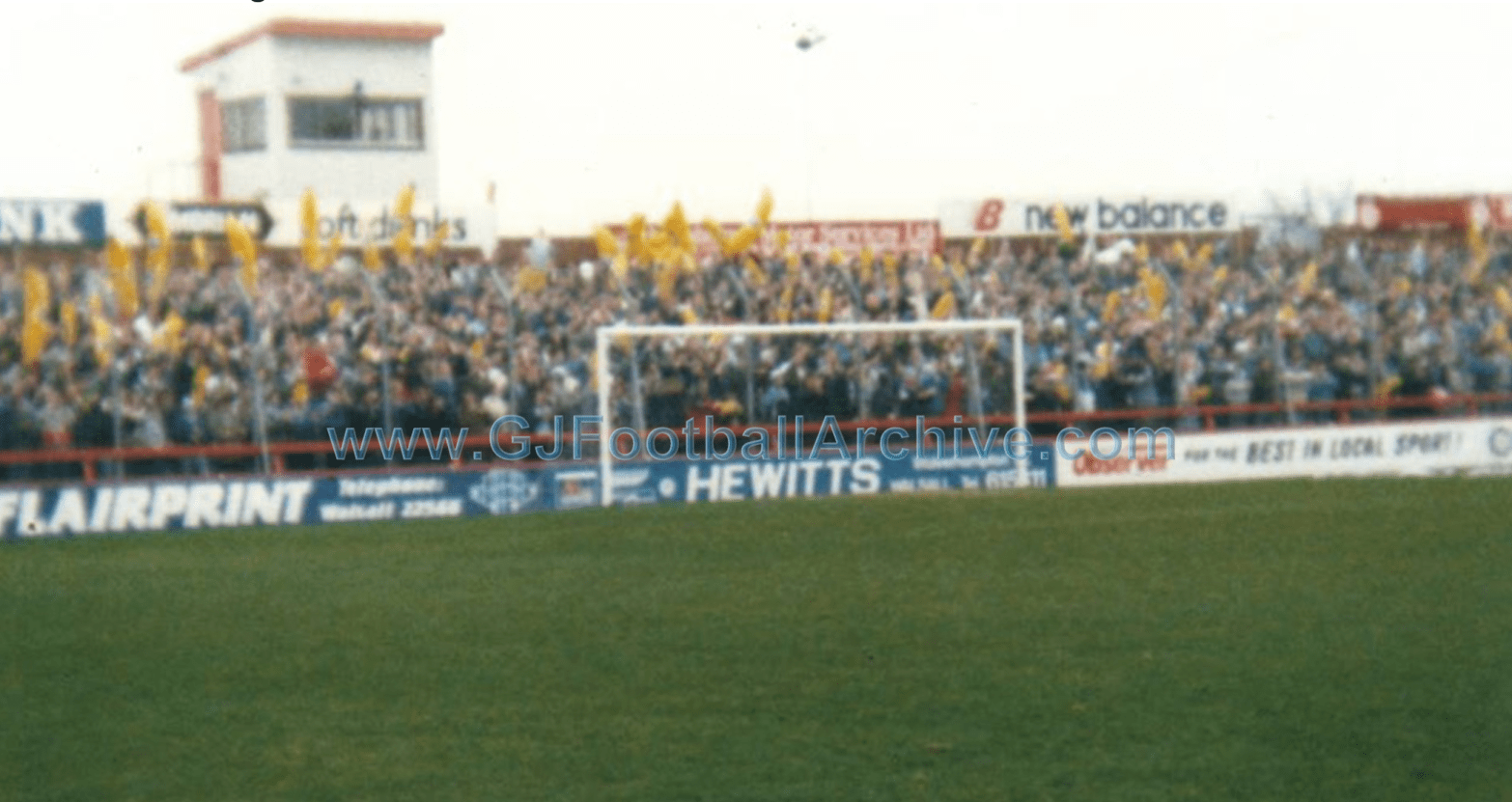
The substitute ‘keeper was certainly the man of the match, winning applause from both sets of supporters after being stand-in for around an hour. You can see highlights here (wonderful commentary from the Walsall video commentator too). City had the away section behind the goal on the right and the covered paddock opposite (right). I was stood in the paddock behind the row of stanchions. Notice the bananas too:

Subscribers can read a series of articles covering the 1980s – a seasonal journey through a truly important decade in the history of Manchester City Football Club. The 1988-89 article is a 4,100 word feature below. Enjoy!

Subscribe to get access – Monthly

Read more of this content when you subscribe today. It costs £3 per month (cancel anytime) to access everything posted since 1 October 2022 or there’s a special annual rate below which gives greater access and works out much cheaper.

Subscribe to get access – Annual

Read more of this content when you subscribe today. It costs £3 per month (above) or £20 a year (here) to access everything posted since the site was created in December 2020. This special rate works out about £1.67 a week and gives access to everything posted, including PDFs of 3 of my books.

If you’d like to know more about subscribing then see:

Tomorrow’s feature is the last on the 1980s as we tell the story of the 1989-90 season. If you missed the earlier features then start here:

The 1980s: 1980-1981 Gow, Hutchison & McDonald

Only 13,646 at Old Trafford

On 30 October in 1973 The second round League Cup tie between Manchester City and Walsall went to a second replay.  City won the game 4-0 with a hat-trick for Francis Lee, but a pitiful crowd of 13,646 witnessed the match at Old Trafford.  City fans didn’t mind playing a 2nd replay, but they did object to it being played at United’s ground.

You can read more on the 1973-74 season here:

Subscribe to get access

If you’d like to support my research then why not subscribe? Every subscription directly helps support my research and provides annual subscribers with access to everything posted on this site, including the entire Manchester A Football History and From Maine Men To Banana Citizens books, plus interviews, articles and more. I am not employed by anyone and all my research is self funded or comes from subscriptions to this site.

The 1900s: 1900-1901 Attendances

The series of features on the 1900s continues today with a simple look at the average attendances of league clubs. I’m publishing the statistics here for season 1900-1901 when Manchester City finished 11th in the First Division (top tier). There were 18 clubs in the division that season. Despite this relatively low position, City were the second best supported club – the highest position either Manchester team had enjoyed up to that point. League champions Liverpool were the 5th best supported club. Newton Heath (MUFC) were still a Second Division club and were 22nd best supported team.

All these figures are estimated based on newspaper reports of the period but are widely accepted as a good indication of support enjoyed at each club.

Match programme for 29 September 1900. Manchester City v Stoke

In the following table every team is in Division One unless (2) appears after their name. This indicates they were a Second Division club that season. Where two teams have the same average then these have been listed in alphabetic order.

1900-1901 Average Attendances

AverageTeam
18700Aston Villa
18300Manchester City
16225Everton
15800Newcastle
15000Liverpool
13600Sheff Utd
11525Sunderland
10575WBA
10175Bolton
9950Sheff Wed
9450Notts County
9350Nottm Forest
8375Middlesbrough (2)
8050Derby
6950Bury
6850Stoke
6575Blackburn
6325Preston
5900Small Heath (2)
5900Woolwich Arsenal (2)
5850Wolves
5475Newton Heath (2)
4975Leicester Fosse (2)
4625Grimsby (2)
3725Stockport (2)
3575Lincoln (2)
3125Walsall (2)
3100Burnley (2)
2850Barnsley (2)
2825Chesterfield (2)
2800Glossop (2)
2675New Brighton Tower (2)
2375Burton Swifts (2)
2075Burslem Port Vale (2)
2050Gainsborough Trinity (2)
1850Blackpool (2)

This series of features covers the final years of Ardwick, the birth of Manchester City and the Club’s first national success. Why not subscribe and read every feature?

More on the 1900s tomorrow.

The 1900s: 1899-1900 Attendances

The series of features on the 1900s starts today with a simple look at the average attendances of league clubs. I’m publishing the statistics here for season 1899-1900 when Manchester City was a First Division club for the first time. They were the third best supported club – the highest position either Manchester team had enjoyed up to that point. In fact City had been the best supported club for the opening months of the season as the heading photo shows (that’s from 20 January 1900).

All these figures are estimated based on newspaper reports of the period but are widely accepted as a good indication of support enjoyed at each club.

Manchester City with the Second Division Shield, 1899

In the following table every team is in Division One unless (2) appears after their name. This indicates they were a Second Division club that season. Where two teams have the same average then these have been listed in alphabetic order.

1899-1900 Average Attendances

AverageTeam
19825Aston Villa
16725Newcastle
16000Manchester City
12925Everton
11325Liverpool
11175Sheff Utd
10475Sunderland
8950Notts County
8125Derby
7875Nottm Forest
7700Stoke
7150Sheff Wed (2)
6575Wolves
6475Blackburn
6250Leicester Fosse (2)
6225Newton Heath (2)
6175WBA
5925Burnley
5925Middlesbrough (2)
5775Bury
5050Small Heath (2)
4825Preston
4800Bolton (2)
4125Woolwich Arsenal (2)
4000Glossop
3775Grimsby (2)
3775Lincoln (2)
2950Chesterfield (2)
2875New Brighton Tower (2)
2525Walsall (2)
2400Barnsley (2)
1875Gainsborough Trinity (2)
1675Burslem Port Vale (2)
1650Loughborough (2)
1650Luton (2)
1500Burton Swifts (2)

This series of features covers Manchester City in the opening years of the twentieth century. Why not subscribe and read every feature?

Tomorrow there’ll be a subscriber article on the 1900-01 season in a similar style to those recently posted on the 1890s. Here’s an 1800 article below on Manchester City in the final months of 1899:

Subscribe to get access

Read more of this content when you subscribe today. It costs £3 per month (cancel anytime) or sign up a year at a time for the discounted annual fee of £20. This gives access to everything on the site, including PDFs of 3 of my books and various other articles, interviews and audio material. Each subscriber has access to all content posted during their subscription period too. Why not sign up for a month and see what you think?

More on the 1900s tomorrow. Why not subscribe and read this and all the other subscriber features?

The 1890s: 1898-99 Attendances

The series of features on the 1890s continues today with a simple look at the average attendances of league clubs. I’m publishing the statistics here for season 1898-99 when Manchester City was a Second Division club – but look where they are in the attendance table! These figures are estimated based on newspaper reports of the period but are widely accepted as a good indication of support enjoyed at each club.

Glossop North End 1898

In the following table every team is in Division One unless (2) appears after their name. This indicates they were a Second Division club that season. Where two teams have the same average then these have been listed in alphabetic order.

1897-9 Average Attendances

AverageTeam
20675Aston Villa
18150Newcastle
14525Everton
13975Liverpool
12300Sunderland
10675Notts County
10000Manchester City (2)
9850Sheff Utd
9400Blackburn Rovers
8875Sheff Wed
8850Nottm Forest
8025Stoke
7775Newton Heath (2)
7550Wolves
7450Leicester Fosse (2)
7325Bolton
7225Derby
6125Burnley
6025Preston
5775Small Heath (2)
5200WBA
4600Burslem Port Vale (2)
4525Bury
4475Woolwich Arsenal (2)
3350New Brighton Tower (2)
3325Grimsby (2)
3000Lincoln (2)
2875Walsall (2)
2775Luton (2)
2750Glossop (2)
2400Barnsley (2)
2375Burton Swifts (2)
2275Gainsborough Trinity (2)
1900Loughborough (2)
1500Blackpool (2)
900Darwen (2)

This series of features covers the final years of Ardwick, the birth of Manchester City and the Club’s first national success. Why not subscribe and read every feature? Here’s a link to the story of the 1898-99 season:

Here’s an 1800 article below on Manchester City in the final months of 1899:

Subscribe to get access

Read more of this content when you subscribe today. It costs £3 per month (cancel anytime) or sign up a year at a time for the discounted annual fee of £20. This gives access to everything on the site, including PDFs of 3 of my books and various other articles, interviews and audio material. Each subscriber has access to all content posted during their subscription period too. Why not sign up for a month and see what you think?

More features tomorrow. Why not subscribe and read this and all the other subscriber features?

The 1890s: 1894-95 Attendances

The series of features on the 1890s continues today with a simple look at the average attendances of league clubs. I’m publishing the statistics here for season 1894-95 when Manchester City was established under that name. These figures are estimated based on newspaper reports of the period but are widely accepted as a good indication of support enjoyed at each club.

In the following table every team is in Division One unless (2) appears after their name. This indicates they were a Second Division club that season. Where two teams have the same average then these have been listed in alphabetic order.

1894-95 Average Attendances

AverageTeam
16225Everton
10925Liverpool
8900Aston Villa
8750Sheff Wednesday
8325Sunderland
8150Bolton
7900Blackburn Rovers
7675Sheff Utd
6400Woolwich Arsenal (2)
6200Burnley
6200Small Heath
6175WBA
6150Preston
6000Manchester City (2)
6000Newton Heath (2)
5525Nottm Forest
5500Leicester Fosse (2)
5300Wolves
4350Derby
4250Notts County (2)
3925Darwen (2)
3925Newcastle (2)
3900Bury (2)
3550Stoke
3325Grimsby (2)
2750Burton Swifts (2)
2525Lincoln (2)
2350Burton Wanderers (2)
2100Rotherham Town (2)
2075Walsall Town Swifts (2)
1825Burslem Port Vale (2)
1725Crewe (2)

This series of features covers the final years of Ardwick, the birth of Manchester City and the Club’s first national success. Why not subscribe and read every feature? Here’s a link to the story of the 1894-95 season:

Here’s an 1800 article below on Manchester City in the final months of 1899:

Subscribe to get access

Read more of this content when you subscribe today. It costs £3 per month (cancel anytime) or sign up a year at a time for the discounted annual fee of £20. This gives access to everything on the site, including PDFs of 3 of my books and various other articles, interviews and audio material. Each subscriber has access to all content posted during their subscription period too. Why not sign up for a month and see what you think?

More on the 1890s tomorrow. Why not subscribe and read this and all the other subscriber features?

The 1970s: 1973-1974 Wembley Return

The series of features/articles covering Manchester City in the 1970s continues with a 1,700 word article on the entire 1973-74 season – a season which included a Wembley final, multiple managerial changes and a controversial Manchester Derby at Old Trafford! You can read this below. This series of articles and features on Manchester City in the 1970s has been running throughout January with indepth articles some days and smaller ‘on this day’ style posts on others. Every day in January will offer something to enjoy.

Subscribers will get access to everything. If you want to know more on this incredible decade for Manchester City Football Club then why not subscribe and read it all? You could even subscribe for a month and see what you think. The following 1,700 word article is on the 1973-74 season and is available to subscribers below. Enjoy!

Subscribe to get access – Monthly

Read more of this content when you subscribe today. It costs £3 per month (cancel anytime) to access everything posted since 1 October 2022 or there’s a special annual rate below which gives greater access and works out much cheaper.

Subscribe to get access – Annual

Read more of this content when you subscribe today. It costs £3 per month (above) or £20 a year (here) to access everything posted since the site was created in December 2020. This special rate works out about £1.67 a week and gives access to everything posted, including PDFs of 3 of my books.

If you’d like to know more about subscribing then see:

On This Day 1963: The 1st FA Cup Tie

On this day (6 March) in 1963, due to an exceptionally snowy winter, both Manchester City’s and Manchester United’s first appearances in the FA Cup that season occurred. The games had been delayed until this date due to the poor weather.  

For the record, the Blues won away at Walsall 1-0 in the 3rd round (Alex Harley scored).  7 days later they beat Bury (1-0 at Maine Road, 41,575 crowd) in the 4th round and then lose to Norwich (2-1 at Maine Road on 16 March) in round 5.

The Reds defeated Huddersfield 5-0 at Old Trafford (Law 3, Giles & Quixall) before 47,703. They also defeated Aston Villa (1-0 on 11 March at Old Trafford), Chelsea (2-1 on 16 March at Old Trafford), Coventry (3-1 on 30th March), Southampton (1-0 at Villa Park on 27th April) and Leicester City 3-1 in the final at Wembley on 25 May.

Subscribe to get access to the entire site

This was a brief sample of the site. If you would like to read the in-depth articles (including the books, articles, history talks and interviews etc.) then please subscribe. It works out about £1.67 a month if you take out an annual subscription (£20 per year) or £3 a month if you’d like to sign up for a month at a time (see below).

Subscribe to get access to the entire site

If you would like to read the in-depth articles (including the books, articles, history talks and interviews etc.) then please subscribe. It costs £3 a month (access everything since 1 October 2022; cancel anytime) or £20 a year (see above)