Yesterday (6 September 2023) I posted a story highlighting the transfer of Steve Daley to Manchester City in 1979. Today I’d like to expand on that by posting here an interview I did with Steve where we discuss that transfer, City fans and the spending City were doing at the time we did the interview. It was a great time to interview Steve and I enjoyed it immensely, helping fill in some gaps.
This interview is available to subscribers below.
Subscribe to get access – Monthly
Read more of this content when you subscribe today. It costs £3 per month to subscribe or sign up for a year at the special price of £20 (works out about £1.67 a month). Monthly subscribers can cancel anytime, so why not give it a try for a month? Monthly subscribers access everything posted since 1 October 2022 whereas annual subscribers get everything posted since the site started in December 2020 (see below).
It costs £20 to subscribe for a year (here). Books, interviews (audio and written), images, features and more have been posted to this site so far. More to come.
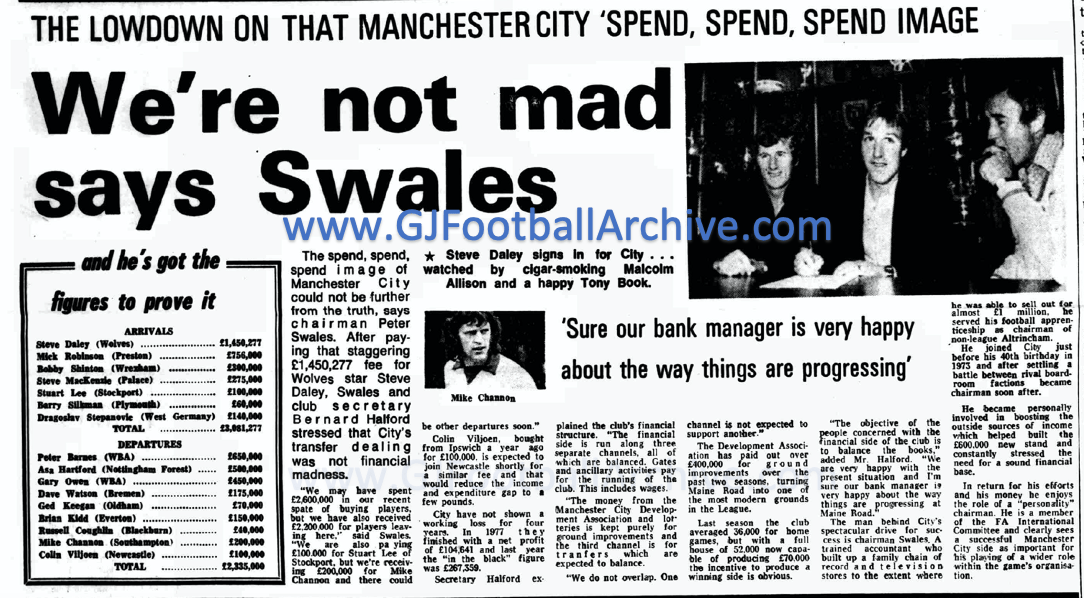
Well, it seems the norm today to talk about the cost of Manchester City’s squad with TV commentators frequently talking about the price of City’s bench. It gets tiring. However, this is not the first time the media talked of City as a ‘spend, spend, spend’ club. Today marks the anniversary of one day in particular when City’s spending caught the media’s attention. That day was on 6 September 1979 when Steve Daley signed for the Blues at a cost of £1,450,277.
City had to defend this spending which – and I know it’s difficult to understand in the modern world of £100m+ footballers – absolutely stunned football. This transfer was the British record but it was perceived as huge.
Chairman Peter Swales’ defence for the spending was that City was a profitable club (see the article) and this is true. City were a hugely profitable club in the 1970s but that all changed over the coming years with Swales, his supporting directors and managers getting giddy trying to buy success. As we all know it takes more than money to generate success and this period of City’s history is the one that actually created the club’s fall from grace, leading to some to believe in the 2010s & 2020s that the club had ‘no history’ and was not a ‘giant’. All that is balderdash. City were a giant who fell unlucky through poor management by a board of directors who did not plan for long term development.
Anyway, lots to say on this but read the article here from 1979 and hopefully that will show the position of strength the club was in (but soon messed up!).
While you’re here why not listen to one of my interviews with Malcolm Allison. You can hear a taster here:
On this day (4 September) in 1981 Manchester City signed Trevor Francis from Nottingham Forest. The transfer meant that the Blues were the first English side to sign three separate £1m or £1m+ players. Peter Swales often boasted of this point (and did so in an interview I did with him years later). The earlier £1m/£1m+ men were Steve Daley and Kevin Reeves.
I’ve interviewed John Bond, Trevor Francis and Peter Swales specifically about this transfer over the years. Subscribers can listen to my Bond interview (see below for details) and a written version of my Trevor Francis interview is available too here (this is free to read):
Roberto Mancini has left his role as Italy’s men’s football manager. Hopefully, he’ll be back in club management soon and maybe in the Premier League too. His contribution to Manchester City’s history is huge and so I think it’s worth reposting this audio special I did a couple of years ago. It’s a special audio recording talking about the years building up to the 2011 FA Cup success brought to City by Mancini. It includes some audio I did with him back in 2011 too. Enjoy this reminder of a time when Mancini helped transform City’s fortunes.
Restored 2011: The All-Manchester FA Cup Semi Final is a special 1 hour audio recording looks at the game and the years between the 1976 League Cup success and the FA Cup glory of 2011. The 2011 semi-final was a crucial step in City’s journey since the 2008 takeover and I felt it was vital to do a special marking this.
So what’s in this special recording? Well, I’ve included exclusive material from interviews and recordings I’ve done over the years with Garry Cook, Brian Marwood, Roberto Mancini, Peter Barnes and Peter Swales. Why Swales? Well, have a listen and you’ll hear why. Basically though I’m trying to set the tone for why the 2011 FA Cup semi final victory and overcoming Manchester United was so significant.
On Mancini… I include a few words from him recorded in 2011 and at one point he talks about the view that was then being expressed that City were ‘trying’ to buy success (now they say City ‘have’ bought success!). His words are a reminder that City have been having that particular criticism thrown at them for over a decade! Oh well, I wonder how long those criticisms were laid at other clubs who had seen major investment which propelled them forward?
Anyway, get yourself a brew and be prepared to be transported back in time. Here’s the recording:
If you enjoy the recording then please let me know, comment or subscribe to the site. I’ve produced videos/talks like this highlighting key points in Manchester City’s footballing history which subscribers can watch.
Subscribe to get access – Annual
Read more of this content when you subscribe today. It costs £20 a year to subscribe (it works out £1.67 a month) or £3 if you’d like to sign up a month at a time. Annual subscribers get full access for as long as you subscribe (you can always try it for a month). It’s worth bearing in mind that the 2010 Manchester A Football History cost £24.95 and all subscribers will be able to access all of that for as long as they are a subscriber (plus all the other stuff of course).
It costs £3 a month to subscribe a month at a time. Why not give it a try! Monthly subscribers get access to everything posted since 1 October 2022 for as long as you subscribe.
If you enjoy all the free material on my website and would like to support my research and keep this website going (but don’t want to subscribe) then why not make a one-time donation (or buy me a coffee). All support for my research is valued and welcome. It allows me to keep some free material available for all. Thanks.
For post 86 of my Maine Rd 100 a photo of Tony Book, Peter Swales and Kaz Deyna. They were photographed at Deyna’s signing in the Maine Rd boardroom. Swales was the City chairman for what became a quarter of Maine Road’s existence, but who were the other chairmen? For the benefit of subscribers to my website I decided to compile for the first time ever a full list of Manchester City’s chairmen since the club’s earliest known game in 1880 through to today. Here goes:
Subscribe to get access
If you would like to read this and all the in-depth articles on this site (including the entire Manchester A Football History book and the audio interview with John Bond) then please subscribe. It works out about £1.67 a month if you take out an annual subscription (£20 per year) or £3 a month if you’d like to sign up for a month at a time. Annual subscribers get full access to the 1000+ articles posted so far and the hundreds scheduled to be posted in the coming weeks.
If you would like to read this and all the in-depth articles on this site (including the entire Manchester A Football History book) then please subscribe. Monthly subscription costs £3 a month if you’d like to sign up for a month at a time. Monthly subscribers get full access to everything posted since 1 October 2022 and the hundreds scheduled to be posted in the coming weeks.
Post 79 of my Maine Rd 100 countdown is this image of fans demonstrating against chairman Peter Swales and his supporting board of directors.
Those were the days! This image was from 1983 but protests began in 1979 and continued until 1993-94. Here’s a photo of John Bond stood in front of the Main Entrance in 1983. The ‘cage’ protecting the entrance would often get locked to prevent fans forcing their way in during demonstrations.
John Bond, 1983
Here’s a 1995 image of Maine Road showing the forecourt in front of the Main Stand where most demonstrations occurred:
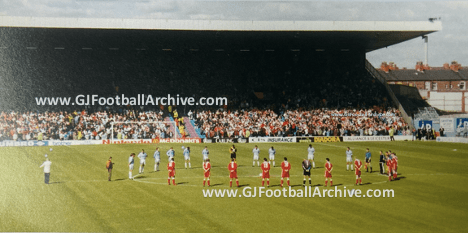
The 54th post in my series counting down to the centenary of Maine Road’s opening game is a simple reminder of City fans and players paying their respects. The main image is from the game with Liverpool at the end of the 1995-96 season. That day City fans and the players paid tribute to former chairman Peter Swales. We all knew it would be respected even though many fans had not forgiven Swales for how he and his supporting directros had transformed the club from a major, profitable European trophy winning club into one that was struggling financially and out of touch with its traditional rivals.
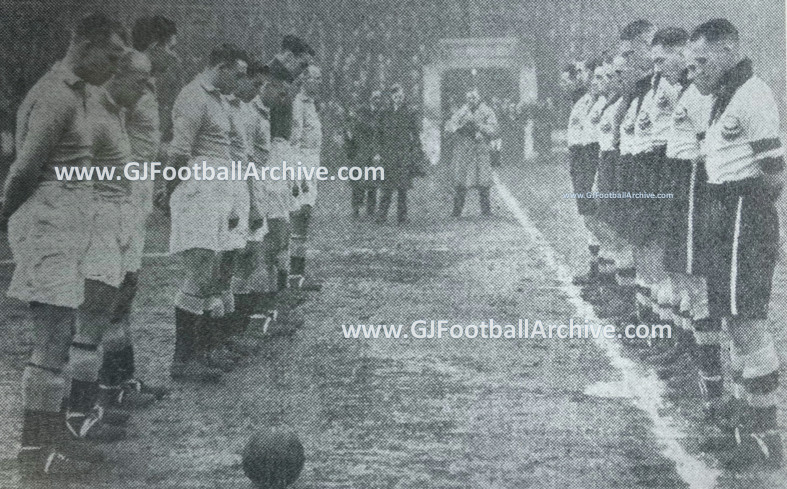
There have been many minute’s silences, or two minutes in many cases going back, at Maine Road. This image is from the two minutes silence for King George V in January 1936. That day City faced Luton. Note: back then we did not cancel games the weekend after a monarch’s death.
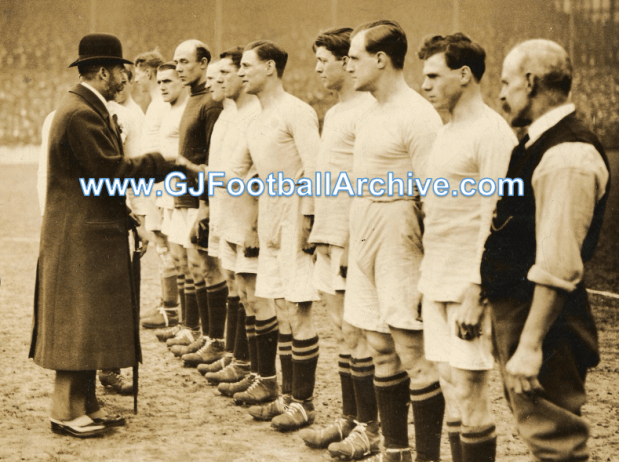
Here are two photos of King George V in happier times when he visited Hyde Road in 1920:
King George V at Hyde Road in 1920 The King with the Mayor in Hyde Road’s ‘Royal Box’. Notice Lawrence Furniss stood, behind the King. Furniss was a major figure from the 1880s to the 1940s at City.
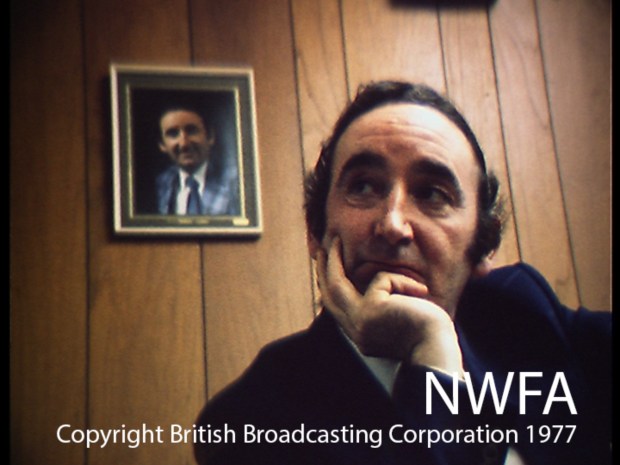
Here’s an image from a film that Will McTaggart and I showed during our Boys In Blue film show. This was from a film profile of the Manchester City chairman Peter Swales.
You can use this 1971 image to work out where the images of fans/players paying their respects were taken. The colour image of City v LFC was taken from the new Platt Lane Stand which was built where numbers 4 & 5 are. I was sat in the stand that day, looking towards the North Stand (10). The King George V silence sees the players lined up in front of the players tunnel (1) with the camera on the pitch looking towards that tunnel.
Maine Road aerial 1971 from Farewell To Maine Road
If you’d like to read more on the history of Maine Road, take a look at Farewell To Maine Road, which can be downloaded from this page:
If you enjoy all the free material on my website and would like to support my research and keep this website going (but don’t want to subscribe) then why not make a one-time donation (or buy me a coffee). All support for my research is valued and welcome. It allows me to keep some free material available for all. Thanks.
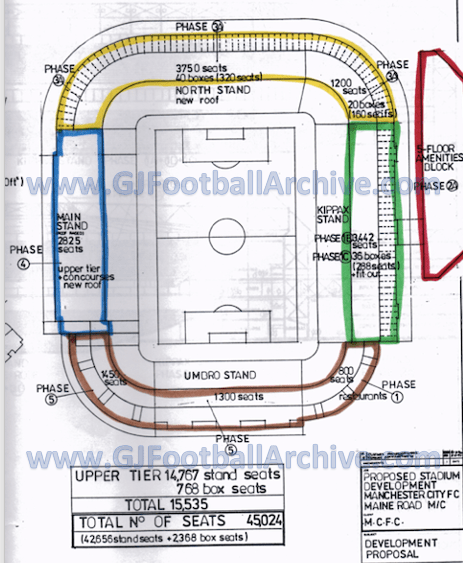
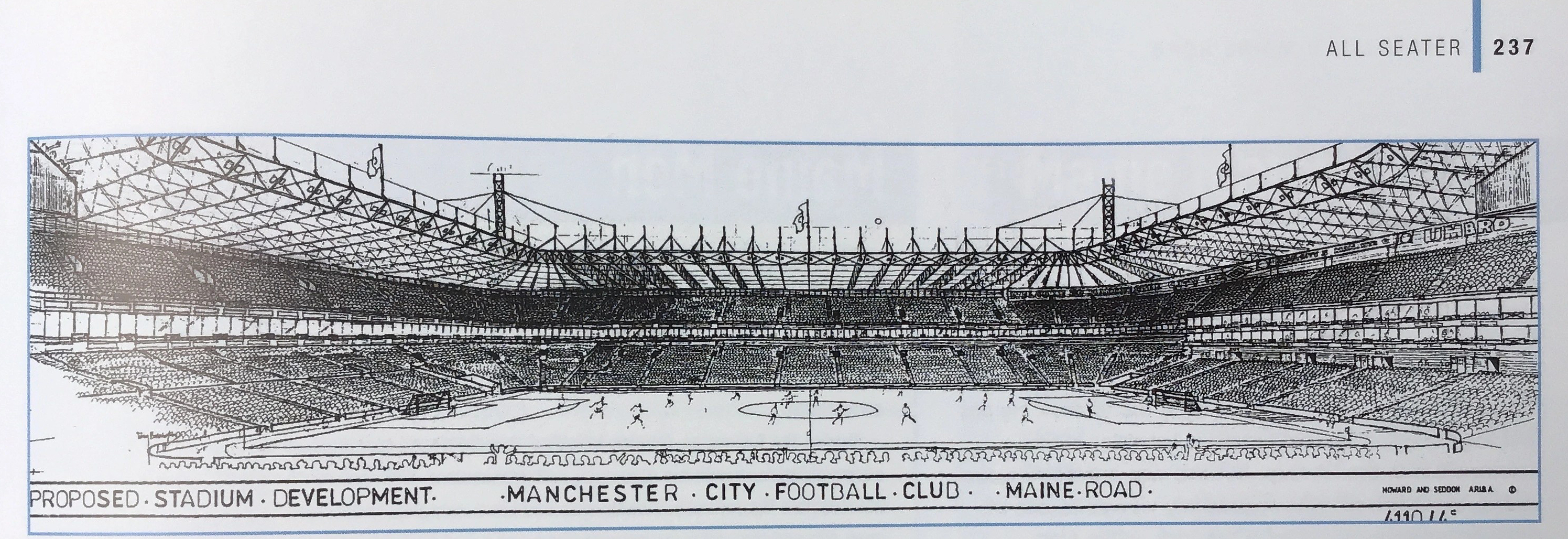
For day 49 of my posts counting down to the centenary of Maine Road’s opening game I’ve posted this plan of what might have been. These were developed in January 1994 shortly after Francis Lee became chairman.
The Kippax needed to be replaced and the plans by former chairman Peter Swales and his supporting directors had been to bolt plastic seats on to the lower part of the original Kippax terracing with a reprofiled second tier behind. Lee ripped up those plans and within days had created a plan which would see the entire ground extended, not simply the building of a new Kippax.
The new Kippax was the first phase of that development but Manchester’s bids for the Olympics changed thinking. Couple that with relegation in 1996 and the wholesale redevelopment of Maine Road was postponed and then dropped completely.
Lee’s plans would have seen the new Kippax followed by a phased development of each of the other three stands. I haven’t got chance to work through every step here but these images might give an indication of how it would have progressed.
1990s Maine Rd redevelopment plans as seen in Farewell To Maine Road
Here’s an aerial photo of the ground in 1995 with the Kippax nearing completion:
If you’d like to read more on the history of Maine Road, take a look at Farewell To Maine Road, which can be downloaded from this page:
If you enjoy all the free material on my website and would like to support my research and keep this website going (but don’t want to subscribe) then why not make a one-time donation (or buy me a coffee). All support for my research is valued and welcome. It allows me to keep some free material available for all. Thanks.
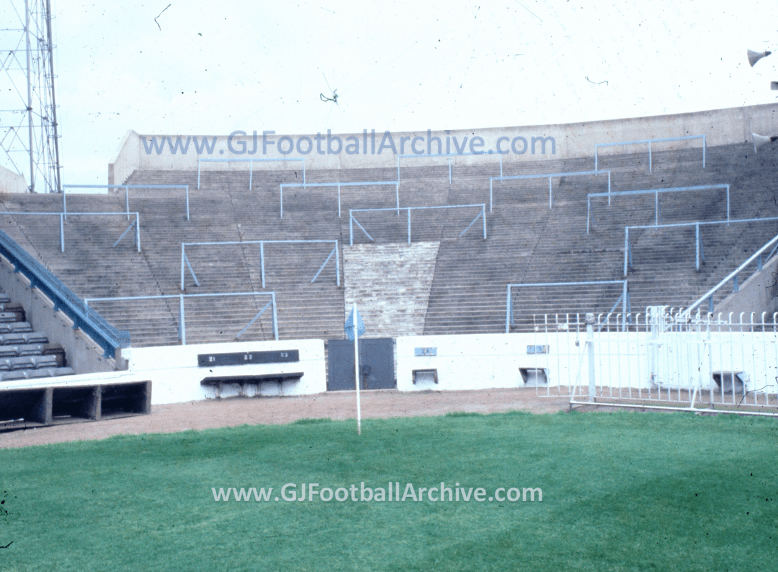
It’s day 37 of my posts counting down to the centenary of Maine Road’s opening game and today’s feature is – don’t get too excited – on this corner! I’ve said before that a photograph can say so much if you look closely at it and learn how to ‘read’ images like this. This is true for this simple photo of the corner between the North Stand (left) and Kippax (right). So what does this picture tell us? Well….
This was built as part of the North Stand development back in 1971 but it remained part of the Kippax. It was never roofed – meaning that this corner and the one on the other side of the Kippax were the only areas of Maine Road never to have a roof over them. If you’re counting the Main Stand had 3 roofs/roof developments during its life; the Platt Lane had 2; the North Stand one, and the Kippax two.
This corner was always accessed via Kippax turnstiles and it was always within the Kippax boundary walls. When the North Stand was built the exterior wall behind the stand was removed and turnstiles built into the stand but this corner never had any of that.
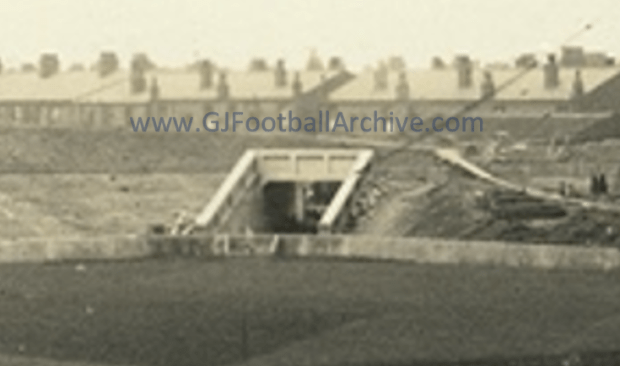
I’m not certain why the original corner terracing was ever demolished. Originally this corner had a large tunnel (like those in the other corners) and maybe they demolished that and built the new terracing because they felt it would increase capacity, but the corner is actually a little smaller than the one it replaced.
The rake of the steps is steeper than the rest of the Kippax and is the same as that in the North Stand. This suggests that there may have been plans to carry the North Stand around the corner. Former chairman Eric Alexander, who was primarily responsible for the new North Stand, had a vision of rebuilding the Kippax next but the arrival of Peter Swales as chairman killed that off. Maybe Eric was thinking ahead?
Strangely, there’s a concrete wedge in the middle which looks like newer concrete, roughly where the original tunnel would have been (though somewhat narrower).
Notice the loudspeaker (top right) pointing to this corner from the Kippax to ensure those standing here could hear the tannoy system. They used to test it in an empty stadium and never understood why fans couldn’t hear it in the Kippax on match day!
The floodlit pylon can be seen at the back, left. Also the blue fence on the left trying to stop fans climbing in to the North Stand – I do remember fans sneaking in occasionally.
There’s also the first pitch side fence on the right. This was positioned in front of the Kippax to stop fans getting on the pitch but all they needed to do was climb into this corner and go through the gate in the wall!
The white wall contains a gate where the old police/first aid dug outs used to be (see photo below of the same corner in the early 1960s) and the small seats built into the wall that the police and first aid people used to sit on at the time this photo was taken.
There’s also the corner flag visible.
The following is the Platt Lane/Main Stand corner when first built in 1923. It gives an impression of how the North Stand/Kippax corner would’ve looked at that time too.
1923 Platt Lane/Main Stand corner tunnel
The North Stand/Kippax corner was demolished in 1994 and later the ‘Gene Kelly’ temporary stand was located there.
For those unfamiliar with Maine Road this photo may help locate the terraced corner between the North Stand and Kippax. It’s number 9 on this image and you can see the Kippax wall behind it. Note the wall behind the North Stand has yet to be removed from this image, taken in 1971.
Maine Road aerial 1971 from Farewell To Maine Road
If you’d like to read more on the history of Maine Road, take a look at Farewell To Maine Road, which can be downloaded from this page:
If you enjoy all the free material on my website and would like to support my research and keep this website going (but don’t want to subscribe) then why not make a one-time donation (or buy me a coffee). All support for my research is valued and welcome. It allows me to keep some free material available for all. Thanks.
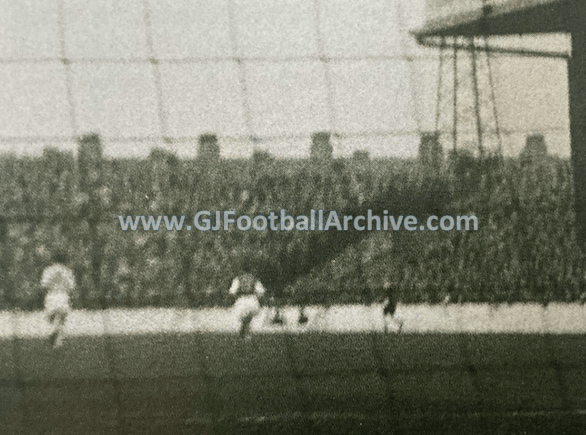
It’s day 23 of my posts counting down to the centenary of Maine Road’s opening game and today’s feature is on the building of the North Stand. As Manchester City are about to appear in the 2023 Champions League final I thought I’d post images from a much earlier European game. This image of Neil Young comes from the 1971 ECWC semi-final v Chelsea. Notice Young is wearing City’s away colours. People often assume that City rarely wore away colours at Maine Road, but the truth is somewhat different.
Often when there was a clash of colours in a cup game City would wear their away strip. Games in the 1920s right through to 1970s saw the Blues don maroon, red/black and even scarlet at times at Maine Road.
The main image shows that North Stand being constructed in the background. You can see that the roof is not yet complete but that the terracing is in use for this ECWC semi final. The terracing was new concrete and the stand housed bars underneath. It was a terraced stand until summer 1972 when the decision was taken to make it a seated stand.
City chairman Eric Alexander was the main man responsible for the stand’s development and he was a passionate believer in giving fans the best facilities possible. He also had ambitious plans to redevelop the Kippax, however Peter Swales became the chairman soon after and he put Ian Niven in charge of ground developments. From then on, until 1993, the only major development was the erection of a new Main Stand roof in 1982. In the 1990s the club was forced to build – or condemn – the Platt Lane Stand.
Maine Road was a major ground for most of its existence and, even with little investment during from 1973 onwards, it was still selected as a cup semi-final venue. BUT I often wonder how spectacular the stadium would have been had Eric Alexander been left in charge of stadium developments. Instead of penny-pinching and devaluing the ground maybe it would have eclipsed Old Trafford as it had for the first 40 years of its existence?
People always focus on Swales as the cause of all the problems and it is true that he was the chairman and the man ultimately responsible, but he was not the major shareholder. In fact he often talked of how he only had a small number of shares until 1983 (when he made a major purchase following City’s relegation he often said). He was supported by directors who often held many more shares than he did. They could’ve ousted him, but instead supported him. Each director had responsibilities for different elements of the club – Swales often talked of this and the match programme frequently told us who was responsible and what they did – yet once Swales did stand down and Franny Lee took over some of those who had worked with Swales swapped sides and retained their positions. I know, from my own interviews with Swales, Alexander and others, that Swales felt let down and betrayed. Every issue was suddenly made to be ‘his’ fault. He accepted this, saying that he was the main man, but others needed to hold their hands up for the lack of investment in Maine Road etc.
1971 ECWC v Chelsea. Francis Lee. Photo by Alan Jubb
The above image shows Francis Lee at this same game and to the right you can see more of the North Stand under construction.
For those unfamiliar with Maine Road this photo may help. The North Stand can be seen with a completed roof on this image (number 10). This was later in 1971 and the stand is still a terraced one.
Maine Road aerial 1971 from Farewell To Maine Road
If you’d like to read more on the history of Maine Road, take a look at Farewell To Maine Road, which can be downloaded from this page:
If you enjoy all the free material on my website and would like to support my research and keep this website going (but don’t want to subscribe) then why not make a one-time donation (or buy me a coffee). All support for my research is valued and welcome. It allows me to keep some free material available for all. Thanks.









 Gary James' Football Archive