On this day in 1968 Manchester City wore Red & Black stripes for the first time. Malcolm Allison had suggested adopting AC Milan’s colours and City first wore them for their meeting at Everton on October 5 1968. Sadly, City were defeated 2-0 at Goodison and the colour change wasn’t popular with fans at first. However, due to a colour clash with Leicester, the new colours were worn in the 1969 FA Cup final. The club won that trophy and the kit soon entered City folklore as an important kit.
City chose to wear the new style for all the successful major finals that followed during Joe Mercer & Malcolm Allison’s time, including the club’s first European trophy in 1970. At one point Allison suggested making red and black the first choice kit.
There were however plenty of complaints about City adopting the colours. Take a look at an earlier post I made on those complaints here:
Identity is important to any aspiring football team and in 1884 the fledgling Gorton Association Football Club chose to wear a distinctive kit consisting of black shirts with a white cross pattée emblazoned across the left breast. The smart new kit set the tone for what the players hoped would be a successful period in the club’s development and from the moment it was first worn in 1884 the club progressed and grew, becoming Ardwick in 1887, before re-launching as Manchester City in 1894.
Subscribe to get access
Read more of this content when you subscribe today. If you’d like to support my research then why not subscribe? Every subscription directly helps support my research and provides annual subscribers with access to everything posted on this site, including the entire Manchester A Football History and From Maine Men To Banana Citizens books, plus interviews, articles and more. I am not employed by anyone and all my research is self funded or comes from subscriptions to this site. You can subscribe at either £20 per year or at £3 per month (cancel any time).
If you enjoy all the free material on my website and would like to support my research and keep this website going (but don’t want to subscribe) then why not make a one-time donation (or buy me a coffee). All support for my research is valued and welcome. It allows me to keep some free material available for all. Thanks.
On this day (17 August) in 1991 Manchester City’s season started with a 1-0 victory at Coventry. City wore their traditional away colours of maroon too! You can see Niall Quinn’s headed goal and the celebrations by City fans here: https://www.youtube.com/watch?v=5haQrZKx9uY
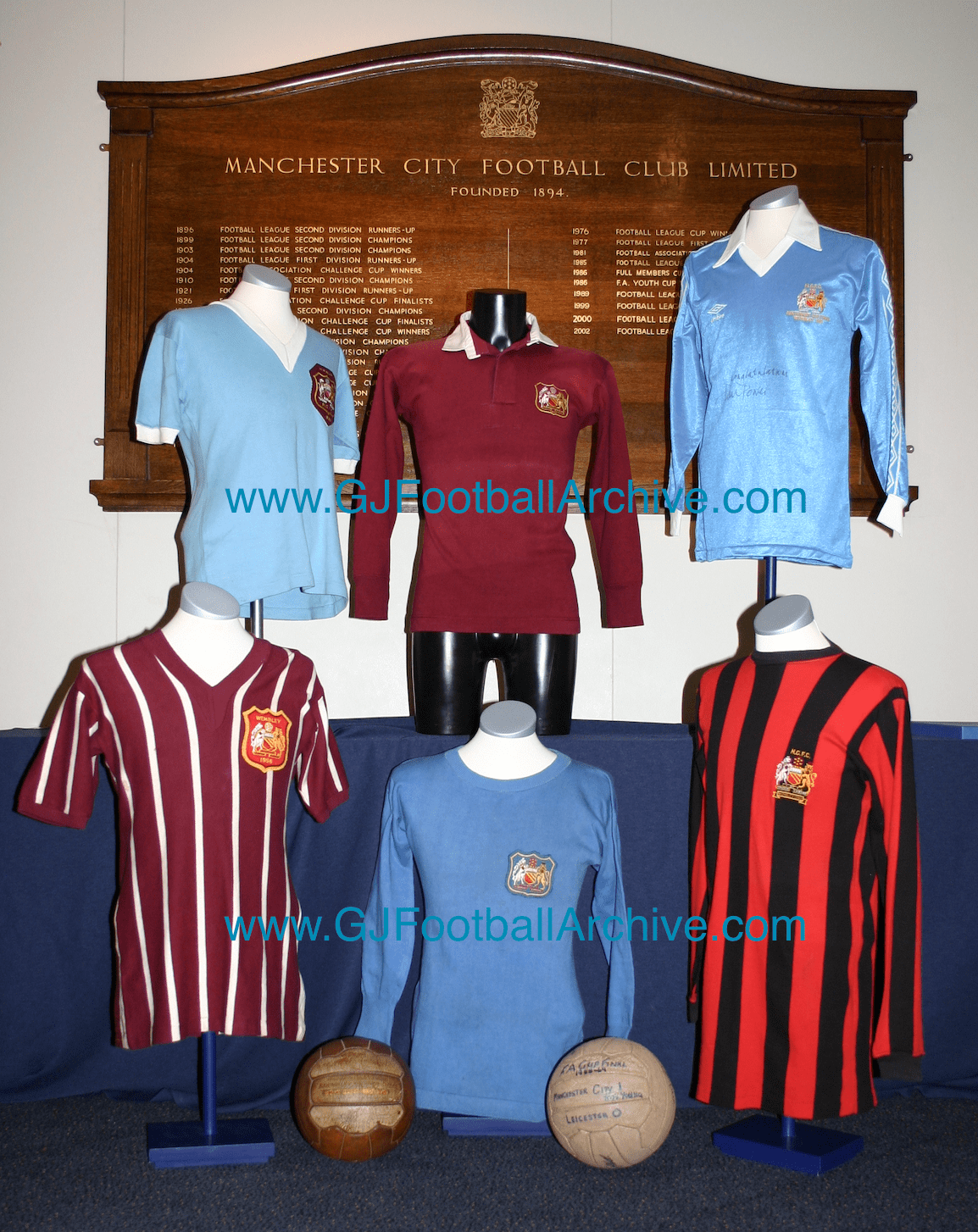
Yesterday I posted images of early Manchester City FA Cup final shirts and asked ‘which shirts are from which finals’ with a bonus question of ‘can anyone work out the players’ who wore these (no searching on t’internet for matching player numbers please!).’ So here are the answers and further details on these players/shirts.
The shirts and players who wore them are:
4, pale blue, top right – Ken Barnes 1955 FA Cup Final
Unnumbered maroon, top middle – Ernie Toseland 1934 FA Cup Final
5, shiny blue, top right – Paul Power 1981 FA Cup Final
4, maroon & white, bottom left – Ken Barnes 1956 FA Cup Final
Cornflower blue, bottom middle – Sam Cookson 1926 FA Cup Final
8, red/black, bottom right – Colin Bell 1969 FA Cup Final
Notice the two balls on the photographs? They are the 1956 FAC Final ball and the 1969 FAC final ball. All shirts and balls were on loan to the Manchester City Experience (the original club museum set up in 2003) as part of our exhibition.
I’ve got further images and more information on these shirts below but first it’s worth talking about the only City FA Cup final shirts missing when we did this exhibition in the mid 2000s (obviously City have reached multiple FA Cup finals since that time) being 1904 and 1933. We simply could not track down shirts from either final, though we kept getting close to borrowing a scarlet shirt from the 1933 final. We put the shirts together and I took these photos of them.
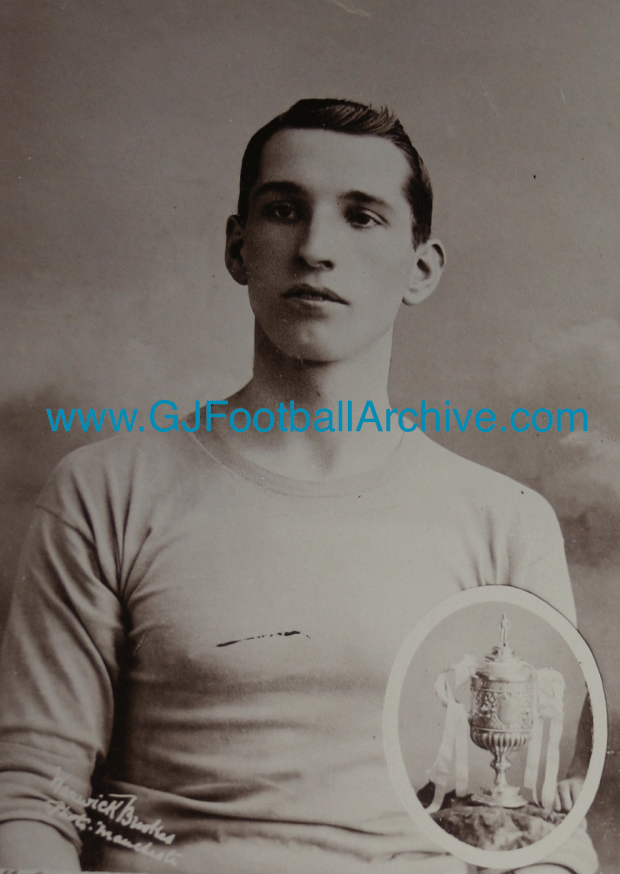
Here’s a contemporary photo of the 1904 FA Cup final shirt. The player here is James McMahon.
James McMahon wearing his 1904 FA Cup final shirt
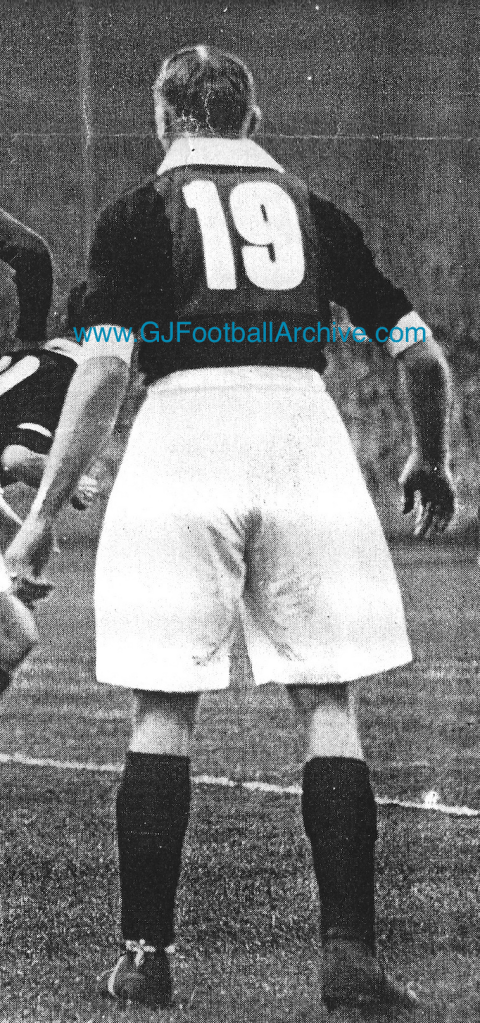
The 1933 FA Cup final was the first final to feature numbered shirts (Everton wore 1-11, City 12-22) and City’s shirts were usually described as being scarlet. City had word what they called ‘Lucky Scarlet’ a few times in the previous decade, though it never quite seemed that lucky! Here’s a contemporary image of the 1933 FA Cup final shirt back, worn by Matt Busby, showing the numbering used.
Matt Busby in the 1933 FA Cup Final
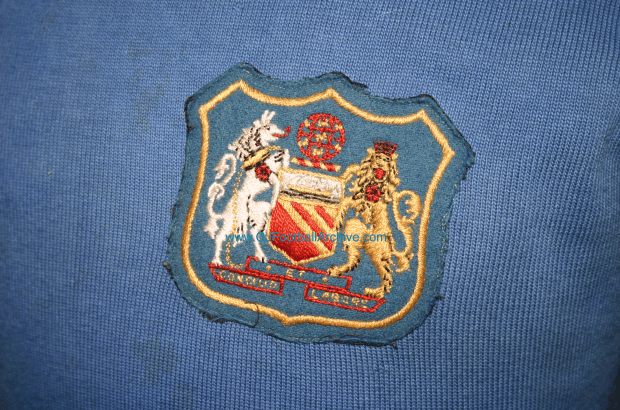
The oldest shirt we had on display was Sam Cookson’s 1926 FA Cup final shirt and here’s a close up of the Manchester coat of arms worn on that shirt. This was the first time City had worn the coat of arms in a final (City didn’t wear any emblem in 1904):
Notice the shade of blue too. It’s a darker blue than City were known to wear and was known as cornflower blue at the time. It was a special colour for the final against Bolton. Someone at City must have remembered (or maybe it was the FA) that there had been some comments in 1904 that City’s blue and Bolton’s white were too close in colour. I’ve always found that a bit odd but I guess City didn’t want to take any chances when the two sides met again in 1926.
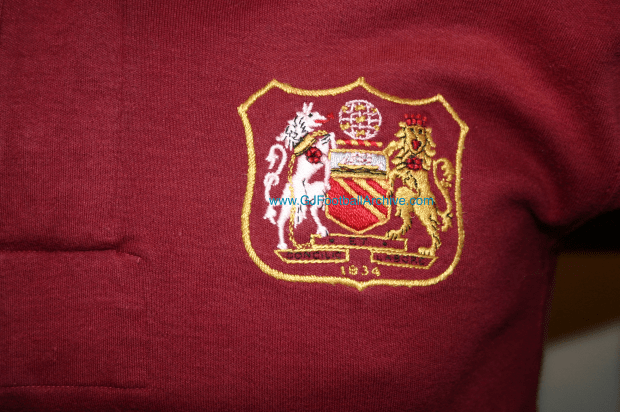
The 1933 final was scarlet as mentioned earlier and the players wore numbers for the first time but in 1934 numbers were not worn. Personally I’d have thought they’d keep up the idea but maybe someone somewhere moaned about these new fangled ideas like wearing numbers in a similar way to how some moaned when squad numbers were introduced and player names were added. Here’s a close up of Ernie Toseland’s 1934 shirt badge. The shirt was described as maroon and the shorts were revolutionary…. We had an expert from Umbro come to visit and he looked at the shorts (we had Toseland’s full kit on display) and was delighted to see an exclusive design. They contained a diamond shaped piece of fabric stitched in and he told me that this was a pair of Umbro’s ‘crotch resistant’ shorts. He explained more, but whether they gave benefit is open to question.
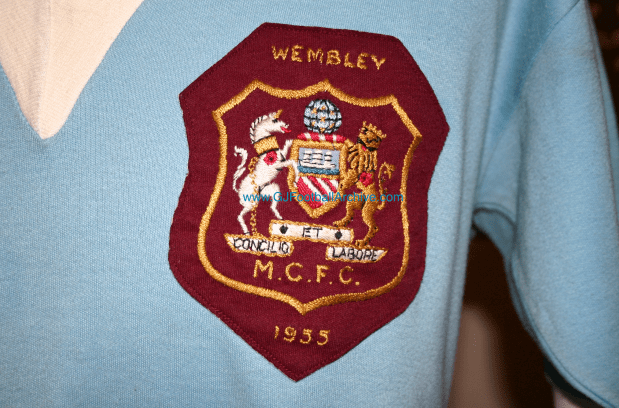
Here’s Ken Barnes’ 1955 emblem. A more traditional blue but it’s interesting that the away colour of maroon makes its way on to the emblem. I wonder if they thought City would wear maroon at some point when the sew on patch was created?
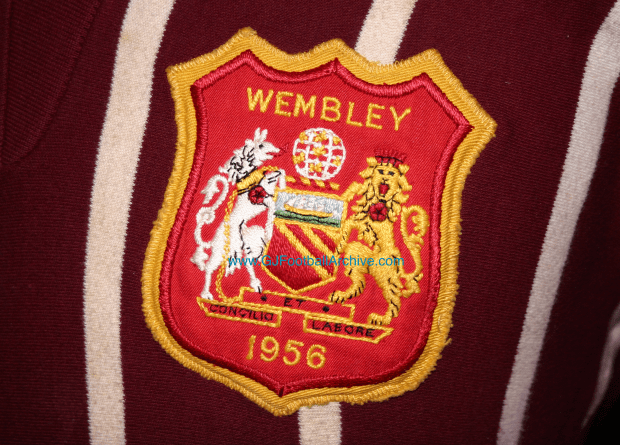
In 1956 the emblem colour was red with yellow edging (to match the numbers on the back). People often try to suggest yellow is not a traditional City colour but it has been used on plenty of kits, including the numbering in 1956 and as the main colour of the away shirt in 1959-60.
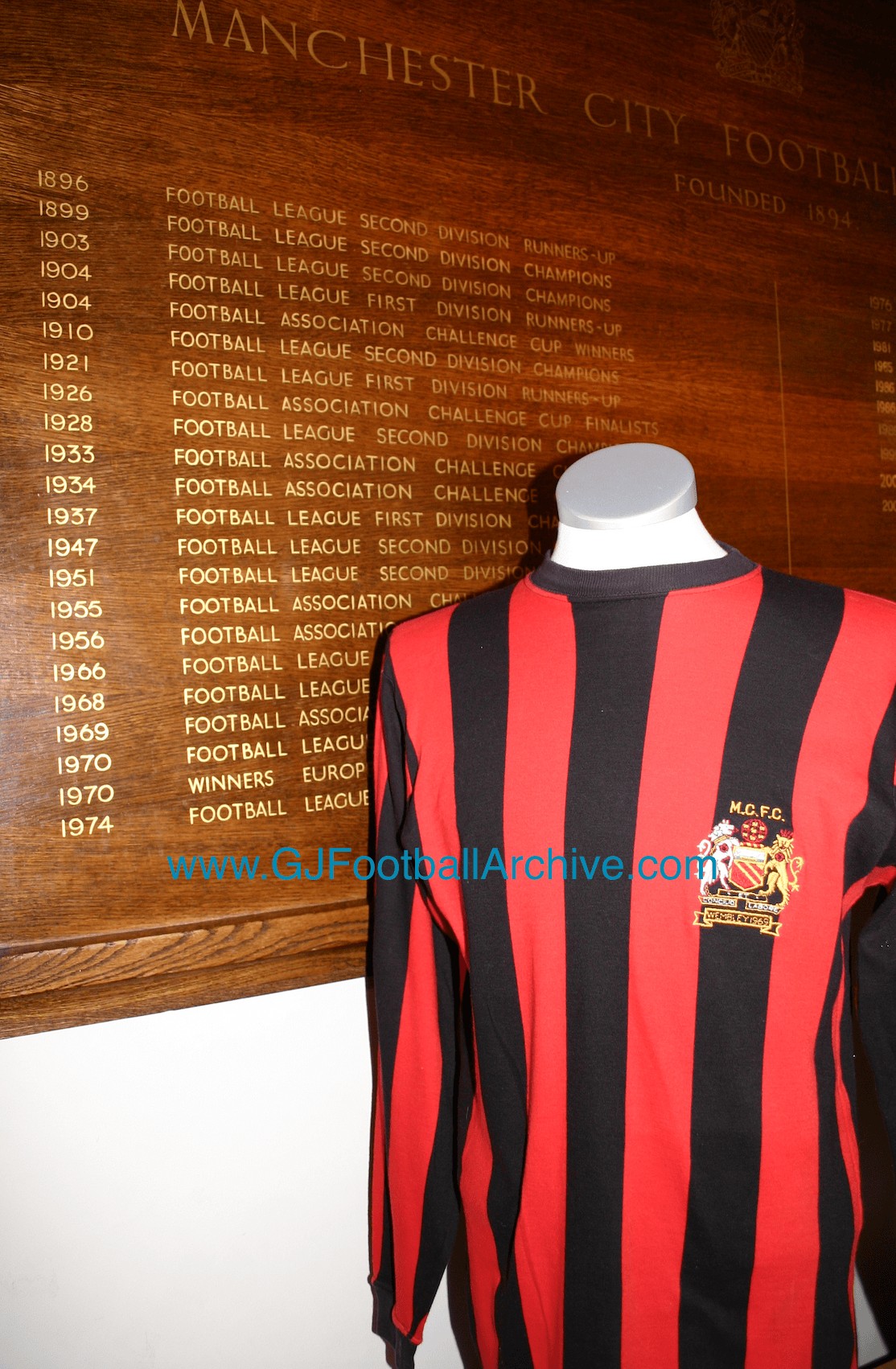
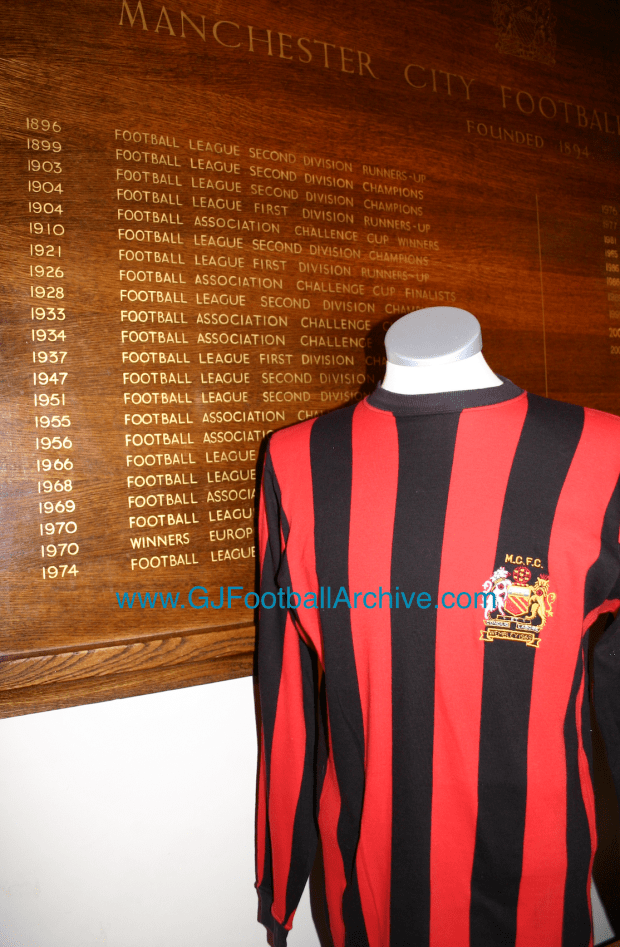
Here’s Colin Bell’s 1969 FA Cup final shirt in front of the old honours board. I believe this honours board is still held in City’s archive somewhere. Maybe we should dig it out and update it. I may post another feature on the board itself another day – people think it’s as old as Maine Road but Bernard Halford had it made in the mid 1970s, just after the League Cup win if my memory is working today!
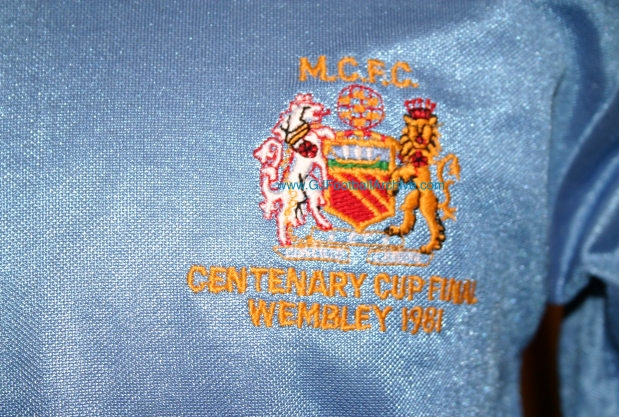
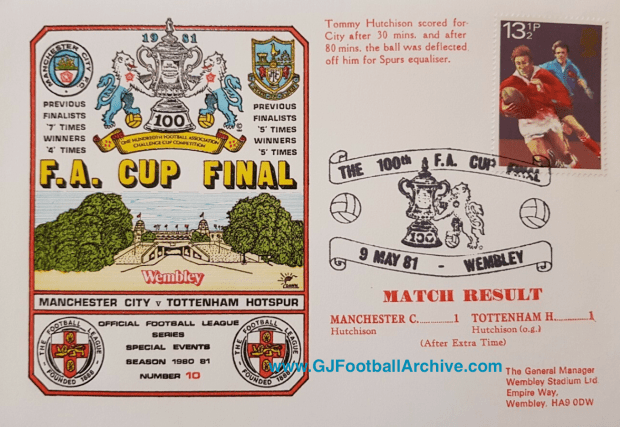
Here’s the special emblem to mark the 100th FA Cup Final. People get confused about this cup final with some saying it was the Centenary Cup Final (as the emblem does!) or the 100th FA Cup Final. The FA were quite clear at the time – the 1972 FA Cup Final was the Centenary Cup Final (marking 100 years since the FA Cup was established) and 1981 was the 100th FA Cup Final. So City or Umbro got this wrong and if you look at the First Day Cover (below) or any of the match programmes, souvenirs etc. you’ll see they created a special 100th cup final emblem.
I’ve done a lot of research on City’s kits over the decades. There’s lots of comments on them in my books, especially Manchester The Greatest City, Farewell To Maine Road and my City Folklore book. There are also other features across this website. Some only for subscribers and some for all. Why not subscribe (see below) and read all the content on this site? You can subscribe for a month at £3 per month or sign up for a year at £20. Why not try it for a month?
If you enjoy all the free material on my website and would like to support my research and keep this website going (but don’t want to subscribe) then why not make a one-time donation (or buy me a coffee). All support for my research is valued and welcome. It allows me to keep some free material available for all. Thanks.
In the mid 2000s we set up a FA Cup final display as part of a special exhibition at the Manchester City Experience (the original club museum set up in 2003). We managed to borrow shirts from several star players and their families with the only City FA Cup finals missing being 1904 and 1933. We simply could not track down shirts from either final, though we kept getting close to borrowing a scarlet shirt from the 1933 final.
We put the shirts together and I took these photos of them. So which shirts are from which finals and can anyone work out the players’ who wore these (no searching on t’internet for matching player numbers please!).
I’ll post the answer tomorrow along with a lot more detail about these shirts and the other missing kits.
If you enjoy all the free material on my website and would like to support my research and keep this website going (but don’t want to subscribe) then why not make a one-time donation (or buy me a coffee). All support for my research is valued and welcome. It allows me to keep some free material available for all. Thanks.
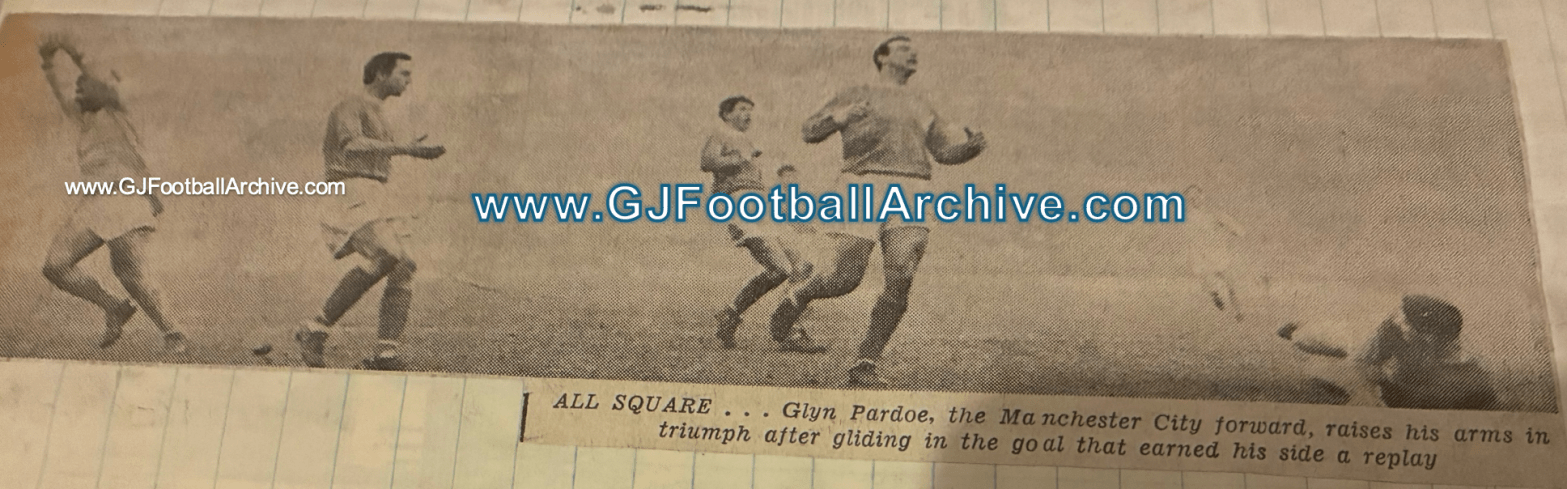
On this day (22 January) in 1966 Manchester City travelled to Blackpool for a FA Cup tie. The game ended 1-1 between the Second Division promotion hopefuls and the First Division side. In this photo Glyn Pardoe has scored City’s goal. Subscribers can find out more about this game below, plus read several contemporary match reports:
Subscribe to get access
Read more of this content when you subscribe today. It costs £3 per month (cancel any time) or you can sign up for a year at the discounted rate of £20 per year. Subscribers get access to everything posted to this site, including PDFs of Manchester A Football History and my first MCFC book too. Why not give it a go for a month and see what you think?
On this day (15 January) in 1966 Manchester City drew 0-0 with Preston at Maine Road but look at the kit City are wearing. This photo shows George Heslop (5) and Alan Oakes (6) in unusual colours for Maine Road. Subscribers can find out more about this kit and day below, plus read several contemporary match reports:
Subscribe to get access
Read more of this content when you subscribe today. It costs £3 per month (cancel any time) or you can sign up for a year at the discounted rate of £20 per year. Subscribers get access to everything posted to this site, including PDFs of Manchester A Football History and my first MCFC book too. Why not give it a go for a month and see what you think?
Back in 1938 Manchester City introduced a letters page in their match programme. The idea was for supporters to write in with suggestions they would like to see the club implement. It took some time before fans started writing in and here was the first letter the club published. It talked of how the club colours of pale blue and white didn’t offer much of a contrast and how the author preferred to see white and black or the 1934 cup final colours of maroon and white.
Over the years there were lots of suggestions of changing City’s traditional colours. In the late 1960s Malcolm Allison wanted to make the club’s red and black away colours their home colours. Imagine anyone making such a suggestion today!
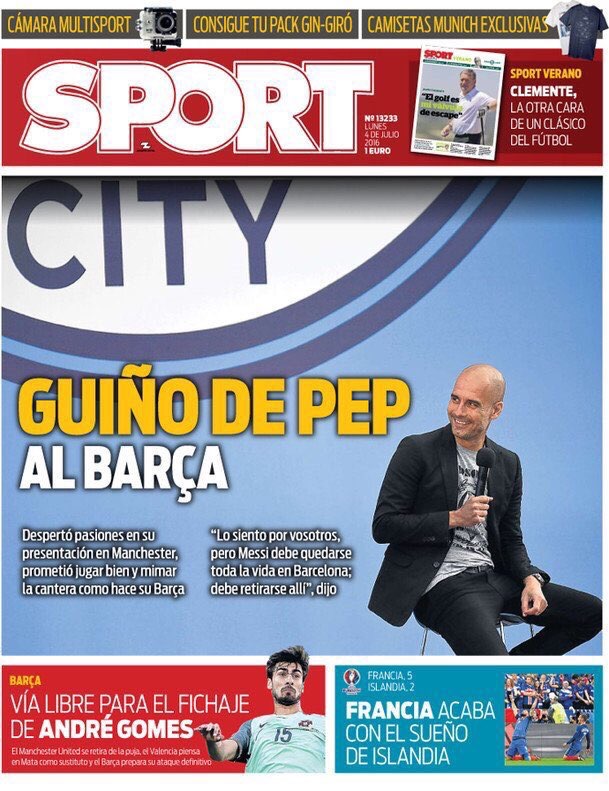
On this day (3 July) in 2016 the new Manchester City badge was officially launched at the Cityzens Weekend. It was also the formal official welcome for new manager Pep Guardiola. There was a surreal moment for me when I was asked to go on stage to be interviewed about the new badge.
I had been consulted by the club on the history of all of City’s badges, emblems and similar for about a year or so, and had performed a series of talks to fans throughout the consultation period.
This was the most detailed badge consultation had ever performed with fans at any club – sadly too many clubs impose a badge without listening to fans. Doing the talks as part of the consultation helped bring out the stories of each emblem and why it was significant – or not! Understanding why, for example, the red rose was introduced in 1972 following the takeover of the club by Joe Smith & Co. or how the 3 emblazoned lines had always been a part of City’s badge (apart from 1972 and the Swales years that followed) helped some determine what elements mattered most to them.
You can find out more about City’s badge history here:
In 2016 I was the warm up act for Pep so it’s a wonder anybody listened. It was a great, positive day for the club and for all of us there. The years since Pep’s arrival have been truly outstanding. We all had hope on this day in 2016 but who’d have thought it would have been as great as it has been?
On this day (April 29) in 1933 Manchester City and Everton played in the FA Cup final. It was a difficult day for Manchester’s team, who were defeated 3-0 by a team that contained the legendary Dixie Dean and former City great Tommy Johnson. You can watch highlights here:
These two teams became the first teams to wear numbered shirts in the FA Cup final. To mark this occasion here is an article on the history of numbered shirts…
This 1700 word article is available to subscribers to my website.
Subscribe to get access
Read more of this content when you subscribe today. It costs £20 a year of £3 per month and you then can access everything on the site. Have a search around and see the volume of content on here or try for a month.