From My Collection: 1970 League Cup Final

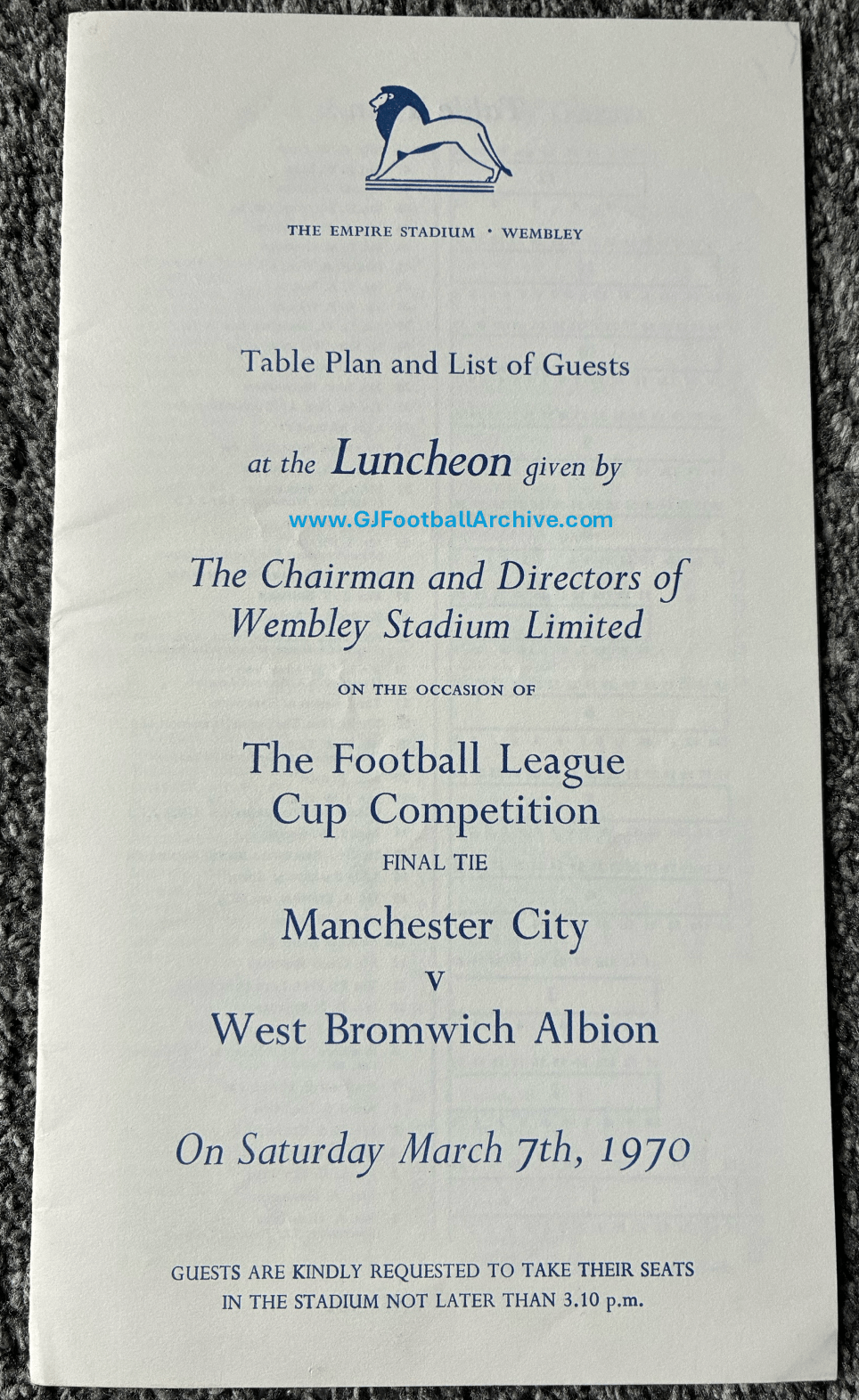
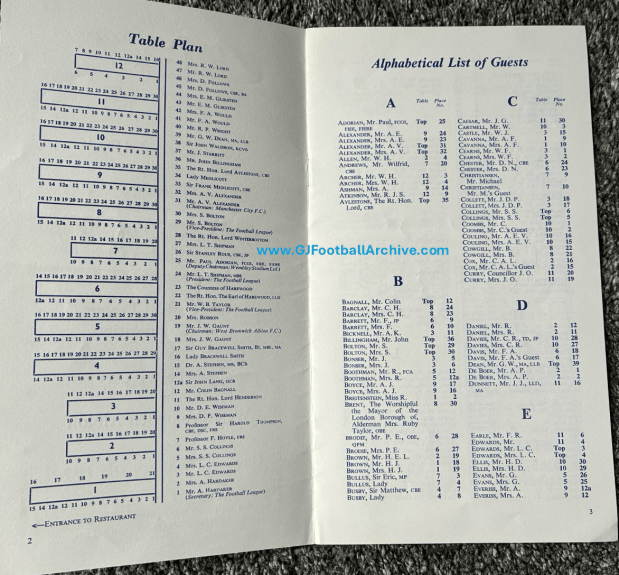
Ever wondered who the official guests were for major games like the League Cup final? Here’s an item from my collection showing the guest lists and tables for the 1970 League Cup final which featured West Bromwich Albion and Manchester City. One of the guests was Manchester United manager and former City player Matt Busby. Here’s the full list:

If you want to know more on the incredible 1960s & 1970s for Manchester City Football Club then why not subscribe and read it all? Have a search through what’s been posted and see what you want to read, watch and remember. The following 5,600 word article on the successes of 1970 is available to subscribers below. Enjoy!

Subscribe to get access – Monthly

Read more of this content when you subscribe today. It costs £3 per month (cancel anytime) to access everything posted since 1 October 2022 or there’s a special annual rate below which gives greater access and works out much cheaper.

Subscribe to get access – Annual

Read more of this content when you subscribe today. It costs £3 per month (above) or £20 a year (here) to access everything posted since the site was created in December 2020. This special rate works out about £1.67 a week and gives access to everything posted, including PDFs of 3 of my books.

If you’d like to know more about subscribing then see:

If you enjoy all the free material on my website and would like to support my research and keep this website going (but don’t want to subscribe) then why not make a one-time donation (or buy me a coffee). All support for my research is valued and welcome. It allows me to keep some free material available for all. Thanks.

Choose an amount

£2.50
£5.00
£7.50

Or enter a custom amount

£

Your contribution is appreciated.

Donate

Albert Alexander (Junior): MCFC Chairman

Back in the late 1960s there was a popular Manchester City chairman whose family had been involved with the club since the very beginning of the club. That was Albert Alexander. Here’s a profile I wrote in 2012 on him. It’s about 900 words long and is free to read. Enjoy!

Albert Alexander was the second generation of the Alexander family to play a prominent role in the development and history of Manchester City.  His father, also Albert, had been involved with the Club from the 1890s and had held various positions including vice-chairman, and even manager for a spell in 1925-26.

Like his father, the younger Albert dedicated his life to the Blues.  Inevitably, he spent most of his boyhood watching the Club develop and, as he grew, he became more involved with behind the scenes work at the Club’s first home Hyde Road.  He was a member of the Ground Committee which performed crucial activities such as stewarding and ground maintenance.

Alexander also managed the Club’s A team and provided support in whatever way necessary to ensure the Blues succeeded.  He was more than happy to work through the ranks and take on any duty necessary.  His son Eric, who was Chairman in the early 1970s, remembers that his father had suffered during the First World War but that didn’t stop him from putting his energies into the Blues:  “He was a very good footballer and cricketer but he was gassed in the Great War and had to give it up.  It affected him throughout his life, although it’s fair to say he recovered enough to fulfil a happy normal life apart from playing of course. 

“He took up golf, but his love for football was such that he started the ‘A’ team at City.  He started it in 1921 and ran it through until 1963.  He enjoyed working with the youngsters and developing them.  He gained an awful lot of satisfaction from that, particularly when players like Matt Busby developed their skills and style as part of the ‘A’ team.”

Ultimately, after many years of loyal service Alexander became a City director.  This came after the Blues became aware that Manchester United were hoping he would join their board.  It is highly likely Alexander would have turned the Reds down, and it was appropriate that he became a director at Maine Road.  It was an honour he deserved for years of dedication to the City cause.

While director he felt the passion all fans feel for the Blues and he also felt the pain and worries during the Club’s struggles in the early Sixties.  He wanted better and, in 1965 as fans demonstrated following City’s lowest attended League game, he came out to face them and talk with them about his hopes and ambitions for the Club.  He apologised for City’s appalling decline.  It says much about his courage and the respect fans had for him that they dispersed.  It is doubtful whether any other director would have been respected in this manner at such a low point.

Understandably, Alexander who was City’s Chairman by this point wanted to see his side successful and later that summer he appointed Joe Mercer as manager.  It was a brave decision as Mercer had been out of work for a year and had suffered a stroke at Aston Villa.  Other names, such as former City hero Peter Doherty and Liverpool manager Bill Shankly, had been expected to be appointed by the media, so this move could easily have been seen negatively.

Alexander guided City through the successful years of the Mercer-Allison period and was probably the first Chairman to be hugely popular with fans.  Everyone seemed to love ‘Little Albert’ as Mercer dubbed him.

Many of City’s achievements during these years were dedicated to Alexander by Mercer, while journalist Bill Fryer commented in 1970:  “He is highly revered in the game and by the public, and I have no doubt good deals have been done for City out of Albert’s friendships because in reality the whole of football is a ‘club’.”

Sadly, despite the Chairman’s popularity, his final years saw him suffer at the hands of the 1970 takeover battle.  Alexander found out about the takeover when he received a knock on his door at breakfast one day.  It was a complete shock to him.

The takeover destroyed much that was good about City at this point, including the Mercer-Allison partnership.  However, it is rarely mentioned how the takeover affected Alexander, the man who had guided City with distinction through some dark days when no one else wanted to know.  He had taken the Club from the lowest point it had experienced since joining the League, to a position of strength with trophies galore.  Those bidding for control wanted the glory, Alexander’s motives were somewhat different – like all true fans he wanted City no matter what. 

Alexander stood down as Chairman and was made Life President – an honour first given to Lawrence Furniss seven decades earlier, proving the significance of this recognition.  Unfortunately, Alexander’s health was deteriorating by this point and he passed away soon after.

Manchester City owes a great deal to the dedication of Albert Alexander and the other members of his family.  The Alexanders helped guide the Blues from the 1890s through to the reign of Peter Swales, and in some ways on via the continuing involvement of Eric Alexander (still a regular attendee until his death in 2019).  Their contribution should never be forgotten.

If you enjoy all the free material on my website and would like to support my research and keep this website going (but don’t want to subscribe) then why not make a one-time donation (or buy me a coffee). All support for my research is valued and welcome. It allows me to keep some free material available for all. Thanks.

Choose an amount

£2.50
£5.00
£7.50

Or enter a custom amount

£

Your contribution is appreciated.

Donate

Subscribe to get access – Annual

Read more of this content when you subscribe today. It costs £20 a year to subscribe (it works out £1.67 a month) or £3 if you’d like to sign up a month at a time. Annual subscribers get full access for as long as you subscribe (you can always try it for a month). It’s worth bearing in mind that the 2010 Manchester A Football History cost £24.95 and all subscribers will be able to access all of that for as long as they are a subscriber (plus all the other stuff of course).

Subscribe to get access – Monthly

It costs £3 a month to subscribe a month at a time. Why not give it a try! Monthly subscribers get access to everything posted since 1 October 2022 for as long as you subscribe.
The 1950s: The 1957-58 Season

The new series on Manchester City in the 1950s continues today with this 2,200 word article on the 1957-58 season. Enjoy!

This is a subscriber article and you can read it by subscribing below.

Subscribe to get access

Read more of this content when you subscribe today. It costs £3 per month or you can subscriber for the discounted annual rate of £20 per year. Each subscriber gets access to everything posted so far, including PDFs of a couple of my books.

Interview – History of Manchester Football

I was recently interviewed for the Christie Scanlon podcast and the video has now been posted. I talk about origins of both City and United, City’s badge consultation, chants and much more. It lasts about one hour and you can watch it on Christie’s channel here:

I enjoyed doing this and Christie’s a good interviewer and host. It looks like Christie’s used an automated captioning software that has made a few typos with names etc. – that’ll be because of my accent – but listen and watch. I’m sure you’ll enjoy it.

The 1970s: 1973-1974 Wembley Return

The series of features/articles covering Manchester City in the 1970s continues with a 1,700 word article on the entire 1973-74 season – a season which included a Wembley final, multiple managerial changes and a controversial Manchester Derby at Old Trafford! You can read this below. This series of articles and features on Manchester City in the 1970s has been running throughout January with indepth articles some days and smaller ‘on this day’ style posts on others. Every day in January will offer something to enjoy.

Subscribers will get access to everything. If you want to know more on this incredible decade for Manchester City Football Club then why not subscribe and read it all? You could even subscribe for a month and see what you think. The following 1,700 word article is on the 1973-74 season and is available to subscribers below. Enjoy!

Subscribe to get access – Monthly

Read more of this content when you subscribe today. It costs £3 per month (cancel anytime) to access everything posted since 1 October 2022 or there’s a special annual rate below which gives greater access and works out much cheaper.

Subscribe to get access – Annual

Read more of this content when you subscribe today. It costs £3 per month (above) or £20 a year (here) to access everything posted since the site was created in December 2020. This special rate works out about £1.67 a week and gives access to everything posted, including PDFs of 3 of my books.

If you’d like to know more about subscribing then see:

If you enjoy all the free material on my website and would like to support my research and keep this website going (but don’t want to subscribe) then why not make a one-time donation (or buy me a coffee). All support for my research is valued and welcome. It allows me to keep some free material available for all. Thanks.

Choose an amount

£2.50
£5.00
£7.50

Or enter a custom amount

£

Your contribution is appreciated.

Donate

The 1970s: 1972-1973 Allison Leaves

The series of features/articles covering Manchester City in the 1970s continues with a 1,700 word article on the entire 1972-73 season – a season of major change which saw one man who didn’t want to be manager told to take the manager’s job or you’ll be leaving yourself! Oh City! You can read this below. This series of articles and features on Manchester City in the 1970s has been running throughout January with indepth articles some days and smaller ‘on this day’ style posts on others. Every day in January will offer something to enjoy.

Subscribers will get access to everything. If you want to know more on this incredible decade for Manchester City Football Club then why not subscribe and read it all? You could even subscribe for a month and see what you think. The following 1,700 word article is on the 1972-73 season and is available to subscribers below. Enjoy!

Subscribe to get access – Monthly

Read more of this content when you subscribe today. It costs £3 per month (cancel anytime) to access everything posted since 1 October 2022 or there’s a special annual rate below which gives greater access and works out much cheaper.

Subscribe to get access – Annual

Read more of this content when you subscribe today. It costs £3 per month (above) or £20 a year (here) to access everything posted since the site was created in December 2020. This special rate works out about £1.67 a week and gives access to everything posted, including PDFs of 3 of my books.

If you’d like to know more about subscribing then see:

If you enjoy all the free material on my website and would like to support my research and keep this website going (but don’t want to subscribe) then why not make a one-time donation (or buy me a coffee). All support for my research is valued and welcome. It allows me to keep some free material available for all. Thanks.

Choose an amount

£2.50
£5.00
£7.50

Or enter a custom amount

£

Your contribution is appreciated.

Donate

The 1970s: 1971-72 Mistreating Mercer

The series of features/articles covering Manchester City in the 1970s continues with a 4,700 word article on the entire 1971-72 season – a hugely significant season though one that’s often neglected. You can read this below. This series of articles and features on Manchester City in the 1970s will run throughout January with indepth articles some days and smaller ‘on this day’ style posts on others. There will be flashbacks to great games, players and more. Every day in January will offer something to enjoy.

Subscribers will get access to everything. If you want to know more on this incredible decade for Manchester City Football Club then why not subscribe and read it all? You could even subscribe for a month and see what you think. The following 4,700 word article is on the 1971-72 season and is available to subscribers below. Enjoy!

Subscribe to get access – Monthly

Read more of this content when you subscribe today. It costs £3 per month (cancel anytime) to access everything posted since 1 October 2022 or there’s a special annual rate below which gives greater access and works out much cheaper.

Subscribe to get access – Annual

Read more of this content when you subscribe today. It costs £3 per month (above) or £20 a year (here) to access everything posted since the site was created in December 2020. This special rate works out about £1.67 a week and gives access to everything posted, including PDFs of 3 of my books.

If you’d like to know more about subscribing then see:

If you enjoy all the free material on my website and would like to support my research and keep this website going (but don’t want to subscribe) then why not make a one-time donation (or buy me a coffee). All support for my research is valued and welcome. It allows me to keep some free material available for all. Thanks.

Choose an amount

£2.50
£5.00
£7.50

Or enter a custom amount

£

Your contribution is appreciated.

Donate

Maine Road 100 – Day 37

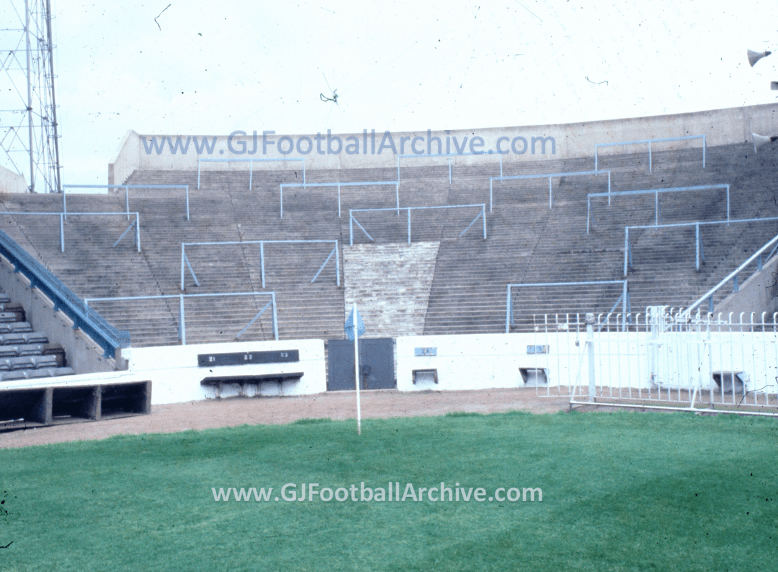
It’s day 37 of my posts counting down to the centenary of Maine Road’s opening game and today’s feature is – don’t get too excited – on this corner! I’ve said before that a photograph can say so much if you look closely at it and learn how to ‘read’ images like this. This is true for this simple photo of the corner between the North Stand (left) and Kippax (right). So what does this picture tell us? Well….

This was built as part of the North Stand development back in 1971 but it remained part of the Kippax. It was never roofed – meaning that this corner and the one on the other side of the Kippax were the only areas of Maine Road never to have a roof over them. If you’re counting the Main Stand had 3 roofs/roof developments during its life; the Platt Lane had 2; the North Stand one, and the Kippax two.

This corner was always accessed via Kippax turnstiles and it was always within the Kippax boundary walls. When the North Stand was built the exterior wall behind the stand was removed and turnstiles built into the stand but this corner never had any of that.

I’m not certain why the original corner terracing was ever demolished. Originally this corner had a large tunnel (like those in the other corners) and maybe they demolished that and built the new terracing because they felt it would increase capacity, but the corner is actually a little smaller than the one it replaced.

The rake of the steps is steeper than the rest of the Kippax and is the same as that in the North Stand. This suggests that there may have been plans to carry the North Stand around the corner. Former chairman Eric Alexander, who was primarily responsible for the new North Stand, had a vision of rebuilding the Kippax next but the arrival of Peter Swales as chairman killed that off. Maybe Eric was thinking ahead?

Strangely, there’s a concrete wedge in the middle which looks like newer concrete, roughly where the original tunnel would have been (though somewhat narrower).

Notice the loudspeaker (top right) pointing to this corner from the Kippax to ensure those standing here could hear the tannoy system. They used to test it in an empty stadium and never understood why fans couldn’t hear it in the Kippax on match day!

The floodlit pylon can be seen at the back, left. Also the blue fence on the left trying to stop fans climbing in to the North Stand – I do remember fans sneaking in occasionally.

There’s also the first pitch side fence on the right. This was positioned in front of the Kippax to stop fans getting on the pitch but all they needed to do was climb into this corner and go through the gate in the wall!

The white wall contains a gate where the old police/first aid dug outs used to be (see photo below of the same corner in the early 1960s) and the small seats built into the wall that the police and first aid people used to sit on at the time this photo was taken.

There’s also the corner flag visible.

The following is the Platt Lane/Main Stand corner when first built in 1923. It gives an impression of how the North Stand/Kippax corner would’ve looked at that time too.

1923 Platt Lane/Main Stand corner tunnel

The North Stand/Kippax corner was demolished in 1994 and later the ‘Gene Kelly’ temporary stand was located there.

For those unfamiliar with Maine Road this photo may help locate the terraced corner between the North Stand and Kippax. It’s number 9 on this image and you can see the Kippax wall behind it. Note the wall behind the North Stand has yet to be removed from this image, taken in 1971.

Maine Road aerial 1971 from Farewell To Maine Road

If you’d like to read more on the history of Maine Road, take a look at Farewell To Maine Road, which can be downloaded from this page:

If you enjoy all the free material on my website and would like to support my research and keep this website going (but don’t want to subscribe) then why not make a one-time donation (or buy me a coffee). All support for my research is valued and welcome. It allows me to keep some free material available for all. Thanks.

Choose an amount

£2.50
£5.00
£7.50

Or enter a custom amount

£

Your contribution is appreciated.

Donate

Maine Road 100 – Day 23

It’s day 23 of my posts counting down to the centenary of Maine Road’s opening game and today’s feature is on the building of the North Stand. As Manchester City are about to appear in the 2023 Champions League final I thought I’d post images from a much earlier European game. This image of Neil Young comes from the 1971 ECWC semi-final v Chelsea. Notice Young is wearing City’s away colours. People often assume that City rarely wore away colours at Maine Road, but the truth is somewhat different.

Often when there was a clash of colours in a cup game City would wear their away strip. Games in the 1920s right through to 1970s saw the Blues don maroon, red/black and even scarlet at times at Maine Road.

The main image shows that North Stand being constructed in the background. You can see that the roof is not yet complete but that the terracing is in use for this ECWC semi final. The terracing was new concrete and the stand housed bars underneath. It was a terraced stand until summer 1972 when the decision was taken to make it a seated stand.

City chairman Eric Alexander was the main man responsible for the stand’s development and he was a passionate believer in giving fans the best facilities possible. He also had ambitious plans to redevelop the Kippax, however Peter Swales became the chairman soon after and he put Ian Niven in charge of ground developments. From then on, until 1993, the only major development was the erection of a new Main Stand roof in 1982. In the 1990s the club was forced to build – or condemn – the Platt Lane Stand.

Maine Road was a major ground for most of its existence and, even with little investment during from 1973 onwards, it was still selected as a cup semi-final venue. BUT I often wonder how spectacular the stadium would have been had Eric Alexander been left in charge of stadium developments. Instead of penny-pinching and devaluing the ground maybe it would have eclipsed Old Trafford as it had for the first 40 years of its existence?

People always focus on Swales as the cause of all the problems and it is true that he was the chairman and the man ultimately responsible, but he was not the major shareholder. In fact he often talked of how he only had a small number of shares until 1983 (when he made a major purchase following City’s relegation he often said). He was supported by directors who often held many more shares than he did. They could’ve ousted him, but instead supported him. Each director had responsibilities for different elements of the club – Swales often talked of this and the match programme frequently told us who was responsible and what they did – yet once Swales did stand down and Franny Lee took over some of those who had worked with Swales swapped sides and retained their positions. I know, from my own interviews with Swales, Alexander and others, that Swales felt let down and betrayed. Every issue was suddenly made to be ‘his’ fault. He accepted this, saying that he was the main man, but others needed to hold their hands up for the lack of investment in Maine Road etc.

1971 ECWC v Chelsea. Francis Lee. Photo by Alan Jubb

The above image shows Francis Lee at this same game and to the right you can see more of the North Stand under construction.

For those unfamiliar with Maine Road this photo may help. The North Stand can be seen with a completed roof on this image (number 10). This was later in 1971 and the stand is still a terraced one.

Maine Road aerial 1971 from Farewell To Maine Road

If you’d like to read more on the history of Maine Road, take a look at Farewell To Maine Road, which can be downloaded from this page:

If you enjoy all the free material on my website and would like to support my research and keep this website going (but don’t want to subscribe) then why not make a one-time donation (or buy me a coffee). All support for my research is valued and welcome. It allows me to keep some free material available for all. Thanks.

Choose an amount

£2.50
£5.00
£7.50

Or enter a custom amount

£

Your contribution is appreciated.

Donate

Season ends With MCFC top but…

On April 22 1972 title challenging Manchester City’s final game of the season ended in a 2-0 victory over Derby County. Goals from Francis Lee and Rodney Marsh. Attendance 55,023. The Blues finished their season top of the League BUT…

Subscribers to my site can read what happened next in this piece which includes quotes from Rodney Marsh, Malcolm Allison & Eric Alexander from my exclusive interviews with them.

Subscribe to get access

Read more of this content when you subscribe today.