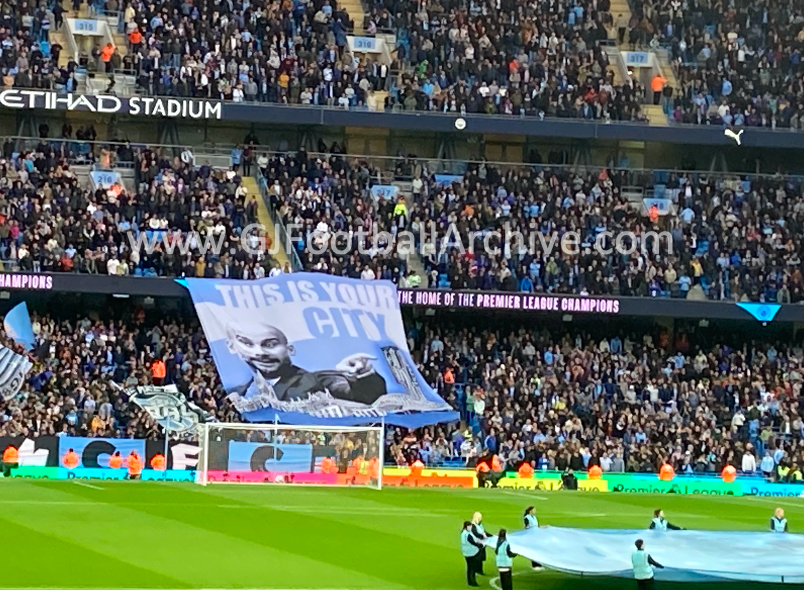
League Dominance?

Lots of tosh has been spoken recently about teams dominating English league football with some claiming that there’s ‘never’ been a time when a team has dominated as much as Manchester City do today. Ignoring the fact that the League campaign is not over yet and will go to the final day (so that’s a nonsense for a start) I decided to pull together a few facts that may be useful. They’re certainly relevant.

So, first of all, the question of whether Manchester City is the first to dominate in a way no other has before (again the season isn’t over and it could go either way yet, so ‘dominate’ is not something I believe anyway!)… City have currently won 3 League titles in a row. A feat that has been done several times before, most recently (before City) by Manchester United in 2006-09.

Ah, but City have won 5 out of 6 titles they say… Yes, but United won 7 out of the first 9 Premier Leagues and were runners up in the other 2. Liverpool achieved the same 7 out of 9 League titles in the 1970s and early 80s. We can’t predict the future of course but City have never managed seven titles in 9 seasons. In fact if City do win the League the stats will show it’s 7 in 11 seasons and at present it’s 7 titles in 12 seasons. So that means two other clubs have had longer spells as ‘dominant’ clubs using the language and phraseology that those criticising the reigning Champions usually use.

One of the other criticisms that’s thrown City’s way is about the Premier League being ‘boring’ because it’s a ‘foregone conclusion’ and ‘other teams have to be perfect’ to finish above City. Well, to be the best you have to beat the best but in terms of the League being ‘boring’ and a ‘foregone conclusion’ then the stats in terms of points gaps say otherwise.

Sure, City’s incredible 2017-18 season when they amassed 100 points was one in which the Blues ran away with the title, but it was also a rarity. City won the League by bettering second place by an astounding 19 points but, wait a minute, that amazing gap is only 1 point  more than the (18 point) gap between 2020 champions Liverpool and second placed City (at a time when City are supposed to be the dominant team!). Not only that but United had an 18 point gap between them and second placed Arsenal in 2000.

Worth noting too that in the 31 season history of the Premier League 14 runners-up teams bettered 2nd placed United’s points tally in 2017-18 when City achieved their 100 points. Surely, no title winning team can be blamed if the runners-up have worse results than in more than 45% of the competition’s seasonal history?

What about the ‘foregone conclusion’ and ‘boring’ line? Well, I suppose it can be argued it’s boring if the League is won many, many weeks before the end of the season. Using that logic it should also be ‘not boring’ if it goes down to the last game (like this season) or the last week (could be 2 or 3 games depending on fixture congestion). So I’ve had a look at how many seasons have finished with 3 points or less separating the top two teams. This shows that there have been 9 seasons when this has been the case. Guess what? 4 of those were seasons when City have won the Premier League (2 United, 1 Arsenal, Blackburn & Chelsea).

This means that 57% of all City’s Premier League title wins have been by less than 3 points! For United (13 PL titles) the figure is 15%; Arsenal (3 PL) it’s 33% and Chelsea (5 PL) is 20%.  Four of United’s PL titles have been won by 10 points or more.

Of course, title races can be exciting when teams win the League by ten points or more, but the argument many put across is that it’s boring when one team walks away with it. Surely there’s less chance of that happening when a team wins the title by less than 3 points?

There are lots of statistics that could be posted and, to be frank, they never actually tell the story of a season. How many times do we see possession stats that are in one club’s favour but the other team is actually winning? Nevertheless, when people try to suggest a season is boring because a club (any club) is running away with it then the stats can help show that something is not true. Similarly, when it comes to dominant football clubs – yes, there are eras of dominance by certain clubs and Manchester City certainly are a dominant club at the moment – we must not be fooled into thinking that a situation has NEVER happened before when it so obviously has (and other clubs may actually have been more dominant!).

Ah well! Football, hey? If only people actually looked at history more before jumping to conclusions.

If you enjoy all the free material on my website and would like to support my research and keep this website going (but don’t want to subscribe) then why not make a one-time donation (or buy me a coffee). All support for my research is valued and welcome. It allows me to keep some free material available for all. Thanks.

Choose an amount

£2.50
£5.00
£7.50

Or enter a custom amount

£

Your contribution is appreciated.

Donate

City 1 Leicester 0, the FA Cup Final

On this day (April 26) in 1969 Manchester City defeated Leicester City in the FA Cup final. It is worth pausing to consider how the Blues compared to football’s other successful sides in the competition at this time in football history.  City’s four FA Cup successes placed them 7th in the all-time list of FA Cup winners – can you guess the clubs they were behind? Liverpool? No! MUFC? No! Arsenal? No! Keep going…

They were behind Aston Villa (7), Blackburn Rovers (6), Newcastle United (6), Tottenham Hotspur (5), The Wanderers (5) and West Bromwich Albion (5).  Bolton, Sheffield United and Wolves had, like City, each won four FA Cups, while Manchester United and Arsenal had only won three, Liverpool one and Chelsea had not yet won the trophy.  In fact Chelsea had only won one major trophy (the League Championship) at this point in their history.  

Here for subscribers is a long read on that final and the events surrounding it:

Subscribe to get access

Read more of this content when you subscribe today.

Oxford’s First and Last

On this day (24 April) in 1948 goalkeeper Ken Oxford made his first appearance for Manchester City’s first team when the Blues faced Arsenal in the League. Oxford kept a clean sheet as City drew with the eventual champions. Sadly, for Oxford his opportunity to play in City’s first team was limited due to the incredible exploits of England captain Frank Swift – displacing Swift was an impossibility!

The Oldham born player never got chance again to appear in City’s first team and at the end of December that year he moved to Derby County after making just 1 first team appearance at Maine Road. He had appeared in reserve games too of course.

His career saw him make 128 League appearances for Norwich and 151 for Derby amongst other clubs. This newspaper cutting from October 1977 is an interview with him and Swift inevitably gets a mention.

Title Winners: City or Arsenal?

On this day (10 April) in 1937 a game viewed as being the title decider saw City defeat championship rivals Arsenal 2-0.  The game, played in front of a Maine Road crowd of 74,918 (still not the highest for a City-Arsenal fixture at Maine Road) swung the advantage to City and ultimately the title came to Manchester.   One point on the attendance… Back then City used to announce the crowd as being number of tickets specifically sold for that game, plus those that paid on the day, i.e. the figures did NOT include any season ticket holder. As the Blues had a couple of thousand season ticket holders then the attendance is known to have been at least 76,000, but an accurate figure does not exist (only those we know turned up and paid on the day or bought a ticket specifically for that game).

You can read more about the game here:

The 1990s: The Super League!

The series of features covering Manchester City in the 1990s continues today with this reminder of the days when the creation of a Super League was leaked to the press. The Super League eventually became the Premier League and the key clubs behind the move were Arsenal, Tottenham, Liverpool, Everton and Manchester United. Much of the coverage from this period in 1991 focused on these clubs wanting to exert greater control on football’s finances, i.e. to carve up the game’s riches for the biggest clubs of the era. These cuttings are all from the start of April 1991.

Back then the Football League had four divisions and voting rights were equal for all clubs in the top two divisions (the ‘full members’ of the League, hence the Full Members Cup). The bottom two divisions were classed as associate members and they still had voting rights which many in the top division objected to. They felt the clubs outside the top flight should not control the League’s finances and direction.

It wasn’t the first time the establishment of a Super League had been discussed (usually it involved the idea of bringing leading Scottish clubs into a British league system) but it does appear to be the first time the leading clubs in the top division wanted to limit the influence of the others.

You can see from these articles who the leading architects were and how fans reacted. This piece quotes Frank Horrocks from the MCFC Supporters Club. Many of his concerns have proved to be true in the 30+ years that have followed:

All these years on there have been multiple attempts by certain clubs to limit the opportunities for others and create an environment where they can prosper without necessarily investing. Many of the financial issues between the rich and the rest in football that people talk of today were created as a result of the greed of several clubs in the early 1990s.

For Manchester City the 1990-91 season saw a shock managerial departure could have disrupted the club but ultimately they finished 5th, 3 points ahead of Manchester United. Here’s a 2,700 word article on that season:

Subscribe to get access – Monthly

Read more of this content when you subscribe today. It costs £3 per month (cancel anytime) to access everything posted since 1 October 2022 or there’s a special annual rate below which gives greater access and works out much cheaper.

Subscribe to get access – Annual

Read more of this content when you subscribe today. It costs £3 per month (above) or £20 a year (here) to access everything posted since the site was created in December 2020. This special rate works out about £1.67 a week and gives access to everything posted, including PDFs of 3 of my books.

This series of articles and features will run throughout March with indepth articles some days and smaller ‘on this day’ style posts on others. There will be flashbacks to great games, players and more. Every day in March will offer something to enjoy.

Subscribers will get access to everything, while some on this day material will be free for all to view.

If you want to know more on this incredible decade for Manchester City Football Club then why not subscribe and read it all? If you’d like to know more about subscribing then see:

The 1990s: Niall Quinn Joins The Blues

On this day (15 March) in 1990 Arsenal’s Niall Quinn joined Manchester City. It was a great, transfer deadline beating transfer and one which proved extremely popular over the months that followed. Quinn was a wonderful Irish international, going to the World Cup while with City.

This newspaper cutting talks of his arrival and contains some nice quotes too:

This feature is part of my series on Manchester City in the 1990s and you can read about the opening months of 1990 below. This series of articles and features will run throughout March with indepth articles some days and smaller ‘on this day’ style posts on others. There will be flashbacks to great games, players and more. Every day in March will offer something to enjoy.

Subscribers will get access to everything, while some on this day material will be free for all to view.

If you want to know more on this incredible decade for Manchester City Football Club then why not subscribe and read it all? The following 1,300 word article on the end of the 1989-90 season is available to subscribers below. Enjoy!

Subscribe to get access – Monthly

Read more of this content when you subscribe today. It costs £3 per month (cancel anytime) to access everything posted since 1 October 2022 or there’s a special annual rate below which gives greater access and works out much cheaper.

Subscribe to get access – Annual

Read more of this content when you subscribe today. It costs £3 per month (above) or £20 a year (here) to access everything posted since the site was created in December 2020. This special rate works out about £1.67 a week and gives access to everything posted, including PDFs of 3 of my books.

If you’d like to know more about subscribing then see:

The 1990s: A Draw with the Champions

The series of articles covering Manchester City in the 1990s continues with a game against reigning champions Arsenal on this day (10 March) in 1990. It was a match City should have won but there were a few jitters and a great deal of banter on the terraces too. It was all connected with that infamous Gary Crosby goal (3 March in 1990) which had caused City to lose 1-0 atNottingham Forest. You can read about that elsewhere on my website but have a read of this match report from the Arsenal game and you’ll see that it was still being referred to and still in the minds of all those connected with City. The Manchester Evening News headline above (mentioning ‘clanger’) wasn’t particularly helpful as it now gave fans the feeling that clangers had happened in consecutive games. That wasn’t fair on either Dibble or on Redmond.

Worth noting that David White scored for City and the Arsenal goal was scored by Brian Marwood, who has spent most of the last 15 years helping the modern day City find success.

For more on that season, have a read of this 1,300 word article on the end of the 1989-90 season. It is available to subscribers below. Enjoy!

Subscribe to get access – Monthly

Read more of this content when you subscribe today. It costs £3 per month (cancel anytime) to access everything posted since 1 October 2022 or there’s a special annual rate below which gives greater access and works out much cheaper.

Subscribe to get access – Annual

Read more of this content when you subscribe today. It costs £3 per month (above) or £20 a year (here) to access everything posted since the site was created in December 2020. This special rate works out about £1.67 a week and gives access to everything posted, including PDFs of 3 of my books.

If you’d like to know more about subscribing then see:

The 1970s: A Tight Game at Arsenal

The series of features/articles covering Manchester City in the 1970s continues with this video flashback to a game at Arsenal on this day (6 February) in 1971. It’s a Manchester City defeat but well worth watching for several great saves/goalline clearances in what was an extremely close match. Watch out also for Arthur Mann and Freddie Hill – two players who are not often seen on film during their City days.

Corrigan did not deserve to lose this game!

This series of articles and features on Manchester City in the 1970s has been running during January and February 2024 with indepth articles some days and smaller ‘on this day’ style posts on others.

Subscribers will get access to everything. If you want to know more on this incredible decade for Manchester City Football Club then why not subscribe and read it all? You could even subscribe for a month and see what you think. The following 5,200 word article is on the 1970-71 season and is available to subscribers below. Enjoy!

Subscribe to get access – Monthly

Read more of this content when you subscribe today. It costs £3 per month (cancel anytime) to access everything posted since 1 October 2022 or there’s a special annual rate below which gives greater access and works out much cheaper.

Subscribe to get access – Annual

Read more of this content when you subscribe today. It costs £3 per month (above) or £20 a year (here) to access everything posted since the site was created in December 2020. This special rate works out about £1.67 a week and gives access to everything posted, including PDFs of 3 of my books.

If you’d like to know more about subscribing then see:

If you enjoy all the free material on my website and would like to support my research and keep this website going (but don’t want to subscribe) then why not make a one-time donation (or buy me a coffee). All support for my research is valued and welcome. It allows me to keep some free material available for all. Thanks.

Choose an amount

£2.50
£5.00
£7.50

Or enter a custom amount

£

Your contribution is appreciated.

Donate

The 1970s: Attendance Facts Not Fiction

It seems that some have a view that the giant clubs remain giant clubs forever and that there are some clubs who have only recently become prominent. Others believe that teams that were giants decades before some of today’s major trophy winners were never actually that prominent. I could spend hours challenging those who hold these views and pointing out that teams such as Everton, Newcastle & City won major trophies before many of these clubs and were perceived as giants years earlier too (decades before in some cases!), but it doesn’t feel like they’d listen. Ah well! Instead as part of my series of features/articles covering Manchester City in the 1970s I’d like to post a few attendance details that may interest some.

The following are a list of the top seven best supported top flight clubs for the ten seasons prior to City’s relegation in 1983. The Manchester clubs are in bold and the numbers in brackets show each club’s league position that season. In addition if any of the clubs won the European Cup, UEFA Cup, ECWC, FA Cup or League Cup that is also listed in brackets.

AVERAGE ATTENDANCES – Top Tier 1973-74

42712 MUFC (21st); 42332 Liverpool (2nd & FA Cup winners); 38666 Leeds (1st); 33048 Birmingham (19th); 32861 Newcastle (15th); 30756 MCFC (14th).

AVERAGE ATTENDANCES – Top Tier 1974-75

45966 LFC (2nd); 40021 Everton (4th); 34822 Leeds (9th); 34614 Newcastle (15th); 32898 MCFC (8th); 30854 Birmingham (17th); 29872 West Ham (13th & FA Cup winners). Both Manchester United (48387) and Sunderland (29931) were in Division Two but had an average higher than some of those in the top seven top tier averages.

AVERAGE ATTENDANCES – Top Tier 1975-76

54750 MUFC (3rd); 41623 Liverpool (1st & UEFA Cup winners); 38874 Aston Villa (16th); 34280 MCFC (8th & LC winners); 33060 Newcastle (15th); 31511 Leeds (5th); 28350 Derby (4th). Sunderland in Division Two had an average of 31250.

AVERAGE ATTENDANCES – Top Tier 1976-77

53710 MUFC (6th & FA Cup winners); 47221 Liverpool (1st & European Cup winners); 40058 MCFC (2nd); 37903 Aston Villa (4th & LC winners); 33599 Newcastle (5th); 32743 Sunderland (20th), 32671 Arsenal (8th).

AVERAGE ATTENDANCES – Top Tier 1977-78

51860 MUFC (10th); 45546 Liverpool (2nd & European Cup winners); 41687 MCFC (4th); 39513 Everton (3rd); 35464 Aston Villa (8th); 35446 Arsenal (5th); 32501 Nottm Forest (1st & LC winners). Tottenham were in Division Two with an average of 33417.

AVERAGE ATTENDANCES – Top Tier 1978-79

46430 MUFC (9th); 46407 Liverpool (1st); 36371 Arsenal (7th & FA Cup winners); 36203 MCFC (15th); 35456 Everton (4th); 34902 Tottenham (11th); 32838 Aston Villa (8th).

AVERAGE ATTENDANCES – Top Tier 1979-80

51608 MUFC (2nd); 44586 Liverpool (1st); 35272 MCFC (17th); 33596 Arsenal (4th); 32018 Tottenham (14th); 29794 Crystal Palace (13th); 28711 Everton (19th).

1979-80 League table and attendance detail up to 26/4/1980

AVERAGE ATTENDANCES – Top Tier 1980-81

45071 MUFC (8th); 37547 Liverpool (5th & LC winners); 34117 Aston Villa (1st); 33587 MCFC (12th); 32480 Arsenal (3rd); 30724 Tottenham (10th & FA Cup winners); 26477 Sunderland (17th). West Ham were in Division Two with an average of 27140.

Kippax Stand c.1980

AVERAGE ATTENDANCES – Top Tier 1981-82

44571 MUFC (3rd); 35100 Tottenham (4th & FA Cup winners); 35061 Liverpool (1st & LC winners); 34063 MCFC (10th); 26780 Aston Villa (11th & European Cup winners); 26585 West Ham (9th); 25589 Arsenal (5th).

1981 City v United Maine Road

AVERAGE ATTENDANCES – Top Tier 1982-83

41552 MUFC (3rd & FA Cup winners); 34758 Liverpool (1st & LC winners); 30581 Tottenham (4th); 26789 MCFC (20th); 24153 Arsenal (10th); 23748 Aston Villa (6th); 22822 West Ham (8th). Second Division Newcastle attracted an average of 24166.

Fans storming the main entrance in 1983. Mirrorpix photo

For those wondering Manchester City did drop a little in terms of position in the attendance chart during their Second Division days but they were still the 6th best supported club (of all clubs) in 1983-84 and 8th best in 1984-85. Back in Division One in 1985-86 the Blues were once again the 4th best supported team in the entire League.

This series of articles and features on Manchester City in the 1970s has been running throughout January with indepth articles some days and smaller ‘on this day’ style posts on others. Every day in January will offer something to enjoy.

Subscribers will get access to everything. If you want to know more on this incredible decade for Manchester City Football Club then why not subscribe and read it all? You could even subscribe for a month and see what you think. The following 1,600 word article is on the 1974-75 season and is available to subscribers below. Enjoy!

Subscribe to get access – Monthly

Read more of this content when you subscribe today. It costs £3 per month (cancel anytime) to access everything posted since 1 October 2022 or there’s a special annual rate below which gives greater access and works out much cheaper.

Subscribe to get access – Annual

Read more of this content when you subscribe today. It costs £3 per month (above) or £20 a year (here) to access everything posted since the site was created in December 2020. This special rate works out about £1.67 a week and gives access to everything posted, including PDFs of 3 of my books.

If you’d like to know more about subscribing then see:

If you enjoy all the free material on my website and would like to support my research and keep this website going (but don’t want to subscribe) then why not make a one-time donation (or buy me a coffee). All support for my research is valued and welcome. It allows me to keep some free material available for all. Thanks.

Choose an amount

£2.50
£5.00
£7.50

Or enter a custom amount

£

Your contribution is appreciated.

Donate
The 1970s: Attendance Flashback to 1978

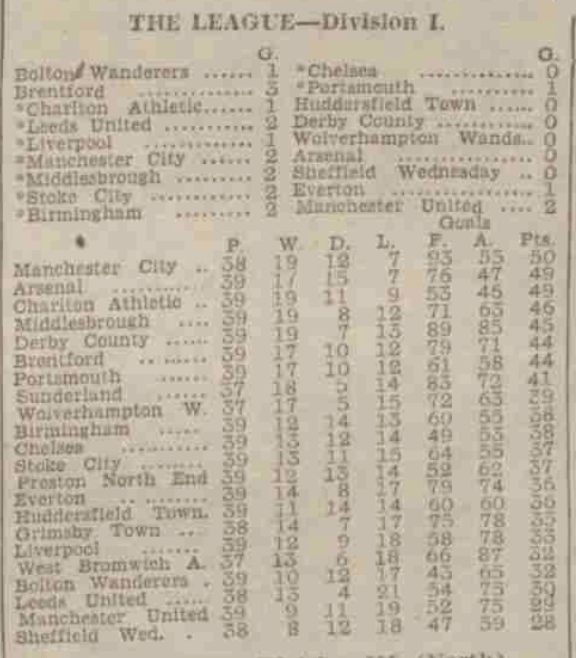
The series of features/articles covering Manchester City in the 1970s continues with this brief post about average attendances. We hear so much baloney these days about which clubs are giants and so on but the truth is that in terms of success no team has ALWAYS been at the top and in terms of support most clubs have had highs and lows. There are some clubs that generation after generation have been popular with fans and this cutting from the Manchester City match programme of 1977-78 may interest some.

I’m not going to point to any club or anything but look at the numbers and make your own minds up. Manchester City, incidentally, tended to be the 3rd best supported club (no matter where they finished) behind United and Liverpool throughout the mid to late 70s and early 1980s. They occasionally dropped to 4th depending on whether Everton or Spurs had a good season and even in City’s 1982-83 relegation season Manchester’s Blues were the 4th best supported club. Not bad for a failing club!

This series of articles and features on Manchester City in the 1970s will run throughout January with indepth articles some days and smaller ‘on this day’ style posts on others. There will be flashbacks to great games, players and more. Every day in January will offer something to enjoy.

Subscribers will get access to everything. If you want to know more on this incredible decade for Manchester City Football Club then why not subscribe and read it all? You could even subscribe for a month and see what you think. The following 5,200 word article is on the 1970-71 season and is available to subscribers below. Enjoy!

Subscribe to get access – Monthly

Read more of this content when you subscribe today. It costs £3 per month (cancel anytime) to access everything posted since 1 October 2022 or there’s a special annual rate below which gives greater access and works out much cheaper.

Subscribe to get access – Annual

Read more of this content when you subscribe today. It costs £3 per month (above) or £20 a year (here) to access everything posted since the site was created in December 2020. This special rate works out about £1.67 a week and gives access to everything posted, including PDFs of 3 of my books.

If you’d like to know more about subscribing then see:

If you enjoy all the free material on my website and would like to support my research and keep this website going (but don’t want to subscribe) then why not make a one-time donation (or buy me a coffee). All support for my research is valued and welcome. It allows me to keep some free material available for all. Thanks.

Choose an amount

£2.50
£5.00
£7.50

Or enter a custom amount

£

Your contribution is appreciated.

Donate