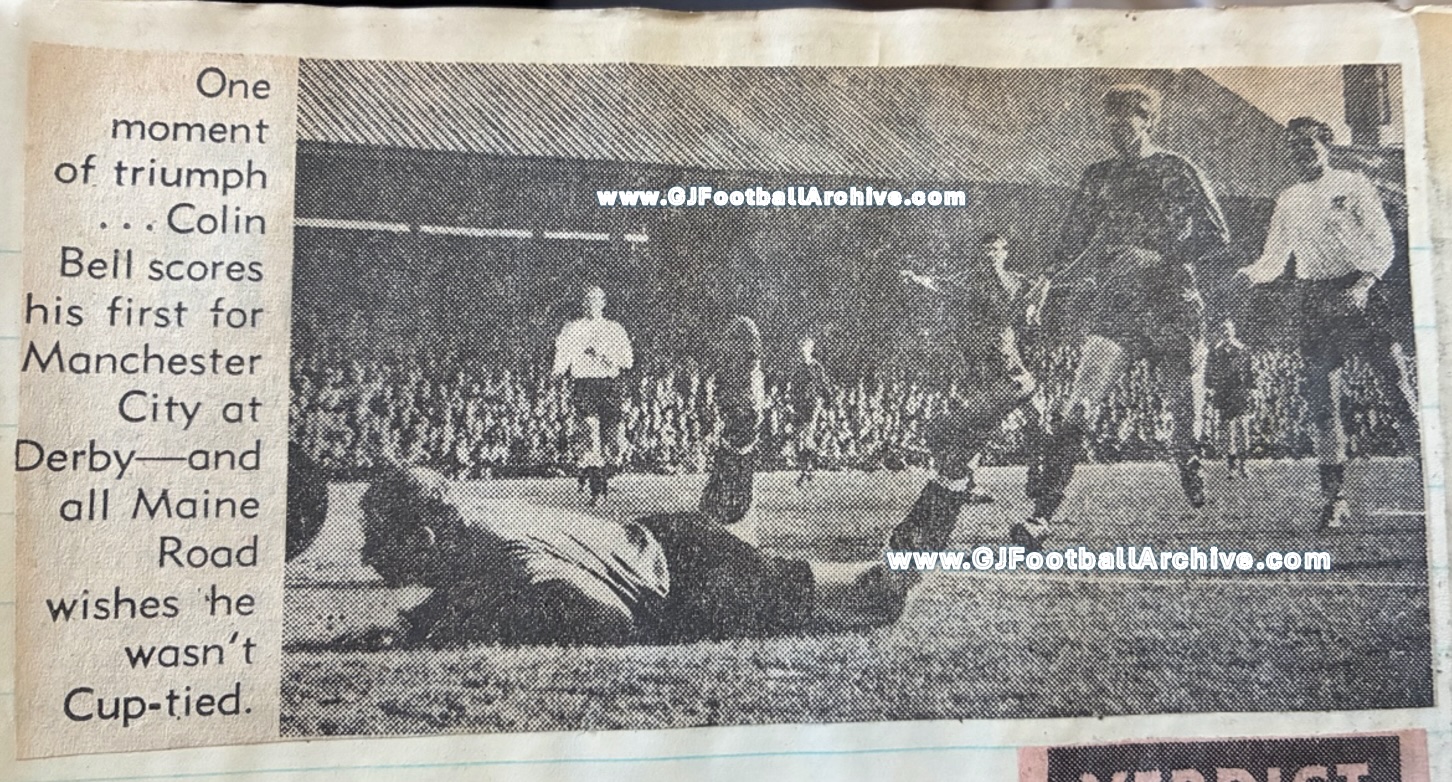
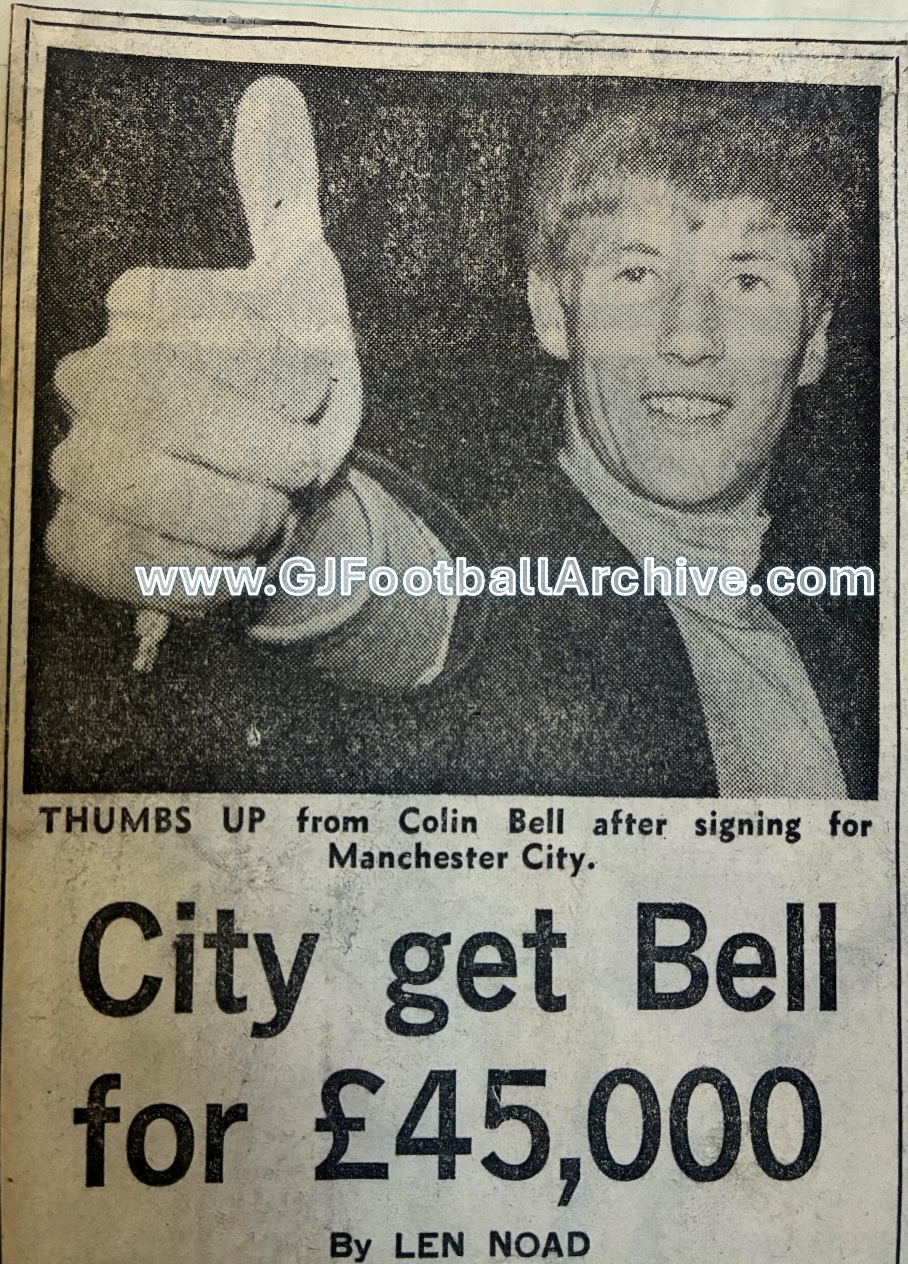
80 Years Ago Today: Colin Bell Was Born

Eighty years ago today (26 February 1946) Colin Bell was born. The above photo comes from Peter Barnes’ collection and was taken at Champneys where City were staying prior to the League Cup final in 1976. It was, of course, Colin’s 30th birthday. My thoughts and best wishes are with Colin’s family today.

Sadly Colin, recognised by most Manchester City fans as the greatest ever player for the club, passed away in January 2021.

I’ve interviewed Colin and written a lot about him over the years. A few posts are available (free to read) here for anyone who wants to learn more about Colin or remember some of his incredible achievements:

Colin Bell Interview/Tribute

1977-78 Colin Bell’s Contribution To The Central League Title

Colin Bell 1946-2021

On This Day in 1977: Colin Bell’s Emotional Return

City 4 Newcastle United 0

Division One

26th December 1977

City Team: Corrigan, Clements, Donachie, Booth, Watson, Power (Bell), Barnes, Owen, Kidd, Hartford, Tueart

Attendance: 45,811

This match has entered Manchester folklore as one of those games you just had to experience to fully appreciate.  All of those present that night from players, to fans, club officials to newspaper reporters, talk of this afternoon as one of football’s most emotional nights.

The story of Colin Bell and his injury had become one of football’s most discussed issues.  The teatime BBC television news show Nationwide had profiled Colin’s tragic story and as a result the player received thousands of good luck messages from neutrals and ordinary non-footballing members of the public.  They had been touched by his long, hard training schedules; his lonely runs through the streets of Moss Side and Rusholme; and by his absolute determination to return to full fitness.  To them Colin’s story was incredible, to City and England supporters it was a deeply disappointing and tragic story.  

Colin’s gruelling training regime ensured he forced his way into manager Tony Book’s thinking by December 1977, and on Boxing Day he was named as substitute for the visit of Newcastle.  Anticipation was high as supporters believed this would be the day they would see their hero return to action.  

Chairman Peter Swales rated Colin highly and shortly before his death in 1996 the former Chairman explained:  “The supporters loved him.  You can never kid supporters.  They know great players.  It’s no good a manager saying, ‘this is the best player we’ve ever had’.  The supporters will know after a few weeks whether he really is the best.  Bell was the best.  No question.”

On the night itself Tony Book had planned to send Colin on as substitute for the final twenty minutes, but an injury to Paul Power meant the manager had to take decisive action.  The supporters didn’t realise, but as the players were making their way into the dressing room for the interval, it was decided that Colin would play the second half.  During the interval fans started to speculate as to when they would see their hero, with the majority believing he would come on for the final flourish, but then as the players came back out on to the pitch it was clear that Paul Power was missing and that Colin was coming on.  

The stadium erupted and the fans on the Kippax terracing began to chant his name.  It was a truly marvellous sight and the tremendous feeling of anticipation and excitement had never been felt midway through a match for any player before.  It was the most amazing individual moment witnessed at the old ground.  Dennis Tueart, a player on that day, remembers:  “He came on at half time, and it was like World War Three.  I’ve never known a noise like it in all my life!  The crowd gave him a standing ovation and he hadn’t even touched the ball.  I’ve never seen a guy work as hard to get back.  The hours and hours he put in.  The pain he went through…  it was a phenomenal amount of work and he definitely deserved that ovation.”

For the player himself the day remained one of the most significant memories of his life when I interviewed him in 2005.  “As I came down the tunnel I could hear a whisper go right round the ground.  I knew that reception was for me alone.  I was never an emotional player but that afternoon I got a big lump in my throat.  I’ve been lucky to win cups and medals and play internationals, but of all my great football memories, that is the one that sticks in my mind.”

“The City crowd and I had this mutual respect really, and that standing ovation from over 40,000 people brought a lump to my throat for the only time in my career.”

The substitution totally transformed the atmosphere and the result.  The game had been goalless, but the Blues tore into Newcastle as if they were playing in the most important game of all time.  Dennis Tueart played superbly and scored a hat-trick, with Brian Kidd also scoring, to make it a convincing 4-0 win for the Blues.  At one point Colin had a header which just sneaked over the bar, but the fairytale goal on his return did not arrive.

When I interviewed him years later a modest Colin felt he didn’t contribute a great deal:  “I don’t think I touched the ball.  It was ten men versus eleven, but the atmosphere got to our team and we ran away with it.”

26th December 2021, 9:47 am 0 boosts 0 favorites

https://gjfootballarchive.com/2020/12/28/in-search-of-the-blues-colin-bell-mbe-interviewed-in-january-2005/

The 1910s: 1915-1916 Wartime Champions

The new series of features on Manchester City in the 1910s continues today with an article on the 1915-16 season. People often claim men’s football stopped in the war but it did not. Regional leagues were established and there was regular competition across the Manchester region. City found trophy success too! If you’re a subscriber you can read all about this season below. If you’re not a subscriber then why not sign up for a month and see what you think?

Subscribe to get access

Read more of this content when you subscribe today. It costs £3 per month (cancel anytime) or sign up a year at a time for the discounted annual fee of £20. This gives access to everything on the site, including PDFs of 3 of my books and various other articles, interviews and audio material. Each subscriber has access to all content posted during their subscription period too. Why not sign up for a month and see what you think?

More on the 1910s soon. Why not subscribe and read this and all the other subscriber features?

The 1910s: 1910-1911 Ground Work

The new series of features on Manchester City in the 1910s continues today with a 1500 word article on the 1910-11 season. If you’re a subscriber you can read this below.

If you’re not a subscriber then why not sign up for a month and see what you think?

Subscribe to get access

Read more of this content when you subscribe today. It costs £3 per month (cancel anytime) or sign up a year at a time for the discounted annual fee of £20. This gives access to everything on the site, including PDFs of 3 of my books and various other articles, interviews and audio material. Each subscriber has access to all content posted during their subscription period too. Why not sign up for a month and see what you think?

More on the 1910s soon. Why not subscribe and read this and all the other subscriber features?

100 Years Ago Today: Highest Christmas Day Score

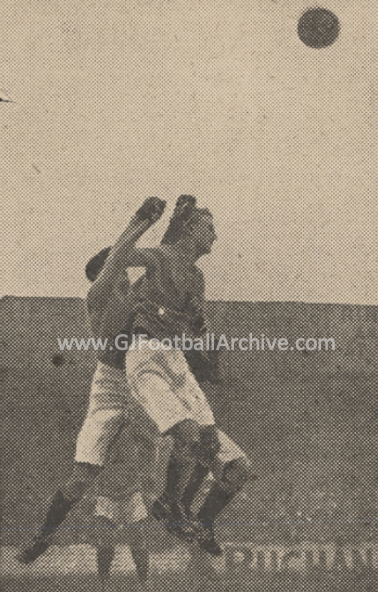
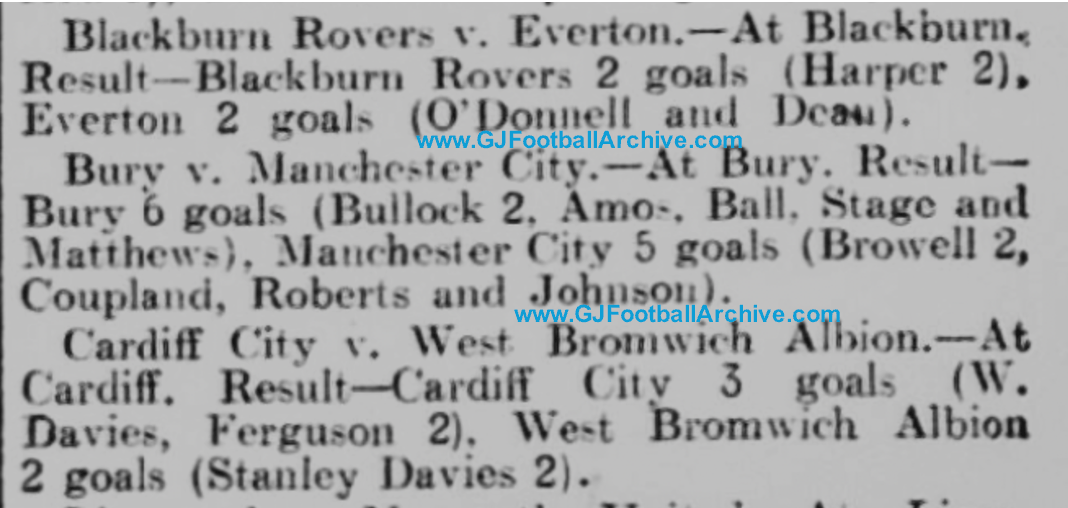
On Christmas Day 1925 Bury FC defeated Manchester City 6-5 in an extraordinary top flight game. This was the highest scoring Christmas Day game Manchester’s Blues ever played in. As this was over the Christmas period detailed match reports are rare but this cutting gives a brief idea of the scorers. On Boxing Day the two teams met again with Bury beating the Blues 2-0 at Maine Road before 50,168 (the Gigg Lane attendance had been 23,621)

On This Day: Christmas at Manchester City

Had your Christmas dinner yet? If not then spare a thought for those days when professional football in England would take place on Christmas Day. In the modern era the thought of playing League football on Christmas Day is totally unacceptable, but in years gone by games were played on consecutive days over Christmas, including Christmas Day, and these were often the best attended matches of the winter.  

The last Christmas Day game featuring Manchester City took place in 1957 when the Blues were defeated 2-1 at Burnley.  The City team for that landmark game was:  Trautmann, Leivers, Little, Barnes, Ewing, Warhurst, Barlow, Kirkman, Johnstone, Hayes, and Fagan.  Fionan Fagan was the last City player to score on Christmas Day

The following day City defeated Burnley 4-1 at Maine Road in front of a crowd of 47,285.  The only change to the line up was Ron Phoenix, who replaced Bobby Johnstone. 

The First Noel

The first League game ever played by City on Christmas Day was at Christmas 1896 against Newton Heath (present day Manchester United).  The game was played at Bank Street, Clayton (roughly across the road from the Etihad, the site of the BMX centre behind the present Velodrome) and was attended by 18,000 – a figure described by the Athletic News as being huge for Newton Heath:  “The crowd was an enormous one and I never saw so many lads at a football match.  They were really the cause of the encroaching in the first half, for they were continually creeping under the rails, and as a natural consequence their elders were bound to follow if they were to get a glimpse of the game.”  

Fans streamed on to the pitch on several occasions and the game was almost abandoned at half time:  “Mr. J. Parlby, one of the League Management Committee, told the crowd point blank that if they did not keep beyond the touchline, the game could not proceed, and the Newton Heath Club would have to suffer the consequences.”

Parlby, was actually a City director, and his words may have been influenced by the fact Newton Heath were the better side that day!  The game ended 2-1 to the Heathens.

The two sides met on two further occasions on Christmas Day, the last (1902) ended 1-1 at Clayton before 40,000 with Billy Meredith scoring for the Blues.

Highest Christmas Crowd

City tended to be away from home on Christmas Day, but the best Maine Road crowd on the 25th was 56,750 in 1930 when City faced Arsenal.  The following day a mere 17,624 attended the return game at Highbury.

The previous year a crowd reported as 70,000 watched Aston Villa beat City 2-1 on Boxing Day at Maine Road.  This is the highest Christmas crowd at a City League game.

Christmas Thriller

Perhaps the most entertaining – if disappointing – game ever played by the Blues on Christmas Day was the 6-5 defeat by Bury at Gigg Lane in 1925.  

Debuts

The following players made their Manchester City League debuts on Christmas Day:

1946 – Peter Robinson (V. Plymouth Argyle)

1933 – Frank Swift (V. Derby County)

1902 – Johnny Mahon (V. Manchester United)

1909 – George Wynn (V. Bradford Park Avenue)

The 1980s: Bury 1 Manchester City 2 at Old Trafford

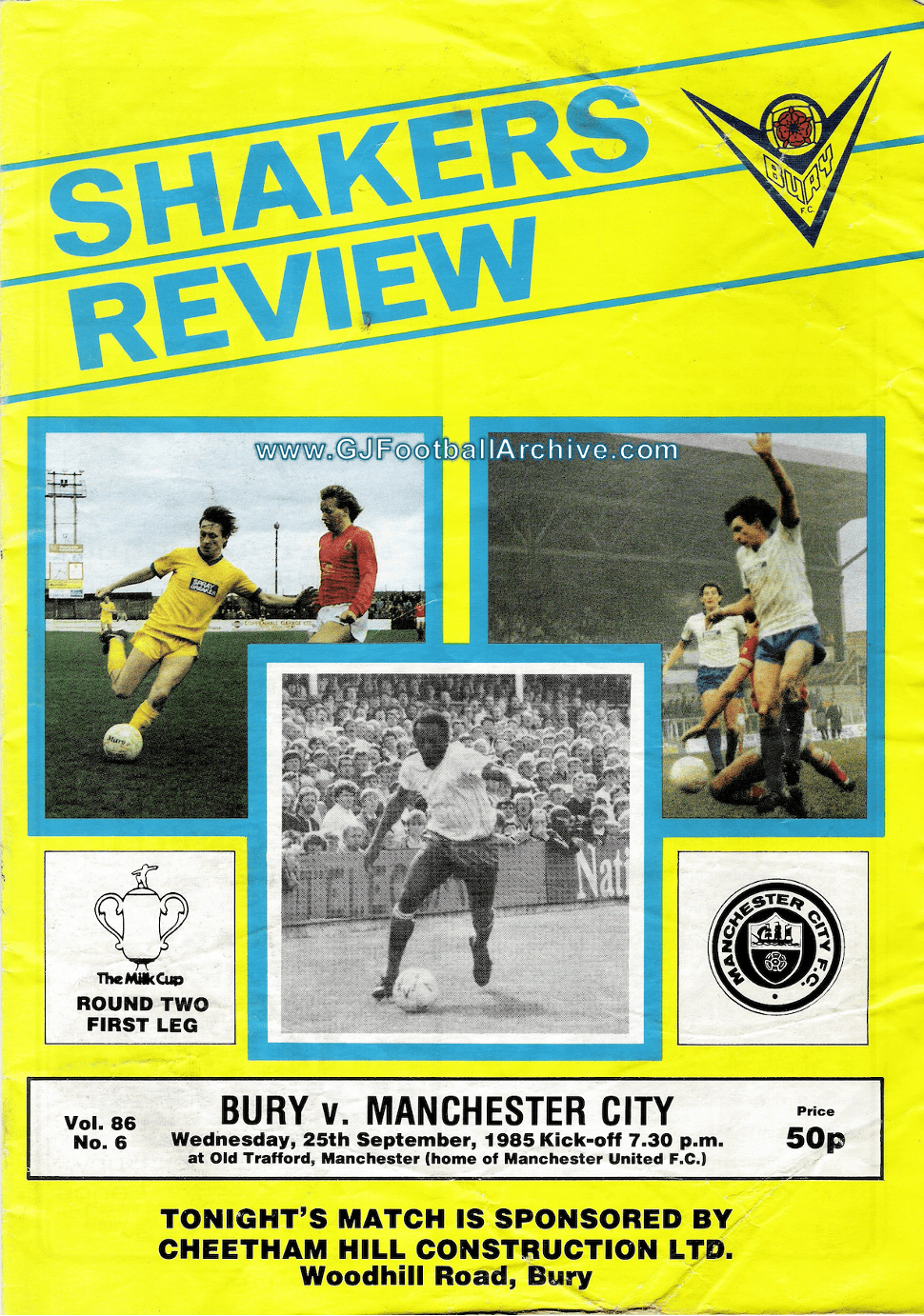
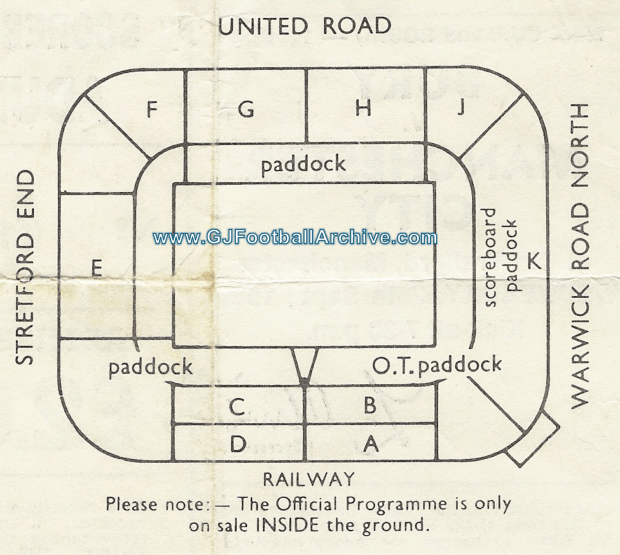
On this day (25 September) in 1985 Manchester City defeated Bury 2-1 at Old Trafford in the League Cup. The game was played at Manchester United’s ground as Bury hoped for a big attendance. In the end the crowd of 11,377 wasn’t that much more than Gigg Lane could hold. Many City fans had stayed away simply because the game was at Old Trafford! Here’s a plan of OT as it was back then from the back of my ticket for the game:

You can read more on this season for Manchester City below. This is a 2,500 word feature on the 1985-86 season. Enjoy!

Subscribe to get access – Monthly

Read more of this content when you subscribe today. It costs £3 per month (cancel anytime) to access everything posted since 1 October 2022 or there’s a special annual rate below which gives greater access and works out much cheaper.

Subscribe to get access – Annual

Read more of this content when you subscribe today. It costs £3 per month (above) or £20 a year (here) to access everything posted since the site was created in December 2020. This special rate works out about £1.67 a week and gives access to everything posted, including PDFs of 3 of my books.

If you’d like to know more about subscribing then see:

Tomorrow’s feature is on the 1986-87 season. If you missed the earlier features then start here:

The 1980s: 1980-1981 Gow, Hutchison & McDonald

The 1930s: 1931-32 A Minute to go!

My series on Manchester City in the 1930s continues today with a subscriber article on the 1931-32 season. If you subscribe (see below) I hope you enjoy it. If you don’t subscribe then why not try it for a month (£3 per month or sign up for a year at a discounted £20 per year)?

Here’s the article:

Subscribe to get access

Read more of this content when you subscribe today. It costs £3 a month (cancel anytime) or sign up for a year at £20 per year. Subscribers have access to the 1000s of articles, features, interviews etc. posted so far and all those posted during your subscription.

The 1940s: The 1939-40 Season

The new series on Manchester City in the 1940s starts today with this 1,400 word article on the 1939-40 season. The season started as any other but then world events intervened!

This is a subscriber article and you can read it by subscribing below.

Subscribe to get access

Read more of this content when you subscribe today. It costs £3 per month or you can subscriber for the discounted annual rate of £20 per year. Each subscriber gets access to everything posted so far, including PDFs of a couple of my books.

The 1960s: Colin Bell’s Bury Debut

Continuing the series of features on the 1960s, here’s a story involving Colin Bell and Harry Dowd it’s always worth telling… On this day (8th February) in 1964 Manchester City and Bury drew 1-1. It hardly sounds a remarkable game but it was for two reasons – this was Colin Bell’s Bury debut (and he scored!) AND City’s goalkeeper Harry Dowd scored the Blues equaliser.

This was City’s first point of 1964. The Blues were losing 1-0 to a debut goal from Bury youngster and future Blue Colin Bell at Maine Road when Dowd suffered a broken finger in the 54th minute.  He was unable to continue in nets but stayed on the field and reverted to centre-forward – a role he’d often played as a youngster.  

Scottish forward Matt Gray replaced Dowd in nets and the game continued with the regular ‘keeper keen to impress in attack:  “I was restless enough to give it all I’d got.  I felt just like a colt on its feet for the first time, pushing and shoving my way through and going for the every ball – many of which I hadn’t a hope of getting.  But the moment of glory wasn’t far away, and it seemed the fans were loving every minute of the action.”

“I got the chance to slip the ball to Derek Kevan, his shot hit the bar, and as it bounced down I went lunging in to turn home the equaliser.  The newspapers said some very kind things the next day.”

With Dowd’s efforts up front and a fine performance in goal from Gray the Blues secured the point.  Gray had managed to keep a clean sheet, although Dowd’s amazing exploits prevented him from receiving the kind of credit that other emergency City ‘keepers Doyle, McDonald, Gleghorn, Quinn and Walker would over the decades that followed. 

This game was probably Dowd’s highlight of the season as later on, he found himself dropped with Bert Trautmann returning to the side for three games before even he gave way to Alan Ogley for the final five matches of the season..  At one point Dowd asked for a transfer, but he remained at Maine Road, playing a significant part in the successes that followed under manager Joe Mercer. 

If you’re a subscriber you can read the following article on Manchester City during the 1963-64 season. If you’d like to read this 1700 word article, plus all other articles on the site, then please subscribe (see below). As with most of the other features in this series it includes words from interviews I have performed with those who were there.

Subscribe to get access

Read more of this content when you subscribe today. It costs £3 per month (cancel anytime) or sign up for a year at the discounted price of £20 per year (works out £1.67 per month). Subscribers access the 1000+ articles posted so far and the others scheduled during the life of your subscription.

The 1960s: Summerbee Double

On this day (29 January) in 1966 Mike Summerbee scored twice as Manchester City defeated Middlesbrough 3-1. The other goal came from Neil Young (the photo is of course Neil Young in 1971 at Maine Road). 1965-66 was an important season in MCFC history and you can read more on it in the following 4100 word article. This (plus all other articles on the site) is available to subscribers (see below). As with most of the other features in this series it includes words from interviews I have performed with those who were there.

Subscribe to get access

Read more of this content when you subscribe today. It costs £3 per month (cancel anytime) or sign up for a year at the discounted price of £20 per year (works out £1.67 per month). Subscribers access the 1000+ articles posted so far and the others scheduled during the life of your subscription.