BBC & MCFC Interviews

Busy day today talking about the history of Manchester City, in particular the story of City’s stadia. It’s 100 years on Friday since Maine Road’s first game and we’ve just had the 20th anniversary of the Etihad’s (then known as City of Manchester Stadium) first game. Time flies!

The interviews today started with Mike Sweeney interviewing me about Maine Rd and the Etihad for BBC Radio Manchester – that will be played on Friday assuming all is okay – and then it was off to Manchester City for the next set of interviews about the club’s grounds and other stuff.

Later I’m chatting elsewhere about football, sorry soccer, in the USA. A busy day.

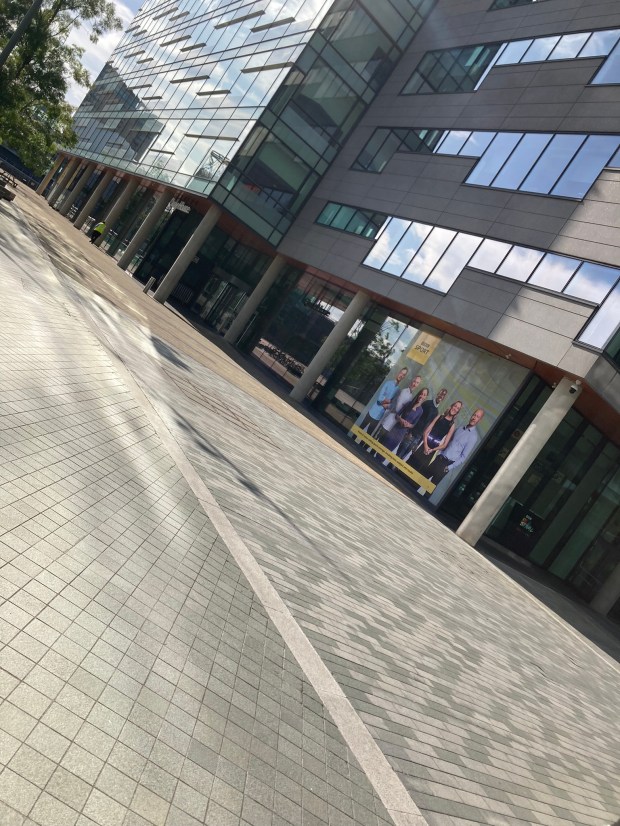
Mediacity BBC

Maine Road 100 – Day 95 Answer

It’s Day 95 of my Maine Road 100 countdown (not long to go now!) to the centenary of Maine Road’s first game. Earlier I asked the question: Of all the brilliant players who graced Maine Road over the decades who do you think was the one who scored most goals at the old stadium? Answer later today. Watch this space about 9pm UK time!

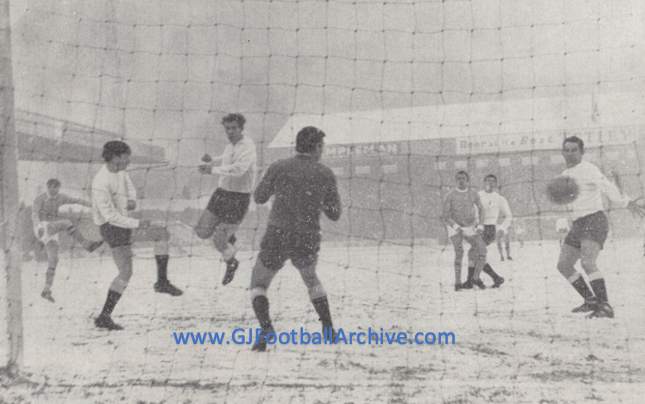
Well, the answer is Colin Bell. Colin scored 107 first team goals at Maine Road with Eric Brook next on 106 first team goals. The main image is Colin scoring v Spurs in December 1967.

I bet there are a few fans out there who saw every one of Colin’s 107 first team Maine Road goals. Feel free to leave comments on the great City star below. Also, why not check out the other articles that mention Colin such as this on his debut for Bury:

Or this interview I did with him many years ago:

Maine Road 100 – Day 95

It’s Day 95 of my Maine Road 100 countdown (not long to go now!) to the centenary of Maine Road’s first game. Following on from yesterday’s feature when I answered the question about who has made most appearances in City’s first team at Maine Road here’s a post about goalscorers.

Of all the brilliant players who graced Maine Road over the decades who do you think was the one who scored most goals at the old stadium? Answer later today. Watch this space about 9pm UK time!

Maine Road 100 – Bonus Article!

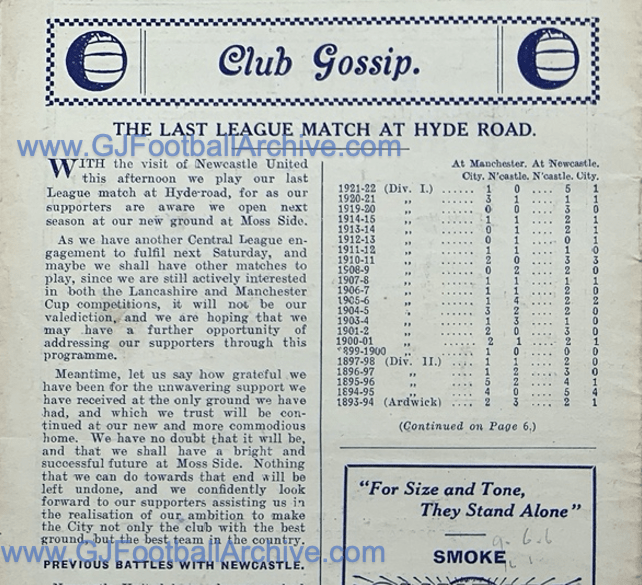
As Manchester City are playing Newcastle today (19 August 2023) and I’ve been doing a 100 day countdown to the centenary of Maine Road’s first game, it’s worth pausing to remember that before Maine Road City had another major venue that had staged games at an international level; semi-finals; been the best supported League club at; and had welcomed the King to. That ground was Hyde Road and the old stadium’s last ever League game came on 28 April 1923 when City drew 0-0 with Newcastle United (hence me doing this reminder today!).

The match was watched by a crowd of around 20,000.  On the same date Wembley Stadium, built by the same people who were building Maine Road, hosted its first FA Cup final and, because of the extraordinary scenes, very little space was given over to the City game in the national ‘papers.  Instead they concentrated on Bolton’s performance and the exploits of Billy, the white horse, in clearing the Wembley pitch. 

Three months after the last Hyde Road League match, on 18 August, the last ever game, a practice match, was staged on the pitch.  Afterwards the goal posts and a few turnstiles were taken from the old ground and erected at Maine Road – about 6 were still at Maine Road in 2003 when it was demolished. Attempts were made to keep one of the oldest (from 1896) and re-erect it in a public area at the new stadium. Sadly, the day before it was to be removed the external wall was smashed and the turnstile was stolen.

One of the Hyde Road stand roofs was dismantled and sold to Halifax Town to be re-erected at the Shay. 

The Shay had opened approximately twelve months before Hyde Road’s last League match, and a stand had already been constructed.  When this stand was extended it coincided with the demolition of City’s ground.  Basically, it appears that the metalwork from one of City’s multi-span roofs was dismantled and re-erected along the touchline at the Shay.  It was linked to the existing roof, and formed one traditional style roof.  The roof still exists at the Shay today, although during the early 1990s it was re-clad.

The front stanchions look suspiciously like those at Hyde Road, while my investigations in the late 1990s highlighted that the metalwork matched that of similar roofing at a factory in Sale.  That factory’s roof was also a former stand roof from Hyde Road.  Both the Shay roof and that in Sale were so similar that it seems likely they had previously been erected at Hyde Road.

The Sale factory was dismantled and sections of the roof given to Manchester City for possible re-use in a City museum.  Sadly, by 2002 the metalwork had vanished from Maine Road and its whereabouts unknown.

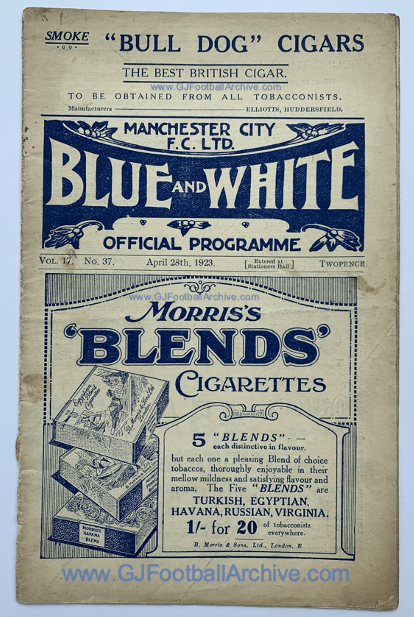
A page from Charles Thurrell’s copy of Hyde Road’s last league game match programme v Newcastle, 28 April 1923
Charles Thurrell’s copy of Hyde Road’s last league game match programme v Newcastle, 28 April 1923

Maine Road 100 – Day 94

It’s Day 94 of my Maine Road 100 countdown (not long to go now!) to the centenary of Maine Road’s first game. Recently I’ve been asked if I know who played most games at City’s old stadium and the answer is that Alan Oakes made more appearances in City’s first team at Maine Road than any other player. Alan made 340 plus one as sub appearances at Maine Road in a City first team shirt.

Alan is also City’s record appearance holder of course. He’s often overlooked these days when people talk about truly great City players but Alan was a model professional, loved by Blues, teammates and opponents alike. Here’s an interview I did with Alan a few years back.

This interview occurred in February 2005 and we discussed his life and career. This appears here as it was originally published.

Alan Oakes joined the Blues at the age of 15 in 1958 and made his first team debut in November 1959 when he was 17 years and 2 months.  He stayed at Maine Road until July 1976 by which time he had made a staggering 564 League appearances.  In February 2005 he was inducted into City’s Hall of Fame, and author Gary James met up with him to discuss his career.

To begin with let’s talk about your childhood, did you come from a sporting background?

We were all very sporty and my father and others played local football – nothing professional – and as a boy I’d play cricket in the summer and football in the winter.  The usual sort of thing – coats as goalposts – and I loved playing.  I progressed into the Mid-Cheshire Boys side and then one day I got the shock of my life when City’s scout Albert Kavanagh knocked on the door and asked me to join the groundstaff.  He’d watched me play at Broughton, Salford, and seemed to like what he saw.  I was astounded and delighted at the same time.  This was a dream moment.

Coming from a Cheshire village like Winsford in the 50s to a big city like Manchester must have been a bit daunting, how did you and your family feel about the move?

It was an opportunity I couldn’t miss.  Other teams showed interest but City meant so much to me.  I’d been to Maine Road a few times – I stood on the old Kippax before it had a roof – and loved the Club.  I wasn’t blinkered though because I also went to Maine Road to watch some of United’s first games in Europe.  Remember they used City’s ground because they didn’t have floodlights and a lot of Blues went to watch the European sides.

Clearly, you saw a wealth of talent during this period, but who were your heroes?

Ken Barnes was a brilliant player and by far the best in his position, and Bobby Johnstone had an amazing footballing brain.  They were great players to watch and later I was fortunate to play with Ken, but my boyhood hero was always Billy Wright from Wolves.  There was something special about Wolves.  They brought over several top European sides for friendlies – I guess they paved the way for the European Cup – and they won so many fans.  They were a great, entertaining side and Billy Wright was their star.  I was still a City fan, but I recognised the quality of Wright and Wolves.

Still only 17 you made your debut in a 1-1 draw with Chelsea, how did you feel about your performance?

I felt okay, but I gave away a penalty!  Fortunately for me Bert Trautmann – the greatest ever keeper – was in nets and he saved the day.  As a member of the groundstaff I’d clean Bert’s boots and even that felt like a great honour, so you can imagine how grateful I felt when he saved the penalty.  The Chelsea game was a one off – I think Ken Barnes was injured – and so it was a few weeks before my chance came again.  I felt a lot of satisfaction that I was in the reckoning though.  When I arrived at City there were 55 professionals and about five teams to progress through to reach the first team.

How did you find the management and coaching staff in those days?

They were all ex-City players and so that was important.  Fred Tilson and Laurie Barnett had played in the 30s finals and coached us, and manager Les McDowall had been a good player in his day.  Clearly the coaching techniques they used were not a patch on Malcolm Allison, but they did what was right for the period.  They also treated me well and looked after me.  I found it difficult adjusting to life in a big city.  I lived in digs for a while, and then moved back home and travelled by train and, eventually, car.  

By 1963 you were a regular but City were entering a difficult period, did that come across to you?

We had a lot of quality in the side but seemed to be conceding too many goals.  We knew we were struggling but we always gave it our best.  After we were relegated in ’63 Derek Kevan and Jimmy Murray arrived.  We were doing really well, then Jimmy did his cartilage in – that was a major blow – and we tailed off.  We missed promotion (6th place) and we couldn’t get it going again until Joe and Malcolm arrived in ’65.  

Although you were still relatively young, you were one of the more experienced players, how did the arrival of Mercer & Allison go down?

It was a great lift of course, but I know we were wary of Malcolm at first.  He had all these ideas and it seemed so different to what we were used to, but within a week or so he’d won everybody over.  The transformation by the two men was so fast – before we’d completed our pre-season games we were convinced we would win promotion.  We couldn’t wait to get started.  The confidence flowed and then Malcolm tackled our fitness.  Of course we won promotion easily, and then held our own in 1966-7.  Don’t forget we had faced a couple of big tests in those first two seasons – We took a strong Everton side to 2 replays in the FA Cup while we were still in Division Two and narrowly lost to Revie’s Leeds the following year.  We lost 1-0 to Leeds with a Jack Charlton goal that should have been disallowed.  So we came away from those games confident we could face any side.  There was nothing for us to fear.

Of course, the Championship followed in ’68 and all the other successes of that great period, which one means most to you?

The Championship and European successes were both very important.  This is a difficult one really, but because I was there during the dark days, I think the most important one had to be the promotion in 1966.  My reason is that without that none of the rest would have followed.  Joe and Malcolm didn’t just get us promoted, they first stopped the rot.  We were going downhill fast and they stopped that, changed gear and pushed us forward quickly, and it wasn’t done with negative play.  A lot of teams pack the defence and try to ensure they don’t lose, we always went out to win and never contemplated holding out for a point.

Throughout your City career people commented that you were a quiet, unassuming, perhaps shy player, was that fair?

I think I was a good professional.  I used to simply get on with it.  I was dedicated and tried to give everything for the Club.  I believe I was a good, honest pro.  If I was asked to do an interview, I’d do it, but I never sought the headlines.  Media coverage was not as it is today, so it was easier in many ways, but I would do it when needed.  More than anything I wanted to make sure my role on the pitch spoke for me.  

By 1973 the Mercer-Allison partnership had ended and some of the other players started to move on, did you contemplate leaving?

Never.  You were worried that you’d be dropped or the next one out, but I never thought about choosing to leave.  Why would anyone want to leave the best club in the country?  I remember thinking that somebody would take my place and that I had to keep performing at the highest level.  In some ways I liked to push myself by thinking of all the people who could take my place, but I never, ever thought about leaving until after the League Cup final of 1976.

The team had changed significantly by 1976, and you were clearly one of the elder statesmen of the team, how did you find that period?

I enjoyed it all, and I remember playing a few games with Peter Barnes in front of me.  I loved that.  He was such a gifted player and it was great for me to play behind someone that exciting at that stage in my career and in his.  I know this came a couple of years after I’d moved on, but it irritated me when Peter Barnes was sold because I believe he could have helped City to real success.  He was the sort of player you built a team around.

While I’m thinking about this, I also believe Mike Summerbee and Francis Lee were sold far too early.  Francis had so much more left in him – he proved that at Derby – and so the break up of the Mercer-Allison team came too rapid.

In July 1976 you moved to Chester, why did you make the move?

I’d had a great season.  I’d played 39 League games and won the League Cup and so there was no pressure to leave, but I did think that I may have blocked some other gifted players coming through.  I was also aware that I’d be 34 when the new season starts and that I may not be up to it in the way I would normally expect.  Chester City were just up the road and for me it was a nice move.  I do remember thinking ‘what have I done?’ because I’d gone from a First Division palace to play at Third Division grounds, but the move was a good one.  Looking back though I was perhaps wrong to leave when I did.  My advice to any player now is to remain playing at the highest level for as long as you physically can.  Those days are precious and should not be cut short.  

I also missed Maine Road a lot when I left and I miss it even more now.  I regret the fact City have left that ground.

At Chester you moved into management, was this something you’d always wanted?

It was part of the attraction of joining Chester that I could become player-manager and I think in the six years I was there we had a great time.  Success is different for a team like Chester, it’s all about survival and so I had to do a lot of work in the transfer market.  I had another ex-City star, Cliff Sear, with me and we worked well together, and I loved every minute at Sealand Road.  Often I’d be trying to negotiate good transfer fees and working hard to sell a couple of players to keep us afloat, and so I got satisfaction from that when it all came right.  I still got a lot of satisfaction from playing as well, so it was a perfect role.

Ian Rush was one of your players.  Is it true he almost came to City?

Yes it is.  Whenever anybody with talent was due to leave Chester I would want them to move to a bigger, better club.  I still love City and so I wanted Rushie to go to Maine Road.  We were having a great cup run and Tony Book and Malcolm Allison came to watch him.  Rush scored twice and I met up with Tony and Malcolm afterwards.  Tony was keen to sign him but Malcolm didn’t rate him for some reason and it all collapsed.  He later went to Liverpool and the rest is history, but I wanted him to go to Maine Road and I wish that deal had occurred.  Of course, you never know how these things would have worked out.

Did you ever consider moving into a higher division as a manager?

Definitely – with City!  It must have been 1983 because I know Billy McNeill was given the job in the end, but I applied for the City job.  I desperately wanted the role because I loved the Club and because I believed I knew exactly what the Club needed.  I’d also served what I thought was a good apprenticeship – six years at Chester taught me a great deal about survival and transfer negotiations.  I knew City had financial problems and that someone with the right experience was needed – the last thing the Club could cope with was someone who needed to spend – and so I felt I was ideal for the role.  Don’t forget what I’d experienced as a player at Maine Road as well.  Most importantly, I understood the Club and all about Manchester football fans and their expectations and needs.   This remains the greatest club in my eyes.

I got an interview at Peter Swales’ house.  A few directors were there and I thought I gave a very good interview.  Unfortunately, I didn’t get the job.  I still wonder what might have happened.

Moving on to today, your son Michael has become a Premier League goalkeeper, is this something you’ve encouraged?

I didn’t push him but I did encourage him.  It’s a great game to be a part of and I love the fact he’s involved.  Joe Corrigan helped him a lot when he was young and so I’m grateful for that, and when he joined Aston Villa I was delighted.  Now he’s at Wolves and I do try to watch him but I find it very difficult.  I’m always in two minds as to whether I want the ball to be at his end of the field or not.  If Wolves are attacking I know he’s safe, but I also know he can’t demonstrate his abilities.  If Wolves are on the defensive I want him to have to make a great save but I’m also worried he’s going to be caught out.  I think he’s doing really well though.  

I once replaced Bert Trautmann in nets – it was against West Ham and he was sent off, so I deputised.  I can’t remember much about it now, but I don’t think Michael would have learnt much if he’d seen it!

Finally, you have made a total of 672 first team appearances for City (including 3 Charity Shield games), how did you feel when you first broke Bert Trautmann’s appearance record?

I was a little bit sad that I took the record off Bert because to me there was no finer ‘keeper and player for the Club, but obviously I felt pleased to have the record.  Personally, I’m looking forward to the day when the record’s beaten.  I know it will take a lot to beat but I hope somebody does it, and if the person who beats it has the same sort of career and enjoyment at City that I have had then he will have had a fantastic career.  This is a great club with terrific fans and I have enjoyed every minute of my time with the Club.

Maine Road 100 – Day 93

For Day 93 in my series of free articles counting down the 100 days to the centenary of Maine Road’s first game I want to do a bit of an attendance feature. Maybe this will put a few myths to bed!  

The Blues have, generation after generation, been one of the English game’s top attractions and Maine Road was an incredible and poweful venue over the years. The Etihad has seen City establish new record average attendances but no English club venue can match what Maine Road achieved in terms of record crowds and it still, all these years on, holds the record for the highest crowd on an English club ground and the record attendance for an English League game – a record City set in 1935 which is currently held by a game featuring United and Arsenal at Maine Road.

The record attendance on a club ground was first set by City in 1924 – 99 years ago! – and was eclipsed by a figure of 84,569 in 1934 – almost 90 years ago. City know how to establish and keep records for decades!

Like all – and I do mean all – English clubs there have been some average attendance lows at Maine Road over the years, but when the entire history of Manchester City at the old stadium is reviewed and the club’s average figures are compared with the national average it is clear that the Blues have consistently been one of football’s most attractive draws.  Take a look at the following:

  • Since the beginning of the Football League in 1888 only nine sides have topped the table for average attendances.  In chronological order of their first appearance at the top of the average table they are: Everton (1888-9), Villa (1898-99), Newcastle (1904-05), Chelsea (1907-08), Tottenham (1909-10), City (1910-11), Liverpool (1922-23), Arsenal (1929-30), & Manchester United (1956-57). City were not based at Maine Road back in 1910 (which makes that even more remarkable) and they were the best supported club again before moving to Maine Road. The first time Maine Road attracted the highest national average was in 1925-26 – which means that City are the ONLY team to have topped the attendance charts at two different venues! 
  • Regularly amongst the best supported sides throughout the inter war period, City’s average exceeded 37,000 for the first time in 1927-28 when the club established a record average crowd for the Second Division.  This was also the entire League’s highest.
  • In 1947-48 City’s average crowd exceeded 42,000 for the first time.  Prior to that season only Chelsea (1919-20 & 1946-7), Arsenal (1934-5, 1936-7,1937-8, & 1946-7) , Newcastle (1946-7), Liverpool (1946-7), United (1946-7), and Wolves (1946-7) had exceeded that figure.
  • From 1975 to relegation in 1983 City were always one of the top 4 best supported sides. Yes, even in a relegation season they were better than all but 3 teams and those 3 teams all finished in the top 4 (one won the League, one the FA Cup and the other finished 4th after winning the FA Cup in the previous two seasons).
  • Since the 1980s whenever City have played outside of the top division, they have tended to be the best supported side in that division.  

In general many people believe success increases support, and while that is undoubtedly true to some extent, for City at Maine Road it was often periods of adversity that proved the loyalty of the Club’s fans.  For example, in 1925-26 when City were the best supported side in Division One and had established a new record average, the Blues were actually relegated.  This coupled with significant poverty and hardship in Manchester at the time should have reduced support but loyalty increased!  In my book “Manchester A Football History” I explore the relationship between attendances and Manchester’s major sides and it is fair to say that City fans can feel immensely proud of their loyalty throughout the history of the game.  Something that cannot be said by all of the League’s biggest names.  

In fact, it is worth highlighting that City have never been the worst supported side in their division at Maine Road (or anywhere else for that matter!) but, of today’s perceived giants, Arsenal (1912-13 – average = 9,100) and Manchester United (1930-31 – average = 11,685) have.  City’s worst average at Maine Road came in the desperate 1964-65 season and was 14,753 (half the average of 1960-61 and a 3rd of City’s 1957-8 figure).  However it is significant that for every League season the club’s average has always been above the divisional average and, apart from 17 seasons, has always been in the top 11 nationally.  Again, few of today’s giants can say that – United’s 20th Century low stands at 4,650 and Chelsea averaged 15,731 as recently as 1988-89. 

For fans average attendances are often used as an indicator of size of club and so a number of people over the years have tried to produce a definitive ‘all-time’ attendance table.  A few years ago analysis by a member of the Association of Football Statisticians (It wasn’t my research – though I was a life member of this organisation) claimed that if stadium capacity was not an issue for any club City would be the fourth biggest side in terms of attendance.  That analysis compared postwar attendance detail with performance on the pitch.   

Figures can be manipulated in many different ways, but City fans should feel proud that the Blues have many attendance firsts that can never be matched by today’s perceived biggest clubs.   

If you have enjoyed this and the other Maine Road 100 articles/features then why not subscribe? For details see:

Maine Road 100 – Day 92

For Day 92 of the Maine Road 100 countdown I’m taking a look at the history of the Kippax Stand… Enjoy!

2024 will mark 30 years since we said goodbye to the terraced Kippax Stand and for those of us old enough to remember those days at Maine Road that stand, above all else, represented the passion fans had for their club.

Unlike most other grounds City’s main terracing ran the full length of the pitch and wasn’t tucked away behind a goal. Because of its positioning the Kippax breathed life into every area of the stadium and was huge.  Originally, it held in excess of 35,000, but even in its final days it still gave the impression of power and passion.

The Kippax was originally known as the Popular Side, matching a similarly dominant feature of the Blues’ Hyde Road ground, when it opened in 1923. That first season it held an estimated 35,000 in a crowd of 76,166 – then a national record attendance for a club ground. In 1934 when 84,569 packed into the stadium City’s vast stand may well have held almost 40,000. Incidentally, that 84,569 became the new national record attendance for a club ground (a record that still stands as Wembley is a national stadium, not officially a club ground). You can read about that crowd and game here:

Incidentally, I know City fans get a lot of abuse these days from fans of certain other clubs about filling stadia etc. Well, if you need any ammunition that 84,569 record crowd is over 22,000 higher than Liverpool’s record crowd (61,905 – a figure which wouldn’t get anywhere near City’s top ten crowds!).

Throughout the period up to the mid-50s the Popular Side developed its reputation but it was when it was roofed in 1957 that it became the true heart of the club. Back then it was extended slightly, although legislative changes had reduced terracing capacities by this time. The club announced it would be known as The Kippax Street Stand and that is what it officially remained until 1994 although most of us knew it simply as The Kippax.  Its capacity by this time was about 32,000, reducing to 26,155 by the end of the 1970s.

The Kippax accommodated fans of every age and gender and, although it was a formidable place for opposition supporters, it was a welcoming stand for Manchester’s Blues. Young children would sit on the walls and railings, while older fans would find their own preferred viewing spot. Here’s a few snippets about the old stand:

  • Originally four vast tunnels (one in each corner and two built into the stand) and two significant stairways allowed fans to move onto the Popular Side.
  • A flag pole, positioned at the back of the terracing up to 1957, allowed a blue and white flag emblazoned with the words City FC to proudly fly. The flag was then re-positioned until it disappeared for good in the 1960s. See:

Maine Road 100 – Day 52

  • Chanters Corner, also known as The Sways, was the area where the more vocal members of City’s support gathered. Packed above a tunnel and next to the segregation fence, fans here often generated the main chants.
  • The 1960s saw The Kippax’s reputation grow. Fans sang their way through success after success as Joe Mercer’s Aces won the European Cup Winners’ Cup and every domestic trophy possible. The Kippax would begin every game with the chant “Bring on the Champions!” and then follow up with a song for every player as they warmed up.
  • The final capacity of The Kippax was 18,300 – making this the largest terraced area at a League ground on its final day (The Kop held its final game on the same day but had a smaller capacity).
  • The Kippax was used for the last time on 30 April 1994 for the visit of Chelsea.
  • The Blue Print flag was a popular presence on many match days from the late 1980s until 1994, making its last appearance at The Kippax’s final game. The flag had been reduced in size by then. But it still covered much of the terracing.  Blue Print was a City fanzine and they had paid for the flag.
  • Segregation was unnecessary for most of the stand’s existence, but by the end of the 1960s a rope would often be used to separate City and United fans on derby day. This was replaced by permanent barriers in the mid-70s which were increased over the years to keep home and away fans apart. Away fans were positioned at the Platt Lane end of the stand by this time.
  • It says much about the passion of the place that in the late 1970s the BBC came to film The Kippax chanting and in full flow.
  • In 1985 when City defeated Charlton 5-1 in a promotion decider on the final day of the season the Kippax was so packed that supporters remain convinced that its official capacity of 26,155 was significantly exceeded. Those of us on the terraces that day will never forget the shock we all experienced when the official crowd of 47,285 was announced – some 5,000 short of capacity!

The Kippax is no more, but those of us who experienced the stand will never forget its power, passion and presence. Its spirit lives on with thousands of Blues who stood there now bringing their own children and grandchildren to the Etihad who, if legislation allows, will soon be able to stand in a section specifically created for that purpose.

If you’re interested you can read how Maine Road got its name here:

While you’re here I’d like to thank you for taking the time and trouble to visit my website. I am not employed by anyone and no one pays me to do research or interviews. I do not have sponsorship or advertising either. I’ve set up this website to help share my 32 years plus writing and research. The intention is to develop the archive and to provide access to as much of my material as possible over the coming weeks, months & years. Subscribers can already access over 280 articles/posts including the entire Manchester A Football History book and audio interviews with former City bosses Malcolm Allison and John Bond.

It costs £20 a year (it works out £1.67 a month) or £3 if you’d like to sign up a month at a time to get full access for as long as you subscribe (see below). Thanks for the support, Gary.

Subscribe to get access – Annual

This has been a sample of the material on http://www.GJFootballArchive.com If you would like to read all the in-depth articles and listen to the audio interviews then please subscribe. It works out about £1.67 a month if you take out an annual subscription (£20 per year). Each subscriber gets full access to the 1000+ articles posted so far and the hundreds scheduled to be posted in the coming weeks.

Subscribe to get access – Monthly

This has been a sample of the material on http://www.GJFootballArchive.com If you would like to read all the in-depth articles and listen to the audio interviews then please subscribe. It works out about £3 a month if you take out a monthly subscription (cancel anytime; access everything since 1 October 2022).

There are plenty of other Maine Road related stories on my site. For details and links see:

https://gjfootballarchive.com/category/manchester-city/maine-road/

Maine Road 100 – Day 90

It’s day 90 of my 100 day countdown to Maine Road’s centenary and today’s feature is about a mysterious abandonment of a Manchester City match at Maine Road. On 7 January 1956, with the score at 1-1 City’s cup tie with Blackpool was abandoned in the 56th minute after fog enveloped the ground. The game was an extraordinary one with City fans angry that it had ever started. In thick fog the referee H Webb (no not that one!) of Leeds said the game should go ahead because, although those in the stands could see little, he claimed he could see both ends of the pitch. So much for consideration for fans!

Blackpool kicked off to start the game but City were unable to see what was going on unless they were close up to the ball. Within 13 seconds Ernie Taylor, who later signed for Manchester United of course, scored without a single City man touching the ball (or even seeing it it seems). 

After 37 minutes the players left the field and it looked like the game would be abandoned but, to the shock of the City players (who seemed to want it abandoning according to some reports, though we all know how things can be incorrectly reported), the match restarted. 

A longer half-time than usual followed but still the game went on. After eight minutes City’s Jack Dyson was fouled in the area – although only the referee, Dyson and the man who committed the foul seemed to know this at the time. Dyson scored the resulting penalty and then a couple of minutes later referee H Webb abandoned the game (maybe it was that H Webb after all!).

Amazingly one newspaper photograph of the game did appear (above), but apart from that it seems the public didn’t see anything. A cartoon appeared in one ‘paper suggesting that fans only found out what happened when they went home and turned on their radios.

Four days later 42,517 attended Maine Road for a 2.15pm kick off on a Wednesday afternoon to see City win the replayed match 2-1.

If you would like to read more pieces like this then please subscribe below. It works out about £1.67 a month if you take out an annual subscription (£20 per year) or £3 a month if you’d like to sign up for a month at a time. Each subscriber gets full access to the 1000+ articles posted so far and the hundreds scheduled to be posted in the coming weeks.

Subscribe to get access – Annual

Read the exclusive content in gjfootballarchive.com when you subscribe. It costs £20 per year or £3 per month (see below). Annual subscribers get access to everything posted since the site was created in December 2020 and throughout your subscription.

Subscribe to get access – Monthly

Read the exclusive content in gjfootballarchive.com when you subscribe. It costs £20 per year (above) or £3 per month (cancel anytime). Monthly subscribers get access to everything posted since 1 October 2022 and throughout your subscription.

Maine Road 100 – Day 87

It’s time for post 87 of my Maine Rd 100 countdown and this is a reminder of the day (4 January) in 1975 when Manchester City played ‘away’ at Maine Road against Newcastle United in the FA Cup.  The tie should have been played at Newcastle but the FA ordered that the match be played at Maine Road following crowd disorder at St. James’ Park the previous season.  City lost the match 2-0.

Were you at this match? If so why not leave your memory as a comment or email it to me for possible future use on this website?

You can read a 1500 article on the 1974-75 season here:

The Story of 1974-75

Maine Road 100 – Day 86

For post 86 of my Maine Rd 100 a photo of Tony Book, Peter Swales and Kaz Deyna. They were photographed at Deyna’s signing in the Maine Rd boardroom. Swales was the City chairman for what became a quarter of Maine Road’s existence, but who were the other chairmen? For the benefit of subscribers to my website I decided to compile for the first time ever a full list of Manchester City’s chairmen since the club’s earliest known game in 1880 through to today. Here goes:

Subscribe to get access

If you would like to read this and all the in-depth articles on this site (including the entire Manchester A Football History book and the audio interview with John Bond) then please subscribe. It works out about £1.67 a month if you take out an annual subscription (£20 per year) or £3 a month if you’d like to sign up for a month at a time. Annual subscribers get full access to the 1000+ articles posted so far and the hundreds scheduled to be posted in the coming weeks.

Subscribe to get access

If you would like to read this and all the in-depth articles on this site (including the entire Manchester A Football History book) then please subscribe. Monthly subscription costs £3 a month if you’d like to sign up for a month at a time. Monthly subscribers get full access to everything posted since 1 October 2022 and the hundreds scheduled to be posted in the coming weeks.