Fifty Years Ago Today: 1976 League Cup Final

Manchester City travelled to Wembley for the League Cup final on this day (28 February) in 1976. Here’s a story of that day…

The huge demand for tickets had seen City secretary Bernard Halford take the unusual step of writing to all the other League clubs, apart from Newcastle of course, asking for any spare tickets from their allocations for the final. Many clubs obliged but still thousands of Blues were denied tickets.

Reaching Wembley was an extraordinary achievement considering the injuries (most notably Colin Bell) and suspensions, and demonstrated a wonderful team spirit that had been galvanised by manager Tony Book and captain Mike Doyle following the controversy surrounding former captain Rodney Marsh earlier in the season. Doyle told the media: ‘The success of this City is the complete team work – and individuals don’t count. I’m sorry Colin [Bell] hasn’t made it, but I’m damned sure it hasn’t weakened our chances, because we’ve proved it. We’ve been without him for three months and still reached Wembley.’

Significantly, every member of the side had already played at Wembley except youngsters Peter Barnes and Ged Keegan. When questioned whether those players would be the weak links Doyle said: ‘Peter is not only a tremendously talented player – he’s got his head screwed on the right way. He just isn’t the sort to get all worked up. In fact, I’ll bet that he could prove the biggest success of the whole match. He’s a natural. He does things superbly without having to think or worry. Keegan is in the same mould. He’ll feel at home, because he’s already one of the City first team pool.  If he wasn’t something special, he wouldn’t be in it!’

The final began with both teams playing attractive football. Newcastle seemed to have the edge for a while, but a foul by Newcastle’s Keeley on Joe Royle brought an important free-kick. Hartford sent the ball to Royle, who headed the ball across the face of the goal. Barnes stormed in to fire a half-volley into the net to give City an eleventh minute lead.

Barnes, who would be announced as the PFA Young player of the Year that weekend, immediately ran off the pitch towards the stands in celebration.

Twenty-four minutes later Newcastle’s Macdonald sent in a low centre. Watson and Corrigan raced for it, but Newcastle’s Gowling managed to get to it first and stab home the equaliser.

The second half started with City determined to get an early goal – and they did! Years later Dennis Tueart explained: ‘The goal itself… [Donachie’s] going, I’ve gone to the far post, then come away from the far post because Tommy [Booth’s] gone there. But as I’ve checked back into the centre, I’d gone in too far, the ball’s gone over to Tommy. Tommy’s got half a head on it and knocked it back. It just went a wee bit behind me. Well, I’d always been fairly good at volleying right from an early age, and I’d scored a goal, probably it was the first or second game of the season, against Norwich. Which I think was technically a better goal, it flew in the net, overhead kick. I’d scored overhead kicks at school, I’d side volleyed which is slightly different, but timing and volleying had always been a strength, and it just came… Any balls that come to you as a forward, no matter which way they come to you, you just try and twist your body and get some kind of contact onto it. Because you know the general area where the goal is, and I connected pretty well, it went across and bounced in.

‘It was important because it was the 46th minute, just after half time, when we got ourselves back in front.’
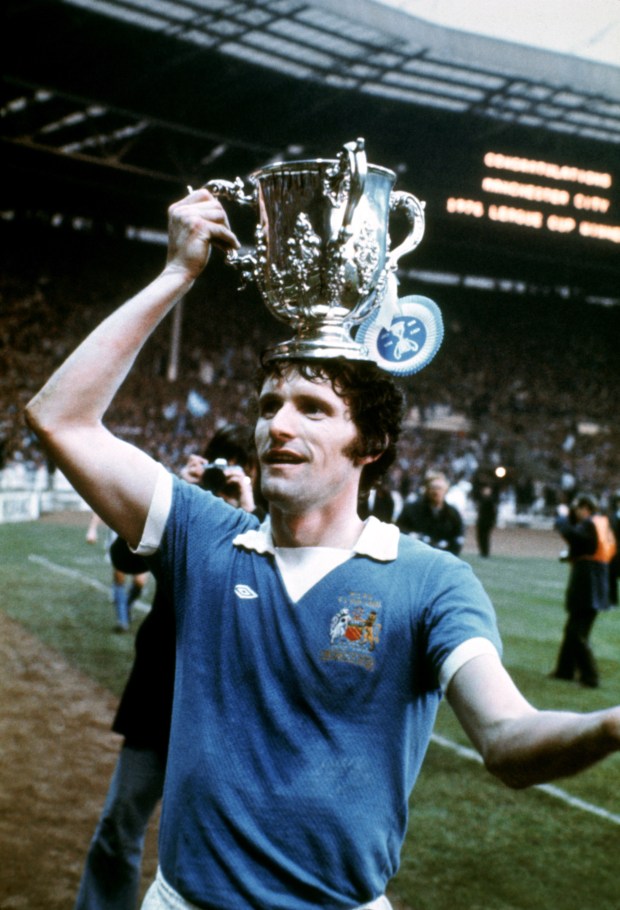
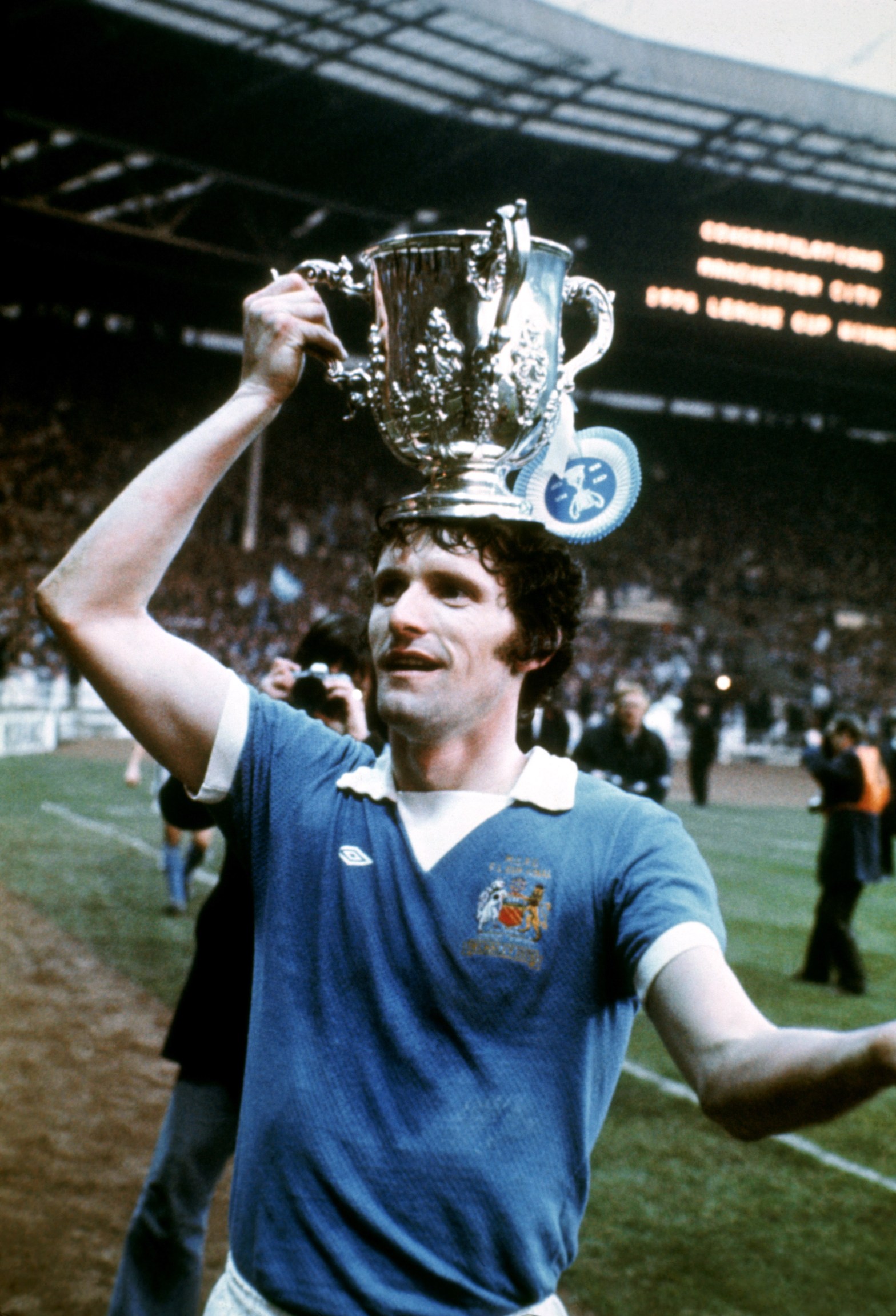
Manchester City’s Mike Doyle celebrates with the League Cup (PAPhotos/Alamy)

Manager Tony Book, who became the first man to win the trophy as a player and as a manager, was delighted with City’s 2-1 win: ‘This was my greatest moment. It was a tremendous final and Tueart’s goal was something special… quite out of this world.’

On the Sunday, City returned home to an incredible tour of Manchester. It was a great day of celebration, and the final would be shown on ITV later that day. In the days before the League Cup was shown live on television, this gave those unable to get a ticket the chance to see the game for the first time. 

Match Stats

28 February 1976

Manchester City 2 (Barnes & Tueart)) Newcastle United 1 (Gowling)

Attendance 100,000

If you enjoy all the free material on my website and would like to support my research and keep this website going (but don’t want to subscribe) then why not make a one-time donation (or buy me a coffee). All support for my research is valued and welcome. It allows me to keep some free material available for all. Thanks.

Choose an amount

£2.50
£5.00
£7.50

Or enter a custom amount

£

Your contribution is appreciated.

Donate

You can read more on the 1975-76 season with this 5,320 word article – a season which saw Tony Book guide the club to major success. If you want to know more on this incredible decade for Manchester City Football Club then why not subscribe and read it all? You could even subscribe for a month and see what you think. The following 5,320 word article is on the 1975-76 season and is available to subscribers below. Enjoy!

Subscribe to get access – Monthly

Read more of this content when you subscribe today. It costs £3 per month (cancel anytime) to access everything posted since 1 October 2022 or there’s a special annual rate below which gives greater access and works out much cheaper.

Subscribe to get access – Annual

Read more of this content when you subscribe today. It costs £3 per month (above) or £20 a year (here) to access everything posted since the site was created in December 2020. This special rate works out about £1.67 a week and gives access to everything posted, including PDFs of 3 of my books.

If you’d like to know more about subscribing then see:

If you enjoy all the free material on my website and would like to support my research and keep this website going (but don’t want to subscribe) then why not make a one-time donation (or buy me a coffee). All support for my research is valued and welcome. It allows me to keep some free material available for all. Thanks.

Choose an amount

£2.50
£5.00
£7.50

Or enter a custom amount

£

Your contribution is appreciated.

Donate
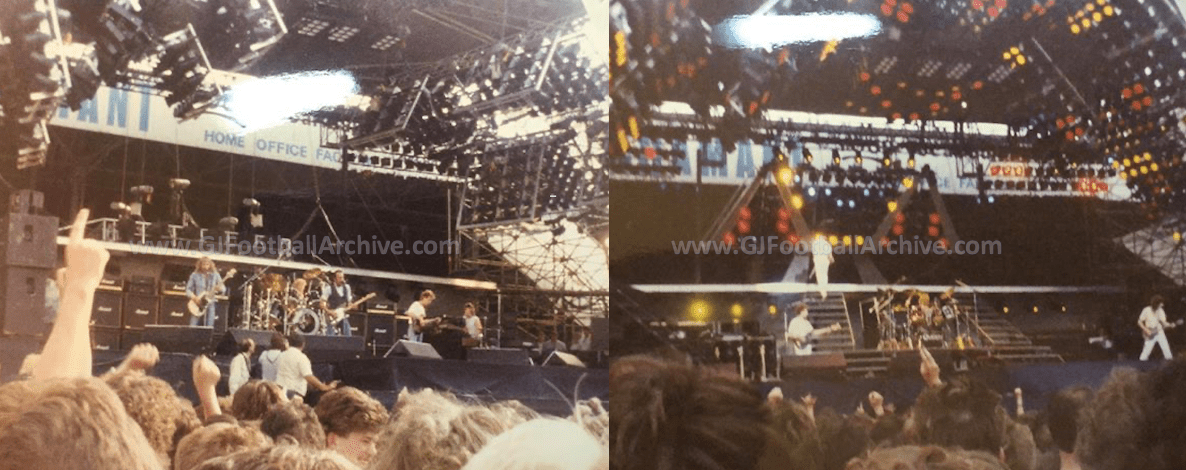
A Kind Of Magic: Cassidy, Queen and Maine Road

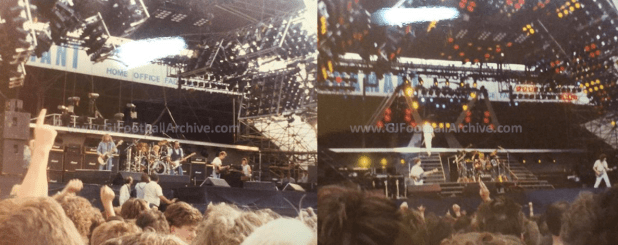
On July 16 in 1986 Queen played Maine Road. This was often considered to be the first major concert at Manchester City’s old stadium. However, it wasn’t. The first was actually a concert by David Cassidy in May 1974. This feature takes a look at that concert and the one by Queen which set the tone for legendary music performances at Maine Road.

Subscribe to get access

If you would like to read this and all the in-depth articles on this site (including the entire Manchester A Football History book) then please subscribe. It works out about £1.67 a month if you take out an annual subscription (£20 per year). Each subscriber gets full access to everything posted so far and the hundreds of articles scheduled to be posted in the coming year.

51 Years Ago: Peter Swales Becomes Chairman

On this day (5 October) in 1973 Peter Swales became Manchester City’s chairman. There was an initial positive blip but after that it was more or less downhill all the way for City. Bad times!

In 1977 the BBC in the northwest showed the following incredible profile of him. On several occasions over the last decade or so myself & Will McTaggart have included this video profile of MCFC chairman Peter Swales in our Boys In Blue film show. Each time those who missed it have asked if they could see a video of it. That wasn’t possible for years but now it is. You can see the Swales profile here…

I would urge all MCFC fans and others to watch this. Some of you may wish to jump to the David Brent-esque clip at 3 mins 20. Others may want to see the Ian Niven roof plan that was thwarted by signing Dave Watson at 1 min 45 secs. Then there’s the scene where Swales gives Watson financial advice (45 secs) and it ends with Swales telling us he was a bit like Kevin Keegan (4 mins).

This really is MCFC gold. Enjoy:

https://bbcrewind.co.uk/asset/6139d63a544c6f0021171865?q=Manchester%20cityu0026amp;size=75

Bernard’s Manchester City Global PR Push!

Today (20 June) in 1992 while English football was gearing up to the first season of the newly established Premier League, Manchester City’s Club Secretary Bernard Halford claimed to have an army containing some of the world’s biggest music stars promoting the club. I’m not entirely convinced this was the truth but Bernard seemed to believe it according to this report.

It makes interesting reading – especially the bit about Mick Jagger, Axl Rose and others asking for a City shirt in their quest to promote Manchester’s Blues.

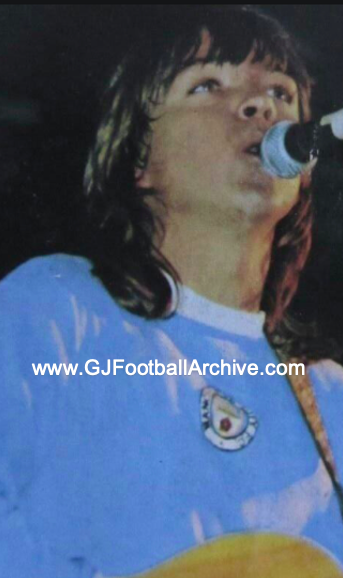
Over the years I interviewed Bernard quite a bit and I do remember him telling me how he’d given Freddie Mercury a City shirt after the legendary Queen concert at Maine Road. This article suggests the same happened with others. I’ve posted previously the David Cassidy image of him in a City shirt at his 1970s Maine Road concert.

I’d love to see a music hall of fame somewhere with an exhibit ‘City shirts worn by rock legends’ – who knows? Maybe they all used to meet up for City chat after Top of the Pops finished?

Status Quo (left) & Queen 1986 concert at Maine Road. Copyright Garry Lippett

Manchester City Break-In

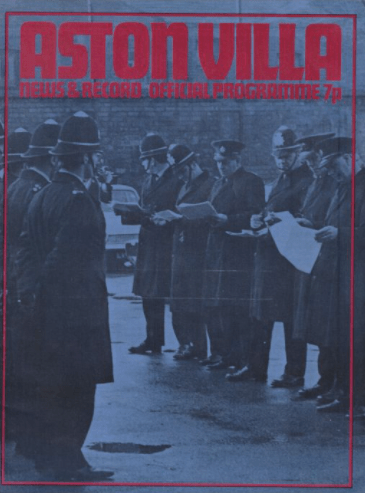
On this day (28 April) in 1903 it was reported that the Manchester City offices had been broken in to. Season tickets, stamps, keys and other articles were stolen (had this been the 1980s I’m sure some comedian would’ve claimed ‘thieves broke into MCFC and stole everything of value… police are looking for a sky blue carpet!’).

Here’s a brief cutting from the period. The punishment? The boys received six strokes each from the birch! In the 1970s Manchester United boss Tommy Docherty (and he wasn’t alone – City’s secretary Bernard Halford agreed with him) suggested that football hooligans should be brought on to the pitch at half time and birched in front of fans!

The 1990s: Loyal Support?

A slight diversion here. The cutting above is from March 1995 and was published in a Liverpool newspaper about attendances at Anfield and Goodison. It’s not worth getting into the local support rivalry that clearly existed on Merseyside then (and probably still does today) but it is worth showing this cutting as it demonstrates that the biggest clubs haven’t always had full stadia.

People assume the 1990s was a decade of full houses but that’s not always the case. The 1994-95 season is an interesting one because there was building work at many stadia as a result of the move to all seater grounds. Manchester City averaged 22,725 which may not sound to great but the season started with City’s capacity down to less than 20,000 for several games. The capacity increased in stages, ultimately reaching about 28,000 that season but this was the first complete season of Franny Lee’s chairmanship and demand was huge.

You can read more on 1994-95 season below. This article is almost 5,000 words long. It’s available to subscribers, so why not subscribe and relive this extraordinary season? As with all these 1990s subscriber features it contains material from interviews I’ve performed with key figures from that time.

Here’s the 5000 word article on that season:

Subscribe to get access – Monthly

Read more of this content when you subscribe today. It costs £3 per month (cancel anytime) to access everything posted since 1 October 2022 or there’s a special annual rate below which gives greater access and works out much cheaper.

Subscribe to get access – Annual

Read more of this content when you subscribe today. It costs £3 per month (above) or £20 a year (here) to access everything posted since the site was created in December 2020. This special rate works out about £1.67 a week and gives access to everything posted, including PDFs of 3 of my books.

This series of articles and features will run throughout March with indepth articles some days and smaller ‘on this day’ style posts on others. There will be flashbacks to great games, players and more. Every day in March will offer something to enjoy.

Subscribers will get access to everything, while some on this day material will be free for all to view.

If you want to know more on this incredible decade for Manchester City Football Club then why not subscribe and read it all? If you’d like to know more about subscribing then see:

The 1990s: 1994-1995 Horton’s Entertainers

The series of articles covering Manchester City in the 1990s continues today with the 1994-95 season. Another significant season and this article is almost 5,000 words long. It’s available to subscribers, so why not subscribe and relive this extraordinary season? As with all these 1990s subscriber features it contains material from interviews I’ve performed with key figures from that time.

Here’s the 5000 word article on that season:

Subscribe to get access – Monthly

Read more of this content when you subscribe today. It costs £3 per month (cancel anytime) to access everything posted since 1 October 2022 or there’s a special annual rate below which gives greater access and works out much cheaper.

Subscribe to get access – Annual

Read more of this content when you subscribe today. It costs £3 per month (above) or £20 a year (here) to access everything posted since the site was created in December 2020. This special rate works out about £1.67 a week and gives access to everything posted, including PDFs of 3 of my books.

This series of articles and features will run throughout March with indepth articles some days and smaller ‘on this day’ style posts on others. There will be flashbacks to great games, players and more. Every day in March will offer something to enjoy.

Subscribers will get access to everything, while some on this day material will be free for all to view.

If you want to know more on this incredible decade for Manchester City Football Club then why not subscribe and read it all? If you’d like to know more about subscribing then see:

The 1990s: Loyal Supporters

I’ll be talking more about fan loyalty in future weeks but today’s feature on the 1990s is a nice reminder of how City fans were viewed during the mid 1990s. Today certain rival fans or people within the media portray the supporters of Manchester City in negative ways. It’s bonkers but I guess that goes with the territory of being a strong, successful club. They can’t criticise the success so they focus on fans, even when that is misplaced. Ah well!

This cutting is from January 1996 when Premier League City were struggling but still selling out game after game. Of course, things got worse that decade but support actually went up as a series of temporary stands were added. The lower City dropped the more determined fans became it seems.

The 1970s: 1972-1973 Allison Leaves

The series of features/articles covering Manchester City in the 1970s continues with a 1,700 word article on the entire 1972-73 season – a season of major change which saw one man who didn’t want to be manager told to take the manager’s job or you’ll be leaving yourself! Oh City! You can read this below. This series of articles and features on Manchester City in the 1970s has been running throughout January with indepth articles some days and smaller ‘on this day’ style posts on others. Every day in January will offer something to enjoy.

Subscribers will get access to everything. If you want to know more on this incredible decade for Manchester City Football Club then why not subscribe and read it all? You could even subscribe for a month and see what you think. The following 1,700 word article is on the 1972-73 season and is available to subscribers below. Enjoy!

Subscribe to get access – Monthly

Read more of this content when you subscribe today. It costs £3 per month (cancel anytime) to access everything posted since 1 October 2022 or there’s a special annual rate below which gives greater access and works out much cheaper.

Subscribe to get access – Annual

Read more of this content when you subscribe today. It costs £3 per month (above) or £20 a year (here) to access everything posted since the site was created in December 2020. This special rate works out about £1.67 a week and gives access to everything posted, including PDFs of 3 of my books.

If you’d like to know more about subscribing then see:

If you enjoy all the free material on my website and would like to support my research and keep this website going (but don’t want to subscribe) then why not make a one-time donation (or buy me a coffee). All support for my research is valued and welcome. It allows me to keep some free material available for all. Thanks.

Choose an amount

£2.50
£5.00
£7.50

Or enter a custom amount

£

Your contribution is appreciated.

Donate
Spend, Spend, Spend Image of Manchester City

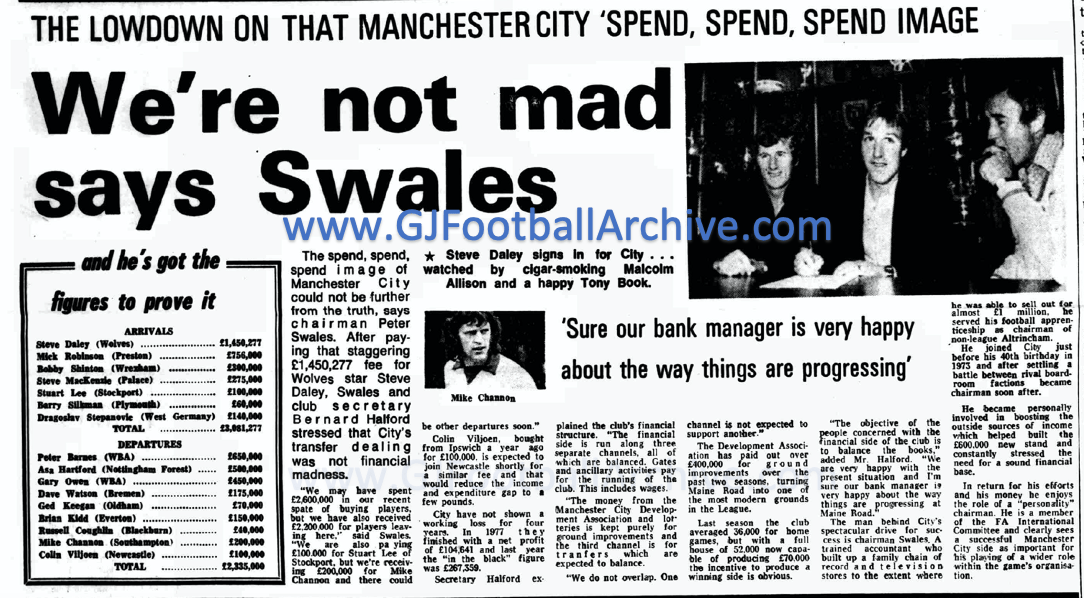
Well, it seems the norm today to talk about the cost of Manchester City’s squad with TV commentators frequently talking about the price of City’s bench. It gets tiring. However, this is not the first time the media talked of City as a ‘spend, spend, spend’ club. Today marks the anniversary of one day in particular when City’s spending caught the media’s attention. That day was on 6 September 1979 when Steve Daley signed for the Blues at a cost of £1,450,277.

City had to defend this spending which – and I know it’s difficult to understand in the modern world of £100m+ footballers – absolutely stunned football. This transfer was the British record but it was perceived as huge.

Chairman Peter Swales’ defence for the spending was that City was a profitable club (see the article) and this is true. City were a hugely profitable club in the 1970s but that all changed over the coming years with Swales, his supporting directors and managers getting giddy trying to buy success. As we all know it takes more than money to generate success and this period of City’s history is the one that actually created the club’s fall from grace, leading to some to believe in the 2010s & 2020s that the club had ‘no history’ and was not a ‘giant’. All that is balderdash. City were a giant who fell unlucky through poor management by a board of directors who did not plan for long term development.

Anyway, lots to say on this but read the article here from 1979 and hopefully that will show the position of strength the club was in (but soon messed up!).

While you’re here why not listen to one of my interviews with Malcolm Allison. You can hear a taster here:

The full interview is available to subscribers here:

More details on the benefits of subscribing here: