Bell, Lee Summerbee Statue

It was great to be at the Etihad today for the unveiling of the statue celebrating the achievements of England internationals Colin Bell, Francis Lee and Mike Summerbee. The statue recognises the achievements of all those involved in winning the major trophies of 1968 to 1970, including City’s first European trophy of course and many of those former players were here for this wonderful day.

Members of the families of Colin Bell, Francis Lee and Mike Summerbee, together with Mike of course, were present to see the statue this morning. After they’d had their personal time with the statue a celebratory brunch occurred. It included a speech from Ferran Soriano and interviews with the sculptor, club archivist Steph Alder, photographer Kevin Cummins, journalist Chris Bailey and myself. We were asked about the significance of the players and that era.

For me one of the most important aspects is that it recognises all the players who appeared in City’s title success of 1968 and in the trophy successes that followed (FA Cup, League Cup and ECWC). That’s significant and fits with comments that all three men have said over the decades that the successes under Joe Mercer and Malcolm Allison were the work of an entire team. Bell, Lee & Summerbee always praised the others.

I love the statue as it shows the men in movement. Often football statues are standing poses or similar, with no suggestion of movement, but this is a wonderful piece of three men moving forward. It’s a great work.

The statue is located in front of the main entrance in a specially paved area which allows fans who want to take a photo to stand with the three men in motion with the Etihad in the background.

There was inevitably some emotion today as Colin and Francis are no longer with us but I do know that Colin was aware that a statue was on its way and Francis did approve the style and saw representations of it. All families seem happy with this work of art.

For those who want to know more on the statues, there will be a film which will be on City’s channel and on YouTube I’m told soon. In the meantime, go and have a look yourself.

Here’s something the club issues a few days ago on the sculptor:

This installation will be located on the west side of the perimeter and will be unveiled on Tuesday morning ahead of a UEFA Champions League meeting with RB Leipzig later that day, where fans will be invited to visit the permanent tribute to an extraordinary era in the Club’s history.

Speaking of his appointment to the project David Williams-Ellis said:

“It is a great honour to create a work of art for Manchester City Football Club celebrating the diverse, talented players, Bell, Lee and Summerbee.

“It’s been an extraordinary last two years, working on this project that celebrates these players from a great era in Manchester City’s football history.

“I hope that the work will give a sense of history and place to the legions of fans and visitors that come to the football ground from around the world and become an enduring part of Manchester’s cultural landscape.”

David Williams-Ellis – Artist Biography

David Williams-Ellis’ sculptures, worked in clay directly from life, are inspired by the romanticism of Rodin and Bourdelle and are noted for their sense of movement and vitality.

David was classically trained in Florence under drawing teacher, Nerina Simi. From there he went on to be an apprentice wood carver and then joined a community of marble carvers beneath the Carrara Mountains in Pietresanta.

David’s reputation was cemented after his time in Italy. Today, his work is in private and public collections across the globe and can be seen in flagship buildings including Scone Palace in Perthshire, Aberdeen’s Maritime Museum, the IFC Building in Shanghai and Oxford House, Swires, Hong Kong.

Amongst his most notable work includes the D-Day Memorial Sculpture, unveiled on 6th June 2019 above Gold Beach in Normandy to commemorate the 22443 service men and women who fell on D-Day and in the Normandy campaign under British command.

Here’s the D Day Memorial:

Today’s the Day: Bell, Lee Summerbee Statue Unveiling

As well as tonight’s European game at the Etihad another major event is happening at the home of Manchester City. The statue celebrating the achievements of England internationals Colin Bell, Francis Lee and Mike Summerbee is being unveiled. I will be there and I know the statue recognises the achievements of all those involved in winning the major trophies of 1968 to 1970, including City’s first European trophy of course.

I’m sure it will be an excellent day. For those who want to know more on the statues, here’s something the club issues a few days ago on the sculptor:

This installation will be located on the west side of the perimeter and will be unveiled on Tuesday morning ahead of a UEFA Champions League meeting with RB Leipzig later that day, where fans will be invited to visit the permanent tribute to an extraordinary era in the Club’s history.

Speaking of his appointment to the project David Williams-Ellis said:

“It is a great honour to create a work of art for Manchester City Football Club celebrating the diverse, talented players, Bell, Lee and Summerbee.

“It’s been an extraordinary last two years, working on this project that celebrates these players from a great era in Manchester City’s football history.

“I hope that the work will give a sense of history and place to the legions of fans and visitors that come to the football ground from around the world and become an enduring part of Manchester’s cultural landscape.”

David Williams-Ellis – Artist Biography

David Williams-Ellis’ sculptures, worked in clay directly from life, are inspired by the romanticism of Rodin and Bourdelle and are noted for their sense of movement and vitality.

David was classically trained in Florence under drawing teacher, Nerina Simi. From there he went on to be an apprentice wood carver and then joined a community of marble carvers beneath the Carrara Mountains in Pietresanta.

David’s reputation was cemented after his time in Italy. Today, his work is in private and public collections across the globe and can be seen in flagship buildings including Scone Palace in Perthshire, Aberdeen’s Maritime Museum, the IFC Building in Shanghai and Oxford House, Swires, Hong Kong.

Amongst his most notable work includes the D-Day Memorial Sculpture, unveiled on 6th June 2019 above Gold Beach in Normandy to commemorate the 22443 service men and women who fell on D-Day and in the Normandy campaign under British command.

Here’s the D Day Memorial:

Bell, Lee Summerbee Statue Latest

Looking forward to Tuesday…

WORLD-RENOWNED SCULPTOR REVEALED AS ARTIST BEHIND PERMANENT TRIBUTE TO CITY’S LEGENDARY TRIUMVIRATE

  • Unveiling confirmed for Tuesday 28 November
  • World-renowned sculptor David Williams-Ellis chosen following exhaustive selection process overseen by Club Chairman Khaldoon Al Mubarak
  • Tribute will celebrate the legacy of Manchester City’s trophy-laden era of the late 1960s and early 1970s Manchester City Football Club is delighted to reveal that world-renowned sculptor David Williams-Ellis is the artist behind a permanent tribute to legendary triumvirate Colin Bell, Francis Lee and Mike Summerbee. A student of eminent octogenarian drawing teacher, Nerina Simi, Williams-Ellis sought out classical training in Florence where his signature style was first established. His sculptures, worked in clay, from life, are inspired by the romanticism of French sculptors Auguste Rodin and Antoine Bourdelle and are noted for their sense of movement and vitality. With exhibitions proudly displayed at Perthshire’s Scone Palace, Aberdeen’s Maritime Museum and the IFC Building in Shanghai, Williams-Ellis is perhaps most famously known for his commission of the Normandy Memorial Trust’s D-Day Sculpture. That monument was unveiled by French President Emmanuel Macron and then-British Prime Minister Theresa May in 2019. Designed and created at his Oxfordshire home studio, Williams-Ellis’s work on this commission has focused on capturing the motion and characteristics of each player and embodying the spirit of their combined 30 years representing Manchester City. This initiative is the latest in a series of tributes to key figures forming the Club’s legacy project, first announced in 2019 and directed by Chairman Khaldoon Al Mubarak. Modern-day legends Vincent Kompany, Sergio Aguero and David Silva were celebrated upon their respective departures from the Club, with each of their sculptures located on the east side of the stadium, in addition to permanent mosaic artworks featured throughout the City Football Academy.

This installation will be located on the west side of the perimeter and will be unveiled on Tuesday morning ahead of a UEFA Champions League meeting with RB Leipzig later that day, where fans will be invited to visit the permanent tribute to an extraordinary era in the Club’s history.

Speaking of his appointment to the project David Williams-Ellis said:

“It is a great honour to create a work of art for Manchester City Football Club celebrating the diverse, talented players, Bell, Lee and Summerbee.

“It’s been an extraordinary last two years, working on this project that celebrates these players from a great era in Manchester City’s football history.

“I hope that the work will give a sense of history and place to the legions of fans and visitors that come to the football ground from around the world and become an enduring part of Manchester’s cultural landscape.”

David Williams-Ellis – Artist Biography

David Williams-Ellis’ sculptures, worked in clay directly from life, are inspired by the romanticism of Rodin and Bourdelle and are noted for their sense of movement and vitality.

David was classically trained in Florence under drawing teacher, Nerina Simi. From there he went on to be an apprentice wood carver and then joined a community of marble carvers beneath the Carrara Mountains in Pietresanta.

David’s reputation was cemented after his time in Italy. Today, his work is in private and public collections across the globe and can be seen in flagship buildings including Scone Palace in Perthshire, Aberdeen’s Maritime Museum, the IFC Building in Shanghai and Oxford House, Swires, Hong Kong.

Amongst his most notable work includes the D-Day Memorial Sculpture, unveiled on 6th June 2019 above Gold Beach in Normandy to commemorate the 22443 service men and women who fell on D-Day and in the Normandy campaign under British command.

Here’s the D Day Memorial:

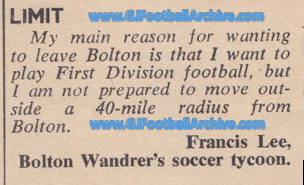
Francis Lee Makes His Views Known

On this day (29 September) Francis Lee’s views on leaving Bolton Wanderers were published in Soccer Star magazine. Hmm, I wonder where he ended up? Do a search on this website and you’ll find the answer. Surprisingly the editorial team didn’t spot the spelling mistake in Wanderers.

Newcastle v Manchester City: The Story So Far

City v Newcastle is one of the most enduring fixtures in English football. There have been cup finals, title deciders, dramatic games, shared heroes and so much more. The two clubs first met in the League in October 1893 (Ardwick/MCFC’s 2nd season in the League) and have since played each other 189 times overall with City winning 76 and Newcastle 72 games.

As tonight is a League Cup tie, the most famous meeting of the teams in that competition came in 1976 at Wembley when Peter Barnes and Dennis Tueart both scored for the Blues.

Anyone at Maine Road on the day City played away against Newcastle at Maine Road? See:

100 years ago there was the last meeting at City’s famous old Hyde Road ground:

In 2012 a Newcastle v City game was crucial in the Blues’ title charge:

Elano’s wonder goal in 2007:

In 2021-22 there was a memorable City victory:

Most Blues of my age and above will remember where they were when our King returned to action on Boxing Day 1977. Here’s an interview I did with him a few years back when we talked about that special day:

When I was a teenager there was a second tier meeting that attracted a significant crowd for the period:

My Dad’s generation will remember the 1955 FA Cup final:

During 1956-57 there was a ‘game of the season’ in the FA Cup between the clubs:

My grandad’s generation would’ve remembered Billy Meredith’s last game:

Who remembers the title decider at Newcastle? Details:

There was a really odd thing a while back where a Newcastle paper claimed that their local team had first worn bar scarves at games. A few simple searches soon proved there were much earlier bar scarfs:

Some of the above are free to read and some are for subscribers only. Follow the link below if you want to find out more about subscribing:

Stan Bowles Debut

This is a rarely seen photo of Stan Bowles celebrating on his Manchester City debut on this day (16 September) in 1967. Bowles scored two that day. I posted the cover from the match programme here last year:

On This Day: Bowles

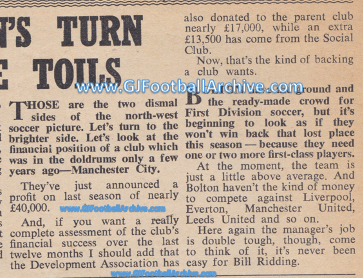
Manchester City Profits

This month (September) in 1967 this article was published highlighting the profitability of Manchester City. I know this is a long time ago but for those who believe City’s profitability is a recent thing it’s worth stating that the Blues were a hugely profitable club until chairman Peter Swales took power. No time to go into all that now (look across this website and you’ll see my posts on it though). Back in 1967 the club was under the stewardship of the Alexander family of course.

Maine Road 100 – Day 94

It’s Day 94 of my Maine Road 100 countdown (not long to go now!) to the centenary of Maine Road’s first game. Recently I’ve been asked if I know who played most games at City’s old stadium and the answer is that Alan Oakes made more appearances in City’s first team at Maine Road than any other player. Alan made 340 plus one as sub appearances at Maine Road in a City first team shirt.

Alan is also City’s record appearance holder of course. He’s often overlooked these days when people talk about truly great City players but Alan was a model professional, loved by Blues, teammates and opponents alike. Here’s an interview I did with Alan a few years back.

This interview occurred in February 2005 and we discussed his life and career. This appears here as it was originally published.

Alan Oakes joined the Blues at the age of 15 in 1958 and made his first team debut in November 1959 when he was 17 years and 2 months.  He stayed at Maine Road until July 1976 by which time he had made a staggering 564 League appearances.  In February 2005 he was inducted into City’s Hall of Fame, and author Gary James met up with him to discuss his career.

To begin with let’s talk about your childhood, did you come from a sporting background?

We were all very sporty and my father and others played local football – nothing professional – and as a boy I’d play cricket in the summer and football in the winter.  The usual sort of thing – coats as goalposts – and I loved playing.  I progressed into the Mid-Cheshire Boys side and then one day I got the shock of my life when City’s scout Albert Kavanagh knocked on the door and asked me to join the groundstaff.  He’d watched me play at Broughton, Salford, and seemed to like what he saw.  I was astounded and delighted at the same time.  This was a dream moment.

Coming from a Cheshire village like Winsford in the 50s to a big city like Manchester must have been a bit daunting, how did you and your family feel about the move?

It was an opportunity I couldn’t miss.  Other teams showed interest but City meant so much to me.  I’d been to Maine Road a few times – I stood on the old Kippax before it had a roof – and loved the Club.  I wasn’t blinkered though because I also went to Maine Road to watch some of United’s first games in Europe.  Remember they used City’s ground because they didn’t have floodlights and a lot of Blues went to watch the European sides.

Clearly, you saw a wealth of talent during this period, but who were your heroes?

Ken Barnes was a brilliant player and by far the best in his position, and Bobby Johnstone had an amazing footballing brain.  They were great players to watch and later I was fortunate to play with Ken, but my boyhood hero was always Billy Wright from Wolves.  There was something special about Wolves.  They brought over several top European sides for friendlies – I guess they paved the way for the European Cup – and they won so many fans.  They were a great, entertaining side and Billy Wright was their star.  I was still a City fan, but I recognised the quality of Wright and Wolves.

Still only 17 you made your debut in a 1-1 draw with Chelsea, how did you feel about your performance?

I felt okay, but I gave away a penalty!  Fortunately for me Bert Trautmann – the greatest ever keeper – was in nets and he saved the day.  As a member of the groundstaff I’d clean Bert’s boots and even that felt like a great honour, so you can imagine how grateful I felt when he saved the penalty.  The Chelsea game was a one off – I think Ken Barnes was injured – and so it was a few weeks before my chance came again.  I felt a lot of satisfaction that I was in the reckoning though.  When I arrived at City there were 55 professionals and about five teams to progress through to reach the first team.

How did you find the management and coaching staff in those days?

They were all ex-City players and so that was important.  Fred Tilson and Laurie Barnett had played in the 30s finals and coached us, and manager Les McDowall had been a good player in his day.  Clearly the coaching techniques they used were not a patch on Malcolm Allison, but they did what was right for the period.  They also treated me well and looked after me.  I found it difficult adjusting to life in a big city.  I lived in digs for a while, and then moved back home and travelled by train and, eventually, car.  

By 1963 you were a regular but City were entering a difficult period, did that come across to you?

We had a lot of quality in the side but seemed to be conceding too many goals.  We knew we were struggling but we always gave it our best.  After we were relegated in ’63 Derek Kevan and Jimmy Murray arrived.  We were doing really well, then Jimmy did his cartilage in – that was a major blow – and we tailed off.  We missed promotion (6th place) and we couldn’t get it going again until Joe and Malcolm arrived in ’65.  

Although you were still relatively young, you were one of the more experienced players, how did the arrival of Mercer & Allison go down?

It was a great lift of course, but I know we were wary of Malcolm at first.  He had all these ideas and it seemed so different to what we were used to, but within a week or so he’d won everybody over.  The transformation by the two men was so fast – before we’d completed our pre-season games we were convinced we would win promotion.  We couldn’t wait to get started.  The confidence flowed and then Malcolm tackled our fitness.  Of course we won promotion easily, and then held our own in 1966-7.  Don’t forget we had faced a couple of big tests in those first two seasons – We took a strong Everton side to 2 replays in the FA Cup while we were still in Division Two and narrowly lost to Revie’s Leeds the following year.  We lost 1-0 to Leeds with a Jack Charlton goal that should have been disallowed.  So we came away from those games confident we could face any side.  There was nothing for us to fear.

Of course, the Championship followed in ’68 and all the other successes of that great period, which one means most to you?

The Championship and European successes were both very important.  This is a difficult one really, but because I was there during the dark days, I think the most important one had to be the promotion in 1966.  My reason is that without that none of the rest would have followed.  Joe and Malcolm didn’t just get us promoted, they first stopped the rot.  We were going downhill fast and they stopped that, changed gear and pushed us forward quickly, and it wasn’t done with negative play.  A lot of teams pack the defence and try to ensure they don’t lose, we always went out to win and never contemplated holding out for a point.

Throughout your City career people commented that you were a quiet, unassuming, perhaps shy player, was that fair?

I think I was a good professional.  I used to simply get on with it.  I was dedicated and tried to give everything for the Club.  I believe I was a good, honest pro.  If I was asked to do an interview, I’d do it, but I never sought the headlines.  Media coverage was not as it is today, so it was easier in many ways, but I would do it when needed.  More than anything I wanted to make sure my role on the pitch spoke for me.  

By 1973 the Mercer-Allison partnership had ended and some of the other players started to move on, did you contemplate leaving?

Never.  You were worried that you’d be dropped or the next one out, but I never thought about choosing to leave.  Why would anyone want to leave the best club in the country?  I remember thinking that somebody would take my place and that I had to keep performing at the highest level.  In some ways I liked to push myself by thinking of all the people who could take my place, but I never, ever thought about leaving until after the League Cup final of 1976.

The team had changed significantly by 1976, and you were clearly one of the elder statesmen of the team, how did you find that period?

I enjoyed it all, and I remember playing a few games with Peter Barnes in front of me.  I loved that.  He was such a gifted player and it was great for me to play behind someone that exciting at that stage in my career and in his.  I know this came a couple of years after I’d moved on, but it irritated me when Peter Barnes was sold because I believe he could have helped City to real success.  He was the sort of player you built a team around.

While I’m thinking about this, I also believe Mike Summerbee and Francis Lee were sold far too early.  Francis had so much more left in him – he proved that at Derby – and so the break up of the Mercer-Allison team came too rapid.

In July 1976 you moved to Chester, why did you make the move?

I’d had a great season.  I’d played 39 League games and won the League Cup and so there was no pressure to leave, but I did think that I may have blocked some other gifted players coming through.  I was also aware that I’d be 34 when the new season starts and that I may not be up to it in the way I would normally expect.  Chester City were just up the road and for me it was a nice move.  I do remember thinking ‘what have I done?’ because I’d gone from a First Division palace to play at Third Division grounds, but the move was a good one.  Looking back though I was perhaps wrong to leave when I did.  My advice to any player now is to remain playing at the highest level for as long as you physically can.  Those days are precious and should not be cut short.  

I also missed Maine Road a lot when I left and I miss it even more now.  I regret the fact City have left that ground.

At Chester you moved into management, was this something you’d always wanted?

It was part of the attraction of joining Chester that I could become player-manager and I think in the six years I was there we had a great time.  Success is different for a team like Chester, it’s all about survival and so I had to do a lot of work in the transfer market.  I had another ex-City star, Cliff Sear, with me and we worked well together, and I loved every minute at Sealand Road.  Often I’d be trying to negotiate good transfer fees and working hard to sell a couple of players to keep us afloat, and so I got satisfaction from that when it all came right.  I still got a lot of satisfaction from playing as well, so it was a perfect role.

Ian Rush was one of your players.  Is it true he almost came to City?

Yes it is.  Whenever anybody with talent was due to leave Chester I would want them to move to a bigger, better club.  I still love City and so I wanted Rushie to go to Maine Road.  We were having a great cup run and Tony Book and Malcolm Allison came to watch him.  Rush scored twice and I met up with Tony and Malcolm afterwards.  Tony was keen to sign him but Malcolm didn’t rate him for some reason and it all collapsed.  He later went to Liverpool and the rest is history, but I wanted him to go to Maine Road and I wish that deal had occurred.  Of course, you never know how these things would have worked out.

Did you ever consider moving into a higher division as a manager?

Definitely – with City!  It must have been 1983 because I know Billy McNeill was given the job in the end, but I applied for the City job.  I desperately wanted the role because I loved the Club and because I believed I knew exactly what the Club needed.  I’d also served what I thought was a good apprenticeship – six years at Chester taught me a great deal about survival and transfer negotiations.  I knew City had financial problems and that someone with the right experience was needed – the last thing the Club could cope with was someone who needed to spend – and so I felt I was ideal for the role.  Don’t forget what I’d experienced as a player at Maine Road as well.  Most importantly, I understood the Club and all about Manchester football fans and their expectations and needs.   This remains the greatest club in my eyes.

I got an interview at Peter Swales’ house.  A few directors were there and I thought I gave a very good interview.  Unfortunately, I didn’t get the job.  I still wonder what might have happened.

Moving on to today, your son Michael has become a Premier League goalkeeper, is this something you’ve encouraged?

I didn’t push him but I did encourage him.  It’s a great game to be a part of and I love the fact he’s involved.  Joe Corrigan helped him a lot when he was young and so I’m grateful for that, and when he joined Aston Villa I was delighted.  Now he’s at Wolves and I do try to watch him but I find it very difficult.  I’m always in two minds as to whether I want the ball to be at his end of the field or not.  If Wolves are attacking I know he’s safe, but I also know he can’t demonstrate his abilities.  If Wolves are on the defensive I want him to have to make a great save but I’m also worried he’s going to be caught out.  I think he’s doing really well though.  

I once replaced Bert Trautmann in nets – it was against West Ham and he was sent off, so I deputised.  I can’t remember much about it now, but I don’t think Michael would have learnt much if he’d seen it!

Finally, you have made a total of 672 first team appearances for City (including 3 Charity Shield games), how did you feel when you first broke Bert Trautmann’s appearance record?

I was a little bit sad that I took the record off Bert because to me there was no finer ‘keeper and player for the Club, but obviously I felt pleased to have the record.  Personally, I’m looking forward to the day when the record’s beaten.  I know it will take a lot to beat but I hope somebody does it, and if the person who beats it has the same sort of career and enjoyment at City that I have had then he will have had a fantastic career.  This is a great club with terrific fans and I have enjoyed every minute of my time with the Club.

Maine Road 100 – Day 81

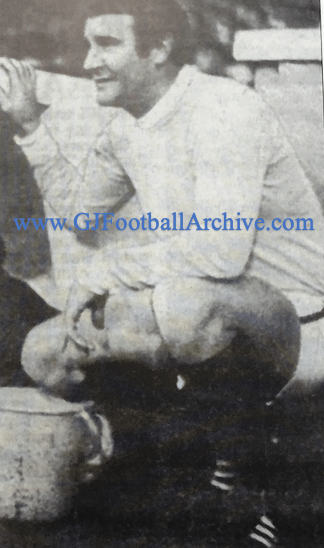
Post 81 of the Maine Road 100 countdown is this image of City’s coach Malcolm Allison in 1968 preparing to come on during a City game at Maine Road. So what was the story? Read on…

The story starts on the final day of the 1967-68 season:

As it had still been possible for either Manchester City or Manchester United to win the League on the final day of the 1967-68 season, the Championship trophy was left at the home of the reigning champions United.

City won the League at Newcastle while United lost 2-1 to struggling Sunderland.

You can read about that final day of the season here:

https://gjfootballarchive.com/2021/05/11/manchester-city-win-the-league/

At United the Championship trophy vanished at some point during that day.  The Daily Express reporter Alan Thompson set off on a mission to track it down.  He started questioning the Old Trafford staff:  “Secretary Les Olive was under the impression that a League official had taken it earlier in the week, Matt Busby was not at all sure what had happened to it, and for a minute or two it was lost until a member of the female staff admitted that it had been locked up ‘in the vault’.  You are at liberty to allow full rein to your imaginations in concluding exactly where the ‘vault’ is at Old Trafford.  But the centre of the boardroom table, where the League Championship Cup has stood proudly for the last 12 months was occupied by five shillings worth of flowers.  Sit down the City fan who says symbolic.”

City still needed the trophy to be presented (Joe Mercer had offered to walk all the way from the Newcastle game to Old Trafford to collect it if he had to!) and so a friendly against Bury was hastily arranged for the Tuesday (May 14 1968) following the Newcastle game to enable the Championship trophy to be presented. 

If the destination of the title was not obvious during the season, the trophy would be presented at the League’s annual dinner but as City would be on tour in America, the League agreed to present it at Maine Road.  The presentation took place before the Bury game with Tony Book and the rest of the players going on a lap of honour before Mercer was handed the trophy to lift above his head.  The crowd roared with delight and then witnessed a 4-2 victory.

Bury’s two goals were scored by Bobby Owen who, two months later signed for the Blues.

The game was noteworthy for it also included an appearance by Malcolm Allison.  For much of the game he’d sat, wearing his familiar red tracksuit then, with about ten minutes left he took the tracksuit off and this image was taken.

Allison then substituted George Heslop and entered the field himself wearing the number 8 shirt.  This caused a little confusion as Colin Bell remained on the pitch with the same number but nobody complained, after all it was a night to enjoy especially when Allison threw himself into the game.  He forced a great save from Neil Ramsbottom, the Bury ‘keeper, and had a goal disallowed.  The City supporters chanted ‘Allison for England’, and even called for Mercer to take to the field. 

Maine Road 100 – Day 78

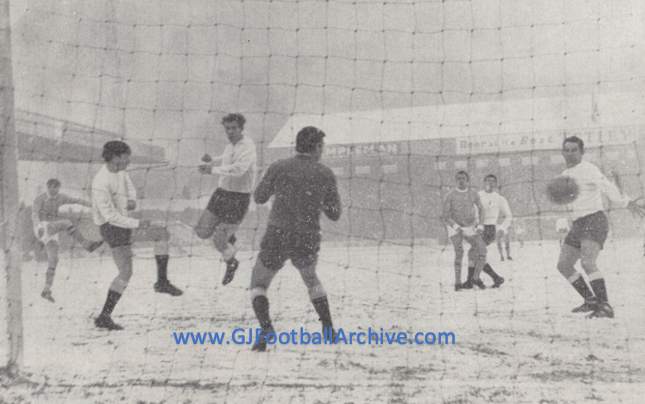
For post 78 of my Maine Road 100 countdown I want to post this reminder of a classic Manchester City v Tottenham gam. It was played on 9 December 1967 became known as the Ballet On Ice.  Manchester United supporter Bobby Greenroyd watched the game on Match of the Day and wrote to City afterwards:  “I am a regular Manchester United fan, but after Saturday’s game your next home gate will be increased by one.”  High praise, particularly as United themselves were on the verge of European Cup glory.

Why and how did this happen and which leading MCFC figure sneaked out to buy a bag of chips while the club celebrated its 1968 League title success? Here for subscribers is an article that explains all….

Subscribe to get access – Annual

Read this and everything else on the site when you subscribe today. It costs £20 a year or £3 per month (see below). Annual subscribers get access to everything posted since December 2020 plus all material during the subscription.

Subscribe to get access – Monthly

Read this and everything else on the site when you subscribe today. It costs £20 a year (see above) or £3 per month. Monthly subscribers get access to everything posted since 1st October 2022 plus all material during the subscription. Why not give it a go for a month?

The snowy image looks towards the Platt Lane Stand (number 5 in this 1971 ground image) from the Scoreboard End goal (number 10 is the Scoreboard End replacement the North Stand).

Maine Road aerial 1971 from Farewell To Maine Road