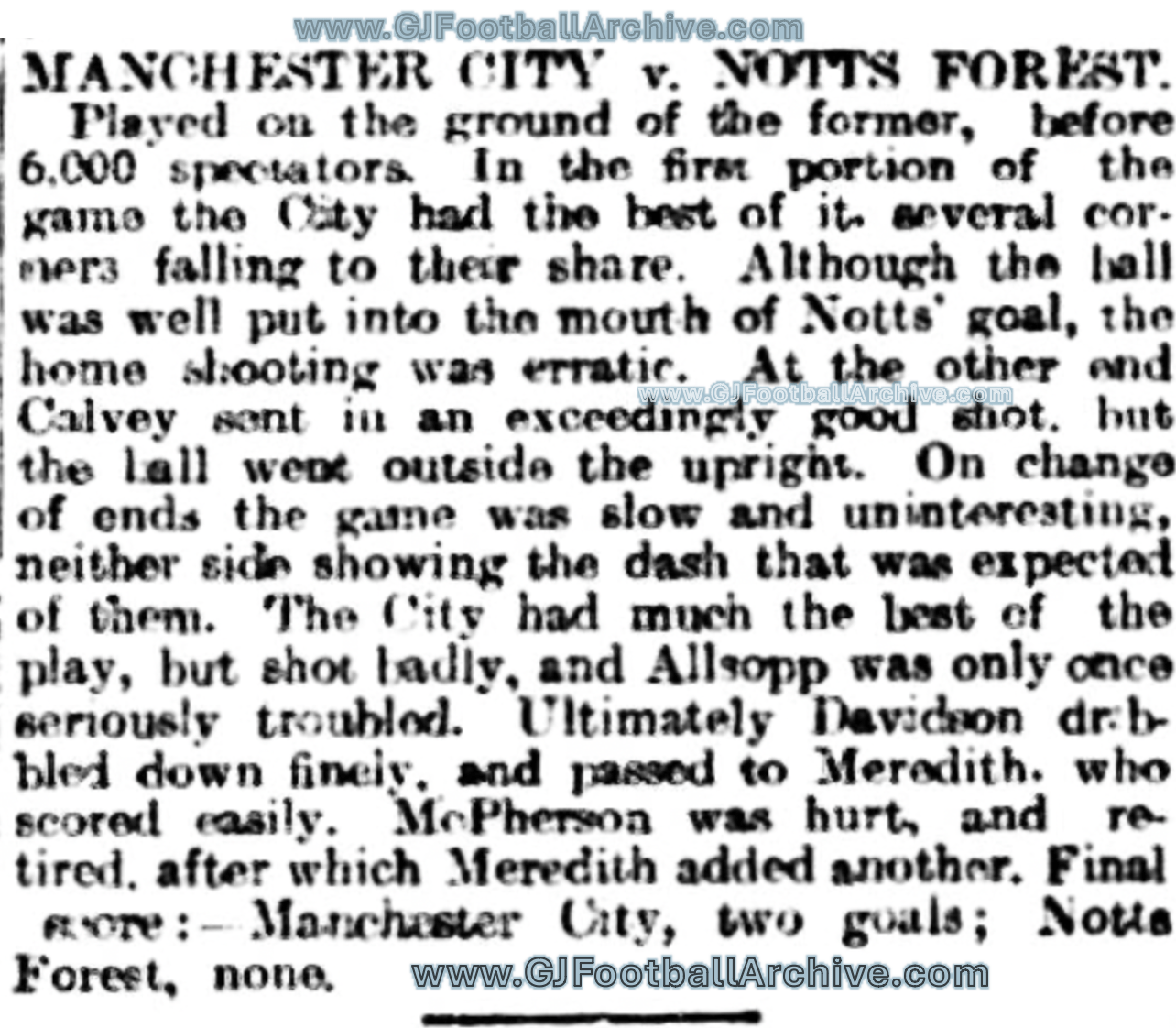
It’s City v Forest tonight (4 March 2026), so here’s a few snippets/features on the two clubs. The first game between them in Manchester was played on 9 April 1900 and ended in a 2-0 City win (see report). This was a First Division game (City became the first Manchester side to earn promotion when they won the Second Division title the previous season). Billy Meredith scored both goals.
Manchester City with the Second Division Shield, 1899
There are quite a few articles on Forest and City on here. Here are all the ones tagged Nottingham Forest:
Also, if you’d like to find out more on the early 1900s for Manchester City then why not start with this subscriber feature on the second half of the 1899-1900 season? It’s a 1300 word article:
Subscribe to get access
Read more of this content when you subscribe today. It costs £3 per month (cancel anytime) or sign up a year at a time for the discounted annual fee of £20. This gives access to everything on the site, including PDFs of 3 of my books and various other articles, interviews and audio material. Each subscriber has access to all content posted during their subscription period too. Why not sign up for a month and see what you think?
For today’s feature I’ve decided to look back to a remarkable day in 1924 when Manchester City and Brighton met in their first competitive game. This ‘first’ also became significant as a ‘last’ moment for one of City’s greatest ever players. That day the legendary Billy Meredith scored his last competitive goal. Remarkably, he was 49 and his return to City’s first team brought significant media coverage.
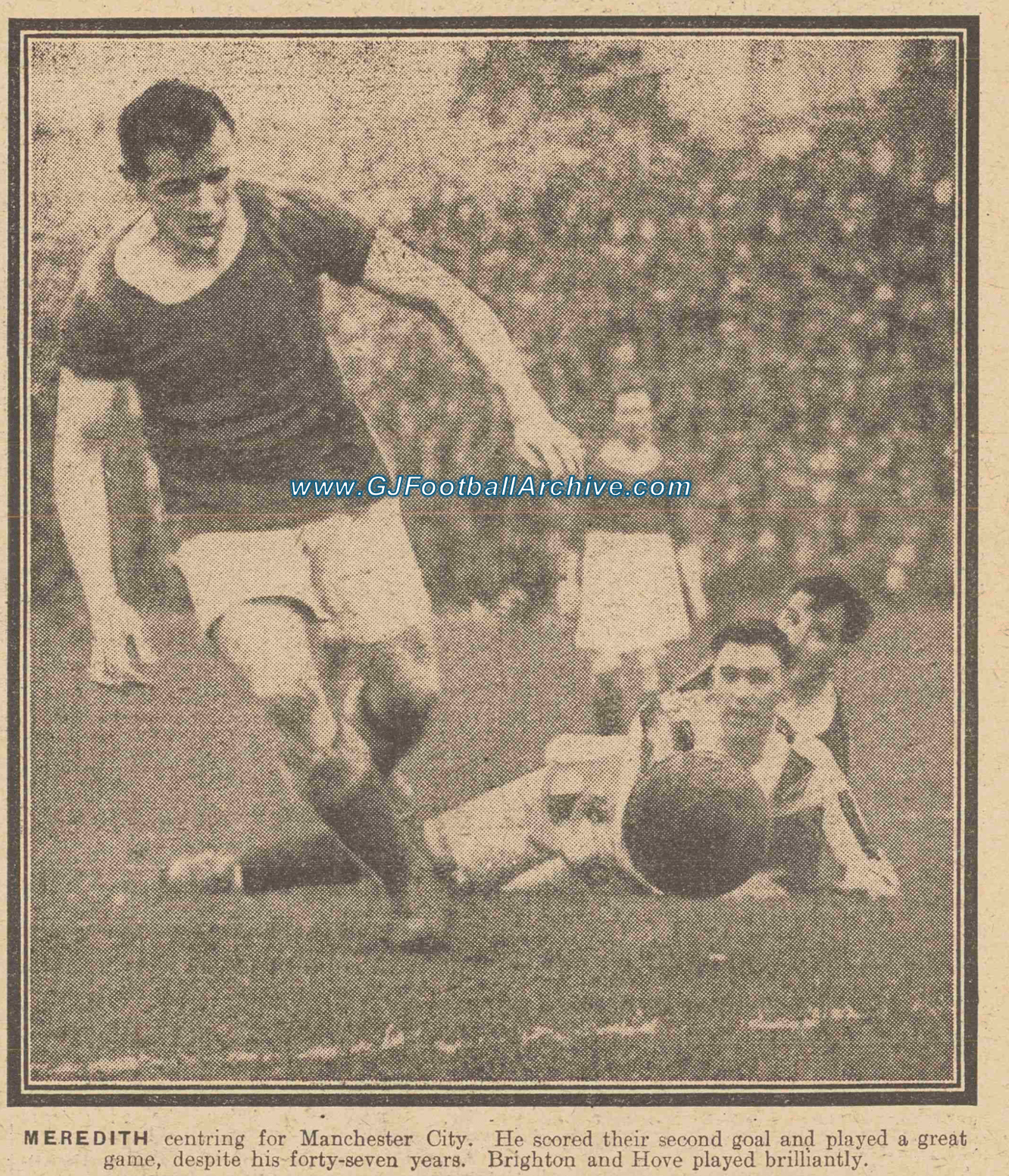
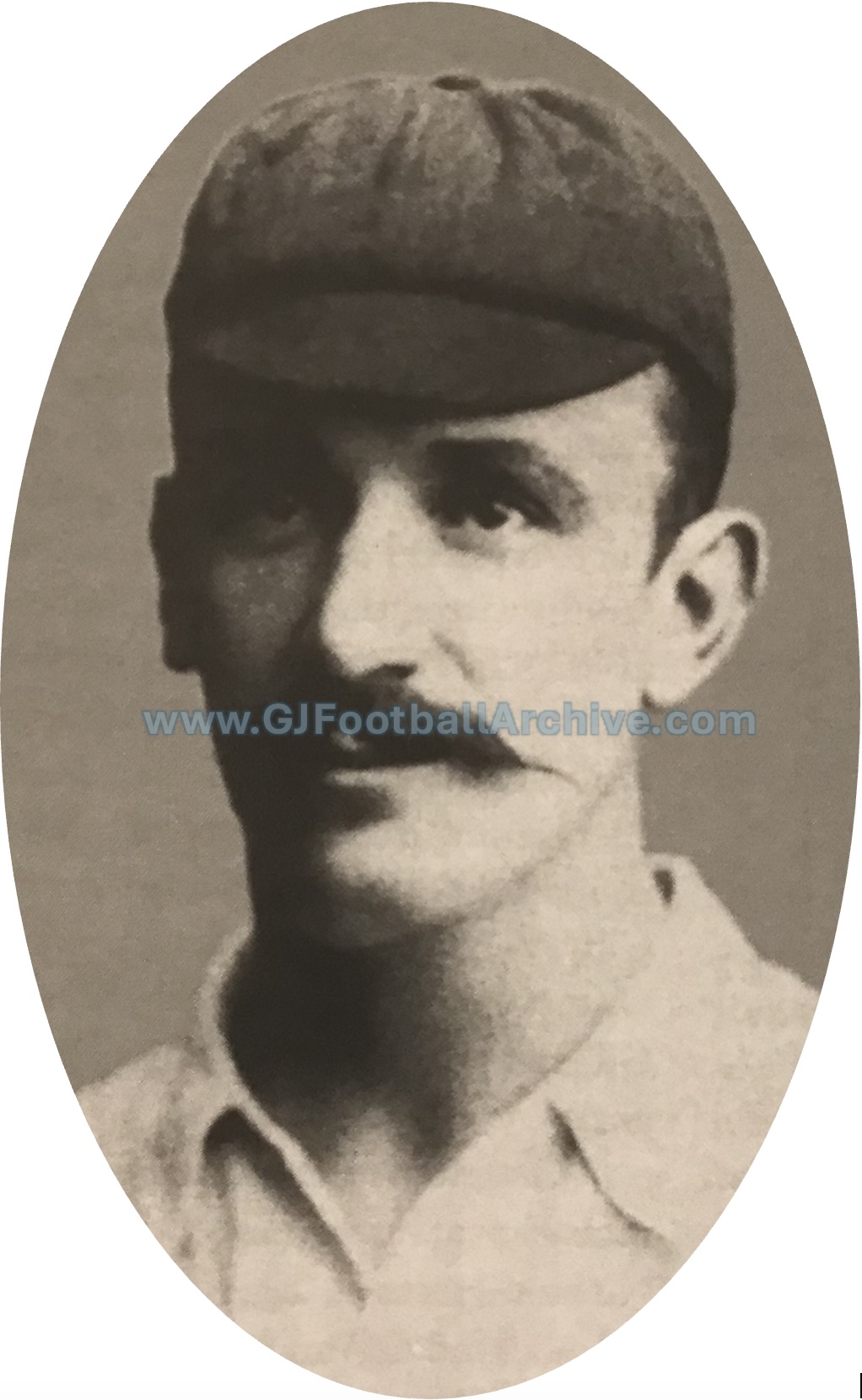
The first ever meeting between City and Brighton was on this day (23 February) in 1924 and this photo is of Meredith during that game. It was a FA Cup tie at Brighton and newspapers were full of Meredith stories. His return was big news. The Manchester Evening News explained: ‘To all intents and purposes, Meredith ceased to be an active member of the first team two seasons ago. Two things have combined to bring him within range of the rather sensational choice now made – sentiment and his own indomitable will to fret his hold on the football stage a little longer… The chief argument in his favour is that from one of his classic centres any match might be won, just as it was when he scored the goal that served to bring the English Cup to Hyde Road twenty years ago next month.’
Meredith had not played in a League game all season – in fact he’d only played one game the previous season! – and he was aged 49. However, he remained the biggest name in football and had captained City to FA Cup success in 1904, scoring the winning goal in the final.
A record crowd of 24,734 packed into Brighton’s Goldstone Ground and Meredith’s inclusion inspired the rest of the team. City defeated Brighton 5-1 and there was even a sentimental moment when a minute into the second half Meredith scored. The Daily Mail described the goal: ‘[Meredith’s] old inimitable ball magic along the touch line remains… Those bow legs still mesmerise the ball, and that great right foot still placed the ball perfectly in the mouth of goal. In this way Meredith got his goal. Hayes grasped the ball, but it spun out of his hands into the net.’
This was to be Meredith’s last-ever first team goal.
This season City reached the FA Cup semi-final, establishing attendance records along the way. Meredith’s inclusion was a masterstroke. The chance of Meredith reaching the FA Cup final had been the nation’s footballing dream, but it could not be fulfilled. In the semi-final City were defeated by Newcastle and the Welshman’s career came to an end. You can read about that game here:
Billy Meredith stopped playing more than 100 years ago but his name remains one all Blues should know. He was our first truly great player and was the game’s biggest star. He joined City in 1894 and, despite a spell at Manchester United, remained a City fan all his life, attending every FA Cup final the Blues played in until his death in 1958.
In 2004 I chatted with his then 98-year-old daughter Winifred, and she said that his heart was always with City: ‘He felt at home at City. I know he had great success at United, but I don’t think they ever really appreciated him in the way City did. I think United were not paying him properly after the war and, because of his age, they probably didn’t value him. But City did, and it’s clear they still love him today. City was always his team and meant more to him than United ever could.’
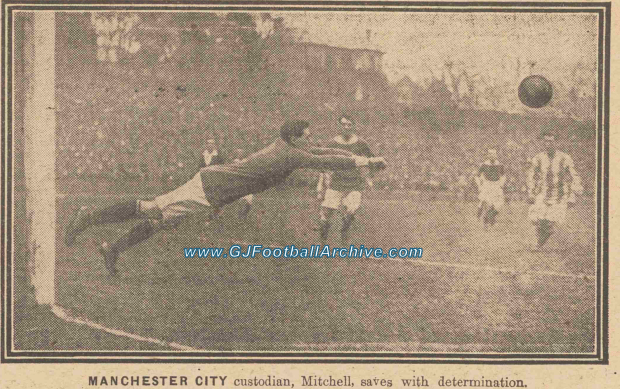
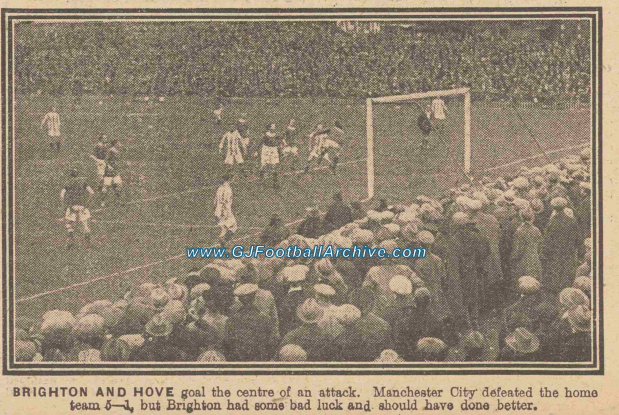
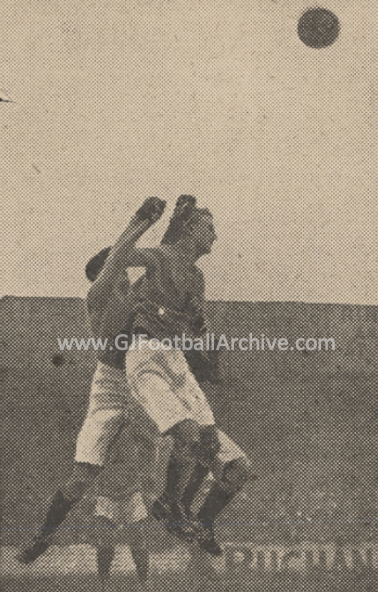
Other images from the game:
One-Time
Monthly
Yearly
If you enjoy all the free material on my website and would like to support my research and keep this website going (but don’t want to subscribe) then why not make a one-time donation (or buy me a coffee). All support for my research is valued and welcome. It allows me to keep some free material available for all. Thanks.
The new series of features on Manchester City in the 1910s continues today with a brief feature on the 1918-19 season when the Football League returned. If you’re a subscriber you can read all about this season below. If you’re not a subscriber then why not sign up for a month and see what you think?
Subscribe to get access
Read more of this content when you subscribe today. It costs £3 per month (cancel anytime) or sign up a year at a time for the discounted annual fee of £20. This gives access to everything on the site, including PDFs of 3 of my books and various other articles, interviews and audio material. Each subscriber has access to all content posted during their subscription period too. Why not sign up for a month and see what you think?
The new series of features on Manchester City in the 1910s continues today with an article on the 1916-17 season. If you’re a subscriber you can read all about this season below. If you’re not a subscriber then why not sign up for a month and see what you think?
Subscribe to get access
Read more of this content when you subscribe today. It costs £3 per month (cancel anytime) or sign up a year at a time for the discounted annual fee of £20. This gives access to everything on the site, including PDFs of 3 of my books and various other articles, interviews and audio material. Each subscriber has access to all content posted during their subscription period too. Why not sign up for a month and see what you think?
The new series of features on Manchester City in the 1910s continues today with an article on the 1915-16 season. People often claim men’s football stopped in the war but it did not. Regional leagues were established and there was regular competition across the Manchester region. City found trophy success too! If you’re a subscriber you can read all about this season below. If you’re not a subscriber then why not sign up for a month and see what you think?
Subscribe to get access
Read more of this content when you subscribe today. It costs £3 per month (cancel anytime) or sign up a year at a time for the discounted annual fee of £20. This gives access to everything on the site, including PDFs of 3 of my books and various other articles, interviews and audio material. Each subscriber has access to all content posted during their subscription period too. Why not sign up for a month and see what you think?
I’ve received separate queries from two major national media outlets today asking whether a record will be set if Semenyo scores in his third consecutive game. They wondered if any player had scored on his debut and in his next two games. Hopefully he’ll play (and score!) against United on Saturday (17 January 2026) but, incredibly, that won’t in itself be a City record as there’s definitely one City player who scored in his debut and the three games that followed (4 consecutive games). There are also others who have netted on their debut and the two games that followed (three consecutive matches). Here are the facts…
One of the media companies mentioned Adebayor and the fact he scored on his debut and in the two League games that followed, making three consecutive scoring League games. That’s true he did, but there was a League Cup tie in between the 2nd and 3rd Premier League games and he didn’t score (he did play). That makes two consecutive games.
There are many City players who have scored in 2 consecutive games such as David Cross in 1982; Stan Bowles in 1967 etc. but there are a couple of players who scored in 3 successive games (regardless of competition) and there’s even a player who scored in 4 consecutive league games (no other game breaks his sequence).
The players/sequences are:
4 consecutive games – (all ‘old’ Div 2/2nd tier): Jimmy Ross – 4/3/1899 (2 goals v Barnsley) & 18/3/1899 (v Walsall) & 25/3/1899 (2 goals v Burton Swifts) & 31/3/1899 (v Gainsborough)
3 consecutive games – Billy McAdams – 2/1/54 (v Sunderland, top flight) & 9/1/54 (FAC, 3 goals v Bradford Park Avenue) & 16/1/54 (top flight v MUFC, so a potential parallel with Semenyo if he scores)
3 consecutive games (all top flight) – Jack Dyson – 8/10/55 (v Sheffield United) & 22/10/55 (penalty v Birmingham City) & 3/12/55 (v Burnley).
There was a big gap between Dyson’s 2nd and 3rd appearances. He’d got his first chance due to injury to striker Bobby Johnstone, then returned to the reserves. His next chance came when he was selected ahead of the great Don Revie (who was having issues behind the scenes with City’s management). Dyson then kept his place for most of the season.
I have to stress I don’t have a comprehensive list of players who scored on their debut and then went on to have a sequence of scoring but I do feel the above are worthy of mention. Jimmy Ross is an interesting figure – he was one of the Preston Invincibles in 1888-89 and scored 7 (occasionally reported as 8) v Hyde in Preston’s 26-0 victory over Hyde in the FA Cup. Ross was a teammate of the brilliant Billy Meredith at City and Meredith often claimed his success back then was down to Ross. Sadly Ross died in 1902 while still a City player.
The new series of features on Manchester City in the 1910s continues today with a 2800 word article on the 1912-13 season – A season which saw United’s most successful manager (at the time) walk out on the Reds to become City’s manager (he believed that City, with the larger pulling power, was a more ambitious club). If you’re a subscriber you can read all about that and the rest of the season below. If you’re not a subscriber then why not sign up for a month and see what you think?
Subscribe to get access
Read more of this content when you subscribe today. It costs £3 per month (cancel anytime) or sign up a year at a time for the discounted annual fee of £20. This gives access to everything on the site, including PDFs of 3 of my books and various other articles, interviews and audio material. Each subscriber has access to all content posted during their subscription period too. Why not sign up for a month and see what you think?
The new series of features on Manchester City in the 1910s continues today with a 1500 word article on the 1910-11 season. If you’re a subscriber you can read this below.
If you’re not a subscriber then why not sign up for a month and see what you think?
Subscribe to get access
Read more of this content when you subscribe today. It costs £3 per month (cancel anytime) or sign up a year at a time for the discounted annual fee of £20. This gives access to everything on the site, including PDFs of 3 of my books and various other articles, interviews and audio material. Each subscriber has access to all content posted during their subscription period too. Why not sign up for a month and see what you think?
Tonight (7 January 2026) Manchester City and Brighton meet in the Premier League. The first game between the two clubs came over 100 years ago in 1924. This game was a newsworthy FA Cup tie due to the return of a legend to the City team. In fact it was so newsworthy that a movie company sent their camera (you’ll see from the footage it never moved!) to Brighton’s Goldstone Ground to capture the return of a true Blue hero.
Here’s film of that game, though sadly we don’t see Meredith or the goal. City are the dark shirted team (actually the club’s ‘Lucky Scarlet’!):
Subscribers can also read an article about that day here:
Subscribe to get access
If you would like to view this article then please subscribe below. It works out about £1.67 a month if you take out an annual subscription (£20 per year) or £3 a month if you’d like to sign up for a month at a time. Each subscriber gets full access to the 150+ articles posted so far and the hundreds scheduled to be posted in the coming weeks.
Now that Erling Haaland has joined an exclusive group of Manchester City players who have scored 100 League goals for the club I thought I’d post a table of all those players. I’ve also listed them in a goals per game format (I’d love to do goals per minutes but we simply don’t have that information for all players). Here goes…
The goals per game ratios for all Manchester City players who have scored 100 league goals or more…
Goals
First Name
Surname
Goals Per Game
Total League Appearances
100
Erling
Haaland
0.9009
111
184
Sergio
Aguero
0.6691
275
126
Billy
Gillespie
0.5780
218
120
Horace
Barnes
0.5530
217
122
Tommy
Browell
0.5495
222
116
Frank
Roberts
0.5370
216
158
Tommy
Johnson
0.4817
328
112
Francis
Lee
0.4498
249
110
Fred
Tilson
0.4472
246
142
Joe
Hayes
0.4290
331
107
Alec
Herd
0.4163
257
146
Billy
Meredith
0.3989
366
158
Eric
Brook
0.3511
450
117
Colin
Bell
0.2970
394
If you enjoy all the free material on my website and would like to support my research and keep this website going (but don’t want to subscribe) then why not make a one-time donation (or buy me a coffee). All support for my research is valued and welcome. It allows me to keep some free material available for all. Thanks.





 Gary James' Football Archive