If you’re lucky enough to get tonight’s match programme look out for my tracker feature. It covers 3 seasons (‘Five, Fifteen & Fifty Years’ ago) and tracks them game by game. Coincidentally (well not quite; I did plan it a little) tonight’s features takes the 1975-76 season to the League Cup final v Newcastle. It also covers the game that followed when, amazingly, Denis Tueart netted another overhead goal which, according to many, was even better than his Wembley effort.
Hopefully everybody will enjoy the article tonight.
Here’s a link to articles about City & Newcastle on this site:
Here’s the Official Programme cover and Manchester City comments (below), published on 27 October 1900 for City’s game with Derby at Hyde Road. Back then the programme was a shared one with Second Division Newton Heath (later United) and a couple of rugby clubs. the comments below on City’s performances and preview of the Derby game are interesting. The 3-0 game it opens with was City’s 3-0 Division One defeat at Sunderland. The Monday game it mentions was a 2-0 victory over Newton Heath in the Lancashire Cup.
The ‘Doctor’ mentioned lower down was City half back William ‘Doc’ Holmes. The preview suggested this would be a tough game for City, though the return of Jimmy Ross was welcomed. Ross, a former Preston Invincible, was a key member of the side and he’d been sidelined for the previous six League games.
The match with Derby ended in a 2-0 victory with both goals scored by Fred Williams. If you’d like to find out more on this season for Manchester City then why not read the following 1200+ word article telling the story of 1900-01? Why not subscribe and read this and all the other content on here? You can even try it for a month at a time if that works best?
Subscribe to get access
Read more of this content when you subscribe today. It costs £3 per month (cancel anytime) or sign up a year at a time for the discounted annual fee of £20. This gives access to everything on the site, including PDFs of 3 of my books and various other articles, interviews and audio material. Each subscriber has access to all content posted during their subscription period too. Why not sign up for a month and see what you think?
Those who saw the Manchester City v Tottenham match programme at weekend May have noticed my new series of articles. This year I’m doing a season tracker feature and have chosen the seasons 1975-76, 2010-11 and 2020-21. Each issue will cover those seasons plus I’ll write a Memory Match feature on a game from that week in one of the three seasons. The three seasons are all important ones in the history of Manchester’s Blues (every season is important of course!) and I hope I can do them justice. The reason I’ve chosen those seasons….
Typically season tracker pick seasons that are a multiple of five and usually focus on 5, 10, 25 years but I felt it was important to look at a season further back, so chose fifty years ago (1975-76 – one of my own personal favourite seasons). I also wanted to recognise the 2010-11 season as that saw Roberto Mancini’s team win their first major trophy. The 2020-21 season was of course a major trophy winning season unde Pep Guardiola.
The Memory Match I chose for the first issue was from 2010 and a day when Liverpool were defeated.
I hope everyone who gets chance to see the programme enjoys the four page feature. Thanks, as always, to those who support my writing.
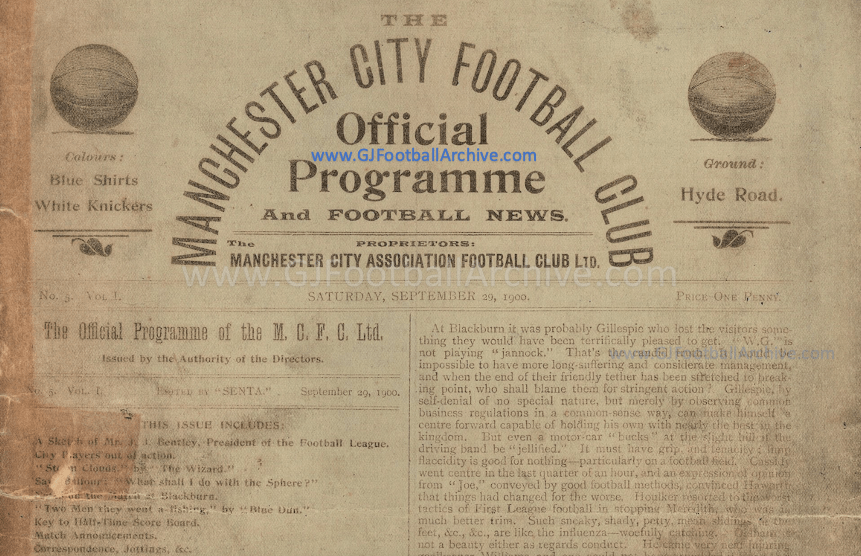
Always a controversial question but back in the early 1900s there was only ever one answer and that was Manchester City who were often referred to as simply ‘Manchester’ in official publications for both City and their Manchester rivals. Here’s an image of the title section of the official programme which directly references ‘Manchester’ (meaning City) and Newton Heath.
Obviously, as there was no Manchester United then I guess it was inevitable that City would be known as Manchester to some. It just surprises me that an official publication for both clubs would use ‘Manchester’ so regularly. Presumably both clubs were happy with this. So if anyone asks ‘which club is Manchester? then the one both were happy to call Manchester must be in with a big shout!
On another topic… notice the opportunity to have your flask filled up at City’s headquarters, the Hyde Road Hotel, before the match? Imagine if that option was brought back at the Etihad!
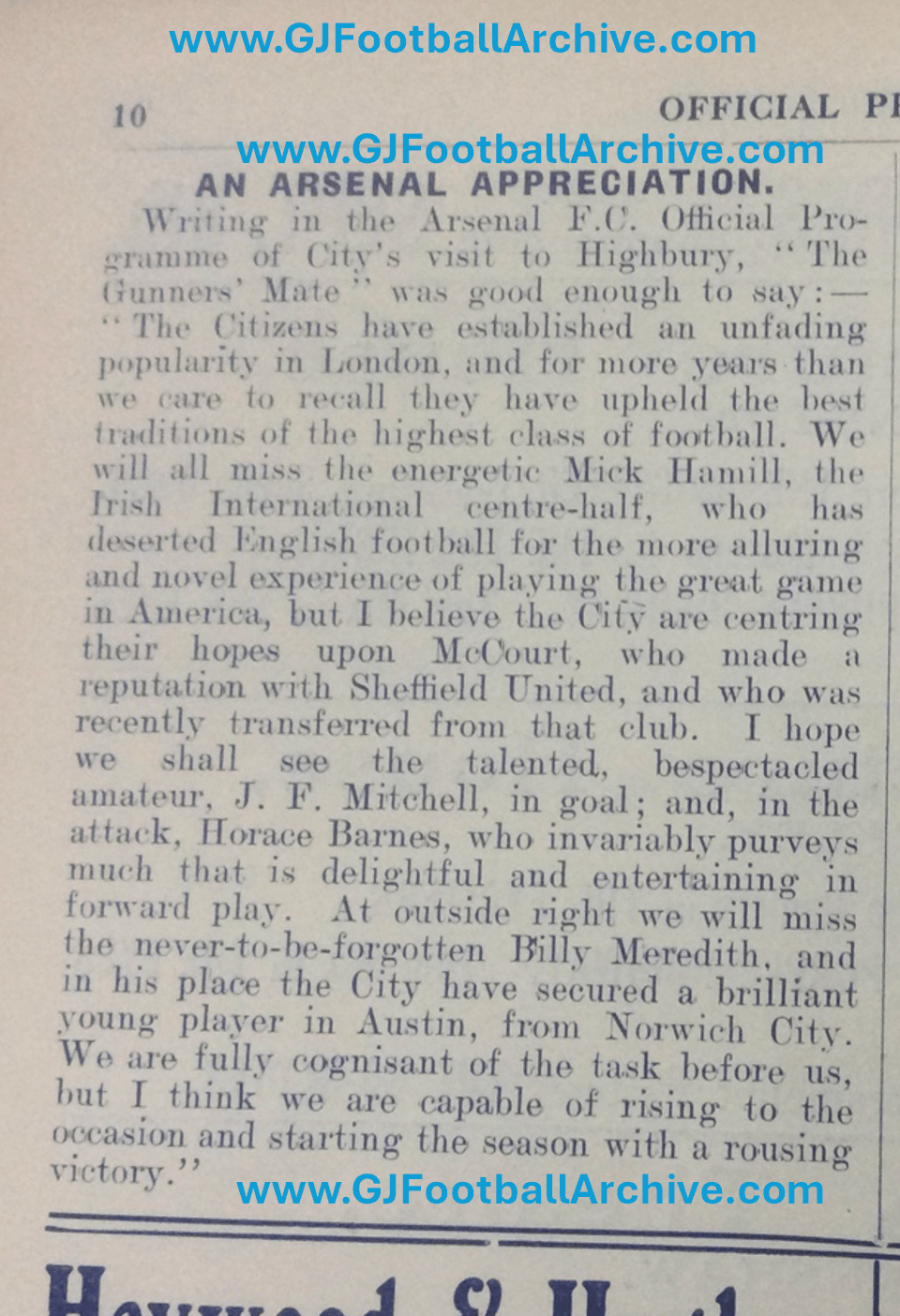
In September 1924 the Manchester City match programme referred back to City’s welcome at Arsenal (Arsenal game was played on 1 September 1924). Apparently in the Arsenal programme City were described: ‘The Citizens have established an unfading popularity in London, and for more years than we care to recall they have upheld the best traditions of the highest class of football.’
It’s great to read how City were viewed back then, especially as in the last decade or so some connected with the London club have tried to imply City have ‘no history’ or little connection to the period before Arsenal won a major trophy (Arsenal’s first major trophy came in 1930; City’s first was in 1904). Views change over time of course.
Notice the use of the word ‘Citizens’ too. Often clubs, including City, used that nickname for the Blues.
If you’d like to know more about Manchester City in the 1920s then have a read of this subscriber article on the 1924-25 season. If you subscribe (see below) I hope you enjoy it. If you are not currently a subscriber then why not try it for a month (£3 per month or sign up for a year at a discounted £20 per year)?
Here’s the article:
Subscribe to get access
Read more of this content when you subscribe today. It costs £3 a month (cancel anytime) or sign up for a year at £20 per year. Subscribers have access to the 1000s of articles, features, interviews etc. posted so far and all those posted during your subscription.
People often talk about the amounts players make and whether clubs get value for money so this may interest those who like to know what footballers earned in days gone by. This is an article from the Manchester City match programme at the start of the 1937-38 season spelling out what bonuses players could earn that season. Back then there was a maximum wage of £8 per week (£6 in close season) for players plus the potential for the bonuses outlined here. Note also the changes to football laws were listed too in the programme. Imagine a world where we knew what bonuses players were on and could calculate their wages game after game! Social media would love that!
You can’t find out every penny earned but you could read more on the 1937-38 season for Manchester City here – it’s a 1,800 word subscriber article on the 1937-38 season. If you subscribe (see below) I hope you enjoy it. If you don’t subscribe then why not try it for a month (£3 per month or sign up for a year at a discounted £20 per year)?
Here’s the article:
Subscribe to get access
Read more of this content when you subscribe today. It costs £3 a month (cancel anytime) or sign up for a year at £20 per year. Subscribers have access to the 1000s of articles, features, interviews etc. posted so far and all those posted during your subscription.
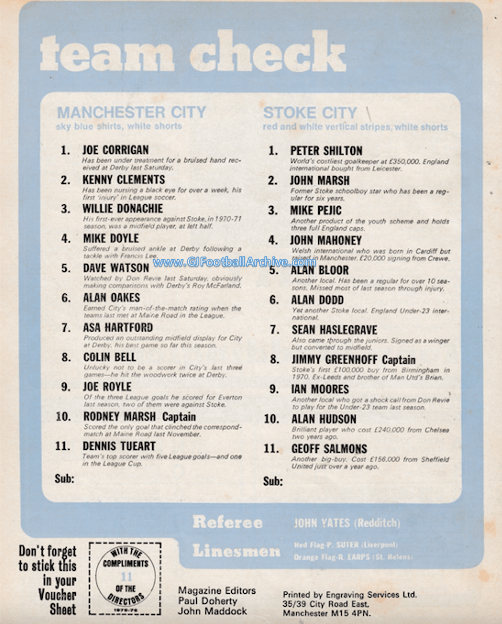
On this day in 1975 Manchester City faced Stoke at Maine Road.
Here for subscribers is a flashback piece detailing what features were in the MCFC match programme that day and game information:
Subscribe to get access
Read more of this content when you subscribe today. It costs £3 per month or sign up for a year at the discount price of £20 per year. Why not subscribe for a month and see what you think?
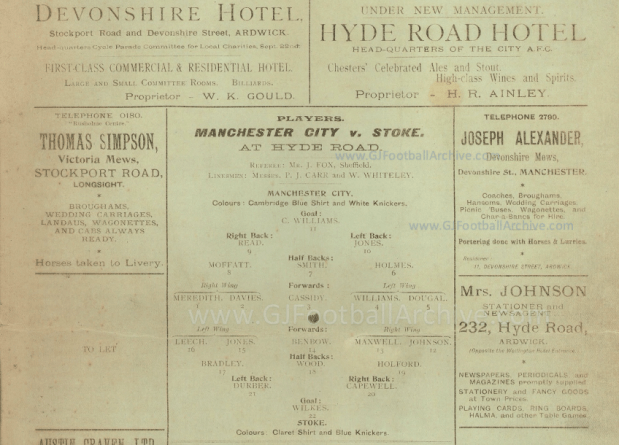
Recently I’ve been contacted by someone who had in their possession a couple of Manchester City match programmes from 123 years ago. These were from the first season the club did its own official match programme (there was an earlier joint effort between 2 rugby and 2 football clubs that was described as official from the 1890s – see below – but 1900-01 was the first for MCFC on their own). He sent me scans of them and one programme was produced for a match played on this day (29 September) in 1900. Here are some images and details from it.
This was a special game for City, though the programme was not produced because it was a special game. This was the fifth issue of the season and contained eight pages, like the others. The significance of the game however was that Arthur Balfour MP was a visitor that day. Balfour would become Prime Minister in 1902 and was still in that role when City won the FA Cup for the first time in 1904 (he wore a City rosette at the final!).
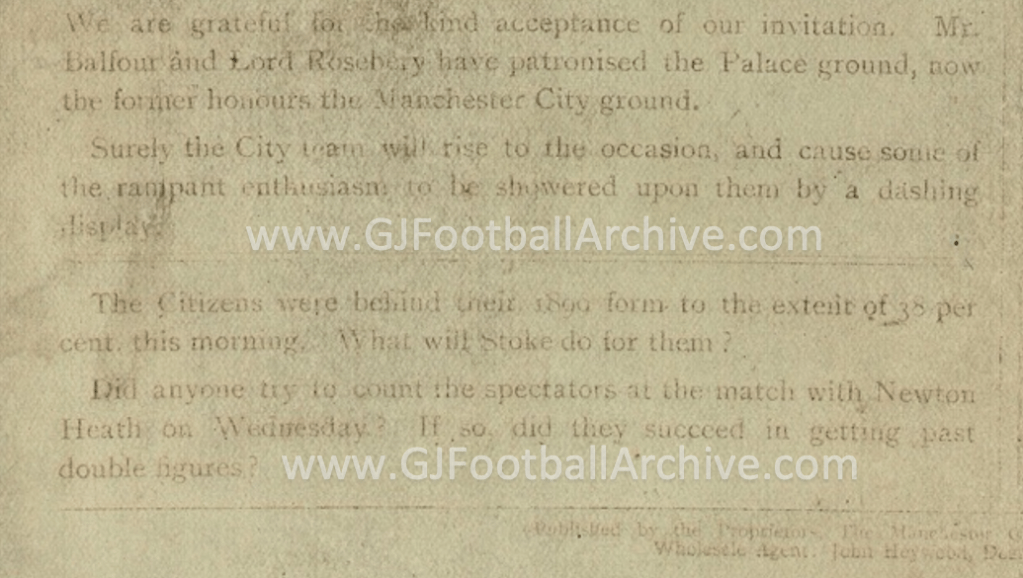
The back page talks about Balfour’s visit. Both the front and the back pages are quite difficult to read as they’ve faded. It is interesting that the club felt able to make light of Balfour’s lack of enthusiasm for ‘socker’ (yes, socker or soccer as we grew to call it, was an English word for association football before the Americans became recognised for their use of it). Balfour preferred golf (after the 1904 FA Cup final he called himself a football ‘ignoramous’. Bob Hulmes, who sent the programme scans to me, managed to transcribe the wording regarding Balfour:
Says Balfour: “What shall I do with the sphere?”
We have specially desired fine weather today as the Right Hon. Arthur James Balfour is due to make his first appearance on the Hyde Road Football enclosure this afternoon. Some little decoration will be made, for the most pleasing sight to the hon. gentleman will be a mighty crowd of enthusiastic well wishers. It is not often that we have a leader of the nation at such functions, and the occasion is historic as far as Manchester is concerned. No doubt our honoured guest wishes he had the opportunity to open a game of golf instead of socker but we are ready to excuse a “miskick” on this occasion. We are grateful for kind acceptance of our invitation. Mr Balfour and Lord Rosebery have patronised the Palace ground, now the former honours the Manchester City ground.
Surely the City Team will rise to the occasion and cause some of the rampant enthusiasm to be showered upon them by a dashing display.
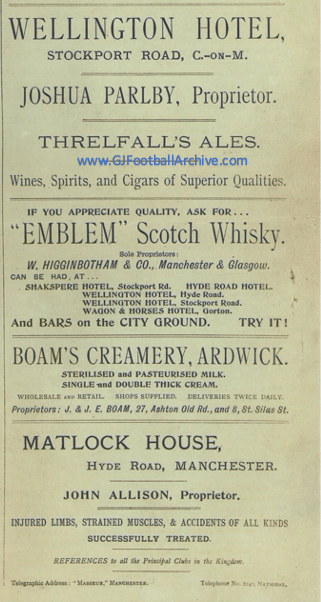
It’s worth noting some of the advertisements. There’s one for Joseph Alexander’s coaches and carriages (the Alexander family business. Note: The Alexanders remained key members of City’s management/directorship/shareholding for most of the 120 years that followed!). There’s also the Wellington Hotel, Stockport Road, which was run by the ever popular City official Joshua Parlby, and the Matlock House Hydro – one of City director John Allison’s business.
The game was against Stoke and they are wearing their then home colours of ‘claret shirts and blue knickers’.
Bob also nudged me towards page 8 which included a wry comment about the previous Wednesday’s friendly at Newton Heath (United):
Did anyone try to count the spectators at the match with Newton Heath on Wednesday? If so, did they succeed in getting past double figures?
The official attendance was estimated by Newton Heath as 600 (I wonder if they had a mickey-take name along the lines of Emptyhad for United’s games at Bank Street?
Before the 1900-01 season there was an official match programme produced for both Newton Heath and Manchester City, alongside a couple of rugby clubs. It was first ‘mocked up’ in May 1898 but went into production for the 1898-1899 season. It continued into the 1900-01 season by which time City were producing their own official programme. Both programmes were in competition throughout that 1900-01 season.
From 9 May 1898 the first Manchester football programme was a mock up based on Everton Liverpool programme
Thanks to Bob Hulmes for allowing me to us images of his match programme. The programme belonged to Bob’s grandfather. He lived in Ardwick, near Hyde Road, and he followed City until his death in 1964. Bob found two programmes from 1900 lining a drawer when his grandfather died in 1964, which shows exactly how rare these images are. It’s a pure fluke in many ways that they survived and fortunately the family looked after them over the decades.
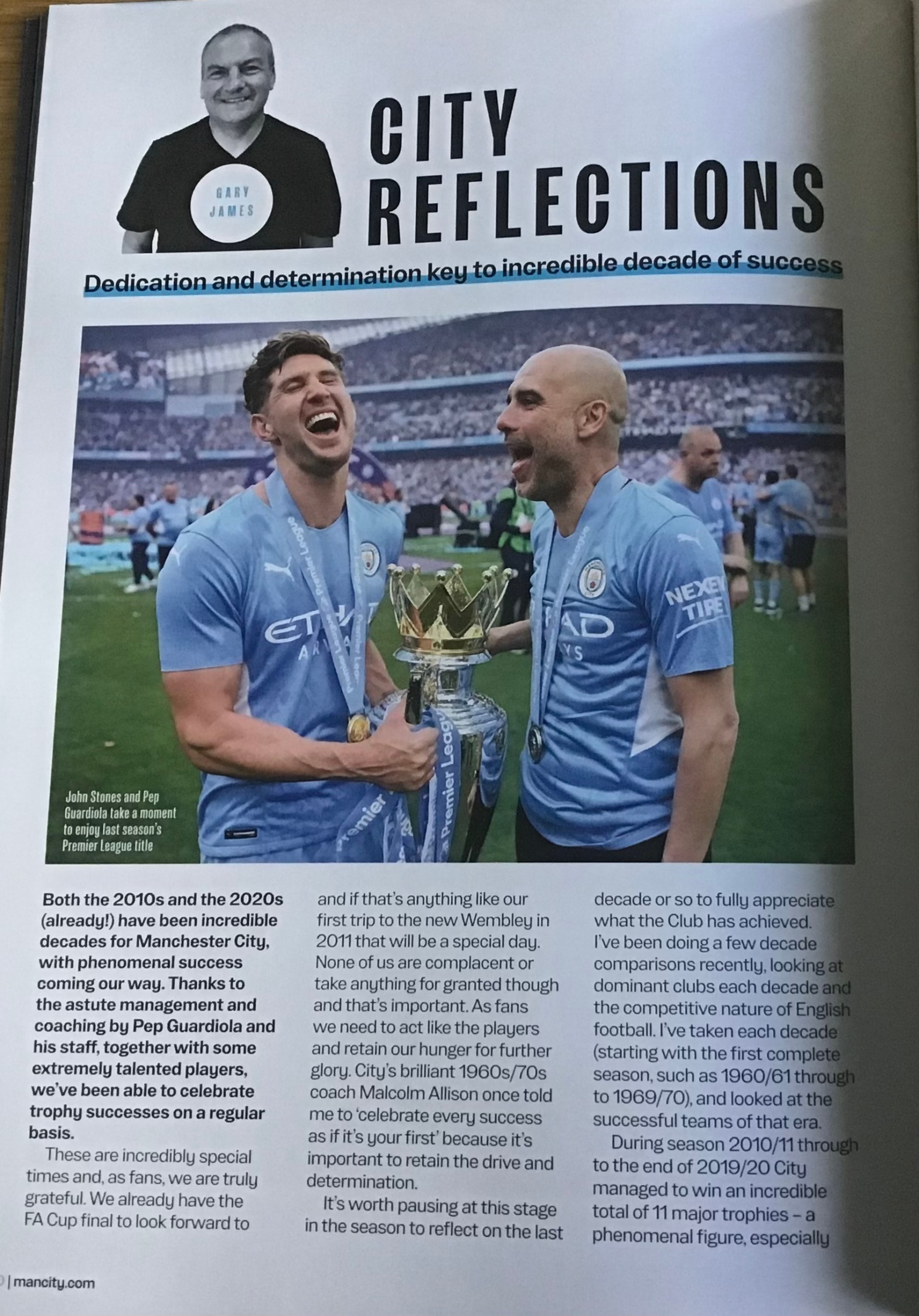
I’m delighted to say that I’ve been asked to write for the Manchester City match programme again this year. This time I’ll be doing a feature on each of the seasons City have spent at their current home. It won’t be chronological – I’ll vary the seasons each game – but I do start this weekend with the 2003-04 season. I’m looking forward to it developing over the season.
This season will see the 30th anniversary of my first article in the MCFC match programme. It was a piece on the history of the Kippax Stand for a special pull out section of the programme for the final game of the 1993-94 season (the last in front of the old Kippax). After that I was asked later in the decade to fill in for City’s historian/statistician John Maddocks on occasion. It meant the world to me when John put my name forward to Polar Publishing to cover for him during a period of ill health. John trusted me to keep up the excellent work he’d been doing since the 1980s and I wanted to make sure I delivered to his standards and that of publisher Julian Baskcomb.
Eventually, following John’s death I was asked to continue writing for the programme throughout the 2000s. Many years ago I was dropped (and quickly reinstated thanks to some moving letters & emails to the person responsible from fans) and some competitions (typically FA Cup & League Cup) do not always have my feature in them, but other than odd programmes I have been fortunate to write my own feature every season for about 22 seasons (apart from that season when Covid meant a programme was not physically printed).
Thanks to Reach for asking me again but mostly thanks to those who read my programme articles and have helped over the years. I’m always amazed when I hear that someone has enjoyed my articles, so thanks. It means a lot and here’s hoping this next season is successful both for the articles and for City of course (what am I talking about – it already is successful for City! Another European trophy! Nice work Blues!).
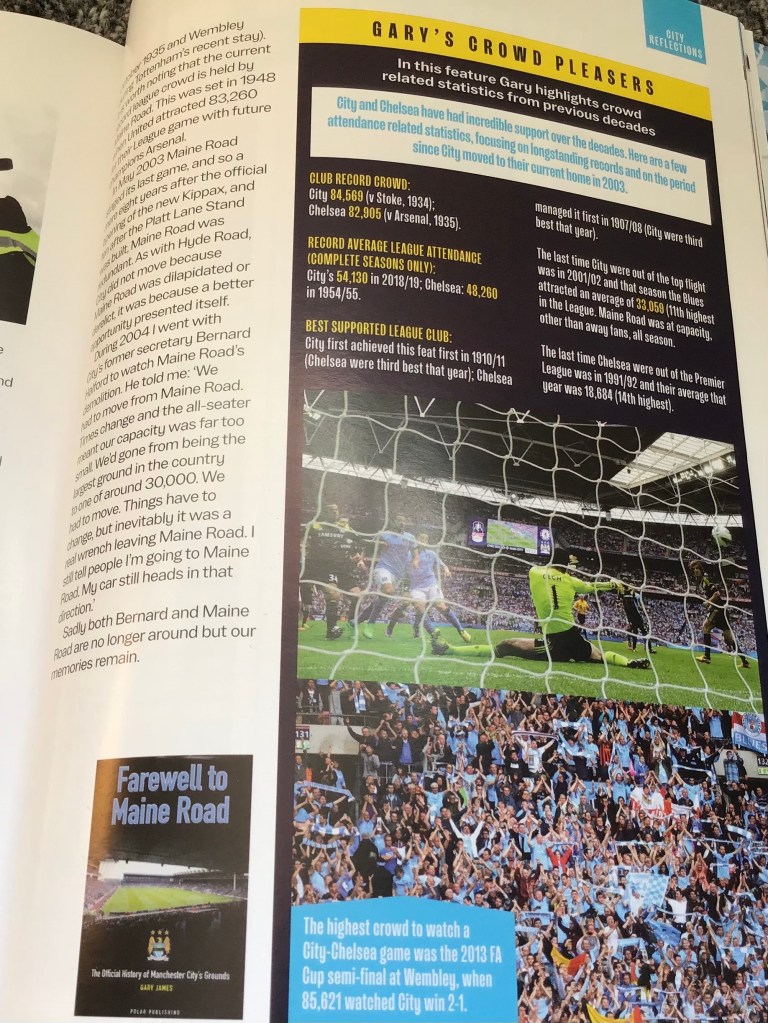
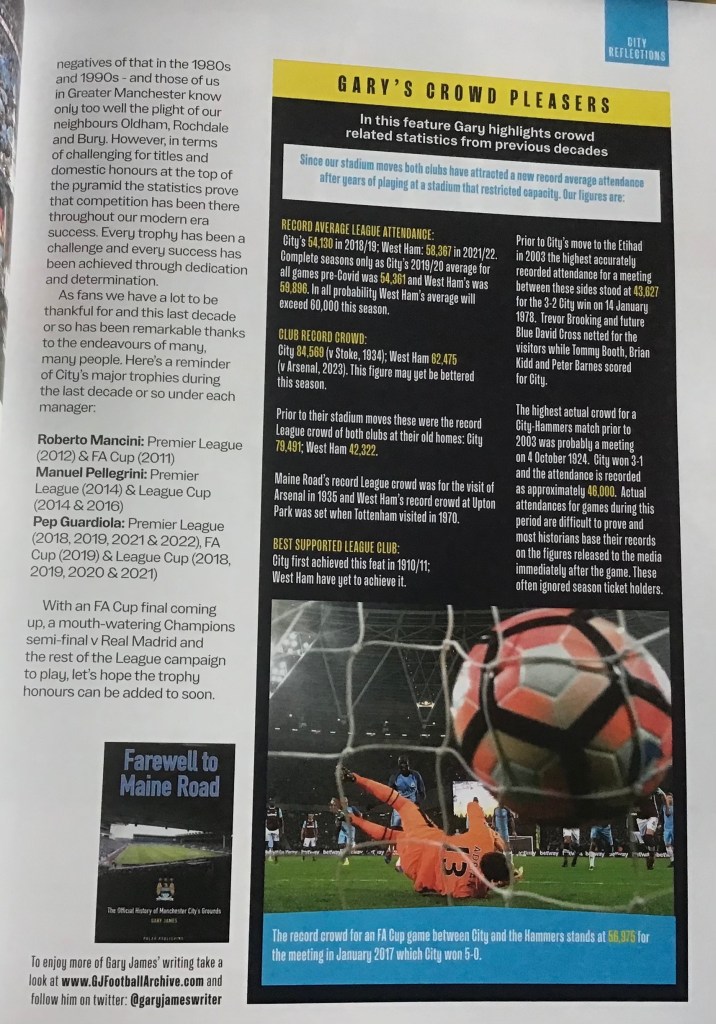
I would like to thank all those who have been in touch this season about my articles in the Manchester City match programme. I truly am grateful for those words. I have been fortunate enough to have been writing for the programme for a few years and always enjoy trying to tell a different story, or use a different angle. There’s so much to say and do and my programme articles in this year’s programme focused on a history piece (which I always try to make relevant to today – but that’s easy when you have history making managers like Pep and record breaking players like Haaland) and a crowd/attendance feature.
I hope they’ve been of interest and, with the crowd feature in particular, I have heard from several fans who have enjoyed the myth-busting that has come from that. Hopefully, I’ll get the chance to carry on writing for the programme over the coming years but if not, thanks to all those who read the piece. I’m driven by publishing the facts not the fiction and writing in an entertaining manner. I hope that comes across.
This season has also seen me write articles for the FA Cup semi-final and two for the upcoming FA Cup final. So there’s still at least 2 pieces coming this season in significant programmes.
Thanks again to all those who read my work and thanks to Reach for selecting me for the MCFC match programmes.










 Gary James' Football Archive