Boxing Day is a day that will forever be a reminder of the great Colin Bell and his return to the Manchester City first team after the devastating injury that came in the November 1975 Manchester Derby. Colin did return briefly at the end of the 1975-76 season but that was a comeback too early. To remember Colin and everything he achieved at Bury and City here’s an interview I did with him in January 2005. This was published in the City match programme back then and you can read Colin’s views on his career here as published at the time. Enjoy!
Colin Bell MBE joined the Blues from Bury in March 1966 and went on to become a major trophy winner with the Blues and a star with England. Gary James met up with him at the end of January 2005
Let’s start with your early life, was football everything to you from an early age?
From the moment I was born I wanted to play. Actually, everybody did in those days. Football was all you ever wanted and I always had a ball with me, so I could play anywhere. No one ever pushed me; it was something I just wanted to do. My mother had played ladies football before I was born and so did others in the family, so there must have been a natural instinct for the game. I used to go and watch Sunderland when I could, although it would take about 90 minutes and three buses to get to Roker Park. As a boy my hero was Len Shackleton and then Charlie Hurley.
At the age of 17 (1963) you joined Bury. There were other potentially larger teams interested, so what made you choose Bury?
The move had to be right and I was quite a shy boy in many ways, so I needed to go somewhere where I felt at home. Bury were a homely club and made me feel so welcome. I’d had interest from a few clubs – Newcastle offered me a trial but I heard nothing afterwards! Arsenal were another. I damaged my back shortly before I went down to London from my home in the north-east and that made me a little uncomfortable. Their manager Billy Wright watched the games we played and selected the ones to stay, and then said to those not selected “I hope you join other clubs that are not as good as Arsenal!”
Both Bury and Huddersfield wanted me to sign, so I was totally open with them and agreed I wouldn’t make my mind up until I returned back home and looked at it objectively. The Huddersfield experience went well, but Bury was so much more homely. While I was there I knew I’d sign for Bury, but I wouldn’t tell them. They kept pushing me, and I wanted to say yes, but I felt it was more important to stick to the plan. So when I went home I told both clubs of my decision.
Presumably, you never looked back and felt Bury was the right choice?
Definitely. My instincts were right, however I did still feel homesick. It really hit me for about six weeks or so and I know that if my family had suggested I go home I would have done. I’d have packed it all in because I hated that homesick feeling. I’d have got that wherever I went, and I’m glad I chose Bury because in the end I couldn’t have had a better start to my career. It was a great period once I’d settled and I felt I was so lucky to be paid for playing.
How ambitious were you then? Did you set targets and aims?
I took each day as it came. That’s true of all my career. I never thought about moving from Bury. It never crossed my mind, and I certainly didn’t think about playing for England. I didn’t even know City were watching me until the official approach came. In fact it got to transfer deadline day and suddenly I had both City and Blackpool interested in me and I had to make another choice. This time it was stay at Bury, move to Second Division City, or move to First Division Blackpool.
So what made you pick City, was the Mercer-Allison involvement the deciding factor?
At the time I didn’t know enough about Mercer or Allison to base a decision on, so my decision was based more on league position. City were heading for promotion, while Blackpool were beginning to struggle (they were eventually relegated in 1967), so I thought it would be best to join a club looking forward rather than one heading for struggle.
Was City as homely as Bury?
That’s something that was truly special about City at the time because even though it was a much bigger club, it still had that homely feel. We were all part of the same family. First team players would pop into the laundry room and have a cup of tea with the ladies in there. Sometimes we’d just love being at the ground. I do think football’s lost a lot by having training grounds some distance from the home grounds. We felt part of the Maine Road furniture. It was my second home and most mornings we’d get in early to get into the gym for head tennis. If ever you arrived at the ground and found you’d arrived too late to make up a head tennis team you’d skulk around and plan to get in even earlier the next day.
You mentioned that you were homesick at Bury, how long did it take you to settle at City?
I arrived in March 1966 and it took me the rest of that promotion season to settle. Promotion helped because I was part of the celebrations from the start. The goal I scored at Rotherham guaranteed promotion and afterwards I tasted champagne for the first time. I couldn’t believe how quickly I was part of a winning side. Something major I realised at this time was that at Bury we’d go to away matches with the aim of getting a draw – at best – but with City we went expecting to turn over every side. After a couple of games I felt this same level of expectation and I think that’s why we became so successful. Malcolm stressed our strengths and used to say that he didn’t care how many we concede so long as we win. If ever we won 4-3 he’d never mention the three goals, he’d only mention the four. That was a great way to play and it continued throughout those successful years.
Both Mercer & Allison and most of the other players have often commented on your high level of fitness and your stamina, was this something you were conscious of at the time?
I think in games I was just as tired as the rest but I think I had a quick recovery rate and I never ever wanted to give less than the best. I was always determined. At training I never really thought about my own fitness, but I do remember that when Malcolm had us all running hard I’d give a commentary as we were running. I’d be going “Bell overtaking Booky on the inside” and so on and I think that may have been a bit off putting for some of the others.
In 1967-68 City won the Championship by two points over Manchester United with a victory over Newcastle, do you remember much of that day?
It was a great end to end game. I’d never previously won at Newcastle and I know that beforehand I felt quite uncomfortable. The great thing about football during this period was that every team in the League was capable of beating you on their ground, so it didn’t matter whether you were playing the top or the bottom. Also, no side ever gave up, so we knew that Newcastle, who were about tenth, wouldn’t sit back if we took the lead they’d be going for it… and they did! We beat them 4-3 but it could have been 5-4 or 6-5 – we knew we’d score one more than them, but both sides kept attacking, kept playing. At no time did they give up.
Presumably the Old Trafford derby match (March 1968) remains another great memory for you?
We beat United 3-1 and that really set us up, but we’d lost a goal right at the start. I equalised, George Heslop headed a goal, and then late on I was brought down by Francis Burns. As I was being stretchered off Francis Lee scored the penalty. I went to hospital, had my leg put in plaster and then joined the rest of the players at the Fletcher’s Arms in Denton for a celebratory drink!
Before the match Malcolm had stressed the importance of the game. He told us they were beatable and once he’d convinced us of that nothing was going to stop us. I think that helped the other teams as well, because once we started to beat them at Old Trafford – and remember I played 9 League derbies at Old Trafford and only lost the first – they realised they could do the same.
Winning so many trophies – League, FA Cup, ECWC, League Cup – during such a short spell was incredible, but which success brought you most satisfaction?
Each trophy was important but I judge success by consistency and when we won the League in 1968 we proved over 42 games that we were the most consistent side. I have to say I’m also very proud of winning the Central League in 1977-78 because I was fighting to regain fitness and also because the side was a very good one. It was great to play with some very enthusiastic young players.
Of course, each success means a great deal. Winning the ECWC was great, but the 1968 League success was all about consistency. Our journey back from Newcastle after the last game was very memorable. Coming down the A1 was superb. There was a convoy of blue and white all the way back.
Moving on to international football, how did it feel when you first discovered you were in the England squad?
When the letter came through the door I couldn’t believe it. Again, as with my early days, I never thought about anything beyond the next City game. I didn’t think about England, but when the letter arrived it was a major, major honour. In fact every time the letter came – even after 40 odd appearances – I still had the same excitement and same buzz I’d always had. It was the highest honour you could receive.
When I joined the squad I remember sitting in the dressing room and seeing all those players who had won the World Cup only a year earlier. These men had achieved so much and to be sat in the same room and to see my name on the squad list next to theirs was a real highlight. Of course when there were other City players in the squad that helped as well, but it’s also worth remembering that every top division side had players who were either in the international squad or on the fringes, so you knew that you’d achieved something major if you got into Alf Ramsey’s team.
You made your international debut in May 1968 against Sweden, and went to the 1970 World Cup finals. How did you feel about the way your career had developed?
Immensely proud, and looking back it’s incredible how it all developed. Having said that I do feel a little aggrieved that when some people talk of the 1970 quarterfinal against West Germany they talk of the substitution of Bobby Charlton as some sort of turning point. I came on for him and I know that he was absolutely drained. Like me he would try and deliver more, but his age and the heat worked against him. I personally think I should have come on earlier and maybe we’d have kept the score at 2-1, or even increased it. Once I came on we still had a lot of play but they’d got to 2-2 and then unfortunately they scored the winner in extra time. Apparently Brazil were delighted because they were convinced we were the best side in the tournament – they’d beaten us in the group stage but knew they’d been in a real game.
You made 48 England appearances and replaced Bobby Moore as captain for one game in 1972, was this something you had always wanted?
I always believed that there should be eleven captains in a side. By that I mean every player needed to be interested and offer advice. There’s no point hiding, waiting for someone else to make the decisions. Every player needed support at times and everybody needs to give advice in my opinion. Tony Book was City’s great captain and a wonderful leader, but if you watch any of those games you’ll see we all act as a captain should. Actually they used to go on about how loud I was on the pitch and how quiet I was off it.
The England captaincy came against Northern Ireland and it must have been a one-off because Moore remained captain for the next year or so. I’m not certain why I got the nod, but it was a privilege and I do remember Sir Alf Ramsey asking me to take on the role.
Moving on to your injury in the 1975 Manchester derby, we now know how serious it was, but how did you feel at the time?
I knew it was very bad, and I know that the physio Freddie Griffiths worked hard to try and get things working for me. He and his assistant Roy Bailey really went out of their way to help, but it was a long and difficult recovery. The TV programme Nationwide did a feature on me and I received lots of letters and cards, which helped – the fans were terrific – but it was the blackest moment of my life. I had violent pains in my leg if I sat a certain way, and thanks to my wife and family they managed to keep me sane. When I started walking properly I was so glad. At one point I didn’t think I would walk again, let alone play sport.
I tried a comeback towards the end of 1975-6 but after the fourth game (V Arsenal) I broke down. It was too soon, and for the following 20 months the battle to return dominated everything I did.
Boxing Day 1977 V Newcastle was your memorable return. I know how I and most Blues felt that day, but how did you feel?
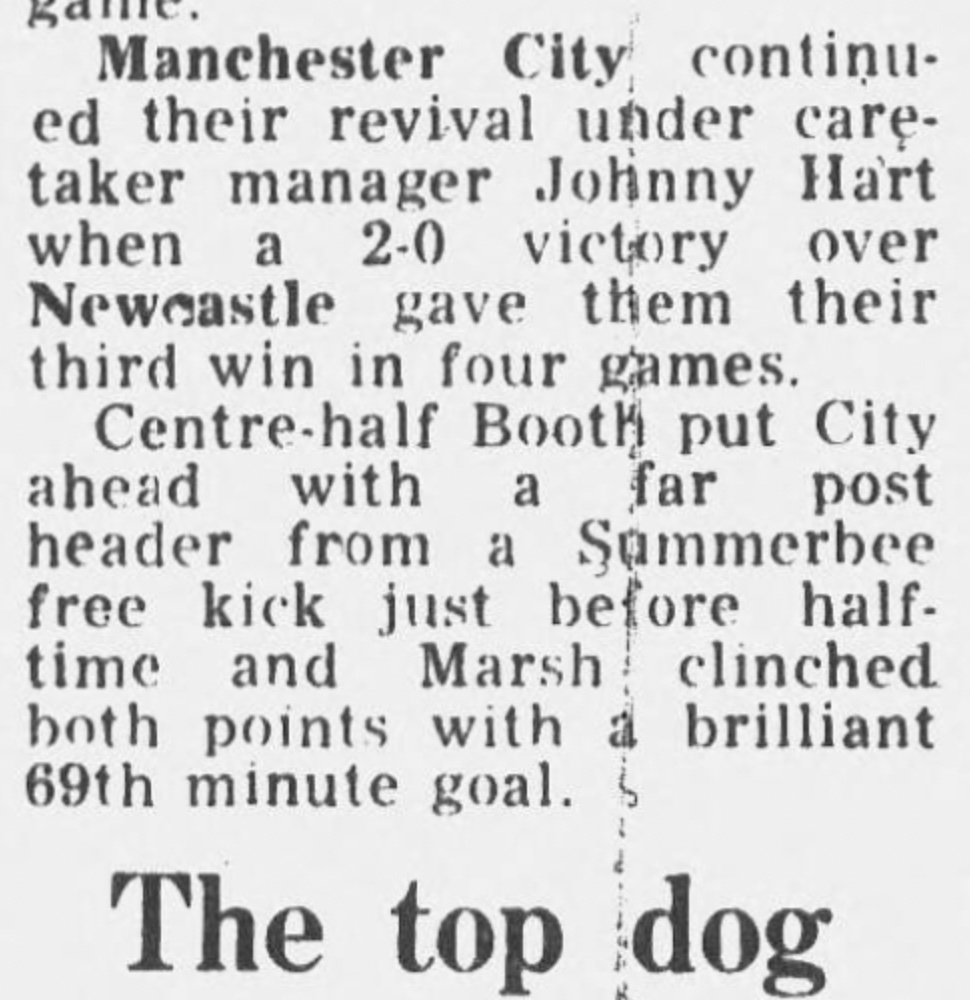
There’s always been something about Newcastle. That day I came on as substitute and I could not believe the atmosphere. The whole ground – including the Newcastle fans – stood and applauded and chanted my name. I was at the Halifax Supporters Club a month ago and I mentioned the game and almost every person in the room talked of the day and how emotional they got. There were at least two dozen people in the room who said they were crying when I came on. Grown men admitted it and I was deeply touched. On the day you could feel that emotion. I don’t believe I did anything of note in the game. I was a passenger, but everyone tells me it was great seeing me there and for me it was and will always be my number one game, and my number one memory of playing football.
Finally, I guess that Newcastle game demonstrated how fans truly felt about you?
The fans have been marvellous throughout my life. The last four years they’ve helped to get me honoured as one of the Football League’s 100 legends; the stand has been named after me; and now the MBE. It’s been an amazing four years. I don’t believe there’s any other player anywhere in football who has the same bond with the fans, and I don’t believe any club has fans as loyal as ours. City fans like players who give 100% and so long as you do that, you will always get incredible support. I loved my time as a player, and I am delighted my bond with the fans is as strong – possibly stronger – today than its ever been.
Subscribe to access great content and support Gary’s research
If you’ve enjoyed this piece then why not subscribe and read the rest of the great material on here. At the same time you’ll be supporting my research and writing (I’m not employed by anyone and my research/writing is self-funded). It costs £3 per month (here; access everything posted since 1 October 2022) or £20 per year (below; access everything posted since December 2020). You’ll also get to read all content posted during your subscription. Thanks.
Subscribe to access great content and support Gary’s research
If you’ve enjoyed this piece then why not subscribe and read the rest of the great material on here. At the same time you’ll be supporting my research and writing (I’m not employed by anyone and my research/writing is self-funded). It costs £3 per month (above) or £20 per year (here; access everything posted since December 2020). You’ll also get to read all content posted during your subscription. Thanks.






 Gary James' Football Archive