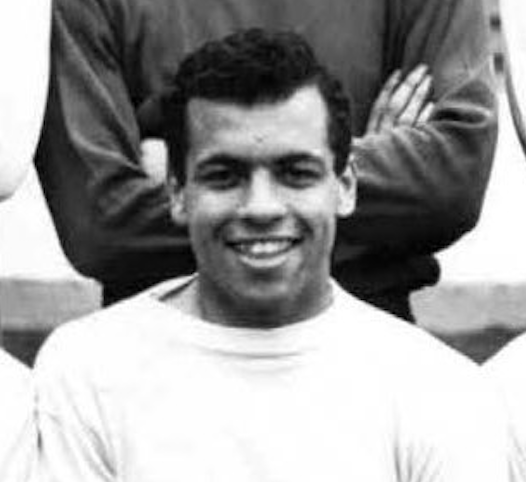
The new series on Manchester City in the 1940s continues with this feature on the 1946-47 season. This was the first league season after the war and ended with City winning the Second Division title. There were some truly significant – and well attended – games that season and future Liverpool manager Joe Fagan (photograph) made his debut this season too. This subscriber article includes comments from an interview I did with George Smith back in 2003.
This is a subscriber article and you can read it by subscribing below.
Subscribe to get access
Read more of this content when you subscribe today. It costs £3 per month or you can subscriber for the discounted annual rate of £20 per year. Each subscriber gets access to everything posted so far, including PDFs of a couple of my books.
The new series on Manchester City in the 1940s starts today with this 1,400 word article on the 1939-40 season. The season started as any other but then world events intervened!
This is a subscriber article and you can read it by subscribing below.
Subscribe to get access
Read more of this content when you subscribe today. It costs £3 per month or you can subscriber for the discounted annual rate of £20 per year. Each subscriber gets access to everything posted so far, including PDFs of a couple of my books.
On this day (23 March) in 1968 came a game between two title challenging teams – Leeds Utd and Manchester City. The view was that this game could knock City out of the title race if it went Leeds’ way. So what happened? Here’s film of the game:
You can find out more aboutthe potential impact of this game by reading this subscriber article on Manchester City during the 1967-68 season. If you’d like to read this 7,600 word article (yes, 7,600 words on one season!), plus all other articles on the site, then please subscribe (see below). As with most of the other features in this series it includes words from interviews I have performed with those who were there.
Subscribe to get access
Read more of this content when you subscribe today. It costs £3 per month (cancel anytime) or sign up for a year at the discounted price of £20 per year (works out £1.67 per month). Subscribers access the 1000+ articles posted so far and the others scheduled during the life of your subscription.
The new series on Manchester City in the 1950s continues today with this 1,500 word article on the 1958-59 season. Enjoy!
This is a subscriber article and you can read it by subscribing below.
Subscribe to get access
Read more of this content when you subscribe today. It costs £3 per month or you can subscriber for the discounted annual rate of £20 per year. Each subscriber gets access to everything posted so far, including PDFs of a couple of my books.
On this day (31 January) in 1968 Manchester City defeated Reading 7-0 in a FA Cup replay. As the players left the field the Elm Park tannoy announcer claimed: ‘Ladies and Gentlemen, you have just seen one of the greatest teams England has produced in a long time.’
Goalscorers were Mike Summerbee (3), Colin Bell, Tony Coleman, George Heslop and Neil Young. This photo is of the Bell, Lee & Summerbee statue at the Etihad today.
Dozens of letters arrived at Maine Road commenting on City’s performance. Many Reading fans wrote in saying they could have watched the Blues all night. Other letters arrived commenting on how well behaved the City supporters were, while fans themselves commented on the cheerfulness of the Reading police.
These points may seem trivial today, but in 1968 football had already begun to enter its hooligan period. Football supporters had started to be seen as trouble causers and incidents of violence, or of vandalism, soon found their way into national newspapers. Although City supporters were never totally blameless, during the late 1960s Blues fans continued to gain commendations rather than condemnation.
You can read more on this remarkable, trophy winning season below. If you’d like to read this 7,600 word article (yes, 7,600 words on one season!), plus all other articles on the site, then please subscribe (see below). As with most of the other features in this series it includes words from interviews I have performed with those who were there.
Subscribe to get access
Read more of this content when you subscribe today. It costs £3 per month (cancel anytime) or sign up for a year at the discounted price of £20 per year (works out £1.67 per month). Subscribers access the 1000+ articles posted so far and the others scheduled during the life of your subscription.
Continuing the series of features on the 1960s, here’s a subscriber article on Manchester City during the 1968-69 season. Another trophy winning season. If you’d like to read this 6,000 word article , plus all other articles on the site, then please subscribe (see below). As with most of the other features in this series it includes words from interviews I have performed with those who were there.
Subscribe to get access
Read more of this content when you subscribe today. It costs £3 per month (cancel anytime) or sign up for a year at the discounted price of £20 per year (works out £1.67 per month). Subscribers access the 1000+ articles posted so far and the others scheduled during the life of your subscription.
Continuing the series of features on the 1960s, here’s a subscriber article on Manchester City during the 1967-68 season. A trophy winning season. If you’d like to read this 7,600 word article (yes, 7,600 words on one season!), plus all other articles on the site, then please subscribe (see below). As with most of the other features in this series it includes words from interviews I have performed with those who were there.
Subscribe to get access
Read more of this content when you subscribe today. It costs £3 per month (cancel anytime) or sign up for a year at the discounted price of £20 per year (works out £1.67 per month). Subscribers access the 1000+ articles posted so far and the others scheduled during the life of your subscription.
On this day (10 November) in 1956 the great Don Revie left Manchester City for Sunderland. Revie had been in and out of favour with manager Les McDowall for over a year, but fans recognised his qualities. Here for subscribers is a profile of Don. Enjoy.
Subscribe to get access
Read more of this content when you subscribe today. It costs £3 per month or there’s a special discounted rate of £20 a year. Subscribers have access to everything posted on the site, including PDFs or Manchester A Football History and my 1st book on MCFC (published in 1989).
Three days after making his Manchester City debut in a League Cup tie with Leicester (22 September 1965, 3-1 City win) Stan Horne made his League debut for Joe Mercer’s Blues. The game, played on this day (25th) in 1965 ended in a 1-0 City win over Derby County at Maine Road. The scorer was Jimmy Murray.
Horne had previously played for Mercer’s Aston Villa too.
There’s a lot of furore this week about Manchester City’s decision to wear their new Oasis inspired kit instead of their home kit for their Champions League game with Inter Milan. Lots are talking about tradition, heritage and the like, so I thought I’d add a few words here that might have been overlooked or forgotten. So here goes…
Firstly, my position is clear that I’ve always been keen to see City wear home colours/blue for every fixture possible (whether home, away or at a neutral venue) but I’m a pragmatist and know that’s no longer likely. History and tradition does mean something but of course, when it comes to football, traditions change frequently. People may think City have only ever worn a particular colour at home or that the traditional away colours are red & black but these things are not true. Times change.
When it comes to wearing alternative kits at home it has been done more often than perhaps people realise. In fact the only decade when it hasn’t happened appears to be the 2010s – I say appeared because I haven’t got evidence of every home game in the 1890s and 1900s!
These last few days have caused some to recall the Middlesbrough game when David James went up front and the two Tottenham games at Maine Road in 80s/90s when the referee felt the kits were too close and City ended up changing. But there have been many other occasions. In fact it’s well over 100 years since City first chose to wear away colours/alternative strips at home when they didn’t need to!
The image above of Neil Young comes from the 1971 ECWC semi-final v Chelsea. Notice that Young is wearing City’s away colours.
Often when there was a clash of colours in a cup game City would wear their away strip. Games in the 1920s right through to 1970s saw the Blues don maroon, red/black and even scarlet at times at Maine Road.
Here’s another image from that Chelsea semi final:
1971 ECWC v Chelsea. Francis Lee. Photo by Alan Jubb
To the right you can see the North Stand under construction, as you can in the Young image.
Other games in living memory (not necessarily mine, but living memory for many older blues) include:
January 1971 – City v Wigan in FA Cup (red & black)
September 1970 – City v Bologna in Anglo-Italian Cup (red & black)
January 1968 – City v Reading in FA Cup (all maroon)
March 1966 – City v Everton in FA Cup (all maroon)
March 1966 – City v Leicester in FA Cup (all maroon)
March 1956 – City v Everton in FA Cup (maroon shirts, white shorts)
In earlier decades City often chose to wear an away shirt for cup ties where there was a clash. Prior to 1921 the FA rule was that home teams would have to change if there was a clash.
In March 1924 City chose to wear a kit they described as ‘Lucky scarlet’ for a FA Cup tie with Cardiff at Maine Road. So for well over 100 years City have often chosen to wear alternative kits at home instead of traditional blue when they didn’t need to.
Personally, I’d still prefer City to always wear blue no matter where they play, but that’s never going to happen anyway.
Incidentally, if you’d like to read more on the history of Maine Road, take a look at Farewell To Maine Road, which can be downloaded from this page:
If you enjoy all the free material on my website and would like to support my research and keep this website going (but don’t want to subscribe) then why not make a one-time donation (or buy me a coffee). All support for my research is valued and welcome. It allows me to keep some free material available for all. Thanks.




 Gary James' Football Archive