The First Manchester Derby at the Etihad

The first Manchester derby at Manchester City’s new stadium (then called the City of Manchester Stadium, now the Etihad) occurred on this date (14 March) in 2004.  For pride’s sake it was important Kevin Keegan’s side did not lose that fixture, but with United some 13 places above the Blues pre-match Ferguson’s side were clear favourites.  It was time for City to upset the form book.

On a wonderful day, perhaps the best the stadium had enjoyed in its inaugural year, a terrific atmosphere helped Keegan’s side achieve a memorable victory.  Fowler opened the scoring in the third minute and Macken made it 2-0 after 32 minutes.  Scholes made it 2-1 three minutes later.  

In the second half goals from Mancunian Trevor Sinclair (73) and Shaun Wright-Phillips made it 4-1 to the Blues.  You can hear my interview with Trevor Sinclair about this game here:

Trevor Sinclair Interview

Matt Dickinson (The Times):  “Humiliated by Manchester City last season, Sir Alex Ferguson and his men used the pain to fuel their drive to the title.  Humiliated again yesterday, they are condemned to live with the despair for months – perhaps even years.”  

Keegan felt the win was thoroughly deserved:  “We had played better against Chelsea and lost.  But against United we got that important early goal which gave us something to hang on to.  We had personnel problems because we had players doing jobs that don’t come naturally to them and also had to make two enforced changes at the interval.”

Chris Bailey explained the significance of the match in the Manchester Evening News:  “Maine Road saw some pulsating derbies in its time but few could have matched this first-ever neighbourly spat at Eastlands.  And how satisfying that Kevin Keegan’s side should choose this day of all days to win their first home game since October 18 and banish all thoughts of the drop.”

In 2012 Dennis Tueart, who was a director at the time of the stadium move, told me his memories of that derby match, believing it was an important moment in the stadium’s inaugural season:  “When we moved to the stadium Kevin Keegan worried about whether the atmosphere would be the same and I told him that fans would take a bit of time getting used to it because they were no longer sat with the people they’d been with for years.  The dynamics were different.  He felt we should try and get fans in the ground earlier, but I said that performance on the pitch would be the most significant factor.  

“When we beat United 4-1 in the first derby at the stadium the atmosphere was incredible.  Kevin came to me afterwards and said ‘I see what you mean’.  That then set the tone of the place.  The place was rocking – people were singing as they walked down the spirals at the end of the match and the atmosphere was absolutely superb.”

If you would like to read about other Manchester derbies then check out this:

https://gjfootballarchive.com/category/manchester-derbies/

Subscribe to get access to the entire site

This was a brief taste of the material on http://www.GJFootballArchive.com If you would like to read all the in-depth articles (including the entire Manchester A Football History book and the audio interview with John Bond) then please subscribe. It works out about £1.67 a month if you take out an annual subscription (£20 per year) or £3 a month if you’d like to sign up for a month at a time. Each subscriber gets full access to everything posted so far and everything scheduled to be posted during your subscription.
An Ill-Tempered Day at Burnley

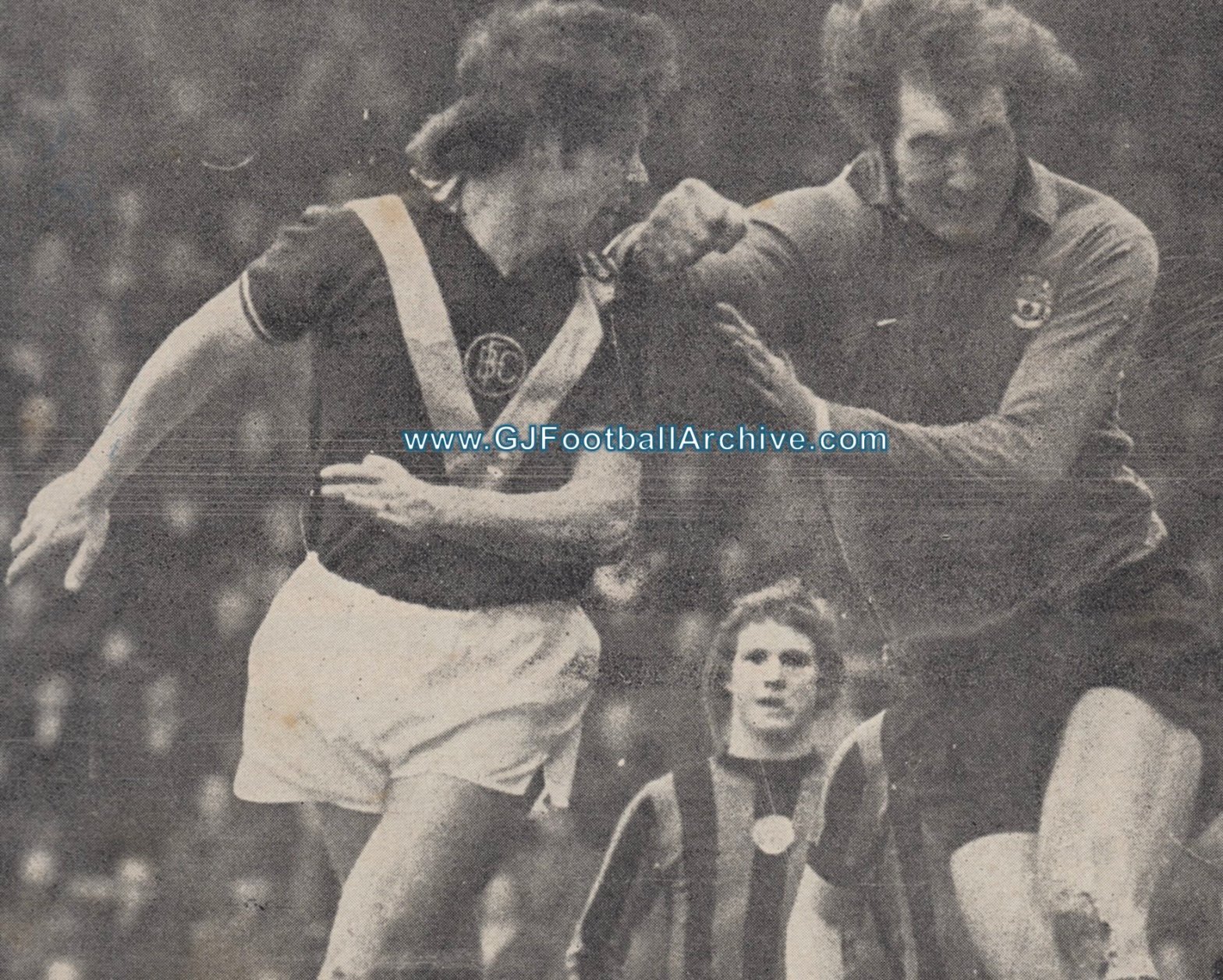
Manchester City, the League Cup winners, travelled to Turf Moor for a League game with struggling Burnley on this day (13 March) in 1976. It was a strange day with City in control for much of the game. It seemed inevitable Tony Book’s side would win, especially when they were awarded a penalty in the 44th minute. Burnley’s centre-half Jim Thomson was sent off for kicking Dennis Tueart while he lay on the ground following a collision with the ‘keeper. Tueart said afterwards: ‘When Thomson was sent off the goalie and I stood looking at each other wondering what had happened. It was a bit silly really! There was a bit of a skirmish with Thomson, but I didn’t even feel a blow of any kind.’

Wembley hero Tueart stepped up to take the resulting penalty but Burnley ‘keeper Gerry Peyton saved brilliantly.

The game became ill-tempered and former City hero Mike Summerbee, playing for Burnley, clashed with Tueart at times, causing both men to be spoken to by the referee.

In the second half City, playing in red & black stripes, were awarded another penalty. This time Tueart’s spot-kick entered the net, but the referee judged that a City played had encroached the area and the penalty was retaken. This time Tueart’s shot hit the post!The game ended goalless and City were now sixth, eleven points (2 points for a win) behind leaders QPR with three games in hand.

You can read more on the 1975-76 season with this 5,320 word article – a season which saw Tony Book guide the club to major success. If you want to know more on this incredible decade for Manchester City Football Club then why not subscribe and read it all? You could even subscribe for a month and see what you think. The following 5,320 word article is on the 1975-76 season and is available to subscribers below. Enjoy!

Subscribe to get access – Monthly

Read more of this content when you subscribe today. It costs £3 per month (cancel anytime) to access everything posted since 1 October 2022 or there’s a special annual rate below which gives greater access and works out much cheaper.

Subscribe to get access – Annual

Read more of this content when you subscribe today. It costs £3 per month (above) or £20 a year (here) to access everything posted since the site was created in December 2020. This special rate works out about £1.67 a week and gives access to everything posted, including PDFs of 3 of my books.

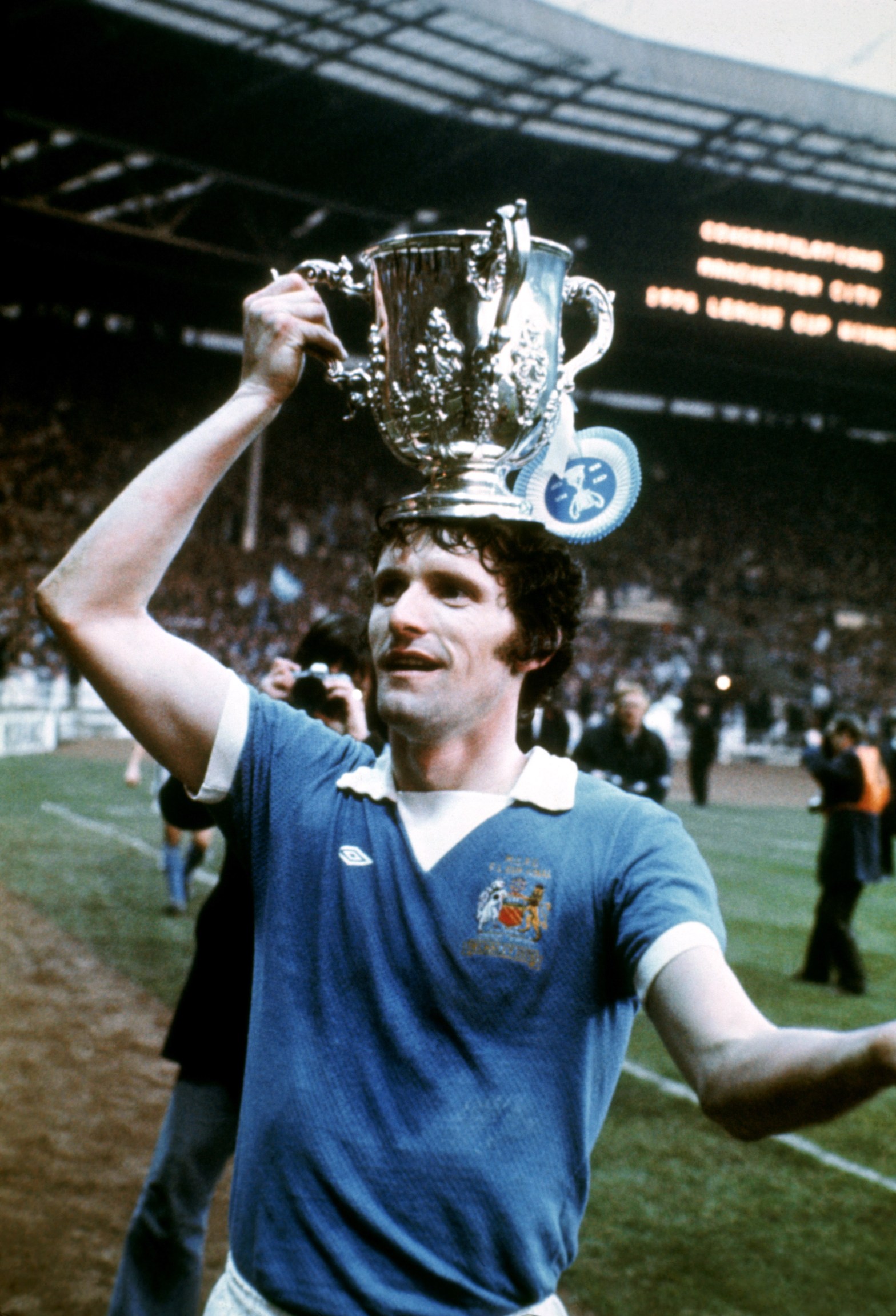
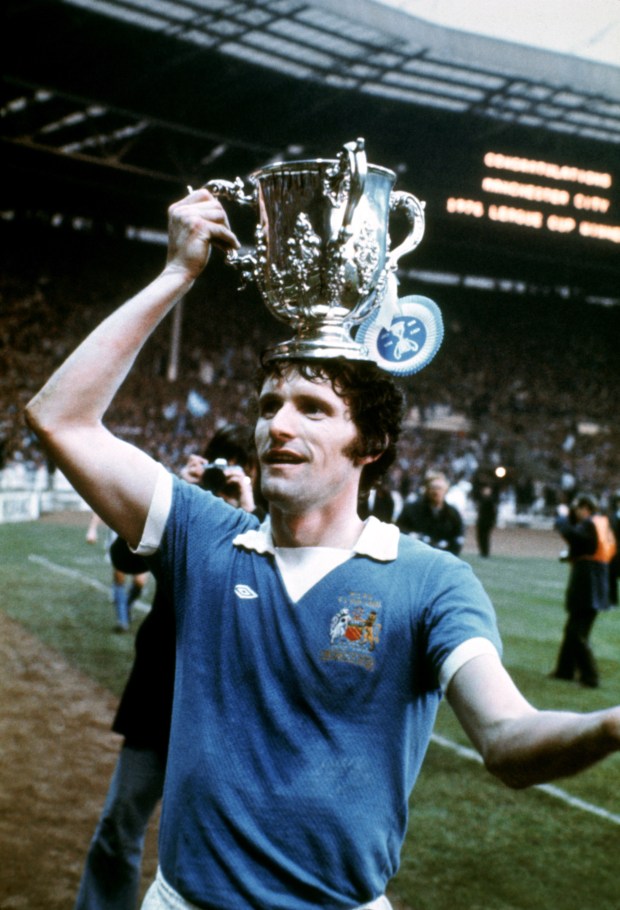
Manchester City’s Mike Doyle celebrates with the League Cup (PAPhotos/Alamy)

If you’d like to know more about subscribing then see:

If you enjoy all the free material on my website and would like to support my research and keep this website going (but don’t want to subscribe) then why not make a one-time donation (or buy me a coffee). All support for my research is valued and welcome. It allows me to keep some free material available for all. Thanks.

Choose an amount

£2.50
£5.00
£7.50

Or enter a custom amount

£

Your contribution is appreciated.

Donate

Fifty Years Ago Today: Manchester City v Sheffield United and a Tueart Overhead Goal!

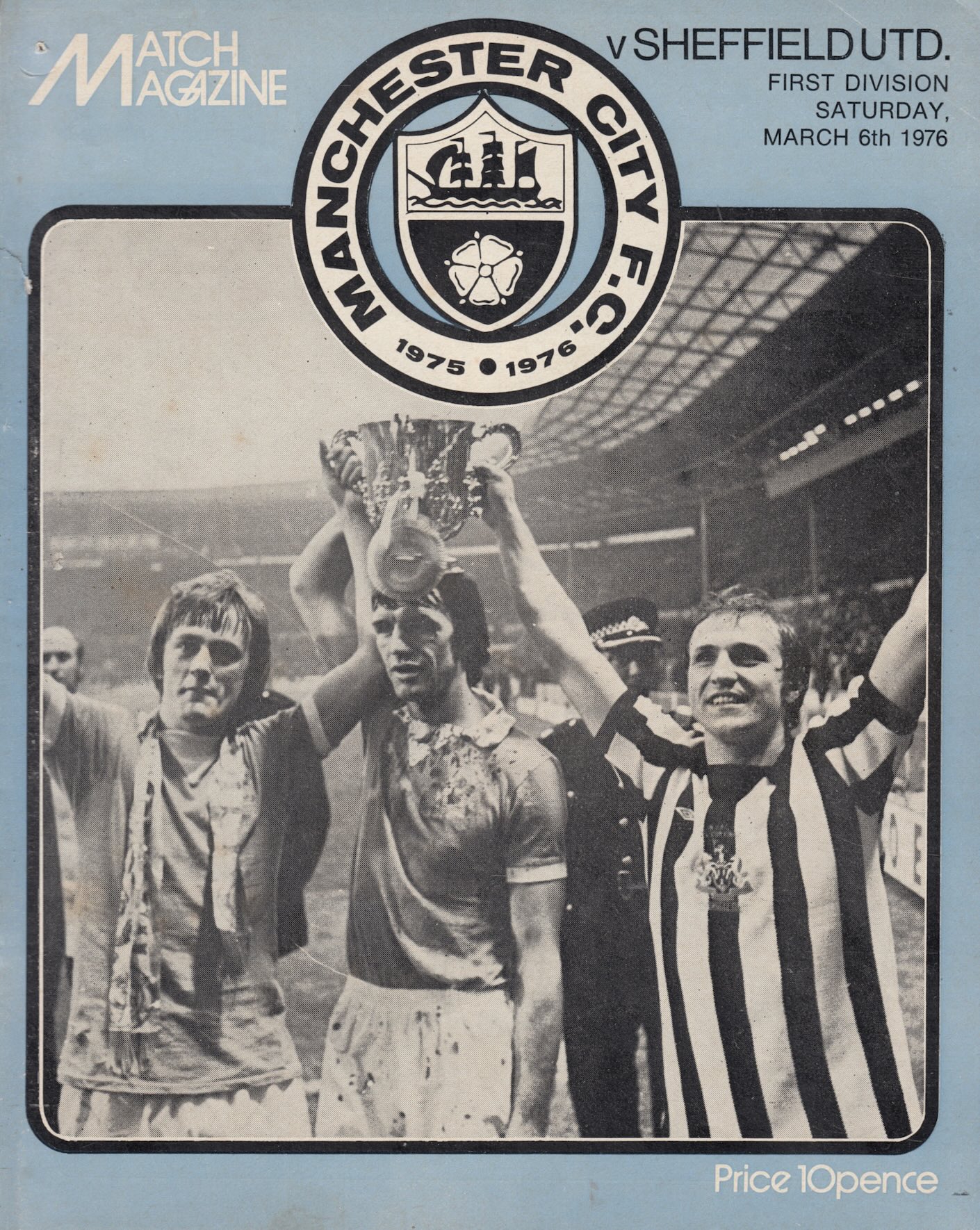
League Cup holders Manchester City played Sheffield United in the League on 6 March 1976. It’s a game often overlooked and for the first 50 minutes or so had little to offer. Some thought City were off form because of their exploits at Wembley but suddenly they burst in to life when Tommy Booth latched on to a loose ball. He fed it to Asa Hartford who made it 1-0 after 59 minutes. 

Eight minutes later Booth headed the ball to Dennis Tueart 15 yards out from goal. Amazingly, the City winger repeated his famous scissor kick from the League Cup final to give the Blues a 2-0 lead and total dominance. Joe Royle headed a third after 71 minutes and Hartford netted his second – a devastating low drive – to make it a 4-0 win. Significantly, in the days before assists were formally recorded, Tommy Booth had supplied the final pass for all four City goals.

A dismal game had been transformed into a real demonstration of City’s strengths. The Blues were now seventh, ten points behind leaders QPR, though the Blues had played 3 fewer League games. However, with eleven games left and only two points for a win it seemed unlikely that further trophy success would follow this season.

You can read more on the 1975-76 season with this 5,320 word article – a season which saw Tony Book guide the club to major success. If you want to know more on this incredible decade for Manchester City Football Club then why not subscribe and read it all? You could even subscribe for a month and see what you think. The following 5,320 word article is on the 1975-76 season and is available to subscribers below. Enjoy!

Subscribe to get access – Monthly

Read more of this content when you subscribe today. It costs £3 per month (cancel anytime) to access everything posted since 1 October 2022 or there’s a special annual rate below which gives greater access and works out much cheaper.

Subscribe to get access – Annual

Read more of this content when you subscribe today. It costs £3 per month (above) or £20 a year (here) to access everything posted since the site was created in December 2020. This special rate works out about £1.67 a week and gives access to everything posted, including PDFs of 3 of my books.

Manchester City’s Mike Doyle celebrates with the League Cup (PAPhotos/Alamy)

If you’d like to know more about subscribing then see:

If you enjoy all the free material on my website and would like to support my research and keep this website going (but don’t want to subscribe) then why not make a one-time donation (or buy me a coffee). All support for my research is valued and welcome. It allows me to keep some free material available for all. Thanks.

Choose an amount

£2.50
£5.00
£7.50

Or enter a custom amount

£

Your contribution is appreciated.

Donate

Fifty Years Ago Today: 1976 League Cup Final

Manchester City travelled to Wembley for the League Cup final on this day (28 February) in 1976. Here’s a story of that day…

The huge demand for tickets had seen City secretary Bernard Halford take the unusual step of writing to all the other League clubs, apart from Newcastle of course, asking for any spare tickets from their allocations for the final. Many clubs obliged but still thousands of Blues were denied tickets.

Reaching Wembley was an extraordinary achievement considering the injuries (most notably Colin Bell) and suspensions, and demonstrated a wonderful team spirit that had been galvanised by manager Tony Book and captain Mike Doyle following the controversy surrounding former captain Rodney Marsh earlier in the season. Doyle told the media: ‘The success of this City is the complete team work – and individuals don’t count. I’m sorry Colin [Bell] hasn’t made it, but I’m damned sure it hasn’t weakened our chances, because we’ve proved it. We’ve been without him for three months and still reached Wembley.’

Significantly, every member of the side had already played at Wembley except youngsters Peter Barnes and Ged Keegan. When questioned whether those players would be the weak links Doyle said: ‘Peter is not only a tremendously talented player – he’s got his head screwed on the right way. He just isn’t the sort to get all worked up. In fact, I’ll bet that he could prove the biggest success of the whole match. He’s a natural. He does things superbly without having to think or worry. Keegan is in the same mould. He’ll feel at home, because he’s already one of the City first team pool.  If he wasn’t something special, he wouldn’t be in it!’

The final began with both teams playing attractive football. Newcastle seemed to have the edge for a while, but a foul by Newcastle’s Keeley on Joe Royle brought an important free-kick. Hartford sent the ball to Royle, who headed the ball across the face of the goal. Barnes stormed in to fire a half-volley into the net to give City an eleventh minute lead.

Barnes, who would be announced as the PFA Young player of the Year that weekend, immediately ran off the pitch towards the stands in celebration.

Twenty-four minutes later Newcastle’s Macdonald sent in a low centre. Watson and Corrigan raced for it, but Newcastle’s Gowling managed to get to it first and stab home the equaliser.

The second half started with City determined to get an early goal – and they did! Years later Dennis Tueart explained: ‘The goal itself… [Donachie’s] going, I’ve gone to the far post, then come away from the far post because Tommy [Booth’s] gone there. But as I’ve checked back into the centre, I’d gone in too far, the ball’s gone over to Tommy. Tommy’s got half a head on it and knocked it back. It just went a wee bit behind me. Well, I’d always been fairly good at volleying right from an early age, and I’d scored a goal, probably it was the first or second game of the season, against Norwich. Which I think was technically a better goal, it flew in the net, overhead kick. I’d scored overhead kicks at school, I’d side volleyed which is slightly different, but timing and volleying had always been a strength, and it just came… Any balls that come to you as a forward, no matter which way they come to you, you just try and twist your body and get some kind of contact onto it. Because you know the general area where the goal is, and I connected pretty well, it went across and bounced in.

‘It was important because it was the 46th minute, just after half time, when we got ourselves back in front.’

Manchester City’s Mike Doyle celebrates with the League Cup (PAPhotos/Alamy)

Manager Tony Book, who became the first man to win the trophy as a player and as a manager, was delighted with City’s 2-1 win: ‘This was my greatest moment. It was a tremendous final and Tueart’s goal was something special… quite out of this world.’

On the Sunday, City returned home to an incredible tour of Manchester. It was a great day of celebration, and the final would be shown on ITV later that day. In the days before the League Cup was shown live on television, this gave those unable to get a ticket the chance to see the game for the first time. 

Match Stats

28 February 1976

Manchester City 2 (Barnes & Tueart)) Newcastle United 1 (Gowling)

Attendance 100,000

If you enjoy all the free material on my website and would like to support my research and keep this website going (but don’t want to subscribe) then why not make a one-time donation (or buy me a coffee). All support for my research is valued and welcome. It allows me to keep some free material available for all. Thanks.

Choose an amount

£2.50
£5.00
£7.50

Or enter a custom amount

£

Your contribution is appreciated.

Donate

You can read more on the 1975-76 season with this 5,320 word article – a season which saw Tony Book guide the club to major success. If you want to know more on this incredible decade for Manchester City Football Club then why not subscribe and read it all? You could even subscribe for a month and see what you think. The following 5,320 word article is on the 1975-76 season and is available to subscribers below. Enjoy!

Subscribe to get access – Monthly

Read more of this content when you subscribe today. It costs £3 per month (cancel anytime) to access everything posted since 1 October 2022 or there’s a special annual rate below which gives greater access and works out much cheaper.

Subscribe to get access – Annual

Read more of this content when you subscribe today. It costs £3 per month (above) or £20 a year (here) to access everything posted since the site was created in December 2020. This special rate works out about £1.67 a week and gives access to everything posted, including PDFs of 3 of my books.

If you’d like to know more about subscribing then see:

If you enjoy all the free material on my website and would like to support my research and keep this website going (but don’t want to subscribe) then why not make a one-time donation (or buy me a coffee). All support for my research is valued and welcome. It allows me to keep some free material available for all. Thanks.

Choose an amount

£2.50
£5.00
£7.50

Or enter a custom amount

£

Your contribution is appreciated.

Donate

Tueart Controversy

For the second successive FA Cup game there was a controversial head-butting incident involving Dennis Tueart fifty years ago today (28 January 1976). If you’d like to know what happened and its significance read the following subscriber feature:

Subscribe to get access

Read more of this content when you subscribe today. It costs £3 per month (cancel anytime) to access everything posted since 1 October 2022 or there’s a special annual rate of £20 per year which works out much cheaper.

There’s also the following 5,320 word article on the entire 1975-76 season – a season which saw Tony Book guide the club to major success. You can read this below. You could even subscribe for a month and see what you think. Enjoy!

Subscribe to get access – Monthly

Read more of this content when you subscribe today. It costs £3 per month (cancel anytime) to access everything posted since 1 October 2022 or there’s a special annual rate to access everything posted since the site was created in December 2020. This special rate works out about £1.67 a week and gives access to everything posted, including PDFs of 3 of my books.

Subscribe to get access – Annual

Read more of this content when you subscribe today. It costs £3 per month (above) or £20 a year (here) to access everything posted since the site was created in December 2020. This special rate works out about £1.67 a week and gives access to everything posted, including PDFs of 3 of my books.

If you’d like to know more about subscribing then see:

If you enjoy all the free material on my website and would like to support my research and keep this website going (but don’t want to subscribe) then why not make a one-time donation (or buy me a coffee). All support for my research is valued and welcome. It allows me to keep some free material available for all. Thanks.

Choose an amount

£2.50
£5.00
£7.50

Or enter a custom amount

£

Your contribution is appreciated.

Donate

Manchester City 4 Mansfield Town 2

Fifty years ago today (3 December 1975) Manchester City defeated Mansfield Town 4-2 in the League Cup. Subscribers can read all about the game below.

Subscribe to get access

Read more of this content when you subscribe today. It costs £3 per week (cancel anytime) or sign up on a yearly basis for the discounted price of £20 per year. Subscribers access every article, interview, feature etc. on the site throughout their subscription.

Watch These Highlights From 50 Years Ago Today!

You’ve got to watch this film of Manchester City v Wolves from today (29 November) in 1975. City win the game but there’s a deliberate handball that prevents a goal but doesn’t end up with a dismissal; a missed penalty; the referee taking out Mike Doyle and much more. Enjoy:

https://www.youtube.com/watch?v=pkgSqz0Jeew

You can also read more on the game below if you subscribe to my site.

Subscribe to get access

You can read more of this content when you subscribe today. It costs £3 per week (cancel anytime) or sign up for a year at the discounted rate of £20 per year. Subscribers get access to everything on the site, including being able to download the book Manchester A Football History and much more.

Details of what a subscriber gets here:

Swansea and City

It’s Swansea v Manchester City tonight in the League Cup and so Here’s a few historical facts and stats about games between the two clubs.

Game One: The first competitive meeting between the two teams came in Division Two on 25 September 1926. The Blues had been relegated the previous May and the historic first meeting with Swansea Town (Swansea was not a city at this point) ended in a 3-1 City victory at Maine Road, before 24,314 fans. George Hicks, Tommy Johnson & Frank Roberts netted for the Blues.

The return game also ended in a 3-1 win on 12 February 1927. Hicks and Johnson both scored again, with Johnson netting twice. A Swansea crowd of 20,345 watched on.

The first top flight game between the sides didn’t come until 21 November 1981 (following Swansea’s promotion) and saw two each from Kevin Reeves and Dennis Tueart (the first a penalty 4 minutes before half time) help City to a 4-0 win.

The first Premier League meeting came on 15 August 2011 – another 4-0 City win. This time Dzeko, Aguero (2) and David Silva each scored at the Etihad before 46,802. Film of that game here:

https://www.mancity.com/citytv/match-highlights/2011/august/city-v-swansea-60-seconds

Incredibly the first FA Cup meeting didn’t come until 16 March 2019 and this saw City win 3-2 at Swansea (OG from Kristoffer Nordfeldt, Bernardo Silva & Sergio Aguero). City had been losing 2-0 (a penalty from Matt Grimes in 20th minute and Bersant Celina netted the other in 29th minute) up until Silva’s 69th minute goal. The action from this game can be viewed here:

https://www.mancity.com/citytv/match-highlights/2019/march/swansea-v-city-highlights-extended

The first League Cup tie was a 2-1 City win at Swansea in 2016:

https://bluemoon-mcfc.co.uk/History/Matches/Match.aspx?id=5300

The highest scoring game between the teams came in August 1927 when City beat Swansea Town 7-4 in Division Two. 34,316 watched a hat trick from Tommy Johnson and other goals from Peter Bell, Charlie Broadhurst, George Hicks and Frank Roberts.

Here’s hoping tonight’s game brings as much entertainment as that one did.

While you’re here, it’s worth taking a look at something else already posted on http://www.GJFootballArchive.com. It’s a profile of Tommy Hutchison who was a cult hero at MCFC and also spent time with Swansea City:

THE STARTING ELEVEN – Tommy Hutchison

Gundogan Record

On 3 June 2023 Ilkay Gundogan City secured his place in national football history with the quickest goal in a FA Cup final. It was a stunning volley after only 12 seconds. That day Gundogan scored two and helped City to 2-1 FA Cup final victory over Manchester United.

As well as the speed of the first goal, Gundogan’s goals gave him another MCFC record. Dave Masey, who has been collecting stats and historical information on Manchester City for years contacted me to tell me about one of his spreadsheets which holds details of City scorers in trophy winning games.

His records capture those who have scored in major cup finals, but besides Cup Finals he also records other trophy-winning games. These include the deciding League games from 1937 onwards against Sheffield Wednesday (1937), Newcastle, QPR, West Ham, Brighton and Villa (2022), but nothing from three recent title successes where the Blues clinched the title when they were not playing. Got that? Good, now….

Dave tells me that the FA Cup success saw Gundogan move to the top of the list with 5 goals, overtaking Neil Young and Sergio Aguero. So he has scored more goals in trophy-winning games than any other Blue.

The list of scorers in trophy winning games reads:

1904Meredith
1934/7Tilson (3), Brook (2), Doherty
1956Hayes, Dyson, Johnstone
1968/70Young (4), Lee (2), Summerbee, Doyle, Pardoe
1976P Barnes, Tueart
2011-(former)Aguero (4), Y Toure (2), Nasri (2), Kompany (2), D Silva (2),Jesus (2), Sterling (2), Dzeko, Zabaleta, Navas, Fernandinho
2016-(current)Gundogan (5),  Laporte (2), Rodri (2), Mahrez, De Bruyne

Dave also tells me that in the three seasons where somebody else’s defeat clinched the title for City, the scorers in the club’s last game before the title confirmation were:

Gundogan (3), Sterling (2), Jesus, Haaland.

As Dave says, Ilkay gets a remarkable number of important goals, particularly for somebody who is ‘just’ a 1 goal in 5/6 games player (63 in 357 for City by June 2025).

Tony Book

I’ve just heard the news that Manchester City’s legendary captain and manager Tony Book has died. I’ve met Tony many times over the decades and it’s difficult to put into words how significant he remains in City’s history. My thoughts are with his family and close friends. I last saw Tony at the former players dinner a few months back. To commemorate his life here’s a profile of him I wrote only a few months ago.

Tony was of course a major footballing star of the 60s and early 70s. It seems appropriate today to highlight some of his achievements with quotes here from interviews I’ve performed over the years.

Tony arrived at Maine Road in 1966 and captained Manchester City to phenomenal success.  When he arrived at City Book he was in his thirties:  “I hoped I’d get a couple of years and I would have been very happy with two years at City, of course.  Because of what happened and the way the success came in my second year, I felt I could go on again. Winning the League in 1968 was like a spark and I wanted to keep the flame going.”

Book lifted more trophies as captain than any other Blue, until the incredible success experienced during Vincent Kompany’s time. Back in 2015-16 as Kompany was nearing Book’s record, Book told me: “Next time he lifts a major trophy he’ll have matched my record as captain. I hope that success comes soon, and that he then goes on to pass my record this season.” 

His time as captain and player was incredible and this was a golden era for City. What is often overlooked though is Tony’s contribution as a manager. In 1973-74 he became manager of City for the final month of the season – a spell that was noteworthy for the infamous Manchester derby when Denis Law netted against United in the Reds’ relegation match.  In the years that followed, Book developed a squad of real talent, blending well-regarded internationals with enthusiastic youth to create a flamboyant and entertaining team.  

Book’s second full season saw his team of entertainers annihilate United 4-0 in the 4th round of the League Cup – on a night remembered more for the devastating injury to Colin Bell – and progress to the competition’s final where they defeated Newcastle 2-1.  The victory meant Book was the first man to win the trophy as a player and as a manager.  He said at the time:  “Two weeks ago I met Gordon Lee (Newcastle manager) and we agreed that whoever won, it was more important for us to provide a good final.  I think we have done that.  This was my greatest moment.  It was a tremendous final and Tueart’s goal was something special… quite out of this world.”

Looking back on 1976 Book believes the key to the success lay in City’s preparation: “We wanted everything to be low key and travelled down early in the week.  We did simple training and tried to build an environment around us that was positive.  It worked well and by the day of the final we were ready.”

City were missing Kenny Clements, and Colin Bell was still out of action, causing Book to bring youngster Ged Keegan in. There had been media talk that Keegan and another youngster, Peter Barnes, would feel the pressure but Book felt differently: “I had total faith in my lads. Barnes scored the first – in a move that we’d worked on in training – and Keegan more than justified his place.  I never had a doubt.”

Book managed City through one of the club’s most exciting periods: “As a manager I was proud that in five years we won the League Cup; finished runners up by a point to Liverpool; we were in Europe for three consecutive seasons; and we reached the quarter-finals of the UEFA Cup. I had some good players that came in – Dave Watson, Brian Kidd, Joe Royle, Asa Hartford – and did an excellent job for me.”

City fans loved what he had brought the club and at the 1976 League Cup homecoming they chanted ‘Tony, Tony’ repeatedly for some time.  At various film shows over the last decade I’ve shown (together with Will McTaggart from the North West Film Archive) a rediscovered film of the homecoming parade which shows exactly what the success meant to the City boss: “I wanted to win the League Cup for them and I remember looking out over the crowd in Albert Square. They were celebrating and singing. Everything we did was for the fans.  These fans have been so loyal over the years and they had made me so welcome when I arrived in 1966.  Such a special club and wonderful fans. They deserved that success – and so many more for the way they stood by this club during the painful years that came later.”

Almost sixty years after he first arrived at City, Tony Book remained a regular and popular presence around the club:  “I love this club and am grateful to all those who brought me here and involved me for so long.  Whenever I’ve been given a job to do I’ve always tried to give my best.” 

Book certainly represents all that is good about football and he is a powerful reminder of the successes Manchester City achieved during his captaincy and as manager.