Manchester Home To A League First & Myth Busting

On this day (17 April) in 1888 the first meeting of the Football League was held in Manchester. The following report names the clubs accepted and the others who wanted to join the League. It has often been written in Manchester United related books that Newton Heath applied to join the League in 1888 but didn’t receive enough votes to be accepted. That is completely untrue as no one actually had to apply nor was a vote taken. Clubs were asked and some tried to push to get included but Newton Heath were neither asked nor were they pushing for acceptance either. Nor were Ardwick or Manchester Asoociation who, to be frank would’ve been the most famous Manchester club at this time.

Bolton Wanderers were the only team from present day Greater Manchester to be asked/selected for the first League season.

Manchester Courier, 18 April 1888

The plaque is positioned on the corner of Mosley Street and Market Street/Piccadilly in Manchester.

Manchester City v Burnley

Today’s game with Burnley and the return of Vincent Kompany provides a great opportunity to remember some key games and stories from years gone by featuring the two clubs. I’ve written a lot about City & Burnley games over the years so sit back and get yourself in the mood for tonight’s game by having a look at these articles:

A game in 2001:

An amazing crowd for a second tier match:

Another incredible crowd for a City-Burnley match:

Sterling inspired City here:

One of my quests to find missing objects involves the 1904 FA Cup final ball. I know it was in Burnley for over 40 years and was still there in the 1950s but where is it today? Can you help find it? Have a read of this:

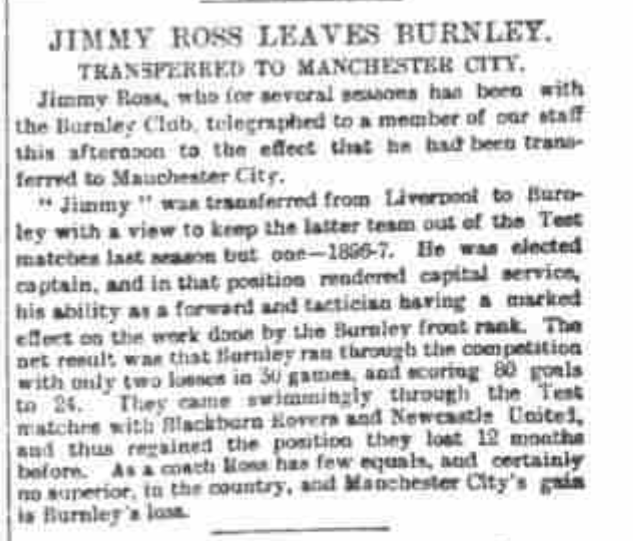
Jimmy Ross was a brilliant footballer for both City and Burnley but he’s often forgotten. You can find out who he was here:

More on Ross here:

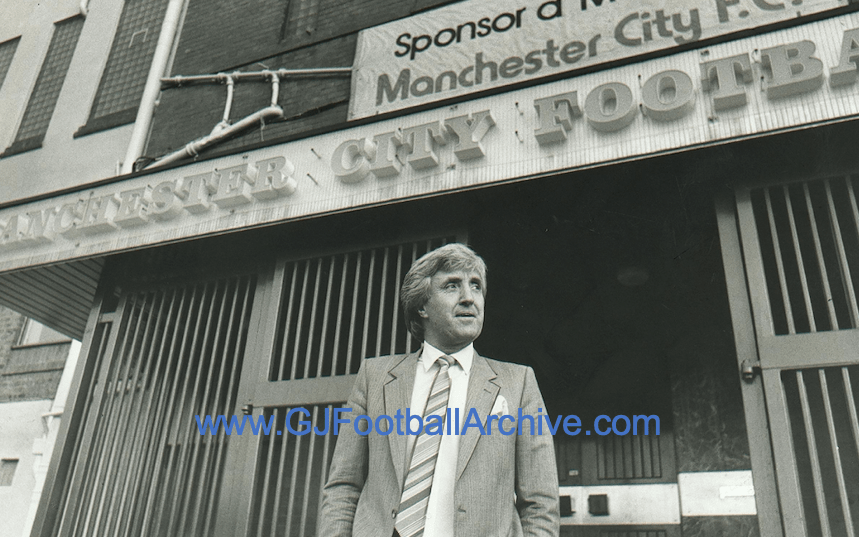
John Bond managed both. Here’s an exclusive interview I did with him many years ago where we talked about his career at both:

A season when City and Burnley challenged each other for the title:

The earliest known surviving film of a City Ladies (now Women) match was against Burnley:

There are of course several articles mentioning Burnley manager Vincent Kompany’s time at MCFC. You can access some of them here:

https://gjfootballarchive.com/tag/vincent-kompany/

The 1970s: 1973-1974 Wembley Return

The series of features/articles covering Manchester City in the 1970s continues with a 1,700 word article on the entire 1973-74 season – a season which included a Wembley final, multiple managerial changes and a controversial Manchester Derby at Old Trafford! You can read this below. This series of articles and features on Manchester City in the 1970s has been running throughout January with indepth articles some days and smaller ‘on this day’ style posts on others. Every day in January will offer something to enjoy.

Subscribers will get access to everything. If you want to know more on this incredible decade for Manchester City Football Club then why not subscribe and read it all? You could even subscribe for a month and see what you think. The following 1,700 word article is on the 1973-74 season and is available to subscribers below. Enjoy!

Subscribe to get access – Monthly

Read more of this content when you subscribe today. It costs £3 per month (cancel anytime) to access everything posted since 1 October 2022 or there’s a special annual rate below which gives greater access and works out much cheaper.

Subscribe to get access – Annual

Read more of this content when you subscribe today. It costs £3 per month (above) or £20 a year (here) to access everything posted since the site was created in December 2020. This special rate works out about £1.67 a week and gives access to everything posted, including PDFs of 3 of my books.

If you’d like to know more about subscribing then see:

City v Burnley

Today’s game with Burnley provides a great opportunity to remember some key games and stories from years gone by featuring the two clubs. I’ve written a lot about City & Burnley games over the years so sit back and get yourself in the mood for tonight’s game by having a look at these articles:

A game in 2001:

An amazing crowd for a second tier match:

Another incredible crowd for a City-Burnley match:

Sterling inspired City here:

One of my quests to find missing objects involves the 1904 FA Cup final ball. I know it was in Burnley for over 40 years and was still there in the 1950s but where is it today? Can you help find it? Have a read of this:

Jimmy Ross was a brilliant footballer for both City and Burnley but he’s often forgotten. You can find out who he was here:

More on Ross here:

John Bond managed both. Here’s an exclusive interview I did with him many years ago where we talked about his career at both:

A season when City and Burnley challenged each other for the title:

The earliest known surviving film of a City Ladies (now Women) match was against Burnley:

There are of course several articles mentioning Burnley manager Vincent Kompany’s time at MCFC. You can access some of them here:

https://gjfootballarchive.com/tag/vincent-kompany/

Manchester City 2023-24 Fixtures

No surprise that treble-winning City’s first Premier League game of 2023-24 will be against Vincent Kompany’s Burnley. I think we could all have predicted that.

Here are the fixtures in full. Obviously, many of these will be changed for TV and also clashes with FA Cup ties and so on. Interesting reading though.

  • 11/08/2023 – Burnley (a)
  • 19/08/2023 – Newcastle United (h)
  • 26/08/2023 – Sheffield United (a)
  • 02/09/2023 – Fulham (h)
  • 16/09/2023 – West Ham United (a)
  • 23/09/2023 – Nottingham Forest (h) 
  • 30/09/2022 – Wolverhampton (a) 
  • 07/10/2023 – Arsenal (a) 
  • 21/10/2023 – Brighton (h) 
  • 28/10/2023 – Manchester United (a) 
  • 04/11/2023 – A.F.C. Bournemouth (h) 
  • 11/11/2023 – Chelsea (a) 
  • 25/11/2023 – Liverpool (h) 
  • 02/12/2023 – Tottenham Hotspur (h) 
  • 05/12/2023 – Aston Villa (a) 
  • 09/12/2023 – Luton Town (a) 
  • 16/12/2023 – Crystal Palace (h) 
  • 23/12/2023 – Brentford (h) 
  • 26/12/2023 – Everton (a) 
  • 30/12/2023 – Sheffield United (h) 
  • 13/01/2024 – Newcastle United (a) 
  • 31/01/2024 – Burnley (h) 
  • 03/02/2024 – Brentford (a) 
  • 10/02/2024 – Everton (h) 
  • 17/02/2024 – Chelsea (h) 
  • 24/02/2024 – A.F.C. Bournemouth (a) 
  • 02/03/2024 – Manchester United (h) 
  • 09/03/2024 – Liverpool (a) 
  • 16/03/2024 – Brighton (a) 
  • 30/03/2024 – Arsenal (h) 
  • 03/04/2024 – Aston Villa (h) 
  • 06/04/2024 – Crystal Palace (a) 
  • 13/04/2024 – Luton Town (h) 
  • 20/04/2024 – Tottenham Hotspur (a) 
  • 27/04/2024 – Nottingham Forest (a) 
  • 04/05/2024 – Wolverhampton (h) 
  • 11/05/2024 – Fulham (a) 
  • 19/05/2024 – West Ham United (h)

32nd and 33rd League Goals of the Season

Today (30 March) in 1929 legendary goalscorer Tommy Johnson netted twice as Manchester City defeated Burnley 4-1 at Maine Road (other scorers were Brook and Marshall). These were Johnson’s 32nd and 33rd League goals of his record breaking season when he netted 38 League goals. I wonder if he’ll still hold the record for most City League goals in a season by the end of this current season.

Finding 1904 Objects

As a trained historian I am always wary about saying that something is the first or that something’s an absolute fact unless I can properly prove it. It’s important to not jump to assumptions and to act responsibly. The quest to uncover football’s history and ensure the facts not the fiction are recorded drives me on. In addition, I am keen to locate items that can link us directly with a particular moment or achievement. So I’d just like to talk about a few items that I’ve been desperate to locate for several years…

There are many items from Manchester City’s long history that I have been searching for over many, many years. I could write a book about them but here’s the story of a few objects connected with the 1904 FA Cup final and one item I’m after tracking down survived for years and I’ve discovered that it was housed in Burnley for at least 40 years.

Many objects connected with Manchester’s first major trophy success still exist including the original-style FA Cup (housed at the National Football Museum – go and take a look when you can); a watch presented to manager Tom Maley (and some of the others presented to the players); a banner made by members of the Alexander Family (club officials and directors from 1894 through to the modern day; the flag is in City’s archive); players’ medals and various newspaper cuttings and photographs. However, there are three important items that I know existed that have vanished.

I am going to start with the 1904 FA Cup final ball, which was stored in Burnley into the 1950s.

Hillman’s Ball

At the end of the 1904 FA Cup final goalkeeper Jack Hillman charged past an opponent to pick up the ball and claim it as his own. The 1904 FA Cup final became the possession of City’s Hillman and he kept hold of it throughout his life. For many years he had it on display in his sweet shop on Thurston Street, Burnley and it is believed it was still in that building at the time of Hillman’s death in 1952.

According to reports the ball was painted in City’s colours – Cambridge Blue and White was worn for the 1904 final – and was inscribed as the 1904 English Cup winning ball. Back then the FA Cup was more commonly known as the English Cup.

Following Hillman’s death there is uncertainty over what happened to the ball. It seems it stayed in Burnley, so if there’s anyone reading with information please get in touch. If the ball managed to survive into the 1950s then it is possible it is still around somewhere.

I managed to get a Burnley newspaper to do a piece on this a few years back but sadly no one came forward with any information.

Film of the Final

The 1904 FA Cup final was filmed and shown in pubs and exhibition halls for at least a month after the final. Several copies of the film must have existed as it was shown in multiple locations at similar times but, to date, none of these copies have been found. Many photos from the 1904 final (including this one of Meredith scoring) are believed to have been taken from the original footage. In recent years older football films have been located in the north-west and I live in hope that one day a metal film cannister will be found with the words ‘1904 English final’ scrawled across will be identified.

The Players’ Shirts

Not one of the 1904 FA Cup final shirts has ever been found despite many of the players saving other equally important shirts. The 1904 shirt carried no badge and as City played a League game only 2 days after the final and travelled straight to Everton from London, it’s possible the same kit was worn again. Players such as Billy Meredith and Sandy Turnbull did save other important shirts and it’s possible the kits may have stayed within family circles but not recognised for their significance due to the lack of a badge. Frank Booth, a prominent member of the team, died in 1919 and is buried in Denton – maybe his family retained the shirt and it still resides in the region?

If you know of any of these items and can help locate them then please do. The film is probably the one that appeals most to me, but both the ball and a shirt would be great finds too.

You can find out more about 1904 here:

The Great Jimmy Ross

On this day (24 February) in 1899 the great Jimmy Ross signed for Manchester City.  Ross was one of football’s leading names and earliest heroes when he played for the famous Preston side that won the League and Cup double of 1889. He had scored an incredible eight goals when Preston beat Hyde 26-0 in the record breaking F.A. Cup tie of 15th October 1887 – a game in which the referee is reputed to have lost his watch and allowed play to last two hours!  (you can read about that game here: https://gjfootballarchive.com/2021/02/22/hyde-v-preston-a-record-breaking-day/ ).

In addition, he was the Football League’s top scorer in 1890 (24 goals), and was quite a character.

He signed for Manchester City from Burnley for a reported £50 after previously captaining Liverpool to promotion. He had also played for the Football League.  

At City he was influential from the start. He netted an incredible seven goals in the final nine games of the 1898-99 season (his first nine games at City too!) brought the Division Two title for the first time – this was the first national success of either of Manchester’s professional clubs.  

Years later the legendary Billy Meredith, looking back on his City days, remembered Ross with great affection: “I must confess that Ross will always be my favourite hero.  He was good at everything he put his hand to and what he didn’t know about football wasn’t worth knowing.  At billiards and card games he was an expert.  Though he must have been thirty-four at least when he joined us, he was able to win seventy yards handicaps with ease and did so.  He could talk like a lawyer and on and off the pitch his comic sayings had us in stitches.”  

Today many of the heroes of football’s earliest years as a professional sport are forgotten and in Manchester’s case people often talk about Meredith as if he was the first and only hero in the city. But Jimmy Ross was a major figure and he was absolutely essential in City’s early development. Without him they may not have achieved that first Second Division title success. He helped develop Meredith into a star and should never be forgotten.

The leading sports newspaper of the day, the Athletic News, often praised Ross. When the club was making its first steps in the top flight the newspaper talked of City’s right sided players and stressed the importance of Ross and of course Meredith:  “For real brilliance the right wing took the biscuit….In fact, there are few, if any, better men at outside right  (Meredith).  His partner, the veteran Ross, of whom it is predicted every season that he has had his day, is in reality taking a second lease of footballing life, despite the paucity of head-covering, and as a wing the two will cause some trouble”.

At one point a newspaper article claimed that Meredith was absolutely brilliant when he was being well served by Ross but when the going got tough, Meredith disappeared.  It seems that at this stage in the Welshman’s career he needed the experienced Jimmy Ross more than Ross needed him.  One article claimed that Meredith: “doesn’t like donkey-work and if his partner is off, Meredith is off too.”

By the end of the 1901-02 season it looked as if Ross and Meredith, despite Ross’ age, would go on forever. Sadly, tragedy struck in 1902. Ross died on 12th June that year after an illness described as “an acute skin disease and a raging fever.”

Ross’ last appearance was appropriately against Preston North End in the First Round of the F.A. Cup in January 1902.  Ross died of an infectious skin condition.  City helped his mother, whom he was looking after at the time of his death, financially.  They also arranged the funeral.

Ross helped Meredith develop and over time the legend of Meredith grew, while Ross’ name has slowly faded. This is a major shame as Ross’ influence on Preston, Liverpool and City’s development is immense. Ross helped City establish their name at a time when Meredith was not quite the finished article. So many players have been described as legends in the decades that have followed. Many of them become forgotten over time, but it is important that once in a while we pause and remember those players. 

Today let’s think about Jimmy Ross and remember him as one of the men who made Manchester City.

Why not now read about the game when Ross played for Preston against Hyde? It already appears on my blog here:

Hyde v Preston – A Record Breaking Day

Capacity Crowd Watch City And Burnley

On this day (29 December) in 2001 a Paulo Wanchope hat trick helped Manchester City to a 5-1 victory over Burnley.  The game, watched by a capacity crowd of 34,350 (this included lots of temporary seating to increase the capacity of Maine Road during its final seasons), came during the Division One Championship winning season. The Blues were of course managed by Kevin Keegan. Here’s a contemporary report of the game:

John Bond Interview – Part 5

Here’s the fifth part of the 1995 interview I performed with former Norwich City, Manchester City and Burnley boss John Bond. In this section, exclusive to subscribers, Bond talks about the great players he had at City. Most notably he talks about Dennis Tueart, Kevin Reeves, Joe Corrigan, Paul Power and Tommy Caton.

He was extremely frank, open and honest – which delighted me because he was a great talker. It’s well worth listening to. At the time we did this I was researching my in-depth history of the club called Manchester The Greatest City (later updated as Manchester The City Years). 

I met John at his home and spent a good few hours with him chatting about the Blues and his career. I loved doing this interview and was always grateful for the time he gave me. He was also happy for me to quote everything he said in the interview. I did end up quoting him extensively in the book (and in others I’ve produced) but, until now, none of the interview has ever been heard by the wider public.

Subscribe to get access

If you would like to listen to the fifth part of this frank interview (and the other parts) and read all the in-depth articles on this site (including the entire Manchester A Football History book) then please subscribe. It works out about £1.67 a month if you take out an annual subscription (£20 per year, here) or £3 a month (below) if you’d like to sign up for a month at a time. Annual subscribers gets full access to everything posted since December 2020.

Subscribe to get access

If you would like to listen to the fifth part of this frank interview (and the other parts) and read all the in-depth articles on this site (including the entire Manchester A Football History book) then please subscribe. It works out about £1.67 a month if you take out an annual subscription (£20 per year, above) or £3 a month (here) if you’d like to sign up for a month at a time. Monthly subscribers gets full access to everything posted since 1 October 2022.