The 1990s: The First Women’s Manchester League Derby

The latest City in the 1990s flashback feature is about the women’s Manchester derby. This weekend marks the latest Manchester derby in the Women’s Super League and it will be played at the Etihad Stadium (City currently hold the record attendance for a women’s club game in Manchester – you can find details of that elsewhere on the website). There’s a long history of competition between teams representing the women of Manchester City and Manchester United.

City’s team has been in existence continually since November 1988 when Donna Haynes and Heidi Ward both scored two goals in their first game (v Oldham Athletic at Boundary Park).

I was at the City Ladies (as they were then known) first game and I was also at their first league derby in September 1990 when City defeated United 4-3. It was a fantastic day, watched by around 150 people.

City’s goals came from Rhoda Taylor (8 min), Rachel O’Shaughnessy (43 mins), Jenny Newton (50 mins) and Lesley Peters. City’s manager Neil Mather told me as part of my research for the Manchester City Women book: ‘United were the top side, you know, and beating them was so good for morale. The men’s team were a good side in the early 90s when City Ladies carried on developing, you know. This was the Howard Kendall era, and City had top five finishes. City were one of the top five or six teams in the country at the time, so it was fabulous for women’s football to have Man City, you know.’

Helen Hempenstall played for City that day and she described her memory of the day for my book: I remember when we played United (30/9/90) and Neil (Helen’s boyfriend, now husband) and all his mates came to watch us. There were a lot of people there that day. United had a decent team then. It was always a difficult game against United. They had a right-winger… We never got on. Every time we played each other we were at each other all the way through the game. Me and Carol Woodall were having a go at her. The referee told Lesley Wright “Tell both your full backs to shut their mouths otherwise they’ll both be off!” We just didn’t get along and before every game I thought I’ll get in their first. ‘I’m having her.’ Neil Mather still talks about it.

‘I think Lesley Wright kept the team together. She kept it all tight at the back. I played at the back with her and I learnt a lot from her. Because I was next to her I knew how important she was. If I missed something she always got it. She always encouraged me and kept shouting ‘different class, different class’. You learn from the people around you and I listened to her. Before every game she came to speak to me. She’d put her arm around me and reassure me. She’d tell me not to worry about anything. Most of the time travelling to away games I’d go with Lesley in the car. We used to have a laugh. I remember one day we were travelling to an away game some distance away and we stopped for petrol and all got out. I lit up a fag and everyone else jumped back in the car screaming! I didn’t even think! When we got to the ground they all told Neil Mather and I think he worried that he could’ve lost half his team. At another game I was sat in the middle and as we got out the person before me slammed the door back. It hit my head and I had a big lump for the game.’

Lesley Wright was one of several women who had first played for the pioneering Manchester Corinthians team. I’ve been researching their remarkable story for years and this summer (2024) my work will be published. It will tell the story of the Corinthians from its formation in 1949 through to its final days forty years later. For more information on that club and the book see:

The story of the first women’s League derby and of the first 30 years or so of City Women’s existence can be read in my book on the club. It’s called Manchester City Women: An Oral History and is basically the women telling their stories of playing for the club and how they got into football, plus statistics covering the journey from friendlies in 1988-89 through to competition and the modern day successes.

You can buy the book via this link (every copy is signed by me):

The 1990s: The Derby at Maine Road AND Old Trafford

The series of articles covering Manchester City in the 1990s continues today with a reminder of the Manchester Derby played on this day (20 March) in 1993. The match ended in a 1-1 draw (City were leading 1-0 before Cantona equalised). Here’s City scorer Niall Quinn’s view of the game:

The game was the first derby at Maine Road in the Premier League that had been established that season and United would go on to win the title, so this draw was viewed as a significant result for City at the time. The attendance was 37,136 which was an absolute sellout. The new Umbro Stand (Platt Lane) had opened that month.

There were issues about ticket touts and capacity, leading to MUFC showing the match at Old Trafford too. 10,000 were reported to have watch the game there. Here are some cuttings about that.

Here’s a 3,200 word article on that full season from a Manchester City perspective:

Subscribe to get access – Monthly

Read more of this content when you subscribe today. It costs £3 per month (cancel anytime) to access everything posted since 1 October 2022 or there’s a special annual rate below which gives greater access and works out much cheaper.

Subscribe to get access – Annual

Read more of this content when you subscribe today. It costs £3 per month (above) or £20 a year (here) to access everything posted since the site was created in December 2020. This special rate works out about £1.67 a week and gives access to everything posted, including PDFs of 3 of my books.

This series of articles and features will run throughout March with indepth articles some days and smaller ‘on this day’ style posts on others. There will be flashbacks to great games, players and more. Every day in March will offer something to enjoy.

Subscribers will get access to everything, while some on this day material will be free for all to view.

If you want to know more on this incredible decade for Manchester City Football Club then why not subscribe and read it all? If you’d like to know more about subscribing then see:

The 1990s: Manchester’s 1996 Olympic Bid Plans

On this day (14 March) in 1990 the Manchester Evening News featured Bob Scott’s plans for Manchester’s 1996 Olympic Bid (remember this was not the first bid by the city either – there was an attempted bid for the 1992 Games). These articles make interesting reading now. Note also the involvement of Rick Parry – a man well known in football circles then and now (he later was one of the key figures behind football’s league restructuring).

I’ve included this as part of my feature on Manchester City in the 1990s as ultimately these Olympic bids led to the building of the City of Manchester Stadium (present day Etihad). Back in 1990 though the preferred site for a new stadium was in Trafford and Manchester City had held discussions even then on moving to the new stadium even though it would have meant City moving out of the City of Manchester.

Notice how the footballing activities were to be shared between City, United, Everton and Liverpool. Also, the velodrome is mentioned as the Tameside Velodrome but it is of course the one build near the present day Etihad.

This feature is part of my series on Manchester City in the 1990s and you can read about the opening months of 1990 below. This series of articles and features will run throughout March with indepth articles some days and smaller ‘on this day’ style posts on others. There will be flashbacks to great games, players and more. Every day in March will offer something to enjoy.

Subscribers will get access to everything, while some on this day material will be free for all to view.

If you want to know more on this incredible decade for Manchester City Football Club then why not subscribe and read it all? The following 1,300 word article on the end of the 1989-90 season is available to subscribers below. Enjoy!

Subscribe to get access – Monthly

Read more of this content when you subscribe today. It costs £3 per month (cancel anytime) to access everything posted since 1 October 2022 or there’s a special annual rate below which gives greater access and works out much cheaper.

Subscribe to get access – Annual

Read more of this content when you subscribe today. It costs £3 per month (above) or £20 a year (here) to access everything posted since the site was created in December 2020. This special rate works out about £1.67 a week and gives access to everything posted, including PDFs of 3 of my books.

If you’d like to know more about subscribing then see:

The 1990s: 1993-1994 Swales Out

The series of articles covering Manchester City in the 1990s continues today with the 1993-94 season. It was such an important (and at times complicated season) that this article on that season is over 9,000 words long. It’s like a book in itself! It’s available to subscribers, so why not subscribe and relive this extraordinary season? As with all these 1990s subscriber features it contains material from interviews I’ve performed with key figures from that time. In particular this one contains quotes from Peter Swales and Francis Lee which they discussed with me personally.

Here’s the 9000+ word article on that season:

Subscribe to get access – Monthly

Read more of this content when you subscribe today. It costs £3 per month (cancel anytime) to access everything posted since 1 October 2022 or there’s a special annual rate below which gives greater access and works out much cheaper.

Subscribe to get access – Annual

Read more of this content when you subscribe today. It costs £3 per month (above) or £20 a year (here) to access everything posted since the site was created in December 2020. This special rate works out about £1.67 a week and gives access to everything posted, including PDFs of 3 of my books.

This series of articles and features will run throughout March with indepth articles some days and smaller ‘on this day’ style posts on others. There will be flashbacks to great games, players and more. Every day in March will offer something to enjoy.

Subscribers will get access to everything, while some on this day material will be free for all to view.

If you want to know more on this incredible decade for Manchester City Football Club then why not subscribe and read it all? If you’d like to know more about subscribing then see:

Hebden Bridge & the Manchester Corinthians

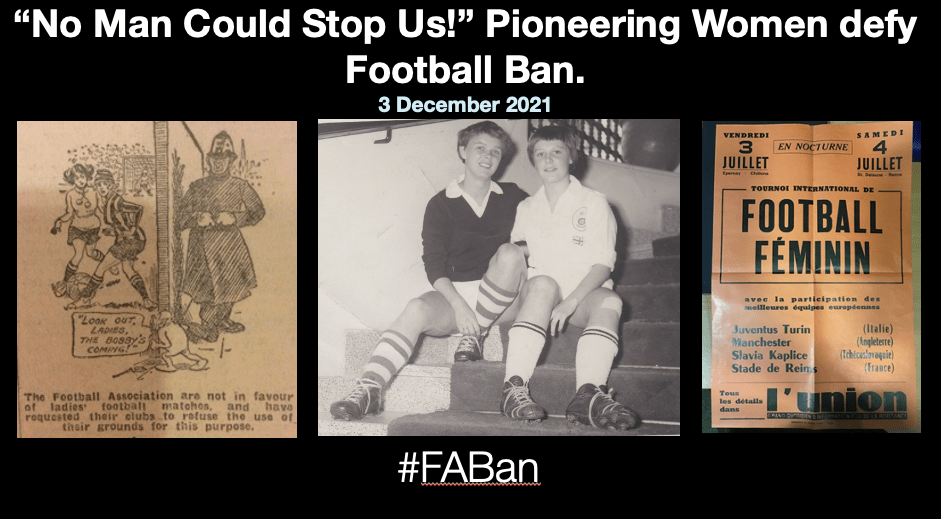
In December 2021 I staged a talk at Hebden Bridge on the FA ban of women’s football. The night was sponsored and supported by Geoff Matthews and his company Cansquared Ltd. It was a wonderful night and lots of attendees asked about the future and what they could do to help promote the stories of the women who played at a time when the FA tried to kill female participation in the sport. Well, after that night a lot has happened to recognise the Manchester Corinthians.

As part of my longstanding project into female participation and involvement in football in Manchester I have been researching and writing Manchester Corinthians: The Authorised History. The book will be of a similar scope to my Manchester City Women: An Oral History on City’s women’s team.

Margaret Shepherd and Margaret Whitworth with me prior to the Hebden Bridge event

A lot has been written on the Corinthians (see the section on women’s football on this site for a few examples) but not nearly enough, plus there are some inaccuracies out there that need to be corrected (even now there are some that keep on being repeated). Basically, this team possessed a talented group of players who toured Europe and South America promoting football, female endeavour and Manchester.

I talked quite a bit about Corinthians at Hebden Bridge and we were fortunate to have three Corinthians as guests that night. Margaret Whitworth, Margaret Shepherd and Lesley Wright between them covered every season of the club’s life from the 1950s through to its demise. Since that night I’ve also tracked down a player from the club’s very first season of 1948-49 who, together with detailed archival research, has helped me piece together for the first time several people who were instrumental in the birth of the club. Again, this is not something that has appeared in any of the articles or films connected with the club in recent years. This will be explained properly for the first time in my book.

I’m still trying to track down other Corinthians to include in the book. To date I’ve identified over 230 players. See:

After the Hebden Bridge night it was clear that we needed to recognise the Corinthian players further. On that night I mentioned my idea of having a plaque erected for the Corinthians in a significant/related location in Manchester. Several members of the audience thought this was a wonderful idea and asked if they could support the wider promotion of the Corinthians – one more or less suggested we should march on Downing Street to persuade them to do something about it!

In 2019 I’d written articles for a variety of publications suggesting the same and urging the FA and others to recognise the Corinthians. In the Manchester City men’s match programme as well I highlighted my desire to get a plaque erected about their achievements.

The talk at Hebden Bridge


Via Manchester Council I was put in contact with the Friends of Fog Lane Park and we ultimately set up a successful appeal in their name. The FA made a significant donation which funded the plaque and our fundraising efforts raised enough to allow the Friends to commission 2 murals and other tributes to the Corinthians as well.

Those present at Hebden Bridge in December 2021 helped raise the profile and that event was significant in highlighting the incredible achievements of its female footballers. Now, the authorised history of the Corinthians will tell the story of the club from its birth right through to the blue plaque appeal. It will use the voices of the women who represented Manchester and England in a positive manner and who won trophies in South America & Europe and who toured North Africa. They won a significant European competition before either Manchester men’s team yet their achievements were not recognised by the city until the blue plaque appeal started.

I am immensely proud of how this has all happened. The event at Hebden Bridge was free to attend and was made possible by the support of a locally based business, Cansquared (Geoff Matthews – who co-hosted the evening). We felt it was vital we made this free to attend to spread the word.

If anyone runs a key Manchester venue and would like a Corinthians celebration event then please get in touch. The more we can do to promote their story the better.

Thanks for reading this. If you would like to find out more about the Corinthians then follow the tabs on this site or use the search function. If you’d like to know more about the FA Ban then you can download for free an article I’ve recently co-written here:

https://www.tandfonline.com/doi/full/10.1080/17460263.2021.2025415

You can find out more on the Corinthians book here:

Copies of my book on Manchester City Women are still available. This tells the history of City Women via the voices of the women (and some men) involved. The book has been heralded as a model for oral histories by the Oral History Society.

Here’s a link you can follow to order a signed copy of the City Women book:

Watch this space for more on the Corinthians and women’s football over the coming months. Thanks – now use the tabs and search to learn more on women’s football in Manchester. Ta!

The 1970s: Liverpool Frustrations Again

The series of features/articles covering Manchester City in the 1970s continues with this brief flashback to today (19 February) in 1973. There wasn’t a first team game that day but the Liverpool Echo did publish this article about their local club’s frustrations at facing Manchester City. This followed a 1-1 draw at Maine Road (Tommy Booth had scored shortly before half time; Liverpool equalised in second half).

The two clubs had met three times in 2 weeks with Malcolm Allison’s Blues defeating Bill Shankly’s Liverpool 2-0 in the middle meeting and both other games ended in a draw. It’s a long time ago now but modern football tends to forget that for much of the 1970s City and Liverpool were considered major rivals, more so than LFC-MUFC for many years. In fact Shankly had already said in the late 1960s that he considered City to be Liverpool’s main rivals – it was probably all about who he saw as the greatest team LFC faced in terms of quality, but there were many seasons, including 1972-73 (through to the end of the decade except 1977-78 & 1979-80), where the Anfield crowd for the game with City was greater than it was for a game with United. In 1973-74 it was an incredible 10,000 higher for City than United and at other times around 6,000.

Ah well! Football perceptions change over time but that’s why it’s important to do the research and find contemporary material. Memories fade and change.

1,700 word article on the entire 1972-73 season – a season of major change which saw one man who didn’t want to be manager told to take the manager’s job or you’ll be leaving yourself! Oh City! You can read this below. This series of articles and features on Manchester City in the 1970s has been running throughout January with indepth articles some days and smaller ‘on this day’ style posts on others. Every day in January will offer something to enjoy.

Subscribers will get access to everything. If you want to know more on this incredible decade for Manchester City Football Club then why not subscribe and read it all? You could even subscribe for a month and see what you think. The following 1,700 word article is on the 1972-73 season and is available to subscribers below. Enjoy!

Subscribe to get access – Monthly

Read more of this content when you subscribe today. It costs £3 per month (cancel anytime) to access everything posted since 1 October 2022 or there’s a special annual rate below which gives greater access and works out much cheaper.

Subscribe to get access – Annual

Read more of this content when you subscribe today. It costs £3 per month (above) or £20 a year (here) to access everything posted since the site was created in December 2020. This special rate works out about £1.67 a week and gives access to everything posted, including PDFs of 3 of my books.

If you’d like to know more about subscribing then see:

The 1970s: 1977-1978 Bell’s Return

The series of features/articles covering Manchester City in the 1970s continues with a 3,700 word article on the entire 1977-78 season – a season which saw an emotional return to the League for Colin Bell and a MCFC title challenge (well, we hoped!). You can read this below. This series of articles and features on Manchester City in the 1970s has been running throughout January and now into February with indepth articles some days and smaller ‘on this day’ style posts on others. Every day in January offered something to enjoy and I’ll continue this series for a little while yet. Thanks for all the positive comments about it.

Subscribers can access everything. If you want to know more on this incredible decade for Manchester City Football Club then why not subscribe and read it all? You could even subscribe for a month and see what you think. The following 3,700 word article is on the 1977-78 season and is available to subscribers below. Enjoy!

Subscribe to get access – Monthly

Read more of this content when you subscribe today. It costs £3 per month (cancel anytime) to access everything posted since 1 October 2022 or there’s a special annual rate below which gives greater access and works out much cheaper.

Subscribe to get access – Annual

Read more of this content when you subscribe today. It costs £3 per month (above) or £20 a year (here) to access everything posted since the site was created in December 2020. This special rate works out about £1.67 a week and gives access to everything posted, including PDFs of 3 of my books.

If you’d like to know more about subscribing then see:

Manchester’s Footballing Origins? There’s a Book For That

I’ve been asked a few questions this last week about the origins of men’s football in Manchester. For those that don’t know I researched & wrote a detailed history on the topic for Manchester University Press a few years back. I don’t have copies available myself but the publisher does have paperback copies, retailing at £21 on their website:

Follow the link (above) and it will explain more on the book but it basically tells the stories of the pioneering men’s clubs in the 1860s/1870s; the development of Manchester’s main two men’s clubs (City & United; correcting many myths!); first trophy successes; the scandal at City and the match fixing at United; plus much more. It considers the types of people who went to watch the clubs during early 20th Century and, again, there may be some detail in there that surprises a few.

If you want to know more then feel free to ask. Thanks

Second Tier Crowd to Rival Leaders Liverpool?

Here’s another attendance flashback piece. This is from February 1984 when Second Division Manchester City were reported as only being a few thousand behind League leaders Liverpool. The article praised City fans of course but it also highlighted the support Newcastle were also getting in the second tier of English football at the time.

In recent years it has become fashionable to knock fans when stadia are not quite full but in the past we tended to praise and recognise those that continued to be loyal. With the cost of football now considerably higher than it was back in the 1980s then I think it’s only fair that we start to go back to recognising the dedication and loyalty of fans. It is so frustrating when modern day fans (often who don’t pay to attend games) or even journalists/commentators/former players on TV (again, often who do not pay to attend games) criticise the supporters of any club if they see a seat or so empty. If only they realised the efforts fans go to to attend games at times usually arranged for the media’s benefit and not ours.

Parking issues, money concerns, travel gridlock, strikes, weather, travel, work… a whole host of things get in the way and it takes dedication to attend any game.

Lots more on this website about attendances. If you want to know crowd comparisons for the decade before 1983-84 season then this is well worth reading. It may surprise fans of some clubs:

The 1970s: City Go Top!

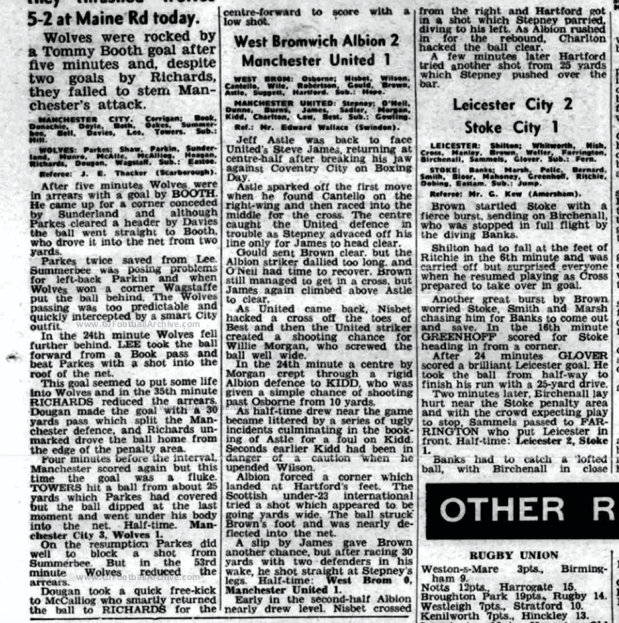
The series of features/articles covering Manchester City in the 1970s continues with this match report from today (29 January) in 1972. The Blues defeated Wolves 5-2 with goals from Francis Lee (3), Tommy Booth and Tony Towers to go top of the League. As a bonus you can also read the WBA v Manchester United match report too.

If you want to know more on this incredible decade for Manchester City Football Club then why not subscribe and read it all? You could even subscribe for a month and see what you think. The following 4,700 word article is on the 1971-72 season and is available to subscribers below. Enjoy!

Subscribe to get access – Monthly

Read more of this content when you subscribe today. It costs £3 per month (cancel anytime) to access everything posted since 1 October 2022 or there’s a special annual rate below which gives greater access and works out much cheaper.

Subscribe to get access – Annual

Read more of this content when you subscribe today. It costs £3 per month (above) or £20 a year (here) to access everything posted since the site was created in December 2020. This special rate works out about £1.67 a week and gives access to everything posted, including PDFs of 3 of my books.

If you’d like to know more about subscribing then see: