League Dominance?

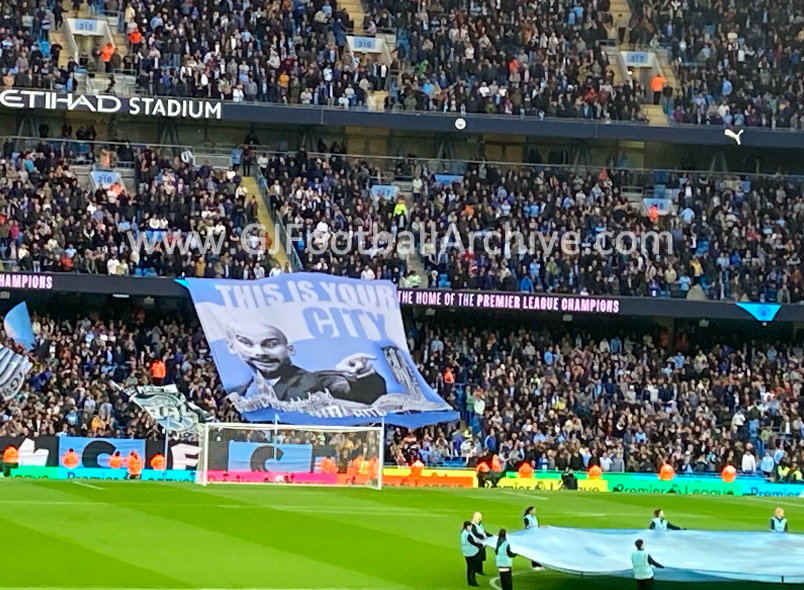
Lots of tosh has been spoken recently about teams dominating English league football with some claiming that there’s ‘never’ been a time when a team has dominated as much as Manchester City do today. Ignoring the fact that the League campaign is not over yet and will go to the final day (so that’s a nonsense for a start) I decided to pull together a few facts that may be useful. They’re certainly relevant.

So, first of all, the question of whether Manchester City is the first to dominate in a way no other has before (again the season isn’t over and it could go either way yet, so ‘dominate’ is not something I believe anyway!)… City have currently won 3 League titles in a row. A feat that has been done several times before, most recently (before City) by Manchester United in 2006-09.

Ah, but City have won 5 out of 6 titles they say… Yes, but United won 7 out of the first 9 Premier Leagues and were runners up in the other 2. Liverpool achieved the same 7 out of 9 League titles in the 1970s and early 80s. We can’t predict the future of course but City have never managed seven titles in 9 seasons. In fact if City do win the League the stats will show it’s 7 in 11 seasons and at present it’s 7 titles in 12 seasons. So that means two other clubs have had longer spells as ‘dominant’ clubs using the language and phraseology that those criticising the reigning Champions usually use.

One of the other criticisms that’s thrown City’s way is about the Premier League being ‘boring’ because it’s a ‘foregone conclusion’ and ‘other teams have to be perfect’ to finish above City. Well, to be the best you have to beat the best but in terms of the League being ‘boring’ and a ‘foregone conclusion’ then the stats in terms of points gaps say otherwise.

Sure, City’s incredible 2017-18 season when they amassed 100 points was one in which the Blues ran away with the title, but it was also a rarity. City won the League by bettering second place by an astounding 19 points but, wait a minute, that amazing gap is only 1 point  more than the (18 point) gap between 2020 champions Liverpool and second placed City (at a time when City are supposed to be the dominant team!). Not only that but United had an 18 point gap between them and second placed Arsenal in 2000.

Worth noting too that in the 31 season history of the Premier League 14 runners-up teams bettered 2nd placed United’s points tally in 2017-18 when City achieved their 100 points. Surely, no title winning team can be blamed if the runners-up have worse results than in more than 45% of the competition’s seasonal history?

What about the ‘foregone conclusion’ and ‘boring’ line? Well, I suppose it can be argued it’s boring if the League is won many, many weeks before the end of the season. Using that logic it should also be ‘not boring’ if it goes down to the last game (like this season) or the last week (could be 2 or 3 games depending on fixture congestion). So I’ve had a look at how many seasons have finished with 3 points or less separating the top two teams. This shows that there have been 9 seasons when this has been the case. Guess what? 4 of those were seasons when City have won the Premier League (2 United, 1 Arsenal, Blackburn & Chelsea).

This means that 57% of all City’s Premier League title wins have been by less than 3 points! For United (13 PL titles) the figure is 15%; Arsenal (3 PL) it’s 33% and Chelsea (5 PL) is 20%.  Four of United’s PL titles have been won by 10 points or more.

Of course, title races can be exciting when teams win the League by ten points or more, but the argument many put across is that it’s boring when one team walks away with it. Surely there’s less chance of that happening when a team wins the title by less than 3 points?

There are lots of statistics that could be posted and, to be frank, they never actually tell the story of a season. How many times do we see possession stats that are in one club’s favour but the other team is actually winning? Nevertheless, when people try to suggest a season is boring because a club (any club) is running away with it then the stats can help show that something is not true. Similarly, when it comes to dominant football clubs – yes, there are eras of dominance by certain clubs and Manchester City certainly are a dominant club at the moment – we must not be fooled into thinking that a situation has NEVER happened before when it so obviously has (and other clubs may actually have been more dominant!).

Ah well! Football, hey? If only people actually looked at history more before jumping to conclusions.

Women’s FA Cup Final: The Original Manchester United Ladies

My research into women’s football in Manchester has highlighted the stories of many players and clubs over the years. I think people tend to think my research is only about City and the Corinthians but it aims to cover all teams. This includes Manchester United, whose history as a women’s team, I’ve been researching for many years. They have a fascinating story and were pioneers in many ways.

The original Manchester United Ladies team was established via the United Supporters’ Club and played its first game in October 1977, against a team from Ireland. In 1986, while looking back on this period, manager Anne Smith joked: ‘Our standard of football was not very high. It couldn’t have been as I was playing!’

Over the course of the next two years, the club played a number of friendlies until, in 1979, the team joined the long-established Three Counties League and the Women’s Football Association (FA). Anne Smith was one of the leading figures within the club, and became manager around this time. Anne was a driving force behind the club for many years and deserves to be recognised as a pioneer of women’s football, helping to establish competitions in the 1970s and 1980s.

Publicity in the men’s United match programme during the late 1970s encouraged other women to join United and in their first season of league football they finished sixth. The Three Counties League covered a large geographic area and travel to games was difficult, so Anne and the United committee worked with others to create a local league. The Women’s FA gave permission to establish the Greater Manchester Women’s Football League with its first season of operation being 1982-83 (if you have information and seasonal records of the Three Counties League then please get in touch as this will help some of my current projects – Gary@GJFootballArchive.com Thanks).

United Ladies won the competition in its first three seasons and the club remained a leading team in the region for many years. Jane Morley, who is currently the secretary of Stockport County Ladies, was a player for many years:

‘As a United men’s supporter it was great to play for the original women’s team. Wearing the red of United and training at the Cliff was really great and we were a strong team too. We were very successful in the Greater Manchester Women’s League. The two strongest clubs were ourselves and Wythenshawe and games between the two were real tests. Wythenshawe were our main rivals.’

During her time with the team Jane remembers playing at the Old Trafford stadium once: ‘There was a men’s testimonial game and we were asked to play on the pitch as part of the day’s events. That was something special for us all.’

The club continued to develop during the 1980s and 1990s, officially forming part of Manchester United by 2001. However, the club disbanded in 2005, not long after the Glazers takeover of the Reds.

In 2018, a new Manchester United women’s team was established and this team went on to win the Championship in 2019. United women have been a formidable challenger in the FA Women’s Super League ever since and reached the Women’s FA Cup final in 2023 for the first time. They’re in the final again today against Tottenham. Will this be their first major trophy success since the resurrection of the team?

Many former United players also played for the Manchester Corinthians during the 1960s, 1970s and 1980s (if you did then please get in touch). The influence of that club, established in 1949, played its part in the development of Manchester’s footballing life. This year to mark the Corinthians 75th anniversary I’m self funding a book on the club: Manchester Corinthians: The Authorised History will be published late summer and tells the story of the club via the voices of women who played from its first ever game in 1949 right the way through until its final game over 40 years later. Players from every season have been interviewed and anyone ordering the book pre-publication will be able to have their name printed in a special roll of honour at the back.

The Corinthians’ legacy is still felt strongly and their influence on both United’s and City’s women’s teams remain. You can find out more on the book here:

As for Jane Morley… she stayed with the original Manchester United women’s team for six successful years. In 1985, together with other United players, she established FC Redstar and took the team into the North West Women’s Regional Football League where they achieved promotion in 1987 to the top division – at the time the highest league competition available. Playing in Stretford, FC Redstar impressed but player recruitment issues brought a premature end to the club in 1990.

Once her playing days were over Jane coached and managed at various levels with Manchester City Ladies for many years. Always keen to promote football to young girls Jane enjoyed developing an array of talent with the club. She also brought success to the club and managed the first team for a spell when they were based in Urmston, Trafford.

After leaving City Jane continued to develop opportunities for girls and young women within both Greater Manchester and in Cheshire and is secretary of Stockport County’s women’s team, dedicating her adult life to promoting football for women and girls.

You can watch a brief interview, captured as part of a project I did for the Women’s Euros, with Jane here:

Manchester’s First Women’s League Derby

Last Wednesday an article I wrote on the first women’s Manchester Derby in a league between City and United was published in the Mirror’s Women’s Football News. For those that think competitive league derbies are a recent thing, it’s worth noting that the game occurred more than three decades ago. It also made reference to my research into Manchester Corinthians. You can read it here:

You can also read about the new Corinthians book here:

City 1 Leicester 0, the FA Cup Final

On this day (April 26) in 1969 Manchester City defeated Leicester City in the FA Cup final. It is worth pausing to consider how the Blues compared to football’s other successful sides in the competition at this time in football history.  City’s four FA Cup successes placed them 7th in the all-time list of FA Cup winners – can you guess the clubs they were behind? Liverpool? No! MUFC? No! Arsenal? No! Keep going…

They were behind Aston Villa (7), Blackburn Rovers (6), Newcastle United (6), Tottenham Hotspur (5), The Wanderers (5) and West Bromwich Albion (5).  Bolton, Sheffield United and Wolves had, like City, each won four FA Cups, while Manchester United and Arsenal had only won three, Liverpool one and Chelsea had not yet won the trophy.  In fact Chelsea had only won one major trophy (the League Championship) at this point in their history.  

Here for subscribers is a long read on that final and the events surrounding it:

Subscribe to get access

Read more of this content when you subscribe today.

The 1890s: Manchester’s First National Success

On this day (April 22) in 1899 Manchester City became the first side to gain automatic promotion when they won the Second Division title after a 4-1 victory over Blackpool. Goals from Meredith (2), Gillespie and Ross gave the Blues the win.

A series of test matches, similar to play offs, had been utilised in previous seasons. The Blues were also the first of the Manchester teams ever to earn promotion and the football season ended with Manchester City as comfortable champions of the Second Division. This meant they were the first Manchester team to win a national League competition too. 

Near neighbours Glossop were also promoted that day. Here’s the final table:

Subscribers can read about the final game and other information from that season below:

Subscribe to get access

Read more of this content when you subscribe today. It costs £20 a year (here) to access everything since December 2020 or for £3 per month (below) you can access everything from 1 October 2020.

Subscribe to get access

Read more of this content when you subscribe today. It costs £20 a year (above) to access everything since December 2020 or for £3 per month (here) you can access everything from 1 October 2020. Why not join for a month and see what you think?

Manchester Home To A League First & Myth Busting

On this day (17 April) in 1888 the first meeting of the Football League was held in Manchester. The following report names the clubs accepted and the others who wanted to join the League. It has often been written in Manchester United related books that Newton Heath applied to join the League in 1888 but didn’t receive enough votes to be accepted. That is completely untrue as no one actually had to apply nor was a vote taken. Clubs were asked and some tried to push to get included but Newton Heath were neither asked nor were they pushing for acceptance either. Nor were Ardwick or Manchester Asoociation who, to be frank would’ve been the most famous Manchester club at this time.

Bolton Wanderers were the only team from present day Greater Manchester to be asked/selected for the first League season.

Manchester Courier, 18 April 1888

The plaque is positioned on the corner of Mosley Street and Market Street/Piccadilly in Manchester.

Oxford Dictionary of National Biography

I’m delighted to say that my latest biographical piece for the Oxford Dictionary of National Biography has been published. It’s on the life of Tommy Docherty, the former Preston & Scotland footballer and manager with a whole host of clubs including Manchester United of course. Details of all the people featured by the dictionary this year can be viewed here:

https://www.oxforddnb.com/newsitem/811/whats-new-april-2024

I’ve written several articles for the dictionary in recent years, including biographical pieces on footballers Jimmy Armfield, Ray Wilkins and Frank Swift. It’s a prestigious publication, recording the achievements of the nation’s most important figures. Anyone included within the book has achieved something remarkable, or perceived as an iconic figure in some way.

Hopefully, in the future I’ll be able to contribute biographical pieces on other important figures. Various panels decide who is to be included but I would be interested to know who you think should be covered in future editions. The important aspect to remember is that these figures must now be deceased and have contributed something remarkable or iconic. Those who died in 2021 or the years that have followed will be eligible to be considered for future editions. Sadly, I won’t decide but I have previously been asked my thoughts and have provided names.

Restored 2011: The All-Manchester FA Cup Semi Final

On 16 April 2011 Manchester City faced Manchester United in the FA Cup semi final. A few years back I produced Restored 2011: The All-Manchester FA Cup Semi Final and as we build up to another FA Cup semi final weekend involving both Manchester clubs it’s well worth reminding ourselves of this time.

This special 1 hour audio recording looks at the game and the years between City’s 1976 League Cup success and the FA Cup glory of 2011. The 2011 semi-final was a crucial step in City’s journey since the 2008 takeover and I felt it was vital to do a special marking this.

So what’s in this special recording? Well, I’ve included exclusive material from interviews and recordings I’ve done over the years with Garry Cook, Brian Marwood, Roberto Mancini, Peter Barnes and Peter Swales.  Why Swales? Well, have a listen and you’ll hear why. Basically though I’m trying to set the tone for why the 2011 FA Cup semi final victory and overcoming Manchester United was so significant.

On Mancini… I include a few words from him recorded in 2011 and at one point he talks about the view that was then being expressed that City were ‘trying’ to buy success (now they say City ‘have’ bought success!). His words are a reminder that City have been having that particular criticism thrown at them for over a decade! Oh well, I wonder how long those criticisms were laid at other clubs who had seen major investment which propelled them forward?

Anyway, get yourself a brew and be prepared to be transported back in time. Here’s the recording:

If you enjoy the recording then please let me know, comment or subscribe to the site. If it’s of interest then, over the coming months and years, I’ll produce others like this highlighting key points in Manchester City – and Manchester’s – footballing history. It costs £20 a year to subscribe (it works out £1.67 a month) or £3 if you’d like to sign up a month at a time to get full access for as long as you subscribe (you can always try it for a month). It’s worth bearing in mind that the 2010 Manchester A Football History cost £24.95 and all subscribers will be able to access all of that for as long as they are a subscriber (plus all the other stuff of course). You can subscribe below.

Subscribe to get access to the full site

£20 per year to access everything

Match Stats for the 2011 FA Cup Semi-final

City 1-0 United (HT 0-0)

Yaya Toure 52

City: 25 Hart 04 Kompany (yellow card), 05 Zabaleta (yellow card), 13 Kolarov, 19 Lescott, 11 Johnson (Wright-Phillips 79), 18 Barry, 21 Silva (Vieira 86), 34 De Jong (yellow card), 42 Y Toure, 45 Balotelli (yellow card). Substitutes 12 Taylor, 38 Boyata, 07 Milner, 08 Wright-Phillips, 24 Vieira, 10 Dzeko, 27 Jo

United: 01 Van der Sar, 03 Evra, 05 Ferdinand, 15 Vidic, 22 O’Shea (Fabio Da Silva 84), 13 Park Ji-Sung, 16 Carrick, 17 Nani, 18 Scholes (red card), 25 Valencia (Hernandez 65), 09 Berbatov (Anderson 74). Substitutes 29 Kuszczak, 12 Smalling, 20 Fabio Da Silva, 08 Anderson, 28 Gibson, 07 Owen, 14 Hernandez

Referee: Dean

Attendance: 86,549

The 1990s: The Super League!

The series of features covering Manchester City in the 1990s continues today with this reminder of the days when the creation of a Super League was leaked to the press. The Super League eventually became the Premier League and the key clubs behind the move were Arsenal, Tottenham, Liverpool, Everton and Manchester United. Much of the coverage from this period in 1991 focused on these clubs wanting to exert greater control on football’s finances, i.e. to carve up the game’s riches for the biggest clubs of the era. These cuttings are all from the start of April 1991.

Back then the Football League had four divisions and voting rights were equal for all clubs in the top two divisions (the ‘full members’ of the League, hence the Full Members Cup). The bottom two divisions were classed as associate members and they still had voting rights which many in the top division objected to. They felt the clubs outside the top flight should not control the League’s finances and direction.

It wasn’t the first time the establishment of a Super League had been discussed (usually it involved the idea of bringing leading Scottish clubs into a British league system) but it does appear to be the first time the leading clubs in the top division wanted to limit the influence of the others.

You can see from these articles who the leading architects were and how fans reacted. This piece quotes Frank Horrocks from the MCFC Supporters Club. Many of his concerns have proved to be true in the 30+ years that have followed:

All these years on there have been multiple attempts by certain clubs to limit the opportunities for others and create an environment where they can prosper without necessarily investing. Many of the financial issues between the rich and the rest in football that people talk of today were created as a result of the greed of several clubs in the early 1990s.

For Manchester City the 1990-91 season saw a shock managerial departure could have disrupted the club but ultimately they finished 5th, 3 points ahead of Manchester United. Here’s a 2,700 word article on that season:

Subscribe to get access – Monthly

Read more of this content when you subscribe today. It costs £3 per month (cancel anytime) to access everything posted since 1 October 2022 or there’s a special annual rate below which gives greater access and works out much cheaper.

Subscribe to get access – Annual

Read more of this content when you subscribe today. It costs £3 per month (above) or £20 a year (here) to access everything posted since the site was created in December 2020. This special rate works out about £1.67 a week and gives access to everything posted, including PDFs of 3 of my books.

This series of articles and features will run throughout March with indepth articles some days and smaller ‘on this day’ style posts on others. There will be flashbacks to great games, players and more. Every day in March will offer something to enjoy.

Subscribers will get access to everything, while some on this day material will be free for all to view.

If you want to know more on this incredible decade for Manchester City Football Club then why not subscribe and read it all? If you’d like to know more about subscribing then see:

The 1990s: Manchester City v Manchester United

Yesterday (23 March 2024) saw another Manchester City victory over United in the WSL Manchester derby. It’s always impressive seeing the Blues win and this City team has been in existence since 1988. The history of women’s football in Manchester does not always get the attention it deserves and many of us have been determined to change that for years (this year I’ll be publishing the Authorised History of the Manchester Corinthians after years of research – see below). So hopefully the following will be of interest. It includes a few quotes from those involved in previous decades and I’ve included it as part of my series on the 1990s as the first City-Utd women’s league derby took place in 1990.

While the perception will always exist that Manchester United’s women’s team has always been City’s rivals and vice versa, for both clubs the real rivals have varied over the years. Derby matches have been played against Manchester Belle Vue and other prominent local clubs. There were even derbies in the 1940s when Manchester Ladies and Manchester Corinthians played each other.


However, any game between City and United takes on extra significance. United fans established a Manchester United Ladies team in the 1970s with close ties to the men’s club. This eventually was closed down by the men’s club before re-emerging in 2018 as a WSL 2 club. In September 2019 the first WSL Manchester derby between City and United occurred at the Etihad following United’s move into the top flight. This was a truly special day for both clubs and for those of us present.

The first competitive derby between City and United was actually in September 1990 in the North West Women’s Regional Football League Second Division when Neil Mather was City’s manager: “I was nervous for weeks on end, and it was coming and coming and coming. I thought ‘we’ve got to beat United in the first competitive Derby.’ Being a big blue it was like ‘whatever we do we’ve got to beat them.’ We were 4-1 up with about five minutes to go and then had a five minute collapse where I thought we’re going to blow this. At one point it had looked like we were going to get five or six and annihilate them and then we nearly lost it! Thank God we hung on for a 4-3 win, but I’ll never forget that game. We had a girl called Jenny Newton who was a manic City fan and scored and I don’t think I’ve ever seen anything like it. When she scored her eyes were bulging and it meant the world and a lot of our girls were City fans. It meant the world to beat them.”

Lesley Wright: “The first time we played United in a competitive game there was about 150 there. They were a really strong team. Better than us at the time and they’d been established a lot longer.”

Rita Howard: “Despite being a United fan I loved playing as City Ladies against United. I absolutely loved it. Even though I’m a United fan I never contemplated joining them because the support from City, even when it waned a little, was far superior to anything United got. At best they’d get a kit and then it was ‘on your way.’ I know our closeness to City came from that beginning with Neil. His enthusiasm got us the kit, the tracksuits, the minibus…. All sorts of things. I know that wasn’t happening at United and at that time I don’t think any club connected in any way to a Football League side were as close as we were then. I think we got a lot more recognition from the beginning and that has carried on to today. Look at what City have done.”

Jane Morley: “I’m a season ticket holder at Manchester United but I was a manager at City Ladies. One day I’d been with City at a tournament and then went straight to Old Trafford for a men’s game. I was sat there when the bloke next to me – who I didn’t know – said ‘what you doing with that on!’ I realised I still had my City jacket on. I had to explain to him that I managed City Ladies.”

Bev Harrop was a Manchester United fan playing for City: “I had a United shirt underneath my City shirt! (laughs) Most of the time.  Not later on, I grew out of it eventually, but at first, I did.”

Jane Morley: “It angers me when people say that Manchester United now have their first women’s team. As with City when the relaunch happened that implies the stuff we did for the club years before doesn’t count. I played for United in the 70s and 80s before a few of us broke away to set up FC Redstar. We left United because we wanted to test ourselves. We had some great players and wanted to progress but those who ran United wanted to stay in a Manchester League and not join the North West League. So we broke away in 1985 and formed FC Redstar.

“Many of the teams we know today as WSL clubs are actually men’s clubs that have taken over established women’s clubs. Teams like Leasowe Pacific became Everton. I have to bite my lip sometimes when some clubs claim they created a women’s team… no, you took and rebranded a team. There were quite a few big teams around the time City Ladies started such as Broadoak with Tracey Wheeldon.” 

These snippets are from my book on Manchester City’s women’s team. Copies (signed by me) can be ordered here: https://gjfootballarchive.com/shop/

For more on the book on the Manchester Corinthians (who started in 1949) see:

If you’d like to read more on women’s football in Manchester then take a look at: 

https://gjfootballarchive.com/category/womens-football-2

Subscribe to get access

If you would like to read all the in-depth articles on this site (including the entire Manchester A Football History book) then please subscribe. It works out about £1.67 a month if you take out an annual subscription (£20 per year) or £3 a month if you’d like to sign up for a month at a time. Each subscriber gets full access to the 500+ articles posted so far and the hundreds scheduled to be posted in the coming weeks.