History Talk Video: The Origins of MCFC

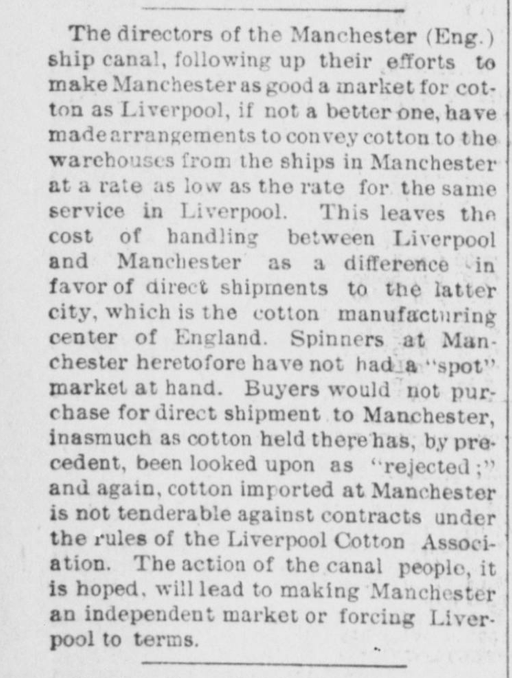
Here’s my presentation on the origins of Manchester City FC, focusing on St Mark’s & the club’s development prior to its re-birth as Ardwick AFC for you to enjoy. It lasts about 1 hour and was recorded on 1 February 2023. There are lots of myths out there, but I focused on the facts and my latest research. 

The presentation is all about the origins prior to 1887. This talk was free to download until 9 February. Since that date it is only available to subscribers (see below for details of how to subscribe).

Subscribe to get access – Annual

Annual subscribers get access to everything posted since December 2020 (interviews, history talks, articles, PDFs of books etc.) and everything to be posted during your subscription. It costs £20 a year (about 5p a day).

Subscribe to get access – Monthly

Monthly subscribers get access to everything posted since 1 October 2022 and everything to be posted during your subscription. It costs £3 a month (cancel any time).

Attendance Differences

I’ve been doing quite a bit of research into attendance figures this week and thought I’d share a couple of findings which may surprise some. There has been a lot of talk in recent years about certain clubs having ‘empty seats’ and I think many Manchester City fans will remember the Manchester Evening News feature where a young journalist used a red highlighter to circle every empty seat he saw at a particular game. This was challenged by fans, including myself, who questioned the time the image he utilised had been taken and the purpose of the article.

Since then fans of rival clubs have often pointed their finger at City and accused the club of having ‘empty seats’ at every game and so I’ve decided to look at the last 30 years and compare each top flight team. Obviously, I could compare average attendances and leave it at that, but as so many people talk about ‘empty seats’ I’ve decided to take a different approach and look at the difference between the highest crowd for each club in a season and that club’s average attendance. I’ve taken the highest attendance as this gets over any potential issue with the reported capacity of a ground.  

The average attendance for each club is inevitably lower than the highest crowd and with away support typically being about 3,000, any difference of a few hundred between the figures could simply be additional segregation for high profile games or maybe away allocations not selling out. Once we get into the thousands then that would suggest the home allocations have not sold out.

Comparing the highest crowd with the average may not necessarily be the best way to compare clubs but it does give an indication of how full a stadium is or not, so it fits with those who obsess about ‘empty seats’.

As well as comparing those figures I’ve also compared the highest crowd with the lowest crowd for each club. The difference between these attendances shows how many ‘empty seats’ (to use that awful phrase) a club has for certain games each season.

Okay, so what does all this show?  Well, I’ll be explaining more in another article soon but a few headlines to include here that may surprise some fans are:

  • Manchester City have generally had one of the ‘fuller’ stadia over the last 30 years since the Premier League was established, even during seasons when the Blues were out of the top division.
  • In 2000-01 (a relegation season for City) the difference between City’s highest crowd and average attendance was 571 and the difference between their highest and lowest crowds was 2576. At Liverpool the equivalent differences were 1,107 and 6,332, meaning that typically there were about twice as many ‘empty seats’ at Anfield than at City and that the worst attended League fixture at Anfield had 6,332 less people at it than their best. At Everton the differences were even greater: 6,130 between highest and average with 12,590 the difference between the highest and lowest attended games. Aston Villa’s figures were even more extreme.
  • In 1998-99 (City’s only season in the third tier) some games were, quite frankly, poorly attended when compared with the best in the Premier League but remember this was the 3rd tier. Those crowds were extraordinary for that league. City fans often believe the ground sold out every week but sadly it didn’t and the difference between City’s best crowd and worst attendance was 8,180, which seems excessive. However, comparing this to the Premier League clubs of the era or today’s giants shows that some had even greater differences. For example, Aston Villa (9,682 difference), Everton (9,828), Leeds (10,243), Liverpool (8,833), Wolves (9,109) and so on. Ultimately, City’s figures in the third tier were absolutely astounding compared to some of those clubs who were in the Premier League or 2nd tier.
  • In 2004-05 the difference between City’s highest and lowest attendances was 4,768. Aston Villa’s was 11,281; Everton’s was 8,146; Leeds’ was 9,911; Leicester was 8,982; Liverpool’s was 9,160 etc.

These are just a few examples of attendance analysis I’m currently performing and there is so much more to say. Often fans of some clubs will say that the capacity of their stadium limits attendances and there is obviously truth in that, but if a club’s lowest attendance is almost 9,000 lower than their best (as with Liverpool in 2004-05) then the capacity of the stadium is not an issue on that day. A few hundred and it’s an issue, but almost 9,000?  

Watch this space for more information over the coming months. The whole ‘empty seats’ accusations are ridiculous and statistics show that all clubs have experienced this phenomenon on occasion during the Premier League era.

Pre-match Activities

In recent years many night games played across football have seen light shows. Manchester City have established a few of these at the Etihad Stadium too. The spectacle has proved popular, particularly with young supporters who are perhaps experiencing a night match for the first time. For today’s subscriber piece I have written a 2000 word article on the history of pre-match entertainment at Manchester City. There are mentions of the St Joseph’s Industrial School and Beswick Prize Bands, various DJs, athletic challenges, Norman Wisdom, Frank Sidebottom & more. Enjoy:

Subscribe to get access – Annual

Read more of this content when you subscribe today. It costs £20 a year (less than 6p a day) to access everything posted since the site went live in December 2020 (books, interviews, videos, history talks etc.) and throughout your period of subscription. Or you can subscribe a month at a time for £3 (cancel anytime; see below)

Subscribe to get access – Monthly

Monthly subscribers have access to everything posted since 1 October 2022 (books, interviews, videos, history talks etc.) and throughout your period of subscription. It costs £3 per month (cancel anytime)

Incoming: Pep

On this day (1 February) in 2016 after increasing speculation from the media Manchester City announced that Pep Guardiola would succeed Manuel Pellegrini as their manager in the summer. The BBC’s Phil McNulty said at the time: “The combination of the charismatic Catalan’s coaching brilliance and the financial backing he will receive makes this a partnership the rest of football world could come to fear.”

Here’s the BBC Report from that day:

https://www.bbc.co.uk/sport/football/35461090

Free Online Presentation on the Origins of MCFC – Today at 6pm

A reminder to all those who have signed up that today (Wednesday 1 February) at 6pm (UK time) I’ll be doing my presentation on the origins of Manchester City FC, focusing on St Mark’s & the club’s development prior to its re-birth as Ardwick AFC. This is a free event where I will explain how the club was born and developed. There are lots of myths out there, but I will be focusing on the facts and the latest research. 

A link will be sent to all those who have registered for the event beforehand. I added a final few places and so you may be able to join for this Zoom talk if you register asap via this link:

I will be presenting the facts and history of the birth of the club and its development in the West Gorton and Gorton areas of Manchester prior to 1887. Dispelling myths and revealing the latest research and evidence of what actually happened.

The link will be sent out shortly before the event is live to all those registered. Only those registered will be admitted into the video chat site. You must register here if you want to get involved.

The talk will last about 1 hour and will be online on zoom, so you should be able to access it anywhere.

Jesus’ First

Today (1 February) in 2017 Gabriel Jesus scored his first Manchester City goal as the Blues defeated West Ham 4-0. The goals were from De Bruyne (17), David Silva (21), Jesus (39) and Toure (pen, 67) at the former London Olympic Stadium. Attendance 56,980. A few stats and reports from that day/the game here:

  • Gabriel Jesus became the first player to both score and assist a goal on their first Premier League start for Manchester City.
  • Jesus also became the second youngest Brazilian player to score his first Premier League goal (19yrs 304days), after Rafael for Manchester United in November 2008 (18yrs 122days).
  • David Silva scored his third away Premier League goal against West Ham – his highest tally of away goals against another opponent in the competition.
  • Yaya Toure has scored all 11 of his Premier League penalties – the best 100% record in the competition.
  • In his 50th Premier League game, Kevin de Bruyne recorded his 30th goal involvement in the competition (11 goals, 19 assists).
  • City have scored nine goals in two games in all competitions at London Stadium – just half the number West Ham have (18) in 17 games there.

Fifteen Points Clear

On this day (31 January) in 2018 Manchester City moved 15 points clear of their nearest rivals in the Premier League title race. You can watch highlights of the game with WBA (which City won 3-0) below:

https://www.mancity.com/citytv/match-highlights/2018/january/man-city-west-brom-video-highlights-extended

The scorers were Fernandinho, Aguero and De Bruyne. I was one of the 53,241 at the Etihad that day. Were you also at this match? If you were why not leave your memory as a comment or email it to me for possible future use on this website?

Subscribe to get access – Annual

If you have enjoyed this free post and would like to support my research and writing then please subscribe. Annual subscribers (£20 per year, sign up here) get access to everything posted on the site including PDFs of 2 of my out of print books and archived content like my exclusive audio interviews with John Bond, Malcolm Allison etc. Not only that but you’ll be helping to support this site’s development.

Subscribe to get access – Monthly

If you have enjoyed this free post and would like to support my research and writing then please subscribe. Monthly subscribers (£3 per month, cancel anytime and sign up here) get access to everything posted on the site since 1 October 2022. Not only that but you’ll be helping to support this site’s development.

Free Online Presentation on the Origins of MCFC – Tomorrow

I’ve increased the number of tickets for tomorrow’s free online talk to the absolute maximum possible. The talk focuses on the origins of Manchester City FC, focusing on St Mark’s & the club’s development prior to its re-birth as Ardwick AFC. It takes place at Wednesday 1 February at 6pm (UK time) and these final few tickets can be booked below.

During the hour long presentation I will discuss the origins and will explain how the club was born and developed. There are lots of myths out there, so come and listen to the facts. This hour will include the opportunity to ask questions as I’m keen to hear your thoughts on the birth of the club.

The event will be live on Zoom on 1/2/23 at 6pm and a link will be sent to all those who have registered for the event beforehand (probably about 1 hour before we are due to start). To sign up for this online Zoom talk please register via this link:

You must register here if you want to get involved. If you’d like an example of what the talk will be like take a look at:

The talk will last about 1 hour and will be online on zoom, so you should be able to access it anywhere.

This is the third and final time I have increased capacity. Tickets have continued to go quickly so please book today if you want to listen and watch the presentation.

You can see posts about other History Talks here:

https://gjfootballarchive.com/tag/history-talks/

Manchester City v Bradford Park Avenue: A Record Breaking Day!

On this day (30 January) in 1946 the second leg of the fourth round FA Cup tie with Bradford Park Avenue occurred. The competition largely followed the style of the War Cup with rounds played on a two legged basis.  In the third round City had defeated Barrow 8-4 on aggregate, and had managed to defeat Bradford 3-1 at Park Avenue in the first leg.  The two goal margin was believed to be enough for the Blues and the match programme included the line:  unless something extraordinary happens this afternoon City should be in the hat for the fifth round draw.

Something extraordinary did happen as Bradford cancelled out the Blues’ lead with goals in the 21st and 23rd minutes. Cardwell had regained the aggregate lead in the 36th minute but the second half saw Bradford in blistering form.  They made it 4-4 on aggregate three minutes after the break and then netted three times in nine minutes to make it 6-1 on the night.  The Blues pulled a goal back after 78 minutes but Bradford came back again netting a penalty five minutes from time and their eighth in the 87th minute.

The Blues had endured their record home defeat in the FA Cup.  Logically there was no reason why it should happen on that day.  The weather wasn’t great and Cardwell was injured during the match, but City’s team should have been more than capable of at least holding back Bradford.

Future England boss Ron Greenwood had played in both games.

Remember When City Scored Ten?

Manchester City have scored ten goals or more on a few occasions since formation, most famously in 1987 against Huddersfield Town when the Blues won 10-1. Today (29 January) is the anniversary of another 10-1 victory. This came in 1930 when the fourth FAC tie played by City in 18 days ended in a 10-1 victory over Swindon Town. Subscribers can read reports of the game below.

Subscribe to get access

Read more of this content when you subscribe today. It costs £20 a year (here, works out about £1.66 per month) or £3 per month (below). Annual subscribers access everything posted to the site including PDFs of 2 out of print books and 100s of articles/interviews etc.

Subscribe to get access

Read more of this content when you subscribe today. It costs £20 a year (above) or £3 per month (here). Monthly subscribers access everything posted to the site since 1 October 2022 and can cancel anytime, so why not try it for a month?