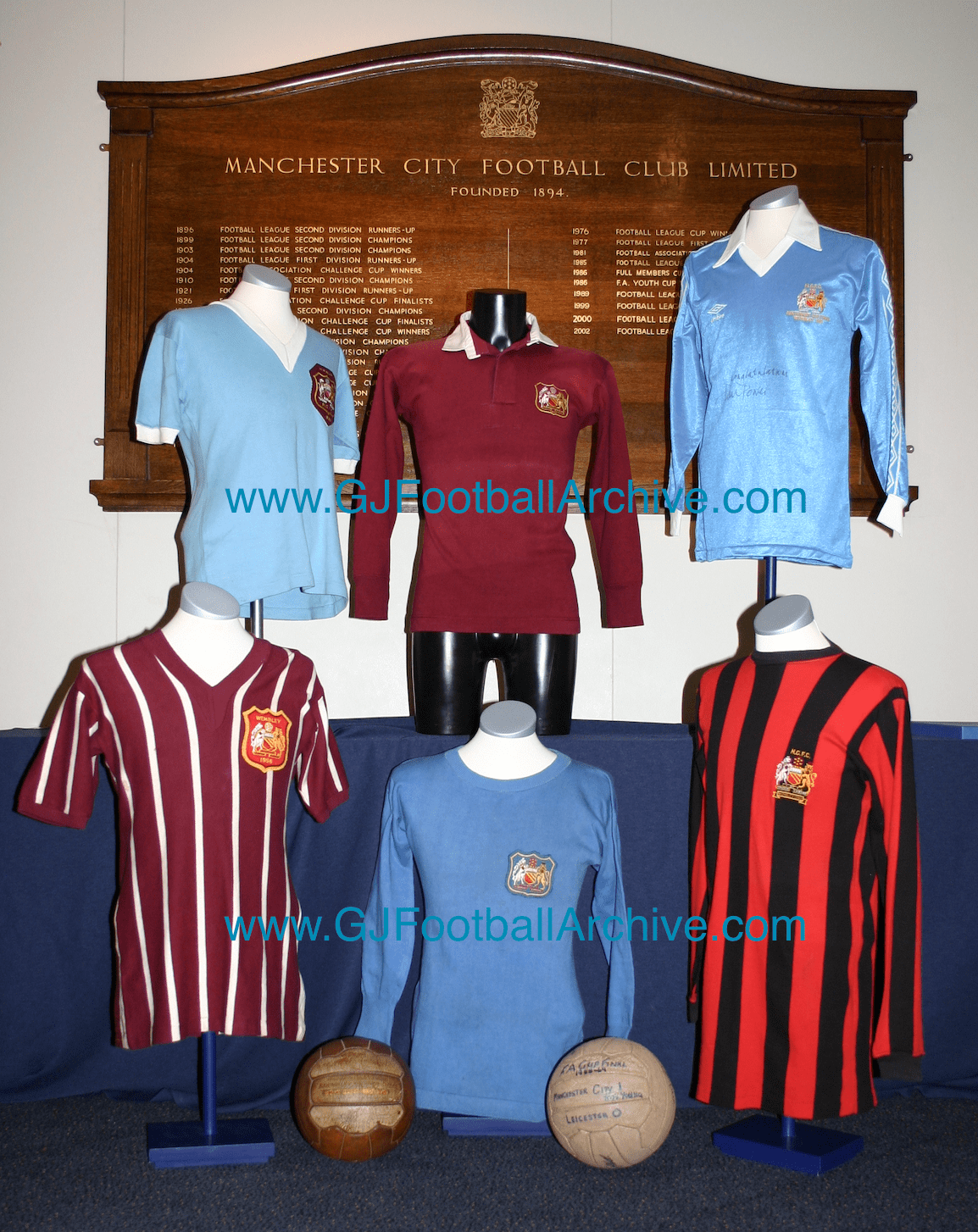
In the mid 2000s we set up a FA Cup final display as part of a special exhibition at the Manchester City Experience (the original club museum set up in 2003). We managed to borrow shirts from several star players and their families with the only City FA Cup finals missing being 1904 and 1933. We simply could not track down shirts from either final, though we kept getting close to borrowing a scarlet shirt from the 1933 final.
We put the shirts together and I took these photos of them. So which shirts are from which finals and can anyone work out the players’ who wore these (no searching on t’internet for matching player numbers please!).
I’ll post the answer tomorrow along with a lot more detail about these shirts and the other missing kits.
If you enjoy all the free material on my website and would like to support my research and keep this website going (but don’t want to subscribe) then why not make a one-time donation (or buy me a coffee). All support for my research is valued and welcome. It allows me to keep some free material available for all. Thanks.
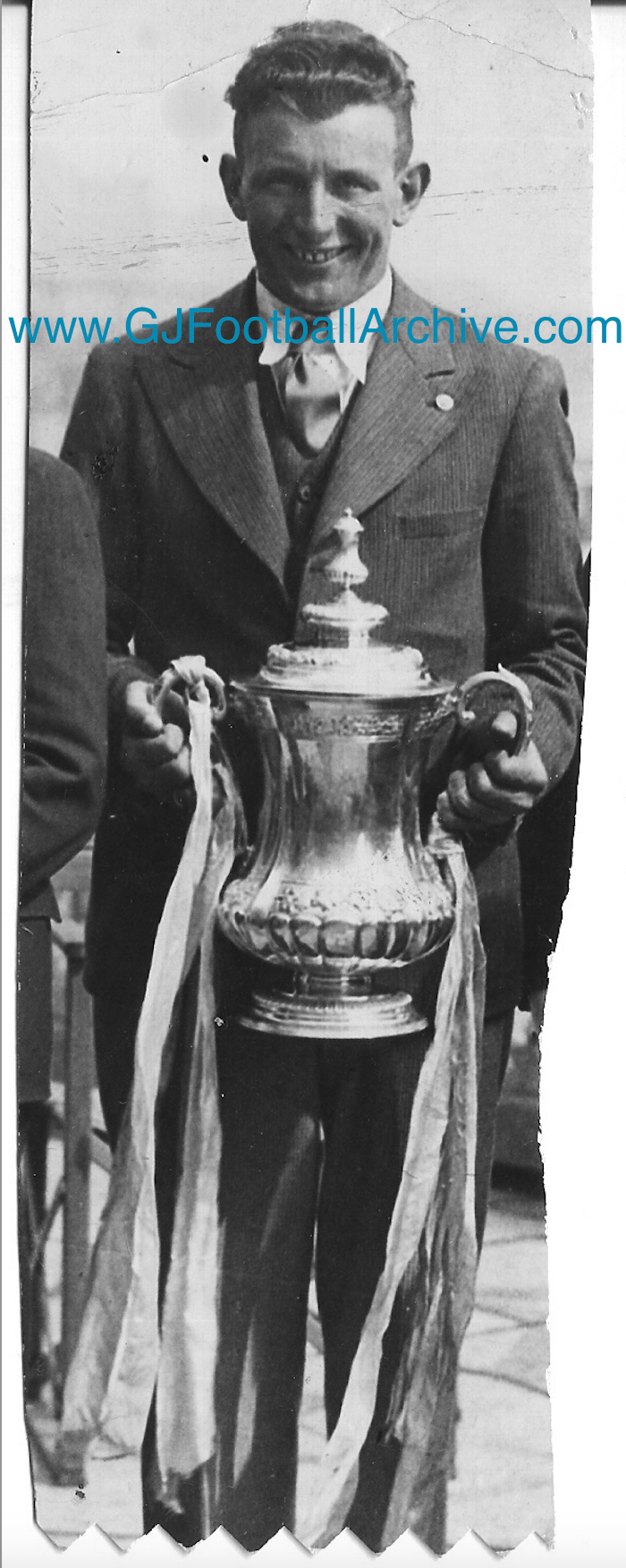
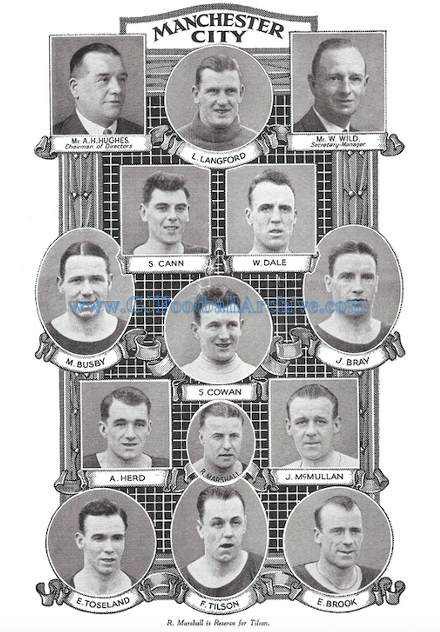
Manchester City’s 1930s captain Sam Cowan is often reported to have said something like ‘We’ll be back next year’ to the King when City lost the 1933 FA Cup final to Everton BUT this cannot have been true. So, here to spell it all out is the story… City reached the FA Cup final in 1926 (losing 1-0 to Bolton), and again in 1933 (losing 3-0 to Everton). Sam Cowan had played in both these games and felt bitterly disappointed with each defeat. By the time of the 1933 final Cowan was City’s captain and that defeat had hurt him more than the 1926 final. He hated being runner up and was determined to see the Blues triumph. He vowed to guide the Blues to glory and promised supporters that City would be back in 1934 to win the trophy. His promise became a reality and over the years Sam’s promise has become part of City folklore with various publications, including official City magazines and other works, claiming that Sam had told King George V at the 1933 final that the Blues would be back in 1934 to win the trophy. Sadly, the story has become corrupted and Sam never did make a promise to the King.
So what did Sam say and why did everyone believe he had made a promise to the King? The Guest of Honour at the 1933 final was the Duke Of York, the present King’s grandfather and the future King George VI. He attended because King George V was too ill to make the final, and so that simple fact proves Sam could not have made a promise to the King.
Lawrence Furniss, the City President, told journalists immediately after the 1934 final that Sam had predicted that the Blues would be back twelve months earlier, and he also suggested that Sam had mentioned this to the Duke Of York. So it’s possible this comment is the one which later became adapted by journalists looking for an even better story.
As an aside here’s a photo of the King at City’s Hyde Road ground in 1920 and Lawrence Furniss is the man stood immediately behind the King:
The King with the Mayor in Hyde Road’s ‘Royal Box’. Notice Lawrence Furniss stood, behind the King. Furniss was a major figure from the 1880s to the 1940s at City.
What is known is that Sam appeared on a newsreel shortly after the 1933 final with Everton’s Dixie Dean where both men toasted each other for the future and Sam stated that he hoped his team, Manchester City, would win the Cup in 1934. This film was shown across the country and made it clear that Sam wanted to return to Wembley.
In 1934 Sam guided City to a 2-1 victory over Portsmouth. Apart from Furniss’s comments nothing was said of a prediction by Sam to the King or Duke of York, it was only years later when it was mentioned. In fact the first time the story was quoted appears to be in 1955 when City’s fifties captain Roy Paul talked of emulating Sam Cowan by guiding City back to Wembley the following year. Books and articles from the period then made the claim that Sam had told the King in 1933 the Blues would return. Clearly, this was a corruption of the truth, but the story sounded great and future generations accepted this as fact.
Clearly, reaching Wembley in successive seasons was a major achievement for Sam and his team. Likewise any losing captain is likely to make a statement saying ‘We’ll be back’. As Sam was not a boastful character it is unlikely he would have said anything more than he was determined to guide his side back to Wembley for what he hoped would be a successful trip.
Regardless of the validity of Sam’s prediction it is clear that Sam was a major influence with the Blues, and he became the first City man to appear in three FA Cup finals while with the club.
If you enjoy all the free material on my website and would like to support my research and keep this website going (but don’t want to subscribe) then why not make a one-time donation (or buy me a coffee). All support for my research is valued and welcome. It allows me to keep some free material available for all. Thanks.
Every Monday I’m posting a section from my book ‘The Emergence of Footballing Cultures: Manchester 1840-1919’. It tells the story of the origins of men’s football in Manchester and discusses the birth of both City and United plus the clubs that predated them such as Hulme Athenaeum, Manchester AFC, Birch etc. Today’s section is the first chapter of the book (a 5,000 word section). This focuses mainly on the middle ages up to the early 1800s and talks of the 1608 ban on football in Manchester, Peterloo and leisure activities such as cockfighting and early cricket activity, as well as football of course. There is material in every section of the book that should interest fans of Manchester football, no matter which team you support, or academic researchers/historians.
Subscribing costs £3 per month (cancel anytime) or you could sign up for a year at the discounted price of £20 per year. Every subscriber gets access to everything posted on the site.
Subscribe to get access
Read more of this content when you subscribe today.
Every Monday I’m posting a section from my book ‘The Emergence of Footballing Cultures: Manchester 1840-1919’. It tells the story of the origins of men’s football in Manchester and discusses the birth of both City and United plus the clubs that predated them such as Hulme Athenaeum, Manchester AFC, Birch etc. Today’s section is the introduction to the book. There is material in every section of the book that should interest fans of Manchester football, no matter which team you support, or academic researchers/historians.
Subscribing costs £3 per month (cancel anytime) or you could sign up for a year at the discounted price of £20 per year. Every subscriber gets access to everything posted on the site.
Subscribe to get access
Read more of this content when you subscribe today.
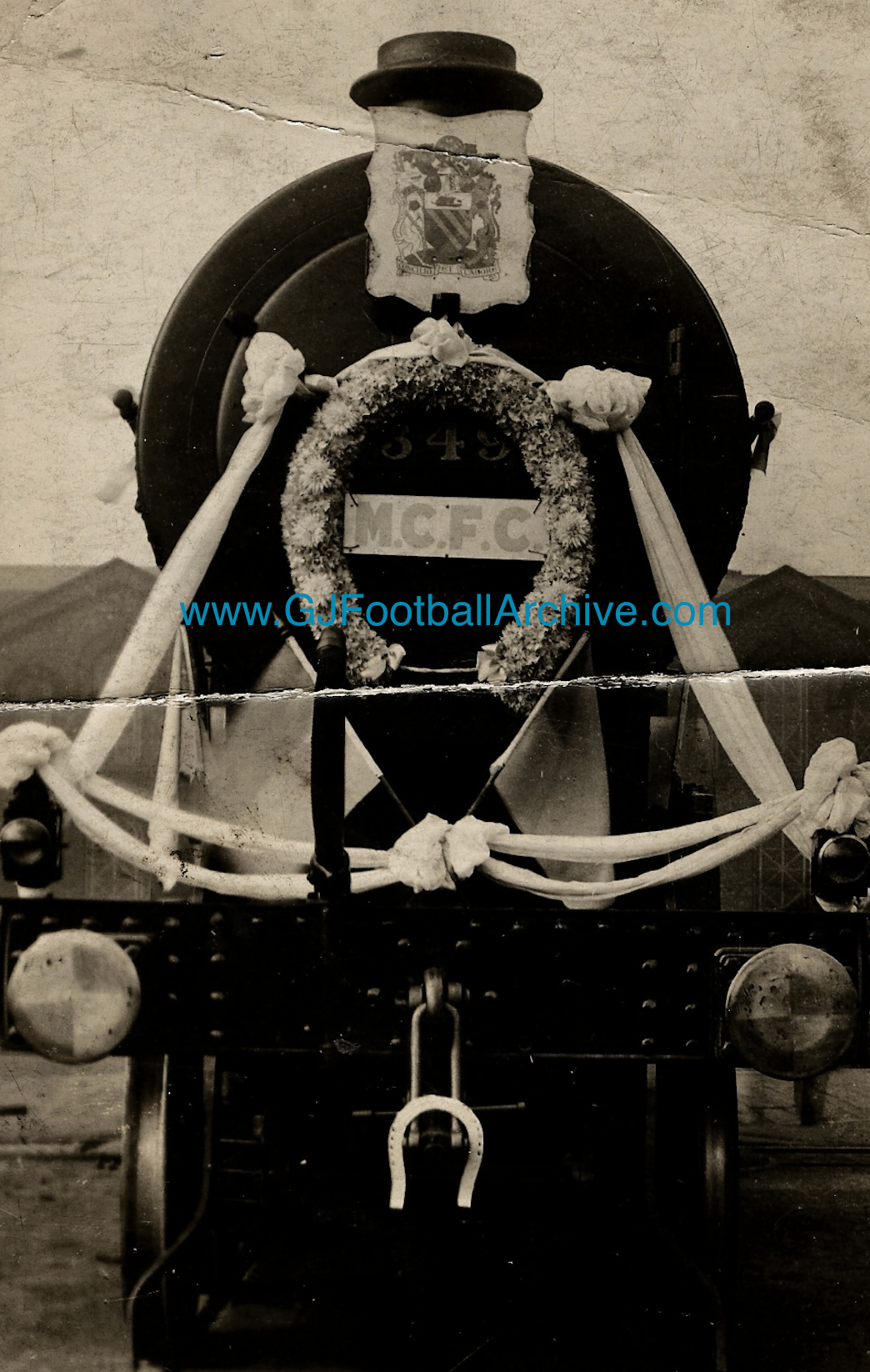
A few days ago I asked for train enthusiasts to help identify a train so that I could work out whether this photo I was given about twenty years ago was from 1904 or 1926. The person who gave it to me was certain it was from 1904 but someone else suggested 1926. Personally I had no idea whether it was either year but I hoped someone out there could help. Obviously, the year of construction could help identify the year the photo was taken. Well, the call for help worked and various people contacted me with suggestions.
John Nisbet found a piece on the engine and wrote to me after identifying the train numbers 349: ‘I found this with a search showing a loco with the number 349. It mentions that it was withdrawn after a 35 year working life which suggests it was built around 1922 ish.’
If that’s true then the train was not around in 1904 and therefore the image seems to be more likely to be 1926.
While you’re here why not subscribe to the site and see all the material posted over the last five years or so?
If you enjoy all the free material on my website and would like to support my research and keep this website going (but don’t want to subscribe) then why not make a one-time donation (or buy me a coffee). All support for my research is valued and welcome. It allows me to keep some free material available for all. Thanks.
Every Monday starting on 3 August 2025 I’m posting a section from my book ‘The Emergence of Footballing Cultures: Manchester 1840-1919’. It tells the story of the origins of men’s football in Manchester and discusses the birth of both City and United plus the clubs that predated them such as Hulme Athenaeum, Manchester AFC, Birch etc. There is material in every section of the book that should interest fans of Manchester football, no matter which team you support, or academic researchers/historians.
Subscribing costs £3 per month (cancel anytime) or you could sign up for a year at the discounted price of £20 per year. Every subscriber gets access to everything posted on the site.
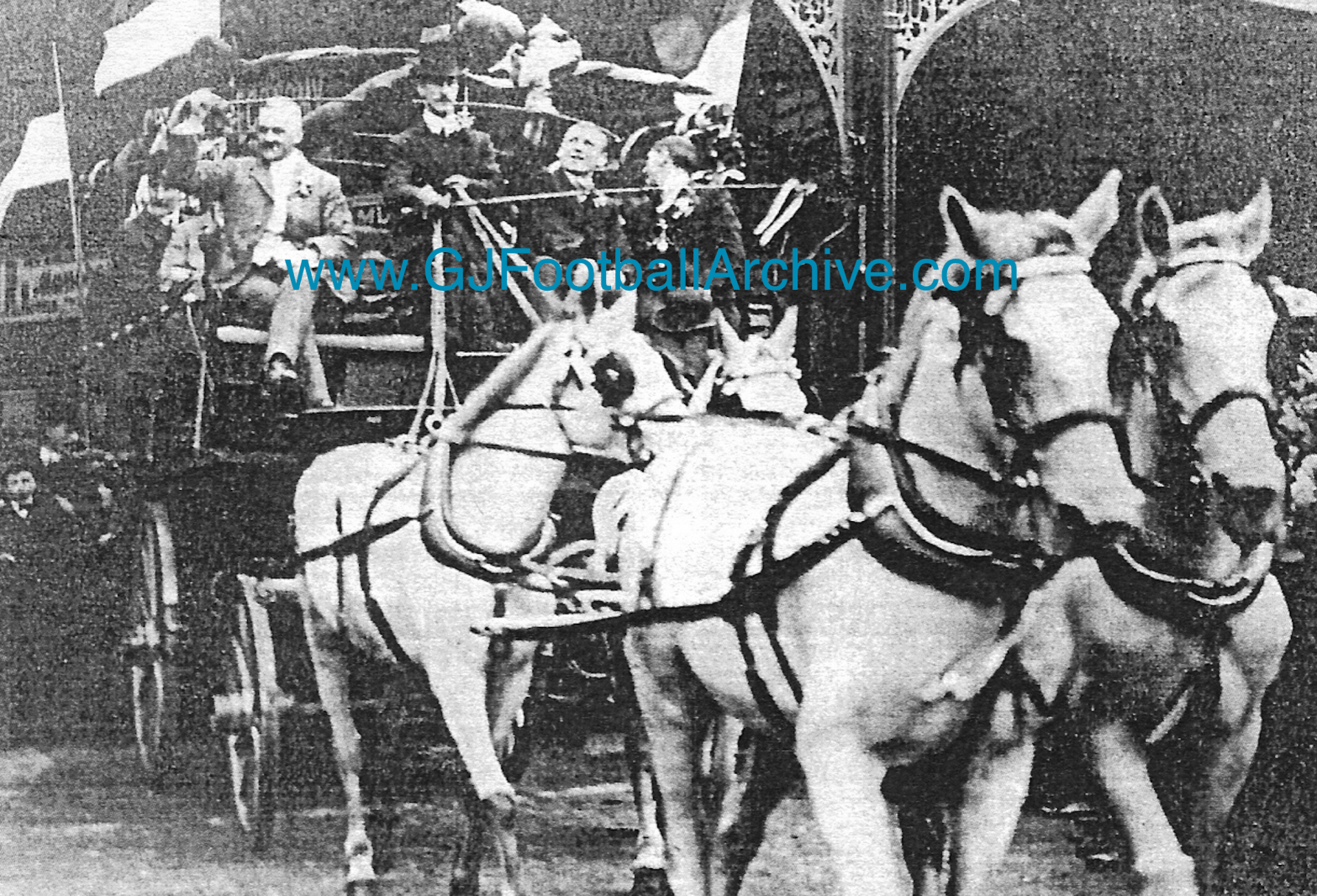
This is an important photo of Manchester United’s first homecoming parade in 1909. The Reds had won the FA Cup and City director Albert Alexander (senior) was asked by United to lead the homecoming parade. City had won the same cup in 1904 and Alexander had led that parade, so the decision was taken to show continuity between the two trophy successes (the first for each club).
Alexander is the man who supplied the carriages and horses and can be seen on this photo holding the reins in between manager Ernest Mangnall and United star Charlie Roberts.
I met and interviewed Albert’s grandson Eric quite a few times over the years – on one occasion Eric took me on a tour of the Isle of Man where he lived and where he acted as an official in the island’s famous TT races. Eric was a wonderful ambassador for City and football in general. He was rightly proud of his family’s direct involvement in the fortunes of City from the 1890s through to the modern era. Eric’s grandfather held almost every position at the club, including acting manager in 1925-26 (taking City to Wembley) and Eric’s father, Albert junior, was chairman when City achieved tremendous success in the 1960s and early 1970s. Albert junior had been a programme seller back in early 1900s too!
Eric was chairman after his father and had to make way for Peter Swales in 1973. You can read more on the Alexanders across this site (use the search or tags).
United and City were close throughout the lives of both Alberts with Matt Busby once asking Albert junior to be a director at Old Trafford (he declined saying City was his club). A seat was reserved for Albert junior at every United home game.
Why not subscribe to the site and read everything on here? See:
If you enjoy all the free material on my website and would like to support my research and keep this website going (but don’t want to subscribe) then why not make a one-time donation (or buy me a coffee). All support for my research is valued and welcome. It allows me to keep some free material available for all. Thanks.
About twenty years ago I was given this photo of a train dressed to take Manchester City to the FA Cup Final. The person who gave it to me was certain it was from 1904 but someone else suggested 1926. Personally I have no idea whether it was either year but hopefully someone out there can help. Is anyone able to work out whether the train itself would’ve been around in 1904 or 1926? Obviously, the year of construction could help identify the year the photo was taken. Any help appreciated.
While you’re here why not subscribe to the site and see all the material posted over the last five years or so?
If you enjoy all the free material on my website and would like to support my research and keep this website going (but don’t want to subscribe) then why not make a one-time donation (or buy me a coffee). All support for my research is valued and welcome. It allows me to keep some free material available for all. Thanks.
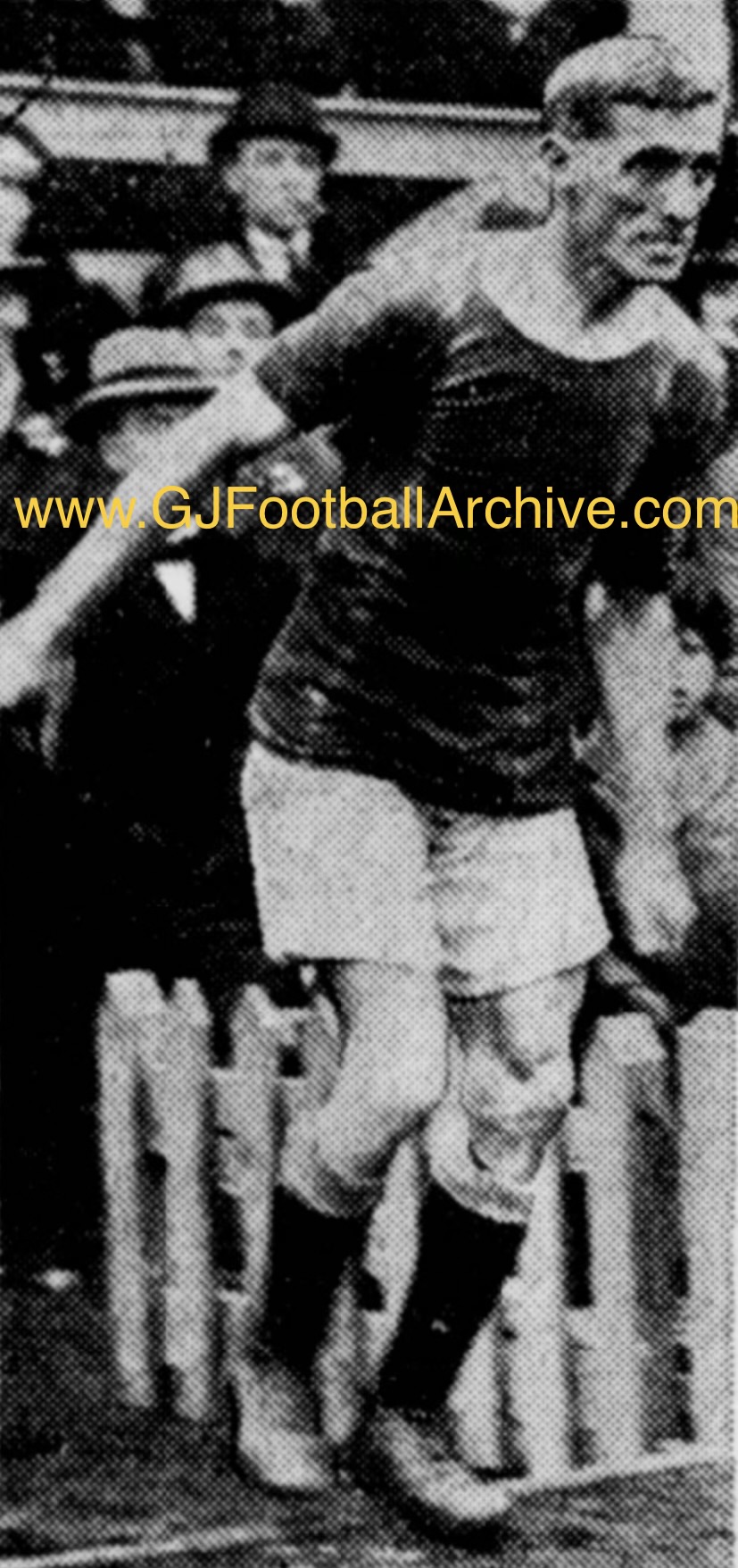
Here’s an image of Billy Meredith from March 1924 supposedly from Manchester City’s game at Cardiff City, though personally I think it’s actually from the FA Cup tie at Brighton a couple of weeks earlier. Regardless of which game it’s from Meredith was 49 at the time.
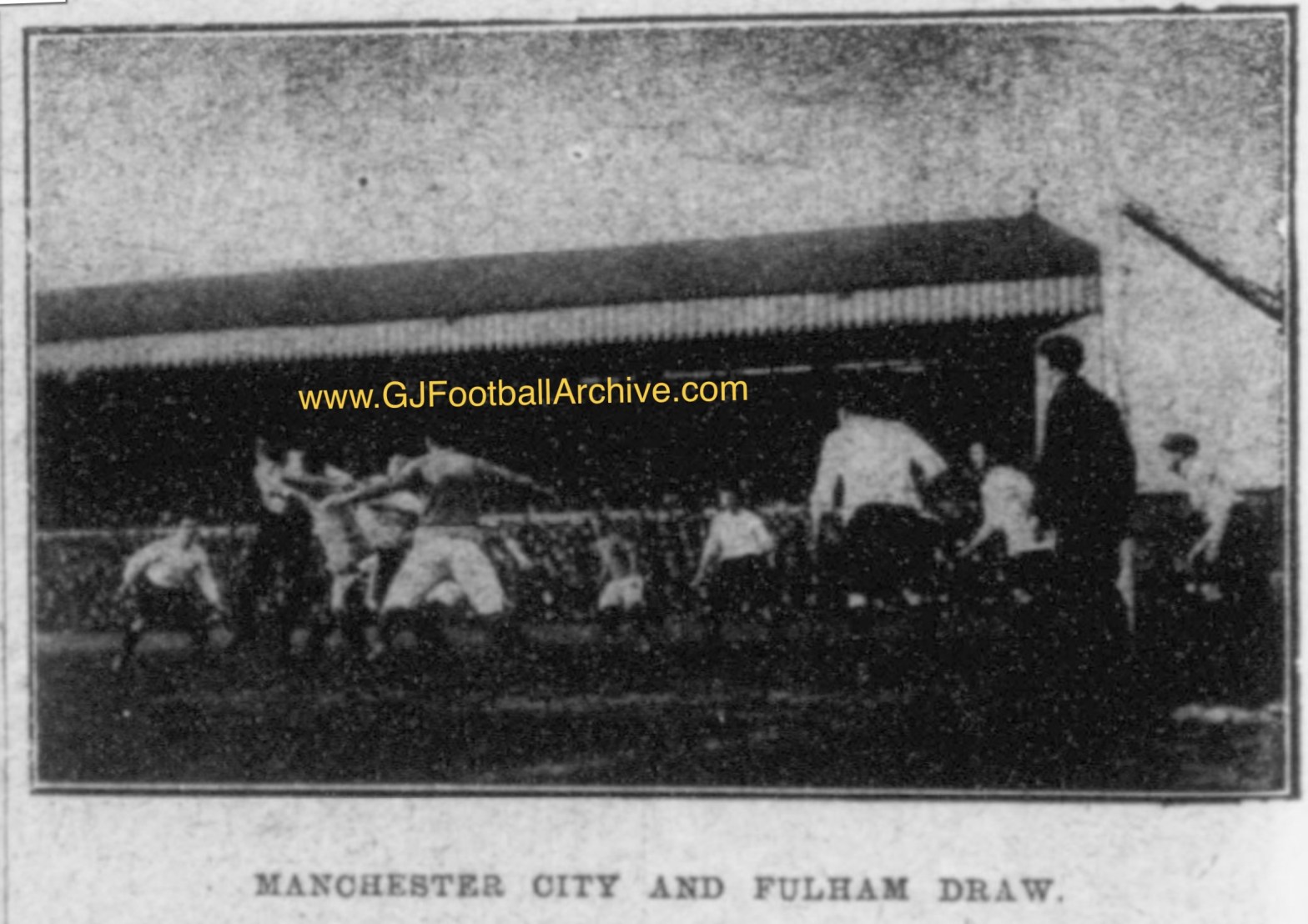
Here’s an image of Manchester City’s Hyde Road in February 1908. The game was Manchester City 1 (Blair) Fulham 1 in the FAC played on 22 February 1908. The stand in the background is the Main Stand, which was destroyed by fire in November 1920.