Heavy snow fall across the country threatened fixtures in January 2010, then on Tuesday 5 January, a day before it was scheduled to be played, the all-Manchester League Cup semi-final was called off. Manchester City’s pitch was perfectly playable, however traffic chaos in Manchester was an issue.
The Blues had been desperate for the match to be played as the mood seemed perfect for a City victory. There was a great deal of positivity. Similarly, at United a FA Cup defeat to Leeds had increased the pressure on the Reds. By the time the two sides did face each other the momentum had changed.
I was in the North Stand when this game was eventually played. Were you at the game when it took place? If you were why not leave your memory as a comment or email it to me for possible future use on this website?
Subscribe to get access
If you have enjoyed this free post and would like to support my research and writing then please subscribe. Annual subscribers (£20 per year, sign up here) get access to everything posted on the site including PDFs of 2 of my out of print books and archived content like my exclusive audio interviews with John Bond, Malcolm Allison etc. Not only that but you’ll be helping to support this site’s development.
If you have enjoyed this free post and would like to support my research and writing then please subscribe. Monthly subscribers (£3 per month, cancel anytime and sign up here) get access to everything posted on the site since 1 October 2022. Not only that but you’ll be helping to support this site’s development.
Newton Heath: William DOUGLAS, John McCARTNEY, Fred ERENTZ, Harry STONES, James McNAUGHT, William STEWART, John CLARKIN, Robert DONALDSON, James DOW, Richard SMITH, James PETERS. Manager: Alf Albut
Manchester City: Charlie WILLIAMS, John WALKER, David ROBSON, Harry SMITH, Robert JONES, John McBRIDE, Billy MEREDITH, Pat FINNERHAN, Sandy ROWAN, William McREDDlE, James SHARPLES. Manager: Joshua Parlby
Subscribe to get access
See more of this content when you subscribe today.
Merry Christmas to all. On this day (25 December) in 1896 Manchester City played their first competitive Christmas Day fixture. The game, staged within sight of the present day Etihad Stadium, was a derby match with Newton Heath (United). It was played at Bank Street, Clayton (behind the Velodrome and the current BMX site). It was a Manchester derby which ended in a Newton Heath victory.
Today I’m focusing on Manchester emblems and, in particular, those used by Manchester City over the years. The club’s current badge has been worn on shirts for over six years after first being revealed at Christmas 2015 and worn from summer 2016, but its roots go back decades with City developing a round badge by the 1930s.
Here for subscribers is a 1500 word piece on the development of badges at City and United. Enjoy!
Subscribe to get access
Read more of this content when you subscribe today. It costs £20 a year (works out about £1.67 a month) and you get access to everything on the site and help future research into Manchester’s football history.
While we look forward to the return of domestic football it’s worth remembering that before the pause for the World Cup there had already been records broken by Manchester City, such as the incredible goalscoring start to the season by Erling Haaland; results like the Manchester Derby 6-3 victory and Rico Lewis becoming the youngest player to score in his first Champions League start. In mid-August there was a flurry of excitement across social media and elsewhere when City were top of the Premier League and United were bottom. People asked when was the last time that had happened.
It turned out that the two clubs had last been in those positions way back in November 1929 and it seemed to surprise some that it was so long ago. The truth is that no matter how poor United or City may have been in past seasons, it has been extremely rare for either club to occupy the bottom spot over the decades. It has been even rarer for the other ‘Manchester’ club to be top at the same time.
So for this 1400 word subscriber article I’m going to talk about when one team has been top and the other bottom and then I’ll take a look at 1929 and the years that followed to highlight how the two Manchester clubs fared. Enjoy….
Subscribe to get access
Read more of this content when you subscribe today. Subscribe here for £20 a year and get access to everything posted on the site since launching in December 2020. Subscribe below for £3 a month for access to everything since 1st October 2022. Whichever subscription you take out you will get access to everything for the full length of your subscription. Why not do £3 for a month to see what you think?
Read more of this content when you subscribe today. Subscribe above for £20 a year and get access to everything posted on the site since launching in December 2020. Subscribe here for £3 a month for access to everything since 1st October 2022. Whichever subscription you take out you will get access to everything for the full length of your subscription. Why not do £3 for a month to see what you think?
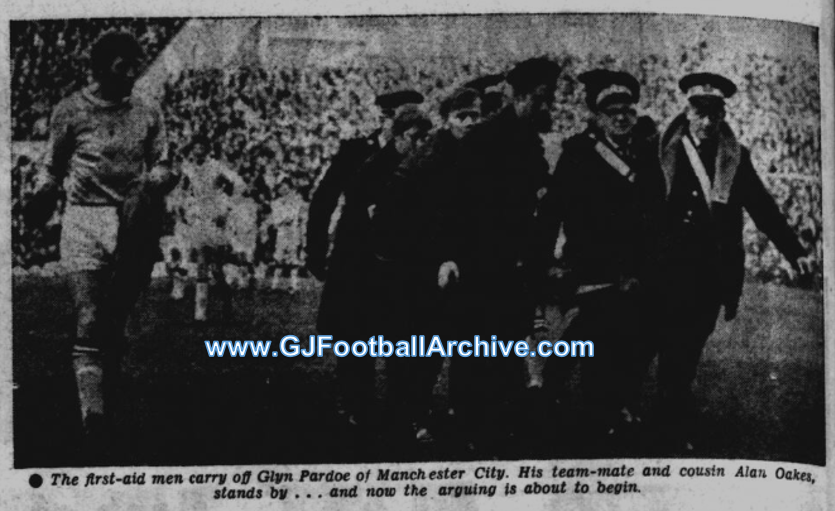
Glyn Pardoe came close to having his leg amputated on this day (12 December) in 1970 following a foul by George Best in the Manchester derby at Old Trafford. I interviewed Pardoe about his career in 2004 and here for subscribers are his views of the tackle and subsequent injury, together with a few contemporary articles from 1970. It became one of the most controversial derby moments of all time and arguments raged for years on whether it had been a deliberate act or not. You can be the judge by reading Pardoe’s views and the contemporary media.
Subscribe to get access – Annual
Read more of this content when you subscribe today. Annual subscribers pay £20 per year to access all material posted since December 2020 and all articles throughout the life of their subscription. Monthly subscribers pay £3 per month (see below).
Read more of this content when you subscribe today. Monthly subscribers pay £3 per month to access all material posted since 1st October 2022 and all articles throughout the life of their subscription. Annual subscribers pay £20 per year (see above).
On this day (12 December) in 1970 a hat-trick from Francis Lee (this was City’s last hat-trick in a derby until Haaland and Foden in 2022!), together with a goal from Mike Doyle, gave Manchester City a comfortable 4-1 victory over Manchester United before an Old Trafford crowd of 52,636. That victory meant City had won 5 and only dropped 4 points in 8 consecutive League derby meetings with the Reds. There was also a devastating injury to Glyn Pardoe (more on that in another post!). Here is the background, report and verdict of that game…
Subscribe to get access – Annual
Read more of this content when you subscribe today. Annual subscribers pay £20 per year to access all material posted since December 2020 and all articles throughout the life of their subscription. Monthly subscribers pay £3 per month (see below).
Read more of this content when you subscribe today. Monthly subscribers pay £3 per month to access all material posted since 1st October 2022 and all articles throughout the life of their subscription. Annual subscribers pay £20 per year (see above).
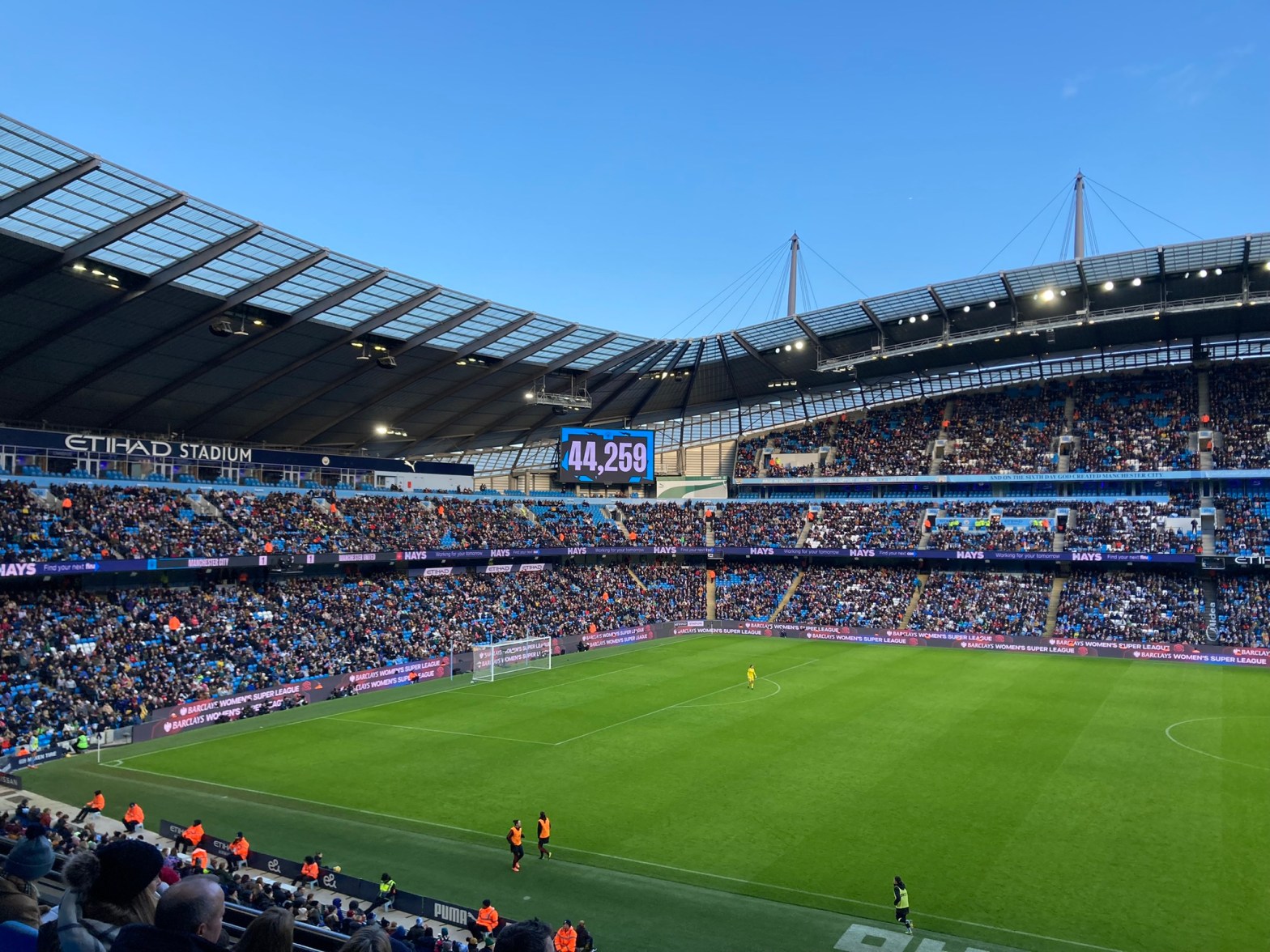
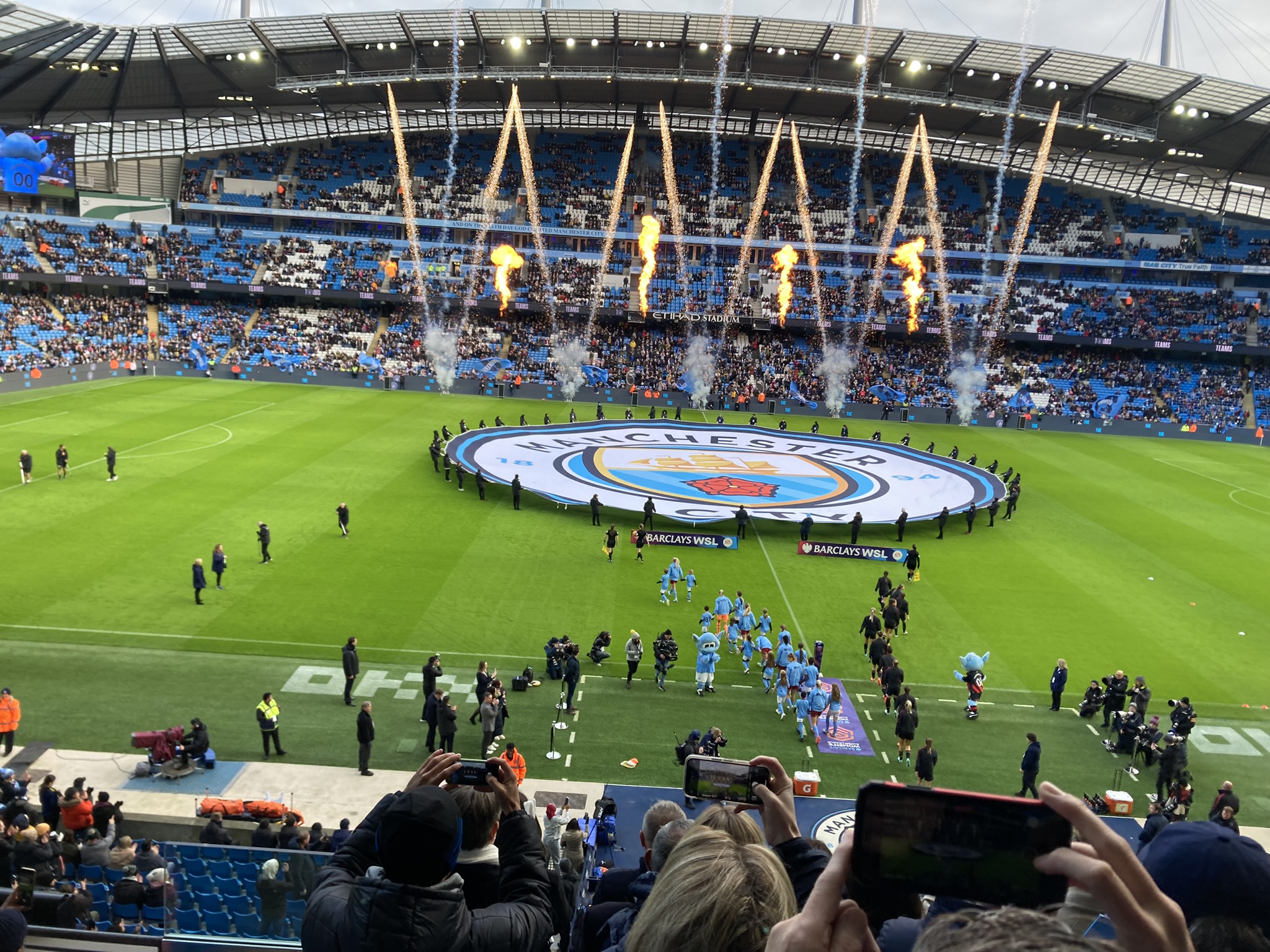
I’m delighted to say that I was at the Etihad Stadium today when a record crowd for a women’s club game in Greater Manchester was set when 44,259 watched City draw 1-1 with United. This includes all home games by Greater Manchester’s clubs; WFA Cup finals played in the area and games played by Dick, Kerr Ladies and other prominent women’s clubs over the last 140 years or so. For those wondering the top four highest club attendances are:
44,259 City v United, Etihad, December 2022
31,213 City V United, Etihad, September 2019
31,000 (occasionally reported as 35,000) Dick, Kerr Ladies v Bath Ladies, Old Trafford, January 1921
30,196 United V Aston Villa, Old Trafford, December 2022
You can read about the first competitive women’s Manchester Derby, which occurred in 1990, here:
Tomorrow is the latest Manchester derby in the Women’s Super League. There’s a long history of competition between teams representing the women of Manchester City and Manchester United. City’s team has been in existence continually since November 1988 when Donna Haynes and Heidi Ward both scored two goals in their first game (v Oldham Athletic at Boundary Park).
I was at the City Ladies (as they were then known) first game and I was also at their first league derby in September 1990 when City defeated United 4-3. It was a fantastic day, watched by around 150 people.
City’s goals came from Rhoda Taylor (8 min), Rachel O’Shaughnessy (43 mins), Jenny Newton (50 mins) and Lesley Peters. City’s manager Neil Mather told me as part of my research for the Manchester City Women book: ‘United were the top side, you know, and beating them was so good for morale. The men’s team were a good side in the early 90s when City Ladies carried on developing, you know. This was the Howard Kendall era, and City had top five finishes. City were one of the top five or six teams in the country at the time, so it was fabulous for women’s football to have Man City, you know.’
Helen Hempenstall played for City that day and she described her memory of the day for my book: I remember when we played United (30/9/90) and Neil (Helen’s boyfriend, now husband) and all his mates came to watch us. There were a lot of people there that day. United had a decent team then. It was always a difficult game against United. They had a right-winger… We never got on. Every time we played each other we were at each other all the way through the game. Me and Carol Woodall were having a go at her. The referee told Lesley Wright “Tell both your full backs to shut their mouths otherwise they’ll both be off!” We just didn’t get along and before every game I thought I’ll get in their first. ‘I’m having her.’ Neil Mather still talks about it.
‘I think Lesley Wright kept the team together. She kept it all tight at the back. I played at the back with her and I learnt a lot from her. Because I was next to her I knew how important she was. If I missed something she always got it. She always encouraged me and kept shouting ‘different class, different class’. You learn from the people around you and I listened to her. Before every game she came to speak to me. She’d put her arm around me and reassure me. She’d tell me not to worry about anything. Most of the time travelling to away games I’d go with Lesley in the car. We used to have a laugh. I remember one day we were travelling to an away game some distance away and we stopped for petrol and all got out. I lit up a fag and everyone else jumped back in the car screaming! I didn’t even think! When we got to the ground they all told Neil Mather and I think he worried that he could’ve lost half his team. At another game I was sat in the middle and as we got out the person before me slammed the door back. It hit my head and I had a big lump for the game.’
The story of that game and of the first 30 years or so of City Women’s existence can be read in my book on the club. It’s called Manchester City Women: An Oral History and is basically the women telling their stories of playing for the club and how they got into football, plus statistics covering the journey from friendlies in 1988-89 through to competition and the modern day successes.
You can buy the book via this link (every copy is signed by me):
We’re in the knock out stages of the World Cup and Manchester City players are contributing significantly to England’s progression at the moment. They are household names and are delivering on the biggest stage, but what about the first City player to appear for England? Who was it and when? Well, here’s the answer.
The first Manchester City player to appear for England was Herbert Burgess, who was reportedly born in Openshaw on 25 February 1883. Burgess was a left back but, according to articles at the time, was only 5ft 4.75 inches tall (weighing 11st 7lbs).
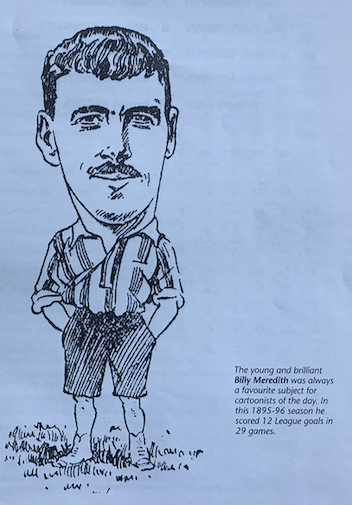
He made his first England appearance against Wales, and City teammate Billy Meredith, in February 1904 and did well in a game that ended 2-2 at Wrexham.
Prior to City Burgess had joined Football League side Glossop in March 1900 and, after three good years there, he moved to City on 30 July 1903. The fee City paid was £250. This was a period when Manchester’s Blues seemed to be cherry-picking the best Glossop had to offer and one report even suggested the nearby club was becoming a nursery club for City.
Burgess made three international appearances in 1904 with the Welsh game followed by a 3-1 victory over Ireland at Solitude, Belfast in March and a 1-0 win over Scotland at Parkhead, Glasgow on 9 April 1904. Only two weeks later Burgess helped City to FA Cup success (they became the first Manchester team to win a major trophy) and the Blues were also League runners up. These were great days for Burgess.
He made one further appearance for England – a 2-1 defeat at Hampden Park on 7 April 1906, played in front of 102,741 – and was furious that one of the Scotland goals was allowed to stand.
This period was a tough one for Burgess as the illegal payments scandal at City completely rocked his world. He was one of 17 players suspended by the FA (I can talk about this for days – it was so unfair and northern newspapers believed it was some sort of conspiracy by the southern based FA!).
Burgess was forced to leave City and, along with other star men, including Billy Meredith, he joined the then underdogs Manchester United and helped them achieve their first major success. He then moved to Denmark and played for Kristiania before joining Hungarian club MTK Budapest.
When his playing days came to an end he became Budapest’s manager and then managed Padova (1922-1926). He left Padova to become Milan’s manager in 1926 and after two years there he returned to Padova.
From 1930 to 1932 Burgess managed another Italian club, Roma. This photo is of Burgess (with cap on) as manager of AS Roma.
Burgess immediately etched his own name into the history of Roma, winning the first ever Rome derby in only his second game in charge. Roma won 1-0 win at Lazio’s Stadio della Rondinella. Burgess also guided Roma to success in the second derby, winning 3-1, the following May, this time at their all-wooden ground Campo Testaccio.
Burgess never lost a Rome derby during his time there as they drew their subsequent two derbies under him. His Roma team also pushed eventual champions Juventus all the way in the 1930-31 campaign, finishing just four points behind Juventus as runners-up.
Sadly, it’s been reported that Italy’s development under the dictatorship of Mussolino meant that English coaches were under pressure to leave and Burgess returned to Manchester, taking a job as a labourer on a housing estate on the outskirts of Manchester. He also became trainer to Ashton National.
He died in 1954.
In total at City he made 94 first team appearances and scored two goals. Had the illegal payments scandal not occurred he may well have been an England regular for several years. As it is his career is pretty impressive for a lad born in Openshaw in the 1880s – FA Cup & League winner; England international; manager of prominent clubs in Hungary and Italy.
People tend to think that it’s only in the modern era that Manchester City have achieved anything or that footballers have gone abroad to coach major clubs like Milan, Budapest and Roma, but the truth is that men like Burgess achieved so much over a century ago. We must take steps to remember them. Oh, and while I’m here it’s worth pointing out that City did have international players for years before Burgess but they didn’t play for England.
The earliest played to make an international appearance while on City’s books made an appearance for Wales in 1890 when the club was still Ardwick. Maybe I’ll write about him one day too?
Subscribe to get access
If you have enjoyed this piece and would like to support my writing while also accessing further great content, then why not subscribe? Those who subscribe on an annual basis get access to everything posted on this site since December 2020 (including PDFs of 2 out of print books, and audio interviews with John Bond, Malcolm Allison etc.). Those subscribing on a monthly basis get access to everything posted since 1 October 2022. It’s £20 a year (subscribe here) or £3 per month (subscribe below). Why not try it for a month?
If you have enjoyed this piece and would like to support my writing while also accessing further great content, then why not subscribe? Those who subscribe on an annual basis get access to everything posted on this site since December 2020. Those subscribing on a monthly basis get access to everything posted since 1 October 2022. It’s £20 a year (subscribe above) or £3 per month (subscribe here). Why not try it for a month?





 Gary James' Football Archive