Manchester City’s First Overseas Born Player

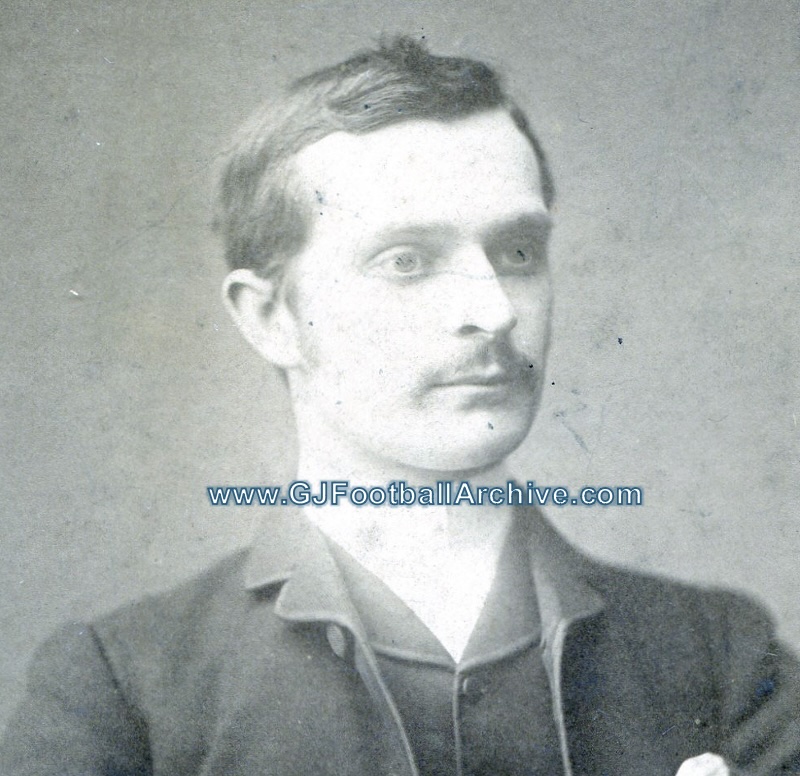
Although most Mancunians were unaware at the time, one of the players with Ardwick AFC (Manchester City’s predecessors) was actually the first overseas international to play in the Football League.  Walter Bowman was born in Canada during 1862, and arrived in the British Isles in August 1888 as a Canadian international.  

The Canadians were playing a number of friendly fixtures against sides in Ireland, Scotland and England, and they even faced Newton Heath winning 2-0 with Bowman scoring.  Whether this appearance was witnessed by any of the Ardwick officials at the time isn’t known, but Bowman returned to Canada with his team mates shortly afterwards.

A second tour followed in 1891 – including a 3-1 Ardwick victory on 12th December 1891 – and Bowman remained behind after the rest of the Canadians had returned home.  He joined Accrington, making his debut in January 1892.  That match made him the first overseas international to play in the League and on 25 August 1892 he signed for Ardwick.  He didn’t manage to make his Ardwick debut until 18 February 1893 when he scored as Crewe were defeated 3-1.

Bowman became a Manchester City player when the Club was re-established and he remained with the Blues until the close season of 1900, with one of his most significant matches being the 11-3 record victory over Lincoln on 23rd March 1895, although Bowman failed to make the scoresheet.

After City little is known of Bowman’s life.  An article in April 1929 talked of a reunion in Toronto of the touring side but Bowman did not attend.  It was believed he was living in the USA in a copper mining city in western Montana called Butte, but he was never traced.  No matter what the final resting place of Bowman, his place as the Football League’s first overseas player means his name will never be forgotten.

Ardwick and the Manchester Cup

Following on from yesterday’s Ardwick AFC feature, here’s another one. This focuses on the Manchester Cup… As football in Manchester developed, so did Ardwick’s desire to become one of the regions elite clubs.  The Manchester Cup had been established in 1884-5 and this was quickly perceived by the majority of Mancunians as the most prestigious competition around.  The Football League was not in existence until 1888 and even then Manchester failed to have any representatives, while the FA Cup had been established since the 1860s but was not seen in a positive light by Manchester’s sides.  Entry into the Cup required great expense as games could be played anywhere in the United Kingdom – during the 1880s sides from Ireland competed in the FA Cup, while Scottish sides had been amongst the earliest supporters of the competition.  The cost of travel clearly limited Ardwick’s ability to play beyond the Manchester region.

In April 1891 Ardwick reached the Manchester Cup final for the first time in their history.  This was a major landmark and it was also the first major meeting with Newton Heath, present day Manchester United.  Newton Heath had previously played in every final of the competition since it was created in 1884-5 and so this was seen as a real test for the Ardwick players.

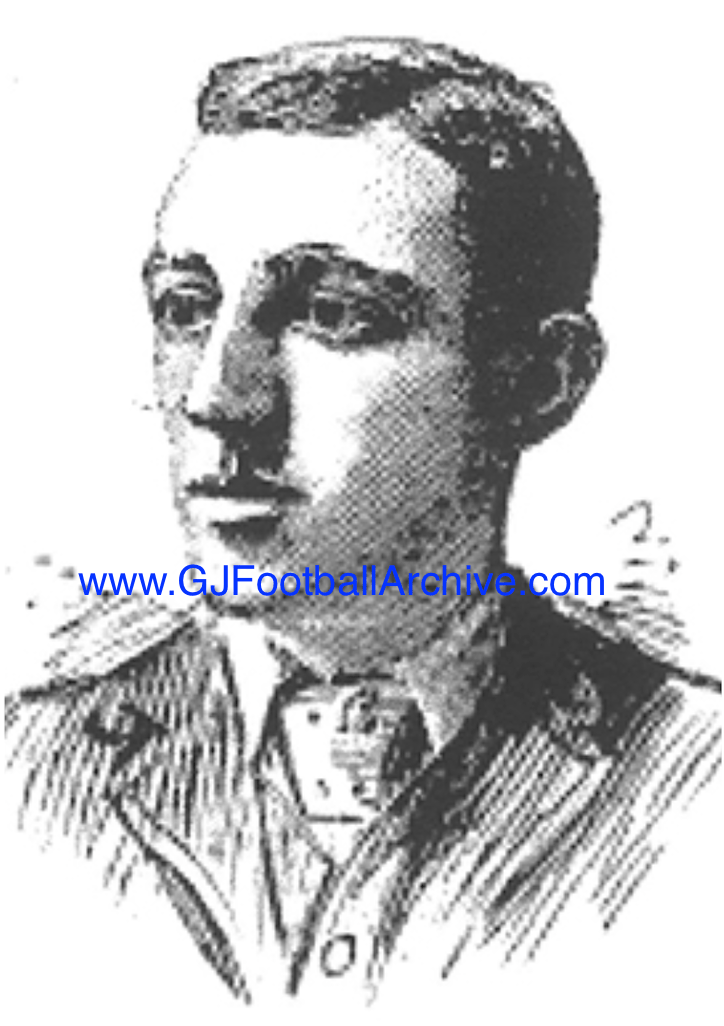
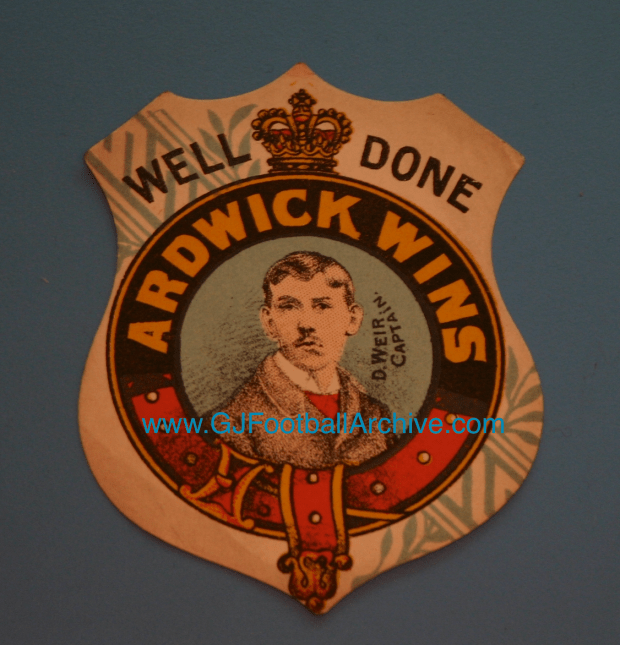
Despite the fact that Newton Heath were the more experienced side, Ardwick took the lead thanks to a seventh minute goal from the influential captain Davie Weir.  Reports simply stated that “Weir scored with a long shot”, however they did give a little information before that to suggest that the goal owed much to the earlier persistence of Bob Milarvie.  Milarvie had challenged the Newton Heath goal a couple of times and had clearly surprised the Heathens.  Then, after gaining the ball following a Newton Heath attack, Milarvie “got on a splendid run but was badly fouled.”  From the resulting free kick Ardwick attacked and Weir netted the goal.

Ardwick did actually have another goal disallowed – they were awarded an indirect free kick and the taker blasted the ball straight into the Heathens goal without any other player touching it – but the trophy was won by the Hyde Road side for the first time.

Success in the trophy perhaps went a little to their heads when at the 1891 Football League AGM Ardwick – along with Darwen, Newton Heath, Nottingham Forest, Stoke, and Sunderland Albion – applied to join the newly expanded Football League.  All the applicants, with the exception of Ardwick, were members of the Football Alliance – a league originally set up to rival the Football League.  Not surprisingly, Ardwick failed to gain admittance, with the new places were filled by Stoke, who had won the Alliance, and Darwen.  There was a consolation prize however and Ardwick were admitted to the Alliance League for the 1891-2 season.  

The Manchester Cup had proved to be the Club’s major breakthrough and it had also proved the Ardwick were already perceived as Manchester’s club.  Although Newton Heath had been the more successful club so far, Ardwick were perhaps seen as being more progressive and were already the better supported of the two.  The Hyde Road derby in the Alliance League attracted a crowd of over 10,000, whereas the Heathens home game at North Road was watched by around 4,000.  Even the Hyde Road derby attendance was bettered by Ardwick on two other occasions in the Alliance that season.  

As well as their large support, Ardwick managed to prove their ability to live with the best when they won the Manchester Cup again.  This time they convincingly defeated Football League side Bolton Wanderers 4-1.  The dream of playing League football was getting closer and the Manchester Cup successes had helped that dream.  One man who was proud of this achievement was Walter Chew (image below), who was with St. Mark’s in their first season of 1880-81.  In 1888 he joined the Manchester FA Committee and remained an influential figure there until his death in 1949.  

Manchester 1840-1919 (Part One)

Every Monday I’m posting a section from my book ‘The Emergence of Footballing Cultures: Manchester 1840-1919’. It tells the story of the origins of men’s football in Manchester and discusses the birth of both City and United plus the clubs that predated them such as Hulme Athenaeum, Manchester AFC, Birch etc. Today’s section is the introduction to the book. There is material in every section of the book that should interest fans of Manchester football, no matter which team you support, or academic researchers/historians.

Subscribing costs £3 per month (cancel anytime) or you could sign up for a year at the discounted price of £20 per year. Every subscriber gets access to everything posted on the site.

Subscribe to get access

Read more of this content when you subscribe today.

Starting Monday: Manchester 1840-1919

Every Monday starting on 3 August 2025 I’m posting a section from my book ‘The Emergence of Footballing Cultures: Manchester 1840-1919’. It tells the story of the origins of men’s football in Manchester and discusses the birth of both City and United plus the clubs that predated them such as Hulme Athenaeum, Manchester AFC, Birch etc. There is material in every section of the book that should interest fans of Manchester football, no matter which team you support, or academic researchers/historians.

Subscribing costs £3 per month (cancel anytime) or you could sign up for a year at the discounted price of £20 per year. Every subscriber gets access to everything posted on the site.

The Origins Of Manchester City: The Earliest Known Game

Continuing here: the story of Manchester City’s origins. Today’s feature is a 3,300+ word feature on the earliest known game, played in November 1880. Have a look elsewhere on the site for other content on this period.

Subscribe to get access

These articles will be available to subscribers to this site. It costs £3 per month (cancel any time) or sign up for a year for the discounted price of £20 per year (works out about £1.67 a month to access every article on this site). To date in excess of 1,500 articles/features have been posted including interviews, talks and more.

On This Day: Christmas at Manchester City

Had your Christmas dinner yet? If not then spare a thought for those days when professional football in England would take place on Christmas Day. In the modern era the thought of playing League football on Christmas Day is totally unacceptable, but in years gone by games were played on consecutive days over Christmas, including Christmas Day, and these were often the best attended matches of the winter.  

The last Christmas Day game featuring Manchester City took place in 1957 when the Blues were defeated 2-1 at Burnley.  The City team for that landmark game was:  Trautmann, Leivers, Little, Barnes, Ewing, Warhurst, Barlow, Kirkman, Johnstone, Hayes, and Fagan.  Fionan Fagan was the last City player to score on Christmas Day

The following day City defeated Burnley 4-1 at Maine Road in front of a crowd of 47,285.  The only change to the line up was Ron Phoenix, who replaced Bobby Johnstone. 

The First Noel

The first League game ever played by City on Christmas Day was at Christmas 1896 against Newton Heath (present day Manchester United).  The game was played at Bank Street, Clayton (roughly across the road from the Etihad, the site of the BMX centre behind the present Velodrome) and was attended by 18,000 – a figure described by the Athletic News as being huge for Newton Heath:  “The crowd was an enormous one and I never saw so many lads at a football match.  They were really the cause of the encroaching in the first half, for they were continually creeping under the rails, and as a natural consequence their elders were bound to follow if they were to get a glimpse of the game.”  

Fans streamed on to the pitch on several occasions and the game was almost abandoned at half time:  “Mr. J. Parlby, one of the League Management Committee, told the crowd point blank that if they did not keep beyond the touchline, the game could not proceed, and the Newton Heath Club would have to suffer the consequences.”

Parlby, was actually a City director, and his words may have been influenced by the fact Newton Heath were the better side that day!  The game ended 2-1 to the Heathens.

The two sides met on two further occasions on Christmas Day, the last (1902) ended 1-1 at Clayton before 40,000 with Billy Meredith scoring for the Blues.

Highest Christmas Crowd

City tended to be away from home on Christmas Day, but the best Maine Road crowd on the 25th was 56,750 in 1930 when City faced Arsenal.  The following day a mere 17,624 attended the return game at Highbury.

The previous year a crowd reported as 70,000 watched Aston Villa beat City 2-1 on Boxing Day at Maine Road.  This is the highest Christmas crowd at a City League game.

Christmas Thriller

Perhaps the most entertaining – if disappointing – game ever played by the Blues on Christmas Day was the 6-5 defeat by Bury at Gigg Lane in 1925.  

Debuts

The following players made their Manchester City League debuts on Christmas Day:

1946 – Peter Robinson (V. Plymouth Argyle)

1933 – Frank Swift (V. Derby County)

1902 – Johnny Mahon (V. Manchester United)

1909 – George Wynn (V. Bradford Park Avenue)

An Official Programme from October 1900

Here’s the Official Programme cover and Manchester City comments (below), published on 27 October 1900 for City’s game with Derby at Hyde Road. Back then the programme was a shared one with Second Division Newton Heath (later United) and a couple of rugby clubs. the comments below on City’s performances and preview of the Derby game are interesting. The 3-0 game it opens with was City’s 3-0 Division One defeat at Sunderland. The Monday game it mentions was a 2-0 victory over Newton Heath in the Lancashire Cup.

The ‘Doctor’ mentioned lower down was City half back William ‘Doc’ Holmes. The preview suggested this would be a tough game for City, though the return of Jimmy Ross was welcomed. Ross, a former Preston Invincible, was a key member of the side and he’d been sidelined for the previous six League games.

The match with Derby ended in a 2-0 victory with both goals scored by Fred Williams. If you’d like to find out more on this season for Manchester City then why not read the following 1200+ word article telling the story of 1900-01? Why not subscribe and read this and all the other content on here? You can even try it for a month at a time if that works best?

Subscribe to get access

Read more of this content when you subscribe today. It costs £3 per month (cancel anytime) or sign up a year at a time for the discounted annual fee of £20. This gives access to everything on the site, including PDFs of 3 of my books and various other articles, interviews and audio material. Each subscriber has access to all content posted during their subscription period too. Why not sign up for a month and see what you think?

Which Club is ‘Manchester’?

Always a controversial question but back in the early 1900s there was only ever one answer and that was Manchester City who were often referred to as simply ‘Manchester’ in official publications for both City and their Manchester rivals. Here’s an image of the title section of the official programme which directly references ‘Manchester’ (meaning City) and Newton Heath.

Obviously, as there was no Manchester United then I guess it was inevitable that City would be known as Manchester to some. It just surprises me that an official publication for both clubs would use ‘Manchester’ so regularly. Presumably both clubs were happy with this. So if anyone asks ‘which club is Manchester? then the one both were happy to call Manchester must be in with a big shout!

On another topic… notice the opportunity to have your flask filled up at City’s headquarters, the Hyde Road Hotel, before the match? Imagine if that option was brought back at the Etihad!

The First Manchester Cup Final

2025 marks the 140th anniversary of the first final of the Manchester Cup (later known as the Manchester Senior cup). The Manchester Cup was the first competition either Manchester United (as Newton Heath) or Manchester City (as Ardwick) won and was a hugely significant competition at the time of their first victories. In many ways it was more important locally than the FA Cup. The final was held on 25 April 1885 and you can read a match report of the game here and then my own words on the final:

The first season of the Manchester Cup proved to be very exciting with games involving Hurst and Newton Heath grabbing much attention in the local newspapers.  In fact the two sides competed in the first Manchester Cup final.  This was played at Manchester FC’s Whalley Range ground and had an attendance of approximately 3,500.  The Ashton club won 3-0 and at the end of the match all the Hurst players were lifted shoulder high by their fans and there was tremendous excitement on the pitch.  It was perhaps the first time a Manchester side had experienced success that actually meant something.  Hurst could rightly claim to be the best in the area, and after the game finished the President of the Manchester FA, Mr. Colbert, presented the cup to J. Ingham, Hurst’s Captain.  The Reporter newspaper then described the fantastic parade that took place all the way back to Ashton:  ‘All the way from Whalley Range the victors kept cheering and the band playing, the cup being held up in front of one of the carriages in which the journey to Ashton was made.  On arriving in town their cheers were redoubled and they received a great ovation in the streets.

‘The victors crowded into the Pitt & Nelson, and Mr. Joseph Fletcher, holding in his hand the cup which was filled with liquor, and addressing the captain of the club, said he had great pleasure in presenting to Mr. Ingham the cup on behalf of the Hurst Cricket & football Club.’

Joseph Fetcher was the landlord of the Pitt & Nelson and according to the Reporter he made a speech saying that he: ‘had lately been in Blackburn and he could assure them that the fame of the Hurst club was well known in that district and he was certain that the next season they would be called upon to play with teams from that district, the Mother of the Game.’

This was undoubtedly the finest moment for any of the Manchester clubs at this stage in history, and Hurst were worthy recipients of the praise.  Hurst had done more than most to encourage the game to develop and, as well as entering the FA Cup, they also tried to arrange fixtures with teams beyond the Manchester boundaries.  In March 1885 they had welcomed Welsh side Rhyl to Hurst and the Ashton side won 8-1 before 3,000 fans, then on Good Friday they played their return match and, according to reports from the period over 750 fans travelled from Ashton for the game which Hurst won 4-0.  Considering the nature of travel, working conditions, and the state of the game at the time this was a major achievement.

You can find out more about the origins of football in Manchester in my book Manchester A Football History. The book is long out of print but PDFs of the entire 2010 edition is available to subscribers to this site.

This is the Introduction for the 2010 edition of the book Manchester A Football History (Gary James, published by James Ward). As with everything else on this site copyright laws apply. The book is published here for the personal use of subscribers to this site. For any other use please email the publishers at info@manchesterfootball.org

Subscribe to get access

Read more of this content when you subscribe today. You can subscribe for £20 a year (works out about £1.67 per month) or £3 per month (cancel any time). Why not try it for a month?

The Reporting of a Manchester Derby

Here’s an interesting cutting from the Official Programme of both Manchester City and Newton Heath in December 1898. Back then City’s and Newton Heath’s match programme was a joint affair, shared with a couple of rugby clubs too. Reading this gives an impression of how the rivalry was at the time – I’m sure City fans will find the line about referee Jack Lewis’s decision making interesting!

This game was actually played at City’s Hyde Road on Boxing Day 1898 and, as was typical of the period, both sets of fans were vocal and spread around the ground.

The opening paragraph described an infamous passageway that led to the Hyde Road ground and was often muddy. Also, worth noting that Billy Meredith was the biggest name in football and was a popular City player at this time.

City won the game 4-0: