The First All-Manchester FA Final

This weekend the 2023 FA Cup final at Wembley will be the first all-Manchester FA Cup final but it is not the first all-Manchester FA Final. That came in 1985-86 when the two Manchester clubs reached the FA Youth Cup final.  In the build-up to Wembley this final will probably be overlooked but I wanted to make sure we do remember. Here’s a brief piece on the final.

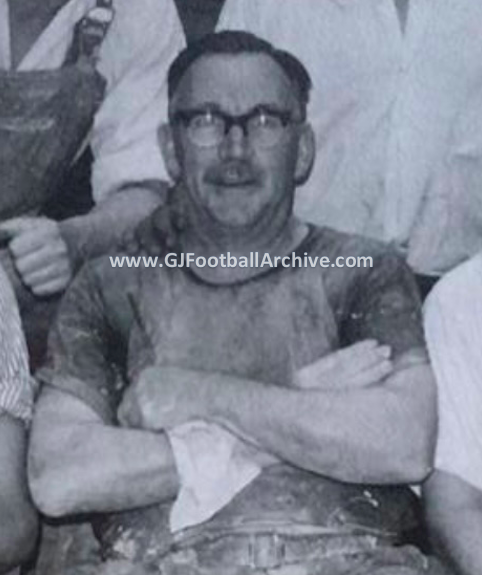
In April 1986 Manchester City’s youth team defeated Manchester United 3-1 on aggregate in the final of the FA Youth Cup.  It was a tremendous achievement at the time, and one which proved that it was the Blues, rather than the Reds, who knew how to find and recruit young players – when Alex Ferguson arrived in Manchester later in 1986 he was dismayed that City tended to sweep up all the local talent and put things in place to change the situation. He even chatted to City’s chief scout Ken Barnes about the Blues’ strengths. More on Ken in a moment.

Of the 11 City boys who played in the 1986 final an amazing seven would also appear in the first team.  Two of those would captain the Blues; two would play for England; and one would continue to play for the Blues into the late 1990s.  For the record the City eleven plus subs were:

Steve Crompton, Steve Mills, Andy Hinchcliffe, Ian Brightwell, Steve Redmond (capt), Andy Thackeray, David White, Paul Moulden, Paul Lake, Ian Scott, David Boyd. Unused subs: Steve Macauley (1st leg) & John Bookbinder (2nd leg).

City’s Chief Scout at the time was 50s Cup winner Ken Barnes and years later I interviewed him about the success. He firmly believed that it was exceptional to find so many young star players at the same time:  ‘We were dead lucky.  I have to say that I don’t think it will ever happen again.  I don’t recall any team having so many of the players coming through from the Youth team.  It was only circumstances as such that they all got into the team at the same time.  There was no alternative – the club had no money.  No money to buy new players – so the young lads were thrown in at the deep end.  Maybe if we had had a good team at the time 3 or 4 of them wouldn’t have got into the team and, who knows what would have happened to them.  It enlightened me the year they won the Youth Cup.  They went throughout the whole season in the Lancashire League and lost only one game.

‘That was a remarkable youth side.  In the past we had boys like Tommy Caton, Ray Ranson, Nicky Reid, John Beresford and Darren Beckford but we never had a team like the 1986 one.  Most of the youngsters played for our nursery team Midas… Nearly all those who have made it into the first team played with them from the time they were 11 or 12.’

Here is the City first team match programme commenting on the success:

1986 YOUTH CUP STATISTICS

Old Trafford, 24 April 1986
Manchester United – Manchester City 1–1 (0–0)
1-0 49 min. Aidan Murphy
1-1 82 min. Paul Lake (penalty)
Attendance: 7,602

Manchester United: Gary Walsh, Tony Gill, Lee Martin, Ian Scott, Steve Gardner (capt), Jon Bottomley, Aidan Murphy (red card, 69 min), Mark Todd, Dennis Cronin, David Wilson (replaced by Tony Hopley), Paul Harvey. Manager Eric Harrison.

Manchester City: Steve Crompton, Steve Mills, Andy Hinchcliffe, Ian Brightwell, Steve Redmond (capt), Andy Thackeray (red card, 69), David White, Paul Moulden, Paul Lake, Ian Scott, David Boyd. Unused sub: Steve Macauley. Manager: Tony Book

Second leg

Maine Road, 29 April 1986
Manchester City – Manchester United 2–0 (1–0)
1-0 02 min. David Boyd
2-0 86 min. Paul Moulden
Attendance: 18,158

Manchester City: Steve Crompton, Steve Mills, Andy Hinchcliffe, Ian Brightwell, Steve Redmond (capt), Andy Thackeray, David White, Paul Moulden, Paul Lake, Ian Scott, David Boyd. Unused sub: John Bookbinder. Manager: Tony Book

Manchester United: Gary Walsh, Tony Gill, Lee Martin, Ian Scott, Steve Gardner (capt), Paul Harvey, Aidan Murphy, Mark Todd, Dennis Cronin, Jon Bottomley (replaced by Tony Hopley), Karl Goddard. Manager Eric Harrison.

If you enjoy all the free material on my website and would like to support my research and keep this website going (but don’t want to subscribe) then why not make a one-time donation (or buy me a coffee). All support for my research is valued and welcome. It allows me to keep some free material available for all. Thanks.

Choose an amount

£2.50
£5.00
£7.50

Or enter a custom amount

£

Your contribution is appreciated.

Donate
Maine Road 100 – Day 14

Day 14 of my posts counting down to the centenary of Maine Road’s opening game… I mentioned on a previous day how during 2002-03 I managed to wander around the stadium often exploring what the stadium had hidden away. Sometimes I’d wander with club photographer Ed Garvey but mostly I’d just go on a search myself. One day while exploring the Main Stand I spotted this staircase to nowhere.

It intrigued me quite a bit and then one game I happened to walk through here pre-match and fans were sat on the steps reading the programme and having a drink. The steps clearly once went somewhere (if you can’t tell via this photo there is a ceiling stretching across the concourse and over the steps. The steps go up to it but there’s no way through.

I started to ask people and show people this photo, which I’d taken during the week. Eventually former club employee Roger Reade, who has fulfilled a variety of roles over the years but is probably best known for his work with the Junior Blues, explained that when the club developed its hospitality functions in the 1980s the staircase was blocked off and an executive suite built above it. So that’s that. An original 1923 staircase that by the late 1980s was redundant. Incidentally, it’s not the only redundant staircase by this time and I’ll perhaps talk about one at the Kippax later this year.

For those unfamiliar with Maine Road this may help locate the staircase to nowhere. It was in the public concourse area of the Main Stand, roughly behind the Main Stand tunnel to the right of number 3 on the photo below.

Maine Road aerial 1971 from Farewell To Maine Road
Stair case to nowhere Main Stand, photographed by Gary James in 2002

If you’d like to read more on the history of Maine Road, take a look at Farewell To Maine Road, which can be downloaded from this page:

If you enjoy all the free material on my website and would like to support my research and keep this website going (but don’t want to subscribe) then why not make a one-time donation (or buy me a coffee). All support for my research is valued and welcome. It allows me to keep some free material available for all. Thanks.

Choose an amount

£2.50
£5.00
£7.50

Or enter a custom amount

£

Your contribution is appreciated.

Donate

Party Like It’s 1999

On this day (30 May) in 1999 Manchester City won the Second Division Play Off final at Wembley in a tense, dramatic day. Understandably, Paul Dickov’s goal in that Play Off final has often been described as the most important Manchester City goal of all time.  That goal does deserve significant recognition, however it is also important to remember the other contributing factors on that day all those years ago, including the opening City goal scored by Kevin Horlock.

The late 1990s had been a very difficult period for City and Horlock’s goal came at a moment when all hope that the Club could resurrect itself seemed to have vanished.   This goal was obviously important as it gave City hope and ultimately that transferred into achievement.

The following article, covering Horlock’s goal and the story of that day, is available for subscribers to the website. It costs £20 a year (it works out £1.67 per month) and you get full access to all articles posted, including PDFs of the out of print Manchester A Football History and my first ever book about Manchester City. There are also audio interviews & more. Do a few searches on past content to see what’s available.      

Subscribe to get access

Read more of this content when you subscribe today.

The 2000s: This Week 2006-07

Continuing the weekly series on Manchester City’s seasons from 1999-2000 through to 2008-09. Each week I’ll be publishing here the story of a different season of that remarkable ten-year period. Today we have a 2,900 word article on the 2006-07 season (below).

Subscribe to get access – Annual

This article is for subscribers to my website. It costs £20 a year to access everything on the site since creation in December 2020. That includes articles, history talks, videos, interviews & more. There’s also a monthly option below.

Subscribe to get access – Monthly

Monthly subscription costs £3 per month to access everything on the site since 1 October 2022 (cancel anytime). All subscribers access all new material until their subscription ends. Why not give it a try for a month?

Maine Road 100 – Day 12

Day 12 of my posts counting down to the centenary of Maine Road’s opening game. Today is a simple photo of something that became lost after decades of proudly stating the club’s name – the central mosaic.

Created in 1923 for the new stadium the central mosaic was one of three created to proudly spell out the club’s name at their new home. I’ve written a lot about these and you can read more in the second chapter of Farewell To Maine Road (I talk about the people who made the mosaics there):

The central mosaic was proudly visible to all from 1923 through to the late 1970s when it was covered up by an advertising hoarding. I was told while researching the book that a refurbishment of the Main Stand saw an air conditioning unit get smashed through it, damaging it forever. You can see the advertising board in this photo:

I do know that during Maine Road’s demolition in 2004 part of the mosaic became visible briefly one day. How I wish we’d have been able to salvage it! If I get chance I’ll post that here, along with other demolition images, later in this series.

The central Mosaic at Maine Road, seen in 1968

This image of it is from 1968 and for those unfamiliar with Maine Road he specific location of the mosaic was above the main entrance of the Main Stand (the Main Stand is number 1 on this image) facing Maine Road itself.

Maine Road aerial 1971 from Farewell To Maine Road

If you’d like to read more on the history of Maine Road, take a look at Farewell To Maine Road, which can be downloaded from this page:

If you enjoy all the free material on my website and would like to support my research and keep this website going (but don’t want to subscribe) then why not make a one-time donation (or buy me a coffee). All support for my research is valued and welcome. It allows me to keep some free material available for all. Thanks.

Choose an amount

£2.50
£5.00
£7.50

Or enter a custom amount

£

Your contribution is appreciated.

Donate

The All-Manchester FA Cup Final

Well, the Premier League is now over for another year and we know who the Champions are and who has qualified for Europe etc. so it’s time to look forward to the first ever all Manchester FA Cup final. There have been FA Cup finals between two teams from present day Greater Manchester before (the first one being City v Bolton in 1904) but this is the first to involve both Manchester clubs.

Prior to this year’s final, the closest Manchester City and Manchester United have got to playing each other in a Wembley FA Cup final were the FA Cup semi finals in 1926 and 2011. I wasn’t around in 1926 but I definitely was in 2011! So a couple of years ago I made this special audio recording talking about the years building up to the semi and the day itself from a Manchester City perspective. Many of you have listened to this already but if you haven’t then it tells the story of the 2011 FA Cup semi final and the years between 1976 and that moment in 2011 for City.

I include audio from interviews I did with a variety of people including Khaldoon, Peter Swales, Garry Cook, Brain Marwood and many others.

If you have heard it before then maybe you should listen again to remind yourself of how we all felt and why that game was so significant.

I include a few words from Roberto Mancini recorded in 2011 and at one point he talks about the view that was then being expressed that City were ‘trying’ to buy success (now they say City ‘have’ bought success!). His words are a reminder that City have been having that particular criticism thrown at them for over a decade! Oh well, I wonder how long those criticisms were laid at other clubs who had seen major investment which propelled them forward?

Anyway, get yourself a brew and be prepared to be transported back in time. Here’s the recording:

If you enjoy the recording then please let me know, comment or subscribe to the site. If you don’t fancy doing that then there’s also the option to make a welcome donation to keep this site going (see below). I’ve produced videos/talks like this highlighting key points in Manchester City’s footballing history which subscribers can watch too. 

If you enjoy all the free material on my website and would like to support my research and keep this website going (but don’t want to subscribe) then why not make a one-time donation (or buy me a coffee). All support for my research is valued and welcome. It allows me to keep some free material available for all. Thanks.

Choose an amount

£2.50
£5.00
£7.50

Or enter a custom amount

£

Your contribution is appreciated.

Donate


Subscribe to get access – Annual

Read more of this content when you subscribe today. It costs £20 a year to subscribe (it works out £1.67 a month) or £3 if you’d like to sign up a month at a time. Annual subscribers get full access for as long as you subscribe (you can always try it for a month). It’s worth bearing in mind that the 2010 Manchester A Football History cost £24.95 and all subscribers will be able to access all of that for as long as they are a subscriber (plus all the other stuff of course).

Subscribe to get access – Monthly

It costs £3 a month to subscribe a month at a time. Why not give it a try! Monthly subscribers get access to everything posted since 1 October 2022 for as long as you subscribe.

Match Stats for the 2011 FA Cup Semi-final

City 1-0 United (HT 0-0)

Yaya Toure 52

City: 25 Hart 04 Kompany (yellow card), 05 Zabaleta (yellow card), 13 Kolarov, 19 Lescott, 11 Johnson (Wright-Phillips 79), 18 Barry, 21 Silva (Vieira 86), 34 De Jong (yellow card), 42 Y Toure, 45 Balotelli (yellow card). Substitutes 12 Taylor, 38 Boyata, 07 Milner, 08 Wright-Phillips, 24 Vieira, 10 Dzeko, 27 Jo

United: 01 Van der Sar, 03 Evra, 05 Ferdinand, 15 Vidic, 22 O’Shea (Fabio Da Silva 84), 13 Park Ji-Sung, 16 Carrick, 17 Nani, 18 Scholes (red card), 25 Valencia (Hernandez 65), 09 Berbatov (Anderson 74). Substitutes 29 Kuszczak, 12 Smalling, 20 Fabio Da Silva, 08 Anderson, 28 Gibson, 07 Owen, 14 Hernandez

Referee: Dean

Attendance: 86,549

Maine Road 100 – Day 11

Day 11 of my posts counting down to the centenary of Maine Road’s opening game. Today follows on from yesterday’s post and shows the demolition of the original Platt Lane Stand.

I know the quality isn’t great but hopefully you can just make out the end of the concrete terracing and see how the 1935 roof was built over a wooden extension to the stand.

Have a look back at yesterday’s post to find out more.

To help those unfamiliar with Maine Road locate the specific location of this post, the Platt Lane Stand is the one where the number 4 & 5 are on this plan. The demolition photo was taken from near the number 6 looking towards the stand.

Maine Road aerial 1971 from Farewell To Maine Road

If you’d like to read more on the history of Maine Road, take a look at Farewell To Maine Road, which can be downloaded from this page:

Farewell To Maine Road – Part Three

Continuing from last week, subscribers to my website are able to download a PDF of the original Farewell To Maine Road book (which retailed at £25) in sections posted each week for the next few weeks. Today, we’ve got the third section. Enjoy!

Subscribe to get access – Monthly

If you would like to read the book and download a PDF of it then you can subscribe now at £3 per month or £20 a year. Monthly subscribers access everything posted to the site since 1 October 2022. All subscribers get everything else posted during their subscription too. You could always try a monthly subscription to see what you think (cancel any time).

Subscribe to get access – Annual

As well as Farewell To Maine Road annual subscribers get access to everything posted since the site was created in December 2020 (that’s 100s of articles, videos, history talks and PDFs of two other books: Manchester A Football History and my first book From Maine Men To Banana Citizens).

Next week I’ll be posting the fourth section of this 320 page, fully illustrated & detailed book for subscribers to enjoy.

You can see the contents pages to see what’s included in this book, published in 2003, and read the Introduction here:

The book has been out of print since 2004 with every copy sold within about six months of publication. Since then I’ve been keen to bring it up to date with stories about the site and the Etihad but that’s not been possible as no publisher has been prepared to invest in the way that Polar Publishing did to ensure it was the right quality.

Copies occasionally appear in second hand book shops or at online retailers but these often sell for ridiculous sums of money. The last time I checked there was one for about £100 here:

When it was published in 2003 apparently, I commented (though I can’t remember saying this, mind you it was 20 years ago): ‘On 320 beautifully illustrated A4 size pages this book tells the story of Maine Road from conception, right through to its final days as a sporting venue. With excellent photographs – including rare illustrations of the stadium during construction never previously published and images from every era – this has been a very interesting book to research, write and compile. I’ve also tried to ensure the views of ordinary fans are included, and some of the most powerful Maine Road moments are captured by the fans who saw them happen.’

In a review, Hugh Ryden wrote in King of the Kippax: ‘The architecture, the moving memories, the reproduction of rare photos and memorabilia and its extensive quotations, make FTMR a must.’

Another King of the Kippax regular Steve Worthington wrote: ‘Following on in the winning formula of his epic “Manchester The Greatest City”, the highly acclaimed author and Manchester City Football Club Historian Gary James has rolled up his sleeves once more and has produced yet another fabulous football book for all to treasure and enjoy. “Farewell to Maine Road” is not only a must for all Manchester City supporters, it is also an essential for all football fans who possess a genuine interest and passion for the history of our great British past time. It catalogues the birth, evolution and ultimate decline of what was once England’s premier and revolutionary provincial football stadium; Maine Road, Moss Side, Manchester M14. Soon to be demolished into oblivion, Maine Road is vividly remembered in all its former glory in this classic portal to the past. Beautifully written with the knowledge and passion you would expect from a lifelong Moss Side Pilgrim, the book provides a definitive literate and graphic illustration of Maine Road’s long and varied history. It contains a rich tapestry of previously unpublished photographs, one of which, a unique atmospheric shot of the famous ‘Ballet on Ice’ (a famous Manchester City V Spurs clash in the late sixties), is arguably worth the cost of the book on it’s own. Having consumed and digested every morsel of information contained within, it is difficult for me to imagine how much painstaking work and dedication it must take to produce and compile a book of such quality. Whilst they continue to produce triumphs such as this, the marriage of Gary James and Polar Publishing is truly one made in a Sky Blue Heaven. This 320-page masterpiece has pushed the boundaries of football publications to a new and higher level and has already prompted tears of nostalgia in my eyes. But don’t take my word for it, sign up a copy and see for yourself, you’ll not be disappointed.’

The publicity blurb said: ‘The only officially approved history of Maine Road is the perfect book for any supporter of City; Maine Road attendee; or general football enthusiast. 

The book details the history of the stadium focussing on its development, and on the key games and events which have made Maine Road such a famous and important venue. Using first hand accounts, as told by supporters, players, administrators, and the media this book has been written and designed to the same high quality used in the highly acclaimed Manchester: The Greatest City. With special features on all the big City matches, international games, FA Cup semi-finals, League Cup finals, Rugby finals, concerts, religious meetings, and even on United’s use of the stadium during the forties and for European Cup games in the fifties. In addition both City’s former ground Hyde Road and future venue the City of Manchester Stadium have been covered to provide the complete history of City’s three homes. 

‘As with earlier works by Gary James & Polar Publishing this book is destined to be regarded as the definitive history of Maine Road & Manchester City’s other grounds.’

My publisher, Julian Baskcomb, commented: ‘Gary James is the appropriate man to write this work after a lifetime’s research on the club and its stadium. As a boy Gary was a regular in the Platt Lane Stand; then at the age of 16 he bought his own season ticket for the Kippax Stand and has been a season ticket holder ever since. He is also a respected journalist with articles for a wide range of publications including The Times and has recently managed the development of Manchester City’s new museum.’

Maine Road 100 – Day 10

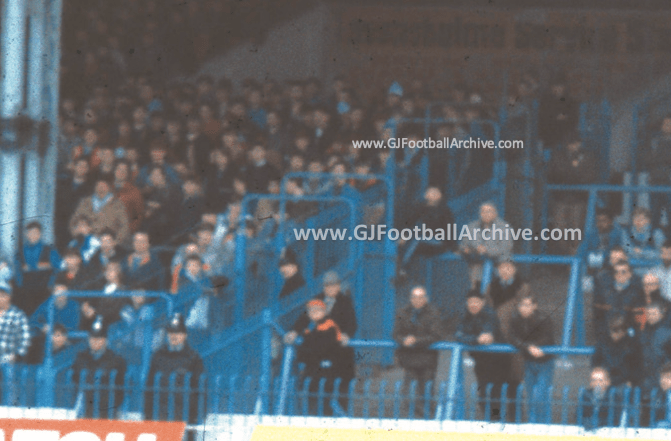
Day 10 of my posts counting down to the centenary of Maine Road’s opening game. Today the original Platt Lane Stand can be seen in this image, taken in 1991. The stand was initially a terraced stand and the original terracing built in 1923. 8 years later the corner (on the left of this image) was roofed, extended a little on wood and the terracing re-profiled for seats. Then, in 1935 the rest of the Platt Lane was roofed and extended on wood but this remained a standing terrace.

The Platt Lane’s development was the first two phases in a planned development which was supposed to see the Main Stand/Scoreboard End corner roofed around 1939, then the neighbouring terracing (later North Stand) roofed to match the Platt Lane by about 1945 and then within about five years the entire Popular Side/Kippax was to be extended and roofed.

Apart from Platt Lane, none of those developments occurred due to the war.

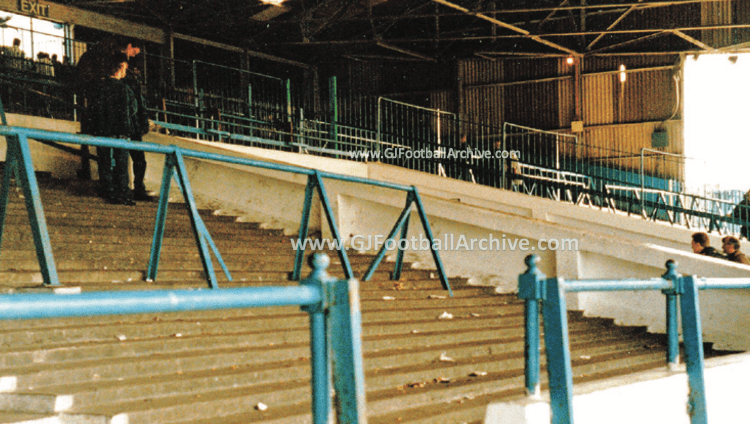
Platt Lane was seated in the 1960s (you can read more on that and all the plans for the stadium in Farewell To Maine Road) and this images shows the steps that were built at the back of the Platt Lane when it was extended. I remember as a young boy climbing up those to get to the benches we sat on occasionally and I was always scared I’d fall through the gaps.

To help those unfamiliar with Maine Road locate the specific location of this post, the Platt Lane Stand is the one where the number 4 & 5 are on this plan.

Maine Road aerial 1971 from Farewell To Maine Road

If you’d like to read more on the history of Maine Road, take a look at Farewell To Maine Road, which can be downloaded from this page:

If you enjoy all the free material on my website and would like to support my research and keep this website going (but don’t want to subscribe) then why not make a one-time donation (or buy me a coffee). All support for my research is valued and welcome. It allows me to keep some free material available for all. Thanks.

Choose an amount

£2.50
£5.00
£7.50

Or enter a custom amount

£

Your contribution is appreciated.

Donate

Maine Road To Berlin

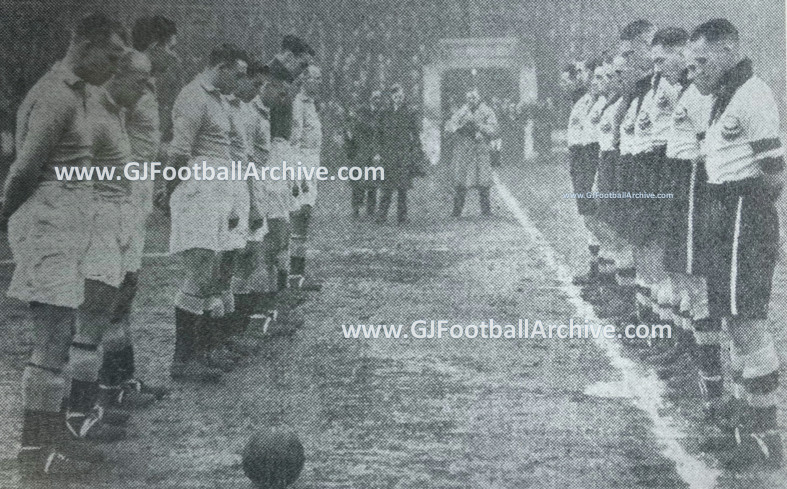
I am not going to pretend that English football teams making tours of Continental countries do not have a very pleasant time, but at the same time these tours are not picnics.  You are there to play serious football, and you have to go about it in the ordinary businesslike way.”  Sam Barkas, City Captain, 27th May 1937

As Sam Barkas hinted, sometimes end of season football tours are not the fun experience a lot of fans think. Sometimes the tour takes on a whole different meaning.  This is certainly true for the May 1937 tour to Germany.

The Blues, as Champions of England, were invited to play a series of high profile matches across Germany and its neighbouring States.  Although this was a major honour for City it has to be stressed that the whole concept of the tour, as far as Germany’s Nazi rulers were concerned, was to promote Germany’s sporting prowess against the best England could offer.  

Subscribe to get access

Read more of this content when you subscribe today. It costs £3 per month or £20 per year and you then have full access to all items posted in the archive for as long as you subscribe.

Subscribe to get access

Read more of this content when you subscribe today. It costs £3 per month or £20 per year and you then have full access to all items posted in the archive for as long as you subscribe.