I was saddened to hear the news of Trevor Francis’ death this afternoon. My thoughts are with his family and friends. I interviewed Trevor 13 years ago for a MCFC match programme article and have reproduced it below. It feels appropriate to use his own words to tell his Manchester City story.
IN SEARCH OF THE BLUES – Trevor Francis
Continuing our series tracking down former City players and managers, today’s feature focuses on Britain’s first £1m footballer, Trevor Francis. The former City and Birmingham player discussed his record-breaking career with particular focus on life in Birmingham and Manchester with author Gary James.
Let’s start by talking about your arrival at Birmingham. How did it feel to move from the south-west and then make your debut at the age of 16?
I was fine with making the move. At that age you don’t really think about it, but having a family of my own I now realise how my mum must have felt. It must have been awful for her to see her boy travel all that way to a big city, I guess. I was only 15 when I left home. Looking back it’s a young age, and with my boys I’ve made comparisons. When they reached the age I was when I left I wondered what I’d feel.
Plymouth, Bristol City and Birmingham had looked at me, but because I was down in Plymouth few clubs really took much notice. Birmingham, of course, were the biggest and at 16 I made my debut, coming on as substitute at Cardiff (5/9/70) and the following week I started and scored in a 1-1 draw against Oxford.
The following February you became the first 16 year old to score 4 goals in a League game. Do you remember much about that game with Bolton (20/2/71)?
Unfortunately, I don’t remember too much about the goals. I remember that after I’d scored my fourth I got a knock on my thigh with about 70 minutes gone. And all I was interested in when I went off was to know if my replacement had had any chances. I wanted to know if I’d have had the opportunity to score more. Never mind the injury, I just thought about playing.
I don’t think anyone will get the chance to beat that record because of the way the game and school leaving age and so on has changed.
Did it bring you a lot of attention?
I was on quite a good run at the time. I scored a couple in the two games either side of the four, so it did bring quite a bit of attention to myself. I’ve always been quite a grounded person, so the attention wasn’t a problem. It didn’t go to my head or anything. In fact it was quite a pleasure. At the time I was very fortunate and grateful that I was appearing in the first team, scoring goals and making the headlines.
You scored 16 goals in 21 (plus 1) League appearances and the following season you made 39 appearances as Birmingham won promotion from Division Two. This must have been a great time, for you?
It was. Winning promotion in 1972 was a good achievement but we also reached the semi-final of the FA Cup, losing to Leeds. I enjoyed the moment. Every day I was learning and I do consider myself very fortunate because my job was football – something I enjoyed doing enormously.
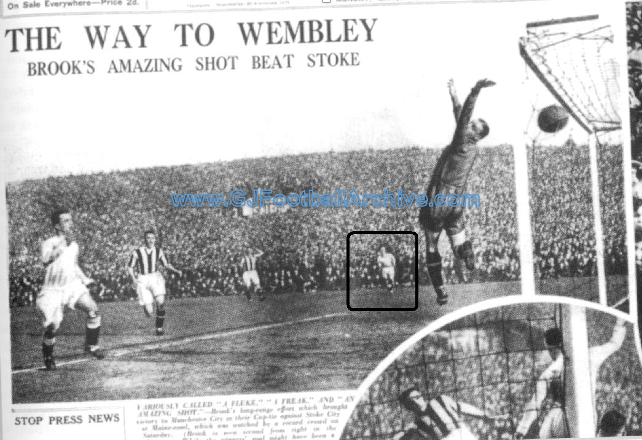
After a total of 328 (plus 2) appearances, 133 goals and another FA Cup semi-final (1975 V Fulham at Maine Road) appearance you eventually moved to Nottingham Forest for £1m in February 1979. How did you feel about the fee?
How I felt at the time is different to how I felt later. At the time I was aware of the attention and knew that the fee was around double the next highest, but I took it all in my stride. To hit that £1m target was big news but it didn’t really affect me. If you ask me how I feel now I’ll have to say I feel very honoured that it happened to me. I also feel very honoured that the greatest manager there has ever been, in my opinion, was prepared to pay that much for me. That was Brian Clough of course.
A lot’s been said about Clough in recent years and there’s been the fictional book and film. However, it’s worth hearing from someone who actually played for him. So, can you explain what Clough was really like and how he motivated you?
I get asked this question more than any other and it’s one I wish I had a stock answer for. I never tire of talking about Clough. Everyone’s fascinated by the guy. What was he like to play for? Well, I just think he gave you maximum confidence. There was such a belief that he transmitted to the players. We often felt we were invincible because of what he did and said to us. Having his presence around you made you feel like you had an extra man on the field. He was highly talented. A fantastic motivator of players and he had everyone’s absolute respect. He was just a pleasure to play for. It was wonderful to be given that opportunity to play for him.
If you think about his appearances on television, he was always compulsive viewing because of his knowledge, talent, opinions and some of his controversial statements. That’s the reason everyone is still so interested in him today. The first question anyone asks me is always about Brian Clough.
Clough knew every player inside out and knew how to get the most out of them individually. He was a little unorthodox and eccentric at times, but it worked.
In 1979 you scored in the European Cup final, is it true that the final was actually your first European game?
Yes it is. I was signed in February, and there was a strange rule at the time which wouldn’t allow me to play in the earlier rounds, but once we got to the final I was eligible to play. So I consider myself very fortunate that I got that chance. I think, once again, it’s only in later years that you think of the implications of it all and what the experience meant. One of my best friends in football is Martin O’Neill and Martin and I have a bit of friendly banter about it because he was left out to make way for me. This must have been a very tough decision for Brian because Martin had been playing very well and suddenly Brian put me in the team instead but, I guess, that was Brian’s job. Brian was more than capable of making decisions.
I felt for Martin of course, but I was so happy to make that appearance. Because of Brian’s faith in me I felt I had to put in a great performance, and so scoring the goal was the least I could do for Brian. We won the final 1-0 in Munich.
This was a major achievement, and was followed by a second European Cup win the following year, although you missed the final. How did that feel?
I was injured just before the final, so that was a disappointment for me, but Martin O’Neill played. It was ironic I guess, but that was very pleasing because Martin deserved that. Forest’s success over those seasons was incredible for a club of that size. It was amazing and won’t be matched. No club of that size could do it today.
Apart from Liverpool who had won the European Cup in 1977 and 1978, so only just before Forest, no British side had ever managed two European Cups before Forest, and it wasn’t until 1999 that another British club reached that milestone.
Moving on to the move to Maine Road, was this something you sought?
No, not at all. I was very happy at Forest. I was disappointed to have to leave and I feel the team was broken up far too quickly. I was one of the ones who left and was very disappointed. However, I have to say that a year or so later when I was leaving Manchester City my feelings of disappointment at leaving matched the feelings I had when I left Forest. I didn’t want to leave such a wonderful club as City. I know I’m jumping ahead, but I enjoyed my time at City… had built a great relationship with the fans… great relationship… and although I’d missed a few games through injury I thought it had been a good season. A good start at my new club. I like to think I gave a bit of excitement and entertainment during my time there, and I felt great warmth from the fans. Ever since, when I’ve gone back to Maine Road or to Eastlands now, I get a fantastic reception from fans, and I really do appreciate that.
You signed for £1m and was City’s third £1m signing. When you first arrived at Maine Road was there anything in particular that impressed you?
I think that the manager John Bond sold the club to me really well. He told me of the plans. Remember City had just been to the FA Cup Final and everything I was told matched my view that City were on the up. I was told other players would be signed to build a quality team capable of challenging for the title.
When I arrived there I was very impressed with the organisation of the club, the friendliness, the facilities, the people. It was without doubt the best club I had been to as a footballer at that time. I was very impressed and really happy. City were a progressive club.
I think it was too good for some of the players. I don’t think some of the younger players at the time quite appreciated how well they were looked after in comparison with other clubs.
When you made your debut at Stoke (5/9/81) thousands of City fans travelled down. Do you remember much about the game?
I didn’t realise at the time how many fans would travel down, so when I saw the crowds and heard the noise I couldn’t believe it. It was a strange few days for me. I trained with Forest on the Friday and I only met up with the City players on either Friday night or possibly Saturday morning. But that day was very special to me. It goes down as one of the greatest memories of my career. To see so many fans… magnificent away support. I got a couple of goals and that made an immediate impact for me. It was a great welcome.
As the season progressed did you still feel so positively about your move?
Yes, definitely. I loved being at City. I scored a goal at home to Wolves (28/12/81) which I think was the best goal I scored for City and the win put us top of the League. I think at that time if we’d been able to strengthen the side with perhaps a couple of signings I think we’d have strengthened our position and stayed at the top for some time. I think it would have been the start of a great era but the exact opposite happened (Gow, Hutchison & O’Neill amongst others were sold during the season). We didn’t know about financial problems, but clearly looking back City decided the policy had to be to sell instead of strengthen. We fell away and the chance went.
It’s worth remembering that we went to Anfield on Boxing Day and beat Liverpool 3-1. They were about 12th at the time, but they went on an incredible run and won the League by four points. We dropped and finished 10th, but what could we have done?
In those days when you started the season there were about 12 teams who could win the title. And we were certainly one of those sides.
You picked up a few injuries during the season and your critics said you were injury prone. Did you feel that?
Throughout my career I picked up injuries. It was so frustrating. I wouldn’t hesitate to answer that throughout my career I sustained too many injuries. It’s not just the injury, it’s more the getting back into the rhythm, finding peak form, and then another injury comes along. I had to battle against injury when all I wanted to do was play. It was frustrating.
Your City record is 14 goals in 29 first team appearances. It’s a pity it’s only 29 games but that’s not a bad ratio, is it?
1 in 2, but I wish it had been more. I’ll tell my grandchildren we used the rotation system. That’ll fool ‘em!
So what happened with your departure from City?
Strangely, I was on holiday and was told of this opportunity to go Sampdoria. It wasn’t my doing. I had no inclination or desire to leave City. Absolutely no thoughts, but I was told that City had instigated it. It was like my departure from Forest.
So when it becomes clear the club are going to sell you there’s not much you can do about it really. It all happened after the 1982 World Cup in Spain. I was later told that Sampdoria had been watching me at the World Cup and then it all happened a short time afterwards.
City’s Chairman, Peter Swales, was a FA councillor and would have been in Spain representing the FA. Perhaps he met Sampdoria’s officials while he was there?
I don’t know, but I do know I had no intention of leaving. After the World Cup I went off on holiday and within a few days I got a call from my agent telling me a transfer had been agreed between City and Sampdoria. It was a real shock. A bolt out of the blue. From what I understand City had overstretched themselves and needed to bring in some cash.
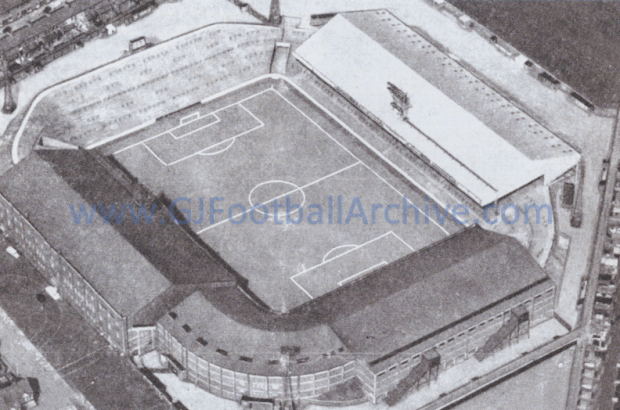
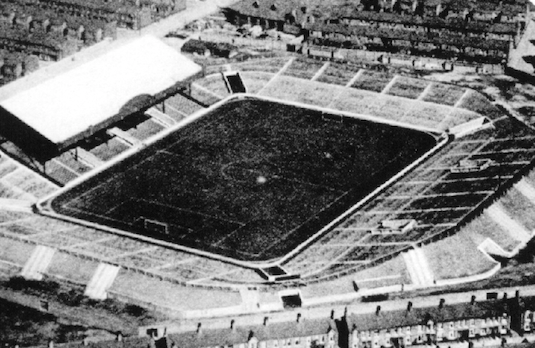
That is certainly the general view that was circulated in the years that followed. A new roof went on the Main Stand in the summer of 1982 and fans dubbed it the “Trevor Francis Stand” because it felt as if you’d been sold to pay for the roof. Were you aware that later still there was a “Bring Back Trevor Francis” campaign?
Really? I had no idea. I wish I’d known at the time.
It wasn’t particularly high profile – a few leaflets were handed out – but it shows how supporters felt about your time at Maine Road.
I’d had a very good relationship with City fans and I was sorry to leave them. City more or less got their money back on my transfer, but that wasn’t an issue for me or I guess for the fans. I’d always wanted to play and always thought I’d help City find that success that John Bond had hoped for when he told me of his plans for the squad. I really wish it had been a much longer spell.
After City your career developed with Sampdoria and Rangers, but eventually you moved into management. How did that come about?
I started to get interested at Rangers. Then my old friend Jim Smith took me to QPR on a free – he’d sold me to Forest for a £1m all those years before. When Jim went to Newcastle I was asked if I wanted to be player-manager. It wasn’t a great desire to move into management at that time, but I took the opportunity.
I had about 12 years in management with 4 different clubs, including Birmingham. I was always intrigued about management and, although I can’t show you medals from my managerial career, I did come close on numerous occasions with Sheffield Wednesday (including FA Cup & League Cup finalists) and Birmingham.
Looking back over your entire career, which club means most?
Who do I have the greatest feeling for? Well, it has to be Birmingham because of the time I was there as a young player and as a manager. You always have a special feeling for your first club, but that’s not to say I don’t have great memories of the other clubs I played for, including City.
What do you make of City’s current position?
I find it enthralling and when you consider that it was the financial problems the club had back in 1982 that forced my sale, then I am obviously delighted. It’s gone full circle and it feels as if City are now back at the level in the game they were at on the day I arrived in 1981.
When you have money it doesn’t guarantee success of course, but the one word I would use is ‘patience’. I think City fans have been very patient over the years and I’m sure success will happen, but patience is needed. You still need to build clubs to have lasting success. It’s great for City and for football, but everyone has to have patience.
*******
Trevor Francis’ debut was my first away game. Previously (on the anniversary of it) I posted the story of that game for subscribers here:






 Gary James' Football Archive