Following on from the series of articles and features on the 1970s and 1980s over the last few months a new series on Manchester City in the 1990s will be starting in March. As with the 1970s & 1980s there will be different content posted each day from indepth articles on each of the seasons through to on this day reminders of games, players and more.
Some of the material will be available for subscribers only and some will be free for anyone to read. If you’d like to know how to subscribe and read all the incredible content on here then see:
Feel free to send in ideas or areas that you’d like me to discuss on 1990s Manchester City. I’m always open to adapting stories or content based on feedback. Thanks for reading.
For post 75 of my Maine Road 100 countdown I’ve posted this image of entertainer Norman Wisdom doing some prematch stuff at Maine Rd in the 90s. That day many of us stood on the Kippax saw the elderly entertainer take to the field but didn’t recognise him at first. In fact many of us thought it was Peter Reid wearing a flat cap!
There were lots of odd prematch activities over the decades and you can read about them in this 2000 word article on the history of pre-match entertainment at Manchester City. There are mentions of the St Joseph’s Industrial School and Beswick Prize Bands, various DJs, athletic challenges, Norman Wisdom, Frank Sidebottom & more. Enjoy:
Subscribe to get access – Annual
Read more of this content when you subscribe today. It costs £20 a year (less than 6p a day) to access everything posted since the site went live in December 2020 (books, interviews, videos, history talks etc.) and throughout your period of subscription. Or you can subscribe a month at a time for £3 (cancel anytime; see below)
Monthly subscribers have access to everything posted since 1 October 2022 (books, interviews, videos, history talks etc.) and throughout your period of subscription. It costs £3 per month (cancel anytime)
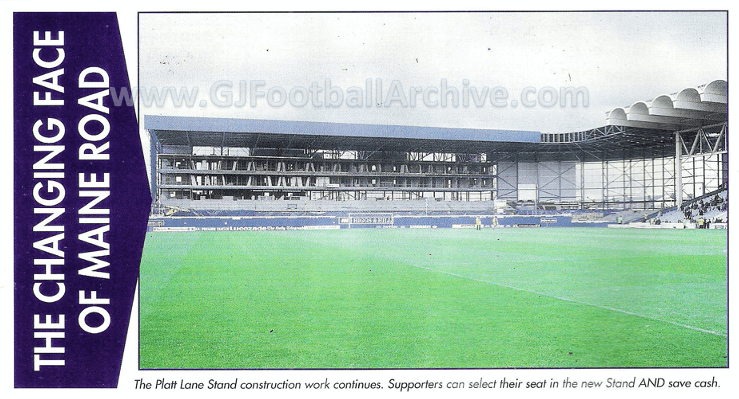
Day 67 of my posts counting down to the centenary of Maine Road’s opening game is this night time cutting from the MCFC match programme of the new Platt Lane. Oh, don’t get me started! This was the perfect example of how Swales, Niven et all downgraded Maine Road from one of England’s leading venues to a mishmash of odd stands. Swales was responsible for the club’s overall direction and Niven was the director responsible for stadium development.
The old Platt Lane held about 9,500, the new stand when opened in March 1993 was less than 5,000. You can read about what happened on the stand’s opening day here:
If you enjoy all the free material on my website and would like to support my research and keep this website going (but don’t want to subscribe) then why not make a one-time donation (or buy me a coffee). All support for my research is valued and welcome. It allows me to keep some free material available for all. Thanks.
It’s 51 of my posts counting down to the centenary of Maine Road’s opening game and today I’m looking at the segregation fence in the old Kippax Stand.
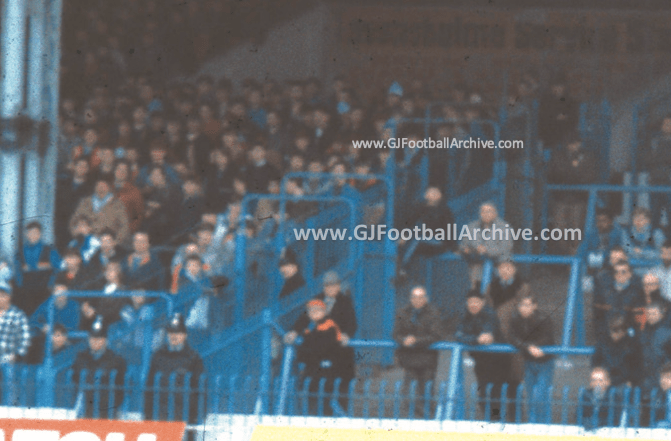
On the main photo above you can see the segregation fence as it looked in the early 1990s. The gap between away fans and home fans had increased compared with the image below from the mid 1980s. The police used to patrol up and down this narrow pathway and on the image below you can see some police within that area.
Kippax Segregation mid 1980s
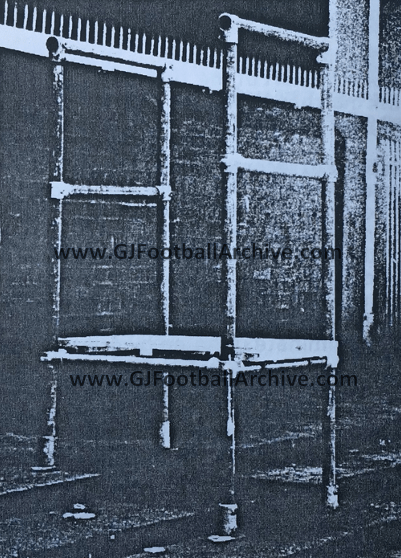
To help the police control the crowd a few simple platforms were constructed out of scaffolding. It all seems so primitive now but I guess clubs were reacting to increasing violence and needed quick solutions. The following was one of several platforms in the Kippax by the end of the 1980s.
Kippax Segregation police platform early 1990s
Before the segregation fence had an alleyway for the police to walk through there was one fence and scaffolding was erected next to it to separate the fans further (see next two images). Similarly this approach was used to widen the segregation fence at other times in later years.
Kippax Segregation early 1990s
The single fence with scaffolding to separate fans further (below).
Early Kippax Segregation
I explain a lot more about this area in Farewell To Maine Road. Formal segregation started in the mid 1970s but not for every game. By the end of the decade it was permanent and in place game after game.
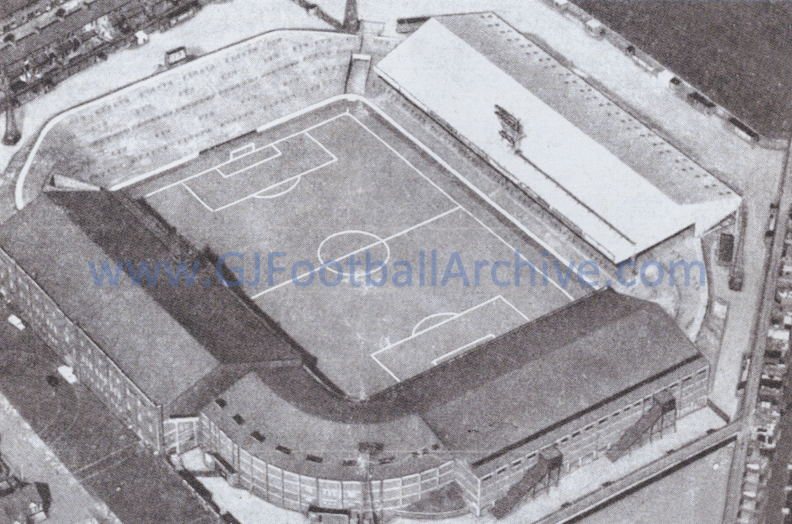
This 1971 image shows the Kippax Stand and the segregation area was roughly where the number 8 is within the stand.
Maine Road aerial 1971 from Farewell To Maine Road
If you’d like to read more on the history of Maine Road, take a look at Farewell To Maine Road, which can be downloaded from this page:
If you enjoy all the free material on my website and would like to support my research and keep this website going (but don’t want to subscribe) then why not make a one-time donation (or buy me a coffee). All support for my research is valued and welcome. It allows me to keep some free material available for all. Thanks.
It’s day 33 of my posts counting down to the centenary of Maine Road’s opening game. Today – Notice anything odd about this image? Look at the Main Stand roof….
This photo was taken shortly after World War Two at a time when the adverts and notices on the Main Stand roof had been blacked out to avoid being picked up by enemy bombers during the war.
We all know about Old Trafford being bombed and while the Maine Road stadium did not suffer major damage houses on Thornton Road and other streets around the ground were bombed during the war.
The semi-circular gable on the roof of the stand carried adverts for much of its existence, though initial plans had been to have the club’s name proudly displayed there. I’ve yet to find an image showing any MCFC wording painted on to it but I do believe it did have this early in the stadium’s life, before adverts took over.
This photo shows the gable from the back/air:
This 1971 view shows the second Main Stand roof (actually just the middle section was replaced) and the original gable would have appeared where number 1 is.
Maine Road aerial 1971 from Farewell To Maine Road
If you’d like to read more on the history of Maine Road, take a look at Farewell To Maine Road, which can be downloaded from this page:
If you enjoy all the free material on my website and would like to support my research and keep this website going (but don’t want to subscribe) then why not make a one-time donation (or buy me a coffee). All support for my research is valued and welcome. It allows me to keep some free material available for all. Thanks.
It’s day 32 of my posts counting down to the centenary of Maine Road’s opening game. Today – A behind the Kippax image from 1993. This photo has so much going on despite it looking fairly bland. I’ll explain:
When the Kippax was roofed in 1957 the original terracing had to be squared off and so, instead of reducing the terracing City decided to extend it where its started to curve. You can see in this image that the end of the stand is on stilts/stanchions over the original banking where it was extended.
At the time the stand was enlarged in 1957 local residents objected to it. Some claimed they’d lost TV signal and were no longer able to get Granada TV which had started broadcasting in May 1956.
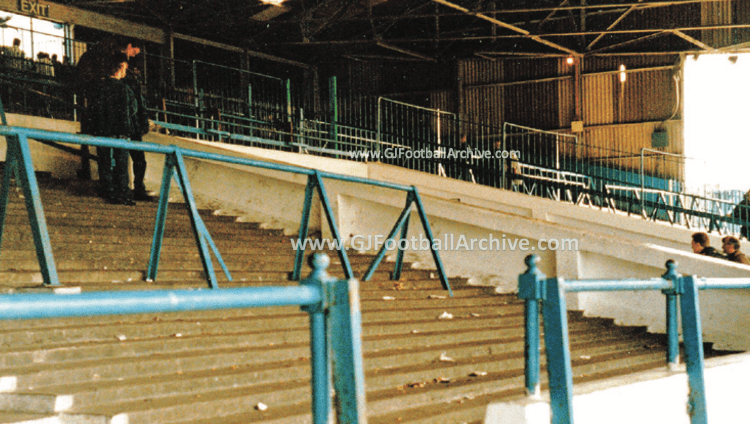
When this photo was taken in 1993 that area was for away fans and if you look carefully you can see the segregation fence to the left of the tunnel and going up the banking.
The tunnel and steps in the foreground of the photo are the original 1923 construction but these steps were no longer in use as an entry point. They were blocked off at the top and tended to be used as a seating area by fans instead. They’d been blocked off after the Ibrox Stadium disaster in 1971 when steps like these had to be remodelled to prevent a build up of fans flowing down at speed. This staircase was not altered but others were and remained in use.
Notice also the paved slope. This had been a simple slope of grass and rubble (as can be seen on the 1971 image lower down this page) for most of the stand’s life but general crowd disorder at football had led to City deciding to pave this section to prevent fans from grabbing stones and lobbing them over the segregation fence at rival fans. When I spoke with Bernard Halford many years ago, he was quite proud of this ‘flagging’ of the slope and said it did prevent some significant issues which could have had repercussions for the club.
This image from 1961 shows this part of the extended/squared off Kippax to the right of the photo.
Here’s a view from 1971 showing the back of the Kippax as it looked. The away staircase is to the left of number 8 and to the left of that you can see the squared off part of the stand on stilts. The staircase that is on the 1993 image is the one between 7 and 8 below.
Maine Road aerial 1971 from Farewell To Maine Road
If you’d like to read more on the history of Maine Road, take a look at Farewell To Maine Road, which can be downloaded from this page:
If you enjoy all the free material on my website and would like to support my research and keep this website going (but don’t want to subscribe) then why not make a one-time donation (or buy me a coffee). All support for my research is valued and welcome. It allows me to keep some free material available for all. Thanks.
It’s day 27 of my posts counting down to the centenary of Maine Road’s opening game. Today – the wooden benches! Many a fan’s first experience of Maine Road was sitting on the benches in the old Platt Lane Stand.
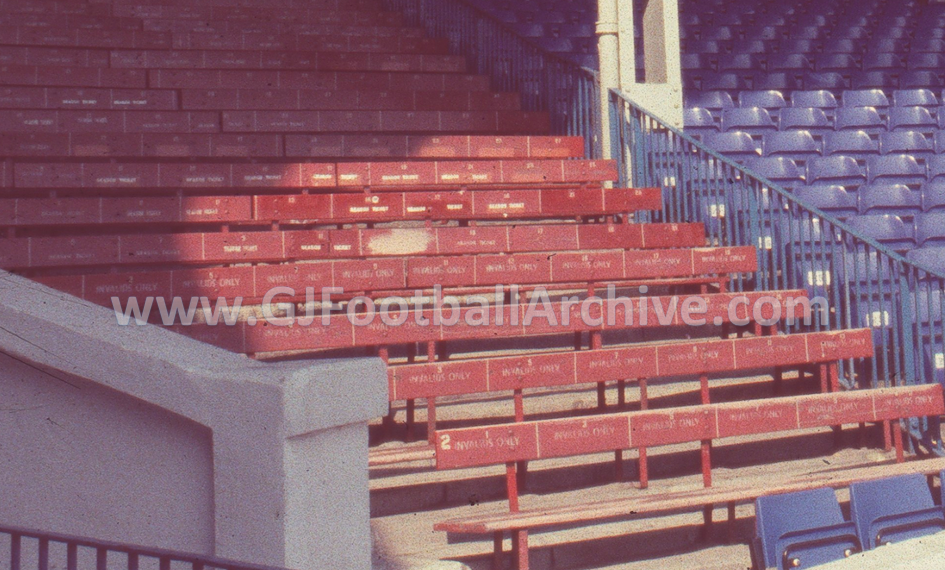
These images may bring back a few memories. The Platt Lane benches were painted maroon and yellow for many years – I’m not certain if they were originally that colour. Older fans may know the answer but if they were maybe it was because they were installed at a time, the early 1960s, when those two colours had been used as City’s second choice kit?
Maroon is City’s traditional away colour but in 1959 a yellow shirt with maroon cuffs and V was used. If there was a link then that was not obvious by the time my Dad was taking me on to the Platt Lane as a young boy.
For me it seemed so odd, but then again the new North Stand had grey seats, and back in 1923 much of Maine Road was painted green. So I suppose there was never much logic around football grounds.
City used to paint on to the seats whether they were for season ticket holders, ‘invalids’ (obviously the wording back then, not today’s wording!) or if they were just numbered you could either sit there if it was an unreserved seating game or the number would match a ticket holder.
Platt Lane corner benches – note the wording on the seats. Some say season ticket; some ‘invalid’ and some are numbered/unreserved.
Most of the benches lasted about 40 years, but some were destroyed when Leeds United fans visited in November 1990 and were replaced for the stand’s final season or so with blue plastic seats. The stand was demolished in 1992.
November 1990: Jimmy Frizzell inspects the damage after Leeds fans smashed up some of the Platt Lane benches.
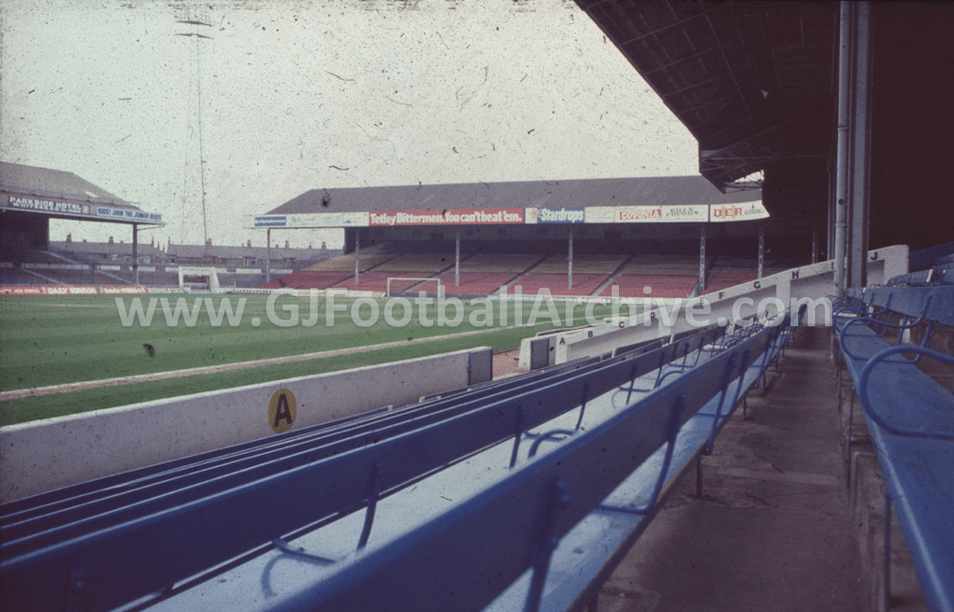
The Main Stand also had benches for much of its existence. These were painted blue and in some cases had arm rests. They had been part of the original build in 1923 and were replaced in phases during the 1970s and 1980s.
The Main Stand’s benches with the Platt Lane Stand’s maroon and yellow benches in the background
For those unfamiliar with Maine Road this photo may help. This shows the original Platt Lane Stand corner (number 3) where the maroon seating with ‘invalid’ wording image was taken. The benches damaged by Leeds fans were near the front of the stand under number 5. The Main Stand bench image is taken to the left of number 2 looking towards the floodlight near 5 and 6.
Maine Road aerial 1971 from Farewell To Maine Road
If you’d like to read more on the history of Maine Road, take a look at Farewell To Maine Road, which can be downloaded from this page:
If you enjoy all the free material on my website and would like to support my research and keep this website going (but don’t want to subscribe) then why not make a one-time donation (or buy me a coffee). All support for my research is valued and welcome. It allows me to keep some free material available for all. Thanks.
Prior to this weekend’s game with Spurs, Manchester City have had players from 41 different nations score for the Blues in the Premier League. Can you remember them all? The following 1200 word article tells the story…
Subscribe to get access
Read this content when you subscribe today. It costs £20 a year or £3 per month (see below). Annual subscribers access everything posted to the site including interviews, talks, books and hundreds of articles plus everything posted during your subscription.
Monthly subscribers (£3, cancel anytime) get access to everything posted to the site since 1 October 2022 plus everything posted during your subscription.
In recent years many night games played across football have seen light shows. Manchester City have established a few of these at the Etihad Stadium too. The spectacle has proved popular, particularly with young supporters who are perhaps experiencing a night match for the first time. For today’s subscriber piece I have written a 2000 word article on the history of pre-match entertainment at Manchester City. There are mentions of the St Joseph’s Industrial School and Beswick Prize Bands, various DJs, athletic challenges, Norman Wisdom, Frank Sidebottom & more. Enjoy:
Subscribe to get access – Annual
Read more of this content when you subscribe today. It costs £20 a year (less than 6p a day) to access everything posted since the site went live in December 2020 (books, interviews, videos, history talks etc.) and throughout your period of subscription. Or you can subscribe a month at a time for £3 (cancel anytime; see below)
Monthly subscribers have access to everything posted since 1 October 2022 (books, interviews, videos, history talks etc.) and throughout your period of subscription. It costs £3 per month (cancel anytime)
The 1992-93 season ended on May 8 with a 5-2 defeat for Manchester City at home to Everton. The Blues finished ninth in the inaugural Premier League campaign – not a particularly depressing position but this had been a strange season. There had been protests throughout the season.
Here for subscribers is some explanation of what happened:
Subscribe to get access
Read more of this content when you subscribe today.






 Gary James' Football Archive