Maine Road 100 – Day 23

It’s day 23 of my posts counting down to the centenary of Maine Road’s opening game and today’s feature is on the building of the North Stand. As Manchester City are about to appear in the 2023 Champions League final I thought I’d post images from a much earlier European game. This image of Neil Young comes from the 1971 ECWC semi-final v Chelsea. Notice Young is wearing City’s away colours. People often assume that City rarely wore away colours at Maine Road, but the truth is somewhat different.

Often when there was a clash of colours in a cup game City would wear their away strip. Games in the 1920s right through to 1970s saw the Blues don maroon, red/black and even scarlet at times at Maine Road.

The main image shows that North Stand being constructed in the background. You can see that the roof is not yet complete but that the terracing is in use for this ECWC semi final. The terracing was new concrete and the stand housed bars underneath. It was a terraced stand until summer 1972 when the decision was taken to make it a seated stand.

City chairman Eric Alexander was the main man responsible for the stand’s development and he was a passionate believer in giving fans the best facilities possible. He also had ambitious plans to redevelop the Kippax, however Peter Swales became the chairman soon after and he put Ian Niven in charge of ground developments. From then on, until 1993, the only major development was the erection of a new Main Stand roof in 1982. In the 1990s the club was forced to build – or condemn – the Platt Lane Stand.

Maine Road was a major ground for most of its existence and, even with little investment during from 1973 onwards, it was still selected as a cup semi-final venue. BUT I often wonder how spectacular the stadium would have been had Eric Alexander been left in charge of stadium developments. Instead of penny-pinching and devaluing the ground maybe it would have eclipsed Old Trafford as it had for the first 40 years of its existence?

People always focus on Swales as the cause of all the problems and it is true that he was the chairman and the man ultimately responsible, but he was not the major shareholder. In fact he often talked of how he only had a small number of shares until 1983 (when he made a major purchase following City’s relegation he often said). He was supported by directors who often held many more shares than he did. They could’ve ousted him, but instead supported him. Each director had responsibilities for different elements of the club – Swales often talked of this and the match programme frequently told us who was responsible and what they did – yet once Swales did stand down and Franny Lee took over some of those who had worked with Swales swapped sides and retained their positions. I know, from my own interviews with Swales, Alexander and others, that Swales felt let down and betrayed. Every issue was suddenly made to be ‘his’ fault. He accepted this, saying that he was the main man, but others needed to hold their hands up for the lack of investment in Maine Road etc.

1971 ECWC v Chelsea. Francis Lee. Photo by Alan Jubb

The above image shows Francis Lee at this same game and to the right you can see more of the North Stand under construction.

For those unfamiliar with Maine Road this photo may help. The North Stand can be seen with a completed roof on this image (number 10). This was later in 1971 and the stand is still a terraced one.

Maine Road aerial 1971 from Farewell To Maine Road

If you’d like to read more on the history of Maine Road, take a look at Farewell To Maine Road, which can be downloaded from this page:

If you enjoy all the free material on my website and would like to support my research and keep this website going (but don’t want to subscribe) then why not make a one-time donation (or buy me a coffee). All support for my research is valued and welcome. It allows me to keep some free material available for all. Thanks.

Choose an amount

£2.50
£5.00
£7.50

Or enter a custom amount

£

Your contribution is appreciated.

Donate

Maine Road 100 – Day 20

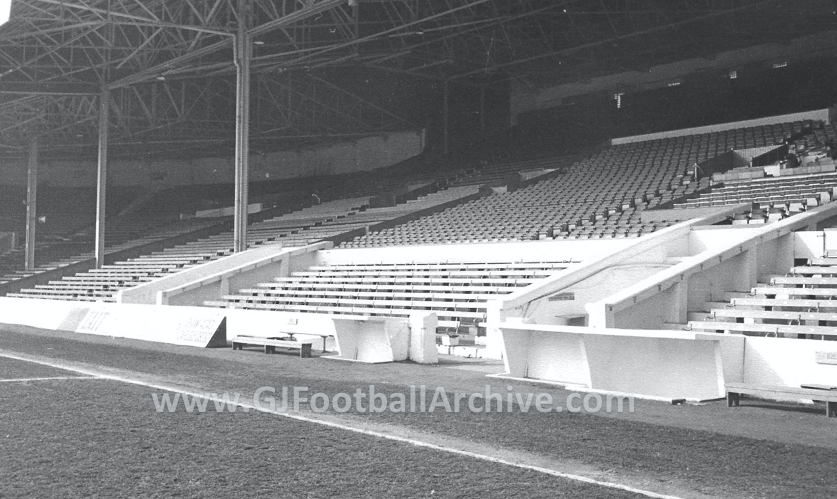
It’s day 20 of my posts counting down to the centenary of Maine Road’s opening game and today’s feature is on the original Maine Road dug outs. Nowadays the playing staff areas take up considerable space wither side of the tunnel at most stadia but for most of Maine Road’s existence there were two concrete bunkers dug out for the manager, physio and maybe one other to sit on. When substitutes were allowed in the 1960s then the sub would also sit there. Inevitably they were cramped and gave an extremely poor view of the game. Basically, the manager would be looking out at leg level.

The main image shows that the City dug out (on the right) had been extended by the time this image was taken in the 1970s. The away dug out (left of the tunnel) is the original size.

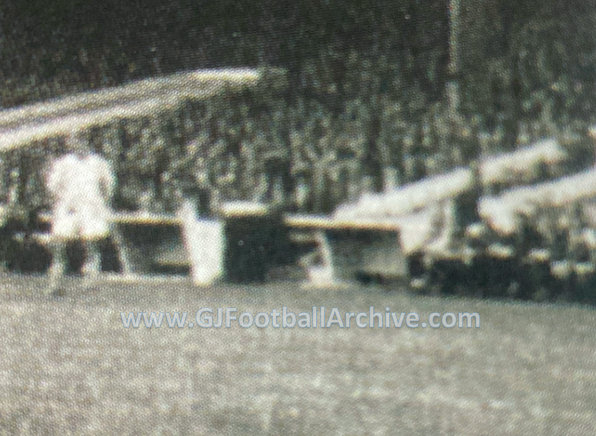
City’s dugouts – which actually were dug out – were built at some point after the main construction of the stadium but I’m not exactly certain when. This image from 1926 shows that small benches were originally positioned/built either side of the tunnel.

1926 City v Fulham, Maine Road. Jimmy McMullan with the ball.

The concrete dugout lasted into the 1970s when more modern bus shelter style ‘dugouts’ (but not ‘dug out’) were erected. This image shows the home bus shelter style dugout in 1983 with manager John Benson. The man with the perm hidden mostly by John Benson is comedian Eddie Large. Physio Roy Bailey is the man closest to the camera.

Mirrorpix photo

Even then the originals remained for some time before being demolished when parts of the white wall were rebuilt. I think they’d been fairly redundant for years though. I have photos of them being used at times during the 1960s and 1970s but this image from the 1950s shows they were empty on many matchdays.

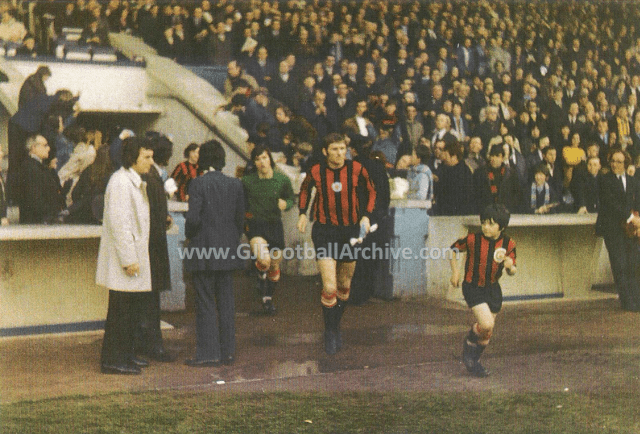
1971 ECWC v Chelsea. Tony Book and mascot Paul Todd. Photo by Alan Jubb

The above image is of the same dugouts in 1971. I tend to think that by this time they were only used if it was a wet day as they provided a little bit of shelter. Notice the bar scarfs in the crowd – blue & white; red & black and one that’s blue & white with a thinner maroon bar too.

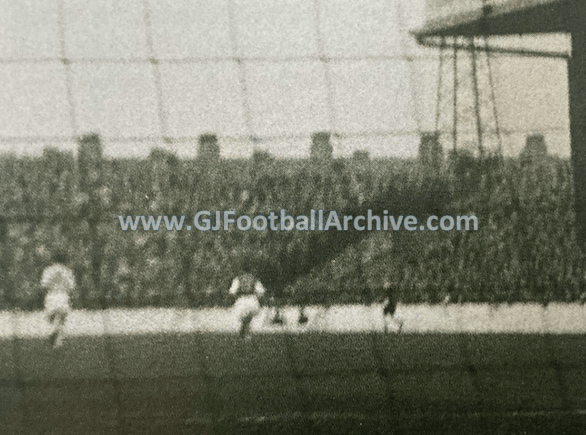
For decades, the manager’s dugouts weren’t the only ‘dugouts’ at the ground as there were also similar arrangements for the police and/or St John Ambulance personnel in Maine Road’s corners. These seemed to be in use into the 1960s as this image shows. Look carefully to the right of the player on the right and you can see two police or St John’s Ambulance staff in a corner dug out near the Kippax. This image is from the early 1960s.

These also disappeared when parts of the white wall were rebuilt and gates added in the corners.

For those unfamiliar with Maine Road this photo may help locate the player dugouts. You can’t really see them but one was positioned in the white wall in front of number 1 and one to the left as we look of the central tunnel next to 1.

Maine Road aerial 1971 from Farewell To Maine Road

If you’d like to read more on the history of Maine Road, take a look at Farewell To Maine Road, which can be downloaded from this page:

If you enjoy all the free material on my website and would like to support my research and keep this website going (but don’t want to subscribe) then why not make a one-time donation (or buy me a coffee). All support for my research is valued and welcome. It allows me to keep some free material available for all. Thanks.

Choose an amount

£2.50
£5.00
£7.50

Or enter a custom amount

£

Your contribution is appreciated.

Donate

A European Replay for City

In September 2021 I was in Copenhagen and, as always when I’m in a city with a football ground, I popped over to the Parken Stadium. Most fans will remember that City drew 2-2 there with FC København in February 2009. Nedum Onuoha and Stephen Ireland scored in the UEFA Cup round of 32 first leg and in the return Craig Bellamy scored twice to give the Blues a 2-1 win on the night (4-3 on aggregate). That year we progressed to the quarter finals.

However, Copenhagen’s stadium played a much earlier role in City’s European story and, as today (31 March) is the anniversary of that game, I’m publishing this article looking back at the day when the Blues played a European Cup Winners’ Cup quarter-final replay there. 

This 1500 word article is available for subscribers…

Subscribe to get access – Annual

Read more of this content when you subscribe today. It costs £3 per month (cancel any time, see below) or £20 a year. Annual subscribers get full access to ALL the content on here throughout their membership. Do a few searches and see what’s on here.

Subscribe to get access – Monthly

It costs £3 per month (cancel any time) or £20 a year (see above). Monthly subscribers get access to everything posted since 1 October 2022 and everything posted throughout their membership. Why not sign up for a month and see what you think?

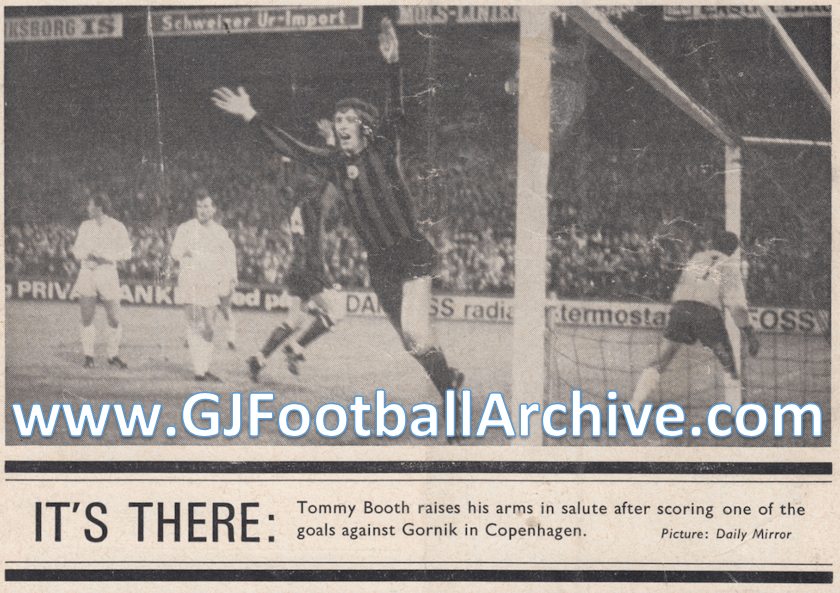
MCFC V Gornik in 1971

On this day (10 March) in 1971 a crowd reported as 100,000 witnessed a 2-0 Manchester City defeat by Gornik in the ECWC quarter final first leg. The story of that game and the rest of the tie is available below (with video clips) for subscribers to this site.

Subscribe to access all the site – Annual

If you would like to read this and all the in-depth articles on this site (including the entire Manchester A Football History book, talks, articles, interviews etc.) then please subscribe. It works out about £1.67 a month if you take out an annual subscription (£20 per year) or £3 a month if you’d like to sign up for a month at a time (see below). Annual subscribers gets full access to everything posted so far and the hundreds scheduled to be posted in the coming year.

Subscribe to access all the site – Monthly

If you would like to read this and more then please subscribe. It costs £3 a month if you’d like to sign up for a month at a time. Monthly subscribers get full access to everything posted since 1 October 2022 and everything to be posted throughout their subscription. Cancel any time.

Mike Summerbee, OBE

Earlier this week the former Manchester City and England international Mike Summerbee was presented with an OBE by Prince William. This is excellent and well deserved news. Mike’s a great ambassador for football, City and Manchester (OBE & Windsor photos from Manchester City).

Mike Summerbee receiving his OBE from Prince William March 2023

It seems appropriate to include here an interview I did with Mike several years ago. I’ve interviewed him often over the years and this one was a general piece, performed in April 2005. It was for the Manchester City match programme and we started by talking about one of his favourite topics ‘Escape to Victory’. Here is that interview as written up at the time. Enjoy!

Mike Summerbee was the second player, after Ralph Brand to join Joe Mercer’s City in 1965.  Over the following decade he became a major star and played a significant role throughout the Mercer-Allison glory years.  Always the entertainer, Mike featured in the classic footballing wartime adventure film “Escape To Victory” and today assists the Club’s commercial activities.   In April 2005 Gary James caught up with him at the Manchester City Experience.

Let’s start with “Escape To Victory”.  How did you get involved in the filming of that movie?

It was Bobby Moore who got me involved.  We’d known each other since I was 16, and we both had a similar outlook.  The makers of the film had got several Ipswich Town players involved, plus Pele and of course Bobby.  They needed another familiar British player and Bobby suggested me.  He called me and said:  “How do you fancy being in a movie with Michael Caine?”  And that was it.  Within three weeks I was on my way to Budapest for filming.  I had no idea at the time that this would become one of those films still being shown and talked about twenty odd years later, but it has become a cult movie with websites dedicated to it.  It’s the sort of film that many other people would have wanted to be in.  I know for a fact that Rod Stewart wanted to be in it.

Why do you think the film is remembered so affectionately?

I don’t want to give too much away – everyone should come to our special showing and see the movie and hear my reasons then – but the film is like a Boys’ Own adventure.  It’s got drama, excitement, and is a traditional film.  It doesn’t rely on bad language, sex, or extreme violence, and it really does appeal to everyone.  Don’t forget it also contains some great actors – everyone remembers Stallone and Caine but look at the other cast members as well – and then there are some very well known footballers including Pele.  

I loved making the film and one of the great aspects for me was that when we came to the football scenes we were told to go out and play the game.  John Huston – a great director – wanted it to look as realistic as possible and so we played a real game.  Inevitably we had spells concentrating on tackling or shooting but much of the game came from real play.  Pele’s wonderful overhead kick goal was natural and was done only once.  We didn’t take ages setting up, re-shooting etc.  It was done for real and only in one take.  John Huston had cameras everywhere and tried to make sure everything that took place on the pitch was filmed from every angle.  That makes it so much more real.

You have a speaking part in the film, did you know about that before you accepted?

We were told to let the actors act and they were told to let the footballers play.  That way we all did what we were good at.  Then when it came to the dressing room scenes Michael Caine said to Huston that it didn’t feel right for only the actors to talk and he said that a couple of us should speak.  When it came to half time, I congratulated a couple of players on their play – that was natural not planned – and that stayed in, and then other lines were given to us.  It felt strange, but when you watch the film it makes much more sense to have us speaking.  I loved making the film and there are so many different aspects to talk about, but we’ll save that for the 5th May event.

Moving back to your playing career, we all know that you came from a footballing family, but did that mean it was something you had to do?

My dad played professionally and so from an early age it seemed natural to play.  All boys loved playing back then anyway, so there was nothing strange about that, but I suppose when you are young whatever your father does has a greater importance.  My brother was a better player than I, although he stopped playing when my Dad died, and we used to play whenever and wherever we could.  I’d get to school as early as possible – not for the lessons, I was a dunce! – but for the kickabout.  We’d have a tennis ball and play until we had to go in.  I also played cricket, athletics and other sports, but football was my best.

Your progression into professional football seems rapid – you were a key feature of the Swindon team in your teens – were there any setbacks?

I’d had a spell at Bristol City when I was 15, but I was so homesick I had to give up on it.  My mother worried about me and suggested I kept out of the game.  She knew about the problems and difficulties a footballer could have because of my father’s career, and then the opportunity came with Swindon and everything started going right for me.  I joined them at a time when they were ready to give youth a chance and I made my debut at 17.  

Was life relatively easy for you then?

The life of a footballer was not as glamorous or financially rewarding as it is today.  I loved playing and I loved the camaraderie of it all, but we all had to have other jobs to keep us going outside of the season.  I used to end up working for the Corporation cutting grass, painting, oddjobs, and digging graves!  It kept you in touch with the fans – both the living and the dead! – and I actually loved all of that time.  We didn’t have flash cars or anything then.  In fact Ernie Hunt and I had a tandem, and we used to cycle together on our tandem to the ground.  It was a great, fun time, and I have very fond memories of it all.

One of the significant angles is that Joe Mercer was interested in signing you from fairly early in your career, were you aware of his interest?

To some extent yes.  Joe had played with my father at Aldershot, and then Swindon played Joe’s Aston Villa in a testimonial game.  We won and I scored a couple, and Joe even played wing-half for Villa.  After that I was told he wanted to sign me for Villa and that he’d made a bid but nothing further happened.  I don’t know if it was problems at Villa or what but some time after that Joe moved on, and then in 1965 he got the City job.  I was in Torquay and I gave him a call – I thought it was time to make the move and chance my arm a little.  Joe said he’d be in touch.  Then serious interest came from City and I was off.  

Did City mean much to you as a boy?

Because of where I lived I’d travel to Birmingham to watch games and whenever City played Villa I used to enjoy seeing Bobby Johnstone, Ken Barnes, Bert Trautmann and the rest.  They were such a great and in many ways glamorous side to watch, and the pale blue shirt – a colour I still don’t believe we’ve managed to recreate properly – was so memorable.  No other side could match that colour and City were unique.  All of those great memories were in my head and I was desperate to play for City when Joe came here.  Although they were in Division Two when I arrived they were a major, major side with a great stadium.  I loved Swindon, but City were something else.

Everyone talks about the atmosphere around the place, how did you find it?

Joe lifted the spirits of everybody, that was clear, and Malcolm Allison was so ahead of his time and knew all about psychology.  He knew what players needed, and he always knew the best way of getting more out of me was by winding me up.  I think I was a consistent player, and at half time in one game we’d had a bit of a bad spell.  I’d played well, but one or two players had struggled and we all knew it, but in the dressing room Mal went up to the two players and told them they were doing well and that they just had to keep plugging away.  He was boosting their confidence I guess and they certainly were more confident in the second half.  When he came to me he said I was playing the worst game ever and that I was letting everybody down!  It wound me up so much I had a go back at him, and then when we got on the pitch I pushed and fought for everything to prove how wrong he was and I gave 120% – his trick had worked!

During your first year at City (1965-66) England manager Alf Ramsey came to watch you play, and eventually you became the first City man since Don Revie in 1956 to play for England.  Were you aware of the attention?

When Ramsey came to watch me the attention was good and, considering Alf concentrated on his ‘wingless wonders’, it was great for me a winger to be considered.  I’d been included in the squad from almost immediately after the World Cup win, then I made my England debut against Scotland at Hampden (February 1968) in front of about 150,000, alongside the likes of Moore & Charlton.  I was very nervous but they helped to calm me and at half time both Bobbys told me I was doing well, so that helped.  In the end every one of my England appearances came at centre-forward, so I guess the style of play limited my opportunities, but I loved playing for England.   

What was Alf Ramsey like as a manager?

He was definitely a ‘player’s manager’.  He handled us well, and I believe that he was, in the end, treated appallingly be the FA.  He treated us exceptionally well and he was a great man to play for – I don’t believe that England have ever managed to find a permanent manager who can match him.  He had the same sort of authority as Joe Mercer, but they were different characters.  Joe was wonderful with the media and the public, while Alf was primarily a players’ man.  There was one time, we’d lost 2-0 at Katowice (1973) and I’d been on the bench.  We were pretty down.  Alf knew how low we were but because we were playing in Moscow a couple of days later he told everybody to get to bed early, no drinking or anything.

We all sneaked into Bobby Moore’s room and had a few gins.  Sir Alf caught us and we thought he was going to have a go.  He said:  “I thought I’d told you not to drink!  But in the circumstances I’ll have a large gin and tonic please.”

Throughout the Sixties and Seventies, City never seemed to fear any opposition, is that something that came from the players?

Obviously, Joe and Malcolm bred a certain atmosphere which boosted confidence.  Whenever we played United we’d get to Trafford at 12.30 simply to soak up the atmosphere and to be ready.  Mal would swagger to the Stretford End before the game to tell them how many we’d win by, and we’d go out there and match his score, although we used to encourage him to keep the expectation down a little!  For us it didn’t matter whether we played Shankly’s Liverpool, Busby’s United, or any other team because we knew we were more than a match for any of them.  Some of these teams possessed better individual players but, particularly at Old Trafford, we were always the better side.  We had a great team spirit.  People always talk about Lee, Bell and Summerbee like Charlton, Law and Best, but our side wasn’t about three players, it was about the whole team.  Oakes, Pardoe, Young…. You know all the players.  Unfortunately the 3 player line is a good one for the media to focus on, but for the players it was always about the team.  I always think it’s wrong to talk about Lee, Bell, & Summerbee.  We were part of a great, strong side and, although the 3 of us were well known, we needed that entire side to bring City success.

Finally, you’ve always been known as an entertainer, and always had a great rapport with fans and the media, presumably this is a very important aspect to your life?

As a player I used to meet the fans as often as possible – we all would.  We’d have lunch in the old Social Club all mixed together, we’d attend supporters & Junior Blues meetings; take part in the pantomime every year; and generally be out and about.  We also used to get on well with the media.  The journalists were always good honest judges back then – people like Frank McGhee and Richard Bott always talked truthfully about your performance.  If they said I’d had a bad game, I knew I had.  They weren’t out to knock you, or to build you up.  They spoke honestly and so I enjoyed talking with them.

For me football is entertainment and the game itself is sometimes less important than everything that surrounds it.  I don’t miss playing, but I do miss the camaraderie we had.  I miss the team spirit we had with City, England, and even during the filming of Escape To Victory.  It’s the same camaraderie fans feel on the terraces.  That’s why I enjoy my involvement with the Club today because it’s all about the fans, the City spirit, and the wonderful life that surrounds the game.

If you enjoy all the free material on my website and would like to support my research and keep this website going (but don’t want to subscribe) then why not make a one-time donation (or buy me a coffee). All support for my research is valued and welcome. It allows me to keep some free material available for all. Thanks.

Choose an amount

£2.50
£5.00
£7.50

Or enter a custom amount

£

Your contribution is appreciated.

Donate

FA Cup: Manchester City v Arsenal

It’s Manchester City v Arsenal on Friday. The first FA Cup tie between these clubs came in 1904 and was part of Manchester’s first major trophy winning campaign. The two sides met at Arsenal in the second round of the competition. Back then City were a top flight team while Woolwich Arsenal were in the Second Division and some reports talked of the Gunners being envious of Manchester City and their status (how often do modern interpretations of a club’s status forget the game’s full history hey?). Arsenal had defeated Fulham 1-0 in the previous round. 

The Blues defeated the Gunners 2-0 with goals from Sandy Turnbull and Frank Booth, prompting the Manchester Evening News to print a cartoon of Billy Meredith leapfrogging over the Gunners while Tom Maley, dressed in kilt, watches. 

Outside-left Frank Booth, one of the scorers, had joined City in April 1902 making his first appearance for the Club in a friendly with Celtic on 1 September 1902.  That friendly appearance brought a little bad luck to the player as fairly early on in the match he accidentally collided with Celtic’s Right-back Hugh Watson causing him to leave the field for twenty minutes or so.  When he returned however he seemed more determined than ever to prove what he was capable of and, when a chance came his way, he scored what was described as a “very fine” goal to give City a 1-0 victory.

Throughout Booth’s career prior to the Arsenal game he had been rather unlucky with injuries and, at times, must have seriously considered concentrating on a life outside of the sport.  He was a hatter by trade, coming from the local hatting areas surrounding the towns of Hyde and Denton, and had only completed his apprenticeship in 1903.  Nevertheless a career in football had to be more appealing than life in one of the large hatting factories of east Manchester.

Here’s a brief cutting mentioning the game. Note also the difficulties being experienced by Second Division Manchester United (again, how often do modern day commentators on the game’s history forget the full history?).

After the tie with Arsenal at Plumstead, George Robey, a very famous Music Hall comedian with a love of football, took the City team to visit the capital’s top Music Halls.  Such light relief was needed in the City camp as the realisation was now dawning that the Blues might seriously be contenders for the League and Cup double that at this point in history had only been achieved by Preston (1889) and Aston Villa (1897). 

For a side (indeed a city) whose only national success so far had been to win the Second Division, this must have felt like an impossible dream but, as the season progressed it became increasingly possible.

You can read about what happened next here:

The next FA Cup meeting between the teams didn’t come until 1932 when they met in at the semi-final stage.

You can read all about that here:

Since 1932 the sides have met in the competition on 17/2/1971 at Maine Road (a 2-1 Arsenal win); the 2017 semi-final (2-1 aet for Arsenal); and again in the 2020 semi played on 18 July 2020 (a 2-0 Arsenal win).

A City FA Cup win over Arsenal is long overdue!

IN SEARCH OF THE BLUES – Colin Bell MBE (interviewed in January 2005)

Boxing Day is a day that will forever be a reminder of the great Colin Bell and his return to the Manchester City first team after the devastating injury that came in the November 1975 Manchester Derby. Colin did return briefly at the end of the 1975-76 season but that was a comeback too early. To remember Colin and everything he achieved at Bury and City here’s an interview I did with him in January 2005. This was published in the City match programme back then and you can read Colin’s views on his career here as published at the time. Enjoy!

Colin Bell MBE joined the Blues from Bury in March 1966 and went on to become a major trophy winner with the Blues and a star with England.  Gary James met up with him at the end of January 2005

Let’s start with your early life, was football everything to you from an early age?

From the moment I was born I wanted to play.  Actually, everybody did in those days.  Football was all you ever wanted and I always had a ball with me, so I could play anywhere.  No one ever pushed me; it was something I just wanted to do.  My mother had played ladies football before I was born and so did others in the family, so there must have been a natural instinct for the game.  I used to go and watch Sunderland when I could, although it would take about 90 minutes and three buses to get to Roker Park.  As a boy my hero was Len Shackleton and then Charlie Hurley. 

At the age of 17 (1963) you joined Bury.  There were other potentially larger teams interested, so what made you choose Bury?

The move had to be right and I was quite a shy boy in many ways, so I needed to go somewhere where I felt at home.  Bury were a homely club and made me feel so welcome.  I’d had interest from a few clubs – Newcastle offered me a trial but I heard nothing afterwards!  Arsenal were another.  I damaged my back shortly before I went down to London from my home in the north-east and that made me a little uncomfortable.  Their manager Billy Wright watched the games we played and selected the ones to stay, and then said to those not selected “I hope you join other clubs that are not as good as Arsenal!”

Both Bury and Huddersfield wanted me to sign, so I was totally open with them and agreed I wouldn’t make my mind up until I returned back home and looked at it objectively.  The Huddersfield experience went well, but Bury was so much more homely.  While I was there I knew I’d sign for Bury, but I wouldn’t tell them.  They kept pushing me, and I wanted to say yes, but I felt it was more important to stick to the plan.  So when I went home I told both clubs of my decision.

Presumably, you never looked back and felt Bury was the right choice?

Definitely.  My instincts were right, however I did still feel homesick.  It really hit me for about six weeks or so and I know that if my family had suggested I go home I would have done.  I’d have packed it all in because I hated that homesick feeling.  I’d have got that wherever I went, and I’m glad I chose Bury because in the end I couldn’t have had a better start to my career.  It was a great period once I’d settled and I felt I was so lucky to be paid for playing.  

How ambitious were you then?  Did you set targets and aims?

I took each day as it came.  That’s true of all my career.  I never thought about moving from Bury.  It never crossed my mind, and I certainly didn’t think about playing for England.  I didn’t even know City were watching me until the official approach came.  In fact it got to transfer deadline day and suddenly I had both City and Blackpool interested in me and I had to make another choice.  This time it was stay at Bury, move to Second Division City, or move to First Division Blackpool.

So what made you pick City, was the Mercer-Allison involvement the deciding factor?

At the time I didn’t know enough about Mercer or Allison to base a decision on, so my decision was based more on league position.  City were heading for promotion, while Blackpool were beginning to struggle (they were eventually relegated in 1967), so I thought it would be best to join a club looking forward rather than one heading for struggle. 

Was City as homely as Bury?

That’s something that was truly special about City at the time because even though it was a much bigger club, it still had that homely feel.  We were all part of the same family.  First team players would pop into the laundry room and have a cup of tea with the ladies in there.  Sometimes we’d just love being at the ground.  I do think football’s lost a lot by having training grounds some distance from the home grounds.  We felt part of the Maine Road furniture.  It was my second home and most mornings we’d get in early to get into the gym for head tennis.  If ever you arrived at the ground and found you’d arrived too late to make up a head tennis team you’d skulk around and plan to get in even earlier the next day.

You mentioned that you were homesick at Bury, how long did it take you to settle at City?

I arrived in March 1966 and it took me the rest of that promotion season to settle.  Promotion helped because I was part of the celebrations from the start.  The goal I scored at Rotherham guaranteed promotion and afterwards I tasted champagne for the first time.  I couldn’t believe how quickly I was part of a winning side.  Something major I realised at this time was that at Bury we’d go to away matches with the aim of getting a draw – at best – but with City we went expecting to turn over every side.  After a couple of games I felt this same level of expectation and I think that’s why we became so successful.  Malcolm stressed our strengths and used to say that he didn’t care how many we concede so long as we win.  If ever we won 4-3 he’d never mention the three goals, he’d only mention the four.  That was a great way to play and it continued throughout those successful years.

Both Mercer & Allison and most of the other players have often commented on your high level of fitness and your stamina, was this something you were conscious of at the time?

I think in games I was just as tired as the rest but I think I had a quick recovery rate and I never ever wanted to give less than the best.  I was always determined.  At training I never really thought about my own fitness, but I do remember that when Malcolm had us all running hard I’d give a commentary as we were running.  I’d be going “Bell overtaking Booky on the inside” and so on and I think that may have been a bit off putting for some of the others.  

In 1967-68 City won the Championship by two points over Manchester United with a victory over Newcastle, do you remember much of that day?

It was a great end to end game.  I’d never previously won at Newcastle and I know that beforehand I felt quite uncomfortable.  The great thing about football during this period was that every team in the League was capable of beating you on their ground, so it didn’t matter whether you were playing the top or the bottom.  Also, no side ever gave up, so we knew that Newcastle, who were about tenth, wouldn’t sit back if we took the lead they’d be going for it… and they did!  We beat them 4-3 but it could have been 5-4 or 6-5 – we knew we’d score one more than them, but both sides kept attacking, kept playing.  At no time did they give up. 

Presumably the Old Trafford derby match (March 1968) remains another great memory for you?

We beat United 3-1 and that really set us up, but we’d lost a goal right at the start.  I equalised, George Heslop headed a goal, and then late on I was brought down by Francis Burns.  As I was being stretchered off Francis Lee scored the penalty.  I went to hospital, had my leg put in plaster and then joined the rest of the players at the Fletcher’s Arms in Denton for a celebratory drink! 

Before the match Malcolm had stressed the importance of the game.  He told us they were beatable and once he’d convinced us of that nothing was going to stop us.  I think that helped the other teams as well, because once we started to beat them at Old Trafford – and remember I played 9 League derbies at Old Trafford and only lost the first – they realised they could do the same.

Winning so many trophies – League, FA Cup, ECWC, League Cup – during such a short spell was incredible, but which success brought you most satisfaction?

Each trophy was important but I judge success by consistency and when we won the League in 1968 we proved over 42 games that we were the most consistent side.  I have to say I’m also very proud of winning the Central League in 1977-78 because I was fighting to regain fitness and also because the side was a very good one.  It was great to play with some very enthusiastic young players.

Of course, each success means a great deal.  Winning the ECWC was great, but the 1968 League success was all about consistency. Our journey back from Newcastle after the last game was very memorable.  Coming down the A1 was superb.  There was a convoy of blue and white all the way back.

Moving on to international football, how did it feel when you first discovered you were in the England squad?

When the letter came through the door I couldn’t believe it.  Again, as with my early days, I never thought about anything beyond the next City game.  I didn’t think about England, but when the letter arrived it was a major, major honour.  In fact every time the letter came – even after 40 odd appearances – I still had the same excitement and same buzz I’d always had.  It was the highest honour you could receive.

When I joined the squad I remember sitting in the dressing room and seeing all those players who had won the World Cup only a year earlier.  These men had achieved so much and to be sat in the same room and to see my name on the squad list next to theirs was a real highlight.  Of course when there were other City players in the squad that helped as well, but it’s also worth remembering that every top division side had players who were either in the international squad or on the fringes, so you knew that you’d achieved something major if you got into Alf Ramsey’s team.

You made your international debut in May 1968 against Sweden, and went to the 1970 World Cup finals.  How did you feel about the way your career had developed?

Immensely proud, and looking back it’s incredible how it all developed.  Having said that I do feel a little aggrieved that when some people talk of the 1970 quarterfinal against West Germany they talk of the substitution of Bobby Charlton as some sort of turning point.  I came on for him and I know that he was absolutely drained.  Like me he would try and deliver more, but his age and the heat worked against him.  I personally think I should have come on earlier and maybe we’d have kept the score at 2-1, or even increased it.  Once I came on we still had a lot of play but they’d got to 2-2 and then unfortunately they scored the winner in extra time.  Apparently Brazil were delighted because they were convinced we were the best side in the tournament – they’d beaten us in the group stage but knew they’d been in a real game.

You made 48 England appearances and replaced Bobby Moore as captain for one game in 1972, was this something you had always wanted?

I always believed that there should be eleven captains in a side.  By that I mean every player needed to be interested and offer advice. There’s no point hiding, waiting for someone else to make the decisions.  Every player needed support at times and everybody needs to give advice in my opinion.  Tony Book was City’s great captain and a wonderful leader, but if you watch any of those games you’ll see we all act as a captain should.  Actually they used to go on about how loud I was on the pitch and how quiet I was off it.  

The England captaincy came against Northern Ireland and it must have been a one-off because Moore remained captain for the next year or so.  I’m not certain why I got the nod, but it was a privilege and I do remember Sir Alf Ramsey asking me to take on the role.

Moving on to your injury in the 1975 Manchester derby, we now know how serious it was, but how did you feel at the time?

I knew it was very bad, and I know that the physio Freddie Griffiths worked hard to try and get things working for me.  He and his assistant Roy Bailey really went out of their way to help, but it was a long and difficult recovery.  The TV programme Nationwide did a feature on me and I received lots of letters and cards, which helped – the fans were terrific – but it was the blackest moment of my life.  I had violent pains in my leg if I sat a certain way, and thanks to my wife and family they managed to keep me sane.  When I started walking properly I was so glad.  At one point I didn’t think I would walk again, let alone play sport.  

I tried a comeback towards the end of 1975-6 but after the fourth game (V Arsenal) I broke down.  It was too soon, and for the following 20 months the battle to return dominated everything I did.  

Boxing Day 1977 V Newcastle was your memorable return.  I know how I and most Blues felt that day, but how did you feel?

There’s always been something about Newcastle.  That day I came on as substitute and I could not believe the atmosphere.  The whole ground – including the Newcastle fans – stood and applauded and chanted my name.  I was at the Halifax Supporters Club a month ago and I mentioned the game and almost every person in the room talked of the day and how emotional they got.  There were at least two dozen people in the room who said they were crying when I came on.  Grown men admitted it and I was deeply touched.  On the day you could feel that emotion.  I don’t believe I did anything of note in the game.  I was a passenger, but everyone tells me it was great seeing me there and for me it was and will always be my number one game, and my number one memory of playing football.

Finally, I guess that Newcastle game demonstrated how fans truly felt about you?

The fans have been marvellous throughout my life.  The last four years they’ve helped to get me honoured as one of the Football League’s 100 legends; the stand has been named after me; and now the MBE.  It’s been an amazing four years.  I don’t believe there’s any other player anywhere in football who has the same bond with the fans, and I don’t believe any club has fans as loyal as ours.  City fans like players who give 100% and so long as you do that, you will always get incredible support.  I loved my time as a player, and I am delighted my bond with the fans is as strong – possibly stronger – today than its ever been.

Subscribe to access great content and support Gary’s research

If you’ve enjoyed this piece then why not subscribe and read the rest of the great material on here. At the same time you’ll be supporting my research and writing (I’m not employed by anyone and my research/writing is self-funded). It costs £3 per month (here; access everything posted since 1 October 2022) or £20 per year (below; access everything posted since December 2020). You’ll also get to read all content posted during your subscription. Thanks.

Subscribe to access great content and support Gary’s research

If you’ve enjoyed this piece then why not subscribe and read the rest of the great material on here. At the same time you’ll be supporting my research and writing (I’m not employed by anyone and my research/writing is self-funded). It costs £3 per month (above) or £20 per year (here; access everything posted since December 2020). You’ll also get to read all content posted during your subscription. Thanks.

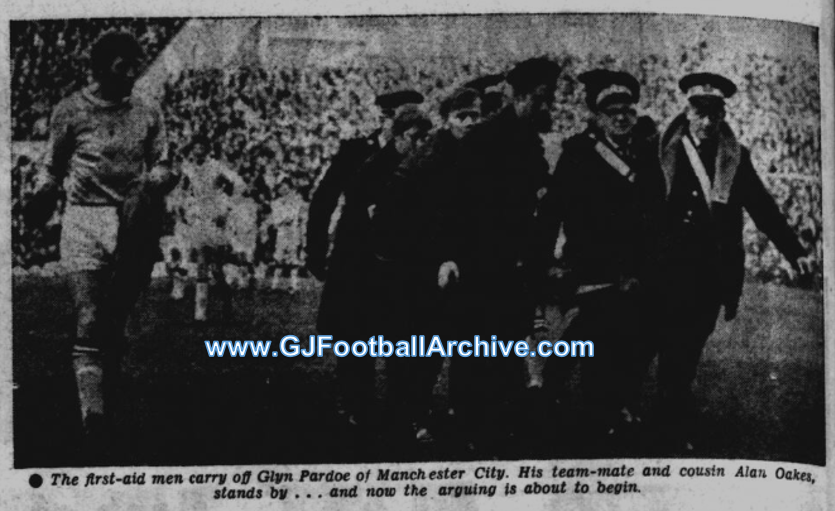
Pardoe’s Derby Injury!

Glyn Pardoe came close to having his leg amputated on this day (12 December) in 1970 following a foul by George Best in the Manchester derby at Old Trafford. I interviewed Pardoe about his career in 2004 and here for subscribers are his views of the tackle and subsequent injury, together with a few contemporary articles from 1970. It became one of the most controversial derby moments of all time and arguments raged for years on whether it had been a deliberate act or not. You can be the judge by reading Pardoe’s views and the contemporary media.

Subscribe to get access – Annual

Read more of this content when you subscribe today. Annual subscribers pay £20 per year to access all material posted since December 2020 and all articles throughout the life of their subscription. Monthly subscribers pay £3 per month (see below).

Subscribe to get access – Monthly

Read more of this content when you subscribe today. Monthly subscribers pay £3 per month to access all material posted since 1st October 2022 and all articles throughout the life of their subscription. Annual subscribers pay £20 per year (see above).

You can read more about the game itself here:

A Derby Hat-trick

A Derby Hat-trick

On this day (12 December) in 1970 a hat-trick from Francis Lee (this was City’s last hat-trick in a derby until Haaland and Foden in 2022!), together with a goal from Mike Doyle, gave Manchester City a comfortable 4-1 victory over Manchester United before an Old Trafford crowd of 52,636.  That victory meant City had won 5 and only dropped 4 points in 8 consecutive League derby meetings with the Reds. There was also a devastating injury to Glyn Pardoe (more on that in another post!). Here is the background, report and verdict of that game…

Subscribe to get access – Annual

Read more of this content when you subscribe today. Annual subscribers pay £20 per year to access all material posted since December 2020 and all articles throughout the life of their subscription. Monthly subscribers pay £3 per month (see below).

Subscribe to get access – Monthly

Read more of this content when you subscribe today. Monthly subscribers pay £3 per month to access all material posted since 1st October 2022 and all articles throughout the life of their subscription. Annual subscribers pay £20 per year (see above).

Dowd Joins Oldham

On this day (1 December) in 1970 Manchester City’s 1969 FA Cup winning ‘keeper Harry Dowd joined Oldham Athletic. Dowd had achieved a great deal at City over the years, including scoring a goal. You can read about that goal here: