Covid and the 2021 League Cup Final

How time flies! Today marks the anniversary (April 25) of the 2021 League Cup Final between Manchester City and Tottenham. It was the first (and only) League Cup Final played during any form of Covid lockdown in England. The 2020 final had been the last major final played in the country before the pandemic led to various lockdowns and then the continuation of football without fans.

Some football clubs, including Tottenham, had been allowed to have a limited number of supporters at their home games during the early stages of the 2020-21 Premier League season, but Manchester City had not as they were in a regional tier that prevented crowds. So, for many of us, the last physical game we attended was the 2020 League Cup final (some City fans did of course attend the 1-0 FA Cup victory at Sheffield Wednesday on March 4 and the Old Trafford derby of March 8 2020).

In the period between our last ‘live’ match and the 2021 League Cup final we had to sit at home watching City’s games played in empty stadia or, occasionally, at grounds with a small number of fans in but never with any ordinary City fans in. Former City star Mike Summerbee, the club’s ambassador, would often be seen, masked-up, at games when TV camera crews recognised him and it was always nice to know there was at least one person steeped in MCFC history there.

When the announcement came that the delayed League Cup Final (it was postponed until April in the hope that fans could attend) was to have up to 8,000 fans at Wembley there were then several dilemmas for fans. This was to be a test event and almost 2,000 tickets were to be issued to each competing club, which fans would have to pay for, and 4,000 would be given away to residents around Wembley and some NHS staff. 

Many fans felt it was unfair that Wembley residents would be given tickets (each could apply to bring a guest too) while fans paid and there were the usual concerns about balance of support – would the fact that tickets were to be given to local residents benefit Spurs for example? 

Most fans had no issue with NHS staff being given tickets with some Blues suggesting that NHS staff (and other key workers) who were season ticket holders of the two clubs should be offered the tickets. Lots of other suggestions were made plus, of course, some fans felt it would only be appropriate to attend a major game like this when ALL fans would be allowed back, though that still seemed some way off in April 2021.

To attend the final Manchester City used their loyalty points system and cup scheme as usual but then there was an added layer where fans had to live in certain postcodes: M, SK, BL, OL, WA, WN, PR, FY, BB, LA, CH, CW, BD, HD and HX​ and Greater London. In addition we had to have covid tests in the build-up to the final, including a lateral flow test that had to be performed at a test centre after 1.30pm on the Saturday before Sunday’s final. 

This was difficult for many to arrange as, for example, some of the councils within the postcodes allowed did not have test sites available at weekend. Some booked to have tests close to Wembley, which caused some logistical issues on cup final day, and others had to travel in to Manchester on the Saturday. Inevitably, some did not get negative tests back in time and missed out.

Those lucky enough to get hold of tickets also had to state their method of travel with a limited number of car parking spaces meaning that option simply was not available for some fans. Specific coach and train travel was set up but the costs were prohibitive for some. Others pointed out their concern that once the trains arrived at Euston (or Watford) there would still be a need to travel to the stadium itself. To some this negated the need for travel on specific trains or coaches, but of course the conditions had been imposed by the Government and footballing authorities, not by the competing clubs.

At the stadium on match day the surrounding area seemed full of shoppers trying to pick up a bargain at the retail store but fans seemed few and far between. The photo above (Wembley Way looking towards the stadium) was taken about one hour before kick off. This would normally be packed at this time.

Close to the stadium the Wembley Way ramps that used to carry people up to the stadium have been demolished and a series of steps have been erected instead. Fans had to show their lateral flow test results, tickets, and photographic ID before being allowed up the steps to the stadium. They had to queue at these checkpoints and then, once they’d been allowed through they could make their way up to the stadium turnstiles. They were discouraged from waiting outside the stadium and were encouraged to go to the turnstile.

In previous years drinks had been allowed into the stadium if they were in plastic bottles and the lids were removed. This year no drinks, not even water, were allowed in the stadium, but staff did allow fans to carry in plastic bottles (without lids) as there were water fountains inside (typically positioned near the disabled toilets) and these could be filled up there. This is well worth remembering if you need to have drinks for medical purposes but do not want to pay Wembley’s expensive prices.

In the stadium bars and catering outlets were open as usual and while there was a considerably smaller number of fans within the concourse area, social distancing was not particularly in evidence. Having said that all fans had been tested but supporters were unclear whether Wembley staff, security, stewards and so on had been tested. 

In the bowl of the stadium all fans had been positioned in the same stand plus the corners. This was the stand containing the Royal Box and directly opposite the TV cameras. The cynic would suggest that this demonstrated, as always, that some think the TV spectacle is more important than those in the stadium. Surely congestion in the toilets and other areas could have been eased had fans been spaced out in a wider area, or even if they’d have chosen blocks around the stadium with perhaps Spurs fans on one side or end and City in the opposite stand? If it’s pure safety then that would be the logical thing to do.

In the seats we were positioned predominantly in alternate seats with the row behind and in front of us following a pattern which was supposed to mean that there would be no one directly in front or behind of you. As some fans were in groups/families who had travelled together they sometimes moved next to others in their group on the same row – officially we were told that wasn’t allowed but inevitably it happened (we all wanted to be next to the people we’d gone to the game with and didn’t want the seat gap) and no one tried to stop it. 

During the game stewards regularly reminded fans that they had to wear face masks throughout – from the moment we had shown our test results and tickets through to leaving the stadium after the presentations we had to be masked up. Of course, when eating or drinking masks were lowered.

Throughout our time in the bowl of the stadium fans would be moving along the rows to their places, and so social distancing was not possible at those times.

After the game we were free to leave en masse if we wanted. As City won the cup most City fans stayed for the presentations and left at various points during the celebrations, meaning there wasn’t a crush to get out. Spurs fans seemed more keen to leave of course, but whether this caused any issues I do not know. Presumably, social distancing is impossible to manage when an entire section chooses to leave at the same time.

If you were one of the lucky ones who had managed to get a car parking space it was refreshing to travel away from Wembley without the huge traffic jams we normally experience. There were roadworks and a few problems on the motorway but nothing like normal.

So, that was the general experience of attending as a Manchester City fan at the first game we’ve been allowed to attend as City fans in over a year. It’s not the story of the game but I hope it gives an idea as to how the crowd management happened.

Several years on this experience now seems alien again but back then it was refreshing to be able to actually attend a game.

Oxford’s First and Last

On this day (24 April) in 1948 goalkeeper Ken Oxford made his first appearance for Manchester City’s first team when the Blues faced Arsenal in the League. Oxford kept a clean sheet as City drew with the eventual champions. Sadly, for Oxford his opportunity to play in City’s first team was limited due to the incredible exploits of England captain Frank Swift – displacing Swift was an impossibility!

The Oldham born player never got chance again to appear in City’s first team and at the end of December that year he moved to Derby County after making just 1 first team appearance at Maine Road. He had appeared in reserve games too of course.

His career saw him make 128 League appearances for Norwich and 151 for Derby amongst other clubs. This newspaper cutting from October 1977 is an interview with him and Swift inevitably gets a mention.

The 1930s: The League Championship Arrives

On this day (24 April 24) in 1937 Manchester City won the Football League for the first time. Here, for subscribers, is the story of that game and the way the club celebrated…

Subscribe to get access

Read more of this content when you subscribe today. It costs £3 per month (cancel any time) or sign up for a year at the discounted rate of £20 (works out about £1.67 per month). If you’re wondering what you can access then why not sign up for a month and see what you think? More details via the link below.

The 1900s: Manchester’s First Major Trophy Success

On this day in 1904 (23 April) Manchester City won its first major trophy a mere decade after being established as MCFC. The captain and goalscorer was, of course, the great Billy Meredith.

A few years back, following the purchase of the oldest surviving FA Cup by Sheikh Mansour (to loan to the National Football Museum) I helped Manchester City with the story of the cup and its significance to Manchester. They’ve produced a video telling the story and it can be viewed here:

https://www.mancity.com/citytv/mens/manchesters-first-trophy-1904-fa-cup-documentary-63745781

City chairman John Chapman used City’s success as part of his political campaign.

For more on the significance of this FA Cup trophy check out the category 1903-04 in the drop down list below.

The 1890s: Manchester’s First National Success

On this day (April 22) in 1899 Manchester City became the first side to gain automatic promotion when they won the Second Division title after a 4-1 victory over Blackpool. Goals from Meredith (2), Gillespie and Ross gave the Blues the win.

A series of test matches, similar to play offs, had been utilised in previous seasons. The Blues were also the first of the Manchester teams ever to earn promotion and the football season ended with Manchester City as comfortable champions of the Second Division. This meant they were the first Manchester team to win a national League competition too. 

Near neighbours Glossop were also promoted that day. Here’s the final table:

Subscribers can read about the final game and other information from that season below:

Subscribe to get access

Read more of this content when you subscribe today. It costs £20 a year (here) to access everything since December 2020 or for £3 per month (below) you can access everything from 1 October 2020.

Subscribe to get access

Read more of this content when you subscribe today. It costs £20 a year (above) to access everything since December 2020 or for £3 per month (here) you can access everything from 1 October 2020. Why not join for a month and see what you think?

Foe Scored in Maine Road’s last MCFC victory

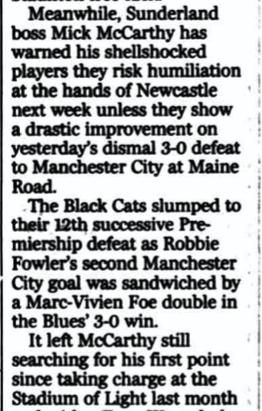
On this day (April 21) in 2003 a goal from Robbie Fowler and two from Marc-Vivien Foe brought a 3-0 Manchester City win over Sunderland.  The game became significant as it was to be the last City victory at the old stadium and Foe’s 80th minute goal was the last scored there by a City man. 

Understandably, during 2002-03 the focus for many Manchester City fans was Maine Road’s final season, especially the final month or so of the season. With every game at the stadium a sell-out – only the size of the away support varied – supporters were desperate for the final season to see the old venue at its best.  They also wanted a few memorable results in those final weeks.  

Ultimately, the Sunderland game was the best Maine Road match of the final weeks.

Pre-match Sunderland presented the Blues with a rose bowl commemorating their final visit to the stadium.  Significantly, the time span between their first appearance at Maine Road and their last was greater than any other visiting club. Co-incidentally City’s last victory at Hyde Road was also against Sunderland in April. You can read about that game elsewhere on my website.

21/4/2003 MCFC 3 Sunderland 0, Attendance 34,357

The 1980s: Clements & Tolmie

On this day (20 April) in 1985 – Kenny Clements and Jim Tolmie helped Manchester City to a 2-0 home victory over Sheffield United in Division Two.  That victory kept the promotion challenge alive, although a few nerve-wracking moments came during the final weeks of the season.

You can read more on that 1984-85 season in this 2,600 word feature. Enjoy!

Subscribe to get access – Monthly

Read more of this content when you subscribe today. It costs £3 per month (cancel anytime) to access everything posted since 1 October 2022 or there’s a special annual rate below which gives greater access and works out much cheaper.

Subscribe to get access – Annual

Read more of this content when you subscribe today. It costs £3 per month (above) or £20 a year (here) to access everything posted since the site was created in December 2020. This special rate works out about £1.67 a week and gives access to everything posted, including PDFs of 3 of my books.

If you’d like to know more about subscribing then see:

Tomorrow’s feature is on the 1985-86 season. If you missed the earlier features then start here:

The 1980s: 1980-1981 Gow, Hutchison & McDonald

The 1980s: Victory Over Bristol City

On this day (19 April) in 1980 Kaziu Deyna, Michael Robinson, and Dennis Tueart all scored form Manchester City as Bristol City were defeated 3-1 in this top flight game. You can watch film of the City goals here:

Subscribers can access everything on this website, so if you want to know more on this season for Manchester City Football Club then why not subscribe and read it all? You could even subscribe for a month and see what you think. The following 4,220 word article is on the 1979-80 season and is available to subscribers below. Enjoy!

Subscribe to get access – Monthly

Read more of this content when you subscribe today. It costs £3 per month (cancel anytime) to access everything posted since 1 October 2022 or there’s a special annual rate below which gives greater access and works out much cheaper.

Subscribe to get access – Annual

Read more of this content when you subscribe today. It costs £3 per month (above) or £20 a year (here) to access everything posted since the site was created in December 2020. This special rate works out about £1.67 a week and gives access to everything posted, including PDFs of 3 of my books.

If you’d like to know more about subscribing then see:

Manchester Home To A League First & Myth Busting

On this day (17 April) in 1888 the first meeting of the Football League was held in Manchester. The following report names the clubs accepted and the others who wanted to join the League. It has often been written in Manchester United related books that Newton Heath applied to join the League in 1888 but didn’t receive enough votes to be accepted. That is completely untrue as no one actually had to apply nor was a vote taken. Clubs were asked and some tried to push to get included but Newton Heath were neither asked nor were they pushing for acceptance either. Nor were Ardwick or Manchester Asoociation who, to be frank would’ve been the most famous Manchester club at this time.

Bolton Wanderers were the only team from present day Greater Manchester to be asked/selected for the first League season.

Manchester Courier, 18 April 1888

The plaque is positioned on the corner of Mosley Street and Market Street/Piccadilly in Manchester.

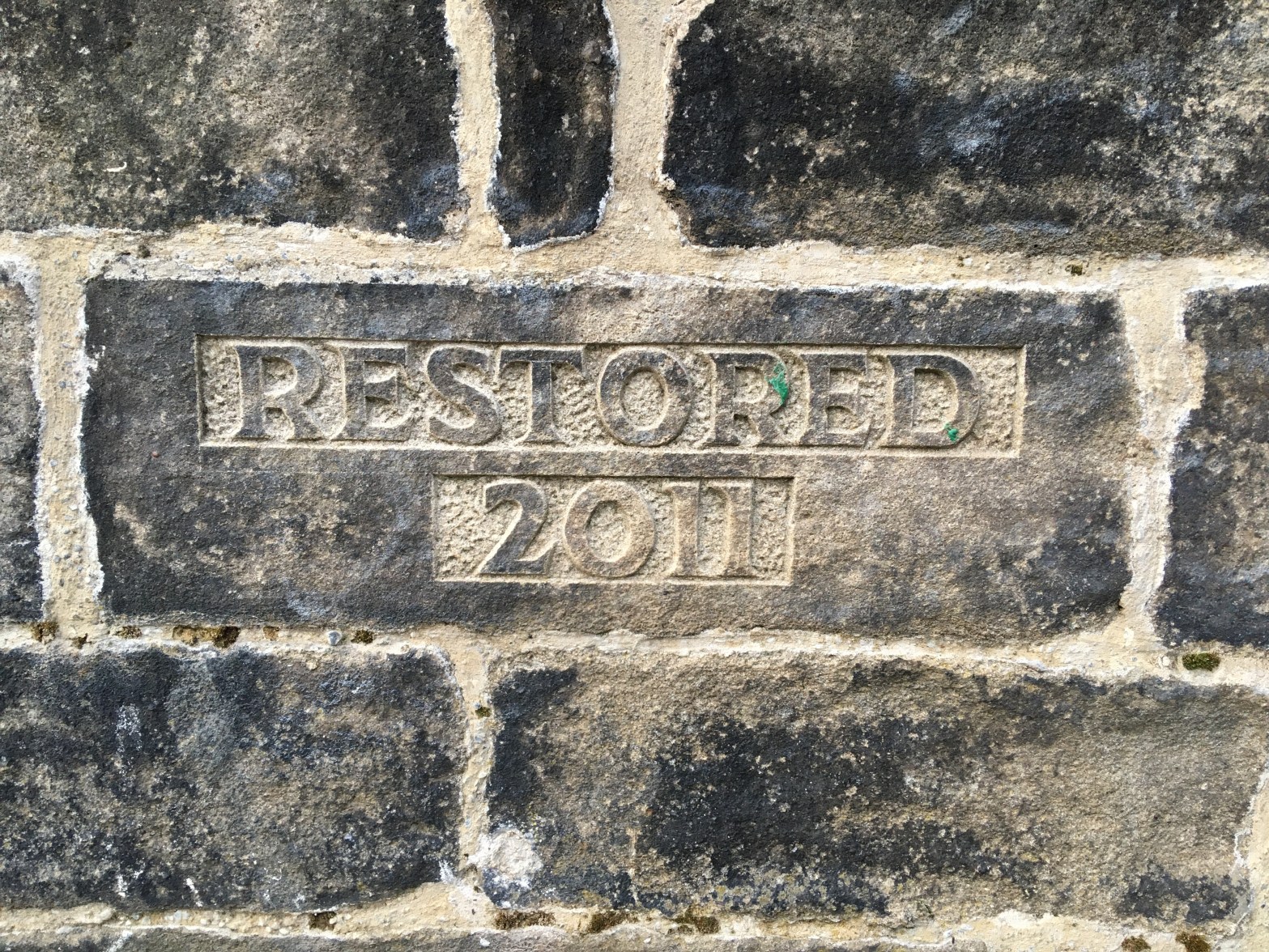
Restored 2011: The All-Manchester FA Cup Semi Final

On 16 April 2011 Manchester City faced Manchester United in the FA Cup semi final. A few years back I produced Restored 2011: The All-Manchester FA Cup Semi Final and as we build up to another FA Cup semi final weekend involving both Manchester clubs it’s well worth reminding ourselves of this time.

This special 1 hour audio recording looks at the game and the years between City’s 1976 League Cup success and the FA Cup glory of 2011. The 2011 semi-final was a crucial step in City’s journey since the 2008 takeover and I felt it was vital to do a special marking this.

So what’s in this special recording? Well, I’ve included exclusive material from interviews and recordings I’ve done over the years with Garry Cook, Brian Marwood, Roberto Mancini, Peter Barnes and Peter Swales.  Why Swales? Well, have a listen and you’ll hear why. Basically though I’m trying to set the tone for why the 2011 FA Cup semi final victory and overcoming Manchester United was so significant.

On Mancini… I include a few words from him recorded in 2011 and at one point he talks about the view that was then being expressed that City were ‘trying’ to buy success (now they say City ‘have’ bought success!). His words are a reminder that City have been having that particular criticism thrown at them for over a decade! Oh well, I wonder how long those criticisms were laid at other clubs who had seen major investment which propelled them forward?

Anyway, get yourself a brew and be prepared to be transported back in time. Here’s the recording:

If you enjoy the recording then please let me know, comment or subscribe to the site. If it’s of interest then, over the coming months and years, I’ll produce others like this highlighting key points in Manchester City – and Manchester’s – footballing history. It costs £20 a year to subscribe (it works out £1.67 a month) or £3 if you’d like to sign up a month at a time to get full access for as long as you subscribe (you can always try it for a month). It’s worth bearing in mind that the 2010 Manchester A Football History cost £24.95 and all subscribers will be able to access all of that for as long as they are a subscriber (plus all the other stuff of course). You can subscribe below.

Subscribe to get access to the full site

£20 per year to access everything

Match Stats for the 2011 FA Cup Semi-final

City 1-0 United (HT 0-0)

Yaya Toure 52

City: 25 Hart 04 Kompany (yellow card), 05 Zabaleta (yellow card), 13 Kolarov, 19 Lescott, 11 Johnson (Wright-Phillips 79), 18 Barry, 21 Silva (Vieira 86), 34 De Jong (yellow card), 42 Y Toure, 45 Balotelli (yellow card). Substitutes 12 Taylor, 38 Boyata, 07 Milner, 08 Wright-Phillips, 24 Vieira, 10 Dzeko, 27 Jo

United: 01 Van der Sar, 03 Evra, 05 Ferdinand, 15 Vidic, 22 O’Shea (Fabio Da Silva 84), 13 Park Ji-Sung, 16 Carrick, 17 Nani, 18 Scholes (red card), 25 Valencia (Hernandez 65), 09 Berbatov (Anderson 74). Substitutes 29 Kuszczak, 12 Smalling, 20 Fabio Da Silva, 08 Anderson, 28 Gibson, 07 Owen, 14 Hernandez

Referee: Dean

Attendance: 86,549