Great news! The plaque honouring the Manchester Corinthians will be unveiled in a few weeks time. To ensure we get as many former Corinthians and Nomads players there as possible can you please get in touch if you played for the team or if a close member of your family did?
We’re particularly looking for women who played for the Corinthians while they were based at Fog Lane Park.
Please use the comments area or email me at gary@GJFootballArchive.com with details of when you/they played and name at time of playing (if it’s changed). Thanks.
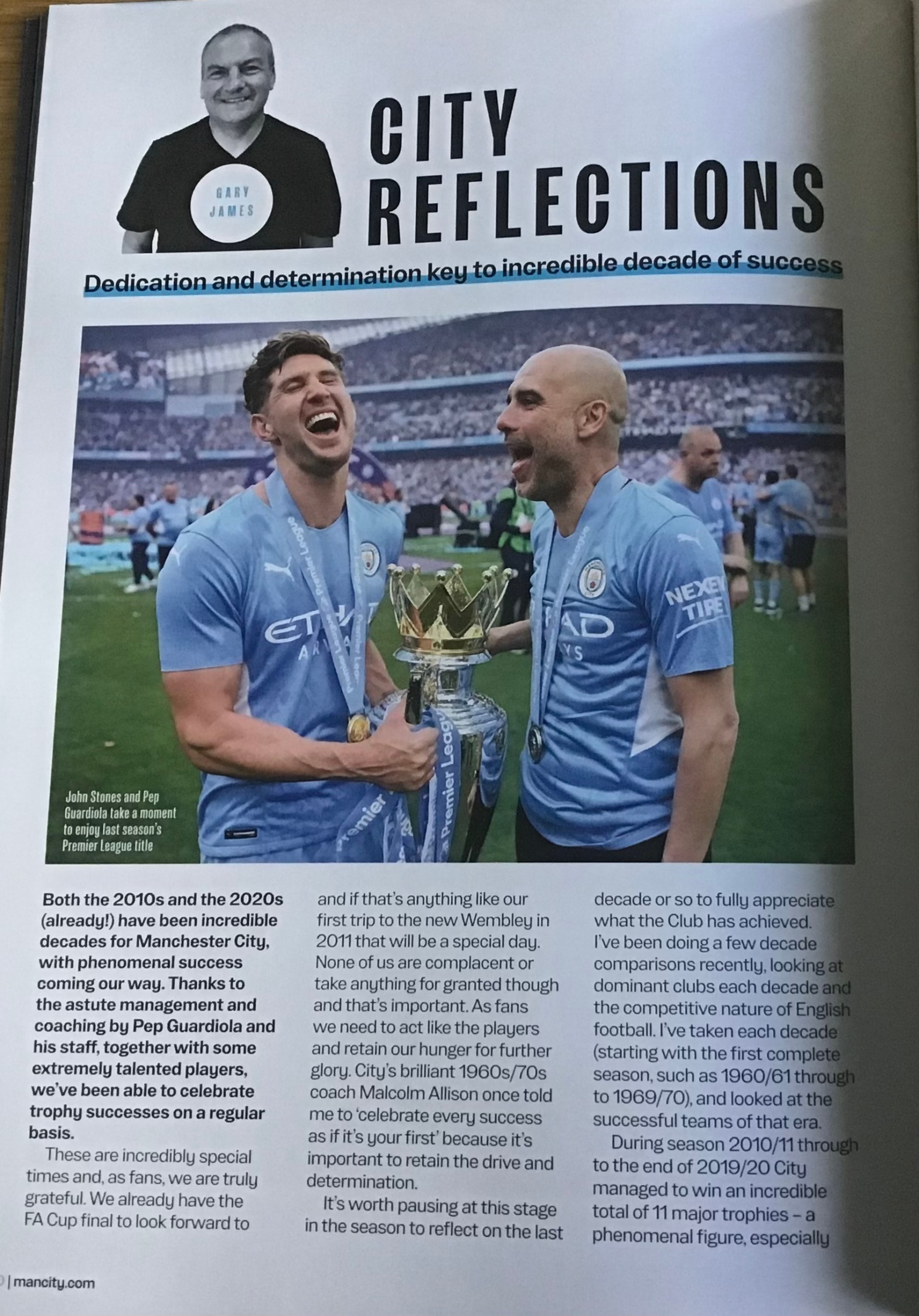
I’m delighted to say that I’ve been asked to write for the Manchester City match programme again this year. This time I’ll be doing a feature on each of the seasons City have spent at their current home. It won’t be chronological – I’ll vary the seasons each game – but I do start this weekend with the 2003-04 season. I’m looking forward to it developing over the season.
This season will see the 30th anniversary of my first article in the MCFC match programme. It was a piece on the history of the Kippax Stand for a special pull out section of the programme for the final game of the 1993-94 season (the last in front of the old Kippax). After that I was asked later in the decade to fill in for City’s historian/statistician John Maddocks on occasion. It meant the world to me when John put my name forward to Polar Publishing to cover for him during a period of ill health. John trusted me to keep up the excellent work he’d been doing since the 1980s and I wanted to make sure I delivered to his standards and that of publisher Julian Baskcomb.
Eventually, following John’s death I was asked to continue writing for the programme throughout the 2000s. Many years ago I was dropped (and quickly reinstated thanks to some moving letters & emails to the person responsible from fans) and some competitions (typically FA Cup & League Cup) do not always have my feature in them, but other than odd programmes I have been fortunate to write my own feature every season for about 22 seasons (apart from that season when Covid meant a programme was not physically printed).
Thanks to Reach for asking me again but mostly thanks to those who read my programme articles and have helped over the years. I’m always amazed when I hear that someone has enjoyed my articles, so thanks. It means a lot and here’s hoping this next season is successful both for the articles and for City of course (what am I talking about – it already is successful for City! Another European trophy! Nice work Blues!).
In the aftermath of Manchester City’s 2023 Champions League success I hoped to find a Blue who had been to both the 2023 final and the club’s previous European trophy success in 1970. I was eventually contacted by Colin Smith who did go to both (and he also went to Porto in 2021 too!) and we decided to have a chat about it. We ended up talking for about one hour comparing the finals and discussing Colin’s trips both as a youngster in 1970 and then as a grandfather in 2023.
The interview took place a while ago and at that time Colin had been to three MCFC European finals. Since then of course he has also been to Athens to watch City win the Super Cup too.
You can now hear our interview here. It’s well worth a listen, especially if you’re a fan who didn’t get chance to go to those finals. Here goes:
1970 ECWC
I hope you enjoy the interview. I have other interviews (both audio and written) here on my website available to subscribers, so why not subscribe? Details here:
For Day 92 of the Maine Road 100 countdown I’m taking a look at the history of the Kippax Stand… Enjoy!
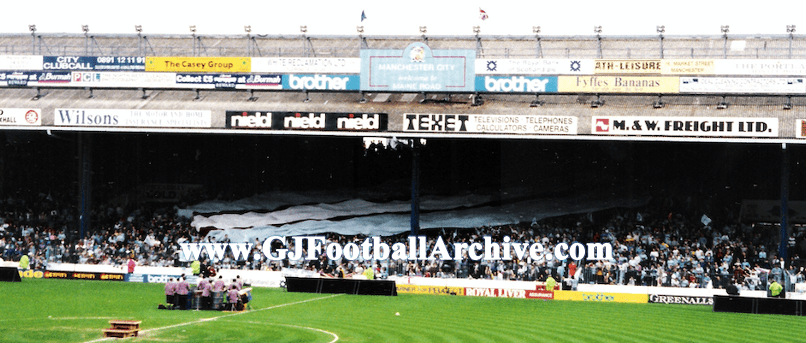
2024 will mark 30 years since we said goodbye to the terraced Kippax Stand and for those of us old enough to remember those days at Maine Road that stand, above all else, represented the passion fans had for their club.
Unlike most other grounds City’s main terracing ran the full length of the pitch and wasn’t tucked away behind a goal. Because of its positioning the Kippax breathed life into every area of the stadium and was huge. Originally, it held in excess of 35,000, but even in its final days it still gave the impression of power and passion.
The Kippax was originally known as the Popular Side, matching a similarly dominant feature of the Blues’ Hyde Road ground, when it opened in 1923. That first season it held an estimated 35,000 in a crowd of 76,166 – then a national record attendance for a club ground. In 1934 when 84,569 packed into the stadium City’s vast stand may well have held almost 40,000. Incidentally, that 84,569 became the new national record attendance for a club ground (a record that still stands as Wembley is a national stadium, not officially a club ground). You can read about that crowd and game here:
Incidentally, I know City fans get a lot of abuse these days from fans of certain other clubs about filling stadia etc. Well, if you need any ammunition that 84,569 record crowd is over 22,000 higher than Liverpool’s record crowd (61,905 – a figure which wouldn’t get anywhere near City’s top ten crowds!).
Throughout the period up to the mid-50s the Popular Side developed its reputation but it was when it was roofed in 1957 that it became the true heart of the club. Back then it was extended slightly, although legislative changes had reduced terracing capacities by this time. The club announced it would be known as The Kippax Street Stand and that is what it officially remained until 1994 although most of us knew it simply as The Kippax. Its capacity by this time was about 32,000, reducing to 26,155 by the end of the 1970s.
The Kippax accommodated fans of every age and gender and, although it was a formidable place for opposition supporters, it was a welcoming stand for Manchester’s Blues. Young children would sit on the walls and railings, while older fans would find their own preferred viewing spot. Here’s a few snippets about the old stand:
Originally four vast tunnels (one in each corner and two built into the stand) and two significant stairways allowed fans to move onto the Popular Side.
A flag pole, positioned at the back of the terracing up to 1957, allowed a blue and white flag emblazoned with the words City FC to proudly fly. The flag was then re-positioned until it disappeared for good in the 1960s. See:
Chanters Corner, also known as The Sways, was the area where the more vocal members of City’s support gathered. Packed above a tunnel and next to the segregation fence, fans here often generated the main chants.
The 1960s saw The Kippax’s reputation grow. Fans sang their way through success after success as Joe Mercer’s Aces won the European Cup Winners’ Cup and every domestic trophy possible. The Kippax would begin every game with the chant “Bring on the Champions!” and then follow up with a song for every player as they warmed up.
The final capacity of The Kippax was 18,300 – making this the largest terraced area at a League ground on its final day (The Kop held its final game on the same day but had a smaller capacity).
The Kippax was used for the last time on 30 April 1994 for the visit of Chelsea.
The Blue Print flag was a popular presence on many match days from the late 1980s until 1994, making its last appearance at The Kippax’s final game. The flag had been reduced in size by then. But it still covered much of the terracing. Blue Print was a City fanzine and they had paid for the flag.
Segregation was unnecessary for most of the stand’s existence, but by the end of the 1960s a rope would often be used to separate City and United fans on derby day. This was replaced by permanent barriers in the mid-70s which were increased over the years to keep home and away fans apart. Away fans were positioned at the Platt Lane end of the stand by this time.
It says much about the passion of the place that in the late 1970s the BBC came to film The Kippax chanting and in full flow.
In 1985 when City defeated Charlton 5-1 in a promotion decider on the final day of the season the Kippax was so packed that supporters remain convinced that its official capacity of 26,155 was significantly exceeded. Those of us on the terraces that day will never forget the shock we all experienced when the official crowd of 47,285 was announced – some 5,000 short of capacity!
The Kippax is no more, but those of us who experienced the stand will never forget its power, passion and presence. Its spirit lives on with thousands of Blues who stood there now bringing their own children and grandchildren to the Etihad who, if legislation allows, will soon be able to stand in a section specifically created for that purpose.
If you’re interested you can read how Maine Road got its name here:
While you’re here I’d like to thank you for taking the time and trouble to visit my website. I am not employed by anyone and no one pays me to do research or interviews. I do not have sponsorship or advertising either. I’ve set up this website to help share my 32 years plus writing and research. The intention is to develop the archive and to provide access to as much of my material as possible over the coming weeks, months & years. Subscribers can already access over 280 articles/posts including the entire Manchester A Football History book and audio interviews with former City bosses Malcolm Allison and John Bond.
It costs £20 a year (it works out £1.67 a month) or £3 if you’d like to sign up a month at a time to get full access for as long as you subscribe (see below). Thanks for the support, Gary.
Subscribe to get access – Annual
This has been a sample of the material on http://www.GJFootballArchive.com If you would like to read all the in-depth articles and listen to the audio interviews then please subscribe. It works out about £1.67 a month if you take out an annual subscription (£20 per year). Each subscriber gets full access to the 1000+ articles posted so far and the hundreds scheduled to be posted in the coming weeks.
This has been a sample of the material on http://www.GJFootballArchive.com If you would like to read all the in-depth articles and listen to the audio interviews then please subscribe. It works out about £3 a month if you take out a monthly subscription (cancel anytime; access everything since 1 October 2022).
For Day 91 of the 100 day Maine Road countdown until the centenary of City’s old stadium is a flashback to one of the earliest seasons for the old place. In particular I’m talking about a remarkable City victory against Crystal Palace in the FA Cup, way back in 1926. Why is this significant? Well, it was possibly the first season or at the least the prime example of a season when the old phrase ‘Typical City!’ was first established. Fortunately Typical City rarely raises its head these days but back in 1925-26 it was very much to the fore. Read on for more…
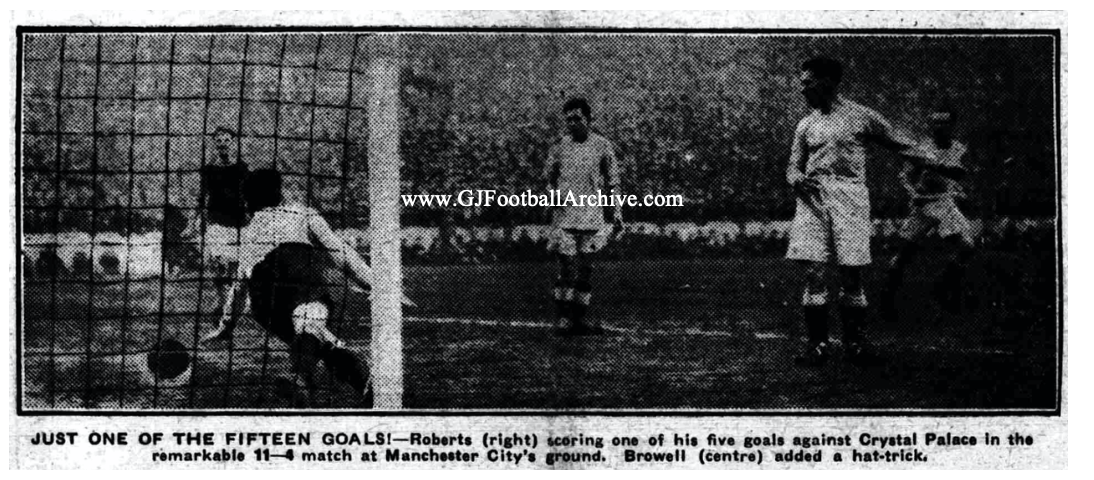
City hadn’t had a manager since November 1925 (believing instead that vice chairman Albert Alexander could lead the other directors in selecting the team) and were struggling in the League when the Blues played a FA Cup fifth round tie against Crystal Palace on 20 February 1926. The tie turned out to be a fifteen goal thriller with City in rampant form.
By half-time the score at Maine Road was 7-0 to the Blues, but Palace would not give up and quickly pulled back four goals. City were knocked out of their period of complacency and soon found their goalscoring touch again.
By the end it was 11-4 and, according to a number of spectators present on the day, Manchester fans rushed on at the final whistle and carried off the Palace ‘keeper Callendar shoulder high. It’s the sort of thing City fans would do back then! Apparently he had played extremely well and, somehow, managed to keep the score down, although one cannot help wondering if he’d have been given such a reception had the scores been reversed.
Frank Roberts was the City star for this particular game, scoring a remarkable five, while Tommy Browell also earned a few plaudits with his hat-trick. Browell had been ill for most of the week and had been unable to train.
With no management and such a miserable time in the League, no one could believe how City had been able to deliver such strong cup performances.
Remarkably, film of the game has survived and can be viewed here:
It’s day 90 of my 100 day countdown to Maine Road’s centenary and today’s feature is about a mysterious abandonment of a Manchester City match at Maine Road. On 7 January 1956, with the score at 1-1 City’s cup tie with Blackpool was abandoned in the 56th minute after fog enveloped the ground. The game was an extraordinary one with City fans angry that it had ever started. In thick fog the referee H Webb (no not that one!) of Leeds said the game should go ahead because, although those in the stands could see little, he claimed he could see both ends of the pitch. So much for consideration for fans!
Blackpool kicked off to start the game but City were unable to see what was going on unless they were close up to the ball. Within 13 seconds Ernie Taylor, who later signed for Manchester United of course, scored without a single City man touching the ball (or even seeing it it seems).
After 37 minutes the players left the field and it looked like the game would be abandoned but, to the shock of the City players (who seemed to want it abandoning according to some reports, though we all know how things can be incorrectly reported), the match restarted.
A longer half-time than usual followed but still the game went on. After eight minutes City’s Jack Dyson was fouled in the area – although only the referee, Dyson and the man who committed the foul seemed to know this at the time. Dyson scored the resulting penalty and then a couple of minutes later referee H Webb abandoned the game (maybe it was that H Webb after all!).
Amazingly one newspaper photograph of the game did appear (above), but apart from that it seems the public didn’t see anything. A cartoon appeared in one ‘paper suggesting that fans only found out what happened when they went home and turned on their radios.
Four days later 42,517 attended Maine Road for a 2.15pm kick off on a Wednesday afternoon to see City win the replayed match 2-1.
If you would like to read more pieces like this then please subscribe below. It works out about £1.67 a month if you take out an annual subscription (£20 per year) or £3 a month if you’d like to sign up for a month at a time. Each subscriber gets full access to the 1000+ articles posted so far and the hundreds scheduled to be posted in the coming weeks.
Subscribe to get access – Annual
Read the exclusive content in gjfootballarchive.com when you subscribe. It costs £20 per year or £3 per month (see below). Annual subscribers get access to everything posted since the site was created in December 2020 and throughout your subscription.
Read the exclusive content in gjfootballarchive.com when you subscribe. It costs £20 per year (above) or £3 per month (cancel anytime). Monthly subscribers get access to everything posted since 1 October 2022 and throughout your subscription.
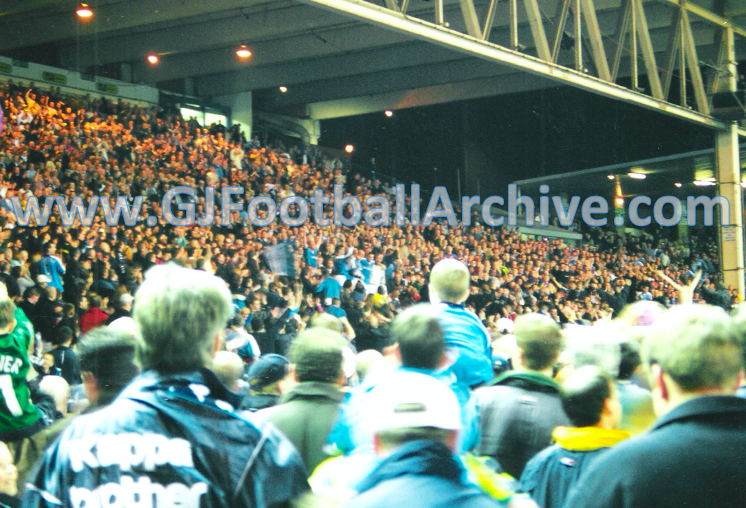
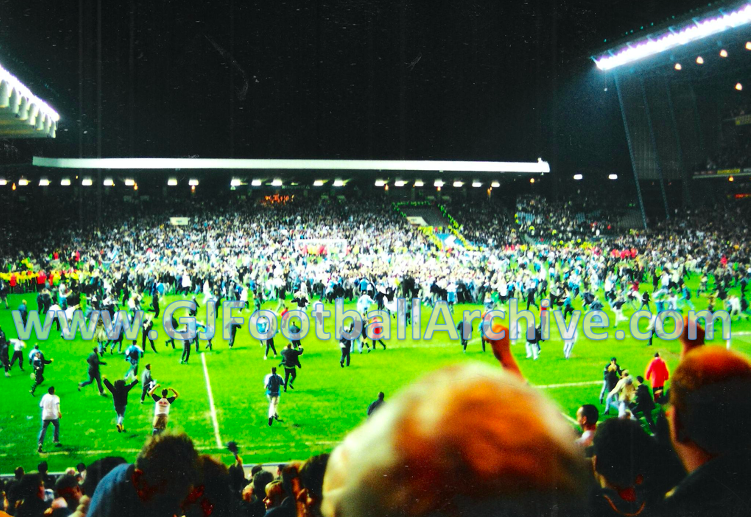
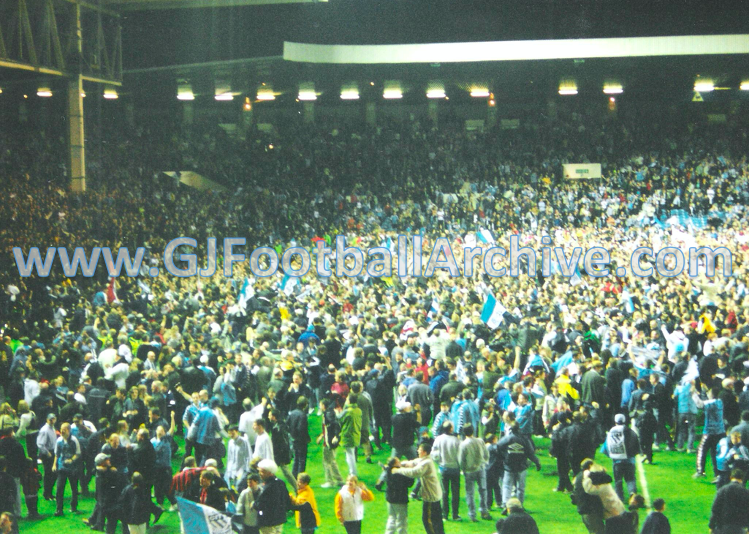
It’s day 89 of my posts counting down to the centenary of Maine Road’s opening game. Today – Pitch invasions! There were lots of celebratory (and some not so celebratory!) pitch invasions at Maine Road over the years. The League title in 1937 saw one, as did promotion games and other matches, such as the 1970 ECWC semi-final victory over Schalke.
The photographs on this post are all from City’s promotion match with Birmingham in 2000 and were taken by me from the Platt Lane Stand.
Promotion pitch invasion v Birmingham 2000Promotion pitch invasion v Birmingham 2000Promotion pitch invasion v Birmingham 2000, looking towards the players in the Main Stand
If you’d like to read more on the history of Maine Road, take a look at Farewell To Maine Road, which can be downloaded from this page:
If you enjoy all the free material on my website and would like to support my research and keep this website going (but don’t want to subscribe) then why not make a one-time donation (or buy me a coffee). All support for my research is valued and welcome. It allows me to keep some free material available for all. Thanks.
It’s day 88 in my 100 day countdown to the centenary of Maine Road. For today here’s an image that needs you to take a good look at. Is this Maine Road or is this a stadium inspired by City’s old ground?
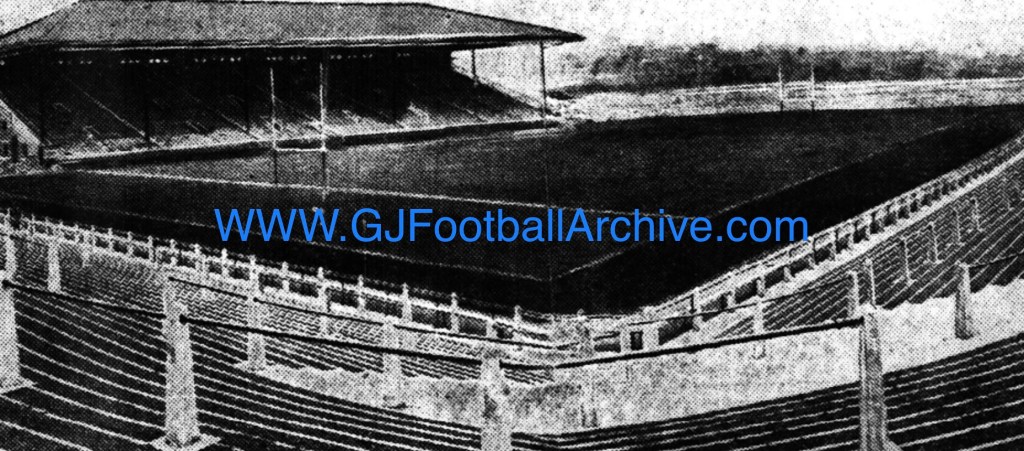
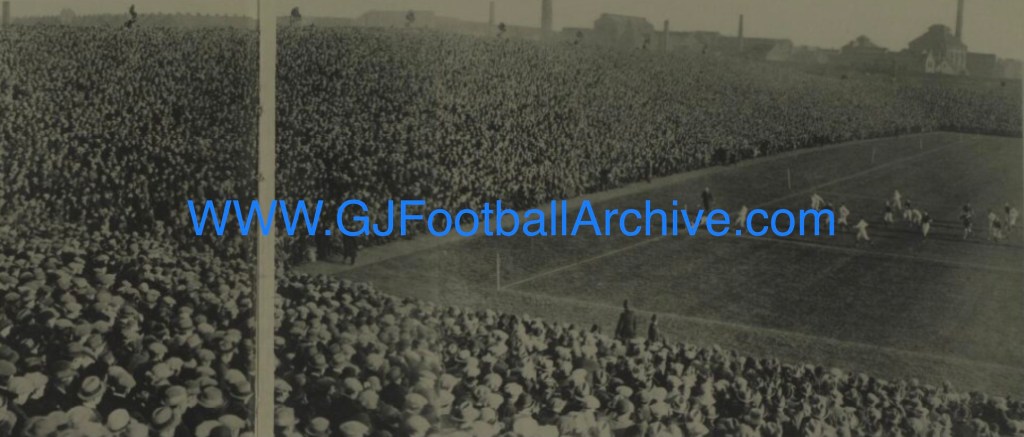
This is an image from the 1920s but it’s not Maine Rd, so why have I included it in a Maine Road centenary piece and where is it?
Well, the answer is…
This is Murrayfield Stadium and believe it or not the stadium was modelled on Manchester City’s Maine Rd stadium. Maine Rd was opened in 1923 and the architects of Murrayfield visited Maine Rd while designing their new stadium, which opened in 1925.
Obviously, there are differences but the general look and style of the place is similar – one huge main stand which didn’t quite go the full length of the pitch (both stands ran about 3/4 of the length of the pitch with a terraced section from stand to corners); a huge, banked terracing opposite which curves down to the corners and two similar sized terraces behind the ends. Have a look at these images from inside Murrayfield in 1925 and see:
Here’s a Maine Rd image from that year too.
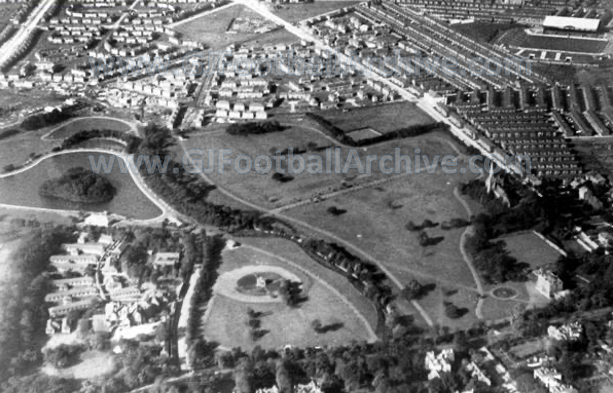
1925 Aerial photo of Maine Road and Platt Fields Park
Roberto Mancini has left his role as Italy’s men’s football manager. Hopefully, he’ll be back in club management soon and maybe in the Premier League too. His contribution to Manchester City’s history is huge and so I think it’s worth reposting this audio special I did a couple of years ago. It’s a special audio recording talking about the years building up to the 2011 FA Cup success brought to City by Mancini. It includes some audio I did with him back in 2011 too. Enjoy this reminder of a time when Mancini helped transform City’s fortunes.
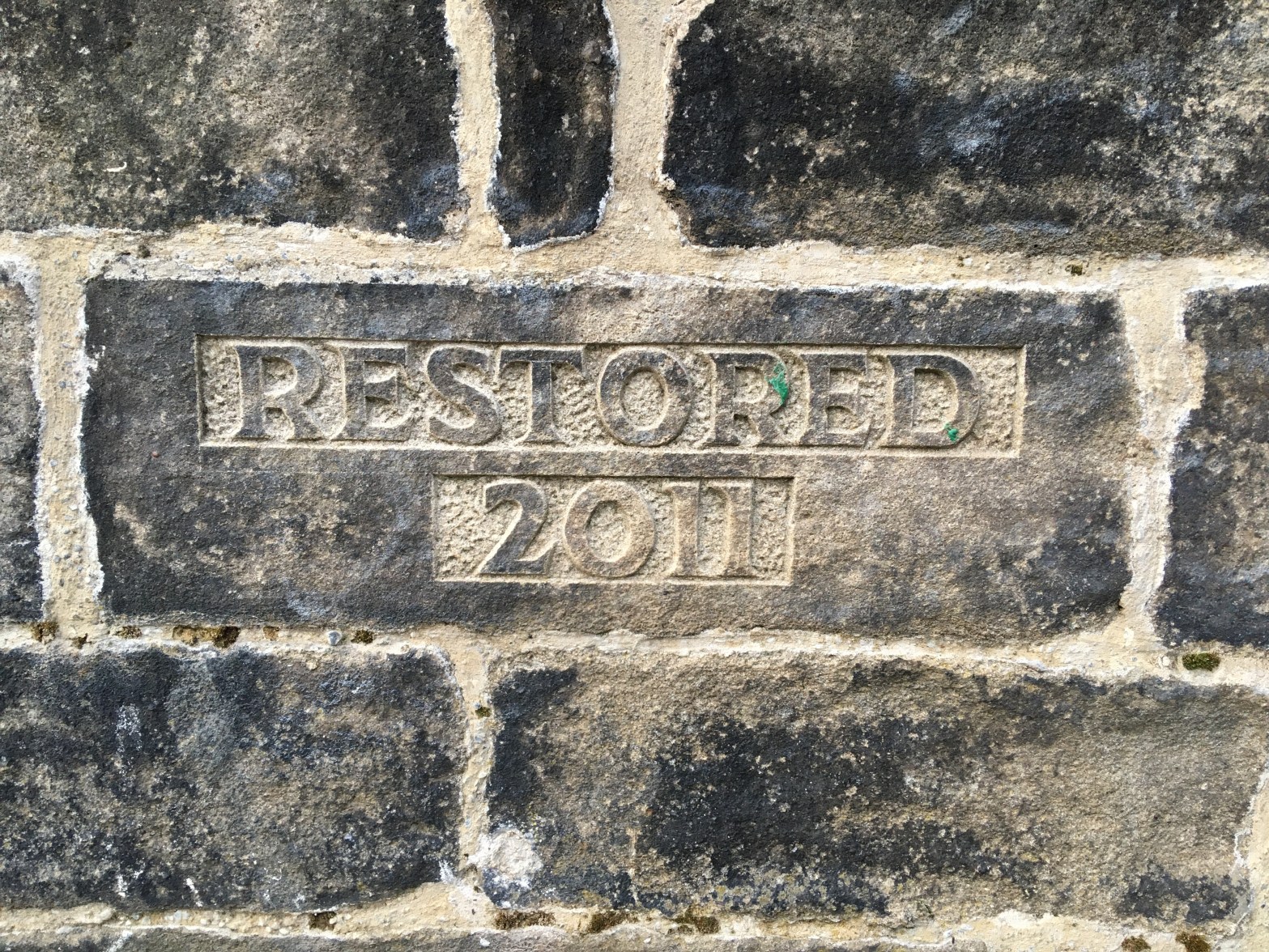
Restored 2011: The All-Manchester FA Cup Semi Final is a special 1 hour audio recording looks at the game and the years between the 1976 League Cup success and the FA Cup glory of 2011. The 2011 semi-final was a crucial step in City’s journey since the 2008 takeover and I felt it was vital to do a special marking this.
So what’s in this special recording? Well, I’ve included exclusive material from interviews and recordings I’ve done over the years with Garry Cook, Brian Marwood, Roberto Mancini, Peter Barnes and Peter Swales. Why Swales? Well, have a listen and you’ll hear why. Basically though I’m trying to set the tone for why the 2011 FA Cup semi final victory and overcoming Manchester United was so significant.
On Mancini… I include a few words from him recorded in 2011 and at one point he talks about the view that was then being expressed that City were ‘trying’ to buy success (now they say City ‘have’ bought success!). His words are a reminder that City have been having that particular criticism thrown at them for over a decade! Oh well, I wonder how long those criticisms were laid at other clubs who had seen major investment which propelled them forward?
Anyway, get yourself a brew and be prepared to be transported back in time. Here’s the recording:
If you enjoy the recording then please let me know, comment or subscribe to the site. I’ve produced videos/talks like this highlighting key points in Manchester City’s footballing history which subscribers can watch.
Subscribe to get access – Annual
Read more of this content when you subscribe today. It costs £20 a year to subscribe (it works out £1.67 a month) or £3 if you’d like to sign up a month at a time. Annual subscribers get full access for as long as you subscribe (you can always try it for a month). It’s worth bearing in mind that the 2010 Manchester A Football History cost £24.95 and all subscribers will be able to access all of that for as long as they are a subscriber (plus all the other stuff of course).
It costs £3 a month to subscribe a month at a time. Why not give it a try! Monthly subscribers get access to everything posted since 1 October 2022 for as long as you subscribe.
If you enjoy all the free material on my website and would like to support my research and keep this website going (but don’t want to subscribe) then why not make a one-time donation (or buy me a coffee). All support for my research is valued and welcome. It allows me to keep some free material available for all. Thanks.
It’s time for post 87 of my Maine Rd 100 countdown and this is a reminder of the day (4 January) in 1975 when Manchester City played ‘away’ at Maine Road against Newcastle United in the FA Cup. The tie should have been played at Newcastle but the FA ordered that the match be played at Maine Road following crowd disorder at St. James’ Park the previous season. City lost the match 2-0.
Were you at this match? If so why not leave your memory as a comment or email it to me for possible future use on this website?
You can read a 1500 article on the 1974-75 season here:








 Gary James' Football Archive