On this day (17 September) in 1910 Old Trafford staged its first Manchester derby and City were even awarded a penalty there too! The penalty was saved and the game ended in a 2-1 United win in front of a crowd estimated to be about 60,000. Here’s a brief match report from that day. Note also the preview for City’s next game at Hyde Road:
This is a rarely seen photo of Stan Bowles celebrating on his Manchester City debut on this day (16 September) in 1967. Bowles scored two that day. I posted the cover from the match programme here last year:
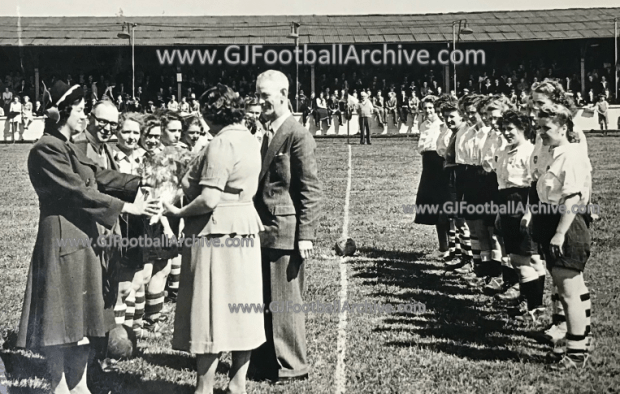
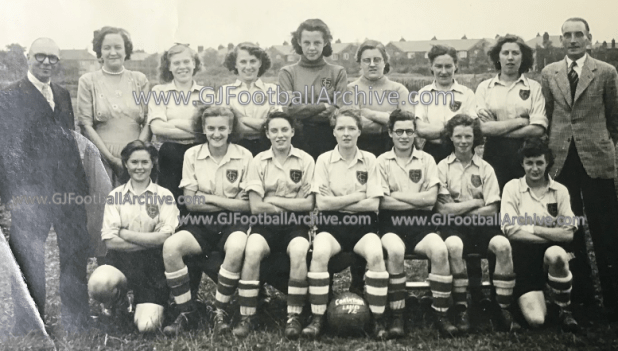
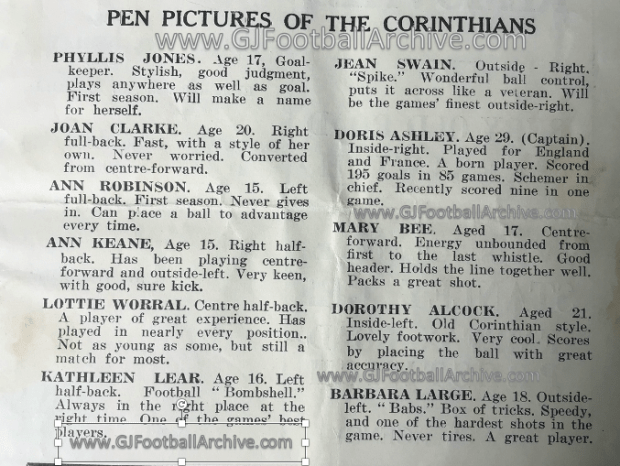
We will be unveiling a blue plaque to the Manchester Corinthians on 6 October. The club toured the globe representing England and promoting female endeavour, football and Manchester and now, over 70 years after they were established, their achievements have helped generate significant improvements to a park and helped foster a great community spirit. Through the dedicated work of a group of volunteers, especially the Friends of Fog Lane Park, a blue plaque, two murals and other tributes telling the Corinthians story will be erected and revealed on Friday 6 October at noon.
We all know how our public parks, particularly in cities, often suffer vandalism and other anti social activity and through the Corinthians’ story he Friends of Fog Lane Park have changed the look of a vandalised building and have built on the good work they had already performed to make Fog Lane Park, Didsbury a safe, well used and popular park.
There’s so much to say but both the Friends of Fog Lane Park and the Corinthians deserve significant praise. In total over £6000 was raised for these tributes and this came from a large number of individuals as well as the FA, Manchester Council and the Corinthians’ old friends (and on the pitch rivals) Dick, Kerr Ladies (see below for names of those who made donations).
The Corinthians won major tournaments in Germany, Venezuela, France and elsewhere. They were the link team between the world renowned Dick, Kerr Ladies and the modern era, playing a significant role in football’s development. Often they played as England in these tournaments too, adding a bit of international significance in the days when formal England teams did not exist.
Another major achievement was that at formation of the Women’s Football Association not only was Gladys Aikin, the Corinthians’ manager, playing a key role but the club joined the WFA as two clubs – Corinthians and Nomads. This demonstrated their commitment to the long term development of the sport.
A year or so ago Will McTaggart, who hosted a number of football film shows with me in the years before Covid, alerted me to a clip that’s been found by the BBC of the Manchester Corinthians women’s team of the 1960s. This clip is from March 1965. You can watch it here:
As a reminder here’s more on the story to erect the plaque:
In 2019 I wrote an article for the Manchester Evening News on the women’s achievements and hoping for FA recognition and had meetings with a variety of local organisations about promoting the Corinthians further. Covid slowed everything down but then in 2021 I publicly announced for the first time the desire to have a plaque erected to the pioneering Manchester Corinthians. This was at a celebration evening at Hebden Bridge organised with Geoff Matthews. Our guests included several former Corinthians players and the mood of the audience was encouraging and supporting, which then led on to rekindling discussions with Manchester based bodies.
Support came from Manchester City Council and we discussed erecting a plaque at Fog Lane Park, the initial home of the Corinthians. In fact the women were based there for over twenty years. Via the council the Friends of Fog Lane Park came on board and we set up an appeal under their name, as custodians of the park. I wrote to contacts at the FA and elsewhere and within next to no time donations came flooding in from a variety of former players, family, friends, journalists and the Dick, Kerr Ladies Foundation via Gail Newsham. It was gratifying to see so much support (a full list of those who donated appears below – thanks to you all!).
My discussions with the FA eventually resulted in them agreeing to fund the plaque, the unveiling and to support other tributes. This meant we’d reached our goal. The plaque is a reality and will be unveiled soon.
The Friends of Fog Lane Park managed to get matching funds from Manchester City Council too and so now, as well as the plaque and a lectern providing a Corinthians’ timeline, there will be two impressive murals painted by artist Gavin Renshaw.
On October 6 at noon the blue plaque will be unveiled with over twenty of the Manchester Corinthians present.
The club became Woodley Ladies in the 1980s before it ceased operation around 1989. A later club, founded by a former Corinthian, used the Corinthians name from formation, playing in Tameside.
If you appear on the following photos then please get in touch or if you played for the Corinthians at any point between 1949 and 1982 we’d love to hear from you. I’m also keen to track down more photographs and items of memorabilia associated with the team. Please email me at gary@GJFootballArchive.com or contact via this page: https://gjfootballarchive.com/contact/
Over the next few weeks I’ll be posting further stories about the Corinthians. Recently I was fortunate to interview a 90+ year old who played for the Corinthians from formation in 1949.
Those who have donated to the appeal to erect permanent tributes to the Corinthians include:
Pam Barnes, Dan Mooney, Adam Turgoose, ‘Ben’, ‘Jean J’, Jonathan Kaye, Megan Riley, Helena Byrne, Dawn Burrows, Clare Wilkins, Linda Foley, Debbie Enever, John Carrier, Jacqui McAssey, Michael Cottam, Karen Ohanco, David Hoyle, Daniel Rubin, Heidi James, Gary James and the Dick, Kerr Ladies Foundation. There were also a small number of anonymous donations – thanks to all of you too. Everyone has contributed to this appeal. Please come along to the unveiling if you can.
Here’s a report and film of Manchester City beating Juventus in their first competitive meeting on this day (15 September) in 1976. That day Brian Kidd scored the only goal (a header) and you can see that goal here:
The match report expresses the disappointment City felt at only taking a 1-0 lead to Italy for the 2nd leg.
Here’s a photo from the game. Notice anything odd? Follow the link after the photo for the story.
On this day (15 September) in 2021 RB Leipzig and Manchester City met for the first time competitively. That game was played at the Etihad Stadium in the competition’s group stage (Group A). It was Pep Guardiola’s 300th game as manager and City achieved a 6-3 victory which meant that the Blues became the quickest English team to achieve 50 wins in the Champions League. Nice work!
Nathan Ake opened the scoring with a powerful header in the 16th minute, becoming the tenth different City player to score that season. The lead was increased twelve minutes later when Nordi Mukiele scored what was described by the BBC as a ‘calamitous own goal… The France defender got his angles horribly wrong as his attempted header back to his keeper following Kevin de Bruyne’s delivery ended up in the net.’
Nkunku scored for Leipzig three minutes before half time but City restored their two goal lead by half time with Riyad Mahrez netting a penalty (45+2) awarded after Lukas Klostermann handled.
Leipzig’s Nkunku headed home his second to reduce the deficit six minutes after the restart, but City hit back five minutes later as Jack Grealish scored with a delightful finish on his Champions League debut. Afterwards he commented about the whole experience: ‘I loved it. I’ve been waiting a while. The past few weeks, I couldn’t wait for this game. It’s a great night.’
Talking about the goal Grealish said: ‘The ball came to me and when I’m in that position, running into the area I’d back myself one on one against anyone to have a go and it paid off. I had a few in the first half that were blocked.’
Former Paris St-Germain player Nkunku scored again (73rd minute) to complete his hat-trick, but Joao Cancelo added a stunning 25 yard effort for City two minutes later. The former City player Angelino was dismissed for a second bookable offence four minutes later and then substitute Gabriel Jesus tapped in at the far post to make it six for City with only five minutes of normal time remaining.
The match ended 6-3 but in truth City’s victory was much more convincing than the three conceded goals suggest. Grealish loved the whole experience of his first Champions League match: ‘It was one of those games. It had absolutely everything. In the end we’re delighted to get the win against a good team full of energy and young players… I’m delighted to come away with the three points – and the goal and assist… I went to check the result from the other game [Club Bruges 1-1 PSG] and it shows anything can happen in the Champions League. It’s why it’s such a wonderful competition.’
Leipzig’s hat-trick scorer Christopher Nkunku was not as positive as Grealish however: ‘Every mistake was punished. We made a lot of individual errors. I scored three goals but every time they scored again right away. We needed to show more concentration. We knew the quality Manchester City have.’
For City boss Pep Guardiola there was disappointment that three goals had been conceded and he admitted: ‘Leipzig never give up. They have a special way to attack. They play all or nothing. You never have the feeling it’s over. We scored a few minutes after they scored… and it helped us a lot. They have a young team, so aggressive, so strong. A fantastic team. Leipzig give a good message to football. The quality of the players was better today and that’s why we won.’
Today (14 September) in 2003 Manchester City won their first competitive League game at the City of Manchester Stadium (now Etihad). It was also a day that saw Steve McManaman make his League debut for the Blues. The game was a PayPerView TV match. You can watch highlights of the game here:
This is how the match was previewed in the Sunday Times:
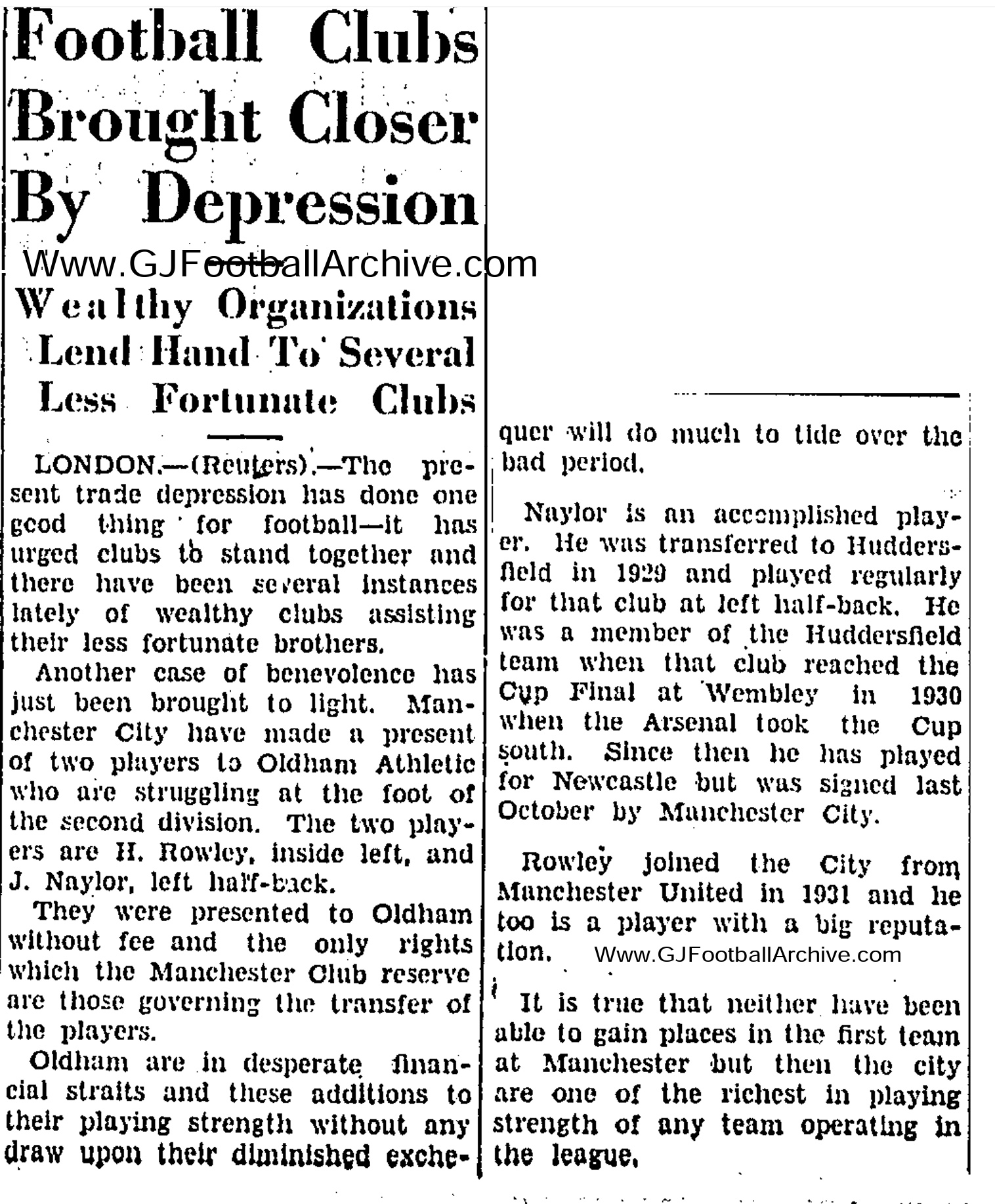
An interesting article here from April 1933 published in the the China Press (that’s right, a newspaper based in Shanghai in the 1930s carried Manchester football news!). It talks about wealthy Manchester City helping out its neighbour Oldham Athletic. Have a read and enjoy!
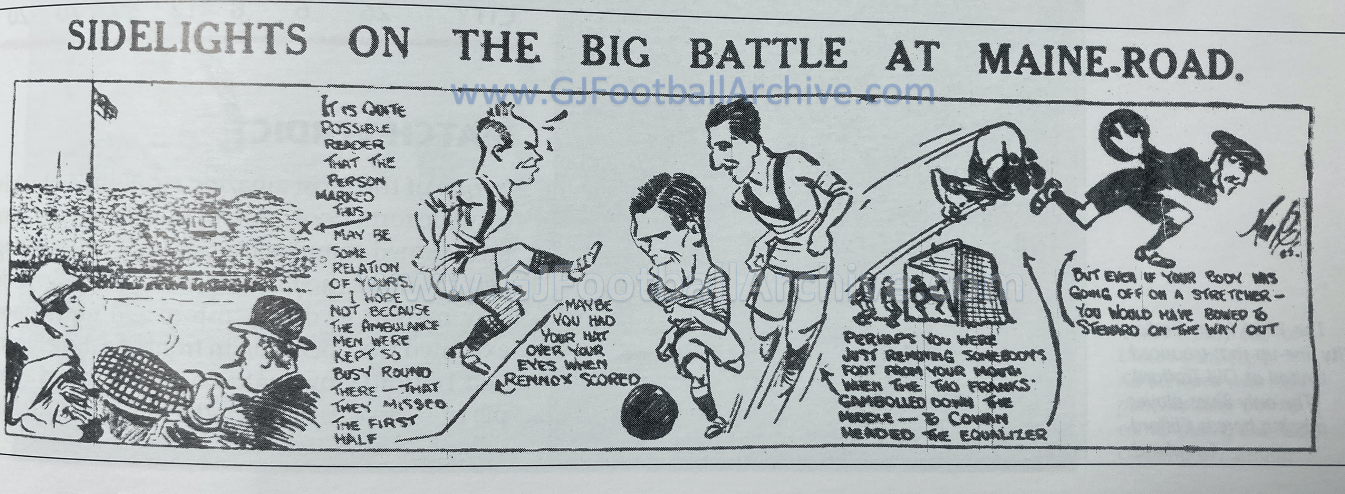
Manchester City’s Maine Road stadium was opened 100 years ago last month and today (12 September) marks the anniversary of the stadium’s first competitive Manchester derby BUT it’s not the centenary of that game as United were a second tier club when City moved to their old stadium. In fact it wasn’t until the stadium’s third season that United and City met competitively at Maine Road.
You can read about that first Maine Road meeting as part of my Maine Road 100 series of free articles. This one was posted on Day 35 here:
Can you help? Do you have a golf buggy or access to one that could be used at Fog Lane Park on Friday 6 October to help transport a few people around the site at our Manchester Corinthians plaque unveiling? If you do then please let me know. You can contact me at:
Gary@GJFootballArchive.com
For background this is what we’re doing on that day…
I’m delighted to say that four years after I wrote an article hoping that football’s governing body ‘finally recognised the work of these pioneering Mancunian women’ we are now about to unveil a blue plaque to the Manchester Corinthians. The unveiling will take place at noon on Friday 6 October 2023 at Fog Lane Park, Didsbury, Manchester.
In 2019 I wrote an article for the Manchester Evening News on the women’s achievements and hoping for FA recognition and had meetings with a variety of local organisations about promoting the Corinthians further. Covid slowed everything down but then in 2021 I publicly announced for the first time the desire to have a plaque erected to the pioneering Manchester Corinthians. This was at a celebration evening at Hebden Bridge organised with Geoff Matthews. Our guests included several former Corinthians players and the mood of the audience was encouraging and supporting, which then led on to rekindling discussions with Manchester based bodies.
Support came from Manchester City Council and we discussed erecting a plaque at Fog Lane Park, the initial home of the Corinthians. In fact the women were based there for over twenty years. Via the council the Friends of Fog Lane Park came on board and we set up an appeal under their name, as custodians of the park. I wrote to contacts at the FA and elsewhere and within next to no time donations came flooding in from a variety of former players, family, friends, journalists and the Dick, Kerr Ladies Foundation via Gail Newsham. It was gratifying to see so much support (a full list of those who donated appears below – thanks to you all!).
My discussions with the FA eventually resulted in them agreeing to fund the plaque, the unveiling and to support other tributes. This meant we’d reached our goal. The plaque is a reality and will be unveiled soon.
The Friends of Fog Lane Park managed to get matching funds from Manchester City Council too and so now, as well as the plaque and a lectern providing a Corinthians’ timeline, there will be two impressive murals painted by artist Gavin Renshaw.
On October 6 at noon the blue plaque will be unveiled with over twenty of the Manchester Corinthians present BUT we still want to track down more former players. Can you help?
Did you, your mum, sister, aunt, granny or other relative play for the club? We are particularly keen on tracking down women who played for the Corinthians at Fog Lane Park from 1949 (its formation) or with the club prior to 1982. The club became Woodley Ladies in the 1980s before it ceased operation around 1989. A later club, founded by a former Corinthian, used the Corinthians name from formation, playing in Tameside.
If you appear on the following photos then please get in touch or if you played for the Corinthians at any point between 1949 and 1982 we’d love to hear from you. I’m also keen to track down more photographs and items of memorabilia associated with the team. Please email me at gary@GJFootballArchive.com or contact via this page: https://gjfootballarchive.com/contact/
Over the next few weeks I’ll be posting further stories about the Corinthians. Last week I was fortunate to interview a 90+ year old who played for the Corinthians from formation in 1949.
Those who have donated to the appeal to erect permanent tributes to the Corinthians include:
Pam Barnes, Dan Mooney, Adam Turgoose, ‘Ben’, ‘Jean J’, Jonathan Kaye, Megan Riley, Helena Byrne, Dawn Burrows, Clare Wilkins, Linda Foley, Debbie Enever, John Carrier, Jacqui McAssey, Michael Cottam, Karen Ohanco, David Hoyle, Daniel Rubin, Heidi James, Gary James and the Dick, Kerr Ladies Foundation. There were also a small number of anonymous donations – thanks to all of you too. Everyone has contributed to this appeal. Please come along to the unveiling if you can.
One Manchester club seems to be getting everything right, winning League titles, European trophies and so on while the other appears to be in self-destruct mode with demonstrations against the owner and all sorts of worrying stories appearing in the media. Sound familiar? This was actually the situation on this day (11 September) in 1993 when Manchester City (not United) were the team in crisis and United (not City) were the team winning Leagues and European trophies.
This cutting is from 11 September 1993 and highlights the proposed takeover by Francis Lee of the Blues. Peter Swales had been City’s chairman for twenty years during which he’d taken the club from being a major, profitable power to one that was heavily in debt – debt that was hampering the club’s development – with a stadium that was being downgraded almost every day via a lack of serious investment. Across at United the club appeared relatively stable with a stadium that was being invested in. They also had one of the game’s most talented and successful managers while City had gone through a series of managers in the previous few years. City were a relatively stable top flight team though by 1993. Brian Horton was now City’s boss and he seemed to offer a positive style of football but the wider problems of the club were never far away. All sound familiar still?
I do find it amazing that City and United seem to have swapped roles so emphatically since 1993 in terms of how the clubs are managed, invested in, stadium developments and so on.
For those unaware of what happened to City or those who perhaps support United and are looking to see what happened and whether history will repeat here’s a brief overview: United dominated football for most of the 1990s & 2000s while City’s Lee takeover was successful. Lee, however, was unable to revive City’s fortunes and build on the fifth place finished that had occurred in 1991 and 1992. Although much of the financial infrastructure of City was improved following the takeover, the dismissal of Horton as manager and a poor appointment in Alan Ball led to relegation. Further issues followed as star players left, managers were sacked or left and the Blues ended up in the 3rd tier (for one season – too many believe City were a 3rd tier club who eventually got lucky but they were a top 6 team who fell apart!).
Could history repeat itself with the roles reversed? Unlikely United will ever fall as low as City but it is worth noting that City never expected to fall that low. Also, removing Swales from power was something that fans had been wanting for decades. It only became a possibility when a former hero announced he could take over the club BUT even then the hopes and ambition of all Blues could not be met.











 Gary James' Football Archive