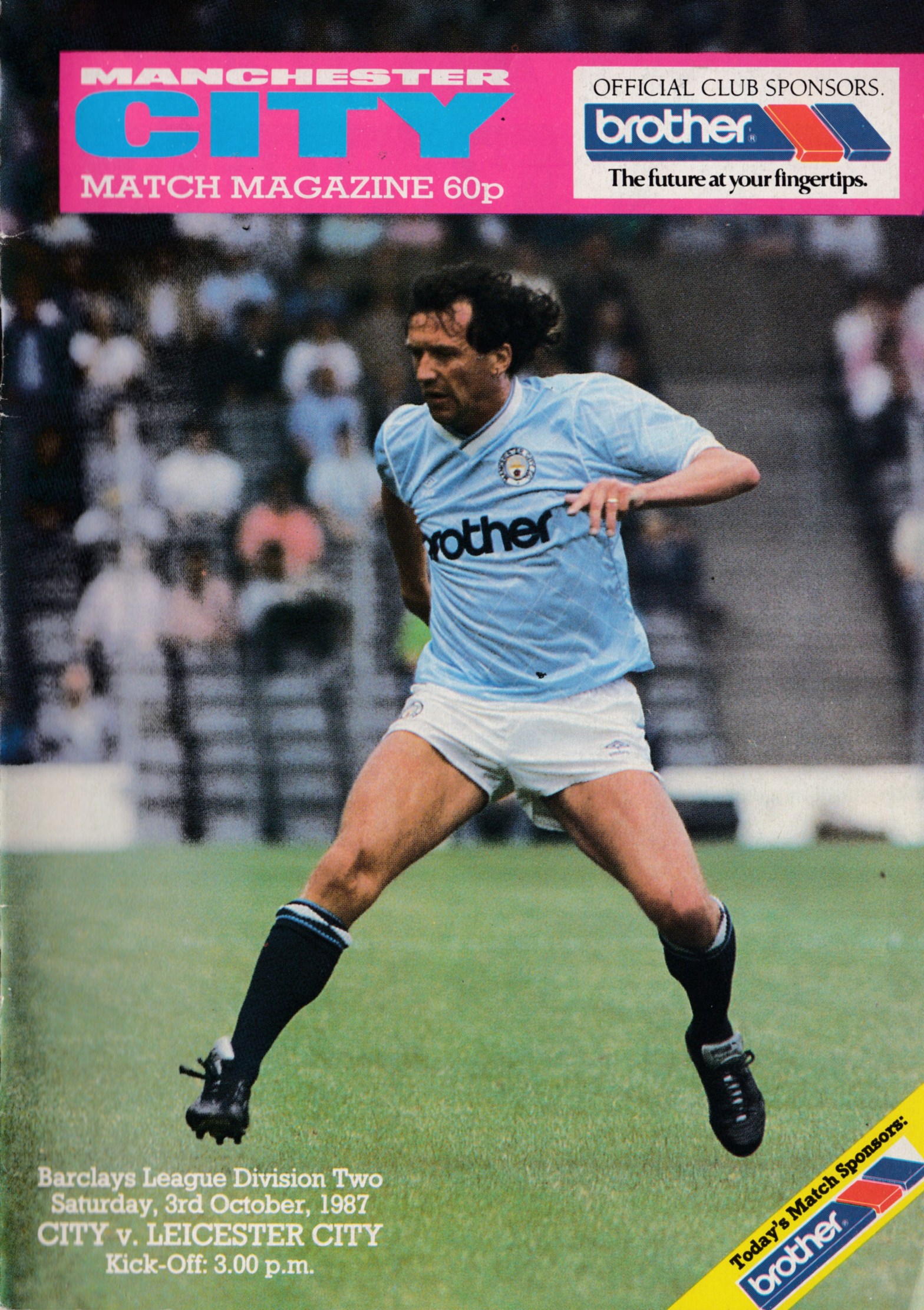
On this day (3 October) in 1987 Paul Stewart & Imre Varadi both scored twice as Manchester City beat Leicester City 4-2 at Maine Road. Games with Leicester were often newsworthy in the 1980s. Sadly, there was the match in March 1989 when Paul Lake swallowed his tongue and there was the FA Cup tie in January 1989 which saw the City players take to the field carrying large inflatable bananas which they then threw into the crowd. This was not a regular occurrence! You can read more on the banana craze here:
Author Archives: garyjamesfootballarchive
Sunday Morning Blues
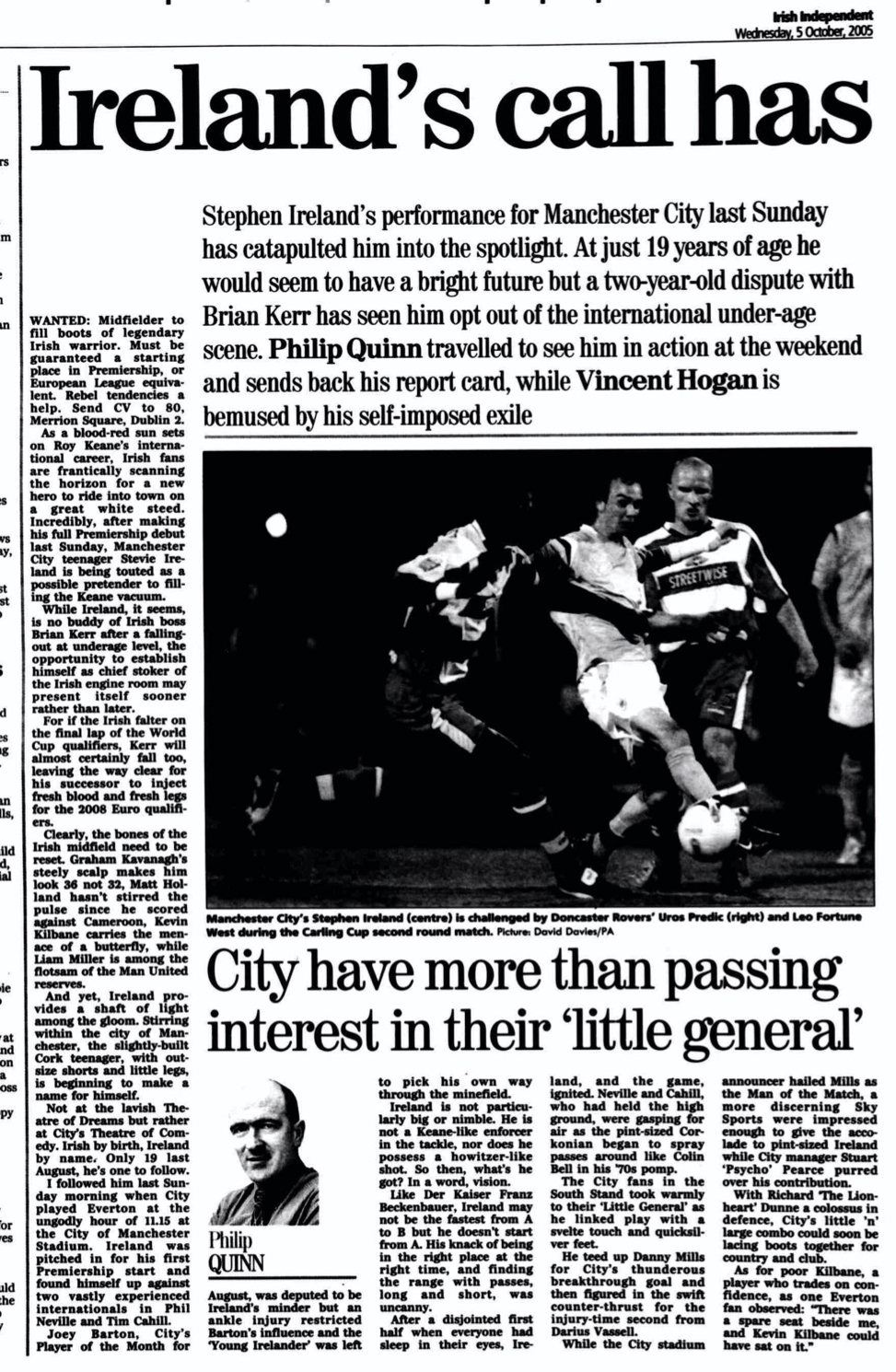
Everton, so often a bogey team back then for Manchester City, were defeated 2-0 on this day (2 October) in 2005. This was the first Sunday morning kick off in the Premier League and the match commenced at 11.15 with some fans making a point of the early start by wearing pyjamas. It was also Stephen Ireland’s first full Premiership game. Before the match he admitted to being “very nervous” and post-match he commented that the rest of the team had supported him: “That helped me ease my nerves and settle in as one of them.” You can see highlights and read more about the game below:

Subscribe to get access
If you’ve enjoyed this then why not subscribe? Every subscription directly helps support my research and provides the subscriber with access to everything posted on this site, including the entire Manchester A Football History and From Maine Men To Banana Citizens books, plus interviews, articles and more. I am not employed by anyone and all my research is self funded or comes from subscriptions to this site.
Subscribe to get access
If you’ve enjoyed this then why not subscribe? You can subscribe at either £20 per year (above) or at £3 per month here (cancel any time). For those subscribing £3 per month you will be able to access all content from October 2022 onwards for as long as you are a subscriber. Those subscribing £20 a year have access to everything posted since December 2020.
City 3 Bilbao 0
On this day (1 October) in 1969 Manchester City’s first home tie in the ECWC ended 3-0 (6-3 on aggregate) as the Blues defeated Athletic Bilbao. City scorers were Alan Oakes, Colin Bell and Ian Bowyer. Attendance 49,665. You can read more (and watch a video) about the game here:
Subscribe to get access
Read more of this content and everything else on the site when you subscribe today for £20 a year here (works out about £1.67 per month).
Subscribe to get access
Read more of this content when you subscribe today. You can subscribe at either £20 per year (above) or at £3 per month here (cancel any time). For those subscribing £3 per month you will be able to access all content from October 2022 onwards for as long as you are a subscriber. Those subscribing £20 a year have access to everything posted since December 2020.
Sterling Double
On this day (30 September) in 2020 Manchester City defeated Burnley 3-0 in the League Cup at Turf Moor. City’s scorers were Raheem Sterling (2) and Ferran Torres. Here are some highlights of the game:
https://www.mancity.com/citytv/mens/burnley-0-3-city-match-highlights-63737092
On This Day: Elano Wonder Goal

On this day (29 September) in 2007 goals from Petrov (38 mins), Mpenza (47) and Elano (87) helped Manchester City to a 3-1 victory over Newcastle United. Elano’s goal came from a truly outstanding free kick and was his first goal for the club. You can see highlights of the game here:
If you enjoy all the free material on my website and would like to support my research and keep this website going (but don’t want to subscribe) then why not make a one-time donation (or buy me a coffee). All support for my research is valued and welcome. It allows me to keep some free material available for all. Thanks.
Choose an amount
£2.50
£5.00
£7.50
Or enter a custom amount
£
Your contribution is appreciated.
DonateEverton Defeated

On this day (28 September) in 2019 Manchester City defeated Everton 3-1 before 39,222 at Goodison Park. The City scorers were Jesus, Mahrez and Sterling and you can see highlights of the game below:
Subscribe to get access
While you’re here why not subscribe to my website. It costs £20 per year (works out about £1.67 a month) and for that every subscriber gets access to a PDF of both Manchester A Football History and From Maine Men to Banana Citizens (both out of print) plus the hundreds of articles, interviews and videos already posted and a guaranteed 4 new exclusive articles per month (usually a lot more than that!). I am not employed to do any research and so subscribers help fund detailed research into football’s history. Thanks for supporting my work if you do already subscribe or buy my books.
Rodney Marsh’s Overhead Goal
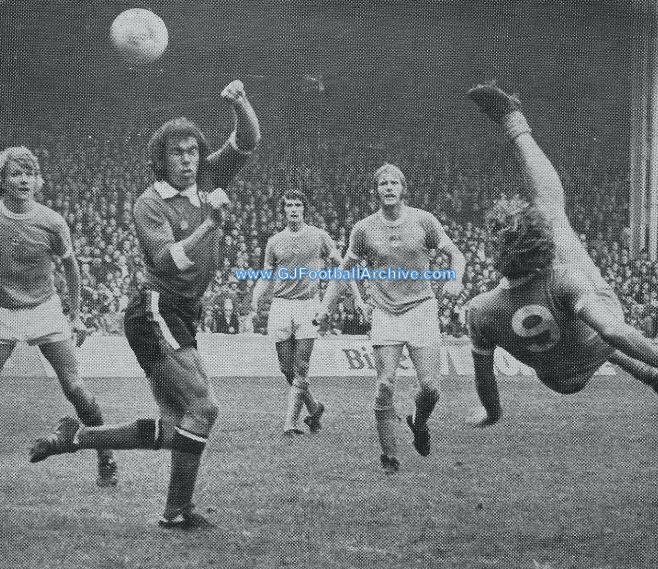
On this day (28th September 1974) Rodney Marsh scored a spectacular overhead goal for Manchester City against QPR at Maine Road.
Subscribers to this site can read about the goal and the game here:
https://gjfootballarchive.com/2022/07/16/golden-goals-1974-rodney-marsh-overhead-goal-v-qpr/
While you’re here why not subscribe to my website. It costs £20 per year (works out about £1.67 a month) and for that every subscriber gets access to a PDF of both Manchester A Football History and From Maine Men to Banana Citizens (both out of print) plus the hundreds of articles, interviews and videos already posted and a guaranteed 4 new exclusive articles per month (usually a lot more than that!). I am not employed to do any research and so subscribers help fund detailed research into football’s history. Thanks for supporting my work if you do already subscribe or buy my books.
The Pride of Manchester?

As we build up to the Manchester derby this weekend the usual questions of who represents Manchester best crops up, as does the ‘you’re not from Manchester’ argument. People also talk about Manchester history and so on, so I thought I’d write a few thoughts here to hopefully help anyone with their Manchester geography, history etc. Some fans will love this; some may hate it, but either way it’s all factual. Here goes….
On the question of history: The earliest recorded game for Manchester United (as Newton Heath) is in November 1880 (against Bolton Wanderer’s 2nd team) while the earliest recorded game for Manchester City (as St Mark’s West Gorton) was one week earlier than United’s game. Much is made of the 1878 formation date but that’s a bit of a red herring. There is no evidence of football participation by the Heathens until November 1880. From 1878 Newton Heath did play cricket and perform athletics. Similarly, St Mark’s are known to have played cricket from the 1860s but this does not mean the club should trace its history of football activity to 1867 (or any other date prior to 1880). I go into a lot more detail on all of this in The Emergence of Footballing Cultures: Manchester 1840-1919 but subscribers can also read the evidence & more via the following link:
Of course City was the first of the two clubs to take on the Manchester name, doing so in 1894. That year Newton Heath also tried to reform as Manchester but were prevented from doing so as there was already a Manchester FC in existence (the rugby club). Again you can read the evidence and facts in the Emergence of Footballing Cultures:
Also on the question of history… Manchester City were the first to find national success when they won the Second Division title in 1899 (also becoming the first Manchester side to earn promotion). City were also the first Manchester team to win a major trophy when they won the FA Cup in 1904. United were the first team to win the League with their first national success coming in 1908. United were the first to win a European trophy, winning the European Cup at Wembley in 1968, while City’s first European trophy (the European Cup Winners’ Cup) came in 1970 at Vienna. Both successes of course predate the first UEFA-tournament successes of Liverpool, Barcelona, Arsenal, Chelsea, Juventus and so many other perceived European giants (note: The Fairs Cup was not a UEFA tournament).
On representing the city of Manchester the point is often made, usually by City fans, that United ‘don’t come from Manchester’, so here’s a bit about geography: It is true that Old Trafford is not in the city of Manchester and that it’s in the borough of Trafford (not Salford as some say). United have been based there since 1910. Of course Trafford is within Greater Manchester, just as Bolton, Wigan, Rochdale, Stockport, Tameside and the city of Salford are. Prior to 1910 United played in Clayton and Newton Heath. At the time of their formation Newton Heath was not a part of Manchester. It was added to the city in 1890.
Similarly, West Gorton, where Manchester City was first founded as St Mark’s (West Gorton) was not part of the city of Manchester until 1890. Neither club was based in the city of Manchester at time of formation. City’s roots included various moves and name changes, with them settling in Ardwick in 1887. Ardwick had been incorporated into Manchester in 1838, meaning that from 1887 the Blues were based within the city of Manchester. The club moved to Maine Road in 1923 and their current home in 2003, both of which were within the city of Manchester by the time of the club’s move. Whichever way you look at it City have been based in the city of Manchester since 1887 while Newton Heath/United were based in the city of Manchester from 1890 to 1910. So for those who would like the maths that’s 135 years v 20 years.
In terms of first blood in the Manchester derby… Newton Heath beat Ardwick in the first derby in a first team competition that still counts today. That was the FA Cup in 1890-91 and you can read about that here:
Ultimately, all of these are merely bragging rights for particular views but I thought I’d post the facts because, all too often the facts get misreported and myths profligate.
On This Day: Dickov
On this day (27 September) in 1997 Swindon Town, then top of the First Division, were beaten 6-0 at Maine Road by Manchester City. Paul Dickov could have scored a hat-trick but instead chose to set the expensive Lee Bradbury up for a much needed morale boosting goal.
Here’s some film of that game:
Subscribe to get access
While you’re here why not subscribe to my website. It costs £20 per year (works out about £1.67 a month) and for that every subscriber gets access to a PDF of both Manchester A Football History and From Maine Men to Banana Citizens (both out of print) plus the hundreds of articles, interviews and videos already posted and a guaranteed 4 new exclusive articles per month (usually a lot more than that!). I am not employed to do any research and so subscribers help fund detailed research into football’s history. Thanks for supporting my work if you do already subscribe or buy my books.
Denis Law and United’s Relegation

Over the years there has been a lot of discussion on Denis Law and his backheeled goal for Manchester City v Manchester United at Old Trafford in April 1974. If you’re a Blue you tend to say it relegated United; if you’re a Red you tend to say ‘absolutely not! It made no difference.’ So, for this feature I decided to focus on the facts, emotion and mood of the era to paint an accurate picture of that day and the significance or not of that goal. Hopefully, Blues & Reds alike will gain a good understanding of it all. I include quotes from some of the interviews I’ve performed in the past. This article will be free to read until 27th September then it’s available to subscribers only. Here goes…
Subscribe to get access
If you have read this and enjoyed it then please subscribe and access more content like this. No one pays for my research and so please support my writing if you can. Subscribers get access to everything on here, including the entire Manchester A Football History book and my first book. It costs £20 a year (works out £1.67 per month).
 Gary James' Football Archive