On this day (August 25) in 1923 Maine Road staged its first game. Two decades later it staged the first World Cup match in England and the decade after that the first European Cup game in England. It still holds the record provincial crowd and the record for a game on a club ground in England, and for eighty years it was the home of Manchester City. Here’s a look at the life of Maine Road.
Here for subscribers is a 2,000 word piece on City’s former home. It corrects a few myths (the ‘Wembley of the North – pah! It was better than that when it opened!).
If you would like to subscribe and read this and all my other content posted to this site (over 370 articles/sound recordings/interviews including the entire Manchester A Football History) then please use the button below. It costs £20 a year (that’s about £1.67 a month) and you have access to everything for as long as you are a subscriber (you can even subscribe for a month at a time at £3, access everything and then cancel your subscription if you like!).
Here’s the article:
Subscribe to get access
Read more of this content when you subscribe today.
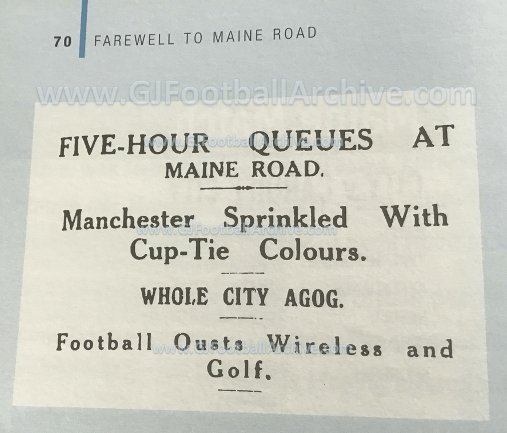
Today (8 March) marks the centenary of a record Manchester City set on this- the record is the highest attendance on a club ground! Happy 100th anniversary! The record set in 1924 saw 76,166 attend City v Cardiff. City had moved to their new Maine Road stadium in August 1923. The capacity of the venue was estimated at around 90,000 but was actually approximately 83,000 when the stadium opened (it was enlarged in 1931 and 1935).
In its first season the capacity was tested and, on this day (8 March) in 1924 the largest attendance for any footballing fixture (including three FA Cup Finals) in Manchester gathered to watch the Blues. This was also, at the time, the record crowd for any game played on an English club ground. It was beaten ten years later when 84,569 watched City v Stoke – so It’s 100 years of this record for the Blues!
You can read about the remarkable day in 1924 below:
Subscribe to get access
Read more of this content when you subscribe today. It costs £20 a year (access to everything) or £3 per month (see below).
Read more of this content when you subscribe today. It costs £20 a year (see above) or £3 per month (cancel anytime; access to everything posted since 1 October 2022).
This has been a sample of the material on http://www.GJFootballArchive.com If you would like to read all the in-depth articles (including the entire Manchester A Football History book and the audio interview with John Bond) then please subscribe. It works out about £1.67 a month if you take out an annual subscription (£20 per year) or £3 a month if you’d like to sign up for a month at a time. Each subscriber gets full access to the 260+ articles posted so far and the hundreds scheduled to be posted in the coming weeks.
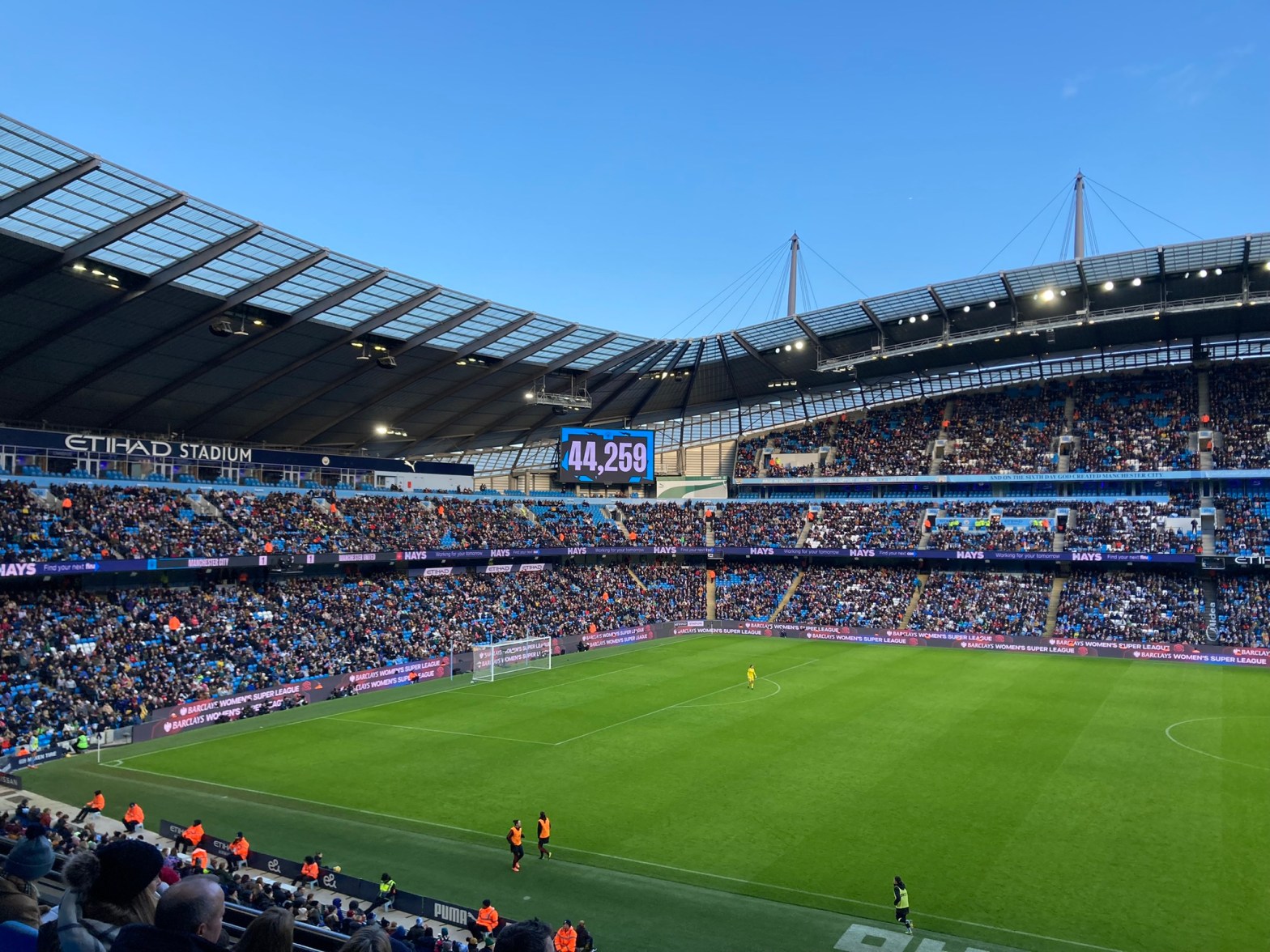
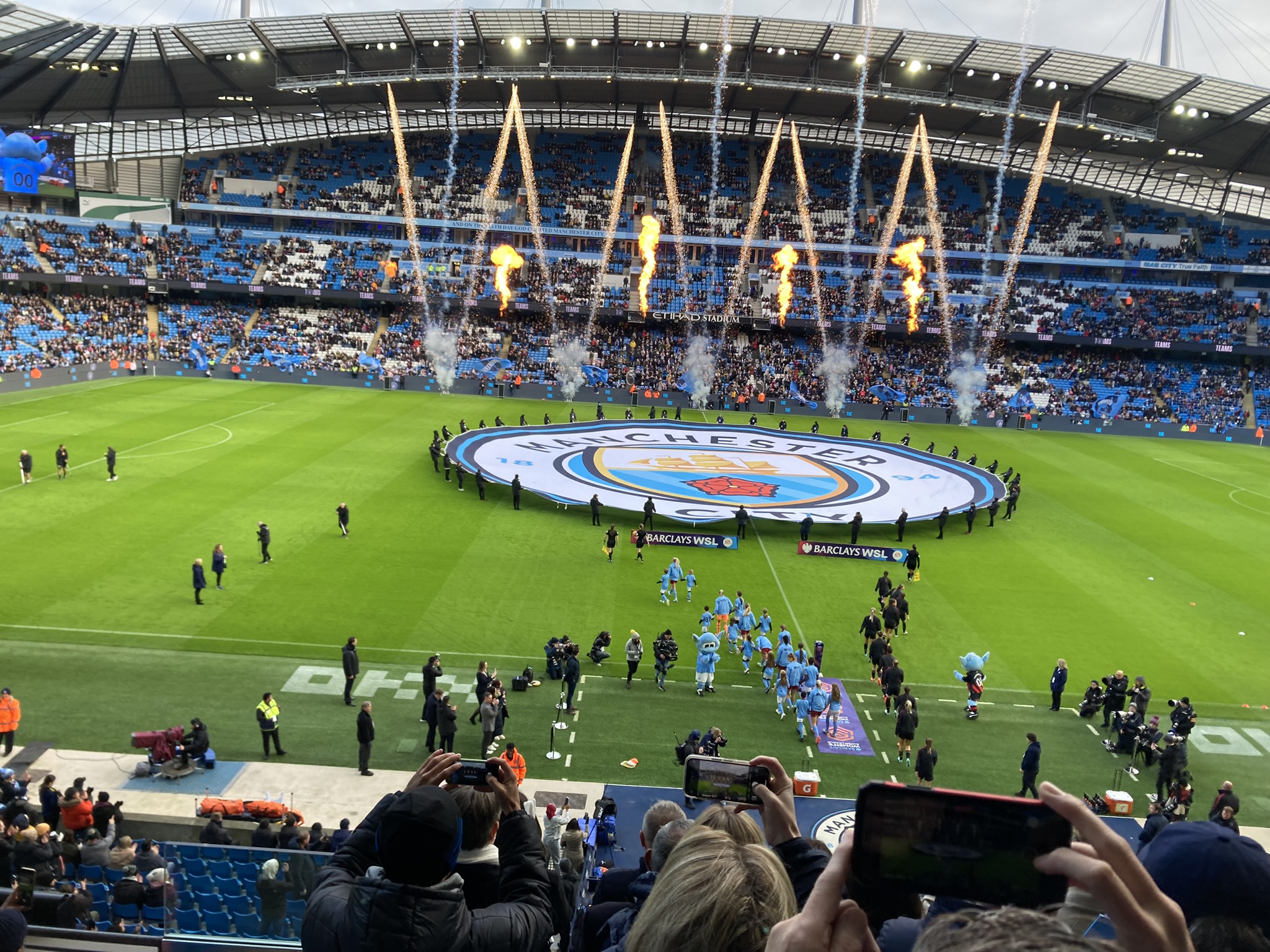
On this day (11 December) in 2022 I was at the Etihad Stadium when a new record crowd for a women’s club game in Greater Manchester was established. 44,259 watched Manchester City’s women’s team draw 1-1 with Manchester United. The attendance best all home games by Greater Manchester’s clubs; WFA Cup finals played in the area and games played by Dick, Kerr Ladies and other prominent women’s clubs over the previous 140 years or so. For those wondering the top five highest club attendances as recorded in Greater Manchester by the end of December 2022 were:
44,259 City v United, Etihad, December 2022
43,615 United v City, Old Trafford, November 2023
31,213 City V United, Etihad, September 2019
31,000 (occasionally reported as 35,000) Dick, Kerr Ladies v Bath Ladies, Old Trafford, January 1921
30,196 United V Aston Villa, Old Trafford, December 2022
You can read about the first competitive women’s Manchester Derby, which occurred in 1990, here:
For post 77 in my Maine Rd 100 countdown a reminder of a record City have held for almost a century! This image is of a day in 1924 when City attracted the highest crowd on a club ground. The drawing is looking from the Main Stand towards the Popular Side, later Kippax. It’s no longer the record attendance because it was beaten by another record crowd at Maine Rd a decade later. Want to know more? The read on…
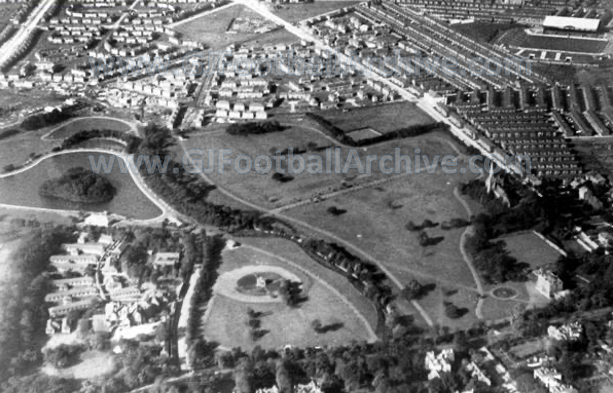
1925 Aerial photo of Maine Road and Platt Fields Park
A record Manchester City have held for 99 years was set on 8 March in 1924 – the record is the highest attendance on a club ground! The record set in 1924 saw 76,166 attend City v Cardiff. City had moved to their new Maine Road stadium in August 1923. The capacity of the venue was estimated at around 90,000 but was actually approximately 83,000 when the stadium opened (it was enlarged in 1931 and 1935).
In its first season the capacity was tested and, on that day (8 March) in 1924 the largest attendance for any footballing fixture (including three FA Cup Finals) in Manchester gathered to watch the Blues. This was also, at the time, the record crowd for any game played on an English club ground. It was beaten ten years later when 84,569 watched City v Stoke. You can read about the remarkable day in 1924 below:
Subscribe to get access
Read more of this content when you subscribe today. It costs £20 a year (access to everything) or £3 per month (see below).
Read more of this content when you subscribe today. It costs £20 a year (see above) or £3 per month (cancel anytime; access to everything posted since 1 October 2022).
This has been a sample of the material on http://www.GJFootballArchive.com If you would like to read all the in-depth articles (including the entire Manchester A Football History book and the audio interview with John Bond) then please subscribe. It works out about £1.67 a month if you take out an annual subscription (£20 per year) or £3 a month if you’d like to sign up for a month at a time. Each subscriber gets full access to the 260+ articles posted so far and the hundreds scheduled to be posted in the coming weeks.
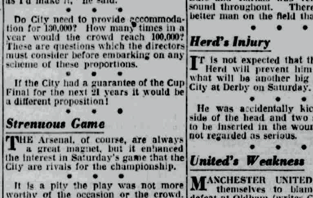
Day 57 of my posts counting down to the centenary of Maine Road’s opening game is a follow on from yesterday. It’s a cutting from the same newspaper, which was produced shortly after City and Arsenal had met at Maine Road in February 1935. It also follows on from some recent articles about stadium improvements. Here, the rumour was that City were planning to make Maine Road a 130,000 capacity venue.
February 1935 City v Arsenal Maine Road extension plans
Maine Road was only 12 years old but already it held a record individual crowd (84,569) for a game on a club ground that still stands today and it held the record League crowd (set at the game with Arsenal in February 1935). It had been expanded a little with the extension to the Platt Lane Corner (near the Main Stand and numbered 3 on the 1971 aerial photo lower down the page).
There was a development plan being developed which would see both the Platt Lane End and Scoreboard End have roofs added and be extended and then attention would turn to the Kippax where a double deck stand was suggested. By that time it was felt the stadium would hold 130,000. As it was the 1930s extensions meant it’s capacity was viewed as about 86,000.
The Platt Lane Stand (number 5 below) was built in 1935 (the old terracing was extended at the back on wooden steps and a roof was erected over the terracing) to the plan but World War Two meant the other plans were put on hold. They were eventually dropped and the next major development would be the Kippax roof and terracing extension in 1957.
Back in February 1935 the local media debated how often City would need a 100,000 capacity venue. The view was that, unless City could persuade the FA to move the FAC Final to Maine Road, then only one game a season would attract that kind of figure to the ground. With United in Division Two for much of the 1930s, and being watched by exceptionally low crowds, the game that most fans saw as the biggest meeting back then was the visit of Arsenal. How times change!
This 1971 aerial image shows the proximity of the housing on Thornton Road (bottom left, near number 6) and behind the North Stand (number 10). They were planned to be demolished in Lee’s 1994 plan.
Maine Road aerial 1971 from Farewell To Maine Road
If you’d like to read more on the history of Maine Road, take a look at Farewell To Maine Road, which can be downloaded from this page:
If you enjoy all the free material on my website and would like to support my research and keep this website going (but don’t want to subscribe) then why not make a one-time donation (or buy me a coffee). All support for my research is valued and welcome. It allows me to keep some free material available for all. Thanks.
A record Manchester City have held for 99 years was set on this day (8 March) in 1924 – the record is the highest attendance on a club ground! Happy anniversary! The record set in 1924 saw 76,166 attend City v Cardiff. City had moved to their new Maine Road stadium in August 1923. The capacity of the venue was estimated at around 90,000 but was actually approximately 83,000 when the stadium opened (it was enlarged in 1931 and 1935).
In its first season the capacity was tested and, on this day (8 March) in 1924 the largest attendance for any footballing fixture (including three FA Cup Finals) in Manchester gathered to watch the Blues. This was also, at the time, the record crowd for any game played on an English club ground. It was beaten ten years later when 84,569 watched City v Stoke. You can read about the remarkable day in 1924 below:
Subscribe to get access
Read more of this content when you subscribe today. It costs £20 a year (access to everything) or £3 per month (see below).
Read more of this content when you subscribe today. It costs £20 a year (see above) or £3 per month (cancel anytime; access to everything posted since 1 October 2022).
This has been a sample of the material on http://www.GJFootballArchive.com If you would like to read all the in-depth articles (including the entire Manchester A Football History book and the audio interview with John Bond) then please subscribe. It works out about £1.67 a month if you take out an annual subscription (£20 per year) or £3 a month if you’d like to sign up for a month at a time. Each subscriber gets full access to the 260+ articles posted so far and the hundreds scheduled to be posted in the coming weeks.
I’m delighted to say that I was at the Etihad Stadium today when a record crowd for a women’s club game in Greater Manchester was set when 44,259 watched City draw 1-1 with United. This includes all home games by Greater Manchester’s clubs; WFA Cup finals played in the area and games played by Dick, Kerr Ladies and other prominent women’s clubs over the last 140 years or so. For those wondering the top four highest club attendances are:
44,259 City v United, Etihad, December 2022
31,213 City V United, Etihad, September 2019
31,000 (occasionally reported as 35,000) Dick, Kerr Ladies v Bath Ladies, Old Trafford, January 1921
30,196 United V Aston Villa, Old Trafford, December 2022
You can read about the first competitive women’s Manchester Derby, which occurred in 1990, here:
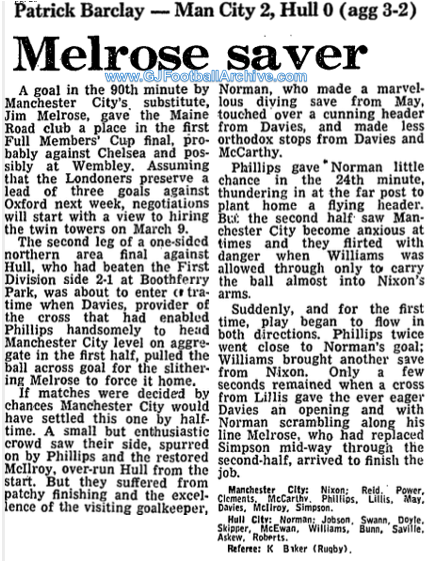
On this day (11 December) in 1985 a 2-0 victory (3-2 on aggregate) by Billy McNeill’s Manchester City over Brian Horton’s Hull sent the Blues to Wembley for the inaugural Full Members’ Cup Final. City’s scorers at Maine Road were David Phillips and Jim Melrose before the largest crowd (by any club) of the entire tournament, excluding the final, of 10,180. Here’s a contemporary report by Patrick Barclay of the game:
You can read more on the Full Members Cup and what it was all about here:
Lots of people talk incorrectly of Manchester City’s support and so for today’s subscriber feature I’ve decided to focus on the growth in City’s average attendance from the club’s first season in the League through to recent years, alongside other crowd related statistics. Hopefully, this will help to answer any questions raised on the loyalty of City’s support (but somehow I doubt it!).
If you would like to subscribe and read this and all my other content posted to this site (over 400 articles/sound recordings/interviews including the entire Manchester A Football History) then please use the button below. It costs £20 a year (that’s about £1.67 a month) and you have access to everything for as long as you are a subscriber (you can even subscribe for a month at a time at £3, access everything and then cancel your subscription if you like!).
Here’s the article for subscribers…
Subscribe to get access
Read more of this content and everything else on the site, when you subscribe today.
On this day (August 25) in 1923 Maine Road staged its first game. Two decades later it staged the first World Cup match in England and the decade after that the first European Cup game in England. It still holds the record provincial crowd and the record for a League game, and for eighty years it was the home of Manchester City. Here’s a look at the life of Maine Road.
Here for subscribers is a 2,000 word piece on City’s former home. It corrects a few myths (the ‘Wembley of the North – pah! It was better than that when it opened!).
If you would like to subscribe and read this and all my other content posted to this site (over 370 articles/sound recordings/interviews including the entire Manchester A Football History) then please use the button below. It costs £20 a year (that’s about £1.67 a month) and you have access to everything for as long as you are a subscriber (you can even subscribe for a month at a time at £3, access everything and then cancel your subscription if you like!).
Here’s the article:
Subscribe to get access
Read more of this content when you subscribe today.





 Gary James' Football Archive