Another £1m MCFC Player

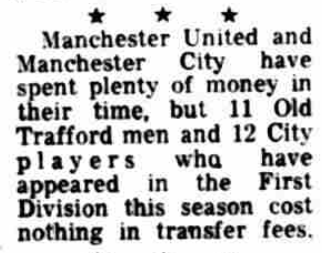
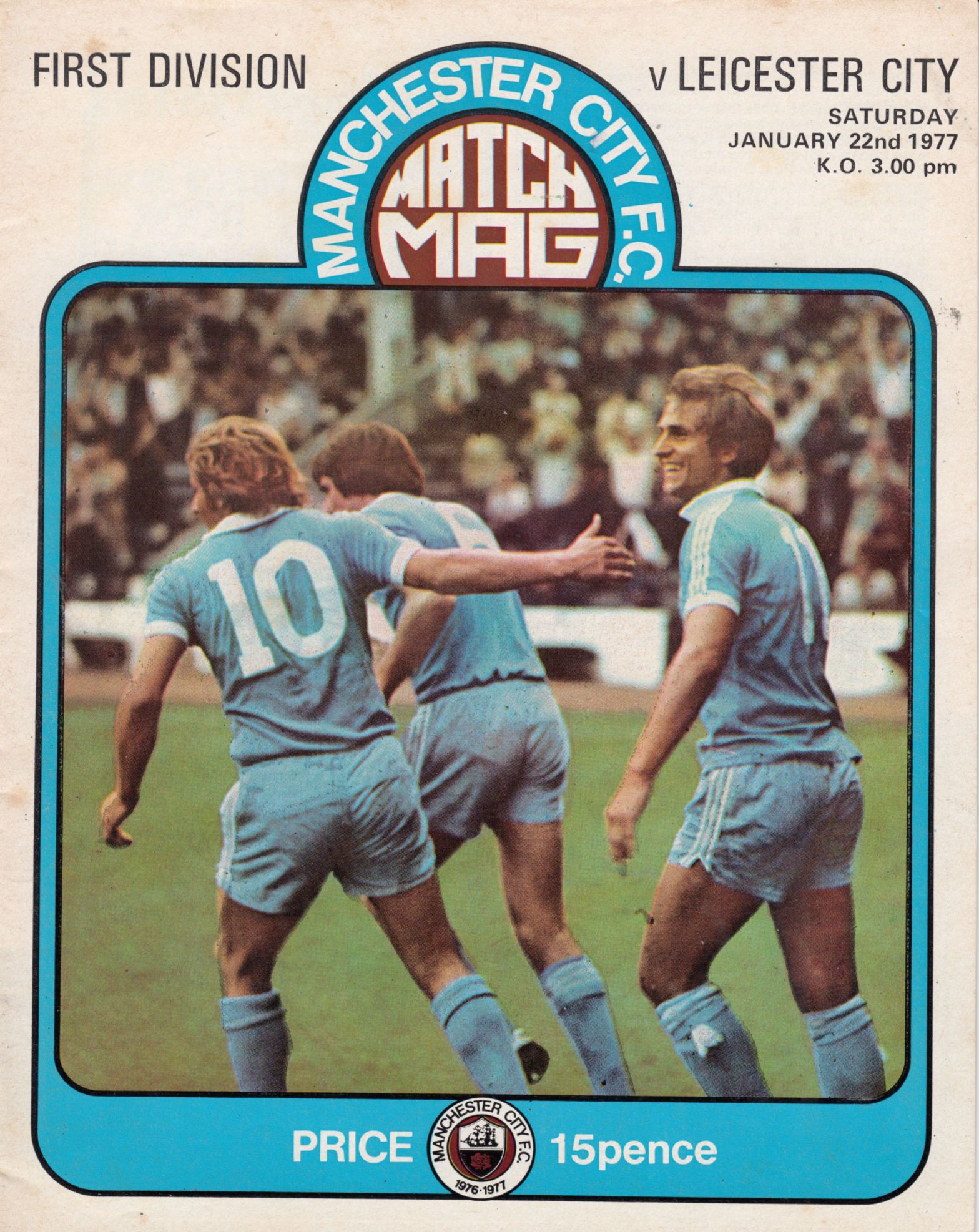
On this day (4 September) in 1981 Manchester City signed Trevor Francis from Nottingham Forest. The transfer meant that the Blues were the first English side to sign three separate £1m or £1m+ players. Peter Swales often boasted of this point (and did so in an interview I did with him years later). The earlier £1m/£1m+ men were Steve Daley and Kevin Reeves.

I’ve interviewed John Bond, Trevor Francis and Peter Swales specifically about this transfer over the years. Subscribers can listen to my Bond interview (see below for details) and a written version of my Trevor Francis interview is available too here (this is free to read):

Here’s the John Bond interview:

The story of Trevor Francis’ debut against Stoke is here:

Here’s an article quoting Mike Doyle, who by this time was a Stoke player, about Francis:

Maine Road 100 – Day 71

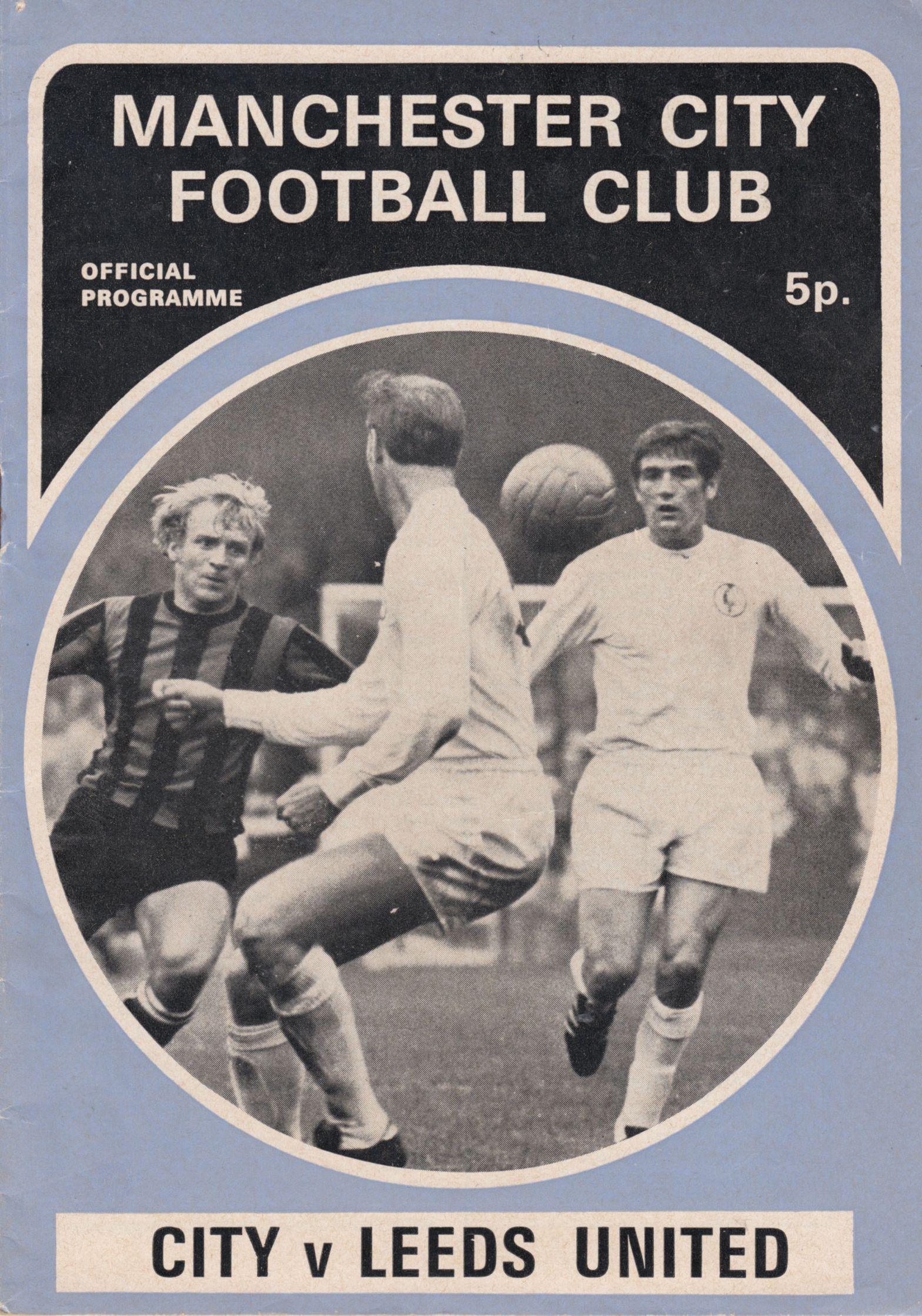
It’s post 71 of my Maine Rd 100 countdown. Today I want to show this programme cover for what was perceived as a decisive Manchester derby. Of course the derby that followed this one was more decisive but it’s worth pausing to reflect on the significance and drama of this Maine Rd derby.

MCFC v MUFC 13 March 1974, Score 0-0, Attendance 51,331 Maine Road

The Old Trafford derby of 1974 is usually quoted as a decisive derby, however the Maine Road match was viewed at the time as being vital to United’s survival.  In fact in the programme Red manager Tommy Docherty claimed:  “Tonight’s game is one which decides our fate.  City’s League Cup defeat is a big anti-climax for them and could help our fight for First Division survival.” Here for subscribers to this site is the story of that game – a highly controversial one that was almost abandoned due to player indiscipline!

Subscribe – Annual

If you would like to read this and all the in-depth articles on this site (including the entire Manchester A Football History book) then please subscribe. It works out about £1.67 a month if you take out an annual subscription (£20 per year). Each annual subscriber gets full access to the 1000+ articles posted so far and the hundreds scheduled to be posted in the coming weeks.

Subscribe – Monthly

If you would like to read this then please subscribe. It works out about £1.67 a month if you take out an annual subscription (£20 per year) above or £3 per month to subscribe on a monthly basis (here, cancel anytime). Each monthly subscriber gets full access to everything posted since 1 October 2022 and the hundreds scheduled to be posted in the coming weeks.

Maine Road 100 – Day 62

Day 6 of my posts counting down to the centenary of Maine Road’s opening game continues with another segregation image. This is a late 1970s Manchester derby image and the City player is Mike Doyle but look beyond him at the segregation and perimeter fencing. As well as the railings in front of the Kippax Stand the away section (to the right) has an additional chicken wire style temporary fence in front of the United fans.

This was a period when United fans had an extremely bad reputation for pitch invasions and crowd actions and City had been forced to install this additional netting for this derby match after consultation with the police.

The fencing didn’t last of course and so this image is extremely unusual.

If you’d like to read more on the history of Maine Road, take a look at Farewell To Maine Road, which can be downloaded from this page:

If you enjoy all the free material on my website and would like to support my research and keep this website going (but don’t want to subscribe) then why not make a one-time donation (or buy me a coffee). All support for my research is valued and welcome. It allows me to keep some free material available for all. Thanks.

Choose an amount

£2.50
£5.00
£7.50

Or enter a custom amount

£

Your contribution is appreciated.

Donate
European Span of Success

Following Sevilla’s, West Ham’s and Manchester City’s successes in major UEFA competition this season I’ve updated the UEFA European Span of Success table. What is this? It’s a list of those clubs who have won two or more major UEFA tournaments showing the span between their first UEFA success and their most recent. The list may surprise some who think that football is all about those perceived as European giants with ‘history’.

The ‘history’ ‘no history’ thing really irritates me. All clubs have history and even when that’s recognised some still go on about history as if it started in 1992, 1999 or 2008 etc. depending on whether your club was successful or your rivals were failing. Both West Ham and Manchester City found major European success before some of those clubs recognised today as Europe’s elite and while this table does not show the number of major trophies won, it does give an indication of trophy winning longevity for those who obsess on ‘my cup’s bigger than yours’ and similar debates. Personally, I think we should all be proud of our club’s achievements and not worry about what a rival has won.

West Ham have the second longest span of all Europe’s clubs and City have the fifth. Nice work Hammers and Blues!

Anyway, here’s the table showing all those with two or more successes:

European span of success 2023, showing EC/CL, ECWC, UEFA/Europa & Europa Conference

The table includes the four major UEFA tournaments: European Cup/Champions League; European Cup Winner’s Cup; UEFA Cup/Europa League & the Europa Conference League. It does not include non-UEFA tournaments such as the Mitropa Cup and Fairs Cup. Nor does it include the Intertoto Cup or similar.

I’m sure some will say but why aren’t the Mitropa or Fairs Cups in there? It’s a good point but these were not UEFA tournaments, though I recognise that the Mitropa Cup had some significant clubs competing in it. It was predominantly an East European competition and participants were not spread over the entire continent.

With the Fairs Cup… It is true that this was later transformed into the UEFA Cup and I have included all UEFA Cup finals in my analysis. But the Fairs Cup had an odd series of entry rules at times. Cities, rather than clubs, often entered with Barcelona beating London in one final for example. It was set up as a friendly type of competition with cities that had staged trade fairs playing each other. As time wore on entry came via the League Cup or League position in England, which added significance to it. But two teams from the same city were not allowed to participate, which meant that teams finishing way down the table could be (and were) included if those above them were multiple clubs from the same city.

In 1970 Manchester City’s Mike Doyle joked that by winning the League Cup he was satisfying his aim of ‘keeping United out of Europe’ (he joked about creating car stickers with that slogan!) because it appeared at that time that United’s only chance of Europe had gone with City’s qualification for the Fairs Cup.

1970 ECWC

City went on to win the ECWC that season, meaning that Fairs Cup place was opened up to League position, but United had finished lower down the table anyway and qualified for the Watney Cup instead. Actually, the Watney Cup is one worth talking about, but I’ll save that for another day. In 1970 Fourth placed Derby County qualified for the Watney Cup, while 5th to 7th (Liverpool, Coventry and Newcastle) all got a Fairs Cup place, alongside 12th placed Arsenal (Fairs Cup winners). I’ve not investigated this fully but it does seem odd that the Watney Cup took precedence over the Fairs Cup.

Arsenal’s 1970 Fairs Cup success was their first European trophy but is not included in the span, neither are those Fairs Cup wins of Barcelona. As an example of the odd qualification rules at times it’s worth looking at the 1969 qualification via the English League system.

In 1969 champions Leeds entered the European Cup. The ECWC place went to FA Cup winners Manchester City and the Fairs Cup places went to: Arsenal (4th), Southampton (7th) and Newcastle (9th). Swindon had won the League Cup, beating Arsenal in the final, but the Fairs Cup organisers wouldn’t allow them to participate as they were not a top flight club! This adds to the reason the competition is not included.

Similarly, Everton (3rd), Chelsea (5th), Spurs (6th) and West Ham (8th) who all finished above Newcastle were denied because of the rule that only one club from each city be allowed. So Liverpool and Arsenal’s inclusion meant their rivals stood less chance of winning the trophy than Newcastle simply because there were multiple clubs in their cities.

That rule does make me wonder what would have happened if both Manchester clubs had qualified for the competition as City are within the city of Manchester boundaries and United are not. Would the two clubs have challenged any decision not to include one of them based on the age old argument of Manchester’s boundaries?

Maybe I’ll post more on the odd rules of football competitions and tell the story of some of those long forgotten competitions.

If you enjoy all the free material on my website and would like to support my research and keep this website going (but don’t want to subscribe) then why not make a one-time donation (or buy me a coffee). All support for my research is valued and welcome. It allows me to keep some free material available for all. Thanks.

Choose an amount

£2.50
£5.00
£7.50

Or enter a custom amount

£

Your contribution is appreciated.

Donate
You can find out the benefits of subscribing here:

More Gundogan Records

For many, many years Dave Masey has been collecting stats and historical information on Manchester City. Like me he was a member of the Association of Football Statisticians and he has helped me often over the years. Following Saturday’s FA Cup final he got in touch with me to tell me about one of his spreadsheets which holds details of City scorers in trophy winning games.

His records capture those who have scored in major cup finals, but besides Cup Finals he also records other trophy-winning games. These include the deciding League games from 1937 onwards against Sheffield Wednesday (1937), Newcastle, QPR, West Ham, Brighton and Villa (2022), but nothing from three recent title successes where the Blues clinched the title when they were not playing. Got that? Good, now….

Dave tells me that Gundogan is now at the top of the list with 5 goals, overtaking Neil Young and Sergio Aguero. So he has scored more goals in trophy-winning games than any other Blue.

The list of scorers in trophy winning games reads:

1904Meredith
1934/7Tilson (3), Brook (2), Doherty
1956Hayes, Dyson, Johnstone
1968/70Young (4), Lee (2), Summerbee, Doyle, Pardoe
1976P Barnes, Tueart
2011-(former)Aguero (4), Y Toure (2), Nasri (2), Kompany (2), D Silva (2),Jesus (2), Sterling (2), Dzeko, Zabaleta, Navas, Fernandinho
2016-(current)Gundogan (5),  Laporte (2), Rodri (2), Mahrez, De Bruyne

Dave also tells me that in the three seasons where somebody else’s defeat clinched the title for City, the scorers in the club’s last game before the title confirmation were:

Gundogan (3), Sterling (2), Jesus, Haaland.

As Dave says, Ilkay gets a remarkable number of important goals, particularly for somebody who is ‘just’ a 1 goal in 5 games player (60 in 303 for City). Certainly this season he has played a true leader’s role and, looking at his place in this table, he is clearly a man for all trophy-winning seasons.

Thanks, as always to Dave, for this information.

Maine Road 100 – Day 15

With a European final coming for City later this month it seems appropriate to include an image of a major European trophy at Maine Road for day 15 of my posts counting down to the centenary of Maine Road’s opening game. This team photo is from 1970 and shows the Manchester City team in front of the Platt Lane Stand with both the League Cup and the European Cup Winners’ Cup (at the time UEFA’s 2nd most significant competition).

I know we’re often told that City have no European history but they did actually win a major UEFA trophy before many teams that are today regarded as major European clubs, such as Liverpool, Juventus and even Barcelona. Barcelona had won the Fairs Cup but this was not a UEFA tournament and its entry rules were not always about where you finished in the League, for example the initial idea was to invite cities to play in the competition and the cities of Barcelona and London (a composite team) competed.

In 1970 City’s Mike Doyle joked that wining the League Cup (which brought a Fairs Cup place) was City’s way to ‘keep United out of Europe’ as the competition had a rule that a city could only be represented by one club if two were in qualifying positions…. it was often confusing!

For those unfamiliar with Maine Road this photo may help locate where the photo was taken from. It was taken on the pitch in front of the Maine Stand (number 1) at an angle looking towards the Platt lane Stand end (number 5).

Maine Road aerial 1971 from Farewell To Maine Road

If you’d like to read more on the history of Maine Road, take a look at Farewell To Maine Road, which can be downloaded from this page:

If you enjoy all the free material on my website and would like to support my research and keep this website going (but don’t want to subscribe) then why not make a one-time donation (or buy me a coffee). All support for my research is valued and welcome. It allows me to keep some free material available for all. Thanks.

Choose an amount

£2.50
£5.00
£7.50

Or enter a custom amount

£

Your contribution is appreciated.

Donate

A European Semi Final Victory

Today (15 April) in 1970 German side Schalke 04 were defeated 5-1 in the ECWC semi-final second leg at Maine Road by Manchester City. You can read the story of that game (and watch video highlights) below.

Subscribe to get access – Annual

Read more of this content and everything else on the site when you subscribe today. It costs £20 a year and for that you get access to everything posted since December 2020 – all the interviews, video talks, articles and also PDFs of Manchester A Football History and From Maine Men To Banana Citizens. There’s also a monthly option (see below) if you want to try for a month.

Subscribe to get access – Monthly

It costs £3 per month (cancel anytime) and for that you get access to everything posted since 1 October 2022. Why not try it for a month and see what you think?

MCFC V Gornik in 1971

On this day (10 March) in 1971 a crowd reported as 100,000 witnessed a 2-0 Manchester City defeat by Gornik in the ECWC quarter final first leg. The story of that game and the rest of the tie is available below (with video clips) for subscribers to this site.

Subscribe to access all the site – Annual

If you would like to read this and all the in-depth articles on this site (including the entire Manchester A Football History book, talks, articles, interviews etc.) then please subscribe. It works out about £1.67 a month if you take out an annual subscription (£20 per year) or £3 a month if you’d like to sign up for a month at a time (see below). Annual subscribers gets full access to everything posted so far and the hundreds scheduled to be posted in the coming year.

Subscribe to access all the site – Monthly

If you would like to read this and more then please subscribe. It costs £3 a month if you’d like to sign up for a month at a time. Monthly subscribers get full access to everything posted since 1 October 2022 and everything to be posted throughout their subscription. Cancel any time.

Manchester City Hall of Fame: Francis Lee’s significant game

City 2 West Bromwich Albion 1

League Cup Final

7th March 1970

Goalscorers: Pardoe, Doyle

City Team: Corrigan, Book, Mann, Doyle, Booth, Oakes, Heslop, Bell, Summerbee (Bowyer), Lee, Pardoe

Attendance: 97,963

Subscribe to get access

Read more of this content when you subscribe today.

Subscribe to get access

Read more of this content when you subscribe today.

IN SEARCH OF THE BLUES – Roy Cheetham (interviewed December 2004)

Manchester born (21 December 1939) Roy Cheetham joined Manchester City from school in 1956 and went on to become a loyal clubman over a 12 year Maine Road career. In total he made 138 (plus five as sub) League and cup appearances, but he also made a staggering 218 Reserves games for the Blues.  Sadly, Roy passed away on 8 December 2019. I met up with him at City’s stadium shortly before Christmas 2004 for an interview. Here for subscribers is that interview. He talks about his City career, moving to Detroit to play in the American soccer league of the time and more:

Subscribe to get access

Read more of this content when you subscribe today. It costs £20 a year (for access to everything posted since December 2020 including PDFs of 2 out of print books and audio interviews with George Graham, John Bond, Malcolm Allison etc.) or £3 per month (everything since 1 October 2022). Subscribe here for annual and below for monthly. Why not try it for a month and support my research & writing?

Subscribe to get access

Read more of this content when you subscribe today. It costs £20 a year (for access to everything posted since December 2020) or £3 per month (everything since 1 October 2022). Subscribe above for annual and here for monthly. Why not try it for a month and support my research & writing?