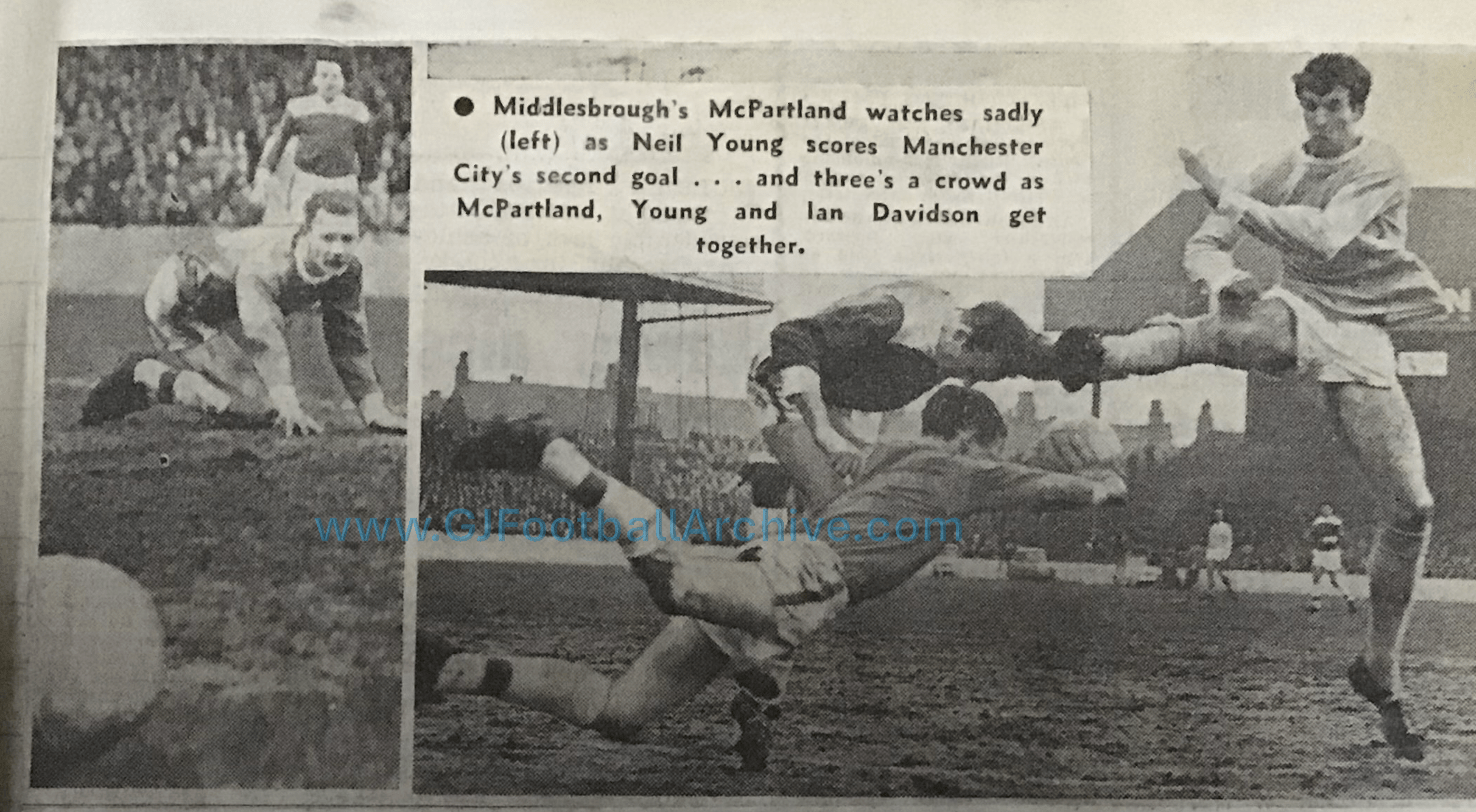
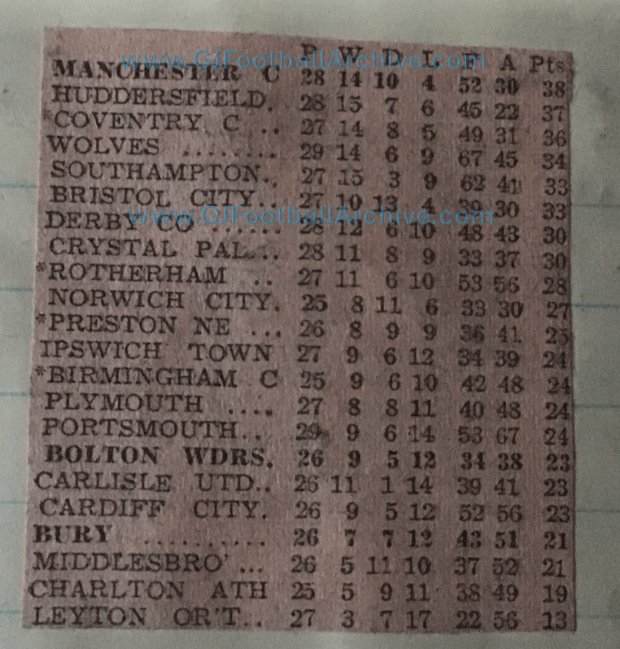
Today (29 January) in 1966 goals from Mike Summerbee (2) and Neil Young brought City a 3-1 victory over Middlesbrough and left City top of Division Two. It was a convincing win (Malcolm Allison boasted how City could have scored 6) but fans actually felt dissatisfied at the end as the Blues had eased off. Here’s the League table from after that game:
Here for subscribers are match reports from this game:
Subscribe to get access
Read more of this content when you subscribe today. It costs £3 per month (cancel anytime) or sign up for a year at a time at a discounted price of £20 per year. This gives access to every article, book, interview etc. posted to the site so far. Why not sign up for a month and see what you think?
You can find out more on Manchester City during the 1965-66 season by reading the following 4100 word article. As with most of the other features in this series it includes words from interviews I have performed with those who were there. This is a subscriber article (see below).
Subscribe to get access
Read more of this content when you subscribe today. It costs £3 per month (cancel anytime) or sign up for a year at the discounted price of £20 per year (works out £1.67 per month). Subscribers access the 1000+ articles posted so far and the others scheduled during the life of your subscription.
If you enjoy all the free material on my website and would like to support my research and keep this website going (but don’t want to subscribe) then why not make a one-time donation (or buy me a coffee). All support for my research is valued and welcome. It allows me to keep some free material available for all. Thanks.
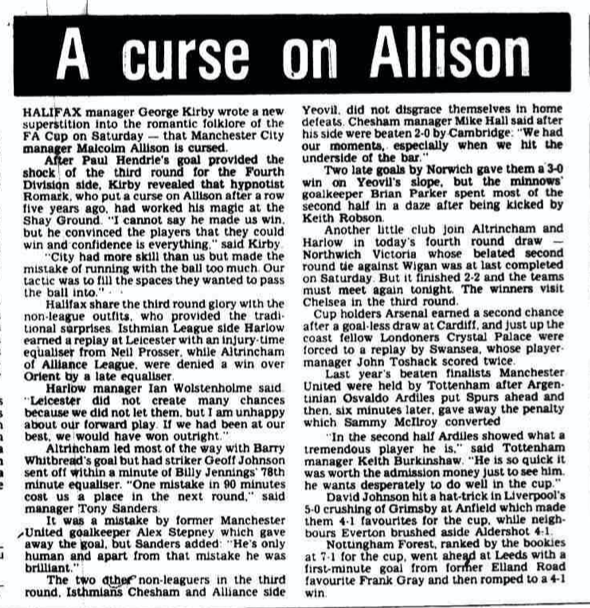
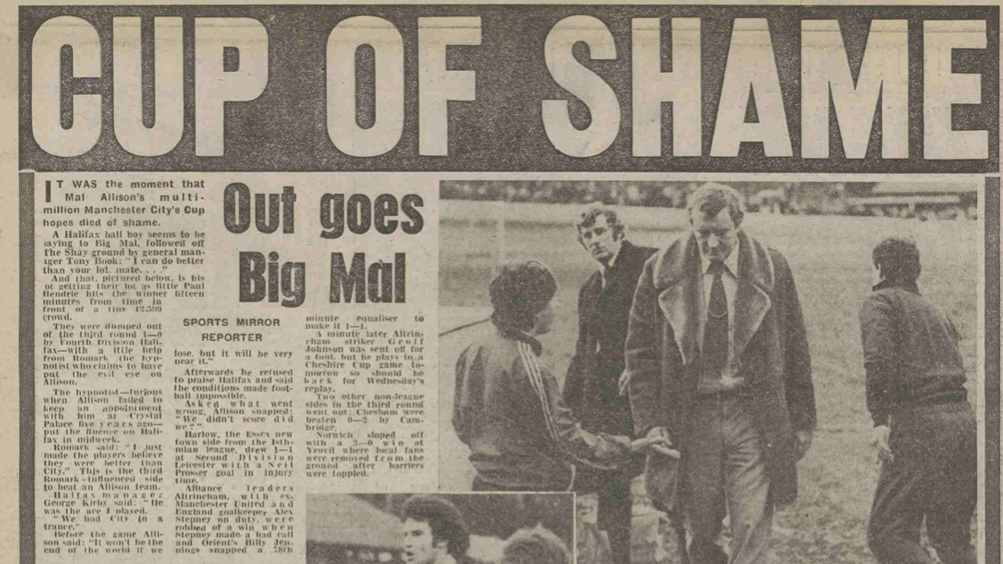
Malcolm Allison’s multi-million pound Manchester City side were humbled 1-0 at Fourth Division Halifax Town in the FAC on this day (5 January) in 1980 but there’s so much more to it than that. At Christmas 1979 big spending City were 12th in the League and Malcolm Allison was in charge of the most expensive British team ever assembled up to that point.12th was disappointing of course but it wasn’t the end of the world. In those days a decent run in the League could easily lift a team (similar to the 2025-26 season in terms of the number of clubs capable of winning the League at Christmas). Sadly, City collapsed in the weeks that followed.
A 1-1 draw at Stoke on Boxing Day was disappointing, but it wasn’t the end of the world. Then a 4-1 defeat at First Division newcomers Brighton knocked confidence at an important time. The next game was the third round F.A. Cup clash against Fourth Division Halifax Town at the Shay.
In his programme notes for the match Halifax Manager George Kirby predicted a shock: “In today’s F.A. Cup 3rd round the only certainty is that there are going to be some surprises, especially with the wintry conditions underfoot. I like to think that we are among one of the possible giant killers. This is because we are playing against one of the certain to be ‘top teams’ of the 80s. A 4th Div side at home to a 1st Div outfit with such stars as Joe Corrigan, Steve Daley, and Mike Robinson is a possible shock result. It only needs an off day by a key player and Halifax are in the hunt.”
Kirby was determined to defeat football’s biggest spenders and even brought in an hypnotist, Romark (who had previously ‘cursed’ Allison while the City boss had been manager of Crystal Palace – a really interesting story which will be covered in my biography of Peter Barnes to be published in 2021), to get his players in the right frame of mind. The game itself was played in horrendous conditions, with multi-million pound City struggling to achieve anything. In the 75th minute it was all over as the ex-Birmingham City player Paul Hendrie converted a cross from former City schoolboy Andy Stafford to give Halifax a 1-0 victory. It was the biggest result in Halifax history, and the most embarrassing City defeat of the Allison period. Even today the name of Halifax and the sight of the Shay brings back nightmares for a large number of Blues.
Subscribe to get access
If you have enjoyed this then why not subscribe and read content like this plus more in-depth material. It’s £3 per month or £20 a year with access to every post so far and many hundreds to come.
Here’s an odd item from my collection. It’s a compliment slip by a Star Press (the ‘champion printers’) which lists the players in Manchester City’s 1967-68 title winning team. There are a couple of spelling mistakes. See if you can spot them. One side of the compliments slip shows the League Champions and the other side looks like this:
I’m not certain if there was a close connection between Manchester City and Star Press at this time.
You can find out more about the 1967-68 season by reading the following subscriber article. If you’d like to read this 7,600 word article (yes, 7,600 words on one season!), plus all other articles on the site, then please subscribe (see below). As with most of the other seasonal features it includes words from interviews I have performed with those who were there.
Subscribe to get access
Read more of this content when you subscribe today. It costs £3 per month (cancel anytime) or sign up for a year at the discounted price of £20 per year (works out £1.67 per month). Subscribers access the 1000+ articles posted so far and the others scheduled during the life of your subscription.
If you enjoy all the free material on my website and would like to support my research and keep this website going (but don’t want to subscribe) then why not make a one-time donation (or buy me a coffee). All support for my research is valued and welcome. It allows me to keep some free material available for all. Thanks.
Almost 46 years since their first ever meeting Manchester City and Real Madrid meet tomorrow (10 December 2025) in the Champions League. I doubt anyone in the media covering the game will mention the first meeting but if there is anyone interested it took place on 19 December in 1979. Back in 1979 the game was considered a prestigious friendly, or at least that’s what it was supposed to be, but it turned out to be a controversial game with implications for the Blues for some time. Here for subscribers is an 1800 word article with images of that game and the controversy surrounding it.
Subscribe to get access – Monthly
This article is available to subscribers to the website. It costs £3 per month (cancel anytime) or £20 a year (see below).
This article is available to subscribers to the website. Annual subscribers access everything on the site (books, articles, videos, history talks, interviews etc.) posted since it was created in December 2020. Monthly subscribers access everything since 1 October 2022. Both Monthly & Annual subscribers access all new content too throughout their subscription.
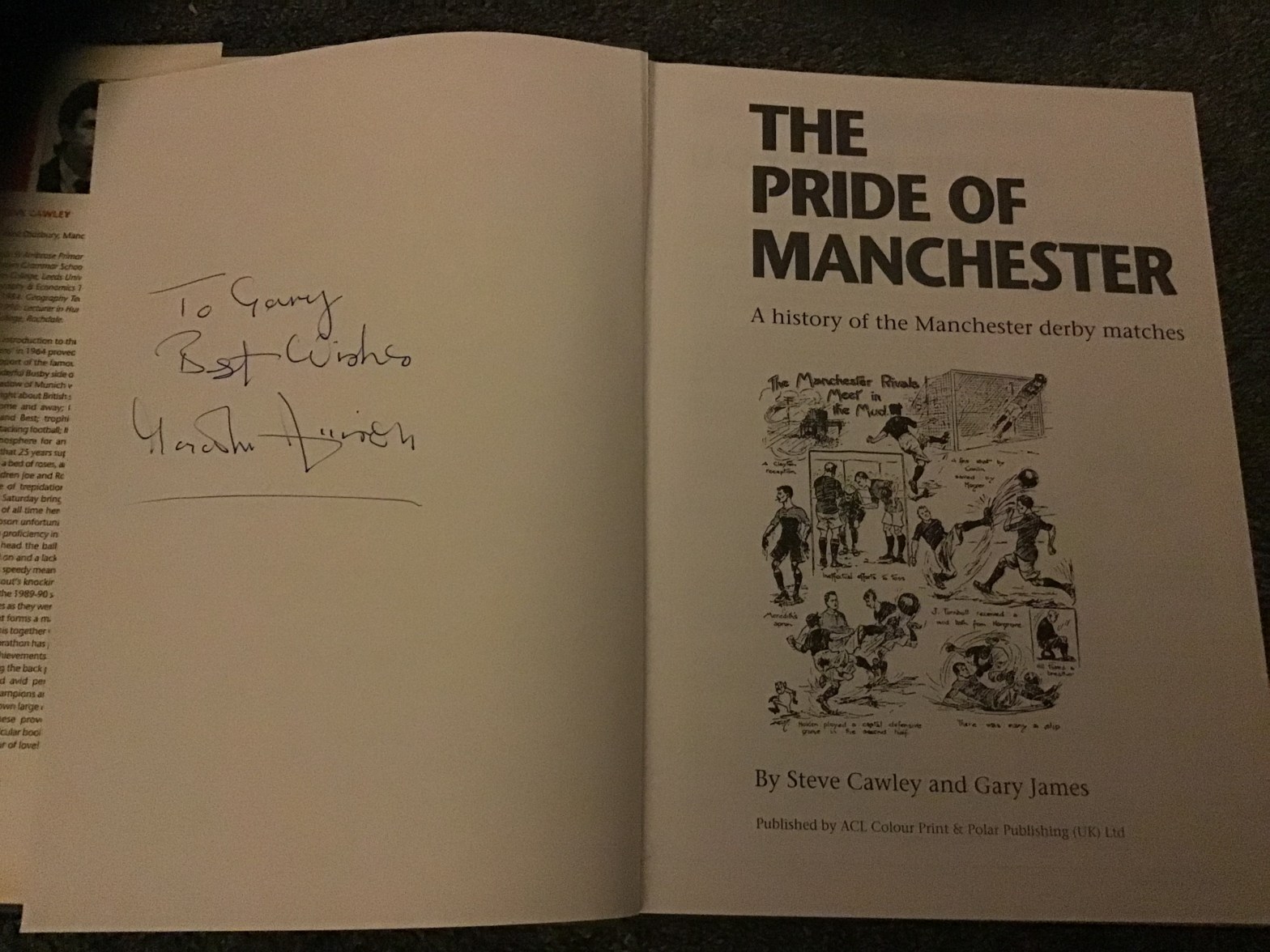
As part of my tidy-up of my collection I have a copy of The Pride of Manchester signed by Malcolm Allison available if anyone wants to buy it. I’m open to offers and will accept the best offer received by Sunday 30 November. The book was published in 1991 and originally retailed at £21.95. It was, at the time, the full history of the men’s Manchester Derby.
The dedication by Big Mal is ‘To Gary’, so if you’ve got a Gary in your family maybe it would be worth buying it for them. I’ll also be happy to write a personal dedication for the buyer.
Malcolm signed this copy when I interviewed him at his home in Yarm about Joe Mercer in 1992-93. The dustjacket is damaged a little with wear and tear at top and bottom. The book is over 30 years old so inevitably will show some wear and tear, but is in a good condition overall.
Minimum offer is £26 to cover UK postage and book original value.
To make your offer email Gary@GJFootballArchive.com with your bid (including UK postage; I won’t be blue to post this outside the UK unfortunately). I’ll review all offers on 30 November and will let everybody know as soon as I can after that.
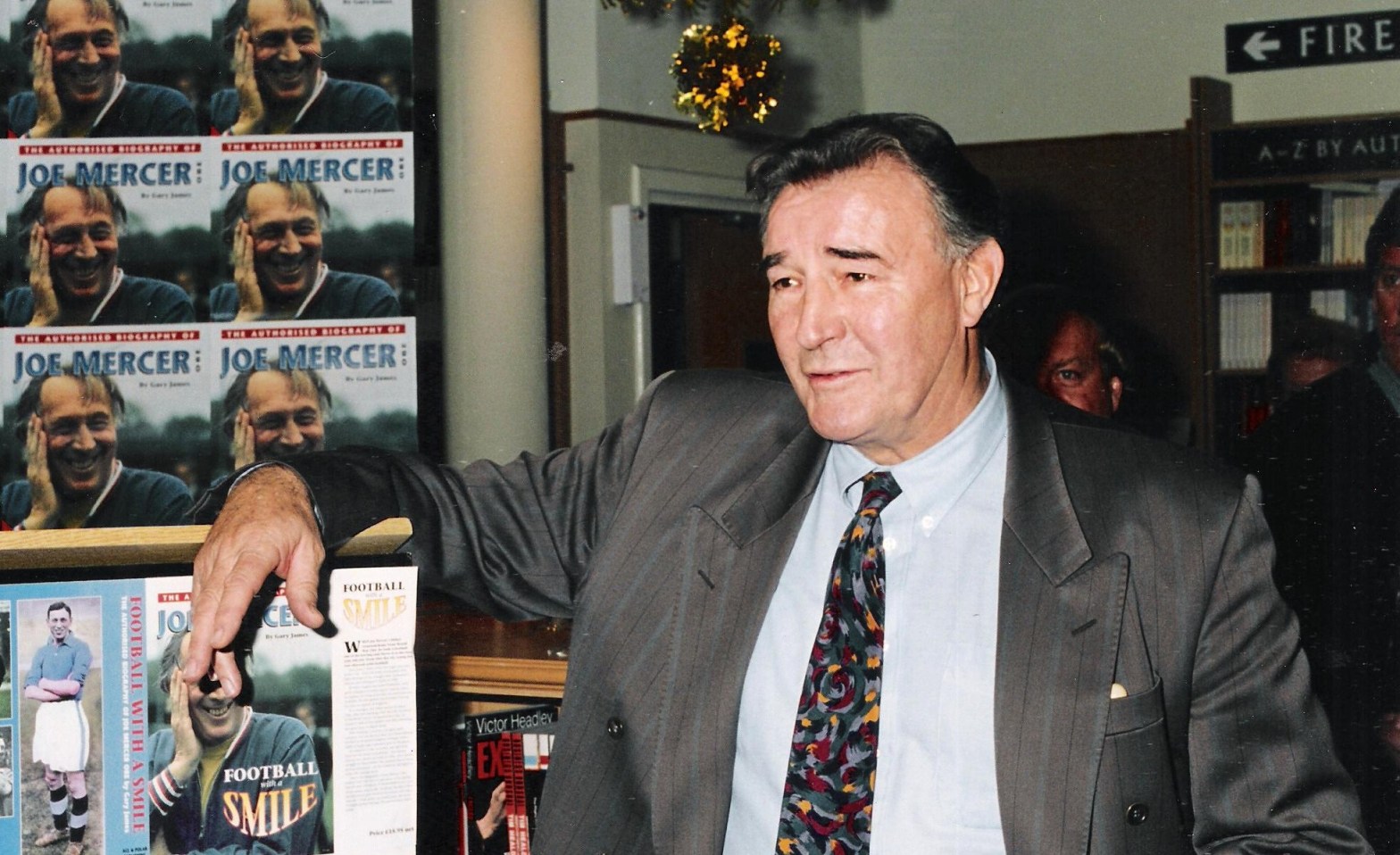
On this day (21 November) in 1964 Manchester City travelled away to Plymouth Argyle. The Blues lost 3-2 but you really need to take a look at this penalty captured on film that day. Malcolm Allison (seen here at my Joe Mercer book launch in 1993) was the Plymouth manager back then, so I guess he had a hand in the plan:
You can read more on Malcolm Allison (and listen to an interview I did with him), Plymouth and on Manchester City in the 1960s across this website. Why not sta, here’s a subscriber article on Manchester City during the 1964-65 season. This was a remarkable season when a City director held meetings, hoping to merge City and United! Plus much more. If you’d like to read this 2350 word article, plus all other articles on the site, then please subscribe (see below). As with most of the other features in this series it includes words from interviews I have performed with those who were there.
Subscribe to get access
Read more of this content when you subscribe today. It costs £3 per month (cancel anytime) or sign up for a year at the discounted price of £20 per year (works out £1.67 per month). Subscribers access the 1000+ articles posted so far and the others scheduled during the life of your subscription.
Here’s some film from a Manchester City-Derby County game at Maine Road on this day (14 November) in 1970. The film has a few things to look out for including a Colin Bell goal and scenes of Joe Mercer and Malcolm Allison, but you can also see the Invacars that used to be used by disabled people and they were allowed to park pitchside. You can see them a couple of times in this footage (look out after about 19 seconds at the top of the image) positioned in front of the Kippax/Platt Lane Corner.
The game ended 1-1 in front of 31,817 at Maine Road. Subscribers can read about this season for Manchester City below. This is a 5,200 word article on the entire 1970-71 season. Enjoy!
Subscribe to get access – Monthly
Read more of this content when you subscribe today. It costs £3 per month (cancel anytime) to access everything posted since 1 October 2022 or there’s a special annual rate below which gives greater access and works out much cheaper.
Read more of this content when you subscribe today. It costs £3 per month (above) or £20 a year (here) to access everything posted since the site was created in December 2020. This special rate works out about £1.67 a week and gives access to everything posted, including PDFs of 3 of my books.
If you enjoy all the free material on my website and would like to support my research and keep this website going (but don’t want to subscribe) then why not make a one-time donation (or buy me a coffee). All support for my research is valued and welcome. It allows me to keep some free material available for all. Thanks.
When Archie Gemmill scored a last minute penalty on this day (18 October) in 1980 to give Birmingham all the points at Maine Road Manchester City were struggling at the foot of Division One. Malcolm Allison had been sacked, and these were the first few days of John Bond’s reign. Looking back on City at this time Bond said: “They’d only got 4 points out of 10 games, hadn’t won a match, hadn’t got a left-back of any description on their books, and the players lacked direction and confidence. To be honest any fool could have turned them around to a limited extent.”
Bond soon turned City around and he was named manager of the month for both November and December. You can read more on the 1980-81 season by subscribing. Here’s a ten thousand word long read on that season. Enjoy!
Subscribe to get access – Monthly
Read more of this content when you subscribe today. It costs £3 per month (cancel anytime) to access everything posted since 1 October 2022 or there’s a special annual rate below which gives greater access and works out much cheaper.
Read more of this content when you subscribe today. It costs £3 per month (above) or £20 a year (here) to access everything posted since the site was created in December 2020. This special rate works out about £1.67 a week and gives access to everything posted, including PDFs of 3 of my books.
If you enjoy all the free material on my website and would like to support my research and keep this website going (but don’t want to subscribe) then why not make a one-time donation (or buy me a coffee). All support for my research is valued and welcome. It allows me to keep some free material available for all. Thanks.
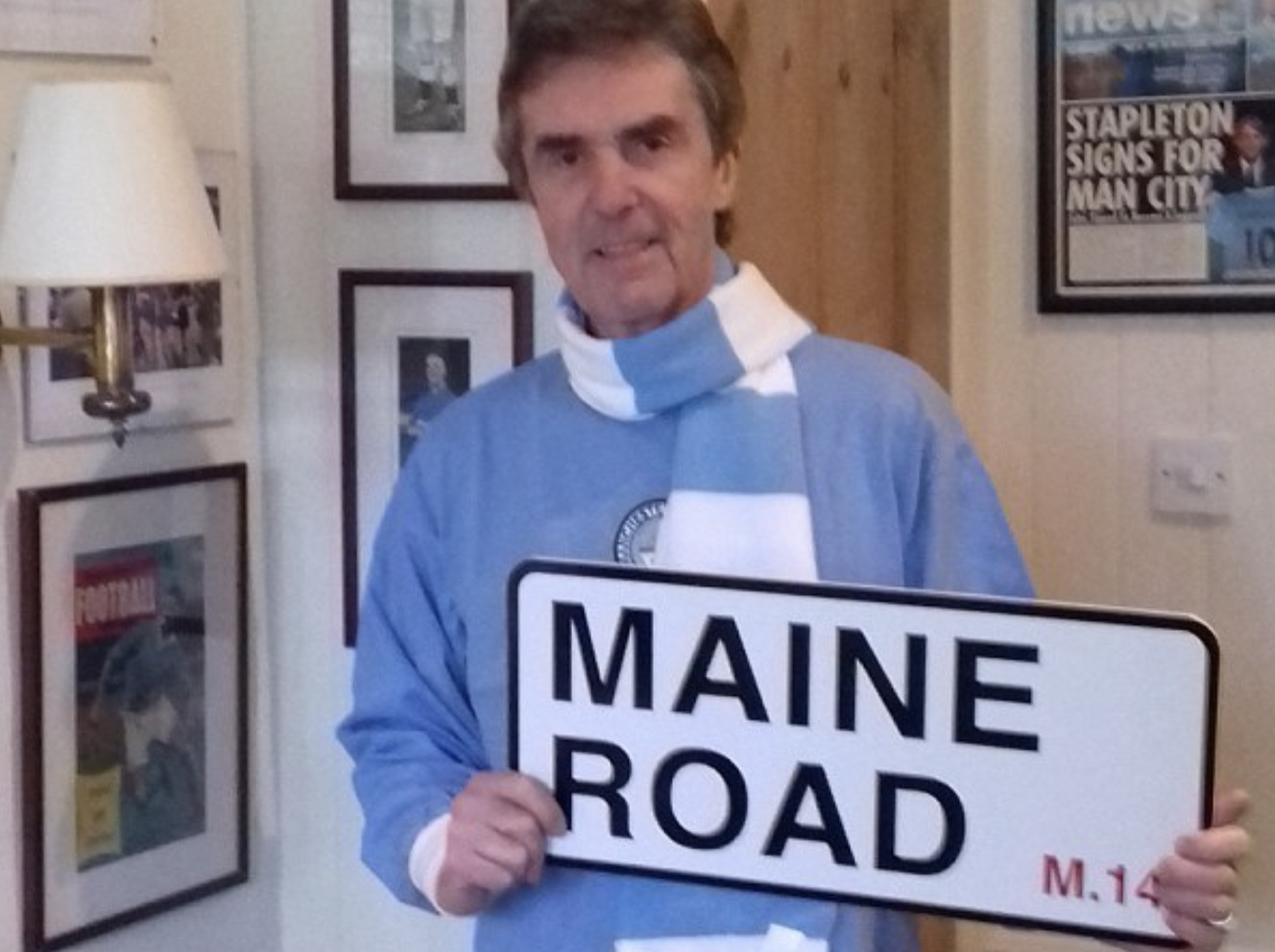
Back in August 2014 I interviewed John Stapleton on his career and support of Manchester City. As part of my tribute to him, I’m posting it here as it was published eleven years ago. Hopefully it adds to the positive stories of him that have been appearing over the last few days. I always enjoyed meeting and chatting with John. Here’s the feature as published in August 2014:
John, you’re known today for ITV’s Good Morning Britain but your career started in local newspapers, with your early TV work coming on This Is Your Life. It was your idea to make Joe Mercer a subject for one show wasn’t it?
Yes it was. I did it purely for the benefit of me and my dad. Eamon Andrews, the presenter, had of course a great interest in sport and I put the idea to him and the rest of the production team. Together with Norah, Joe’s wife who in recent years I often sat with at games sharing her boiled sweets, we concocted a situation where Joe and Malcolm were in a London hotel before a trip to watch a European game in 1970. Malcolm disappeared – deliberately as part of the show though Joe didn’t know this – and Joe was called to reception urgently. Eamon leaped out to do the big ‘This Is Your Life’ reveal and Joe had no idea whatsoever. It was a great day for us all and Joe was thoroughly deserving of it as well.
My grandfather, who lived in Denton, was at the first game at Maine Road and attended matches at Hyde Road and now my son Nick is a regular, so we’ve had a good four generations of Blues so far. When I was about 7 I was taken to watch City play Blackpool, in the days when Stanley Matthews played for them of course, and I loved simply being at the ground. It felt like home and that was it really. I was hooked. We used to have to go on two buses and a tram to get there from where we lived in Saddleworth – it seemed such a long journey at the time, but it was always worth it. No matter what the result.
Can you remember who your first heroes were?
Well, my dad went to the 1955 FA Cup final and then the year after we watched the final against Birmingham on our television. So exciting, because televisions were new to most of us back then and to be able to live the drama of the game, and of course Bert Trautmann’s injury, live in your own home was amazing really. The world’s moved on so much, but the black & white set felt so modern at the time. It was then that my first real hero emerged – Dave Ewing. A wonderful, uncompromising defender and I remember him protecting Bert in those final minutes as best he could.
Did you ever meet Dave?
Sadly, no, but I did meet his son. I left Manchester when I was 21 to work in Fleet Street and so opportunities to bump into your heroes were few. I was also less able to get back to Manchester as often as I do now, and so I watched City in the south and travelled back as often as work and finance allowed. I have since met quite a few of my heroes from that period, people like Ken Barnes and of course his son Peter. Two great City legends. Ken was a wonderful rascal and very funny and Peter is a really nice guy. I’ve also got to know Mike Summerbee quite well – and bought several of his shirts over the years and they weren’t cheap! He came to our house a few years back and charmed my parents. For my father it was great to be in his company and I think we all cherished that day. Even my lawyer was talked in to buying some of Summerbee’s shirts.
How do you feel about attending games today?
It’s an absolute joy and the fan in me never goes away. For my son, living in London and under so much pressure from his peers to support Arsenal, the years before the takeover were difficult. Those that had experienced the glories of the fifties to seventies had good memories of success, but the younger generation who had never seen us lift a major trophy must have found it tough. But it was all character building and fortunately he can now experience the success that this club deserves. It means more if you’ve been through the thick and thin – and he certainly experienced the thin alongside me!
Alongside the Mercer-Allison era, today is the best we’ve ever known and, hopefully, will keep on getting better. We’ve waited a long time but it’s been worth it. I’ve no complaints about any aspect of City today and the club is as friendly as ever, if not more so in some respects. It gives me a real buzz every time I walk into the stadium, or meet a former player, or chat to a fellow Blue like you Gary. We all have a shared bond and recognise that what we’re experiencing now is truly exceptional – long may it last!
In the mid 1970s you came in to contact with City professionally via the Junior Blues rally. What do you remember of it?
It was held at Belle Vue and there were thousands of Junior Blues there. It was a great event and we had the full team on the stage, giving fans the chance to ask questions to the team and the management. Peter Swales had asked me to present it – for free I might add but it was a major honour to do it – and it was probably the first time any club had opened up in such a way. City were quite forward thinking in terms of the media and fan relations at the time. I was also involved with the BBC Nationwide series on City.
That was another landmark moment in football’s relationship with the media. What was your involvement?
I was a Nationwide presenter and we’d managed to get City to open their doors for the cameras. Reporter Kevin Cosgrove did most of the progress reports and I came in at the end of the series to do a big outside broadcast on the last day of the season. I did some pre-recorded interviews, including one with Franny Lee, and then I did all the links at the ground. It went out to the full BBC network and was very good for the club and, of course, the BBC.
There’s a chant “City Are Back!” we’ve been singing for years, but I now feel that the club I first supported is back. Is this true for you?
In many ways yes. I’ve been a good friend of present day FA boss Greg Dyke for years as we’ve worked together in TV. He was given a tour of the club and the new facilities by Brian Marwood and he told me that this really is a friendly and forward looking club. He was very impressed and it’s satisfying to know others are now recognising how special this club is.
Those facilities will help City develop talented young players in future years. It’s ironic really that people have been urging certain other clubs to spend, spend, spend recently, but we’ve been the ones tagged as the big spenders.
That’s going away now I believe. The evidence is clear and we had to spend to catch up, just like other teams have throughout history. We should never forget either that two of our greatest and most consistent players – Vincent Kompany and Pablo Zabaleta – arrived before the takeover. Kompany is a truly great leader and I’ve been fortunate to meet him and he is also a wonderful man. He is the perfect captain for this club, but we’re so fortunate to have so many brilliant players. Just think of David Silva… outstanding quality!
You’ve worked with Manchester United supporter Eamon Holmes in the past, did the two of you ever discuss football?
We’ve had some good banter over the years. Good craic! In fact I took him to two games. The first was when Beckham scored from a free kick at Maine Road. Eamon jumped up in the directors’ box and you can imagine how that went down. The second time he was booed into the ground by City fans!
Your own personal greatest game?
Obviously, the last game v QPR in 2011-12, but also the 6-1 against United at Old Trafford. I turned to Nick my son and said ‘savour this moment. No matter how long you live you’re unlikely to experience this feeling again.’ And of course, there’s the 1999 play-off final without which we may never have come back at all. What a transformation in 15 years – hopefully, there’s more to come.
On July 20 in 1965 Malcolm Allison was formally interviewed by the Manchester City board to be manager Joe Mercer’s assistant. Mercer had wanted to bring Allison in since he took the job earlier in the month. Here is a feature I did on Allison back in January 2005.
I first interviewed Malcolm in 1991, and, using material from several conversations with him, and in 2005 I took the opportunity of a MCFC v Crystal Palace game to remind everyone of his significance. Today, for subscribers, I’m posting it here.
Subscribe to get access
Read this article and all other content when you subscribe today.








 Gary James' Football Archive