Maine Road 100 – Day 70

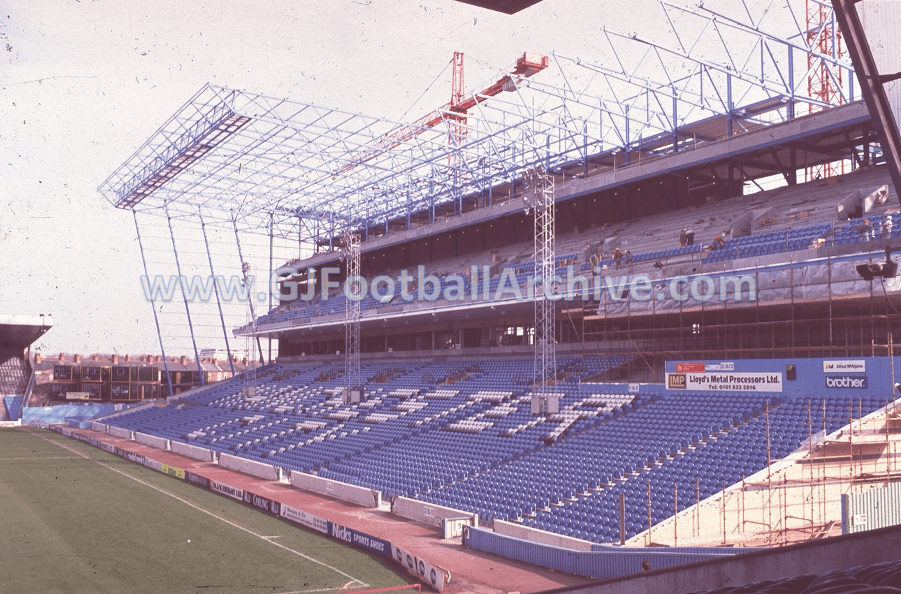
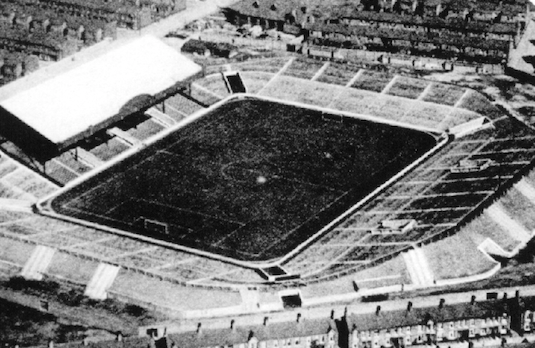
Here’s post 70 in my Maine Road 100 countdown. Today I’m talking about the old stadium’s final Manchester City victory. During 2002-03 the focus for many City fans was Maine Road’s final season, especially the final month or so of the season. With every game at the stadium a sell-out – only the size of the away support varied – supporters were desperate for the final season to see the old venue at its best.  They also wanted a few memorable results in those final weeks.  

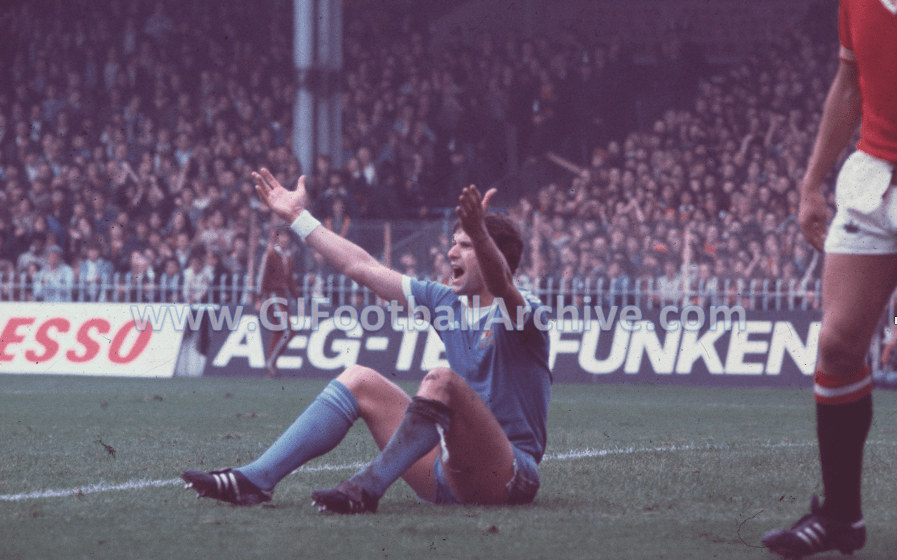
Ultimately, the best Maine Road match of the final weeks came on April 21 2003 when a goal from Robbie Fowler and two from Marc-Vivien Foe brought a 3-0 win over Sunderland.  The game became significant as it was to be the last City victory at the old stadium and Foe’s 80th minute goal was the last scored there by a City man. Sadly, Foe was also to die a few weeks later, adding to the poignancy of this day.

Pre-match Sunderland presented the Blues with a rose bowl commemorating their final visit to the stadium.  Significantly, the time span between their first appearance at Maine Road and their last was greater than any other visiting club. Co-incidentally City’s last victory at Hyde Road was also against Sunderland in April. You can read about that game here:

https://gjfootballarchive.com/2021/04/02/hyde-roads-last-city-victory/

21/4/2003 MCFC 3 Sunderland 0, Attendance 34,357
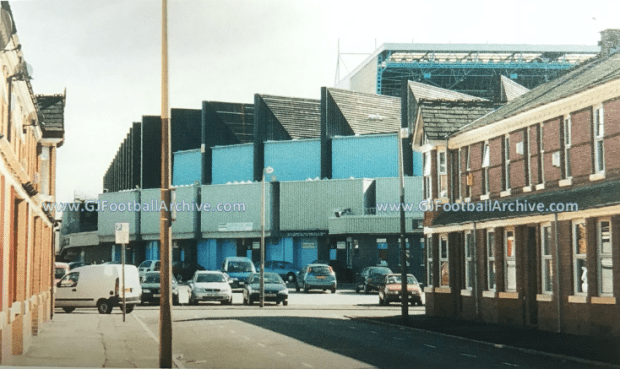
The view down Wansford Street towards Maine Road in 2003

Maine Road 100 – Day 69

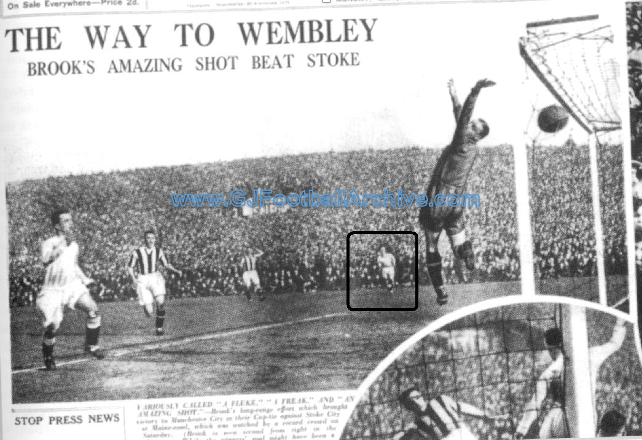
Post 69 in the 100 Maine Rd countdown is this image from a game played on 5 March 1934. It shows Eric Brook scoring what some believed was the greatest goal ever netted at Maine Road (see post 68 for a later contender). What else makes this image special is that it’s from the 84,569 game v Stoke when City attracted a record English crowd on a club ground that still stands today.

Subscribers can read more on why this day, game and image is so special here:

GOLDEN GOALS – 1934 Eric Brook V Stoke City

Maine Road 100 – Day 68

It’s day 68 of my Maine Rd countdown…. Many goals over the old stadium’s 80 year life were described as the greatest ever at Maine Road.  Sometimes these became a talking point for a few days, sometimes for a few years but unless they happen to occur in a major game goals tend to lose their significance as time moves on.  This is especially true for Maine Rd games prior to the 1990s when television coverage was limited to, at best, a handful of top flight games.

One that was remembered for many years was Rodney Marsh’s overhead kick from the City-QPR Division One game of September 1974.  Do you remember it? The following subscriber post tells the story of that classic goal and images of it step by step.

Subscribe to get access

Read more of this article and access all other articles for as long as you subscribe – £20 a year (works out about £1.67 a month).

Subscribe to get access

Read more of this content when you subscribe today.

Subscribe to get access

Read more of this content when you subscribe today.

Maine Road 100 – Day 67

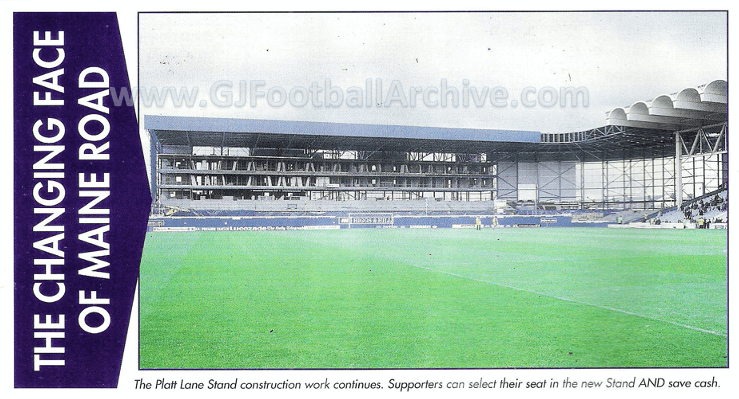
Day 67 of my posts counting down to the centenary of Maine Road’s opening game is this night time cutting from the MCFC match programme of the new Platt Lane. Oh, don’t get me started! This was the perfect example of how Swales, Niven et all downgraded Maine Road from one of England’s leading venues to a mishmash of odd stands. Swales was responsible for the club’s overall direction and Niven was the director responsible for stadium development.

The old Platt Lane held about 9,500, the new stand when opened in March 1993 was less than 5,000. You can read about what happened on the stand’s opening day here:

This 1971 aerial image shows the old Platt Lane (3, 4 & 5). The stand was demolished in 1992 with the new one rising in 1992-93.

Maine Road aerial 1971 from Farewell To Maine Road

If you’d like to read more on the history of Maine Road, take a look at Farewell To Maine Road, which can be downloaded from this page:

Maine Road 100 – Day 66

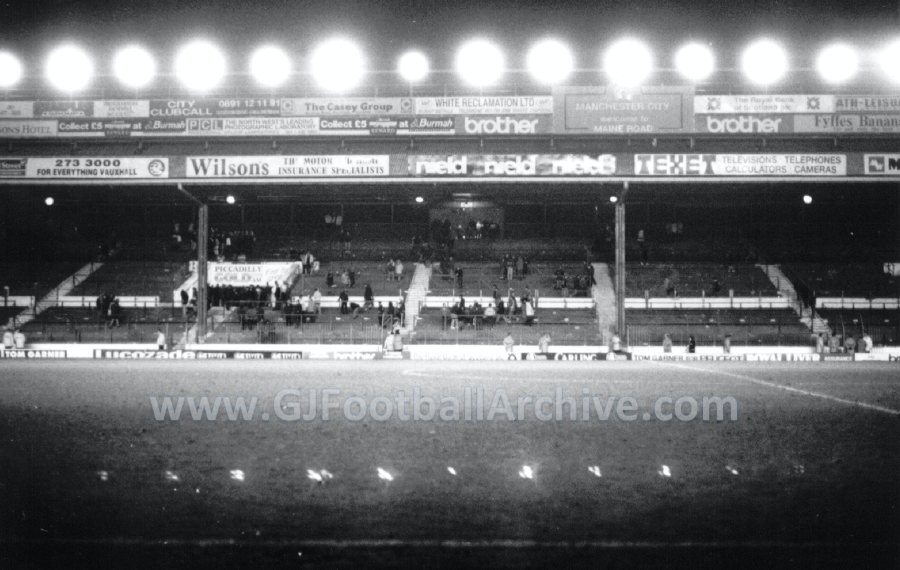
Day 66 of my posts counting down to the centenary of Maine Road’s opening game is this night time image of the Kippax. This was taken in Maine Road’s final season and was loaned to me a few decades ago by the fanzine Blueprint (Phill Gatenby). Compare this with my Day 65 image and you’ll see the floodlights are now on the roof, alongside more adverts plus the Welcome To Maine Road sign is a newer version.

For its final game that season the Kippax had a higher official capacity than all other standing areas, including the Kop which also went on that day in April 1994.

This 1971 aerial image shows the Kippax (7 & 8) from the back. The stand was demolished in 1994:

Maine Road aerial 1971 from Farewell To Maine Road

If you’d like to read more on the history of Maine Road, take a look at Farewell To Maine Road, which can be downloaded from this page:

Maine Road 100 – Day 65

Day 65 of my posts counting down to the centenary of Maine Road’s opening game is this image of the Kippax. When this was taken in the 1980s its capacity was over 26,500 in a 52,600 capacity Maine Road. Note the iconic Trumann’s for steel advert.

This 1971 aerial image shows the Kippax (7 & 8) from the back. The stand was demolished in 1994:

Maine Road aerial 1971 from Farewell To Maine Road

If you’d like to read more on the history of Maine Road, take a look at Farewell To Maine Road, which can be downloaded from this page:

Maine Road 100 – Day 64

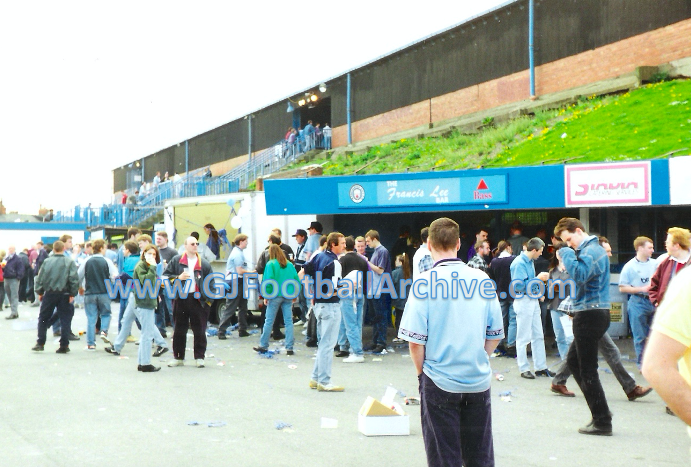
Day 64 of my posts counting down to the centenary of Maine Road’s opening game is this image taken by Steve Worthington from behind the old Kippax Stand during its final season. Notice the player named bar – this one after Francis Lee – and if you look carefully the second staircase visible (left) is the staircase to nowhere which was blocked off in the early 1970s following the safety legislation (that followed the Ibrox disaster) that outlawed the original style of staircase. The one closest to the camera was remodelled but the other was blocked off (see previous Maine Road 100 posts for details).

Steve Worthington’s photo was taken from the area behind the kippax, slightky 1971 aerial image shows the 1957 roof over the Kippax (7 & 8) which was demolished in 1994:

Maine Road aerial 1971 from Farewell To Maine Road

If you’d like to read more on the history of Maine Road, take a look at Farewell To Maine Road, which can be downloaded from this page:

Maine Road 100 – Day 63

Day 63 of my posts counting down to the centenary of Maine Road’s opening game is this image from the 1994-95 season of the ‘new’ Kippax Stand during construction.

At times during the stand’s construction the capacity of Maine Road had been less than 20,000 – the lowest at any City venues since the 1800s!

The 1994 demolition of the old Kippax saw the original 1923 terracing at that end demolished, meaning that the only part of the 1923 stand construction still standing was the base of the Main Stand.

This 1940s image of the Maine Road shows the original 1923 terracing (left):

This 1971 aerial image shows the 1957 roof over the Kippax (7 & 8) which was demolished in 1994:

Maine Road aerial 1971 from Farewell To Maine Road

If you’d like to read more on the history of Maine Road, take a look at Farewell To Maine Road, which can be downloaded from this page:

Maine Road 100 – Day 62

Day 6 of my posts counting down to the centenary of Maine Road’s opening game continues with another segregation image. This is a late 1970s Manchester derby image and the City player is Mike Doyle but look beyond him at the segregation and perimeter fencing. As well as the railings in front of the Kippax Stand the away section (to the right) has an additional chicken wire style temporary fence in front of the United fans.

This was a period when United fans had an extremely bad reputation for pitch invasions and crowd actions and City had been forced to install this additional netting for this derby match after consultation with the police.

The fencing didn’t last of course and so this image is extremely unusual.

If you’d like to read more on the history of Maine Road, take a look at Farewell To Maine Road, which can be downloaded from this page:

Maine Road 100 – Day 61

Day 61 of my posts counting down to the centenary of Maine Road’s opening game continues from yesterday and reveals how, years before Manchester City moved to Maine Road, significant football matches were played on fields next to the road.

Yesterday I talked about Dog Kennel Lane, well today here’s a mention of Dog Kennel Lane in relation to football. Manchester Association were the city’s prominent team in the mid 1870s and early 1880s. They promoted the game extensively and subscribers can read their story here:

And here:

I explain a lot more about them in The Emergence of Footballing Cultures: Manchester 1840-1919.

The brief newspaper cutting from 1882 mentions their Dog Kennel Lane ground. On the following I show where Maine Road was later built but the Manchester ground was probably further up the road/lane towards what became Great Western Street.

An early 20th century interpretation of an older map, showing modern streets (dotted) with the original roads.
Manchester Association at Dog Kennel Lane, 1882

If you’d like to read more on the history of Maine Road, take a look at Farewell To Maine Road, which can be downloaded from this page: